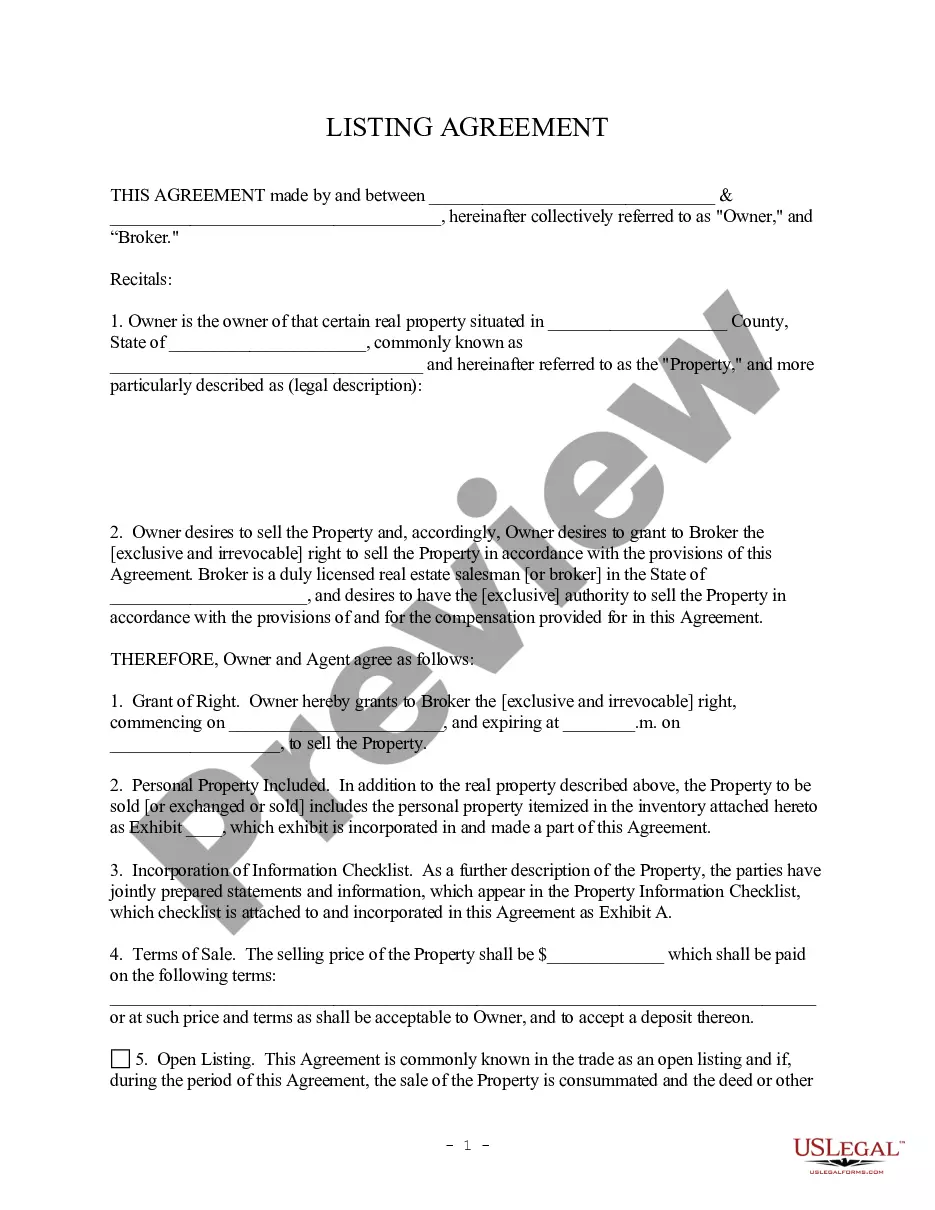
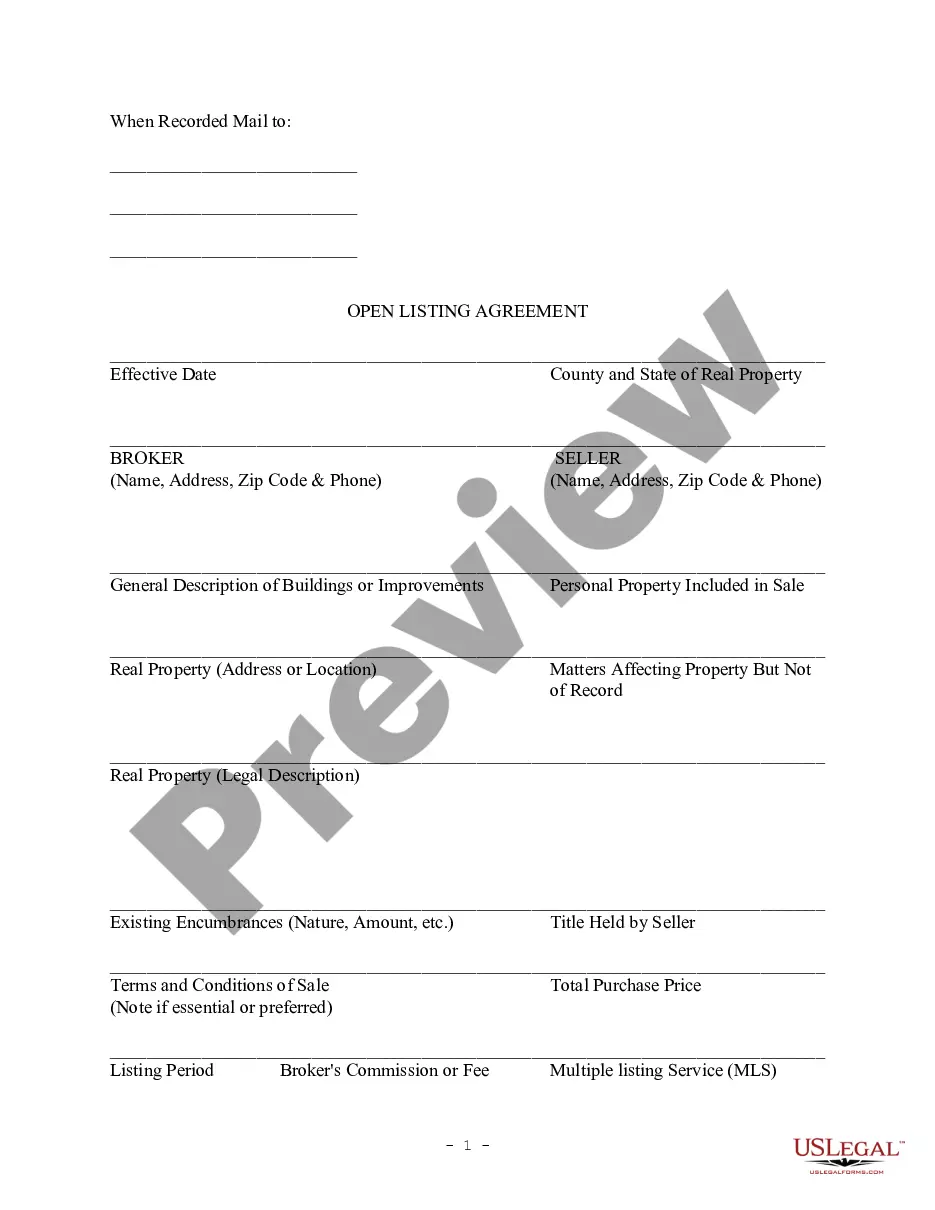
Listing Agreement Document With Bse In Utah
Description
Get your form ready online
Our built-in tools help you complete, sign, share, and store your documents in one place.
Make edits, fill in missing information, and update formatting in US Legal Forms—just like you would in MS Word.
Download a copy, print it, send it by email, or mail it via USPS—whatever works best for your next step.
Sign and collect signatures with our SignNow integration. Send to multiple recipients, set reminders, and more. Go Premium to unlock E-Sign.
If this form requires notarization, complete it online through a secure video call—no need to meet a notary in person or wait for an appointment.
We protect your documents and personal data by following strict security and privacy standards.

Make edits, fill in missing information, and update formatting in US Legal Forms—just like you would in MS Word.

Download a copy, print it, send it by email, or mail it via USPS—whatever works best for your next step.

Sign and collect signatures with our SignNow integration. Send to multiple recipients, set reminders, and more. Go Premium to unlock E-Sign.

If this form requires notarization, complete it online through a secure video call—no need to meet a notary in person or wait for an appointment.

We protect your documents and personal data by following strict security and privacy standards.
Looking for another form?







Form popularity
FAQ
Less commonly, the term listing agreement also refers to a contract made between a security issuer (e.g., a public company) and the financial exchange that hosts the issue. Examples of exchanges include the New York Stock Exchange (NYSE), the Tokyo Stock Exchange (TSE), and the London Stock Exchange (LSE).
Why is a Listing Agreement Important? Legal Protection: The listing agreement serves as a legal document that outlines the obligations and expectations of both the broker and the seller, providing legal protection to both parties.
The listing contract should be in writing for it to be enforceable in a court of law. To prevent misunderstanding and fraud between the parties involved therefore, its essential for the contract to be in writing.
The listing agreement is a document that protects your real estate agent. It ensures they will receive their commission if they find a buyer for your property and gives them exclusive rights to sell your home.
“Listing agreement” means a written contract between a seller of real property or a business opportunity and a real estate broker by which the broker has been authorized to sell the real property or find or obtain a buyer, including rendering other services for which a real estate license is required to the seller ...
Generally, state laws require certain contracts or agreements to be in writing to protect both buyers and sellers from being taken advantage of, and from fraud. Under most states' laws, the following agreements and contracts are required to be in writing and signed: The sale of land, or a home, or an interest in land.
Written Contracts Keep People Accountable A written contract will set expectations and avoid misunderstandings, and it will also keep the parties accountable. A written contract will help you as a small business owner understand what your responsibilities are and keep you accountable to those responsibilities.
This national change isn't as significant in Utah because the state has required written buyer agreements since the 1990s. The biggest difference is buyers who work with a Realtor will now be asked to sign the agreement at the beginning of the process. As a buyer, remember these agreements are negotiable.
An overview of the buying process within the presentation is akin to providing clients with a roadmap – a clear and concise guide to what lies ahead. Setting clear expectations for clients about each stage of the buying process is more than just transparency; it's about building trust.
Benefits of Exclusive Representation and Compensation This means they can negotiate better deals, provide tailored advice, and ensure that your needs are prioritized. COMMITMENT AND LOYALTY. It solidifies a mutual commitment.

