Listing Agreement Document With Bse In Washington
Description


Form popularity
FAQ
Every valid contract in California needs to have four essential elements. (1) The parties must be capable of contracting, (2) the parties must consent to the contract, (3) the contract must have a lawful object (they cannot be for illegal services), and (4) the contract must be supported by consideration.
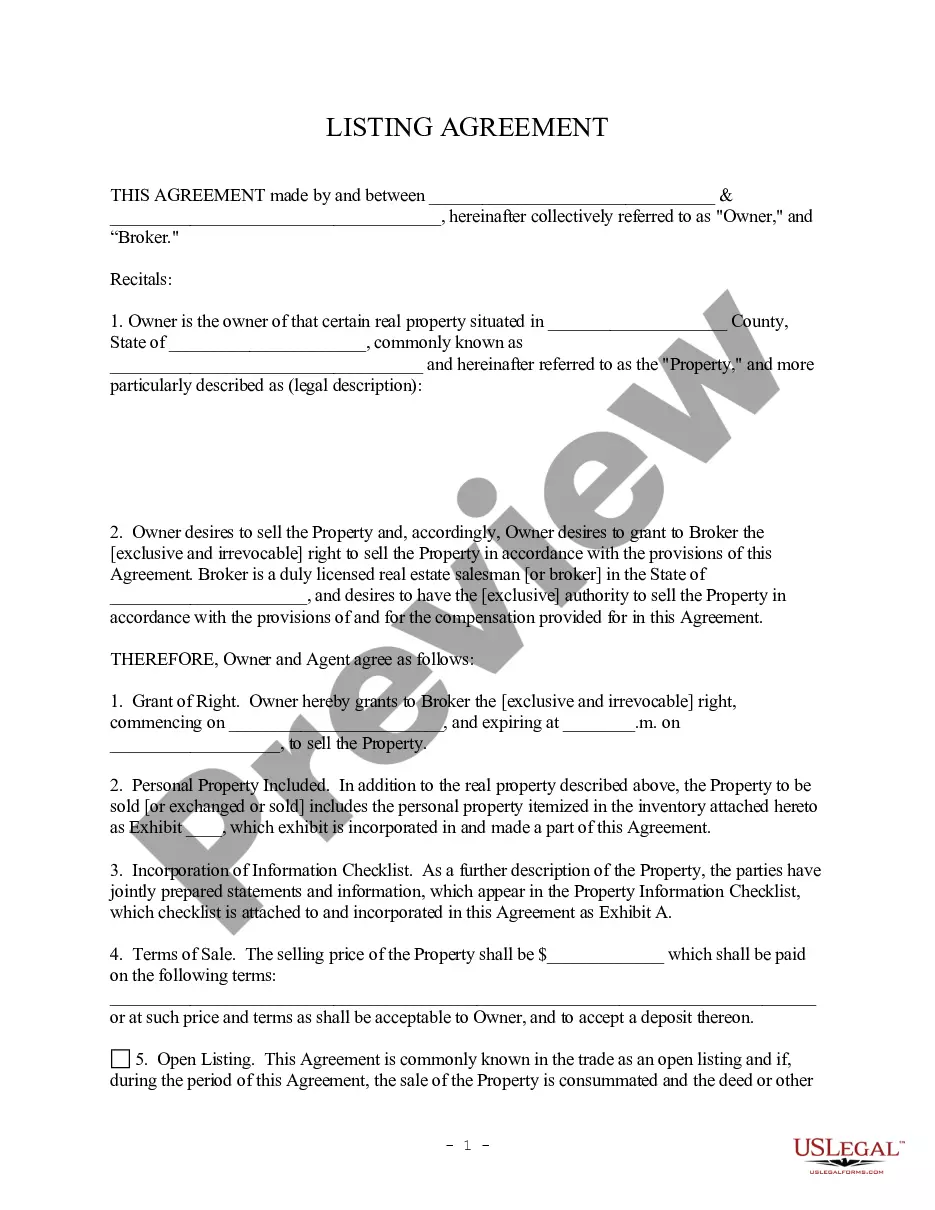
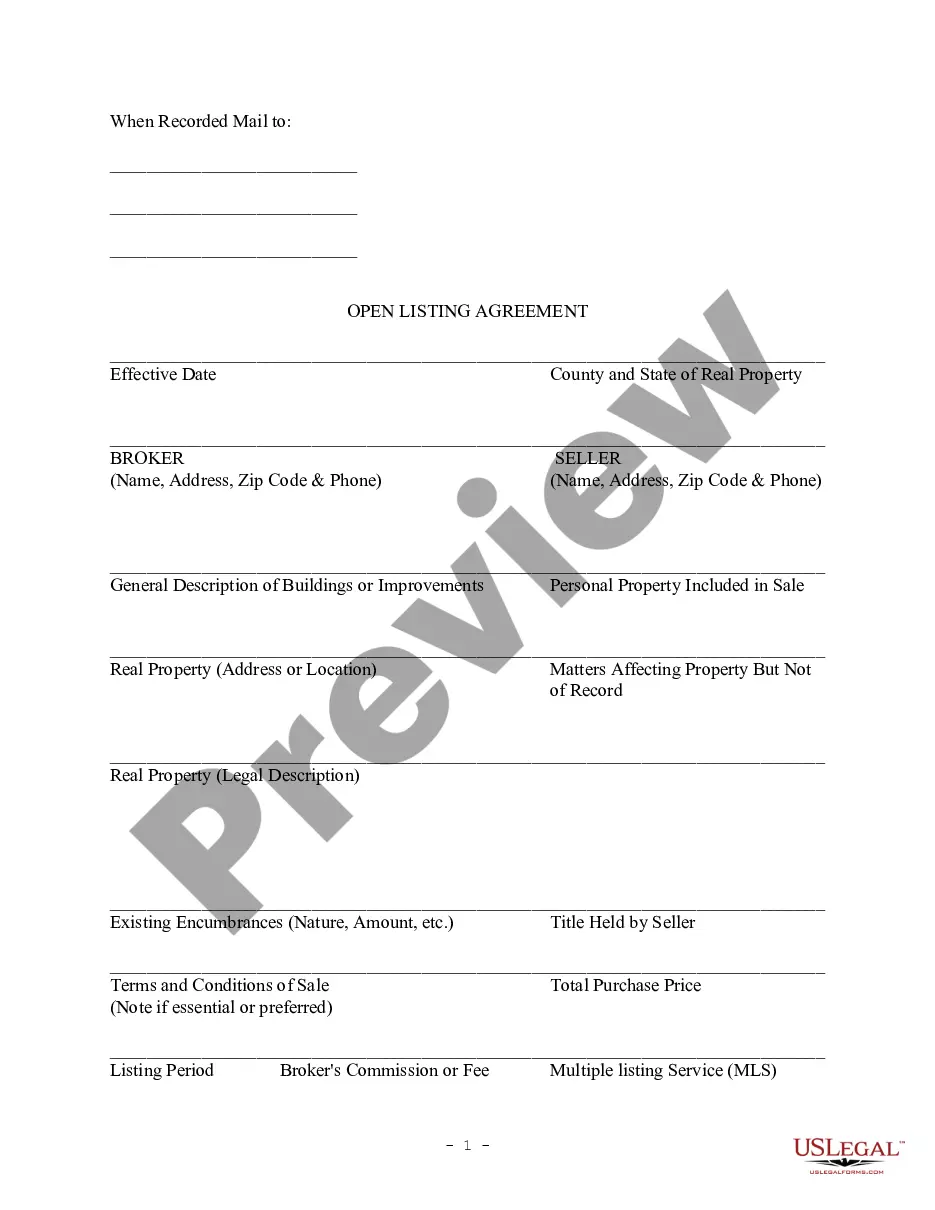
The three types of real estate listing agreements are open listing, exclusive agency listing, and exclusive right-to-sell listing.
The Exclusive Listing Agreement establishes a ground for honesty, trust, and confidence between the seller and broker. Such a relationship is important during the marketing process and through the closing of the sale or lease.
Exclusive right to sell listing An exclusive right to sell grants a single real estate agency exclusive authority to market and sell a property, ensuring the listing agent earns a commission regardless of who finds the buyer. While this agreement is active, the property owner cannot use another agent.
In an exclusive agency listing, the seller retains the right to sell the property, with no obligation to the broker. With exclusive right-to-sell listings, the broker receives a commission regardless of who sells the property.
The answer is the age of the seller. Information needed for the listing agreement includes lot size, possibility of seller financing, and the property taxes. The age of the seller is not needed.
A listing agreement is between the parties that own a property and the agents or brokers who will find a buyer for it. Typically, a real estate listing agreement involves the property owner and a real estate agent. The property owner, or seller, grants the agent the right to market and sell the property.
At this point, your REALTOR will take the final steps necessary for selling your home, including the preparation and staging of your home before it's officially listed in the Multiple Listing Service (MLS) databases. This includes: Making an extra key for the lockbox. Arrange for the installation of the yard sign.
Final answer: A listing agent, when signing an agreement, is in reality representing and serving the interests of the broker who holds their license. This is a legal agreement between the broker and the other party. The agent does not sign on behalf of any other entity in the company or other MLS licensees.

