Board Directors Minutes With Action Items Template In Pima
Description


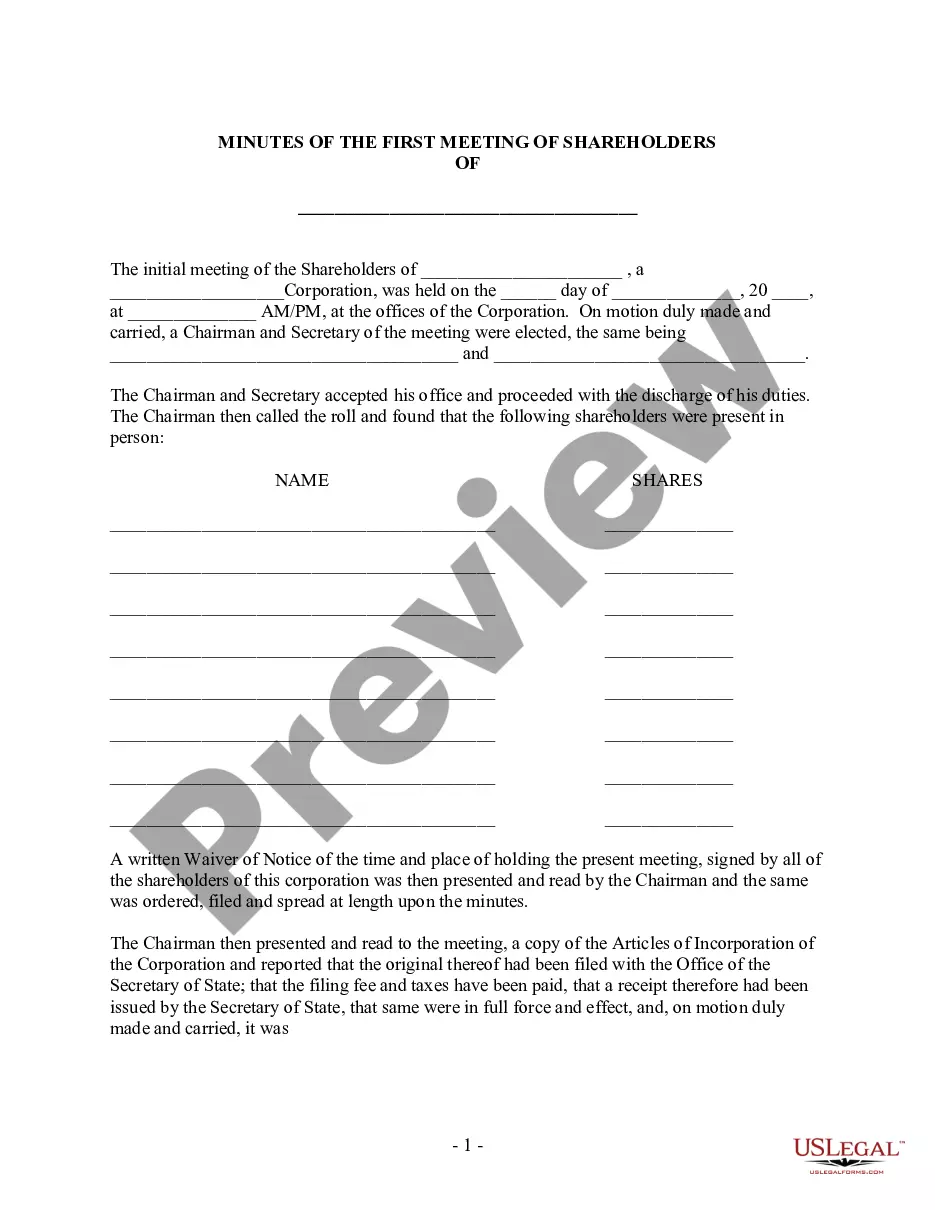
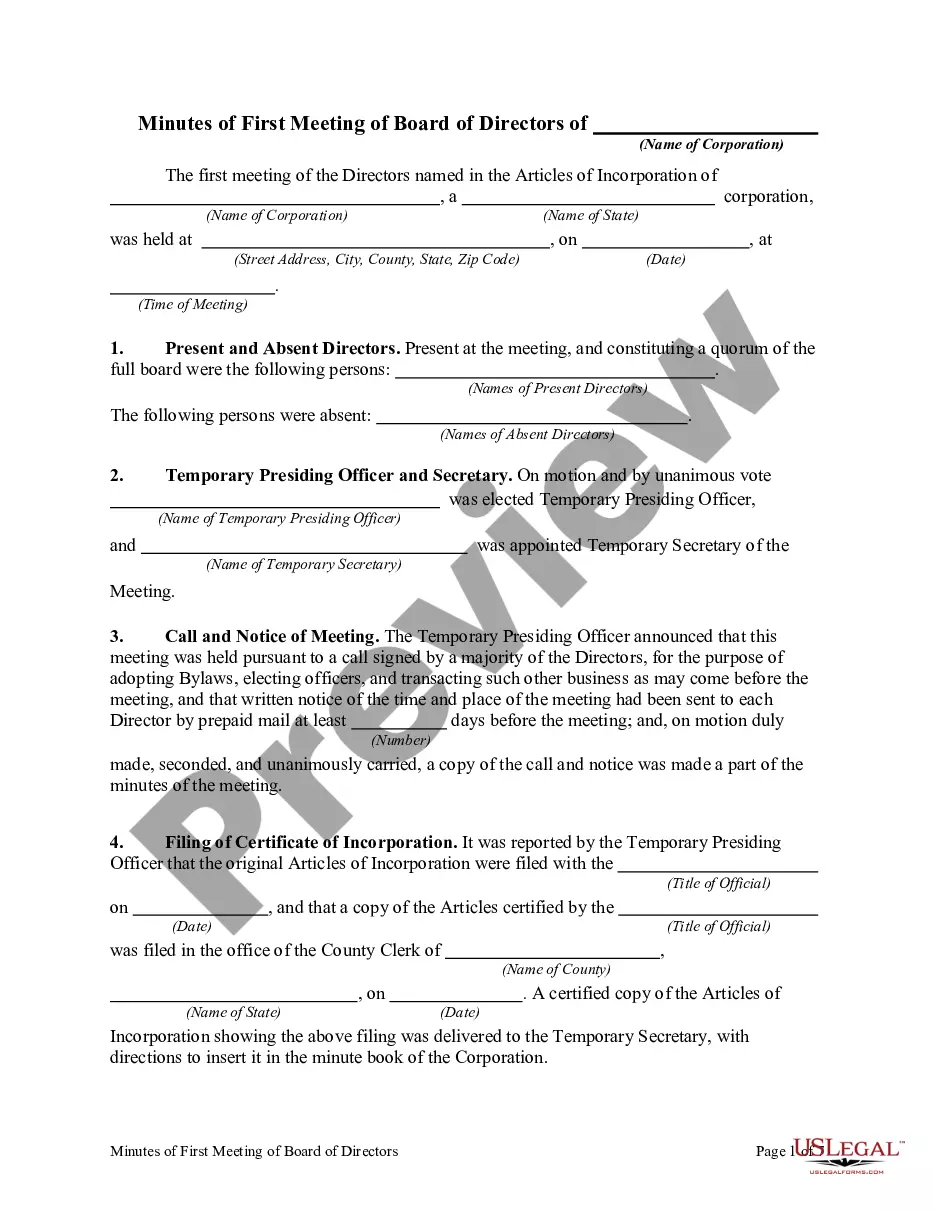
Get your form ready online
Our built-in tools help you complete, sign, share, and store your documents in one place.
Make edits, fill in missing information, and update formatting in US Legal Forms—just like you would in MS Word.
Download a copy, print it, send it by email, or mail it via USPS—whatever works best for your next step.
Sign and collect signatures with our SignNow integration. Send to multiple recipients, set reminders, and more. Go Premium to unlock E-Sign.
If this form requires notarization, complete it online through a secure video call—no need to meet a notary in person or wait for an appointment.
We protect your documents and personal data by following strict security and privacy standards.

Make edits, fill in missing information, and update formatting in US Legal Forms—just like you would in MS Word.

Download a copy, print it, send it by email, or mail it via USPS—whatever works best for your next step.

Sign and collect signatures with our SignNow integration. Send to multiple recipients, set reminders, and more. Go Premium to unlock E-Sign.

If this form requires notarization, complete it online through a secure video call—no need to meet a notary in person or wait for an appointment.

We protect your documents and personal data by following strict security and privacy standards.
Looking for another form?
Form popularity
FAQ
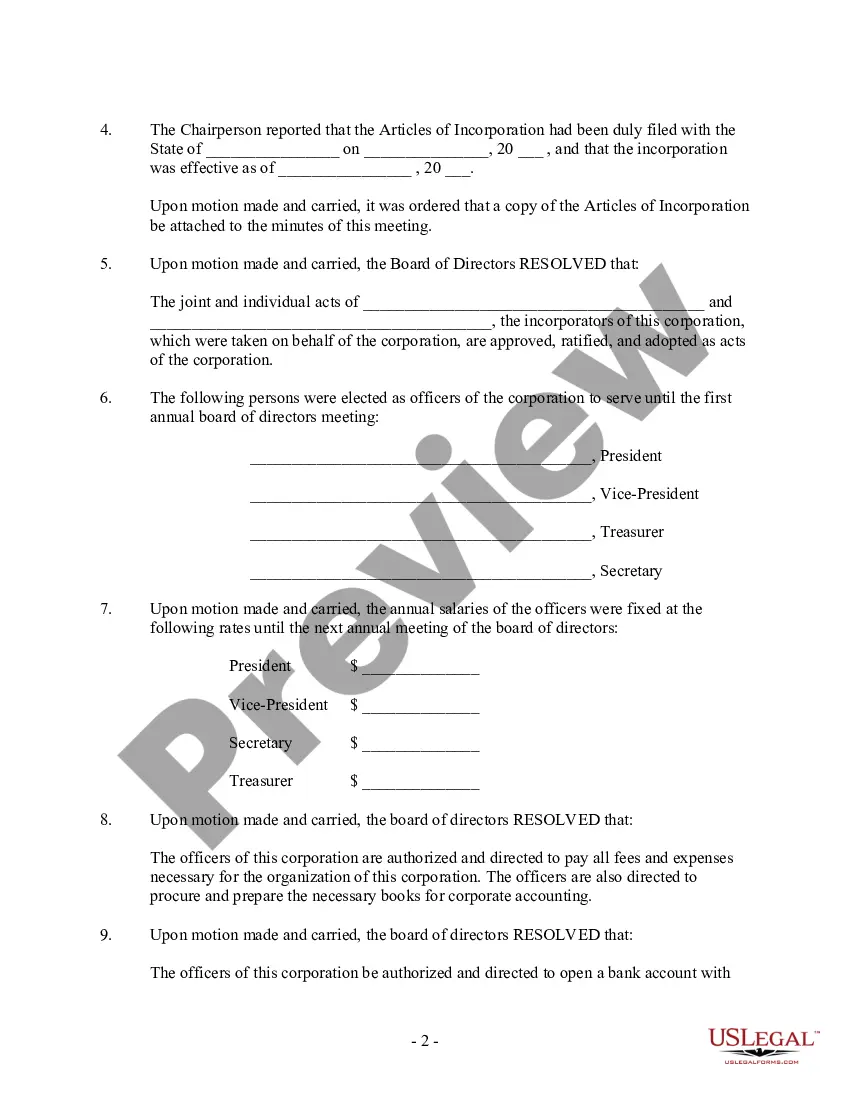
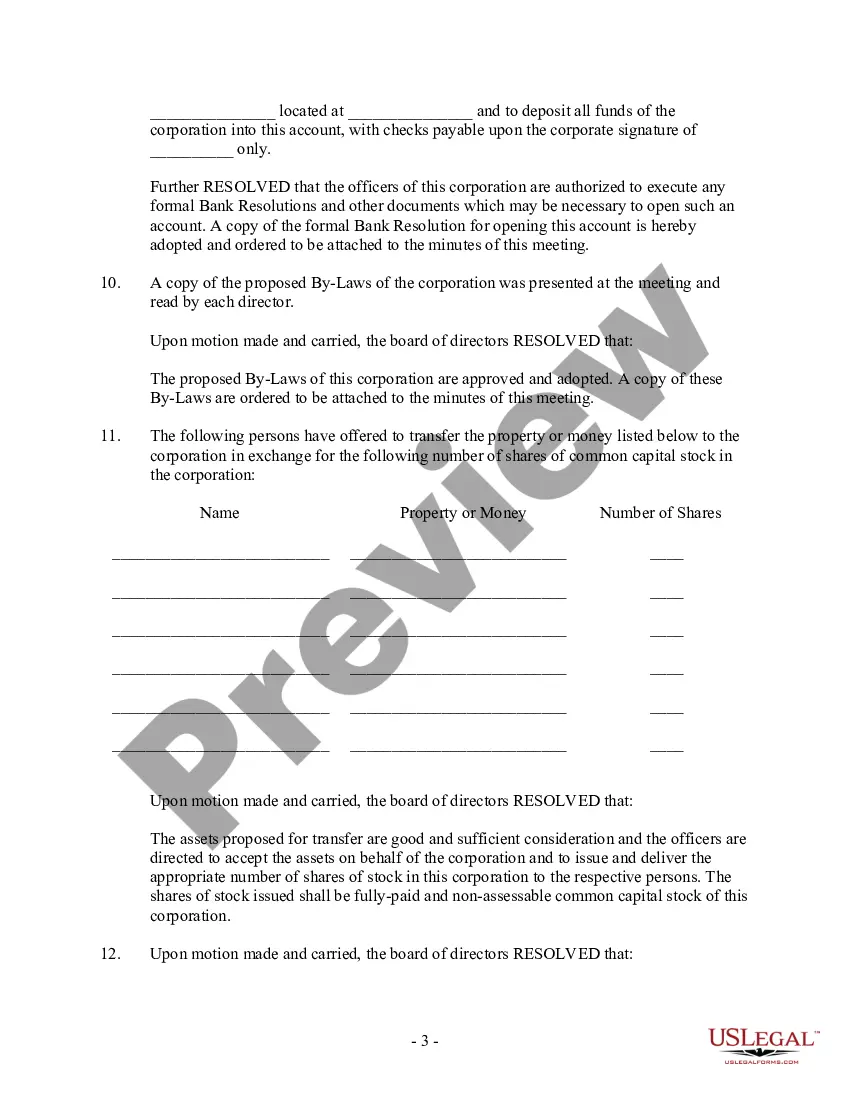
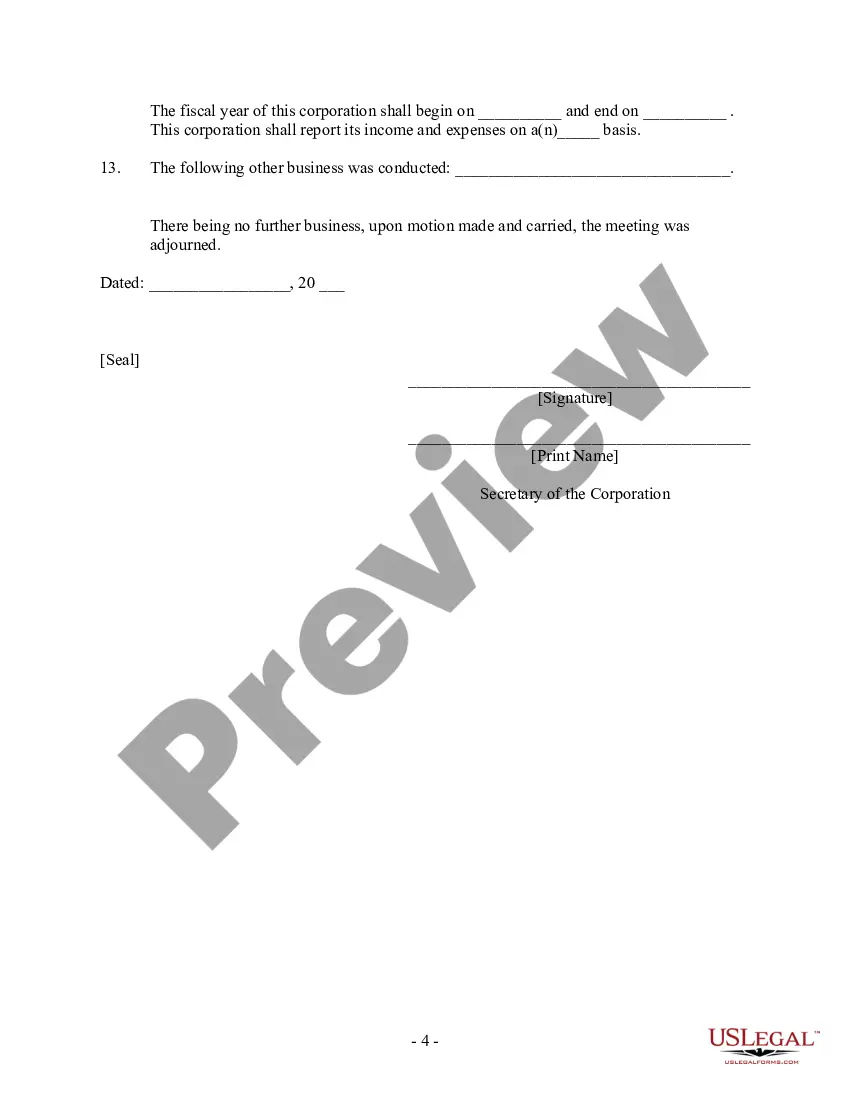
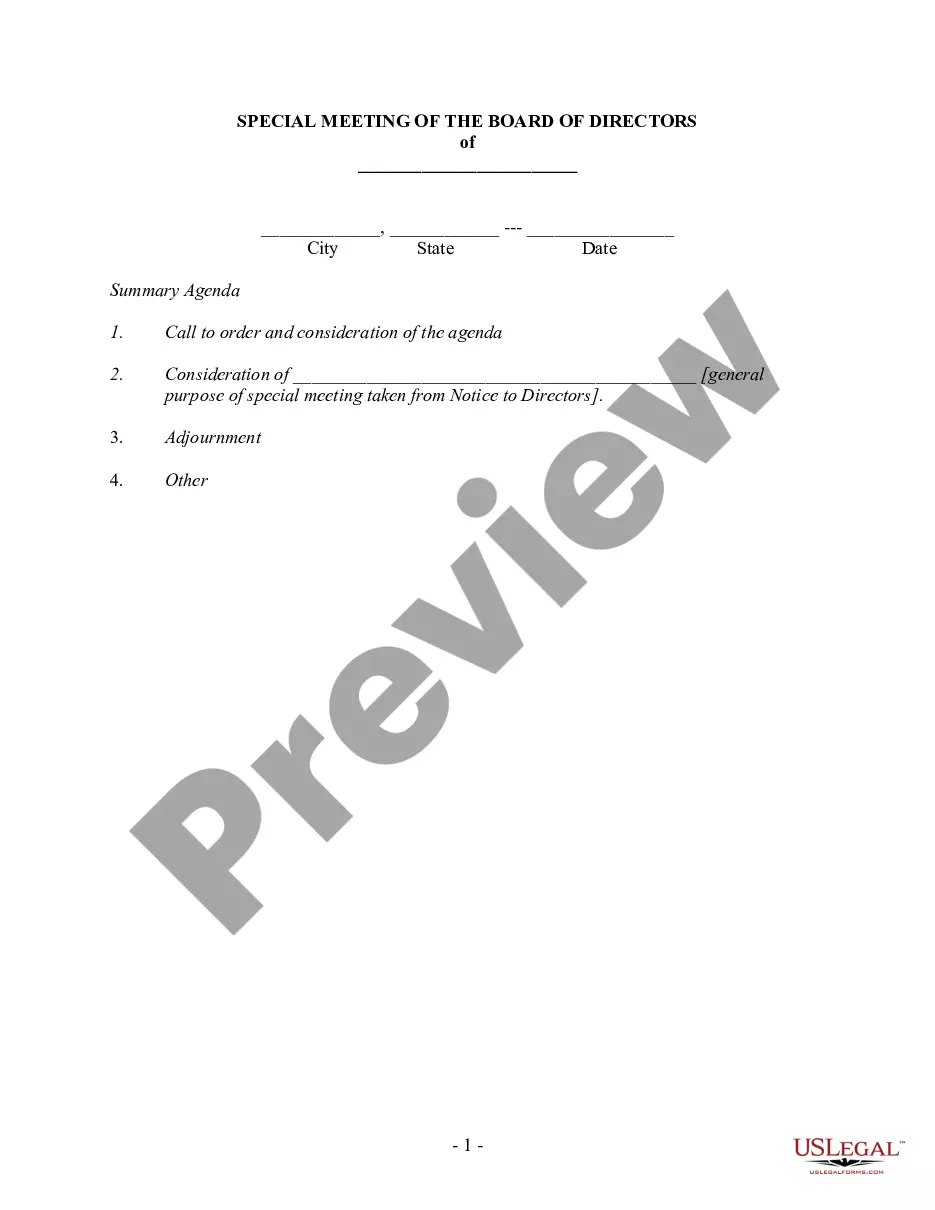
They are legally required to include these details: Date, time, and location of the meeting. Record of notice of board meeting provision and acknowledgment. Names of attendees and absentees, including guests. Approval of previous meeting minutes.
How To Write Constructive Action Items Create an Easily Understandable Title. The title of your action items should be short, simple, and straight to the point. Write a Clear and Concise Description. Assign a Task Owner for Your Action Items. Set Due Dates for Your Action Items. Establish Priority Levels for Your Task Lists.
5 steps to write impactful meeting action items Write the action item (what) Discuss the purpose (why) Set a due date (when) Assign a person to every action item (who) Think about what happens next.
5 steps to write impactful meeting action items Write the action item (what) Discuss the purpose (why) Set a due date (when) Assign a person to every action item (who) Think about what happens next.
Include the name of the organization, date and time of meeting, who called it to order, who attended and if there a quorum, all motions made, any conflicts of interest or abstainments from voting, when the meeting ended and who developed the minutes. The secretary of the board usually takes minutes during meetings.
In most cases, the meeting secretary will sign the approved copy of the minutes, while some boards require all present board members to sign the approved minutes.
Include the name of the organization, date and time of meeting, who called it to order, who attended and if there a quorum, all motions made, any conflicts of interest or abstainments from voting, when the meeting ended and who developed the minutes. The secretary of the board usually takes minutes during meetings.
Minutes may vary slightly depending on the state and the organization, but they typically include: Meeting date, time and location. Type of meeting. Names and titles of attendees and guests. Any absent board directors. Quorum. Notes about directors who left early or re-entered the meeting.
Board meeting minutes are an objective record of what took place during a board meeting. The minutes are typically used for internal purposes like record-keeping and for posterity. Minutes can serve to inform future meetings and recall what was discussed, agreed upon or dismissed by a company's board members.
