Arbitration Agreement With Class Action Waiver In Philadelphia
Description





Get your form ready online
Our built-in tools help you complete, sign, share, and store your documents in one place.
Make edits, fill in missing information, and update formatting in US Legal Forms—just like you would in MS Word.
Download a copy, print it, send it by email, or mail it via USPS—whatever works best for your next step.
Sign and collect signatures with our SignNow integration. Send to multiple recipients, set reminders, and more. Go Premium to unlock E-Sign.
If this form requires notarization, complete it online through a secure video call—no need to meet a notary in person or wait for an appointment.
We protect your documents and personal data by following strict security and privacy standards.
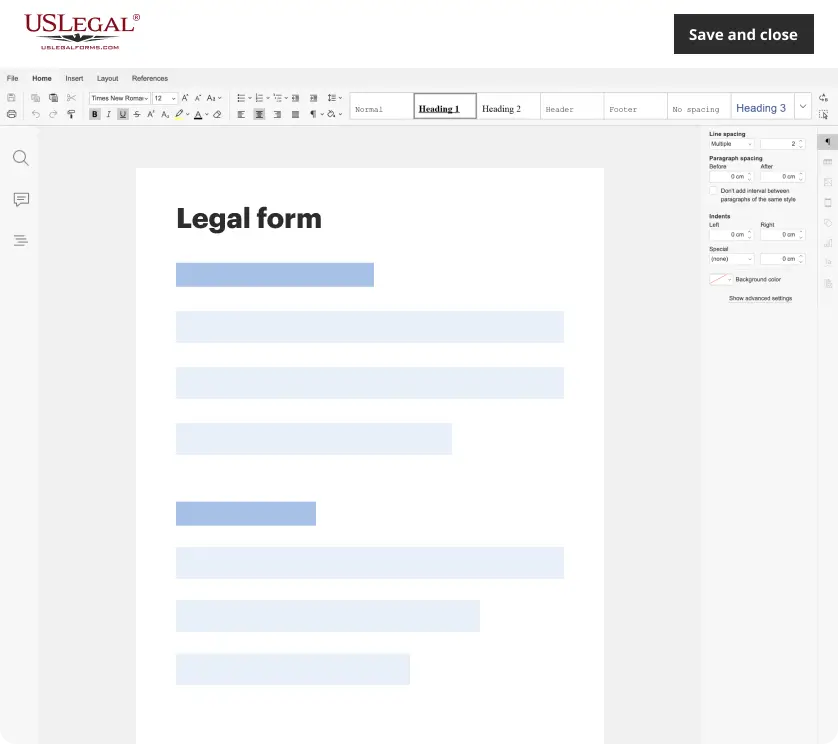
Make edits, fill in missing information, and update formatting in US Legal Forms—just like you would in MS Word.
Download a copy, print it, send it by email, or mail it via USPS—whatever works best for your next step.
Sign and collect signatures with our SignNow integration. Send to multiple recipients, set reminders, and more. Go Premium to unlock E-Sign.
If this form requires notarization, complete it online through a secure video call—no need to meet a notary in person or wait for an appointment.
We protect your documents and personal data by following strict security and privacy standards.
Looking for another form?
Form popularity
FAQ
Some contracts give you the right to opt out of the forced arbitration clause within a certain period of time, often 30 to 60 days, after signing the agreement by notifying the company that you wish to opt out. Check your contract for the deadline and for specific instructions for opting out.
However, employers that mandate arbitration often include class-action waivers in their employment contracts. This prevents workers from litigating their cases jointly, and instead requires them each to proceed with their relatively small individual claims through arbitration.
1 In the context of arbitration, waiver occurs when a party consciously and intentionally gives up its right to arbitrate a particular dispute, thereby choosing litigation as the preferred method of dispute resolution.
See 9 U.S.C. § 1. In Concepcion, the U.S. Supreme Court ruled that class action waivers in arbitration agreements are enforceable.
drafted arbitration clause can kill a class action in its infancy. Therefore, when evaluating a consumer class action case, you should attempt to determine whether the putative plaintiff is in a contractual relationship with the defendant business.
Unconscionability requires a showing of both a procedural and substantive defect in the document for the agreement to be rendered unenforceable by the court. Procedural unconscionability results from oppression or unfair surprise to one party caused by unequal bargaining power.
Under binding arbitration, as is required here, the parties agree to accept the arbitrator's decision as final, limiting their right to seek resolution of the dispute by the court.
Arbitration is a procedure in which a dispute is submitted, by agreement of the parties, to one or more arbitrators who make a binding decision on the dispute. In choosing arbitration, the parties opt for a private dispute resolution procedure instead of going to court.
1 In the context of arbitration, waiver occurs when a party consciously and intentionally gives up its right to arbitrate a particular dispute, thereby choosing litigation as the preferred method of dispute resolution.
