Alabama Motion to Transfer and Consolidate
What is this form?
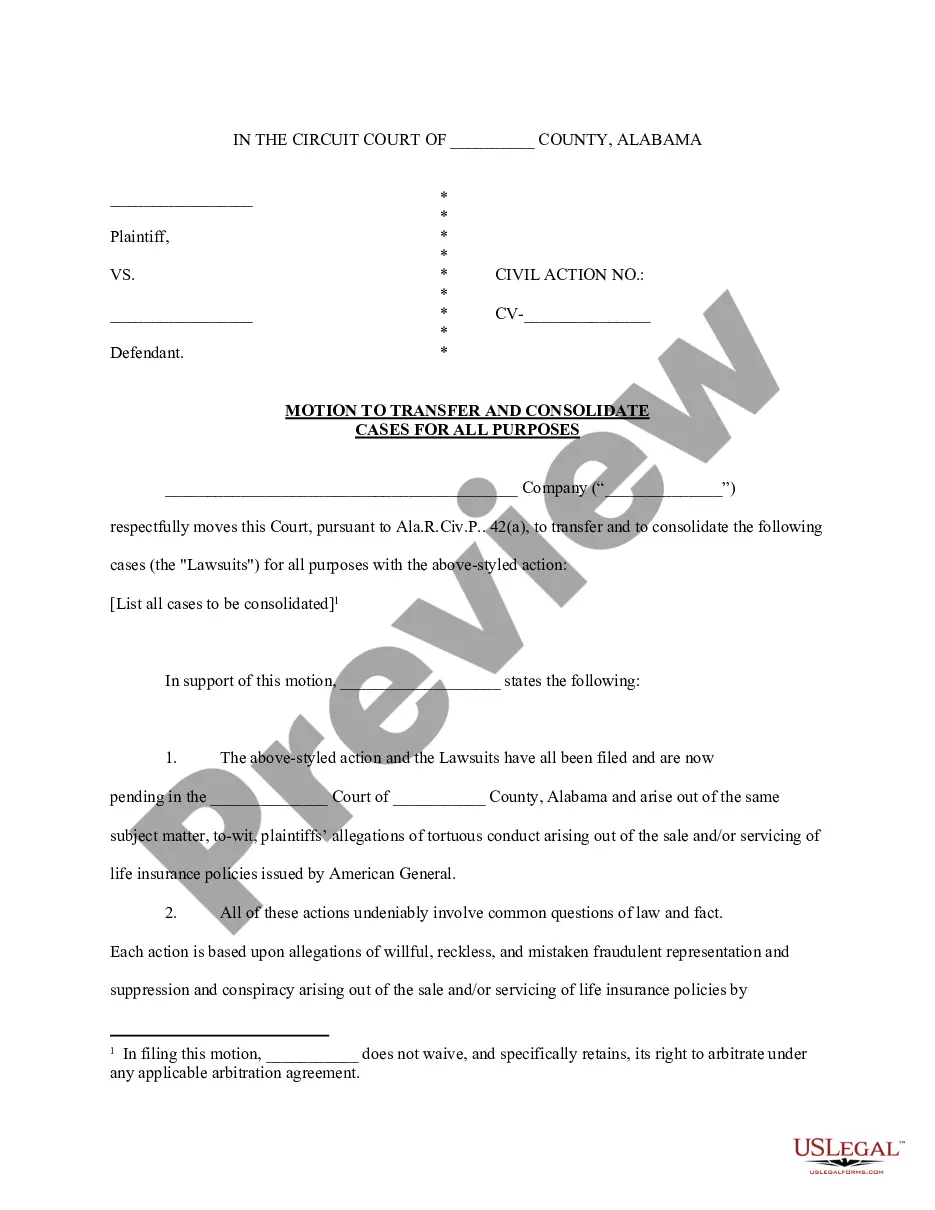
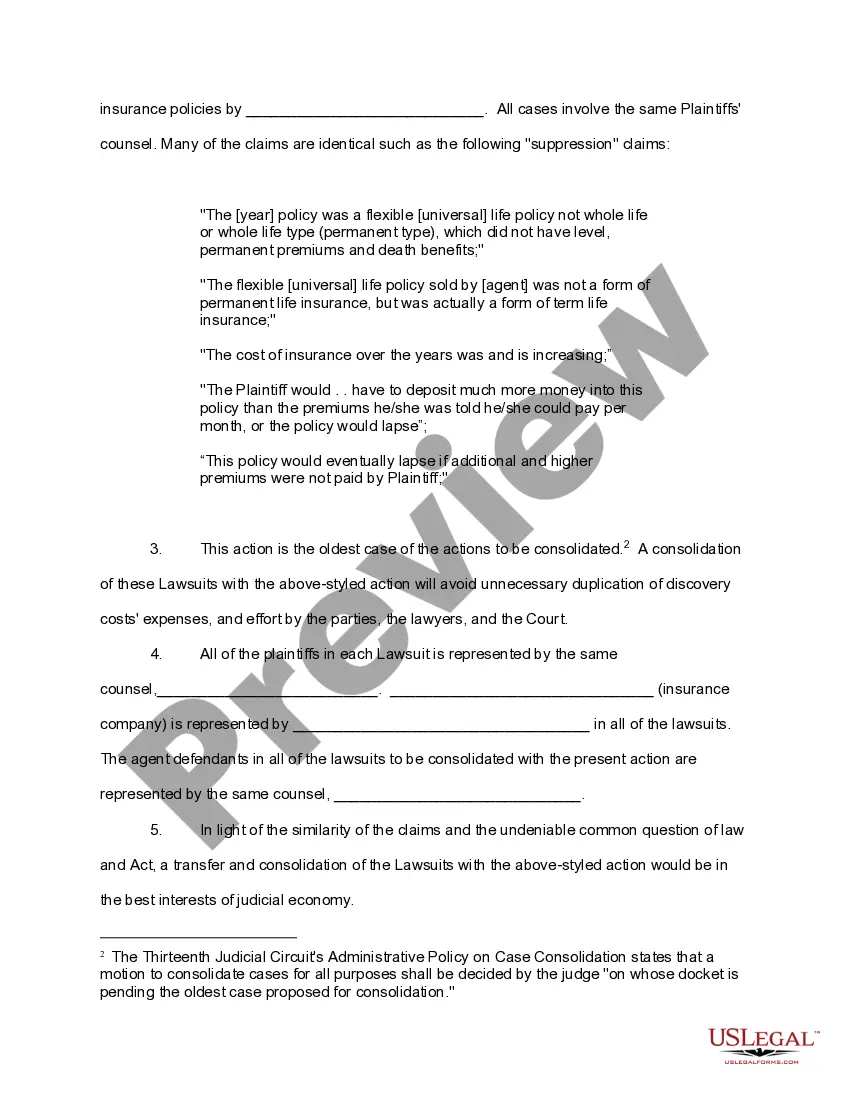
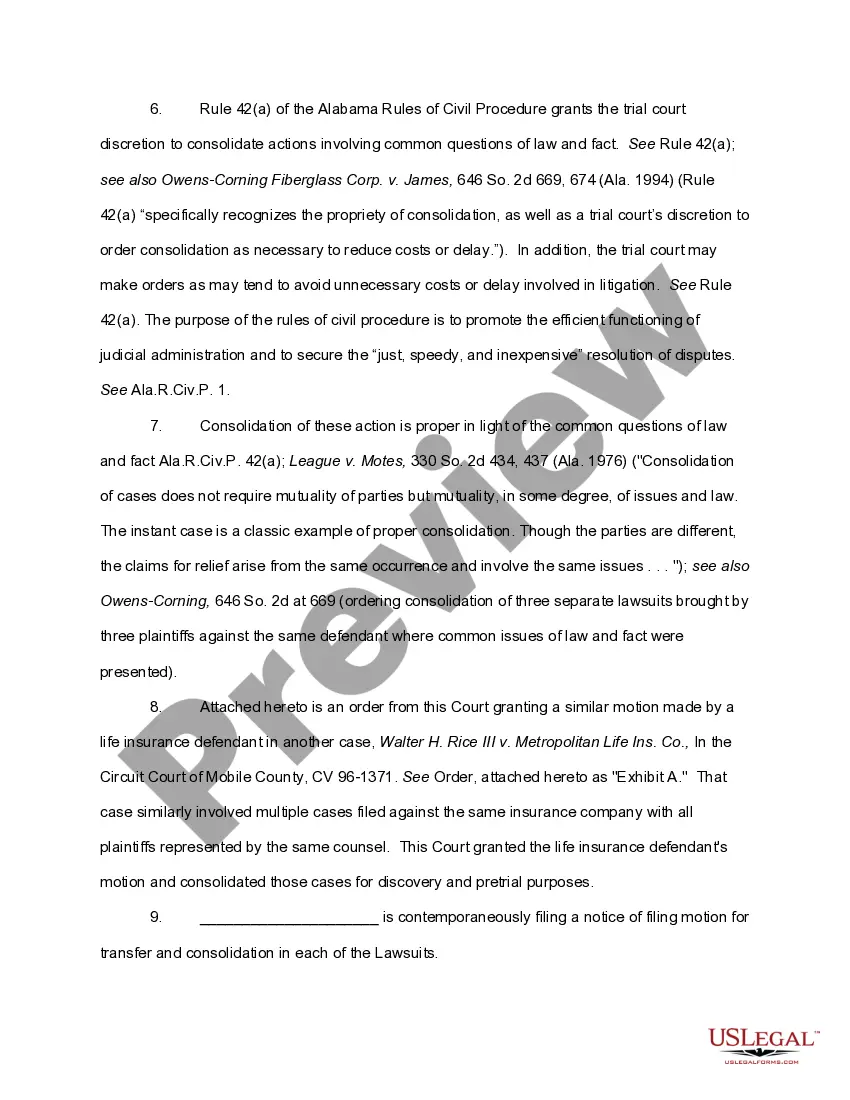
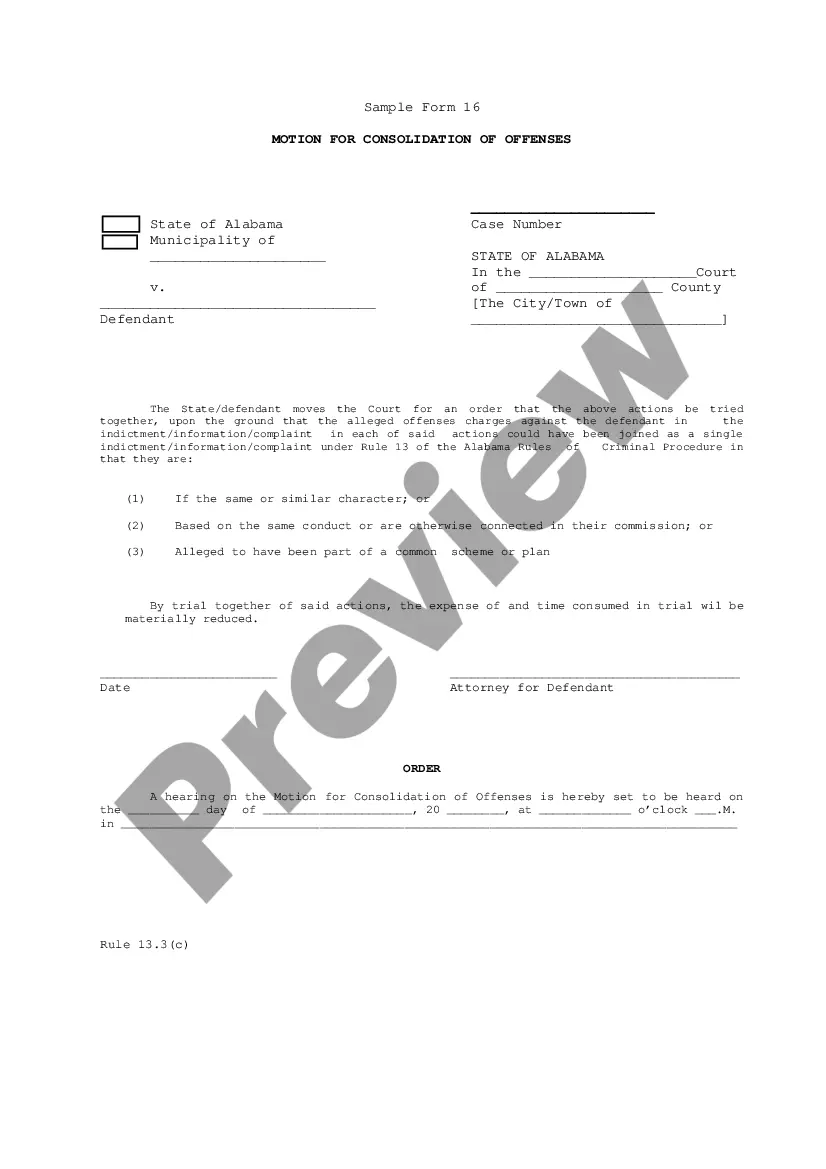
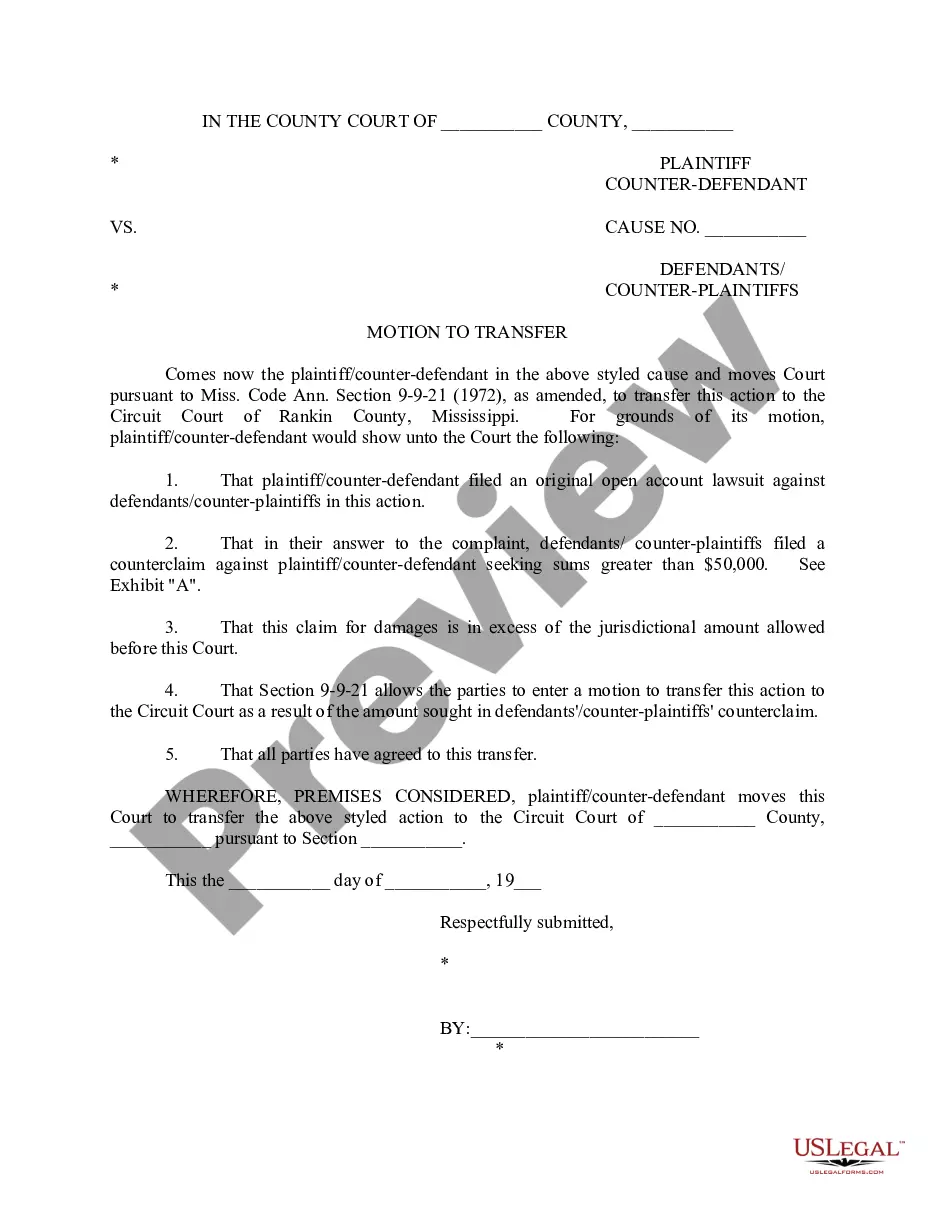
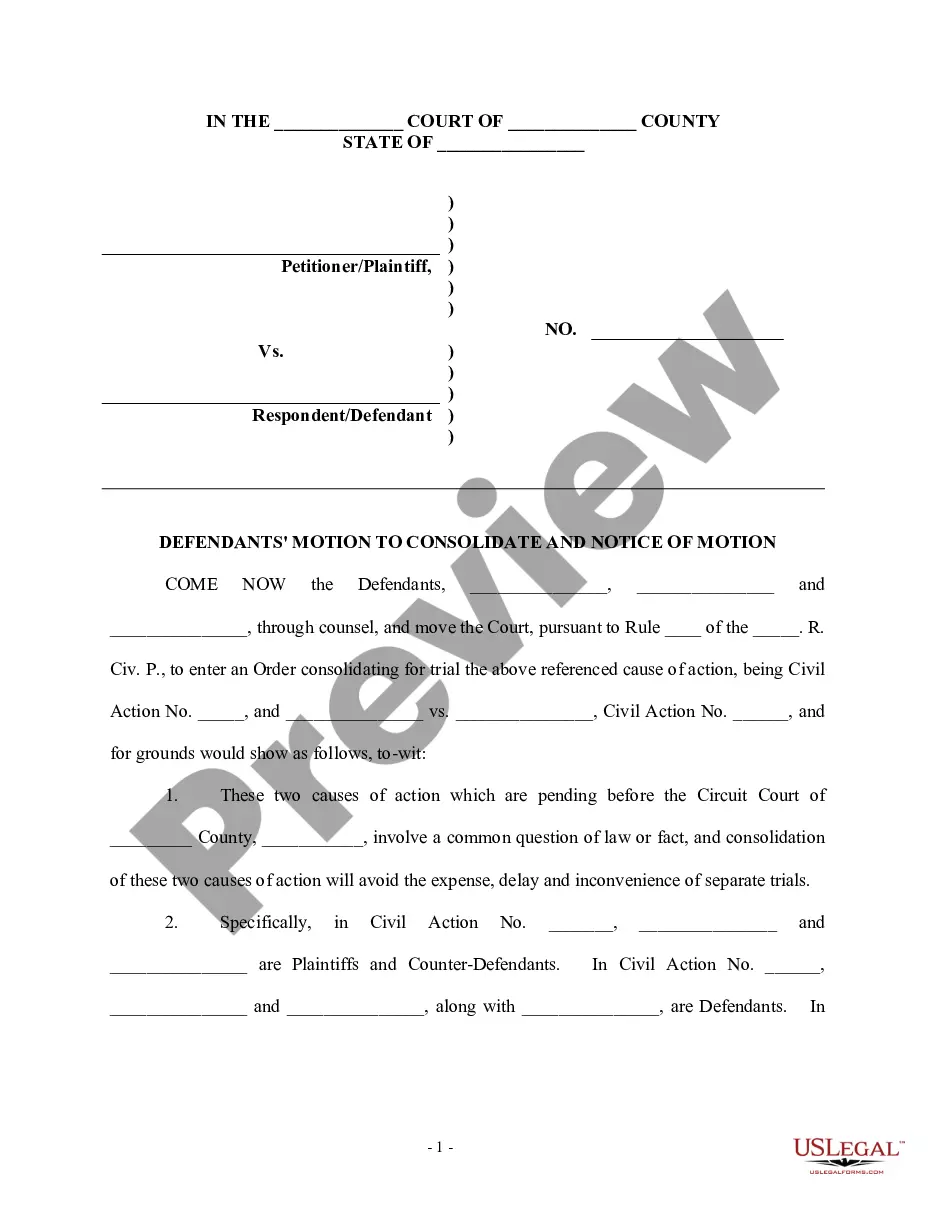
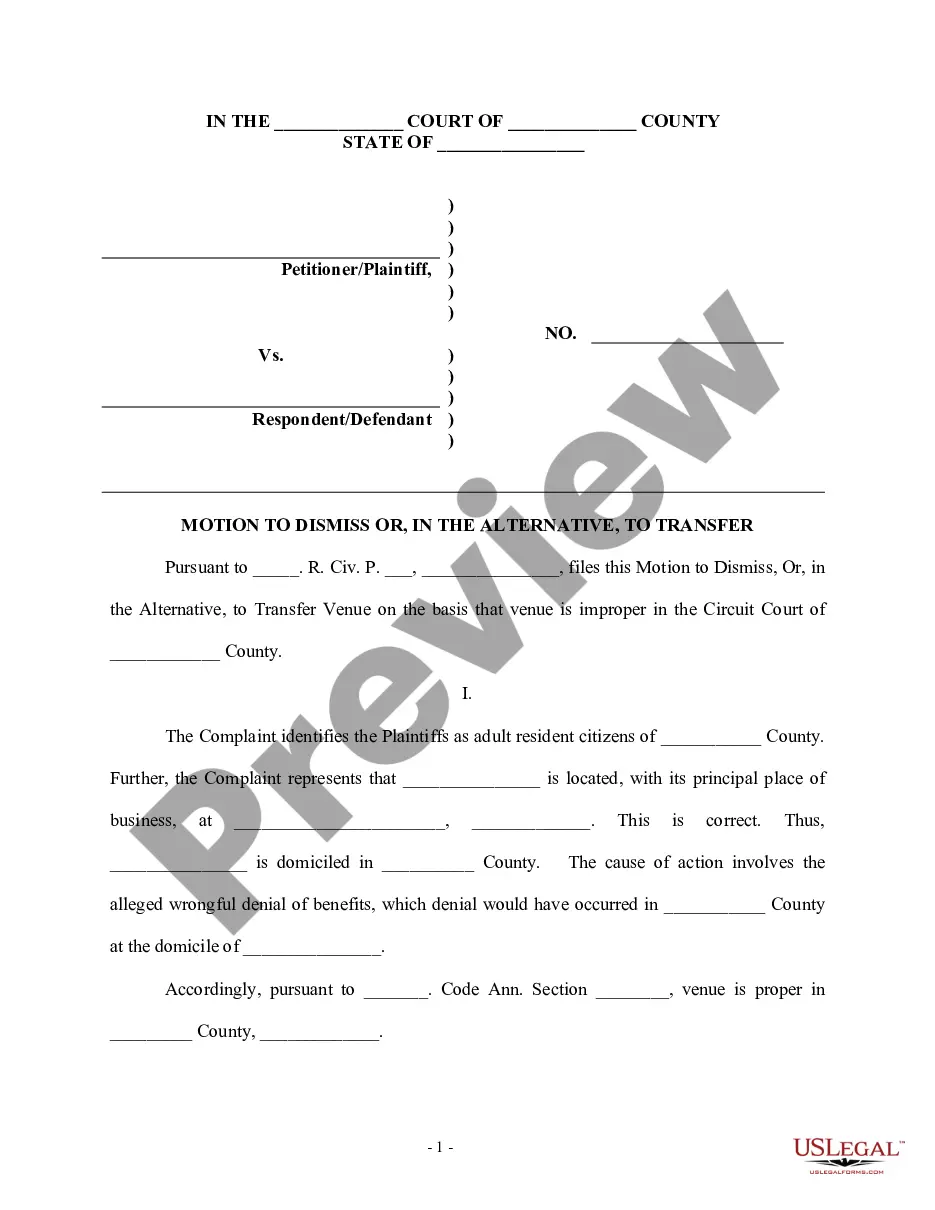
The Motion to Transfer and Consolidate is a legal document filed in Alabama Circuit Court to combine multiple related cases into a single action. This form is specifically used for cases that share common legal and factual questions. By consolidating cases, parties can avoid redundancy in legal proceedings and reduce overall costs associated with separate trials.
Key components of this form
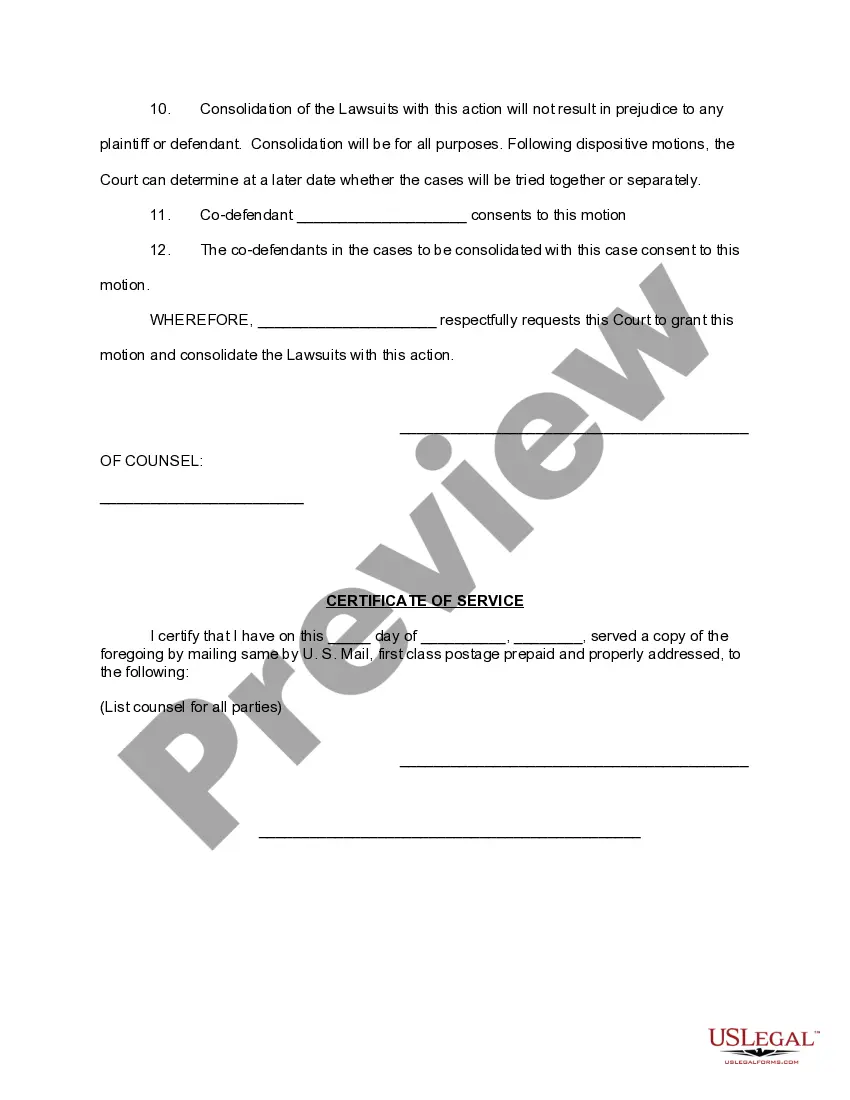
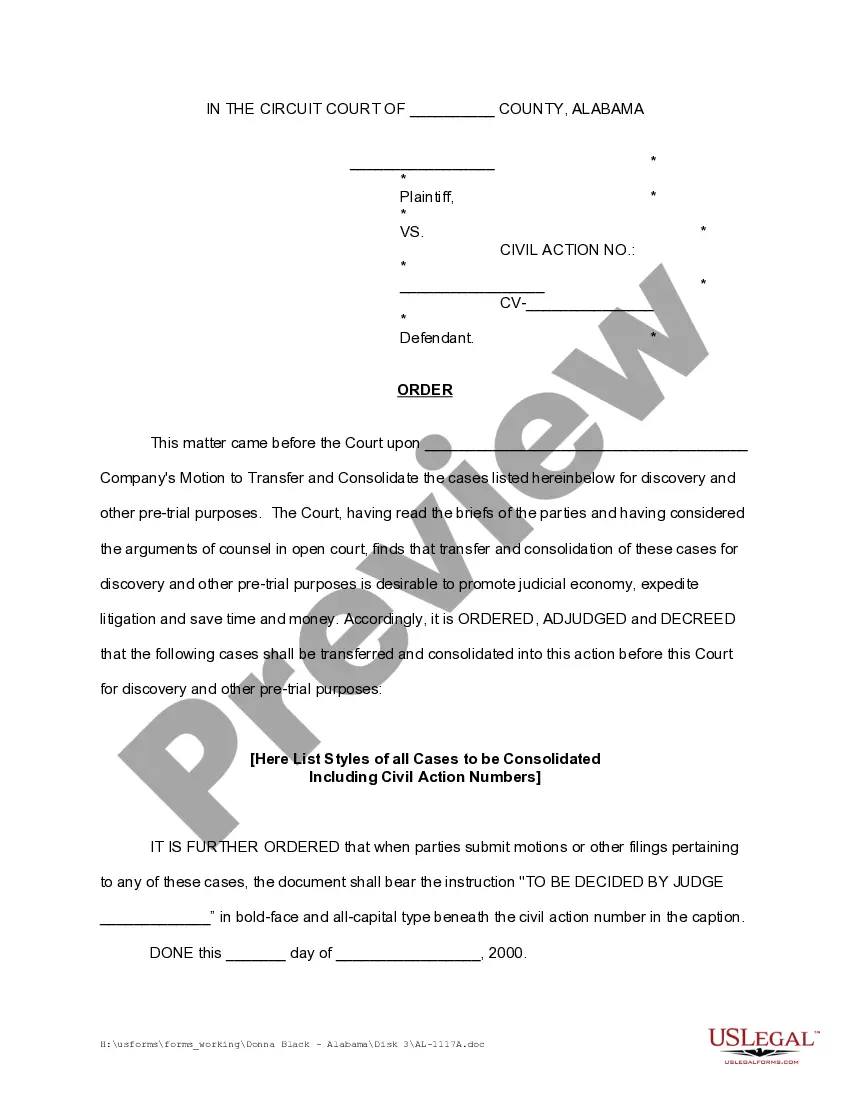
- Case style: Includes the names of the plaintiff and defendant, as well as the civil action number.
- Grounds for consolidation: A statement outlining the rationale for transferring and consolidating the cases.
- Common factual and legal questions: A section detailing the similar issues among the cases being consolidated.
- Consent of co-defendants: A part indicating that co-defendants in the related lawsuits consent to the motion.
- Order of the Court: Includes a template for the judge's order consolidating the cases.


Situations where this form applies
This form should be used when there are multiple lawsuits involving related issues that have been filed in the Alabama Circuit Court. Common scenarios include cases where different plaintiffs raise similar claims against the same defendant or when the same legal counsel represents all parties. Using this motion can streamline the judicial process and facilitate more efficient resolution of related claims.
Who this form is for
- Attorneys representing clients in multiple related lawsuits.
- Parties involved in lawsuits concerning similar facts or legal questions.
- Defendants facing multiple lawsuits from the same plaintiff or set of plaintiffs.
Instructions for completing this form
- Identify the parties: Fill in the names of the plaintiff and defendant as well as the civil action number.
- List cases for consolidation: Provide details of all related cases that should be consolidated.
- Outline common issues: Describe the shared legal and factual questions among the cases.
- Obtain consent: Ensure that all co-defendants consent to the motion and include their names.
- File the motion: Submit the completed motion to the court along with any necessary supporting documents.
Notarization requirements for this form
This form does not typically require notarization unless specified by local law.
Get your form ready online
Our built-in tools help you complete, sign, share, and store your documents in one place.
Make edits, fill in missing information, and update formatting in US Legal Forms—just like you would in MS Word.
Download a copy, print it, send it by email, or mail it via USPS—whatever works best for your next step.
Sign and collect signatures with our SignNow integration. Send to multiple recipients, set reminders, and more. Go Premium to unlock E-Sign.
If this form requires notarization, complete it online through a secure video call—no need to meet a notary in person or wait for an appointment.
We protect your documents and personal data by following strict security and privacy standards.

Make edits, fill in missing information, and update formatting in US Legal Forms—just like you would in MS Word.

Download a copy, print it, send it by email, or mail it via USPS—whatever works best for your next step.

Sign and collect signatures with our SignNow integration. Send to multiple recipients, set reminders, and more. Go Premium to unlock E-Sign.

If this form requires notarization, complete it online through a secure video call—no need to meet a notary in person or wait for an appointment.

We protect your documents and personal data by following strict security and privacy standards.
Avoid these common issues
- Failing to list all related cases for consolidation can lead to incomplete records.
- Not obtaining consent from co-defendants may cause delays in the consolidation process.
- Omitting details about the common legal questions can undermine the motion's effectiveness.
Why use this form online
- Convenience: Access and complete the form from anywhere, anytime.
- Editability: Easily make changes online if needed before filing.
- Reliability: Use templates drafted by licensed attorneys to ensure compliance with legal standards.
- The motion to consolidate helps avoid duplicative legal efforts in similar cases.
- Consolidation can lead to more unified rulings, reducing the potential for conflicting judgments.
- This motion is a recognized practice under Alabama civil procedure and upholds judicial efficiency.
Key takeaways
- The Motion to Transfer and Consolidate is crucial for efficiently managing related legal cases in Alabama.
- The form allows for the consolidation of lawsuits that involve similar legal questions or facts.
- Using this form can significantly reduce the time and resources spent on litigation.
Looking for another form?
Form popularity
FAQ
The Alabama Motion to Transfer and Consolidate is a court filing used in the Alabama Circuit Court to move related cases into a single proceeding. It should be used when multiple lawsuits share common facts or legal issues and you want to consolidate them to promote efficiency and avoid duplicative proceedings. The motion identifies proposed cases and the reasons for consolidation.
This motion requires listing every case to be consolidated, with the court caption, parties, and the civil action numbers for each case. The cases should involve related facts or common questions of law or fact so consolidation is appropriate, helping streamline the proceedings in the Alabama Circuit Court.
The caption must identify the court, and list the parties and the civil action numbers for each case proposed for consolidation. It provides a clear reference for the judge and other parties and ensures the motion is tied to the correct cases in the Alabama Circuit Court.
The motion must include a statement outlining the reasons for consolidation, including common questions of law and fact across the proposed cases. This helps the court determine that consolidating the cases will promote efficiency and avoid duplication in Alabama Circuit Court proceedings.
The motion should provide details on representation, listing attorneys for plaintiffs and defendants, and include a certification of service showing that copies were sent to all parties. It also includes an order section where the court will formalize the consolidation.
What makes this form different from separate transfer or consolidation motions is that it combines both objectives into a single Alabama Circuit Court motion. It focuses on cases with common subject matter and parties and includes specific sections—caption, list of cases, reasons for consolidation, representation, service certification, and an order—to effect the consolidation.