California Closing Statement

What this document covers
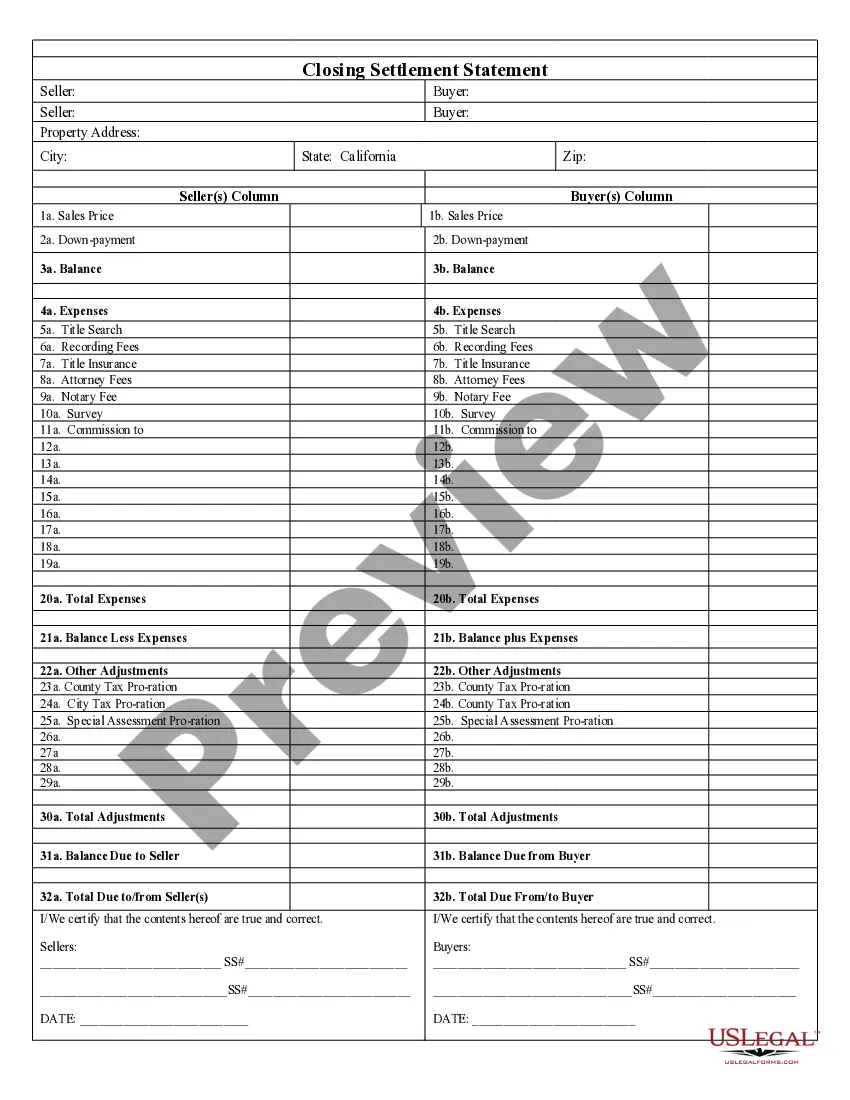
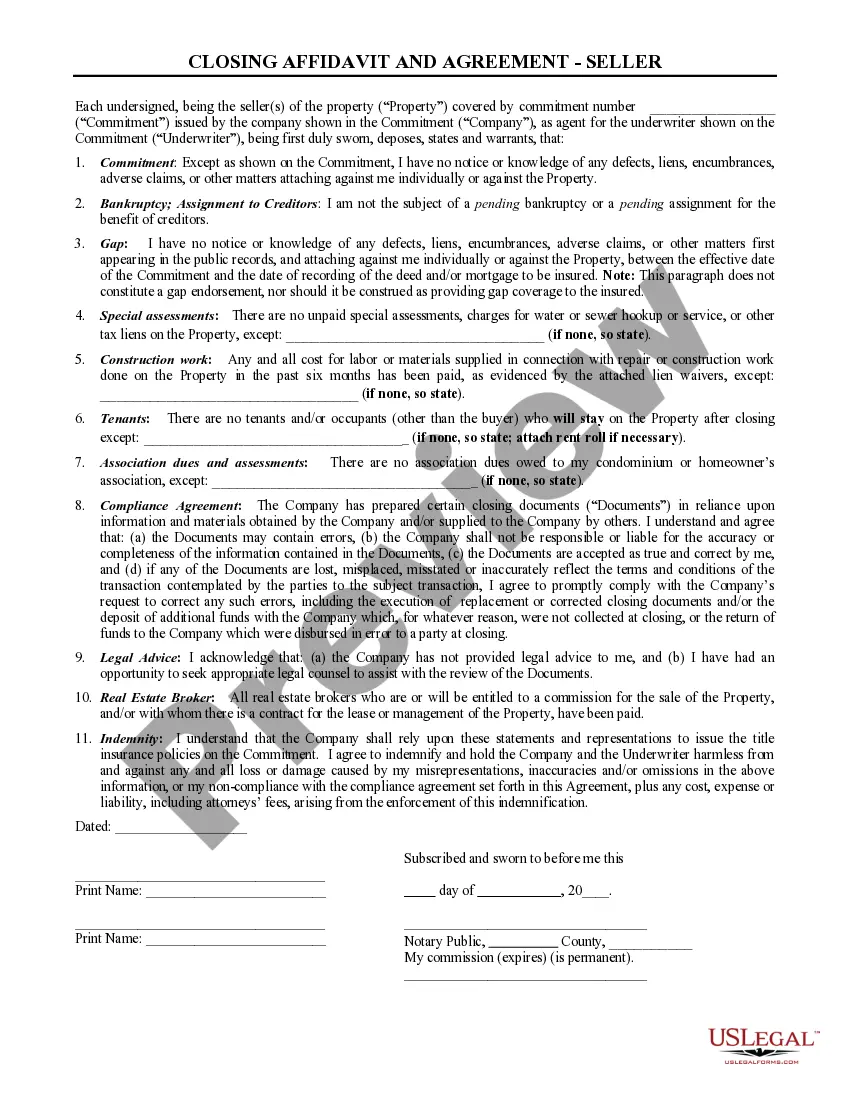
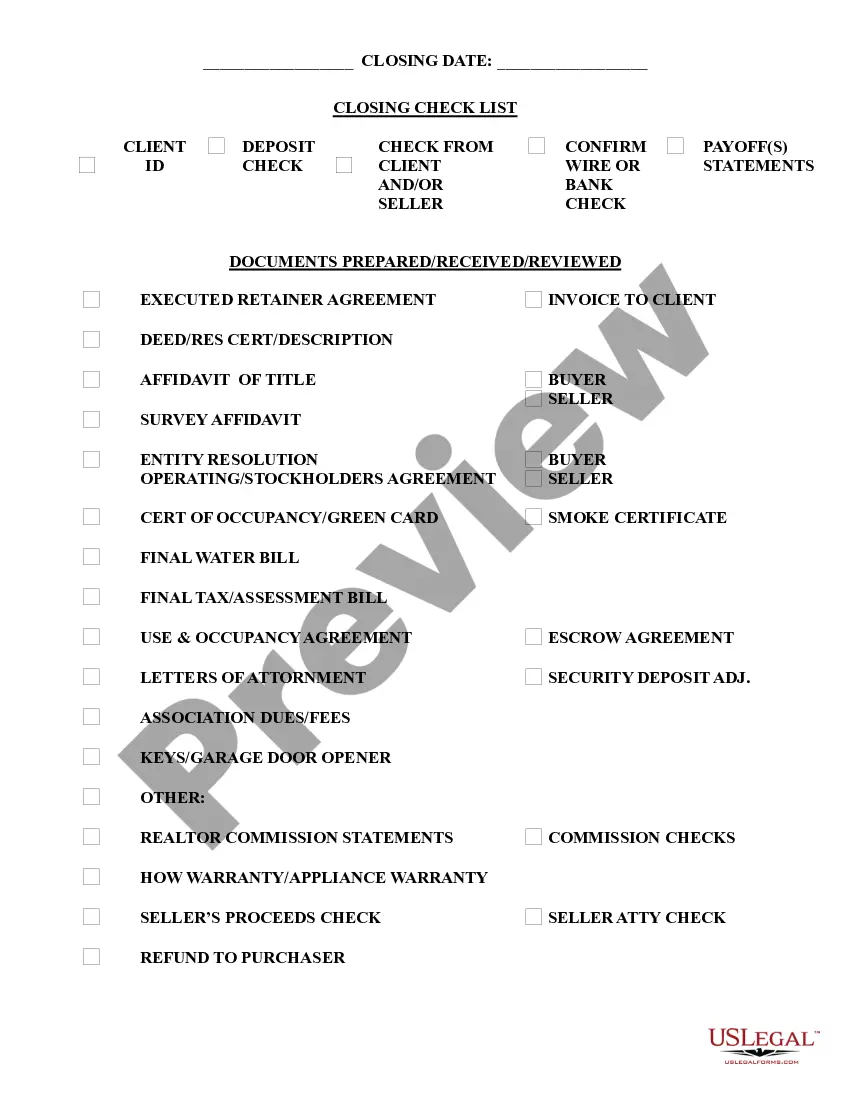
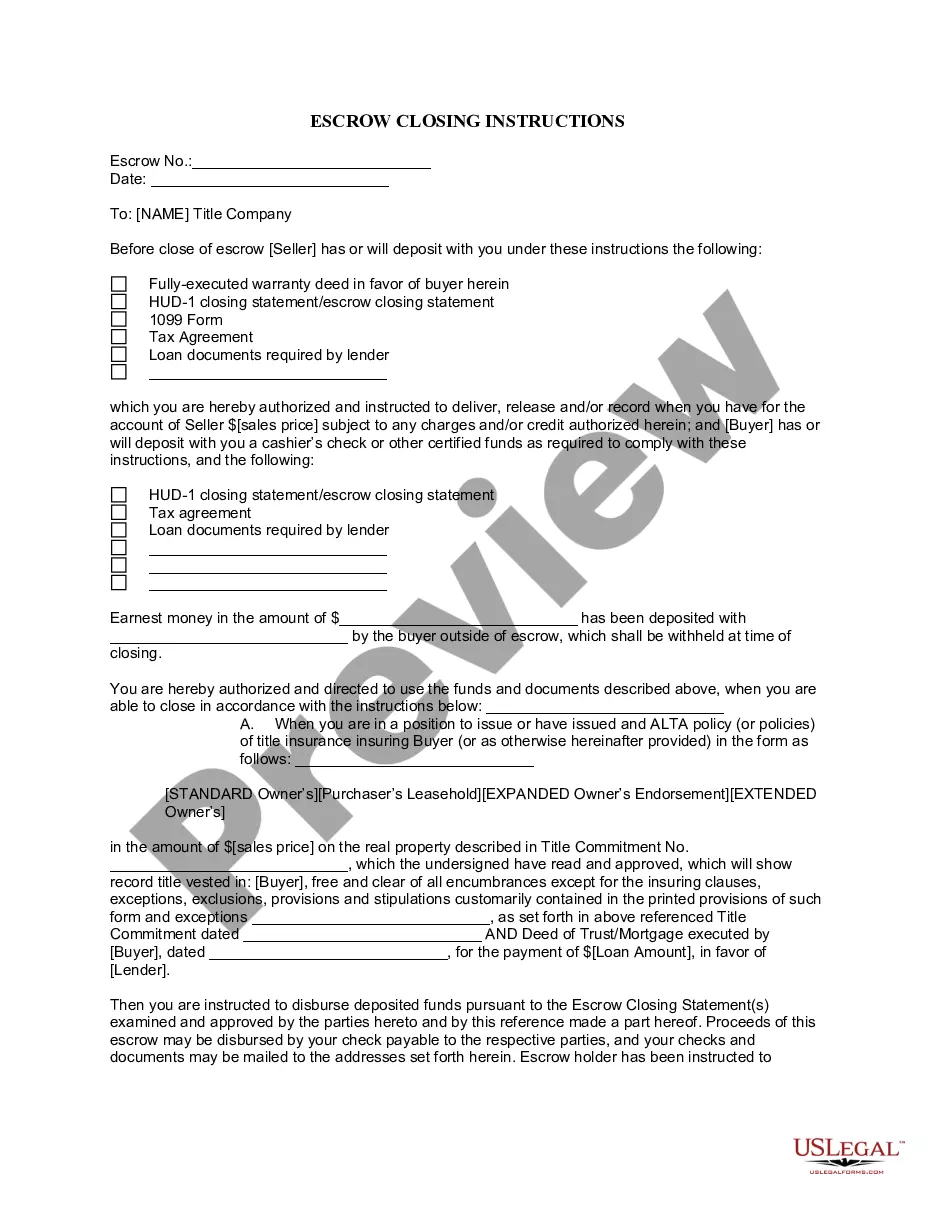
The Closing Statement is a crucial document in real estate transactions involving cash sales or owner financing. This form serves as a settlement statement that outlines the financial details of the transaction, ensuring transparency for both the buyer and seller. Unlike other forms used in real estate, this closing statement is verified and signed by both parties, establishing a clear record of the financial exchanges made during the sale.
Key parts of this document
- Balance calculations: Details the remaining amounts due or owed after expenses.
- Expenses breakdown: Lists various expenses such as title search, recording fees, and attorney fees.
- Total expenses: Provides a comprehensive tally of all costs associated with the transaction.
- Adjustments: Includes prorations for taxes and other financial adjustments relevant to the transaction.
- Certification by parties: Requires signatures of both the seller and buyer to confirm accuracy.
Common use cases
This form should be used during the final stages of a real estate transaction when funds are exchanged. It is necessary to document the financial aspects of a cash sale or an owner-financed sale, ensuring that both parties understand their financial obligations and entitlements. Use this closing statement when you are ready to finalize the sale and transfer ownership of the property.
Intended users of this form
This form is intended for:
- Homebuyers involved in a cash sale or owner-financed property purchase.
- Property sellers conducting transactions directly with buyers.
- Real estate agents or attorneys facilitating the closing process for their clients.
Completing this form step by step
- Begin by identifying the parties involved in the transaction, including the seller and buyer.
- Clearly specify the property details, including the address and legal description.
- List all applicable expenses in the designated fields, including title insurance and attorney fees.
- Calculate and enter the total expenses and any financial adjustments that apply.
- Ensure all parties sign and date the form to certify its accuracy.
Notarization guidance
This form usually doesn’t need to be notarized. However, local laws or specific transactions may require it. Our online notarization service, powered by Notarize, lets you complete it remotely through a secure video session, available 24/7.
Get your form ready online
Our built-in tools help you complete, sign, share, and store your documents in one place.
Make edits, fill in missing information, and update formatting in US Legal Forms—just like you would in MS Word.
Download a copy, print it, send it by email, or mail it via USPS—whatever works best for your next step.
Sign and collect signatures with our SignNow integration. Send to multiple recipients, set reminders, and more. Go Premium to unlock E-Sign.
If this form requires notarization, complete it online through a secure video call—no need to meet a notary in person or wait for an appointment.
We protect your documents and personal data by following strict security and privacy standards.

Make edits, fill in missing information, and update formatting in US Legal Forms—just like you would in MS Word.

Download a copy, print it, send it by email, or mail it via USPS—whatever works best for your next step.

Sign and collect signatures with our SignNow integration. Send to multiple recipients, set reminders, and more. Go Premium to unlock E-Sign.

If this form requires notarization, complete it online through a secure video call—no need to meet a notary in person or wait for an appointment.

We protect your documents and personal data by following strict security and privacy standards.
Typical mistakes to avoid
- Failing to include all expenses, which can lead to disputes later on.
- Incorrectly calculating totals, affecting the final balance due.
- Not obtaining signatures from both parties, making the document invalid.
Benefits of using this form online
- Instant access to a reliable closing statement template, drafted by licensed attorneys.
- Edit and personalize the form conveniently from any device.
- Download the completed form quickly, ensuring you have the necessary documents for closing.
Looking for another form?
Form popularity
FAQ
California is a wet closing state, meaning that funds are typically disbursed at the close of escrow when all documents are signed. This process allows both parties to ensure everything is complete before finalization. Understanding this can give you peace of mind as you move through your transaction. Always refer to your California Closing Statement to keep track of your closing process.
Closing costs for a $600,000 dwelling in California usually range from $12,000 to $30,000. The exact amount can fluctuate based on a variety of variables, including your mortgage lender and specific property. Being aware of these costs ahead of time can ease anxiety during the home-buying process. Your California Closing Statement will provide a complete breakdown of these expenses.
A proper California Closing Statement should be organized, clear, and comprehensive. It should feature identifiable sections for income and expenses, with each item clearly labeled and totaled at the end. This format helps ensure transparency and makes it easy for both buyers and sellers to verify the financial details of the transaction.
To prepare a real estate closing statement in California, compile all relevant expenses and credits associated with the sale. Use a systematic approach to categorize each item, ensuring that nothing is overlooked. Utilizing resources like those from USLegalForms can simplify this process and help you create an accurate closing statement.
At the closing in California, both the buyer and the seller must typically be present along with their respective agents. It is also common for the escrow officer to attend to facilitate the signing of documents. This group ensures that all aspects of the California Closing Statement are agreed upon and executed properly.
To write an effective California Closing Statement, start by gathering all relevant financial information related to the transaction. Organize this information into categories like fees, credits, and debits, ensuring clarity and accuracy. Always double-check your figures and consider using a template from a reliable source, such as USLegalForms, to streamline the process.
A good California Closing Statement clearly outlines all the financial details related to the sale of a property. It should provide an itemized list of credits and debits for all parties involved. This transparency helps both buyers and sellers understand the costs associated with the transaction and ensures everyone is on the same page.
To get a copy of your California Closing Statement, reach out directly to your title company or the real estate agent who handled your transaction. They usually have these records readily available and can provide them promptly. Alternatively, check your email for any digital copies you may have received during the closing process.
In California, closing documents such as the California Closing Statement may become part of public records once recorded. However, access to these documents can vary based on local laws and the specific details of your transaction. If you need further assistance with public records, consider contacting your local recorder's office.
Typically, you should receive your California Closing Statement a few days before your closing date. It's essential to review this document carefully, as it outlines all the financial details of your transaction. If you haven’t received it by then, contact your lender or title company for clarity.