Connecticut Decree/Appointment of Co-Conservators
Understanding this form
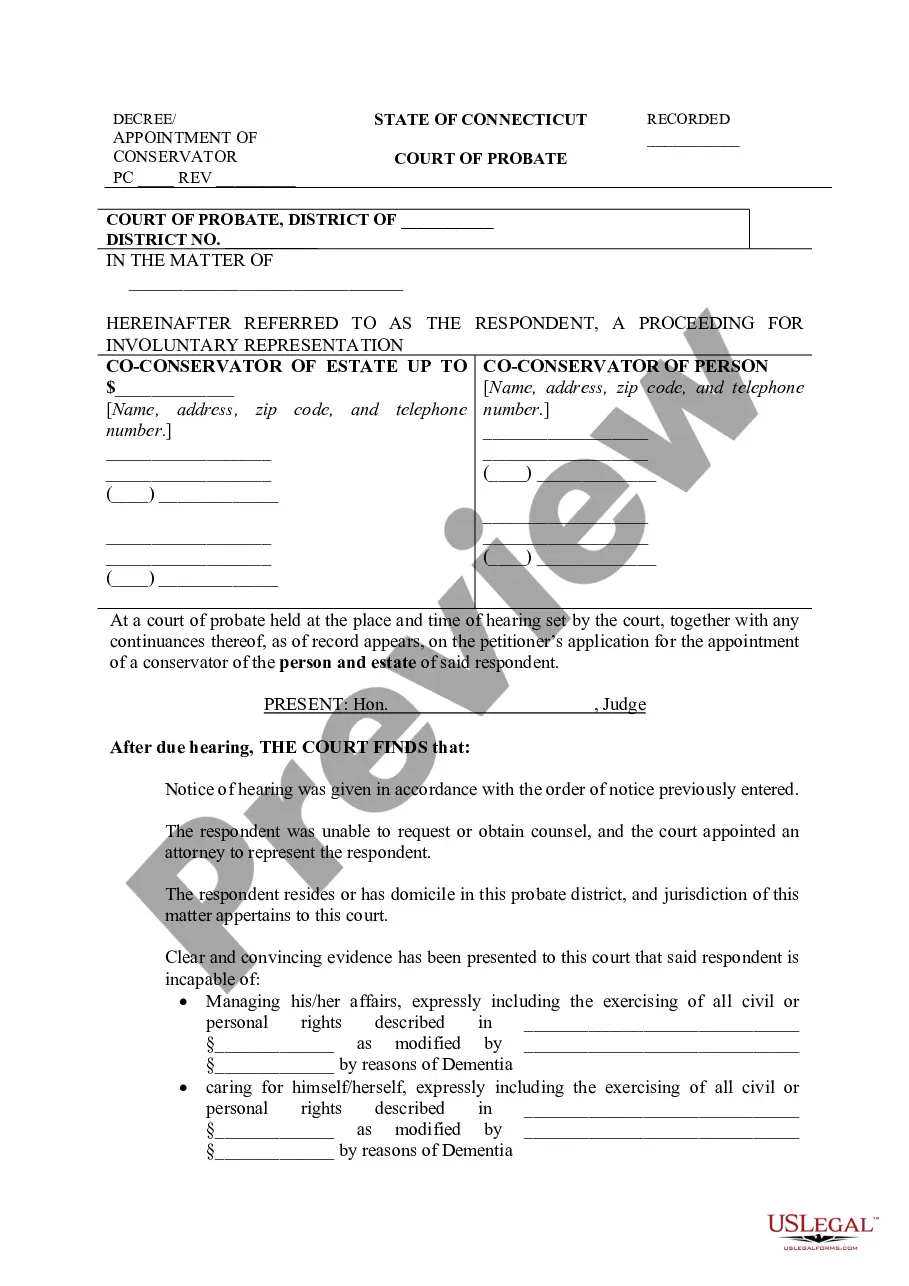
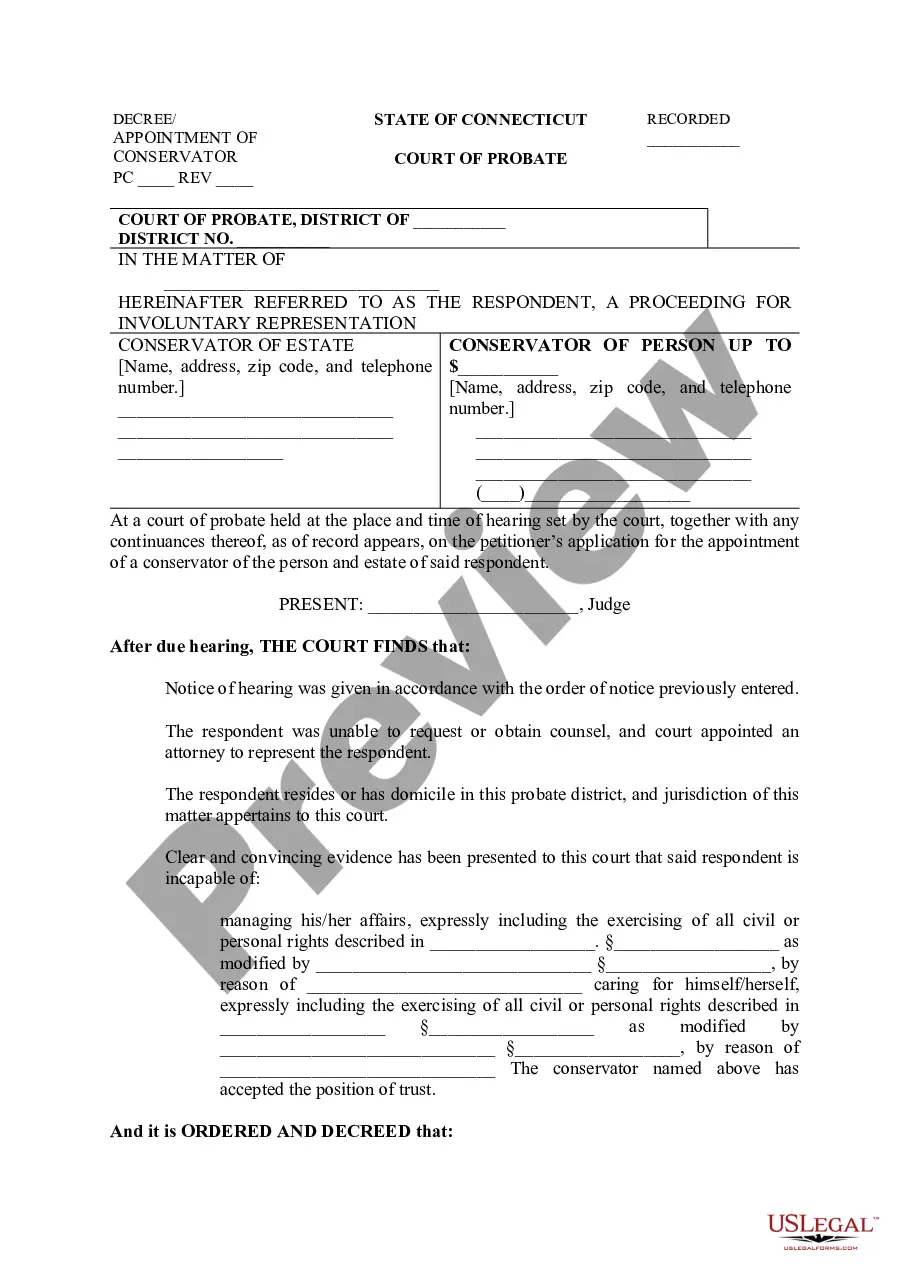
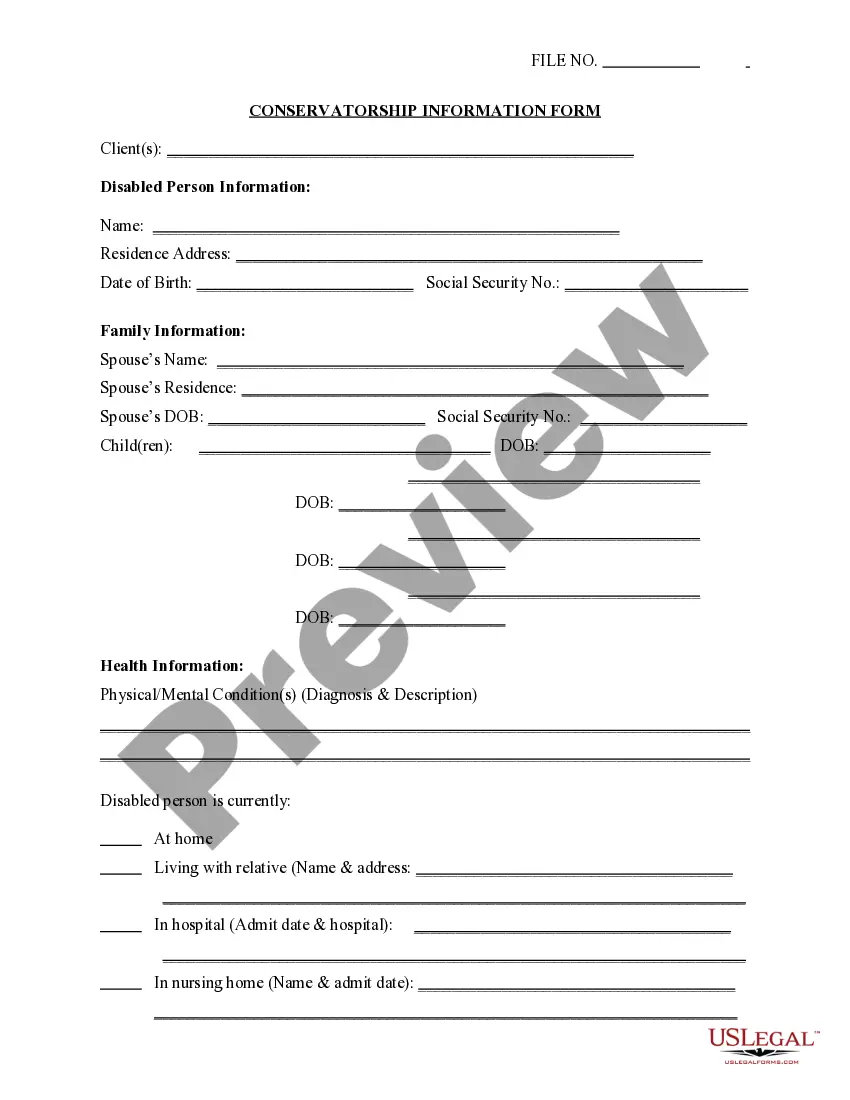
The Decree/Appointment of Co-Conservators is a legal document used to designate individuals to manage the financial and personal affairs of someone who is incapacitated or a minor. This form is essential in establishing co-conservatorship, where two or more appointed conservators share the responsibility for overseeing the welfare of the conservatee. Unlike a singular appointment, co-conservators collaborate to manage the affairs of the ward, ensuring that their interests are protected together.
Main sections of this form
- Identification of the conservators (personal and contact information).
- Declaration of the respondent's incapacity and basis for the court's decision.
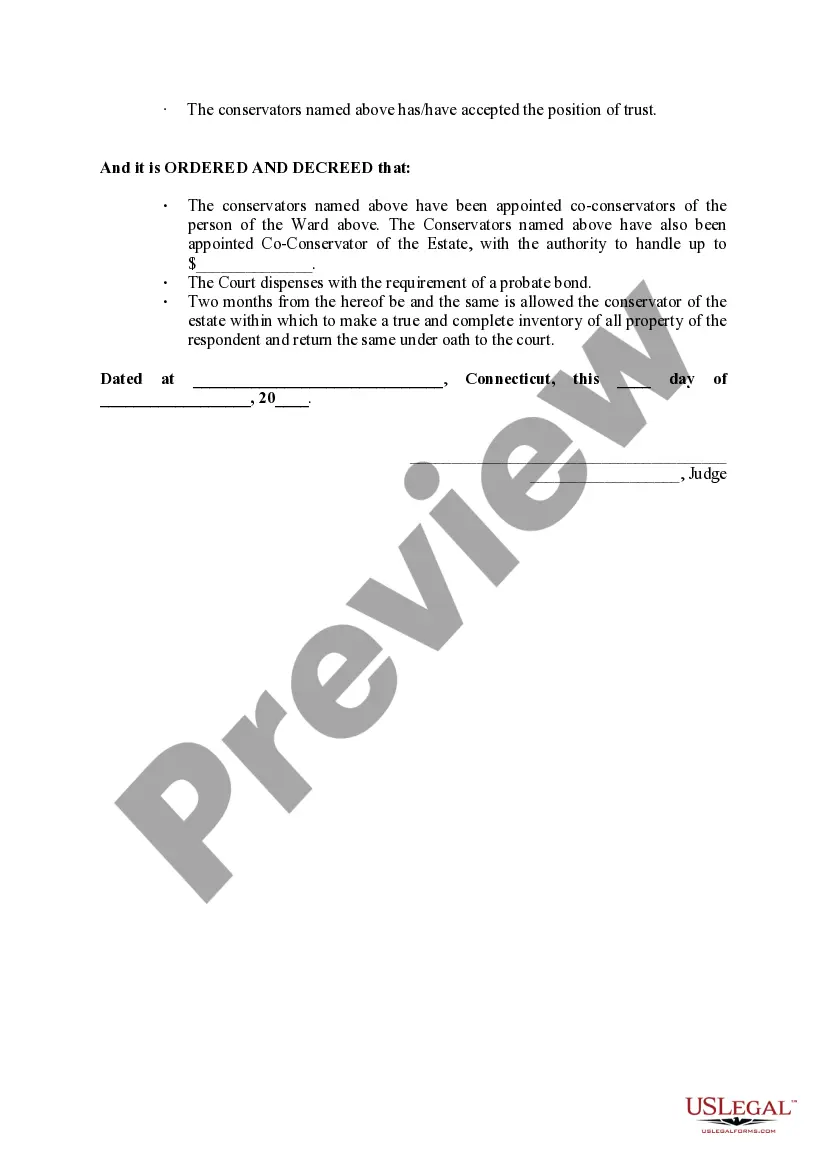
- Specific powers granted to co-conservators, including limits on estate management.
- Notice of hearing and evidence supporting the need for conservatorship.
- Judicial approval and signature of the judge to validate the document.

Common use cases
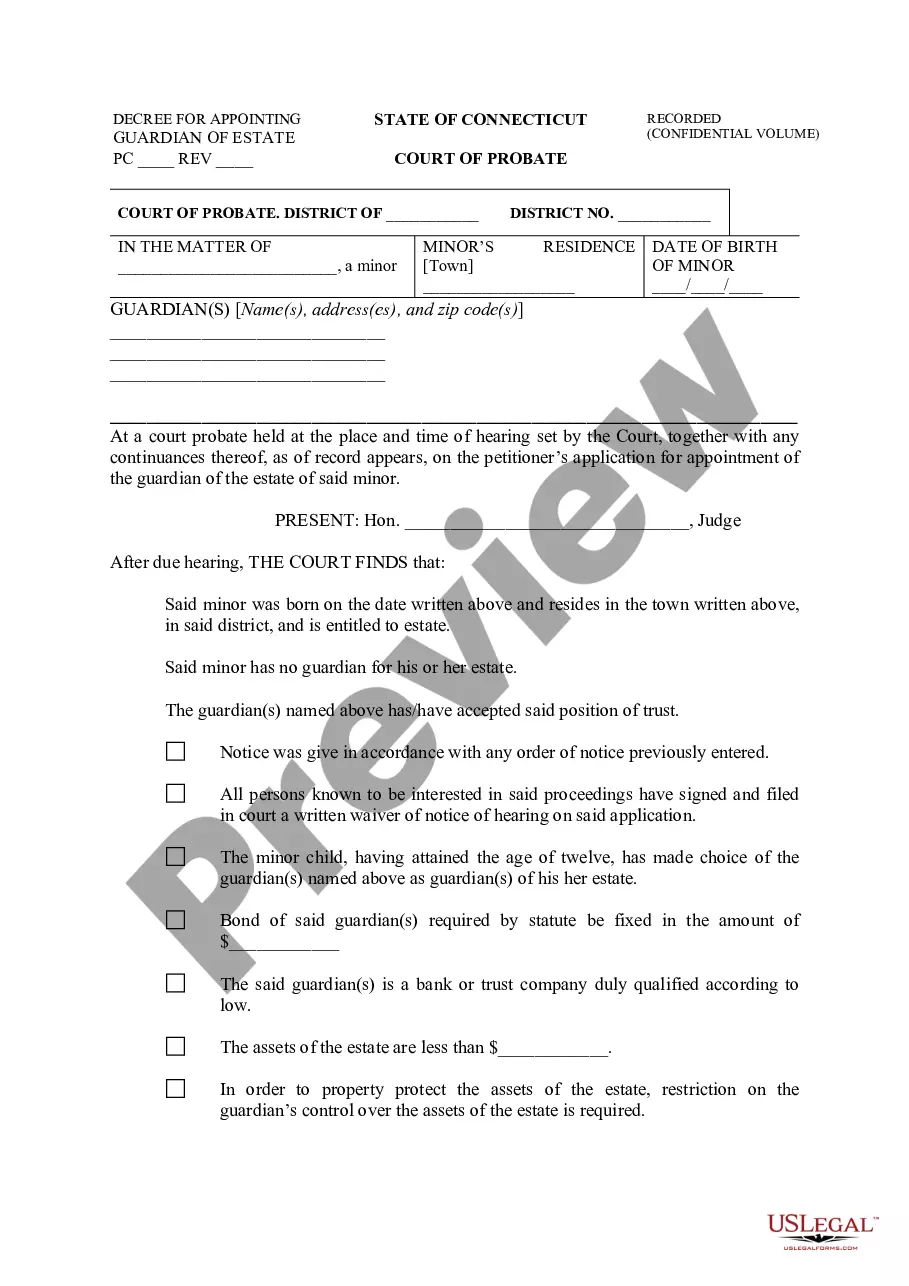
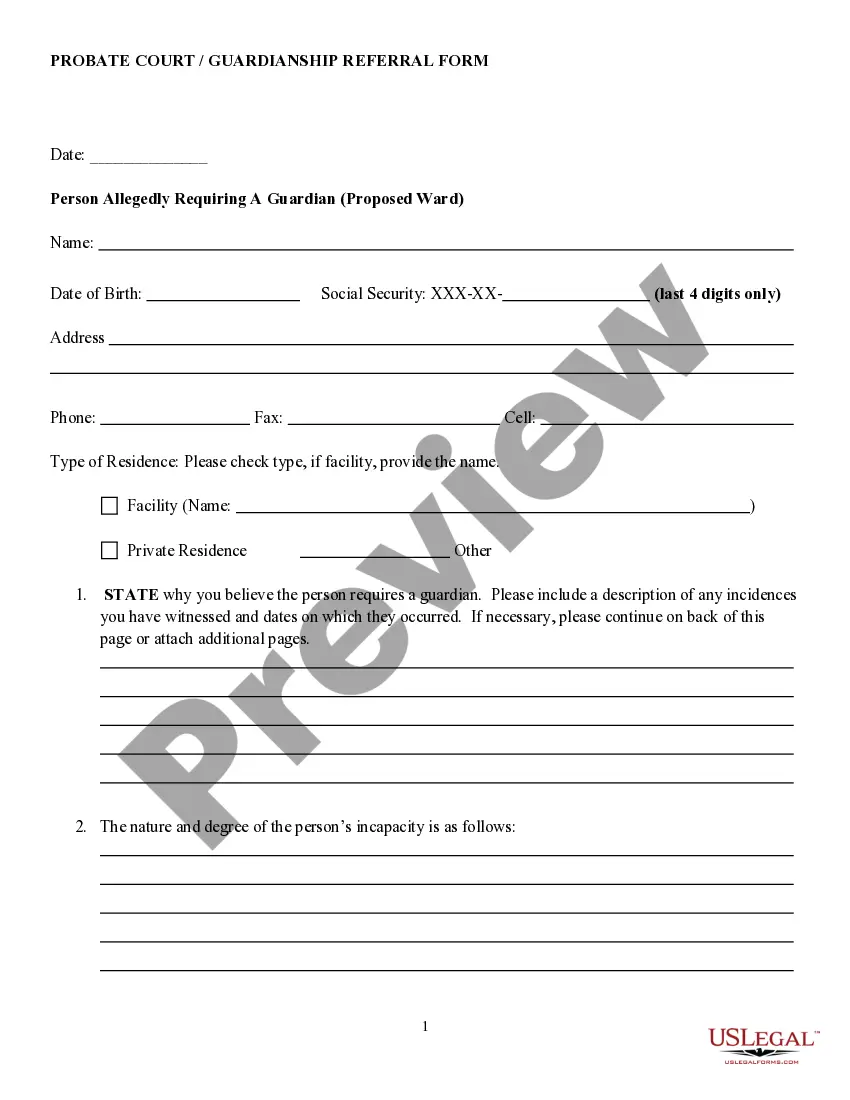
This form should be used when a court finds that an individual, due to incapacity, is unable to manage their financial or personal affairs. It is applicable in cases involving individuals suffering from conditions like dementia or other significant mental health issues where assistance is necessary for their wellbeing. Additionally, it can apply to minors needing an appointed guardian for their affairs.
Who should use this form
This form is suitable for:
- Family members or relatives of the incapacitated individual.
- Legal guardians or advocates for minors.
- Attorneys representing an individual seeking co-conservatorship.
- Individuals involved in a probate case requiring court intervention for conservatorship.
How to prepare this document
- Identify and list the names and contact details of the co-conservators.
- Provide information about the incapacitated individual (the respondent), including their legal name.
- Specify the basis for the respondent's incapacity, referring to relevant statutes.
- State the financial authority granted to the conservators, including any monetary limits.
- Obtain all necessary signatures and ensure the document is filed with the court as per local requirements.
Notarization requirements for this form
This form does not typically require notarization unless specified by local law. It is advisable to check with your specific court regarding any additional requirements to ensure the document's validity.
Get your form ready online
Our built-in tools help you complete, sign, share, and store your documents in one place.
Make edits, fill in missing information, and update formatting in US Legal Forms—just like you would in MS Word.
Download a copy, print it, send it by email, or mail it via USPS—whatever works best for your next step.
Sign and collect signatures with our SignNow integration. Send to multiple recipients, set reminders, and more. Go Premium to unlock E-Sign.
If this form requires notarization, complete it online through a secure video call—no need to meet a notary in person or wait for an appointment.
We protect your documents and personal data by following strict security and privacy standards.

Make edits, fill in missing information, and update formatting in US Legal Forms—just like you would in MS Word.

Download a copy, print it, send it by email, or mail it via USPS—whatever works best for your next step.

Sign and collect signatures with our SignNow integration. Send to multiple recipients, set reminders, and more. Go Premium to unlock E-Sign.

If this form requires notarization, complete it online through a secure video call—no need to meet a notary in person or wait for an appointment.

We protect your documents and personal data by following strict security and privacy standards.
Common mistakes
- Failing to accurately identify the incapacitated individual or conservators.
- Not providing sufficient evidence of incapacity during the hearing process.
- Leaving out or incorrectly stating the financial limits for co-conservators.
- Neglecting to follow court procedures for filing and notifications.
Why use this form online
- Convenient access to legal document templates prepared by licensed attorneys.
- Easy navigation and editing options for personalizing the form to fit specific circumstances.
- Immediate download and paperless options, saving time and resources.
Looking for another form?
Form popularity
FAQ
While conservatorship can provide essential support, it also has potential downsides. Individuals may lose some autonomy over their financial and personal decisions, which can lead to feelings of loss of independence. Additionally, the process to establish a Connecticut Decree/Appointment of Co-Conservators can be complex and require ongoing oversight, highlighting the importance of seeking guidance through a platform like uslegalforms to navigate this process effectively.
A conservator in Connecticut holds significant authority over the financial and legal matters of the person under conservatorship. This includes managing assets, paying bills, and making decisions regarding investments. When you seek a Connecticut Decree/Appointment of Co-Conservators, you'll find that this designation empowers the conservator to act in the best interests of the individual, ensuring their financial stability and legal protections.
In Connecticut, a guardian and a conservator serve distinct roles. A guardian focuses on personal matters, including health care and living arrangements, while a conservator manages financial affairs and property. When considering a Connecticut Decree/Appointment of Co-Conservators, it's crucial to understand these roles to ensure the proper care and management of an individual’s needs.
Appointing a conservator involves selecting a responsible person to manage the financial and personal affairs of someone unable to do so on their own. This process is formalized through a Connecticut Decree/Appointment of Co-Conservators, which grants specific legal authority to the appointed individual. The appointment ensures that the needs of the person under conservatorship are met, while protecting their rights. Using platforms like UsLegalForms can simplify this process and provide the necessary documentation to facilitate the appointment effectively.
The time frame to obtain conservatorship in Connecticut can vary based on court schedules and the complexity of the case. Generally, after submitting your petition, a hearing takes place, and a judge makes a decision. Expect the process to take several weeks to a few months, especially if any complications arise. Utilizing platforms like Uslegalforms can expedite your understanding of the process and what is required for a Connecticut Decree/Appointment of Co-Conservators.
Putting someone under a conservatorship requires a petition to the probate court, along with evidence that the person cannot manage their own affairs. The court will evaluate the situation and may hold a hearing to ensure the conservatorship serves the individual's best interest. Obtaining a Connecticut Decree/Appointment of Co-Conservators is a legal step that ensures proper oversight for those in need of assistance.
To file for conservatorship in Connecticut, you must submit a petition to the probate court in your district. This petition should include necessary information about the person you seek to protect. It's essential to understand that obtaining a Connecticut Decree/Appointment of Co-Conservators involves important documentation and potentially a court hearing. Uslegalforms offers various resources to help guide you through the filing process smoothly.
Yes, in certain situations, a guardian and a conservator can be the same individual. However, the roles have distinct responsibilities. A guardian typically manages personal decisions, while a conservator oversees financial matters. For cases involving a Connecticut Decree/Appointment of Co-Conservators, the court will decide the best arrangement based on the individual's needs.
In Connecticut, the primary distinction between a conservator and a guardian lies in their areas of responsibility. A guardian is often appointed to make personal and health care decisions for a minor or incapable adult. Conversely, a conservator, particularly under the Connecticut Decree/Appointment of Co-Conservators, focuses on managing financial matters. Both roles are vital in ensuring the well-being of individuals who require assistance.
The duration for obtaining conservatorship in Connecticut can vary based on several factors, including court schedules and case complexity. Generally, the process may take a few weeks to several months. By understanding the procedures outlined in the Connecticut Decree/Appointment of Co-Conservators, you can better anticipate the timeline and prepare accordingly. Staying informed can help you navigate this journey effectively.