Florida Trust - Two Individual Trustees - to an Individual
About this form
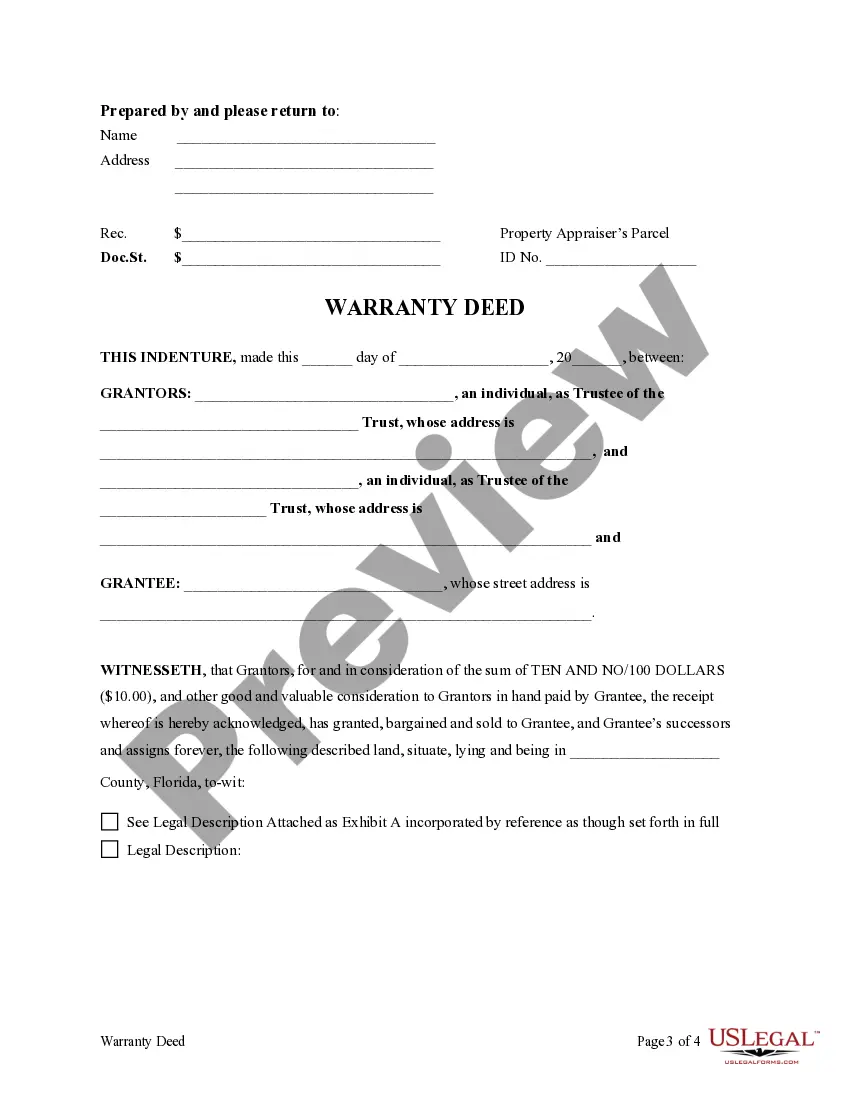
This form is a Warranty Deed specifically designed for transferring property from a Trust acting through two individual Trustees to an individual. Unlike general real estate deeds, this form ensures the legal conveyance of property while complying with state laws. It serves as a critical legal instrument in property transactions involving trusts and individual ownership.
Key parts of this document
- Names and addresses of the Grantors (Trustees) and Grantee (individual receiving the property)
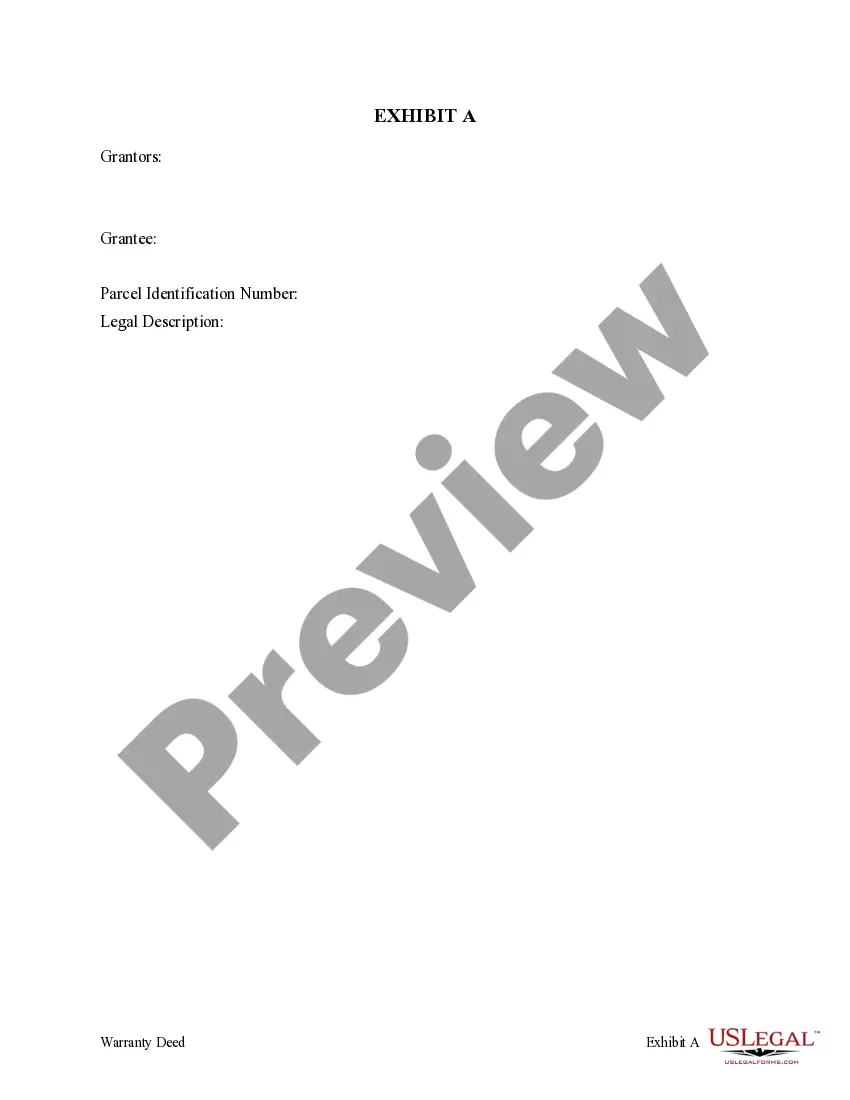
- Description of the property being conveyed, including a legal description section
- Statement of consideration, usually a nominal amount and other valuable considerations
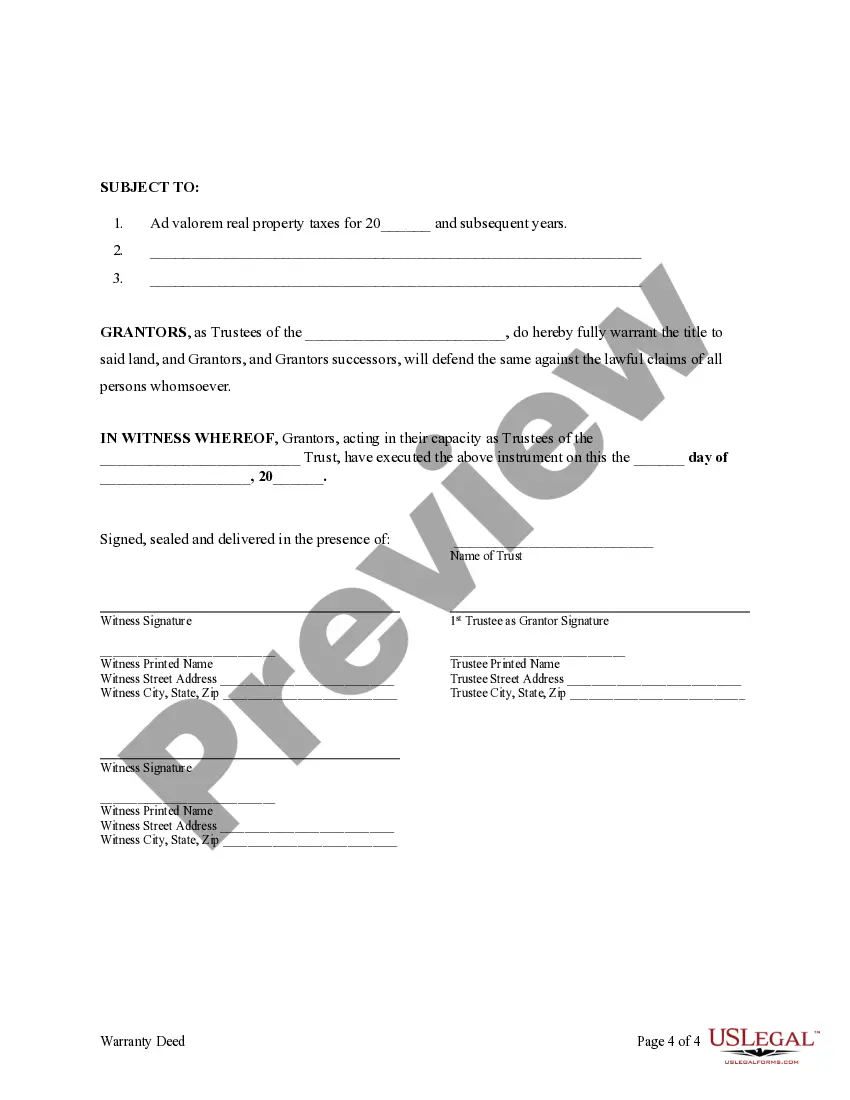
- Warranties provided by Grantors regarding the ownership and title of the property
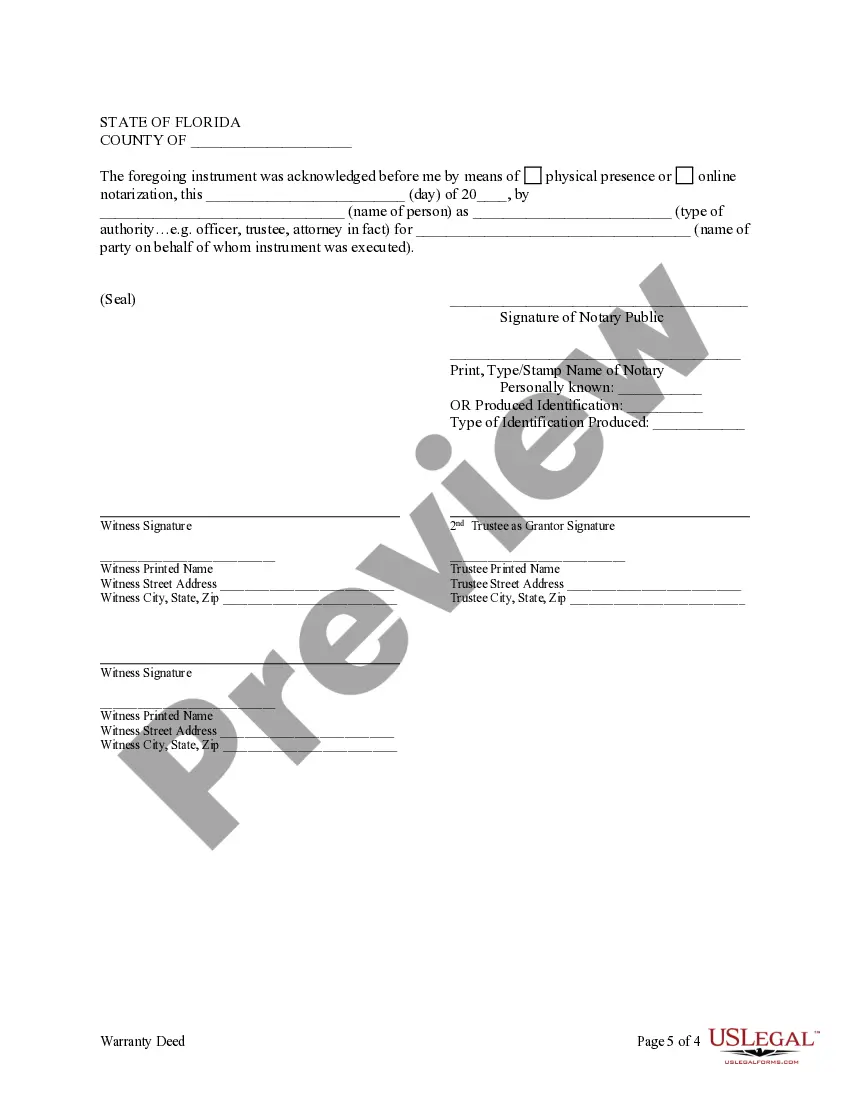
- Signature sections for both Trustees and witnesses
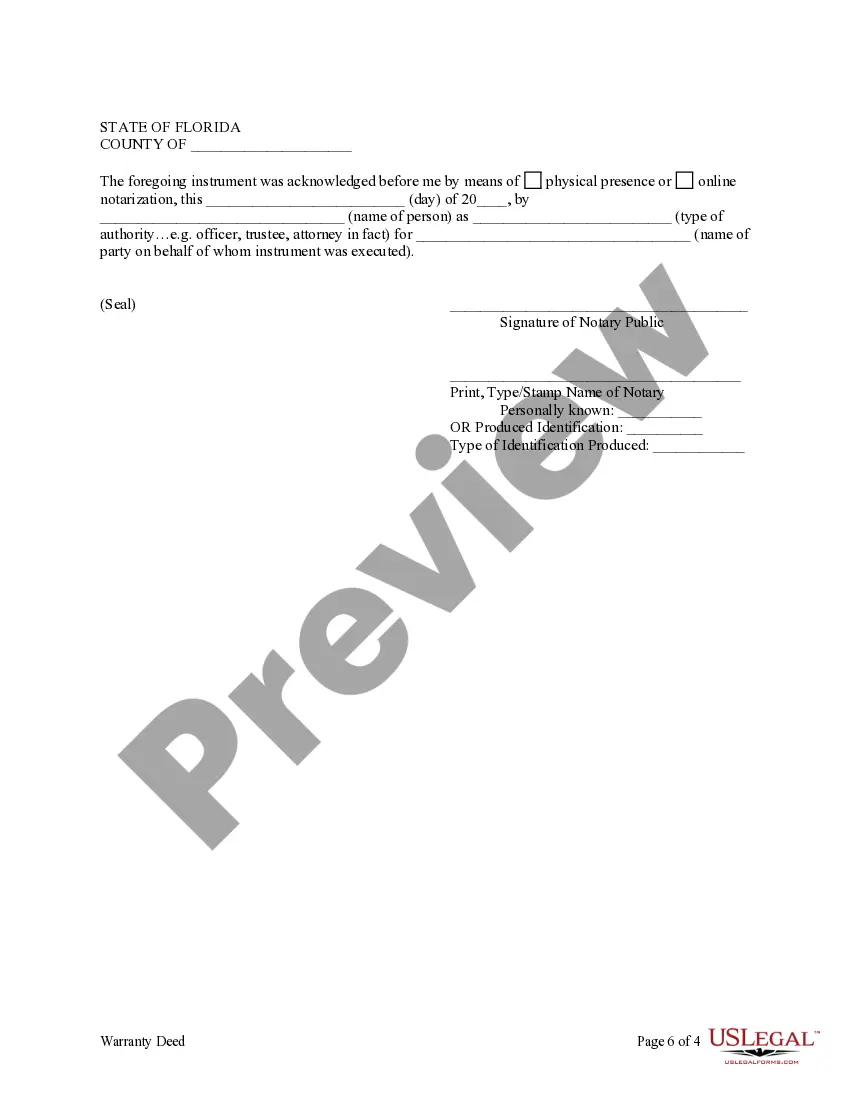
- Notary acknowledgement section to validate the deed


Situations where this form applies
This Warranty Deed should be used when transferring property from a trust managed by two individual Trustees to an individual beneficiary. It is essential in situations where property ownership needs to be legally established and where the trust holds the title. This may occur during estate planning, asset distribution, or when selling property held within a trust.
Who needs this form
This form is intended for:
- Trustees of a Trust who wish to transfer property to an individual
- Individuals receiving property from a Trust
- Real estate professionals advising on trust-related transactions
- Legal representatives managing property transfers for their clients
How to prepare this document
- Identify and enter the names and addresses of both Trustees (Grantors) and the individual (Grantee).
- Provide a legal description of the property being transferred, ensuring accuracy.
- Fill in the date of the transaction and the consideration amount being exchanged.
- Both Trustees must sign the deed in the presence of witnesses.
- Finalize the document with proper notarization to validate the transfer.
Does this form need to be notarized?
Yes, this form must be notarized to be legally valid. This step ensures that the signatures of both Trustees are authenticated, providing additional security for the property transfer. US Legal Forms offers integrated online notarization services, allowing you to complete this step securely via video call anytime, ensuring convenience without needing to travel.
Get your form ready online
Our built-in tools help you complete, sign, share, and store your documents in one place.
Make edits, fill in missing information, and update formatting in US Legal Forms—just like you would in MS Word.
Download a copy, print it, send it by email, or mail it via USPS—whatever works best for your next step.
Sign and collect signatures with our SignNow integration. Send to multiple recipients, set reminders, and more. Go Premium to unlock E-Sign.
If this form requires notarization, complete it online through a secure video call—no need to meet a notary in person or wait for an appointment.
We protect your documents and personal data by following strict security and privacy standards.

Make edits, fill in missing information, and update formatting in US Legal Forms—just like you would in MS Word.

Download a copy, print it, send it by email, or mail it via USPS—whatever works best for your next step.

Sign and collect signatures with our SignNow integration. Send to multiple recipients, set reminders, and more. Go Premium to unlock E-Sign.

If this form requires notarization, complete it online through a secure video call—no need to meet a notary in person or wait for an appointment.

We protect your documents and personal data by following strict security and privacy standards.
Typical mistakes to avoid
- Failing to include the legal description of the property.
- Not obtaining required witness signatures on the deed.
- Forgetting to have the document notarized.
- Inaccurately stating the consideration amount.
- Leaving out necessary information about the Grantors or Grantee.
Benefits of completing this form online
- Convenient downloadable format allows for easy access and completion.
- Editability ensures all information can be accurately entered before printing.
- Reliable templates drafted by licensed attorneys, ensuring compliance with legal standards.
- Quick turnaround to get your legal documents ready without extensive delays.
Looking for another form?
Form popularity
FAQ
Certainly, having two trustees for a Florida Trust - Two Individual Trustees - to an Individual is entirely permissible. This arrangement can distribute the workload and allow for more thorough oversight of the trust assets. However, it’s crucial for both trustees to collaborate and agree on decisions to maintain efficient operations. Utilizing a platform like uslegalforms can provide you with resources to set up your trust effectively, ensuring smooth management.
While managing a Florida Trust - Two Individual Trustees - to an Individual can offer advantages, it can also present challenges. Disagreements between trustees may arise, leading to delays in decisions or actions. Additionally, if one trustee is inactive or unresponsive, it can hinder the trust's function. To mitigate these issues, it's wise to establish clear roles, responsibilities, and communication strategies from the start.
Yes, it is possible to have two trustees in a Florida Trust - Two Individual Trustees - to an Individual. This arrangement allows for shared decision-making, which can enhance oversight and management. However, you must consider the dynamics of the chosen individuals to ensure they work well together. Proper planning and clear guidelines in your trust document can help prevent any potential issues.
Having co-trustees can be beneficial when managing a Florida Trust - Two Individual Trustees - to an Individual. Co-trustees can share the responsibilities, bringing different strengths and perspectives to the management of the trust. However, it's essential to ensure they communicate effectively to avoid conflicts, as differing opinions can slow down decision-making. Ultimately, your choice should depend on the specific needs of your trust and the individuals involved.
In Florida, co-trustees typically cannot act independently unless the trust document specifies otherwise. Rather, they usually need to collaborate on significant decisions to ensure proper management of the trust. This shared responsibility helps enhance accountability and protect the beneficiaries’ interests. If you're aiming for a specific arrangement, consulting US Legal Forms will provide you with the legal tools to articulate your needs clearly.
When there are two trustees in a Florida Trust - Two Individual Trustees - to an Individual arrangement, both are generally required to act together when making decisions regarding trust assets. This collective approach fosters cooperation and ensures that all actions taken are in the best interest of the beneficiaries. It is also essential to define how decisions are made in the trust document to avoid complications. If you need assistance with this, US Legal Forms can provide the templates you need.
Yes, you can designate two individual trustees in a Florida Trust - Two Individual Trustees - to an Individual agreement. This option allows you to leverage the unique strengths and expertise of both individuals. However, it is crucial to outline the roles and responsibilities clearly in the trust document to avoid potential conflicts. For assistance in creating a trust that fits your needs, consider using US Legal Forms.
Absolutely, having more than one trustee is not only possible but often recommended in a Florida Trust - Two Individual Trustees - to an Individual framework. Multiple trustees can share responsibilities and provide multiple viewpoints in decision-making. This collaborative approach often leads to better management of the trust assets. If you need help structuring your trust, look to US Legal Forms for reliable legal solutions.
Yes, a trustee can appoint another trustee under a Florida Trust - Two Individual Trustees - to an Individual agreement, provided the trust document allows it. This is often beneficial when the original trustee is unable to fulfill their duties. It's essential to ensure that the appointed trustee meets the qualifications outlined in the trust document. If you're unsure about the process, consider using US Legal Forms to guide you through the necessary steps.