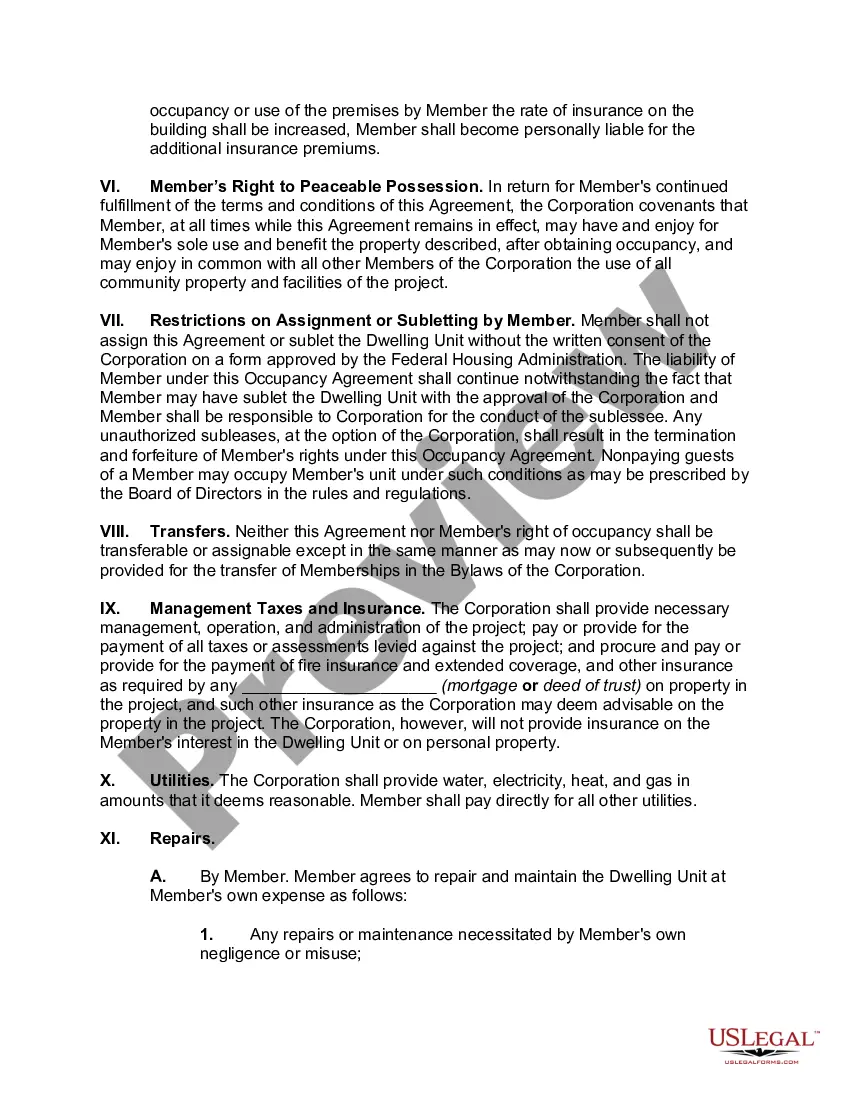
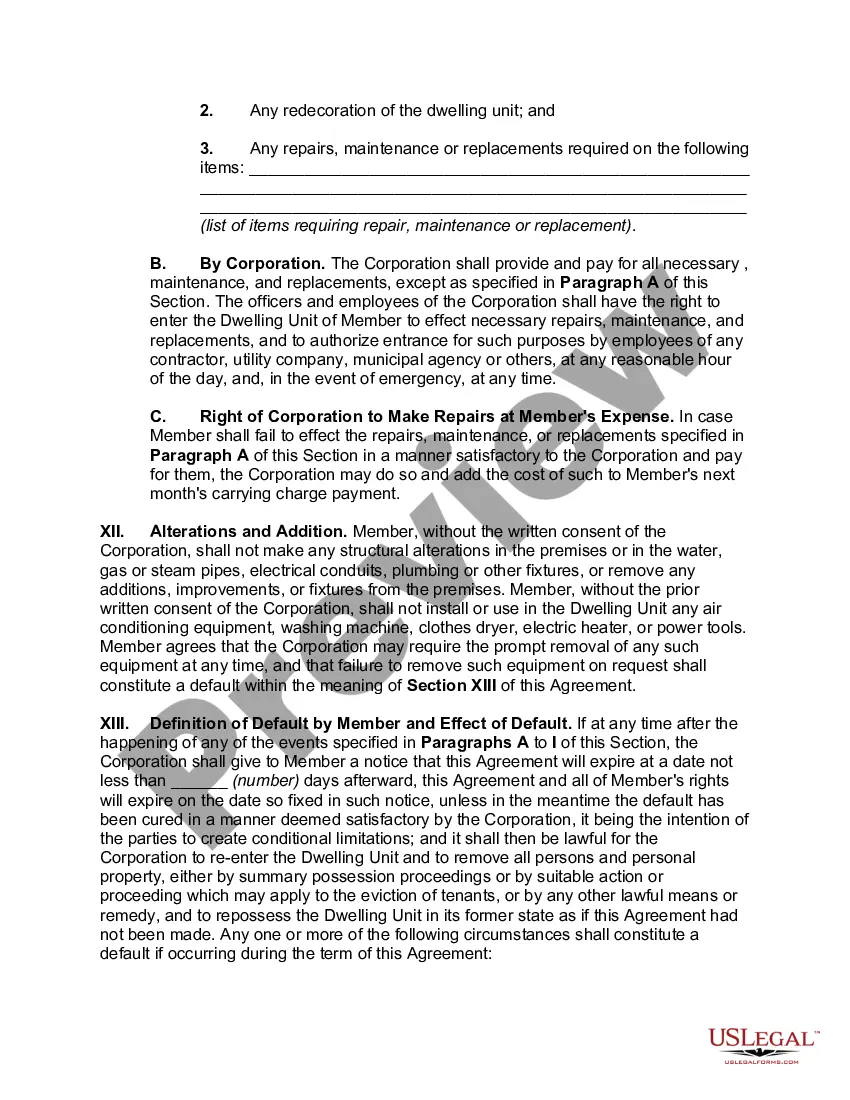
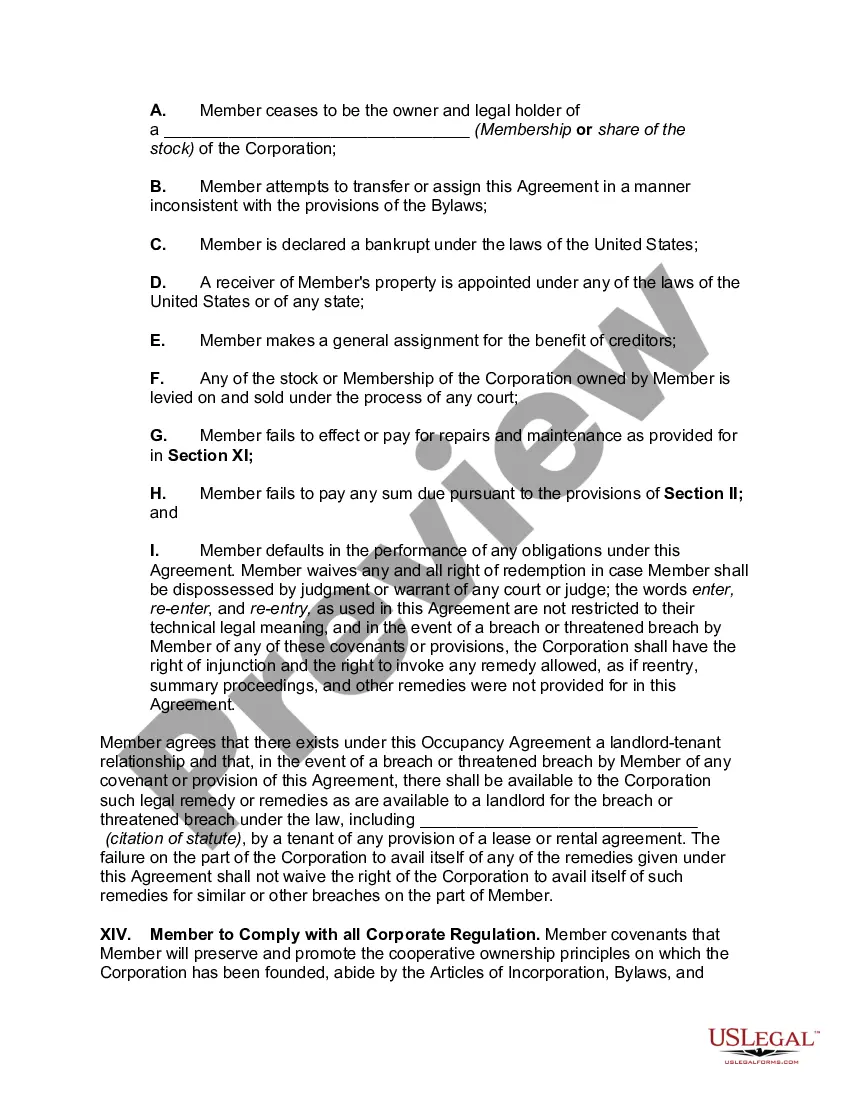
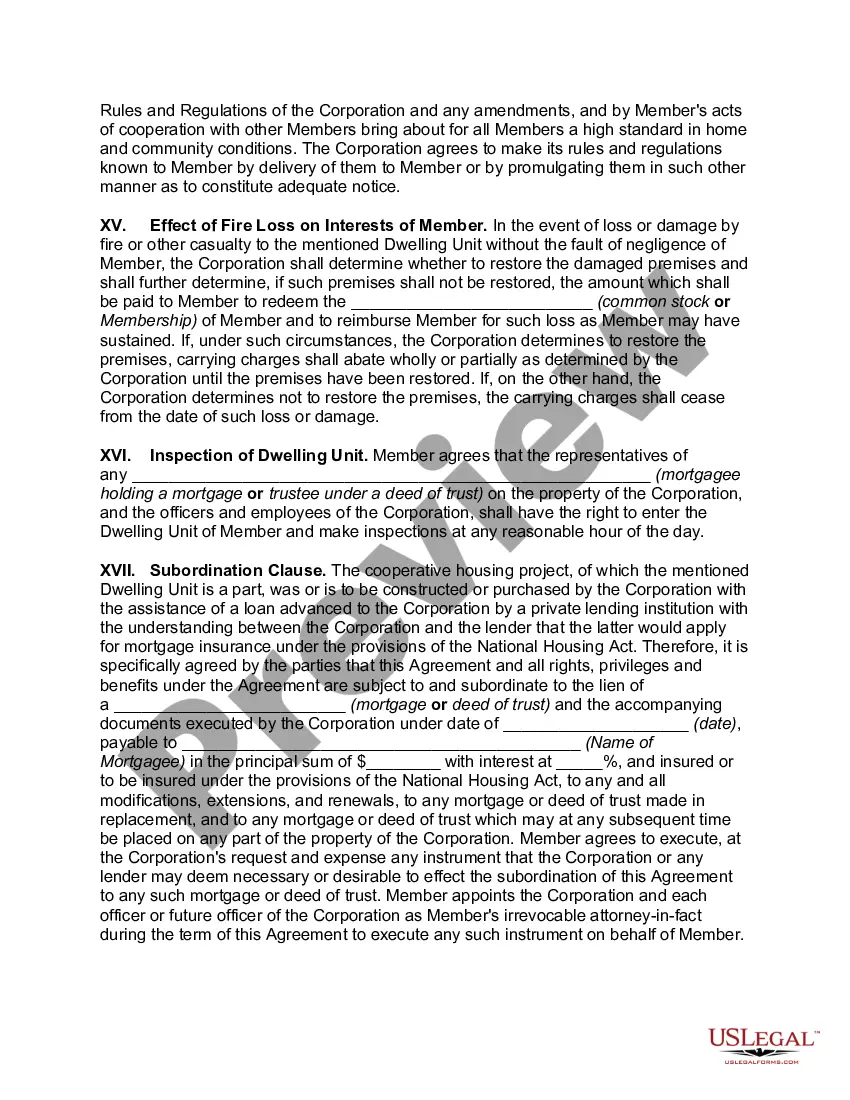
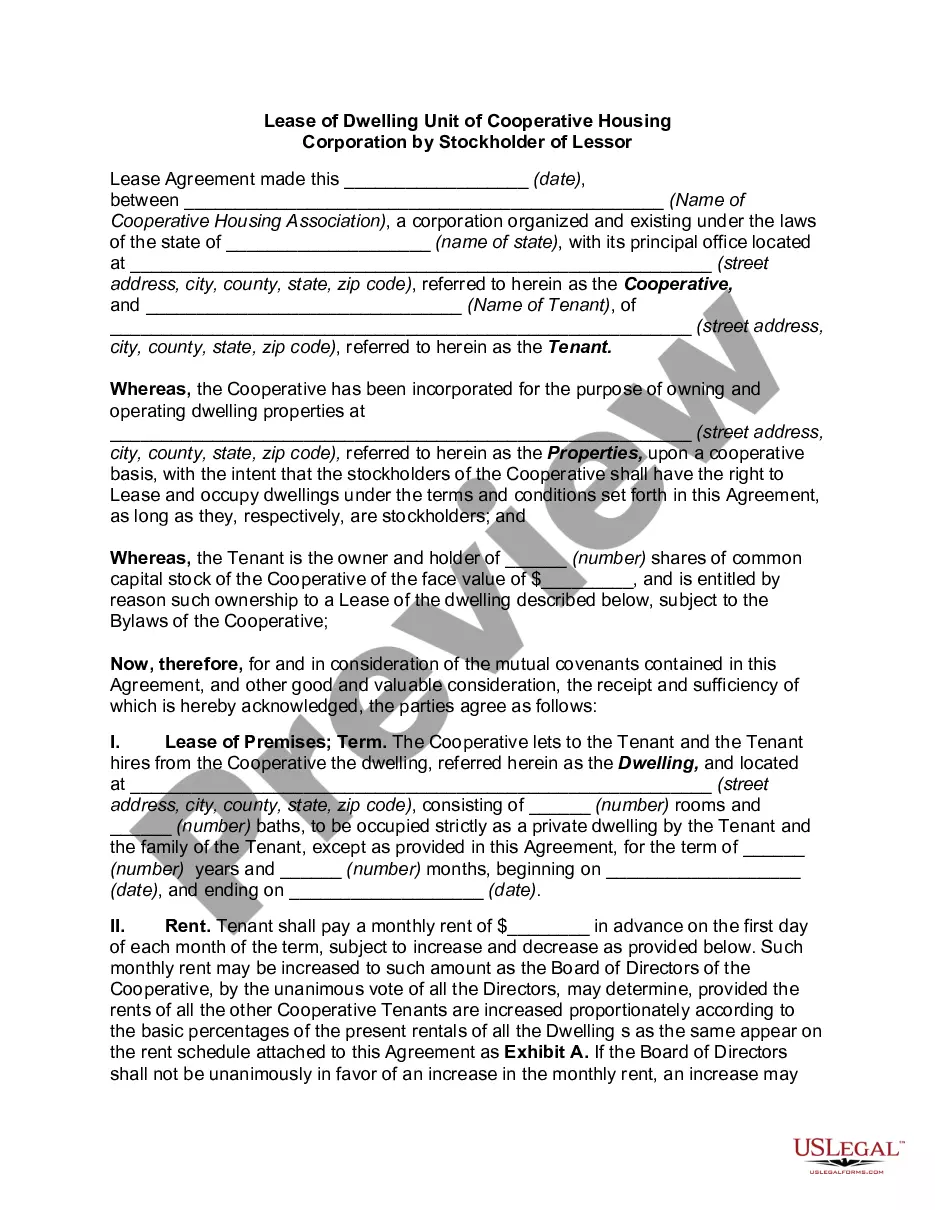
Florida Occupancy Agreement Between Cooperative Housing Corporation and Member/Shareholder
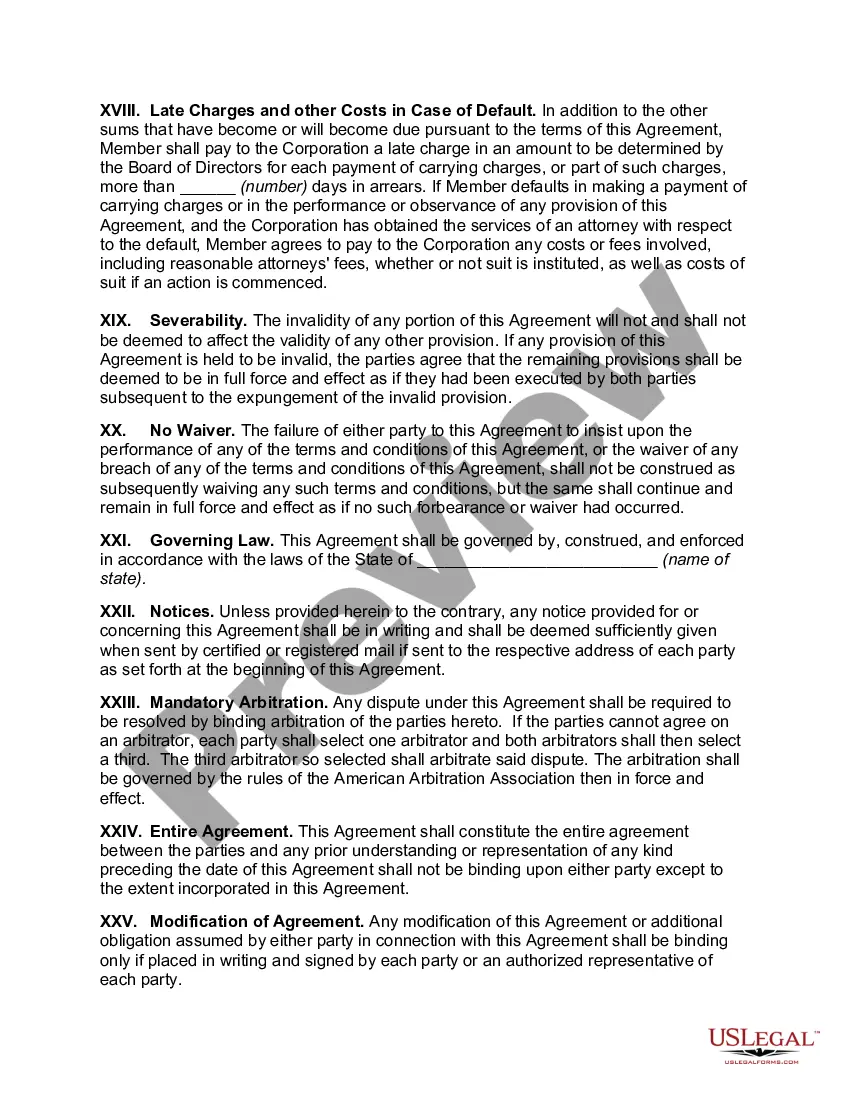
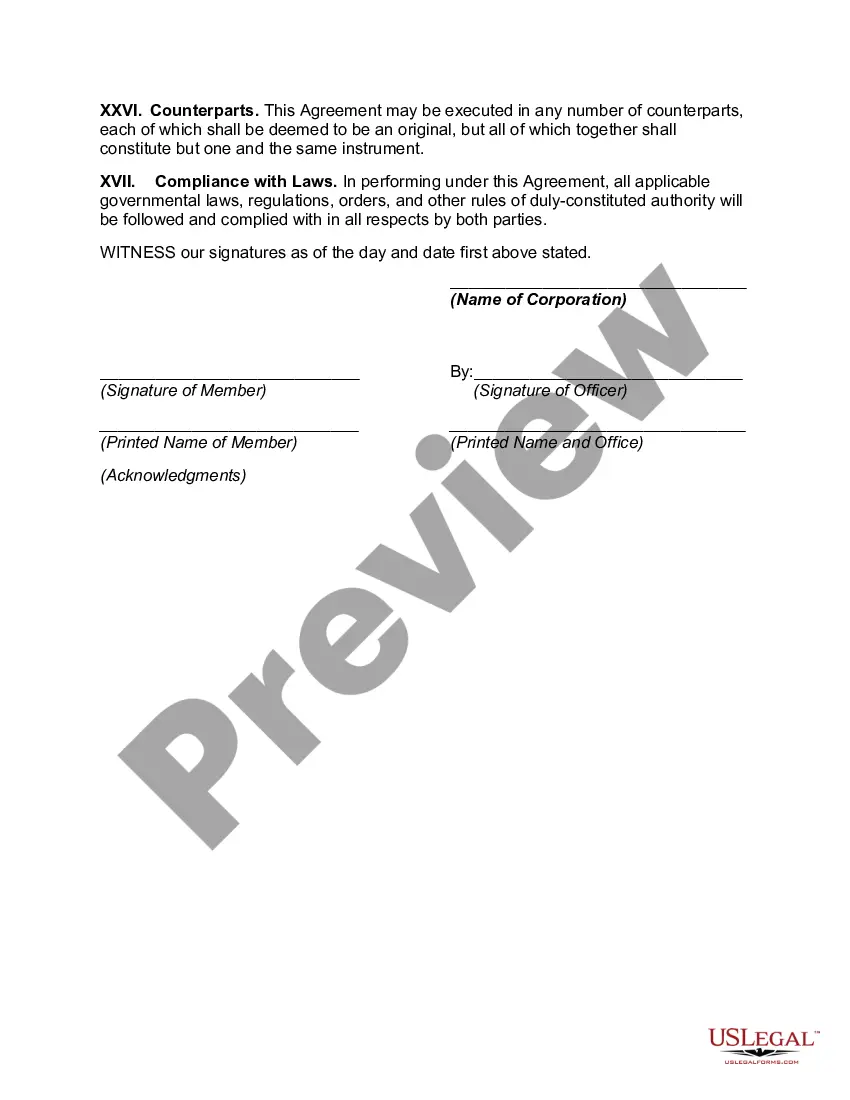
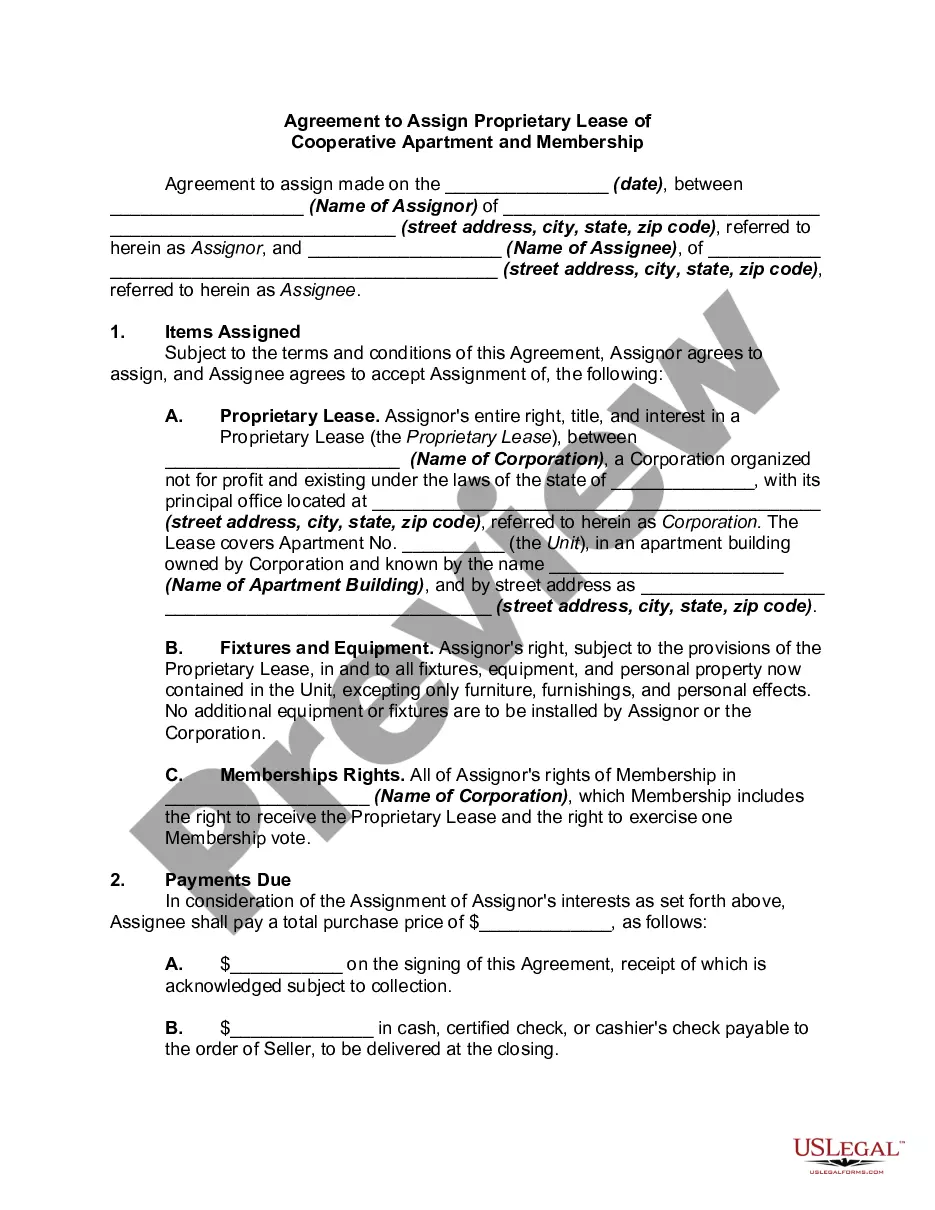
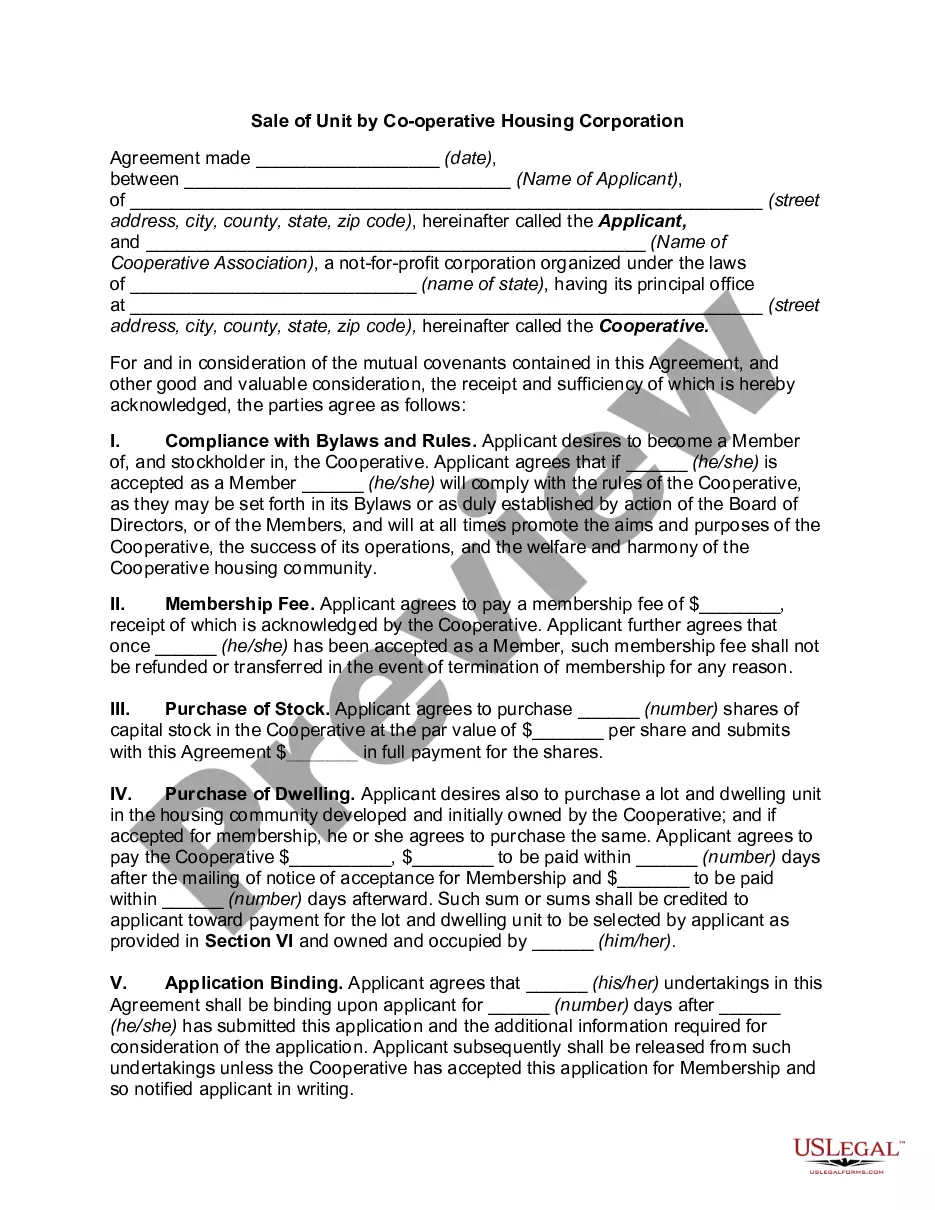
Description
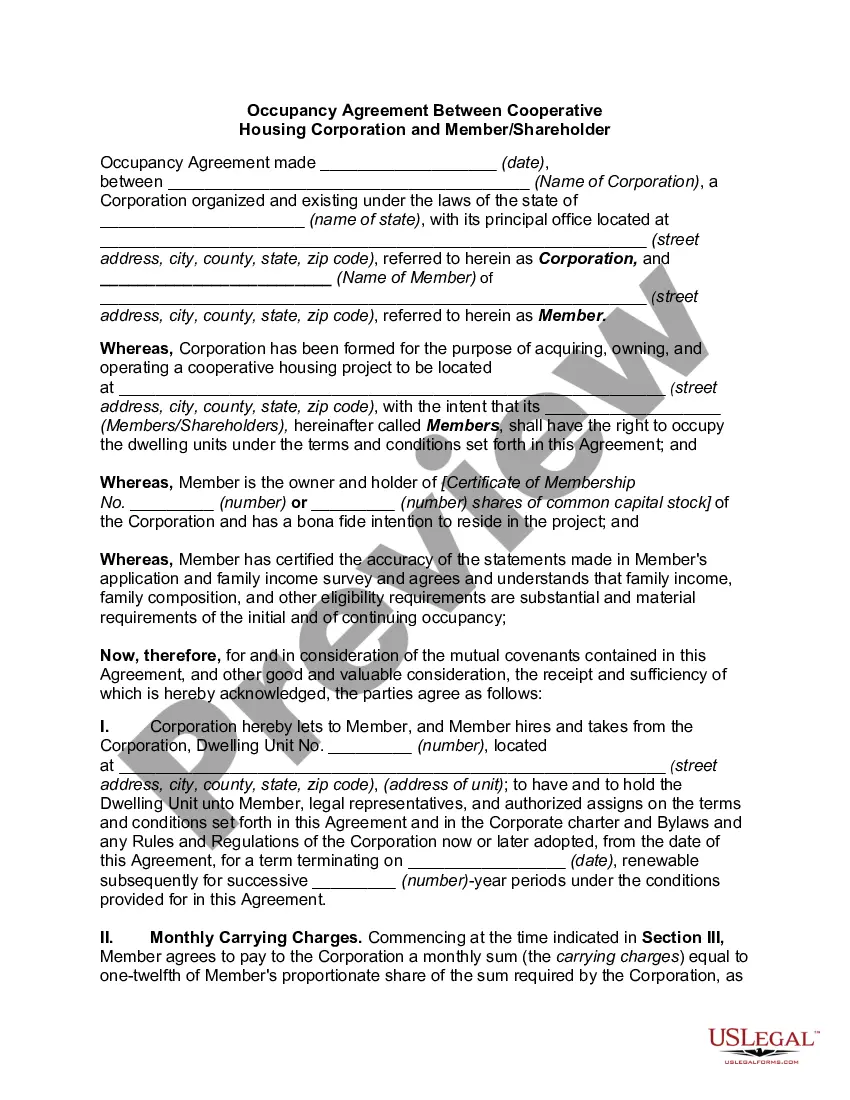
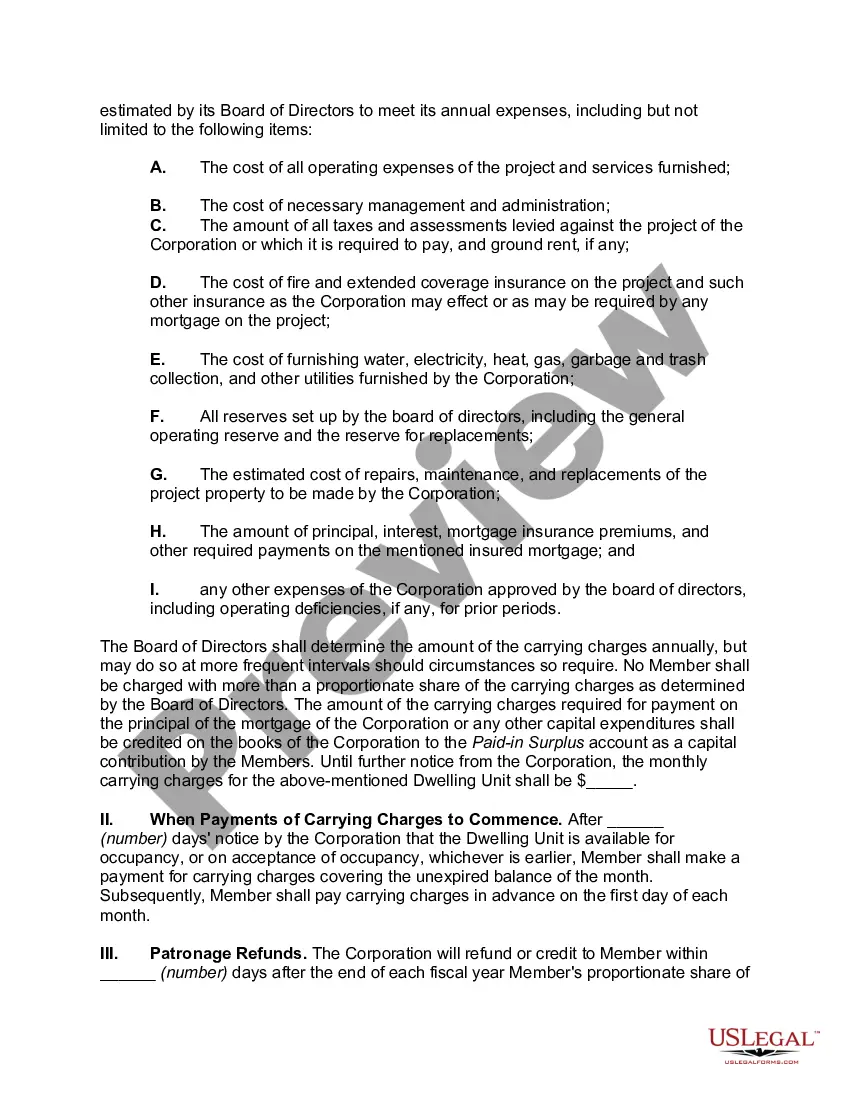
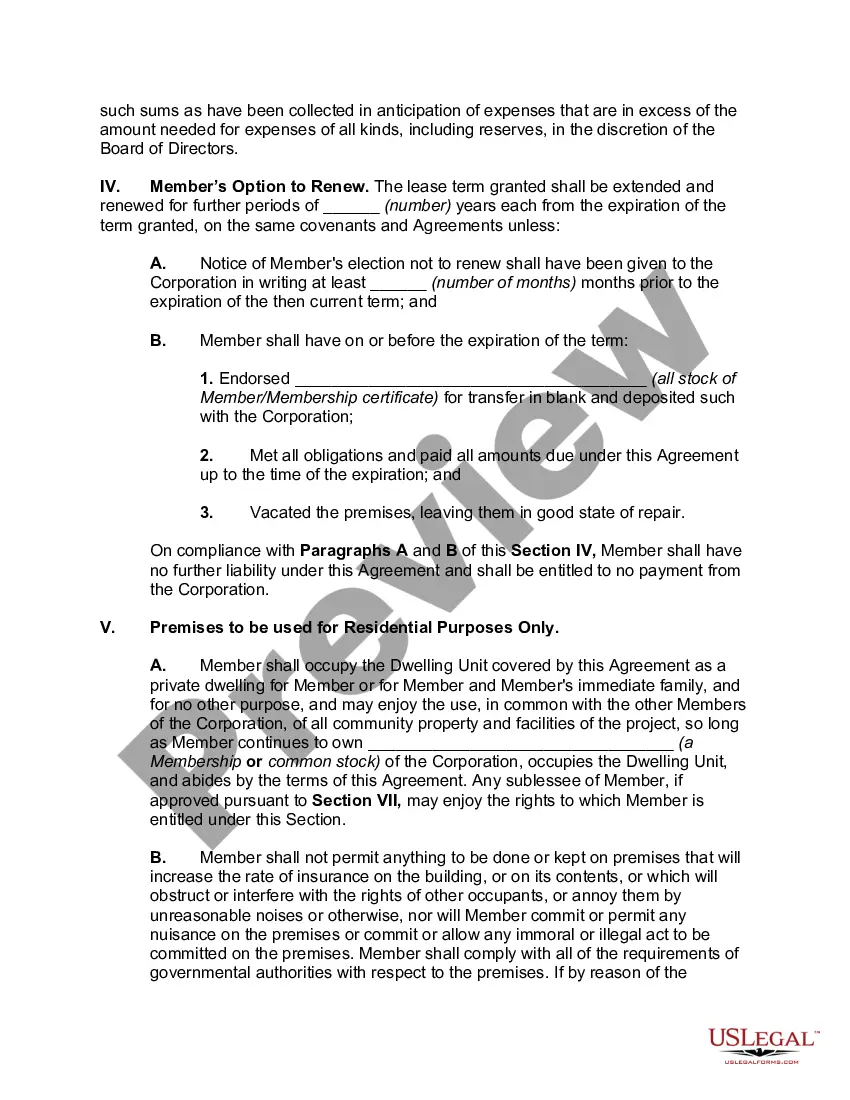




How to fill out Occupancy Agreement Between Cooperative Housing Corporation And Member/Shareholder?
If you wish to obtain, secure, or generate legal document templates, utilize US Legal Forms, the premier collection of legal forms, available online.
Take advantage of the site’s user-friendly and efficient search feature to find the documents you need. A range of templates for business and personal purposes are categorized by sections and states, or keywords.
Utilize US Legal Forms to find the Florida Occupancy Agreement Between Cooperative Housing Corporation and Member/Shareholder in just a few clicks.
Every legal document template you obtain is yours indefinitely. You have access to every type you downloaded through your account. Click the My documents area to select a form to print or download again.
Compete and acquire, and print the Florida Occupancy Agreement Between Cooperative Housing Corporation and Member/Shareholder with US Legal Forms. There are thousands of professional and state-specific forms you can use for your business or personal needs.
- If you are currently a US Legal Forms user, Log In to your account and click the Acquire button to obtain the Florida Occupancy Agreement Between Cooperative Housing Corporation and Member/Shareholder.
- You can also access forms you previously downloaded in the My documents section of your account.
- If this is your initial time using US Legal Forms, follow the steps outlined below.
- Step 1. Confirm you have chosen the form for your correct location/region.
- Step 2. Use the Preview option to examine the form's details. Don’t forget to read the summary.
- Step 3. If you are not satisfied with the form, utilize the Search field at the top of the page to explore different templates of the legal form type.
- Step 4. After you’ve found the form you desire, click the Acquire now button. Select the payment plan you prefer and enter your information to sign up for an account.
- Step 5. Process the transaction. You can use your credit card or PayPal account to complete the transaction.
- Step 6. Choose the format of the legal form and download it to your device.
- Step 7. Complete, modify, and print or sign the Florida Occupancy Agreement Between Cooperative Housing Corporation and Member/Shareholder.
Form popularity
FAQ
Cooperatives are businesses owned by member-owners. Co-ops are democratically controlled by their member-owners, and unlike a traditional business each member gets a voice in how the business is run. Services or goods provided by the co-op benefit and serve the member owners.
op is comprised of stocks or shares. When a coop is created, it will be determined how many shares the coop will have. Most coops have a few hundred shares, not thousands, but they vary from coop to coop. Coop shareholders receive actual stock certificates, although they may only see them briefly at closing.
Co-ops can issue two types of shares: Membership shares: These shares give their purchasers ownership in a co-op, the right to vote at members' meetings, and the right to receive a share of the co-op's profits.
In a worker co-op, the people who work there own the business equally. That means everyone has an equal say in how the business is run (one member, one vote), and everyone shares equitably in the profit.
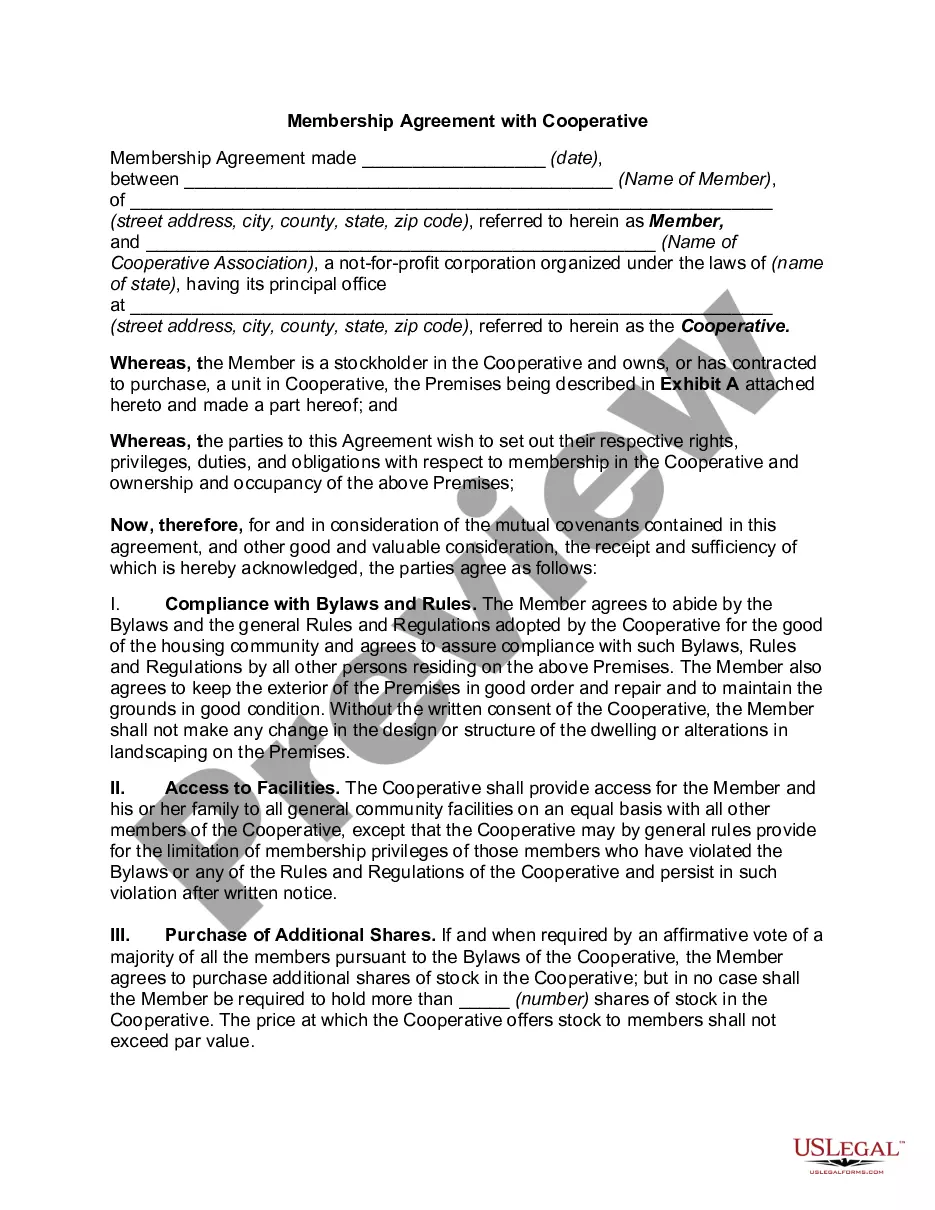
Ownership "Shares" in a Co-op The co-op is generally a corporation, with a corporate board of directors, and each resident is a "shareholder." Co-op buyers do not sign a deed. Instead, they purchase shares of the corporation, shares that include a lease granting use of a specific unit.
Shares are allocated based on the square footage of the unit and whether there is a balcony or private roof access. Your co-op board cannot determine the amount of shares randomly for each unit.
While other types of corporations are owned by shareholders or stockholders, co-ops are owned by its members or the people who use the services of the cooperative. Some cooperatives are employee-owned. To become a member of a cooperative, a person makes a financial contribution.
A proprietary lease, also referred to as an occupancy agreement, gives a shareholder in a housing cooperative the right to occupy a particular dwelling unit. Homebuyers who join a co-op are purchasing shares in a corporation rather than acquiring real estate.
What sets a cooperative apart from other types of corporations is who the owners of the company are. While other types of corporations are owned by shareholders or stockholders, co-ops are owned by its members or the people who use the services of the cooperative. Some cooperatives are employee-owned.
operative is a legally incorporated corporation that is owned by its members, who use the cooperative's services or purchase their products.