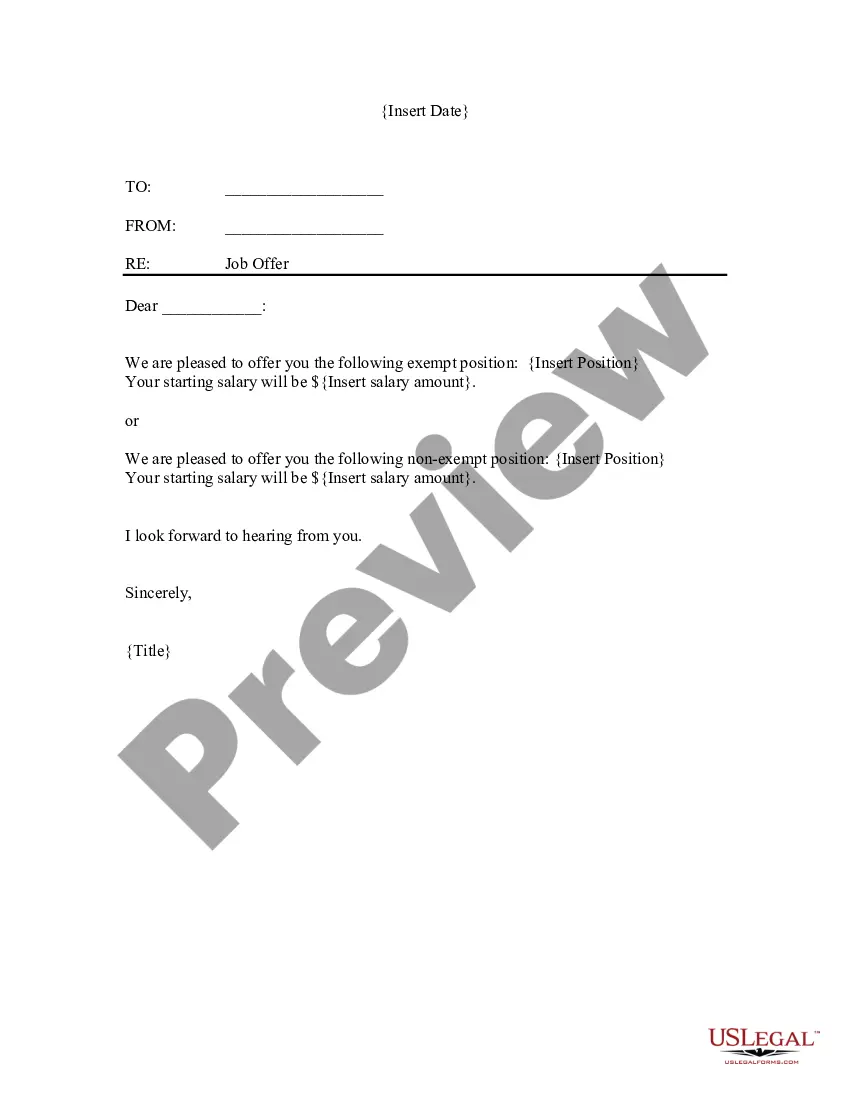
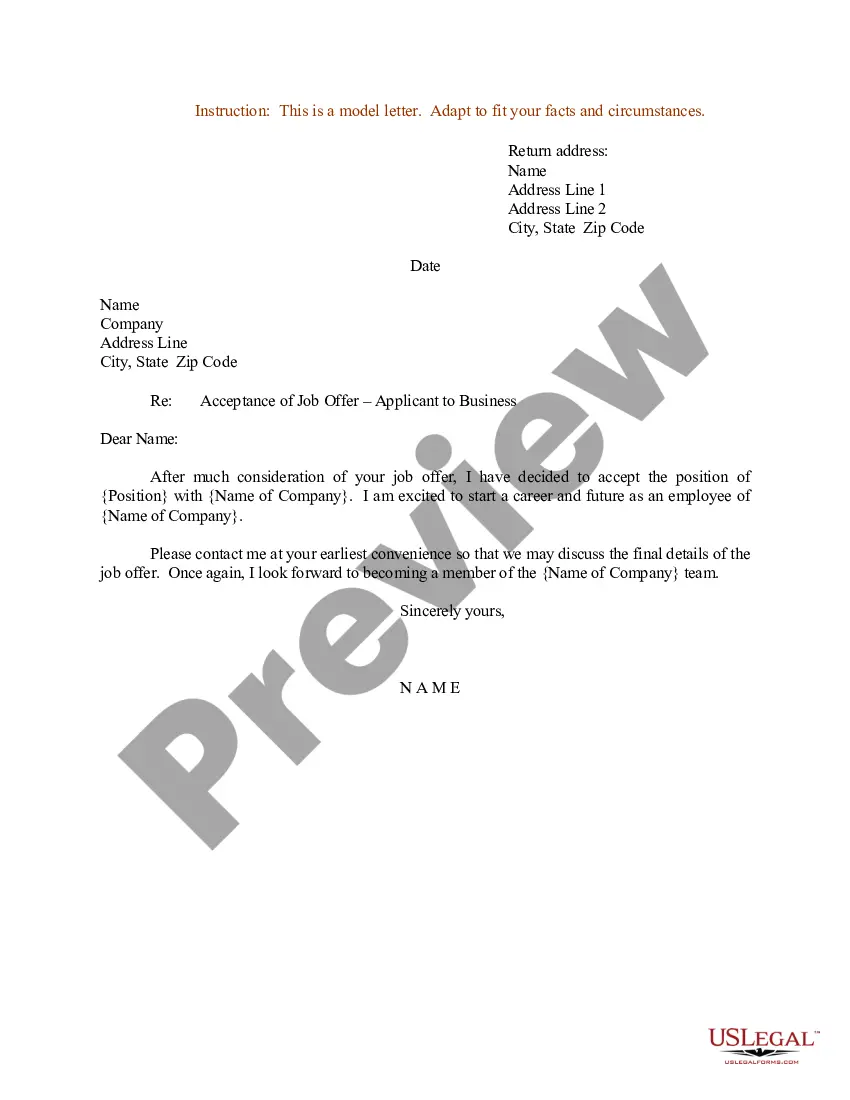
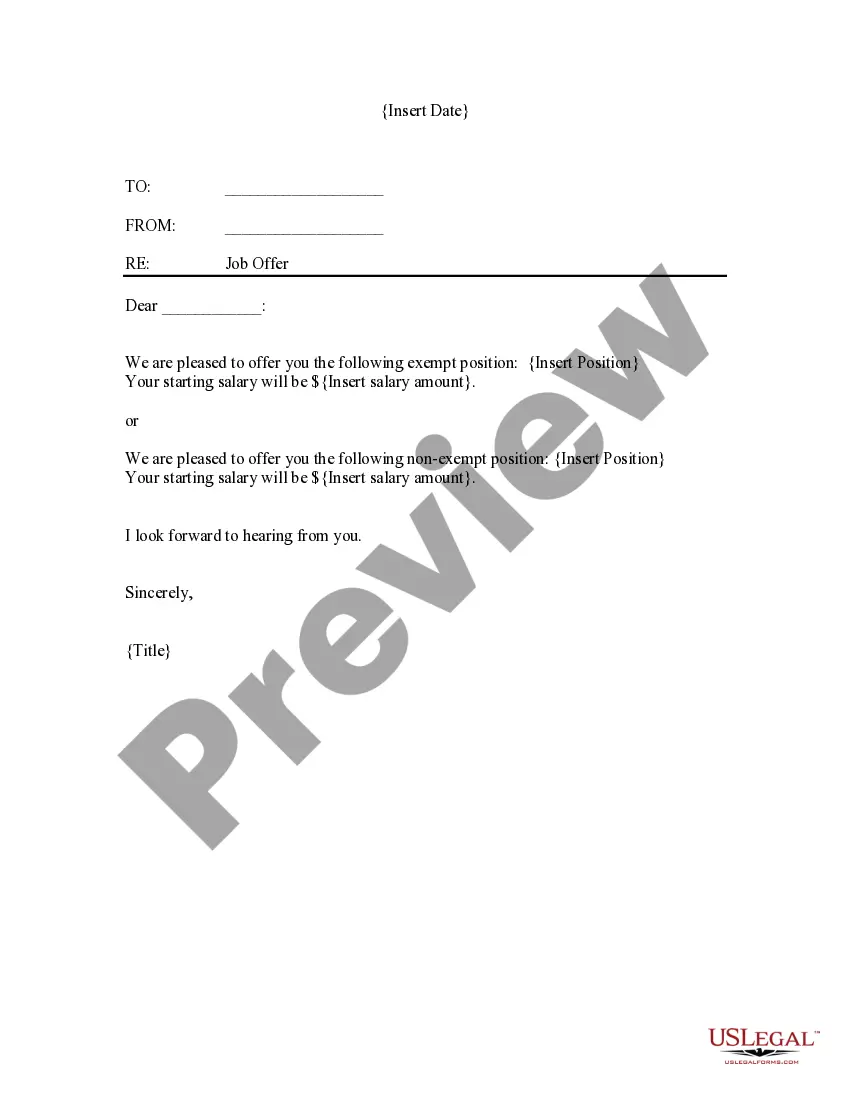
Iowa Job Offer Letter for Therapist
Description
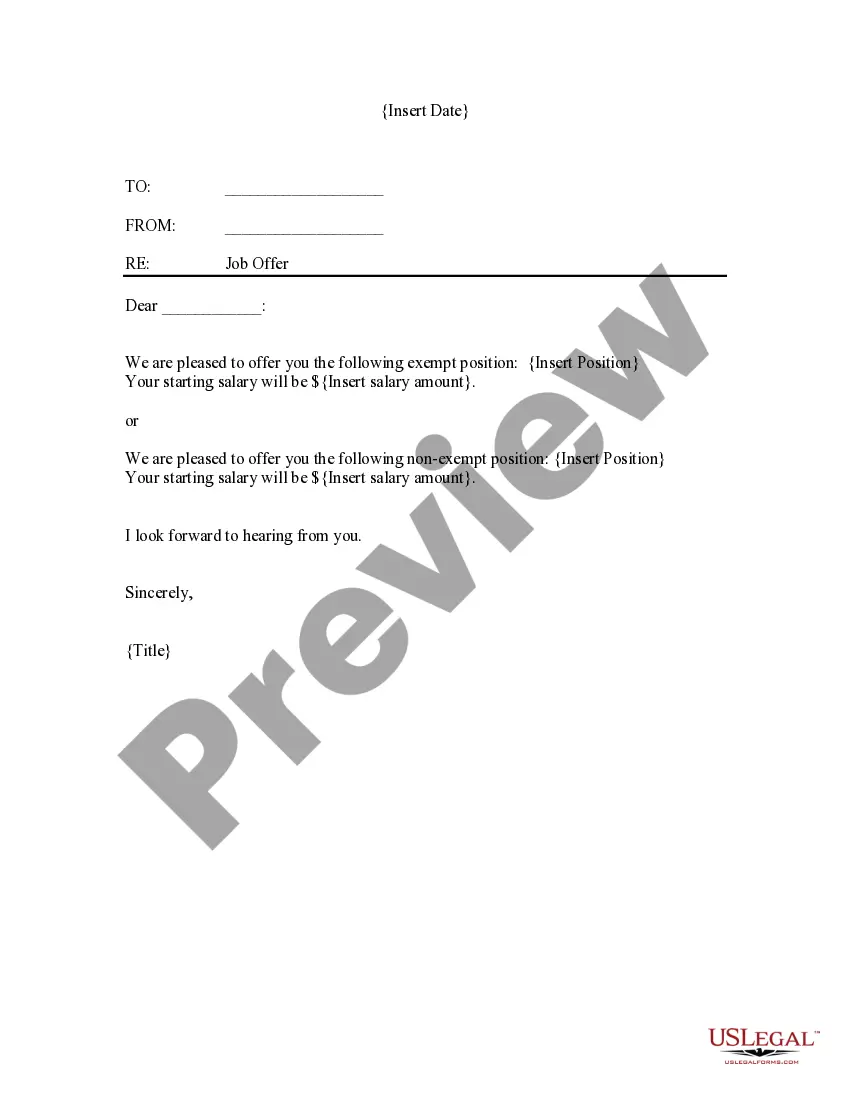
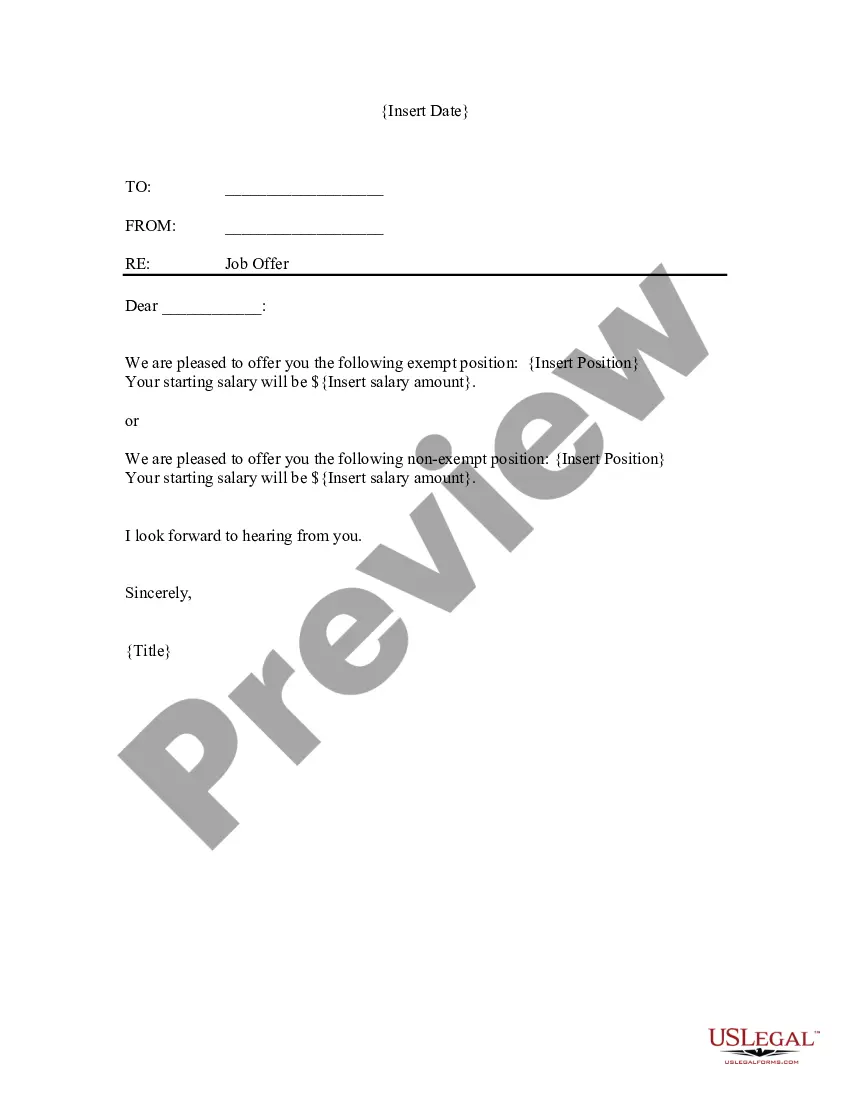
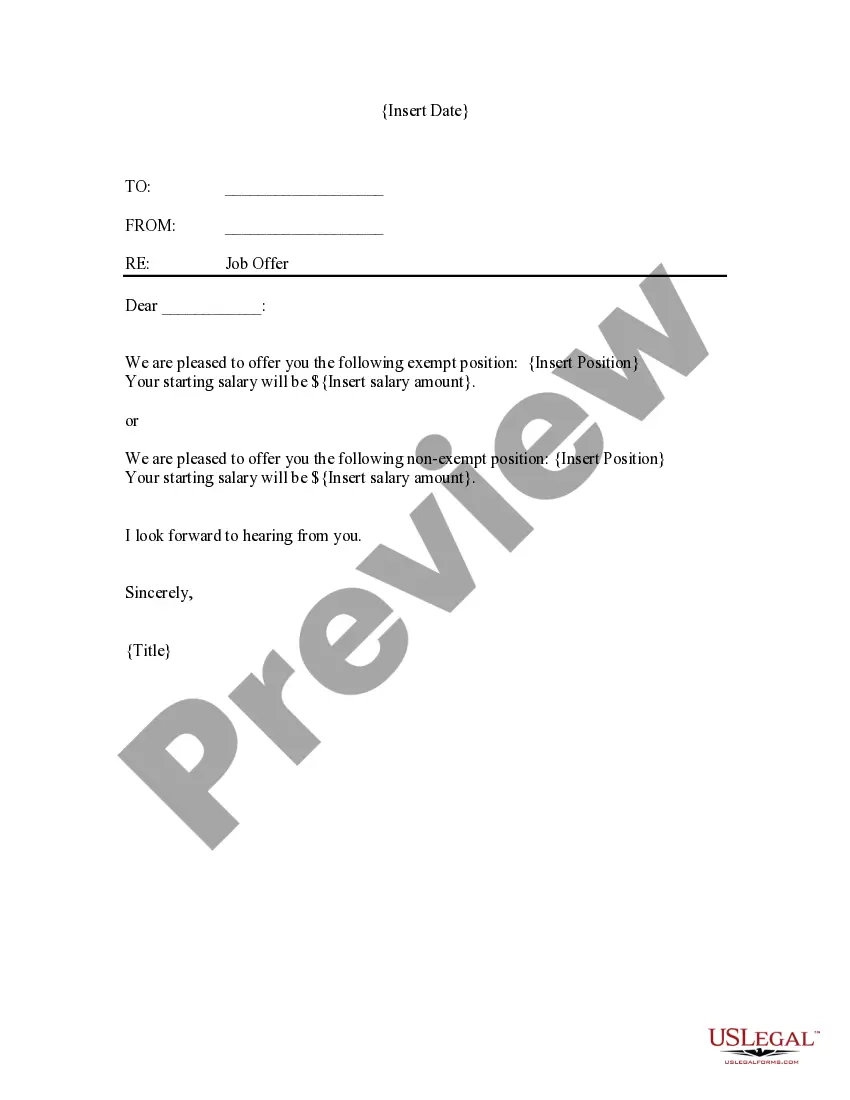

How to fill out Job Offer Letter For Therapist?
US Legal Forms - one of the most important repositories of legal documents in the United States - offers a vast selection of legal form templates that you can download or print. By using the website, you can find thousands of forms for business and individual purposes, organized by categories, states, or keywords. You can access the latest versions of forms such as the Iowa Job Offer Letter for Therapist within moments.
If you already have an account, Log In and download the Iowa Job Offer Letter for Therapist from the US Legal Forms library. The Download button will appear on every form you view. You can access all previously downloaded forms under the My documents tab of your account.
If you are using US Legal Forms for the first time, here are simple steps to get you started: Make sure you have selected the correct form for your city/state. Click the Preview button to review the form’s content. Check the form details to confirm you have chosen the correct one. If the form doesn’t meet your requirements, use the Search field at the top of the screen to find one that does.
Each template you add to your account does not have an expiration date and is yours to keep forever. Therefore, if you want to download or print another copy, simply go to the My documents section and click on the form you need.
Gain access to the Iowa Job Offer Letter for Therapist with US Legal Forms, the most extensive library of legal document templates. Utilize a wide array of professional and state-specific templates that meet your business or personal needs.
- Once you are satisfied with the form, confirm your selection by clicking the Get now button.
- Then, choose the payment plan you wish and enter your information to register for an account.
- Proceed with the payment.
- Use your credit card or PayPal account to complete the payment.
- Select the file format and download the form to your device.
- Edit, fill out, and print and sign the downloaded Iowa Job Offer Letter for Therapist.
Form popularity
FAQ
Detecting a legitimate Iowa Job Offer Letter for Therapist involves checking for specific elements. Look for clear details like the company's name, your role, salary, and any contingencies or conditions. Additionally, verify the authenticity by contacting the employer directly using information found separate from the letter.
A job offer letter from employer to employee should include:Job title.Job description.Starting date.Work schedule.Reporting structure.Salary (Compensation Bonus or Commission)Paid time off.Employee benefits.More items...
No employer has the right to ask the employee to show his Offer Letter, that's is not considered as the the good HR Practices. It's at the discretion of the employee to disclose the name of his new employer.
With that, every job offer letter should include the following terms:A job title and description.Important dates.Compensation, benefits, and terms.Company policies and culture.A statement of at-will employment.An employee confidentiality agreement and noncompete clause.A list of contingencies.
Confidentiality and Non-Disclosure AgreementsNon-disclosure and confidentiality agreements are standard practice in offer letters. Typically, they state that you must keep sensitive information that you learn in your tenure at a company private, or else face consequences such as firing or lawsuits.
In general, offer letters are less formal than employment contracts, which typically set terms and conditions of employment that are legally binding. It's also vital for employers to understand that they aren't required by federal law to send an offer letter to new hires.
The letter F. Google will no longer take job candidates' word for it if they claim they have a competing job offer. Recruiters will now ask to see offer letters before raising Google's offer, The Information reported. The move is unusual for applicants who are not seeking an executive-level position.
There's nothing illegal about the employer asking for that information. Of course, you don't have to provide it if you don't want to, but if their intention is to use it to counter-offer, it may actual help you to give them the information they're requesting.
Whereas an offer letter is unofficial (avoiding statements that promise future wages or employment), an employment contract is exactly the opposite, setting wages and length of employment in legally binding stone.
With that, every job offer letter should include the following terms:A job title and description.Important dates.Compensation, benefits, and terms.Company policies and culture.A statement of at-will employment.An employee confidentiality agreement and noncompete clause.A list of contingencies.30-Aug-2021