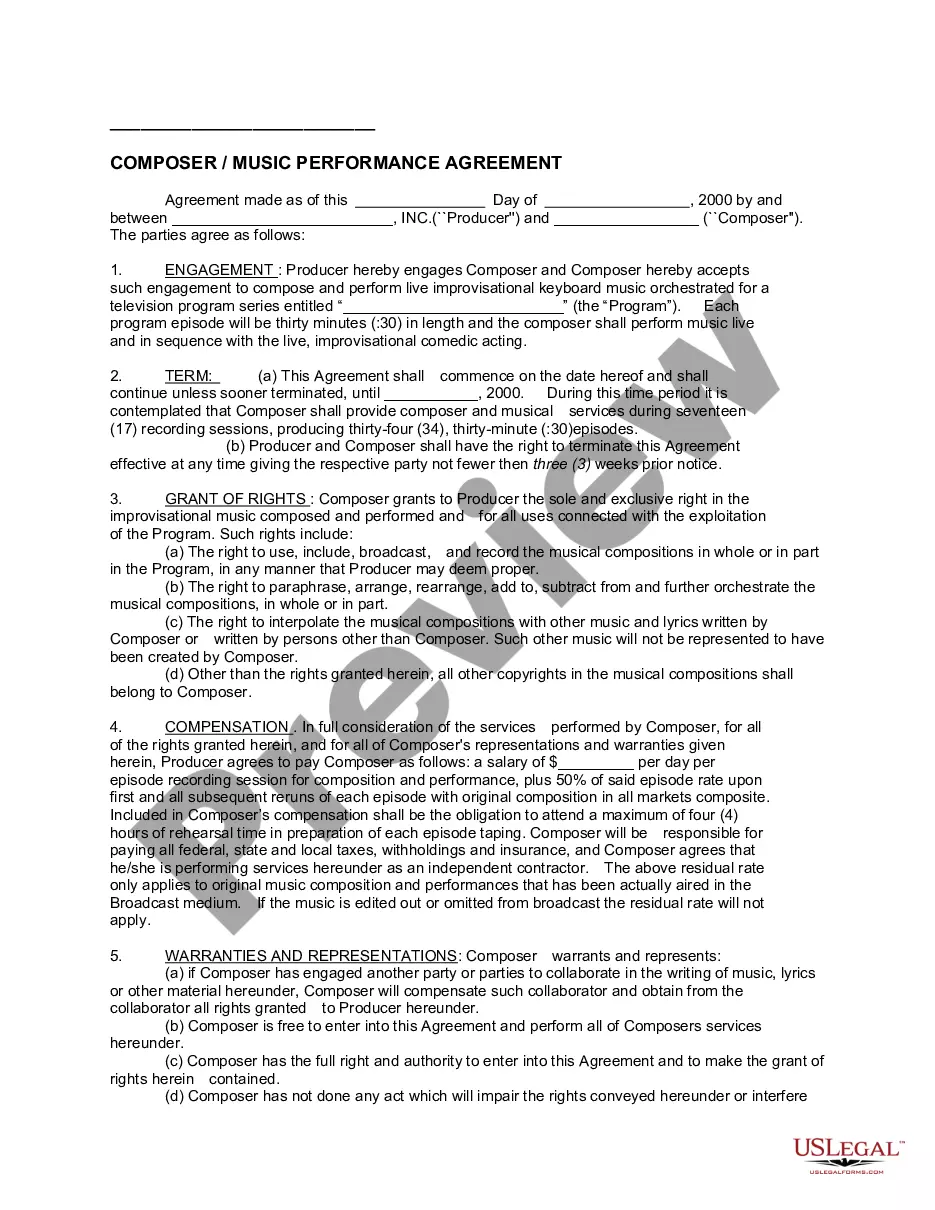
Writer Performance Agreement between Manager and Promoter Living out the Terms defining the following 1) Scope of Performance; 2) Date, Time and Place for the Performance; 3) Compensation; and, 4) Technical Requirements.<\p>
Indiana Songwriter Performance Agreement
Category:
State:
Multi-State
Control #:
US-0026BG
Format:
Word;
PDF;
Rich Text
Instant download
Description
Free preview
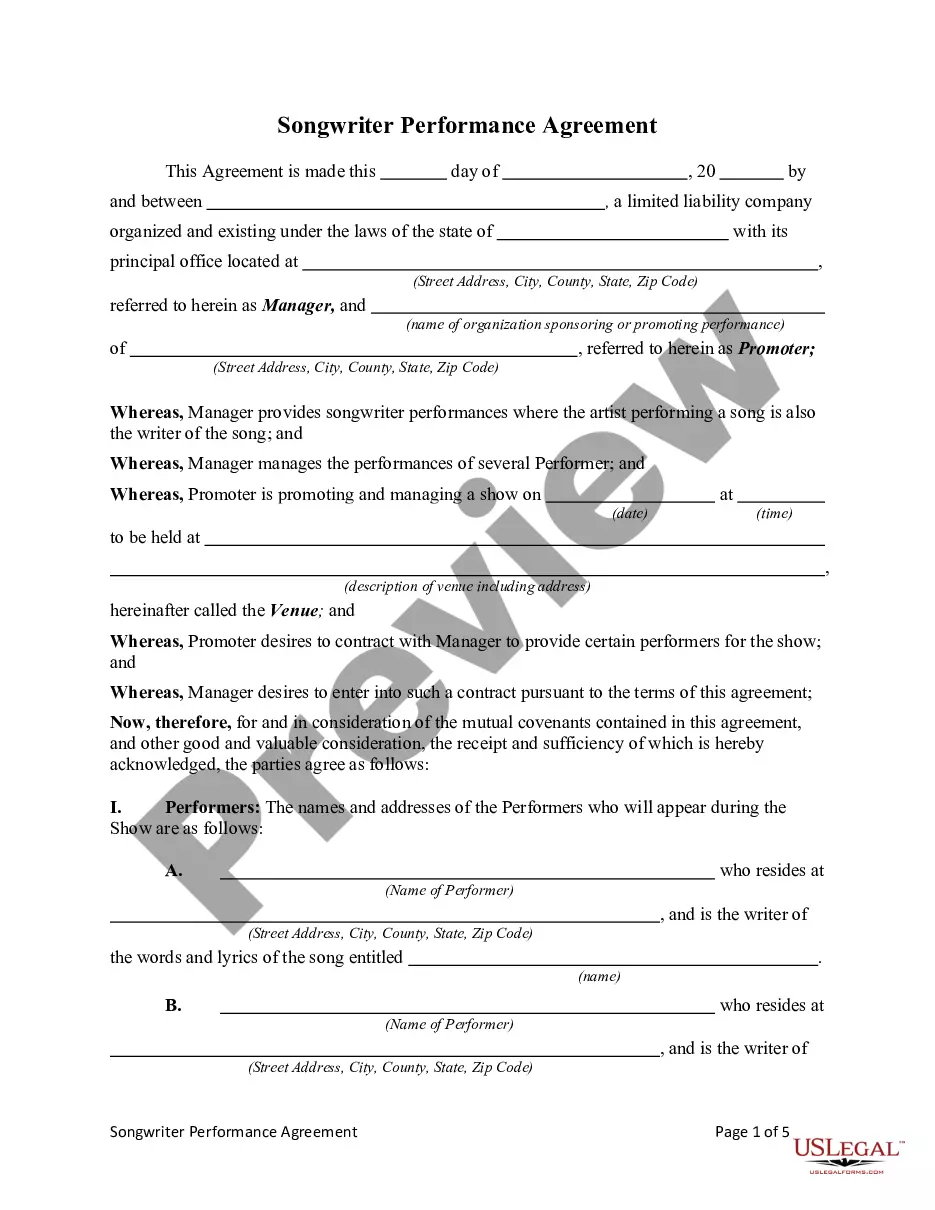
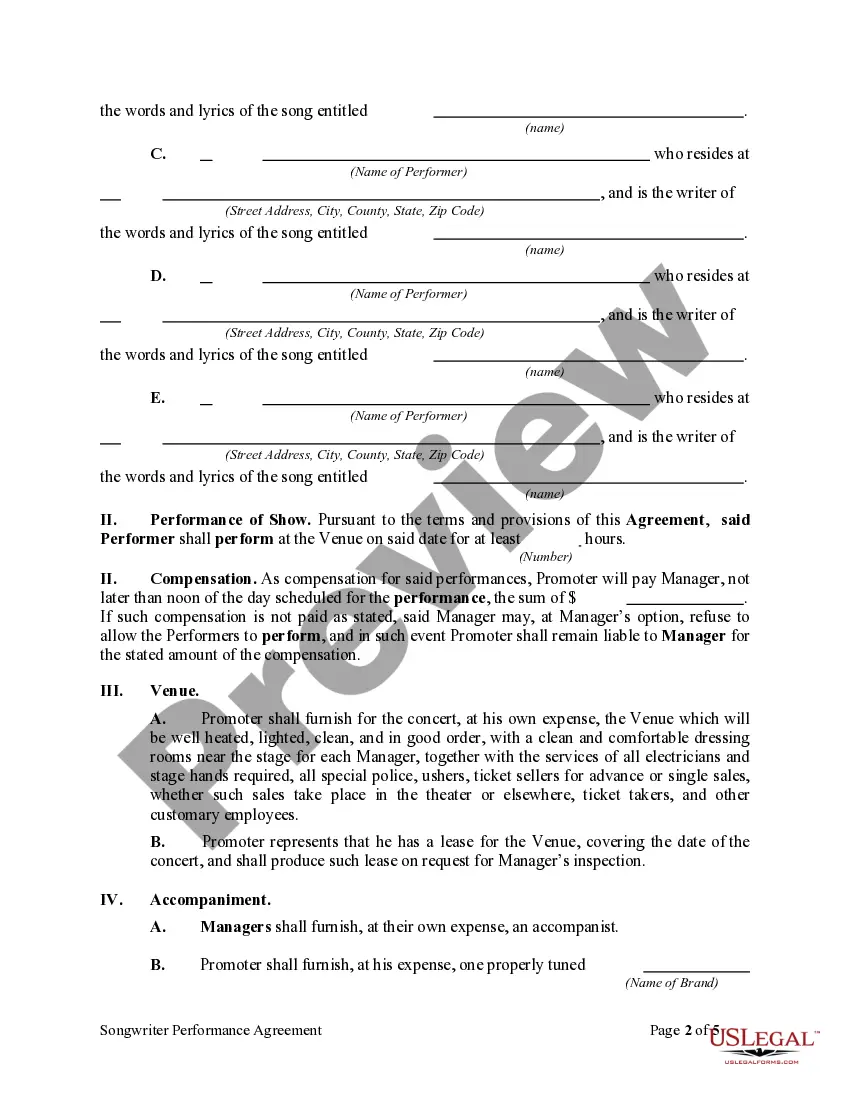
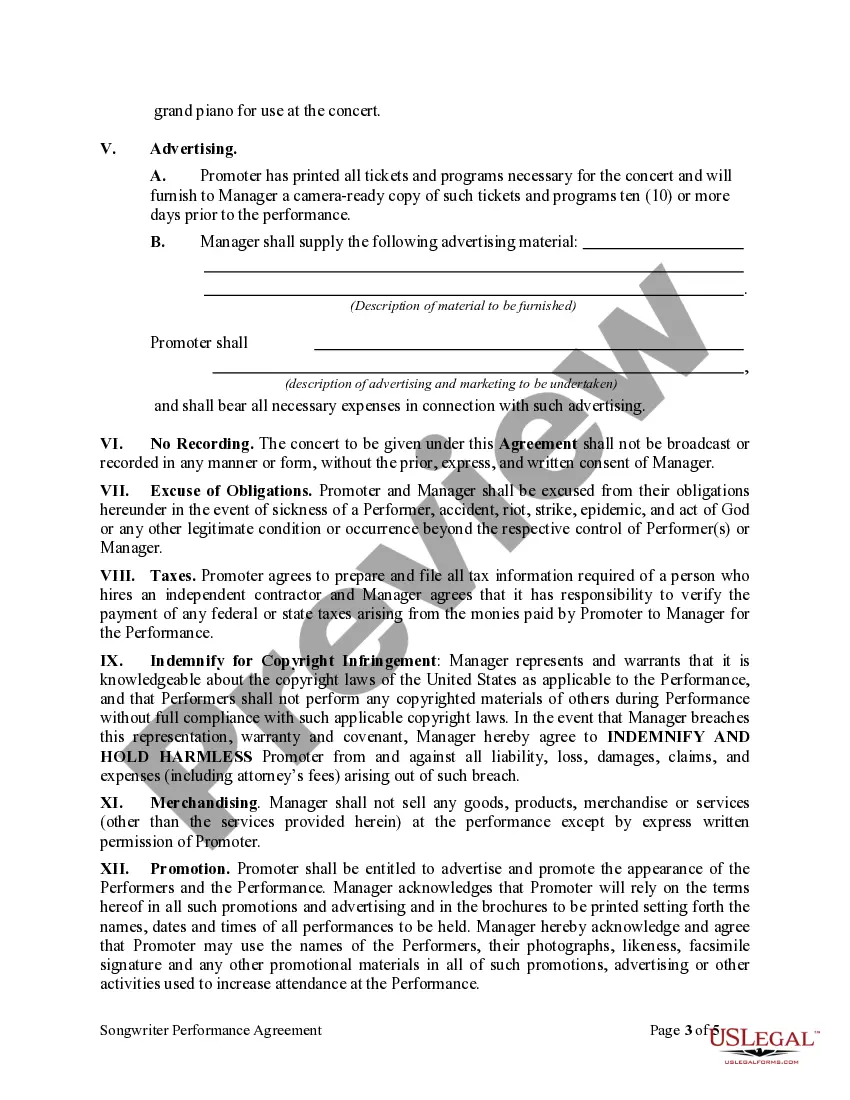
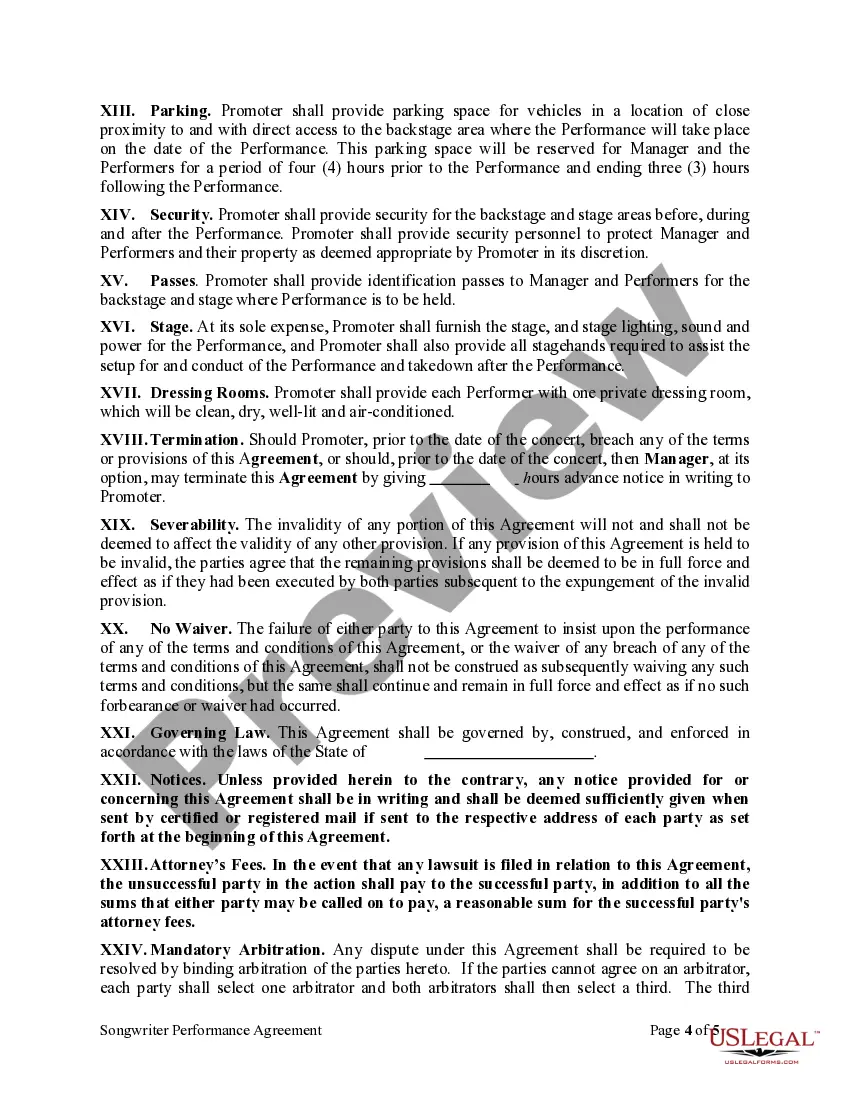
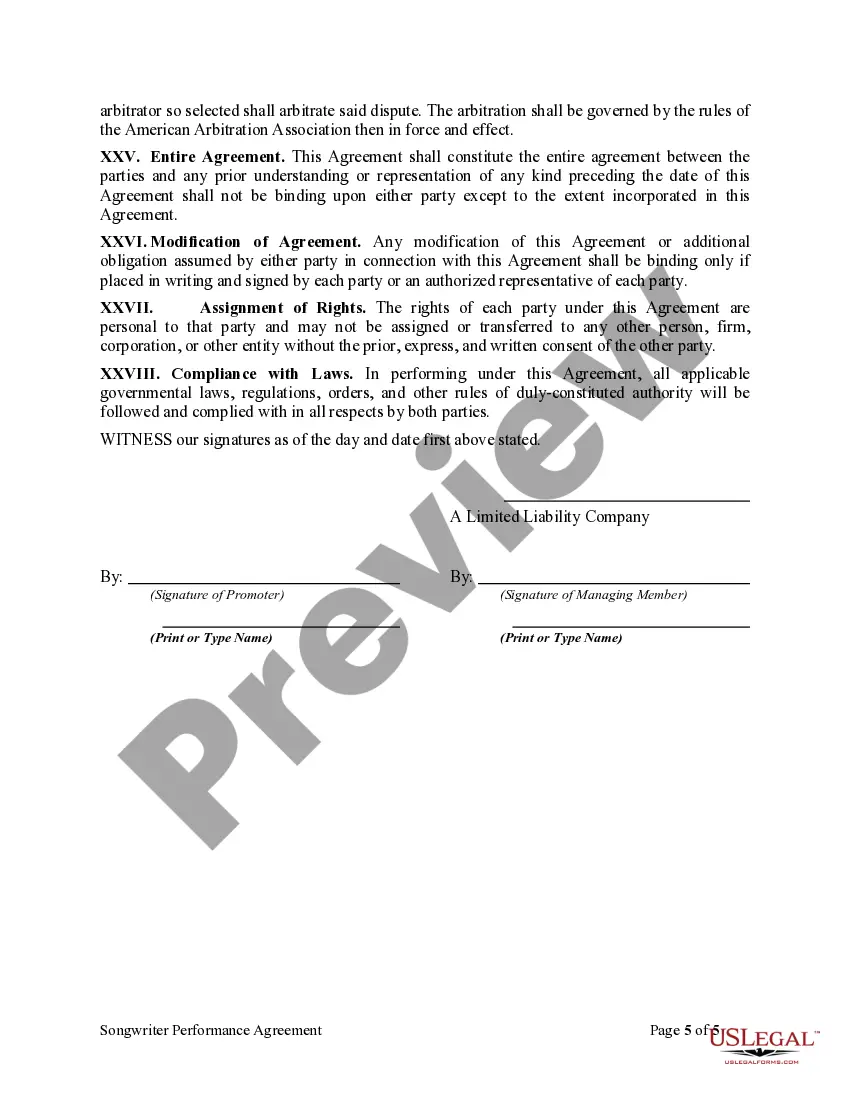

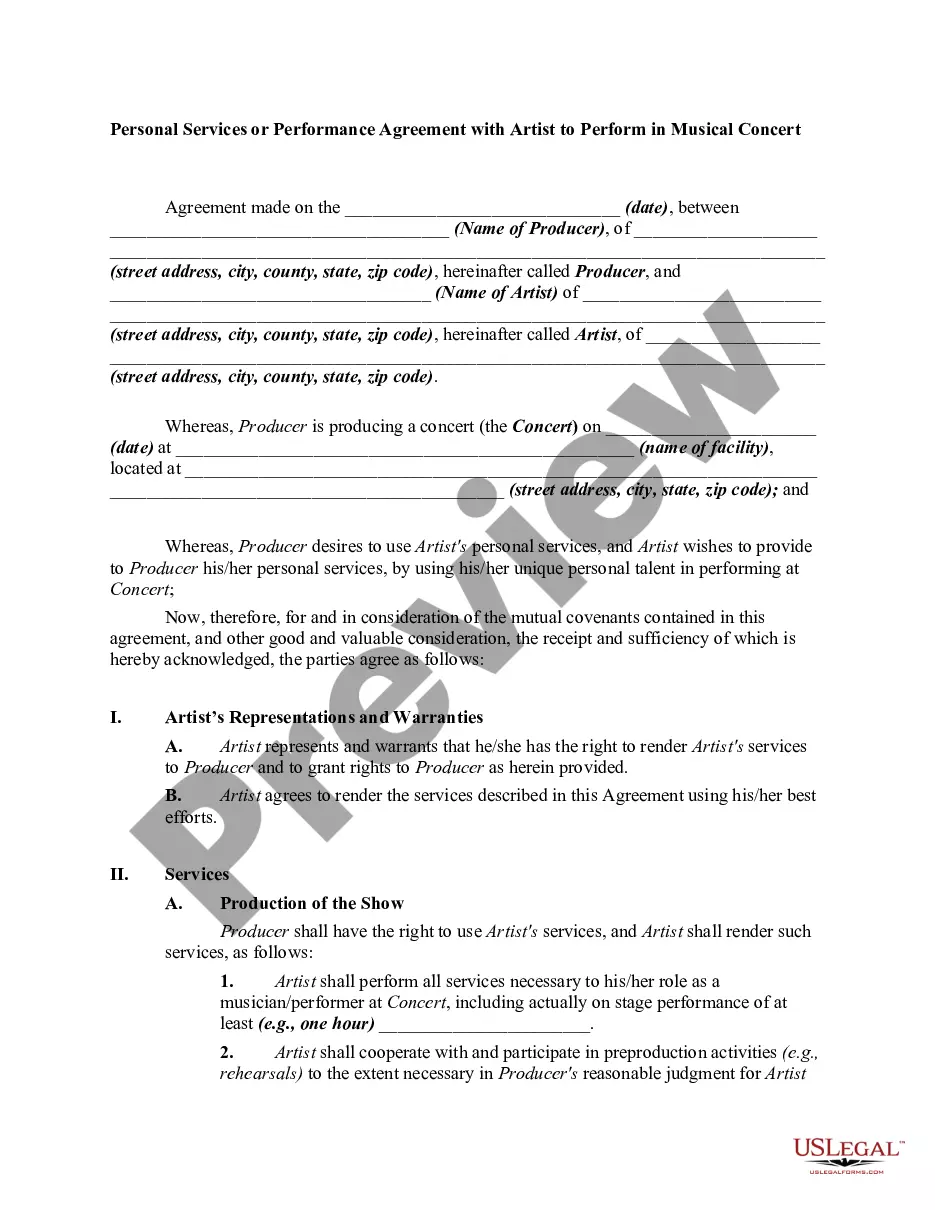
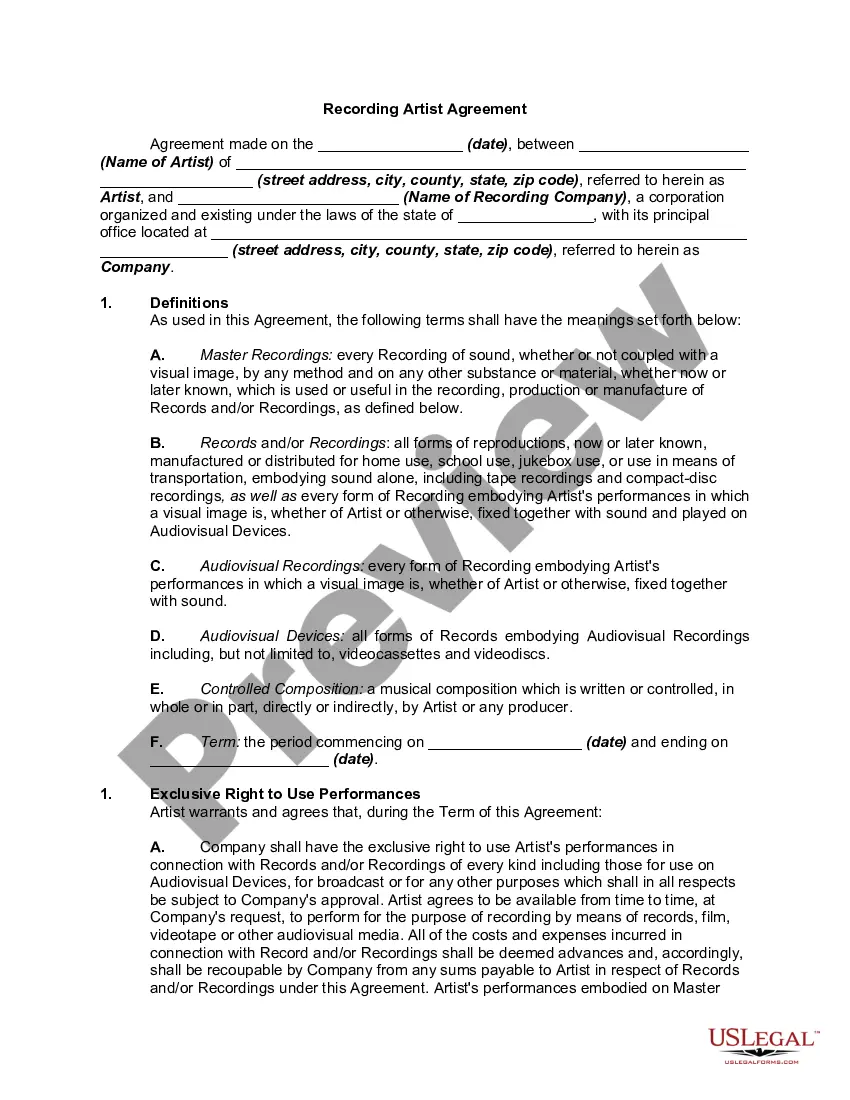




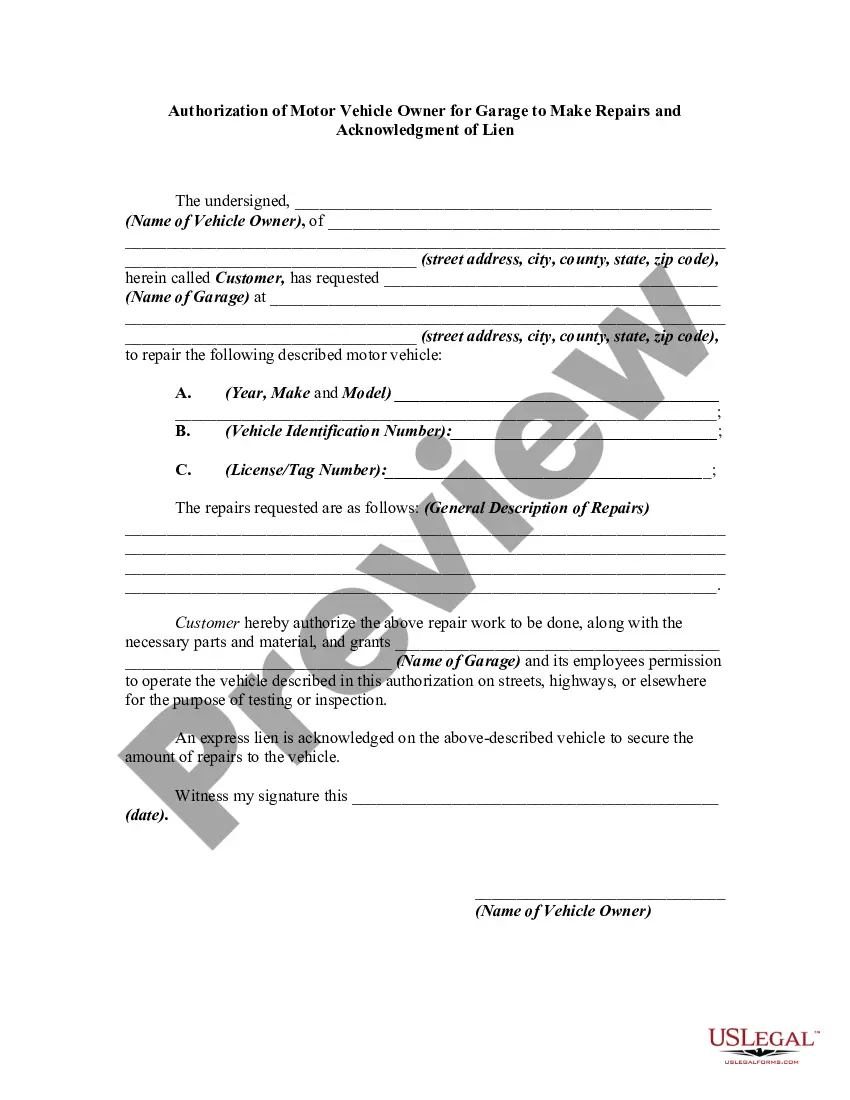
How to fill out Songwriter Performance Agreement?
Have you ever been in a situation where you need documentation for various organizations or specific tasks almost every day.
There are numerous legitimate document templates available online, but locating reliable ones can be challenging.
US Legal Forms offers thousands of form templates, including the Indiana Songwriter Performance Agreement, specifically designed to fulfill federal and state requirements.
Once you locate the correct form, click Purchase now.
Choose the pricing plan you prefer, fill in the required information to create your account, and complete the transaction using your PayPal or credit card.
- If you are already familiar with the US Legal Forms website and possess an account, simply Log In.
- After logging in, you can download the Indiana Songwriter Performance Agreement template.
- If you do not have an account and wish to start using US Legal Forms, follow these steps.
- Find the form you need and ensure it is for your specific city/region.
- Utilize the Preview button to assess the form.
- Review the description to confirm you have selected the correct form.
- If the form isn’t what you need, use the Search field to find the form that suits your requirements.
Form popularity
FAQ
Technically, you do not need licenses from all four organizations. If the music your band will be performing or your venue will be playing was created by U.S. songwriters, then you may want to consider a blanket license from ASCAP and BMI, as most U.S. songwriters belong to these two.
Essentially, a Performance Contract is an agreement between a government and a public agency which establishes general goals for the agency, sets targets for measuring performance and provides incentives for achieving these targets.
It is your responsibility to obtain permission to perform ASCAP songs from ASCAP or directly from the copyright owner. ASCAP represents tens of thousands of copyright owners and millions of songs and an ASCAP license will give you the right to perform them all.
Anyone can cover anyone else's song, and its creator cannot say no (that's the compulsory part). But if you do cover a song, you must pay a royalty to the song's creator (that's the licensing part).
Basic information included in Music Performance Contracts:Name and contact information of both parties.Description of services.Performance of services.Payment.Deposit.Cancellation policy.Terms.Relationship of parties.More items...
When you register those songs for the live performances, then they know the song's already in their system, they know it was performed at this place, and then they run it through whatever crazy royalty formulas they have. And then they pay that out in their next distribution, Plumb said.
Yes. The royalties we distribute for live performances are based on the licensing fees paid by the venues where they take place, so there is a direct link between what a venue pays and who that money goes to. Many of our general licensees use recorded music but do not host live performances.
Most of the time, bands do not need to worry. It is music industry standard for venues acquire what is known as a public performance license a license that allows cover songs to be played at that location. Sometimes, venues do not allow covers to be played.
Royalties generated are typically split 50/50 between songwriter and publisher. There are often multiple songwriters attached to a song, each of whom may be owed a different percentage of the royalties collected, and each may work with different publishers to collect.
When someone records and releases a song, you are free to do your own cover version of that song by obtaining a mechanical or compulsory license. Then, every time your cover version is sold or reproduced, you (or your record label) must pay the statutory royalty fee for that song (currently 9.1¢ per copy in the US).