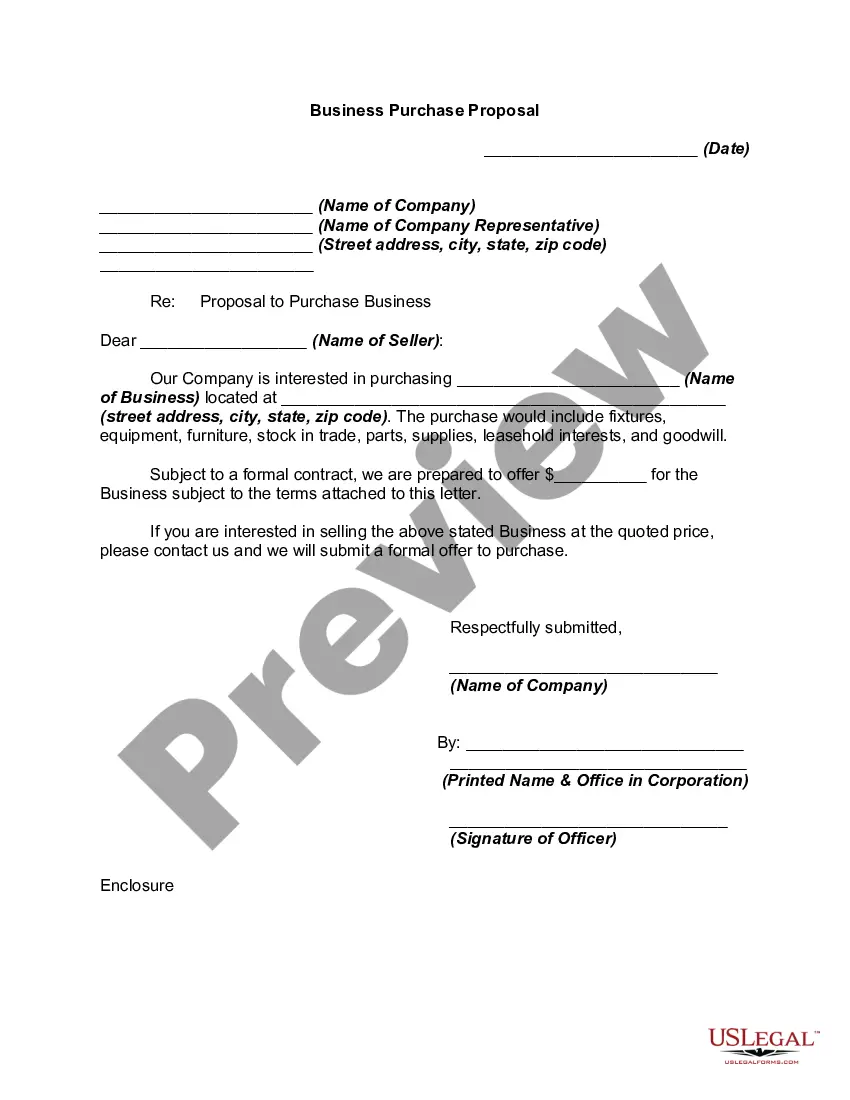
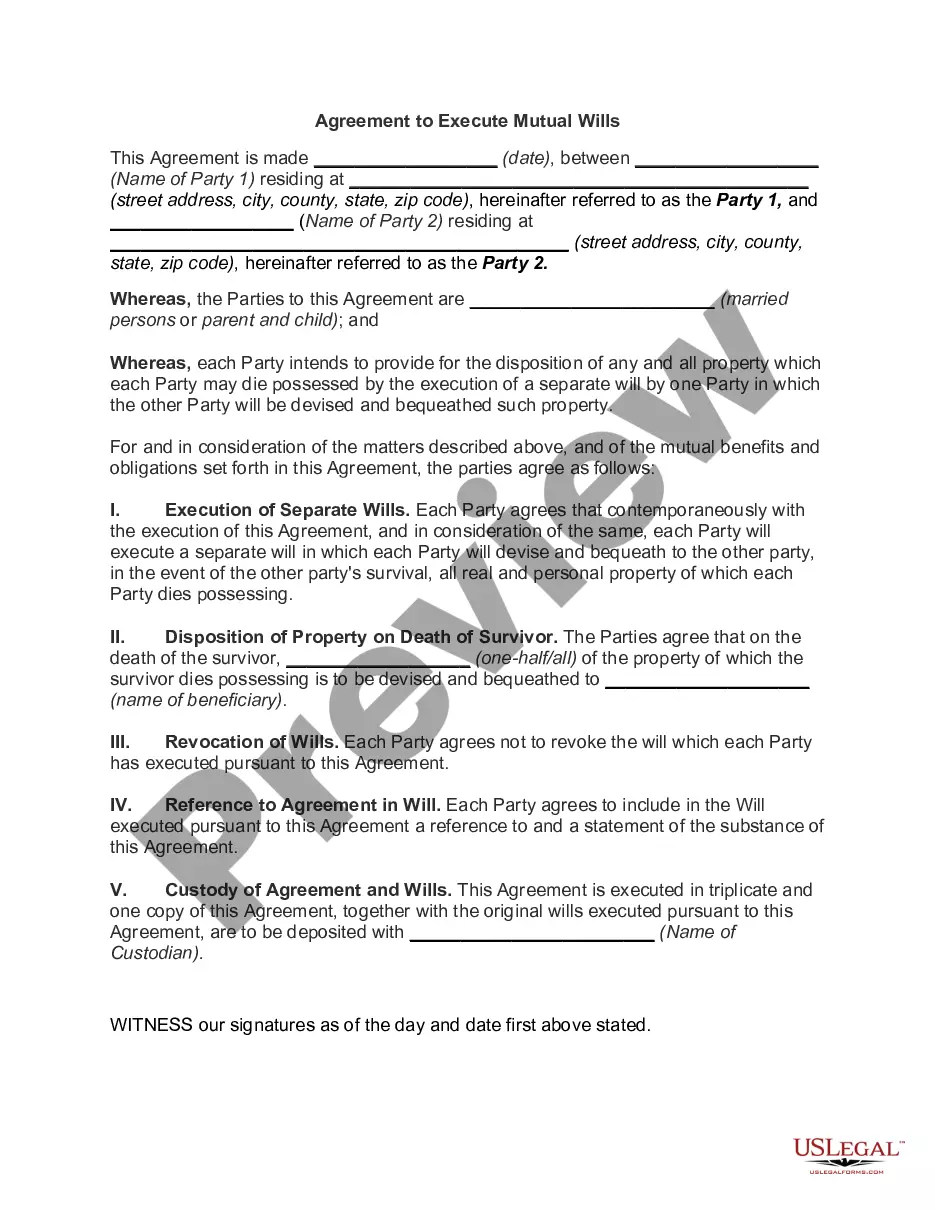
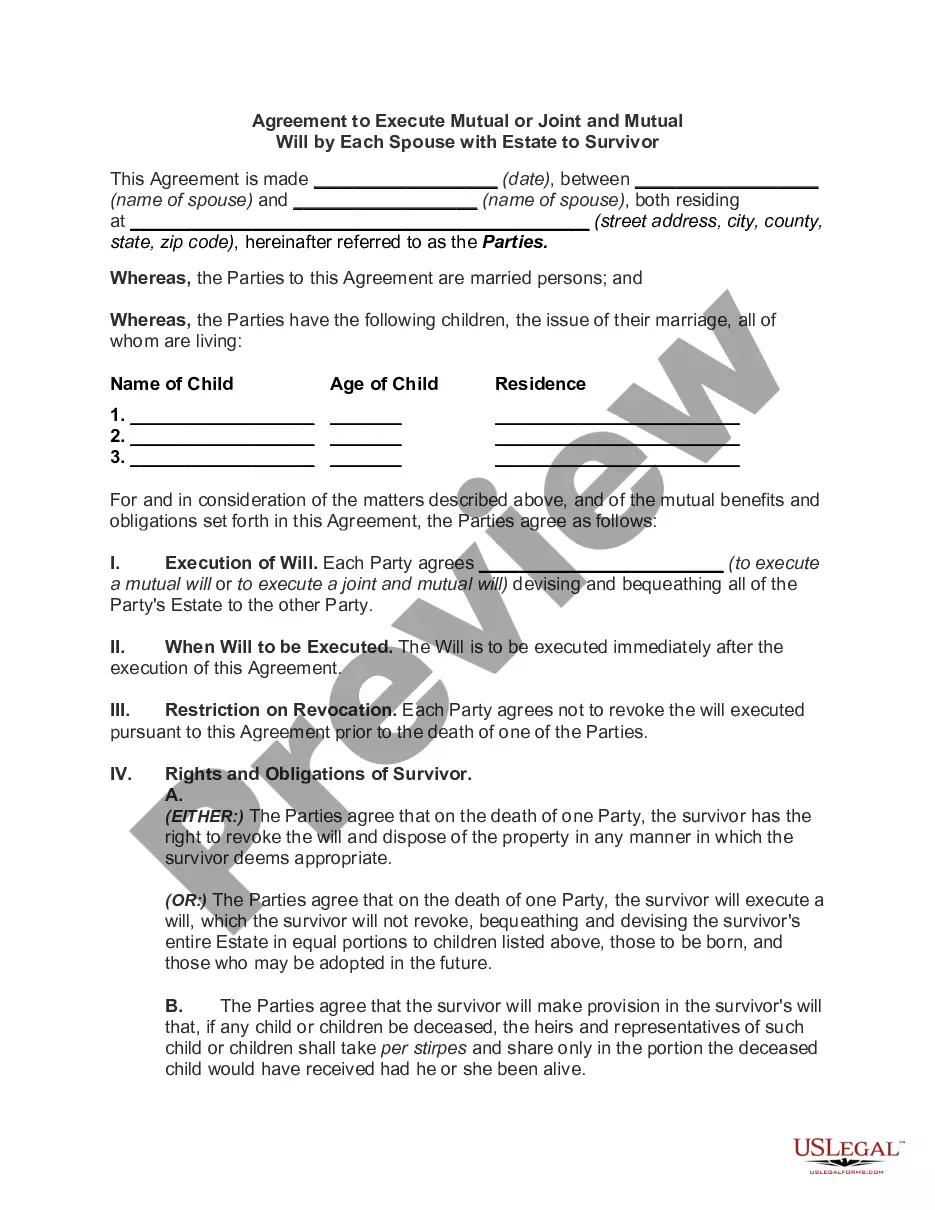
Kansas Agreement to Execute Mutual Wills
Description

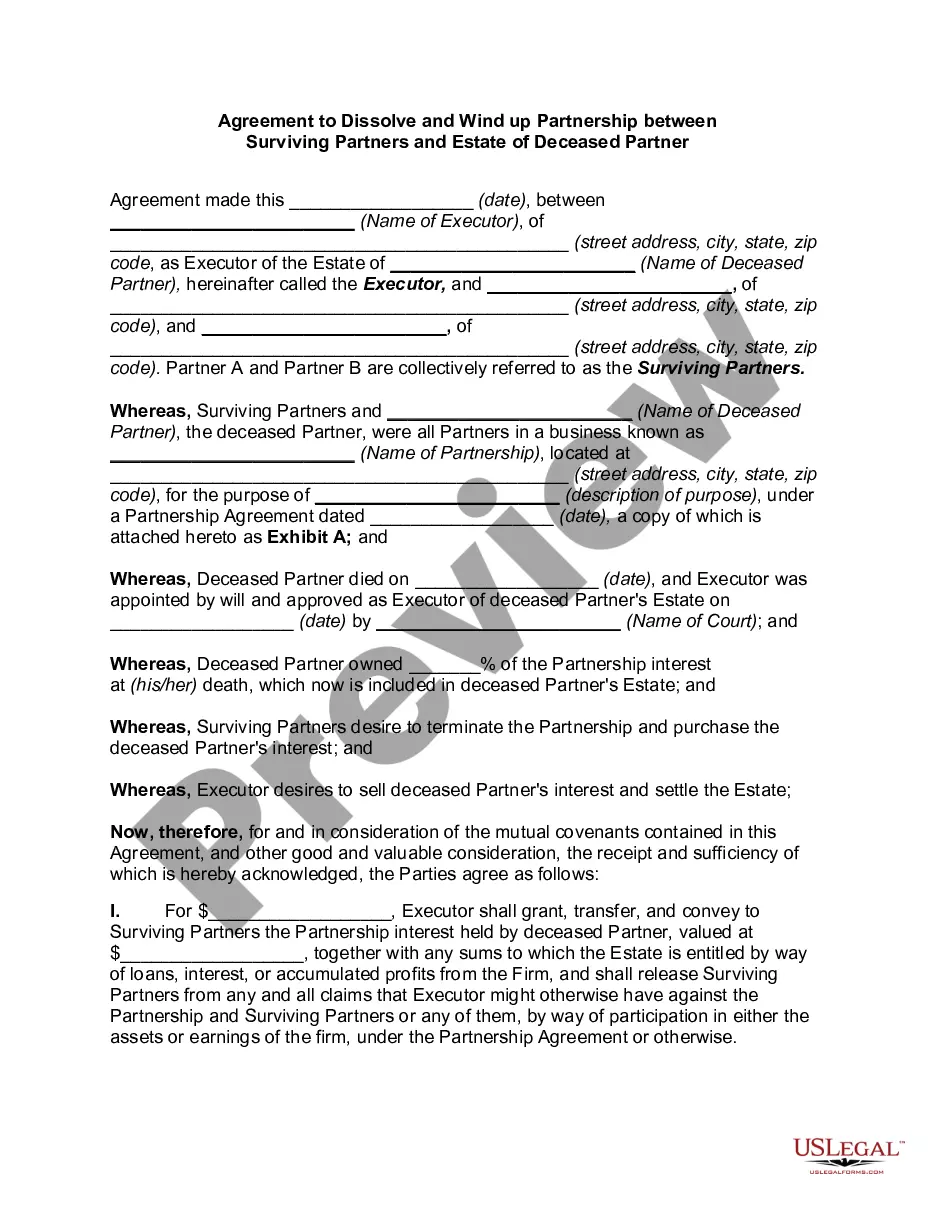
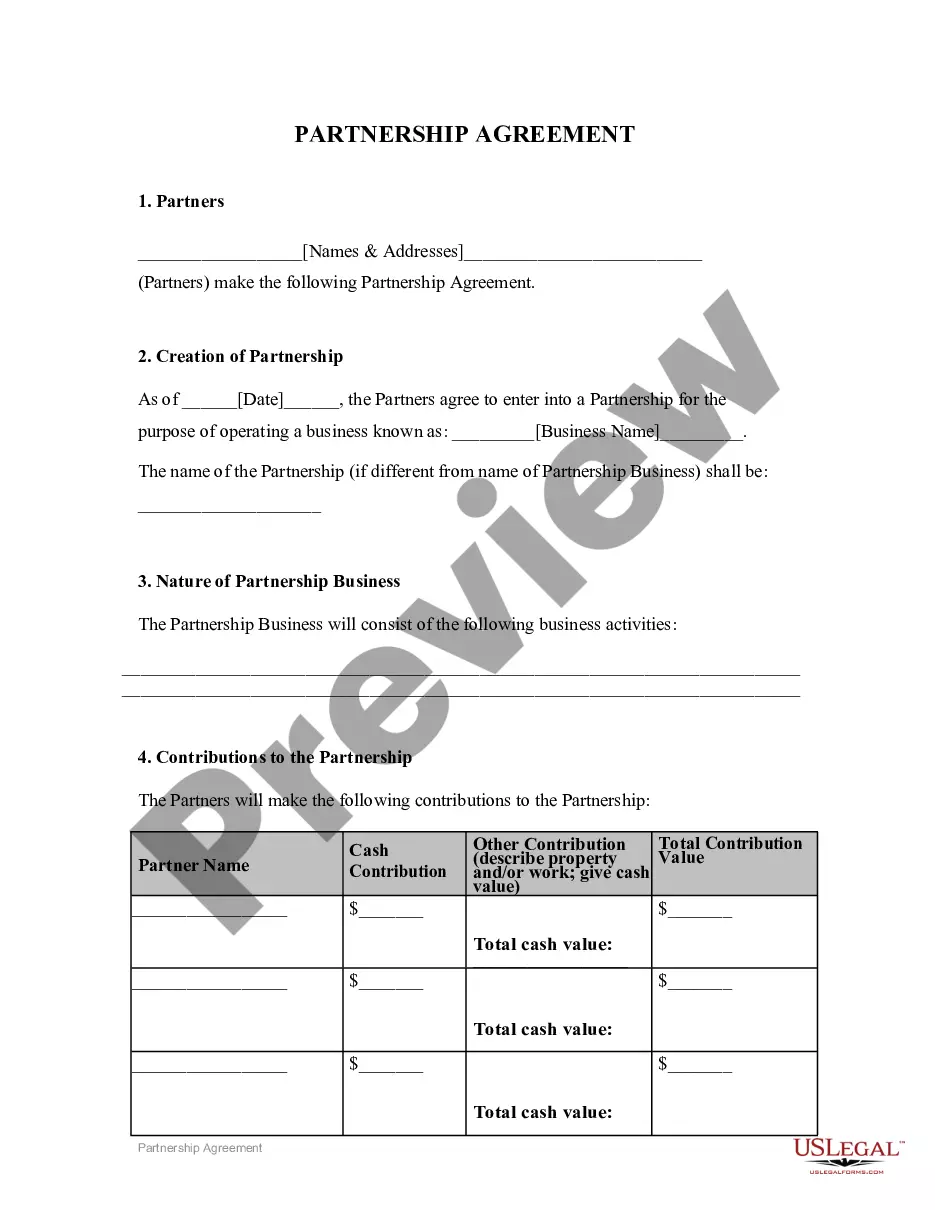
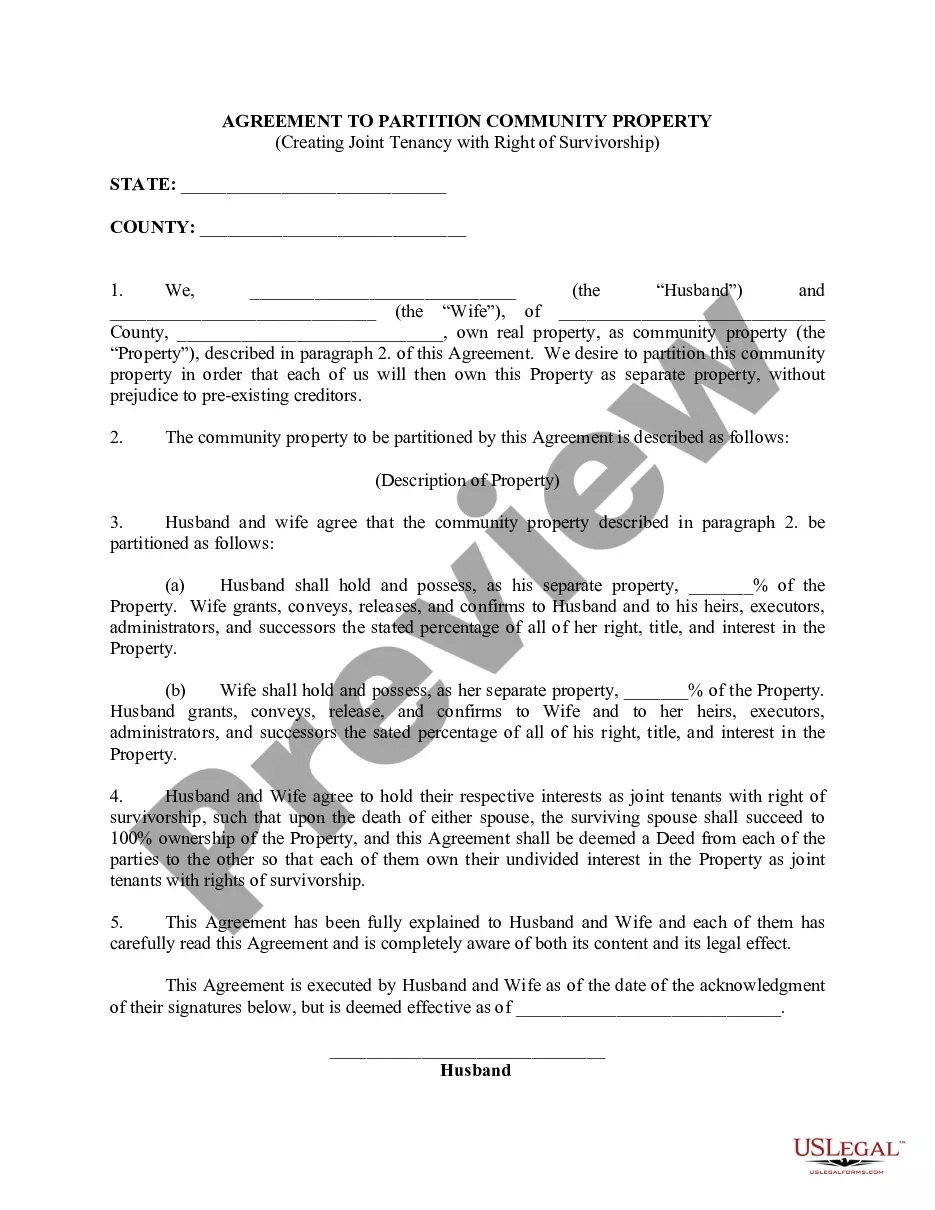
Get your form ready online
Our built-in tools help you complete, sign, share, and store your documents in one place.
Make edits, fill in missing information, and update formatting in US Legal Forms—just like you would in MS Word.
Download a copy, print it, send it by email, or mail it via USPS—whatever works best for your next step.
Sign and collect signatures with our SignNow integration. Send to multiple recipients, set reminders, and more. Go Premium to unlock E-Sign.
If this form requires notarization, complete it online through a secure video call—no need to meet a notary in person or wait for an appointment.
We protect your documents and personal data by following strict security and privacy standards.

Make edits, fill in missing information, and update formatting in US Legal Forms—just like you would in MS Word.

Download a copy, print it, send it by email, or mail it via USPS—whatever works best for your next step.

Sign and collect signatures with our SignNow integration. Send to multiple recipients, set reminders, and more. Go Premium to unlock E-Sign.

If this form requires notarization, complete it online through a secure video call—no need to meet a notary in person or wait for an appointment.

We protect your documents and personal data by following strict security and privacy standards.
Looking for another form?

How to fill out Agreement To Execute Mutual Wills?
Are you presently in a situation where you require documents for occasional business or personal purposes almost every day.
There are numerous legal document templates accessible online, but finding ones you can rely on isn't simple.
US Legal Forms provides thousands of template forms, including the Kansas Agreement to Execute Mutual Wills, which are designed to meet federal and state requirements.
Once you find the right form, click Get now.
Select the pricing plan you want, provide the necessary information to create your account, and pay for your order using PayPal or a credit card.
- If you are already acquainted with the US Legal Forms site and have an account, simply Log In.
- After that, you can download the Kansas Agreement to Execute Mutual Wills template.
- If you do not have an account and wish to begin using US Legal Forms, take these steps.
- Locate the form you need and ensure it corresponds to the correct city/area.
- Use the Preview button to examine the form.
- Review the information to confirm that you have selected the correct form.
- If the form isn't what you're looking for, use the Search field to find the form that meets your requirements.
Form popularity
FAQ
In Kansas, a will must be filed within six months of the decedent's death.
If I have a will, does my spouse need one? The answer is yes everyone should have a will! If you're married, you and your spouse can have separate (or joint) wills that you sign yourselves. This way, if something were to happen to one of you, there's no room for ambiguity or confusion.
To be valid, a will needs to:Be in writing and signed by the person making the will.The person making the will must have signed it with the intention of creating a valid will.Two people must witness the will maker's signature.More items...
A joint will can be executed with each other or with the third person in accordance with a proper agreement or contract in order to transfer or dispose of the property. A joint will can be made with another person through an agreement but it cannot be revoked by one testator.
A joint will is one document signed by two people. A mutual will represents two individual wills that are signed separately, but are largely the same in content.
Probate proceedings are usually only required if the deceased person owned any assets in their name only. Other assets, also known as non-probate property, can generally be transferred to the other owner without probate. Kansas has not adopted the Uniform Probate Code.
No, in Kansas, you do not need to notarize your will to make it legal. However, Kansas allows you to make your will "self-proving" and you'll need to go to a notary if you want to do that. A self-proving will speeds up probate because the court can accept the will without contacting the witnesses who signed it.
A petition is filed with the court to have an executor or administrator appointed. The court appoints someone and provides them with documents that allow them to act on behalf of the estate. Notice of probate must be sent to all heirs and creditors. Creditors are given four months to file a claim against the estate.
A joint will is one document signed by two people. A mutual will represents two individual wills that are signed separately, but are largely the same in content.
Making one will for two people is usually not advisable because it's irrevocable after the first spouse's death. by Ronna L. DeLoe, Esq. Even though married couples often have the same goals in mind when making their estate plan, most attorneys advise against joint wills.