Louisiana Release in Full from future obligation, after settlement
About this form
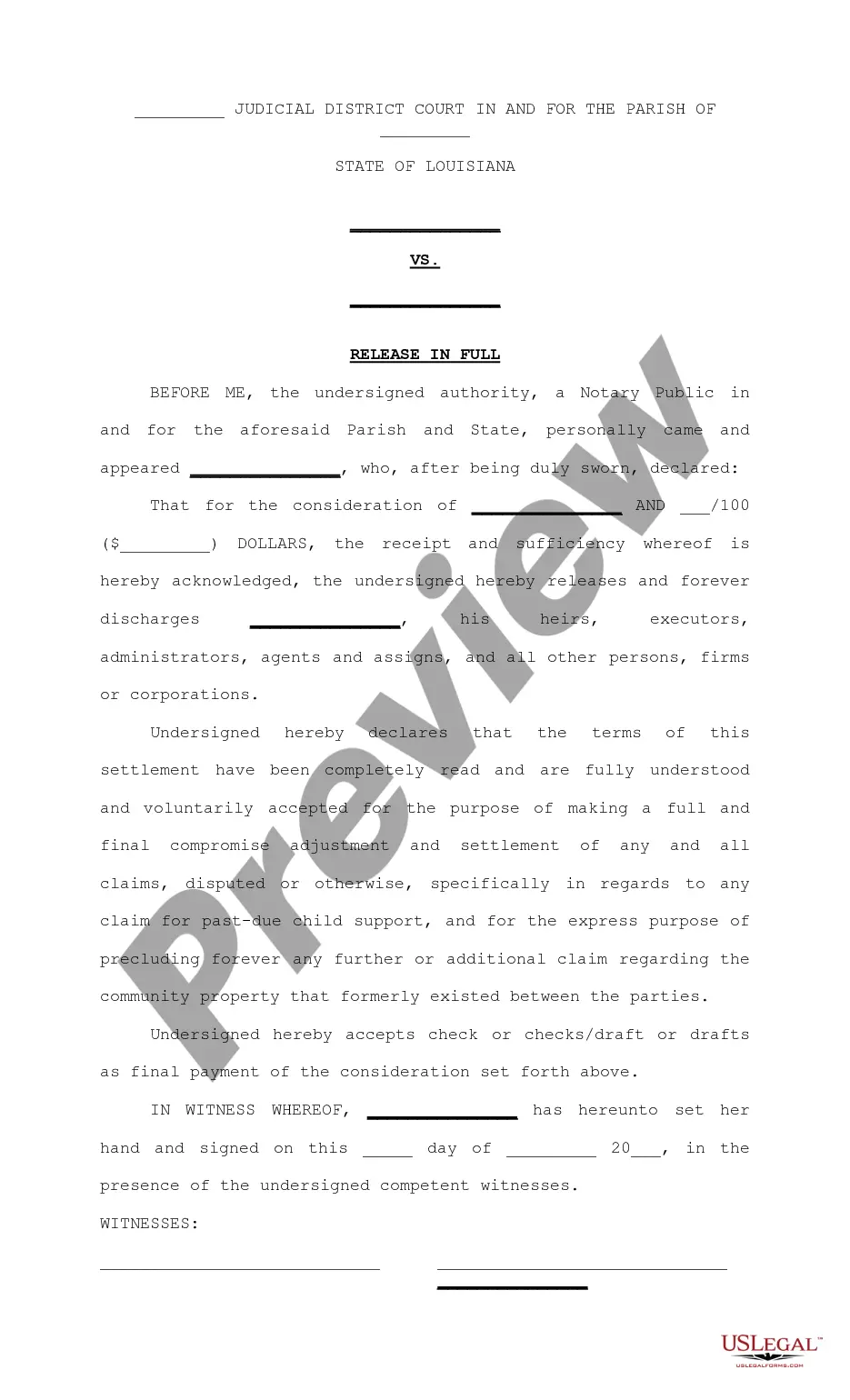
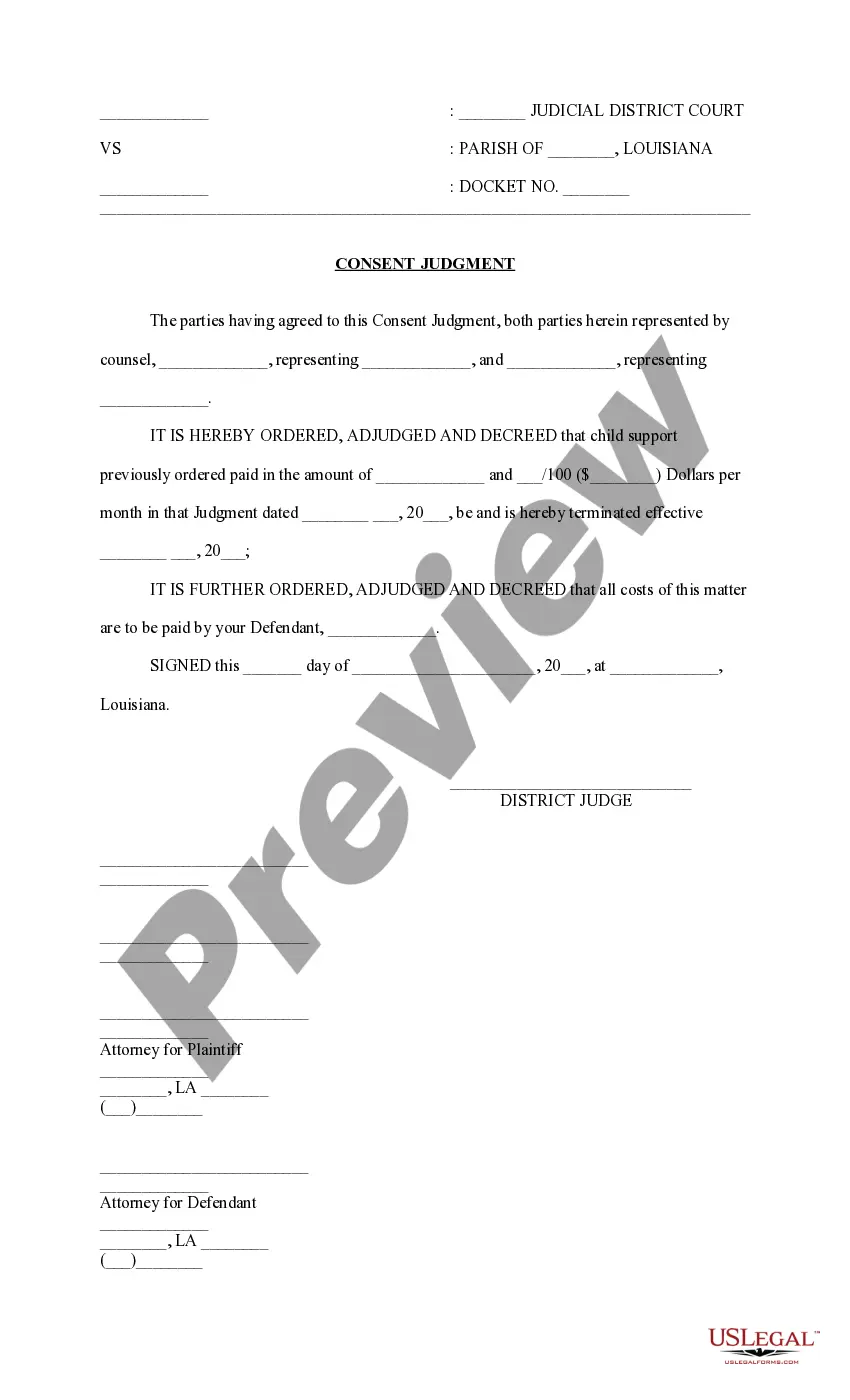
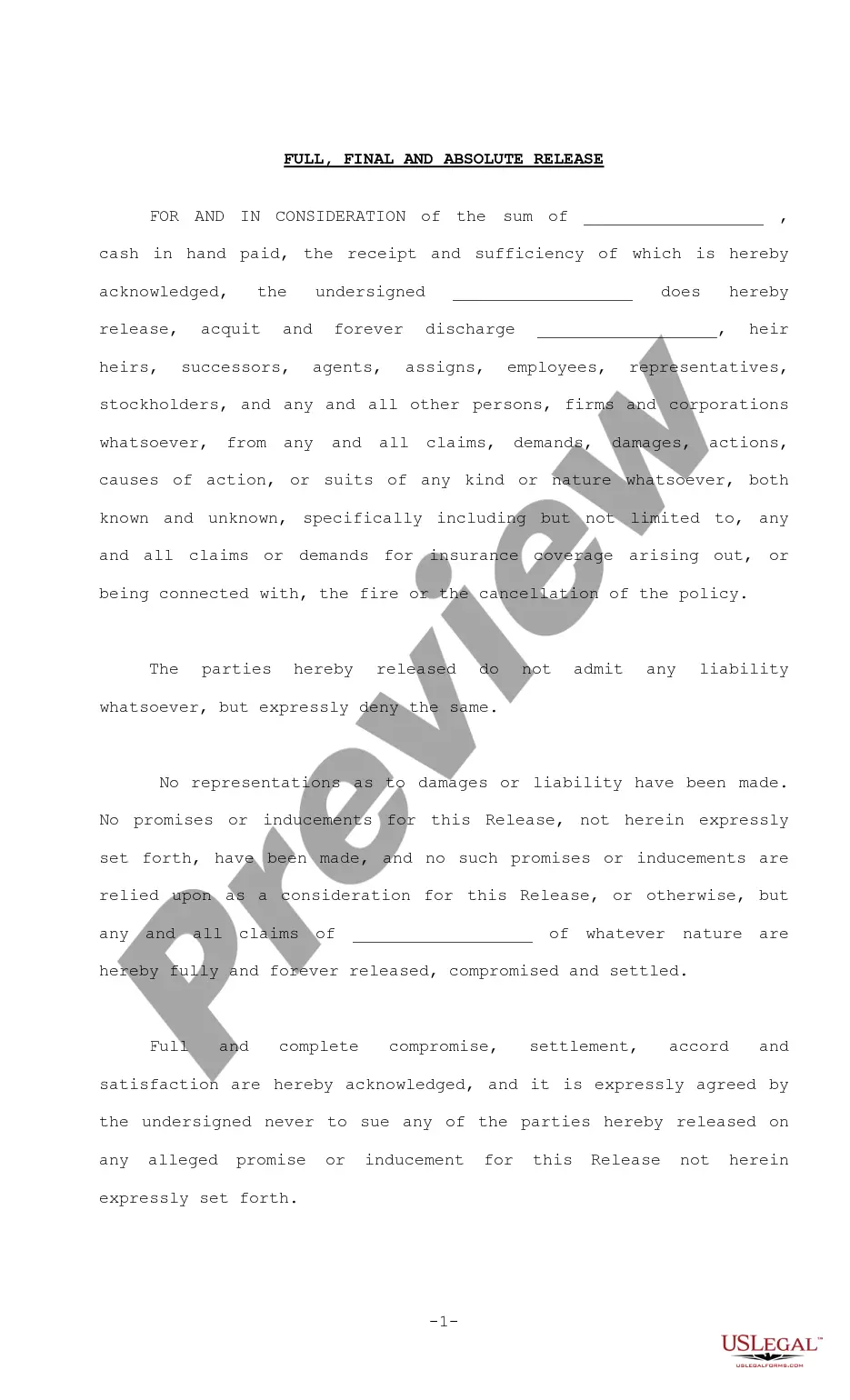
This form is a Release in Full from future obligation after settlement, which allows a plaintiff to formally release a defendant from any further financial obligations following a divorce settlement. It is specific to circumstances where a plaintiff has received an agreed-upon sum, particularly in relation to child support, and seeks to conclude all claims connected to former community property. Unlike similar forms, this document ensures that the plaintiff waives any future rights to claims regarding these matters.
Key parts of this document
- Parties involved: Identification of the plaintiff and defendant.
- Consideration: The amount paid to the plaintiff to finalize the settlement.
- Release statement: A declaration releasing the defendant from all future claims related to the specified obligations.
- Confirmation of understanding: An acknowledgment that the terms have been fully understood and voluntarily accepted by the plaintiff.
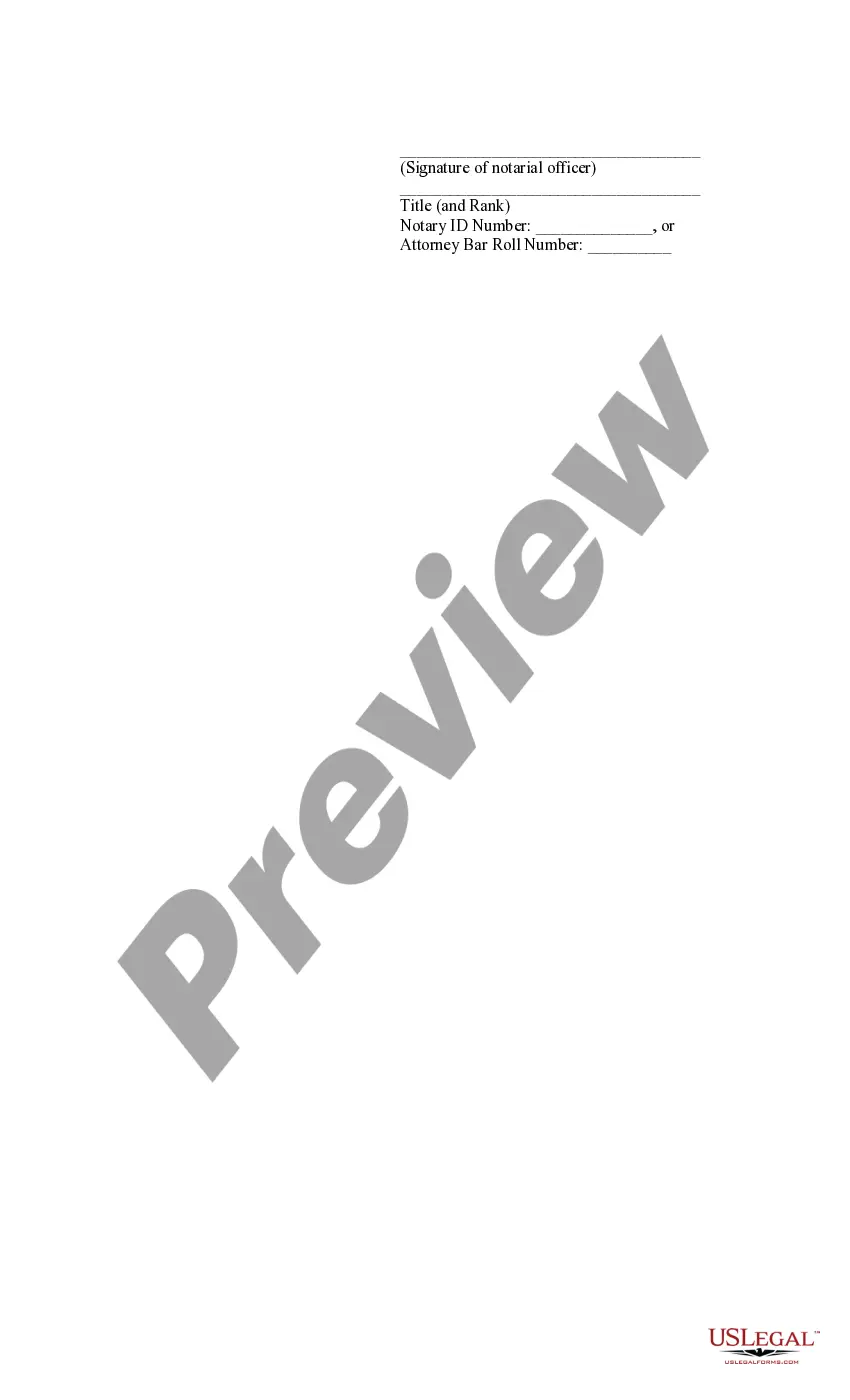
- Signature section: Space for signatures of the plaintiff, witnesses, and a notary public.
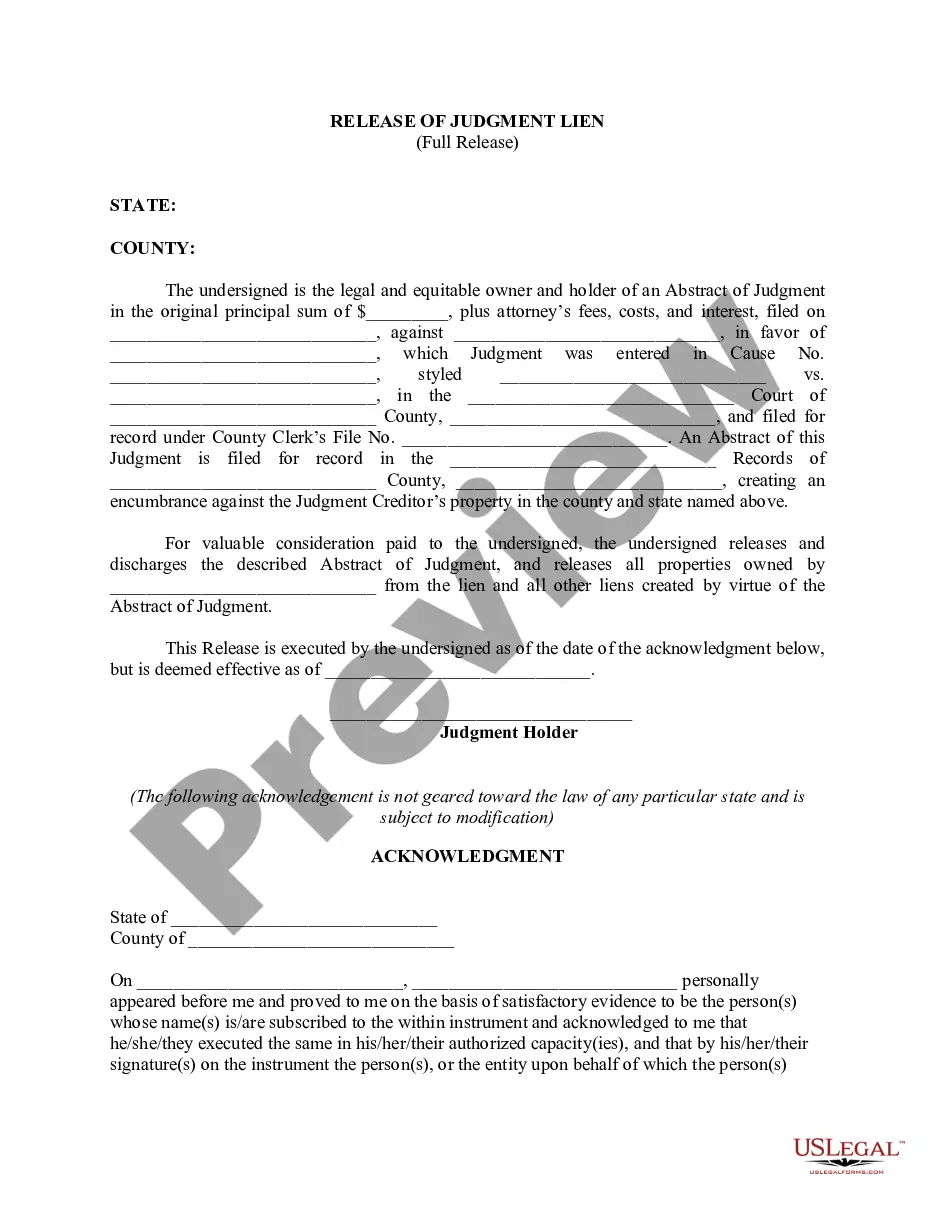
Situations where this form applies
This form should be used after reaching a settlement in a divorce case, specifically when one party has agreed to pay a certain amount of money to the other to resolve issues such as past-due child support. It is relevant when both parties want to prevent any future claims regarding community property or other financial matters once the settlement is finalized.
Intended users of this form
- Individuals involved in a divorce settlement.
- Parties looking to finalize all claims related to child support obligations.
- Anyone who wishes to formally release another party from further financial responsibilities stemming from their former partnership.
How to prepare this document
- Identify the parties: Fill in the names of the plaintiff and defendant.
- Specify the amount: Enter the total settlement amount to be paid.
- Read the release statement: Ensure that you understand the implications of waiving future claims.
- Sign the form: Both parties must sign in the presence of witnesses.
- Notarize: Ensure a notary public witnesses the signatures for legal validity.
Notarization guidance
Yes, this form must be notarized to be legally valid. A notary public must witness the signatures of all parties involved, ensuring that the document is executed correctly. US Legal Forms offers integrated online notarization, available twenty-four hours a day, providing a secure video call option and eliminating the need for travel.
Get your form ready online
Our built-in tools help you complete, sign, share, and store your documents in one place.
Make edits, fill in missing information, and update formatting in US Legal Forms—just like you would in MS Word.
Download a copy, print it, send it by email, or mail it via USPS—whatever works best for your next step.
Sign and collect signatures with our SignNow integration. Send to multiple recipients, set reminders, and more. Go Premium to unlock E-Sign.
If this form requires notarization, complete it online through a secure video call—no need to meet a notary in person or wait for an appointment.
We protect your documents and personal data by following strict security and privacy standards.

Make edits, fill in missing information, and update formatting in US Legal Forms—just like you would in MS Word.

Download a copy, print it, send it by email, or mail it via USPS—whatever works best for your next step.

Sign and collect signatures with our SignNow integration. Send to multiple recipients, set reminders, and more. Go Premium to unlock E-Sign.

If this form requires notarization, complete it online through a secure video call—no need to meet a notary in person or wait for an appointment.

We protect your documents and personal data by following strict security and privacy standards.
Mistakes to watch out for
- Forgetting to fill in the settlement amount.
- Not having the form notarized if required.
- Failing to include witnesses when signing.
- Misunderstanding the implication of the release statement.
Why use this form online
- Convenience of downloading and completing the form at your own pace.
- Editability enables customization according to specific details of your case.
- Reliability from forms drafted by licensed attorneys, ensuring legal standards are met.
Legal use & context
- This form is legally binding once completed and notarized.
- It precludes any further claims related to the stated issues, giving both parties closure.
- Failure to properly execute this form may lead to disputes regarding financial obligations in the future.
Summary of main points
- The Release in Full from future obligation after settlement is crucial for finalizing financial agreements in divorce cases.
- This form protects parties from future claims regarding agreed financial matters.
- Proper completion and notarization ensure the formâs validity and enforceability.
Looking for another form?
Form popularity
FAQ
Expressing Obligation. In order to express the idea of obligation, to talk about rules, duties, or orders, to give strong advice to other people or to ourselves, must, have (got) to, should and ought to are used.
To express obligation, duty or necessity in the future or the past, must and need are not used. They are replaced by have to: We must (need to) buy another ticket. We had to buy another ticket yesterday.
The modal verb must has two past tense forms: had to and must have. Which form we use depends on whether we want to express obligation or if we want to say how certain we are about the probability of something happening. This table below shows us the past tense of must and have to and when to use them.
Like all modals, 'must' has no future form; we have to use an alternative way of expressing the idea, for example: He will have to (future obligation) visit the doctor. 'Must' has no past tense form; once again, we have to use an alternative way of expressing the idea, for example: He had to visit the doctor.
I have to finish my work before this evening. I have got to learn English if I want to live in the USA. I must see the doctor soon because I don't feel well. It is obligatory that I stop when the traffic light turn red. It is necessary that I take a taxi. I'm late.
Must is used to express obligation, give orders and give advice. It can only be used for present and future reference.
As you know, we use must to express necessity or obligation in the present. Must is a modal verb, therefore it does not have an infinitive form. Because of this, the auxiliary verb will cannot precede must. We express necessity or obligation in the future with the verb to have to.
Obligation in the present: I have to finish my work before this evening. I have got to learn English if I want to live in the USA. I must see the doctor soon because I don't feel well. It is obligatory that I stop when the traffic light turn red.