Louisiana Rule for Divorce and to Set Visitation
What this document covers
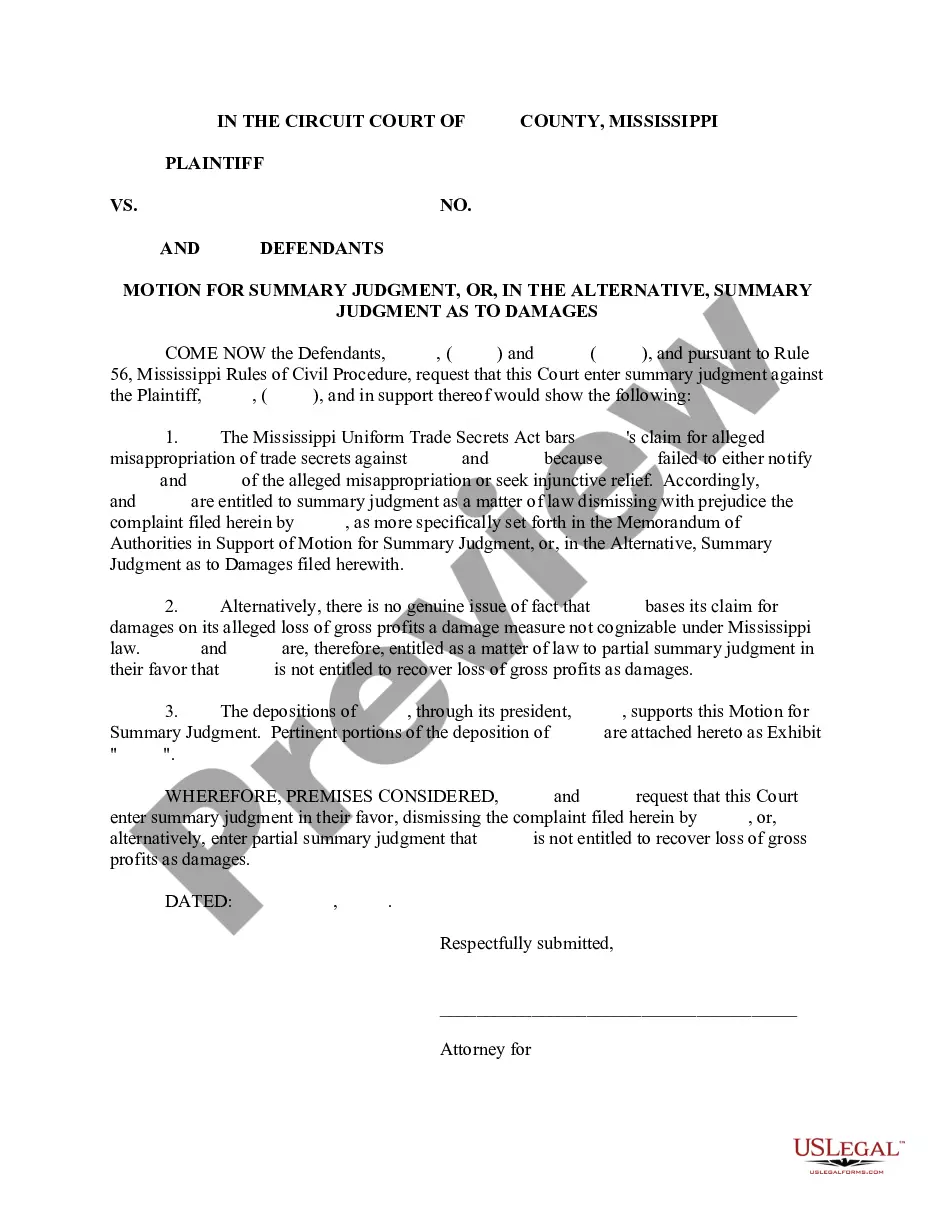
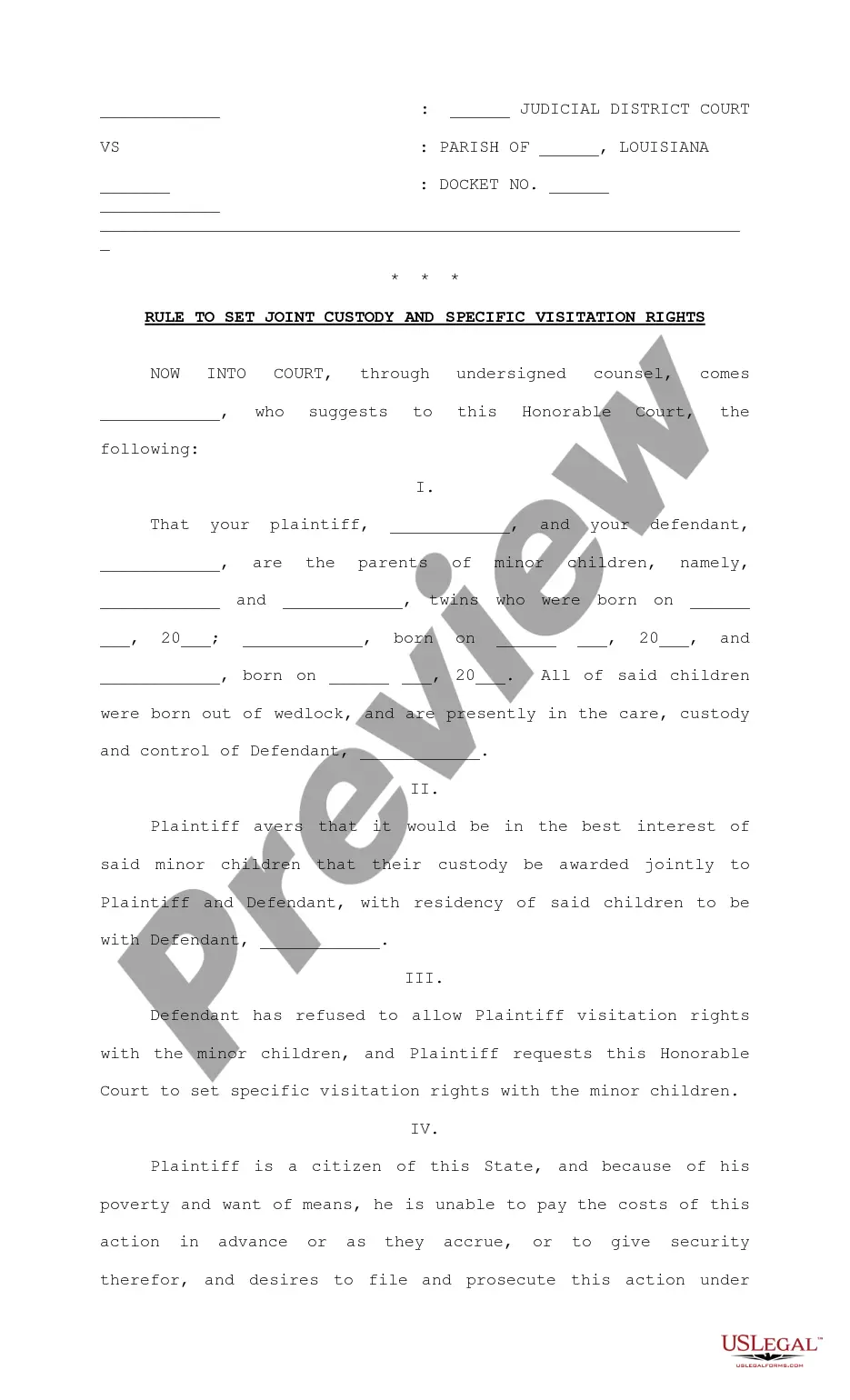
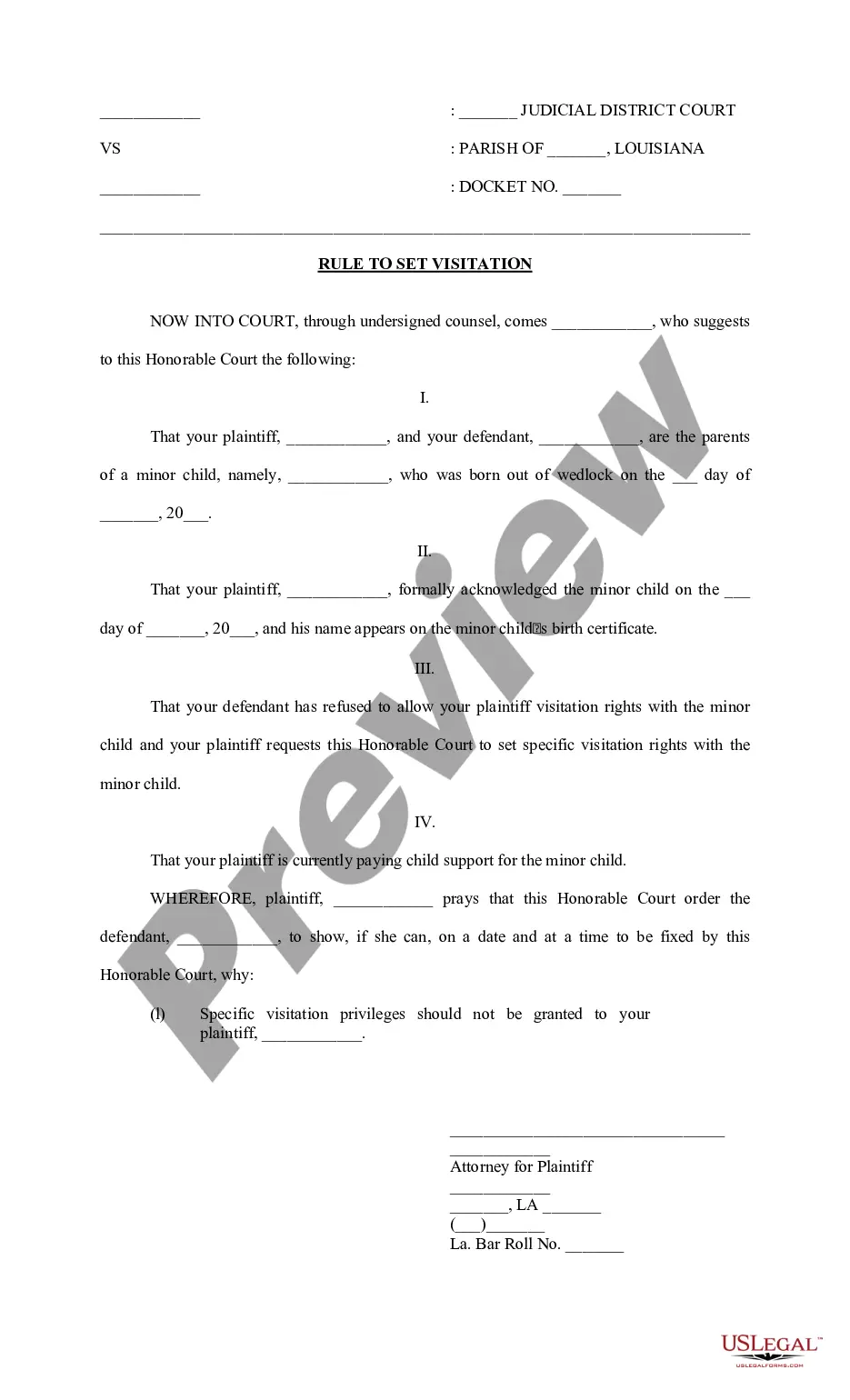
The Rule for Divorce and to Set Visitation is a legal document that allows a petitioner to request a divorce and establish visitation rights for a minor child. This form is specifically used in the context of Louisiana law, based on La. Civil Code Article 102. Unlike standard divorce forms, this one addresses both the dissolution of marriage and the need for court intervention regarding child visitation, ensuring that both parental rights and responsibilities are clearly defined.
Main sections of this form
- Petition for Divorce: Specifies that the petition has been filed and served.
- Duration of Separation: Indicates that the parties have lived apart for more than 180 days.
- Minor Child Information: Identifies the child born from the marriage.
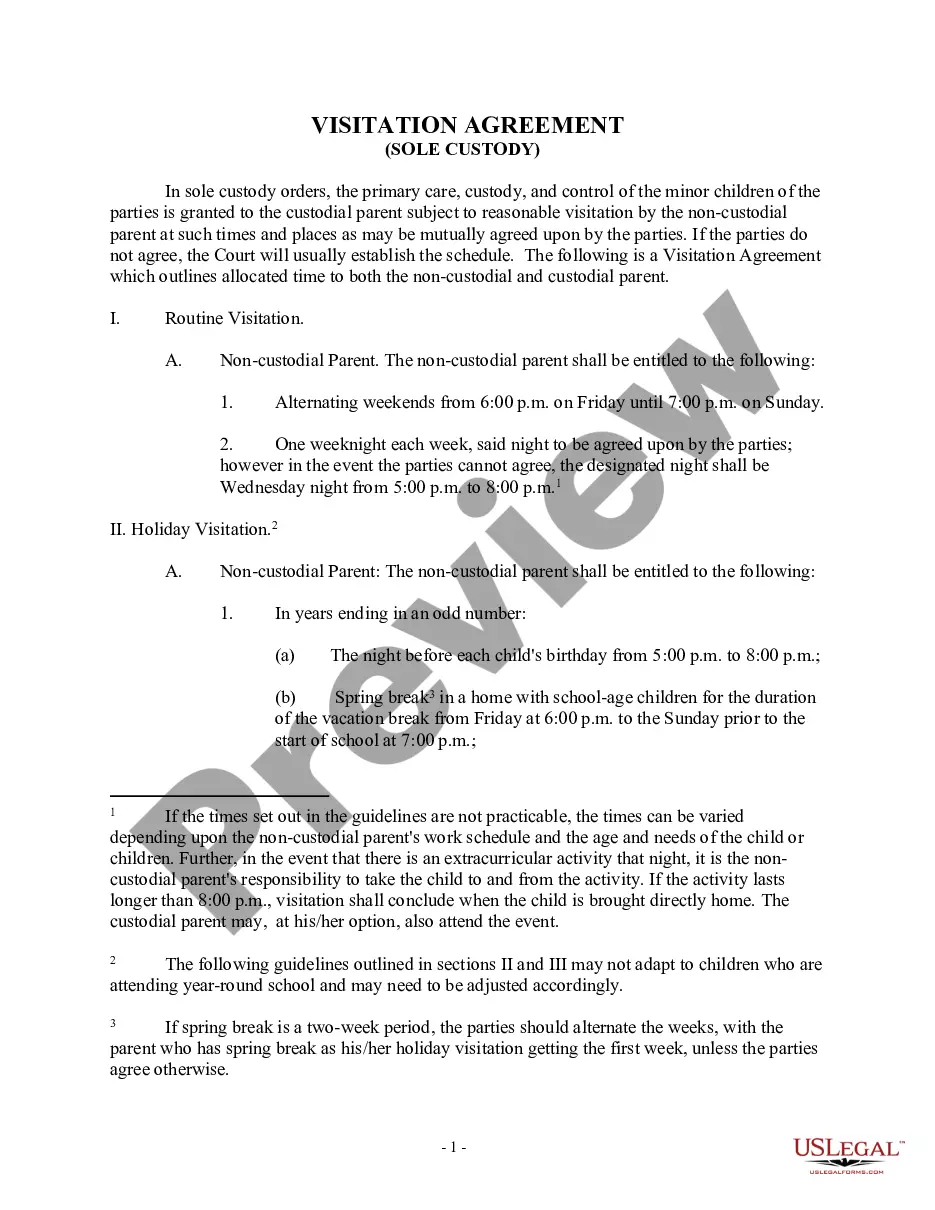
- Request for Visitation Rights: Seeks to establish specific visitation privileges for the petitioner.
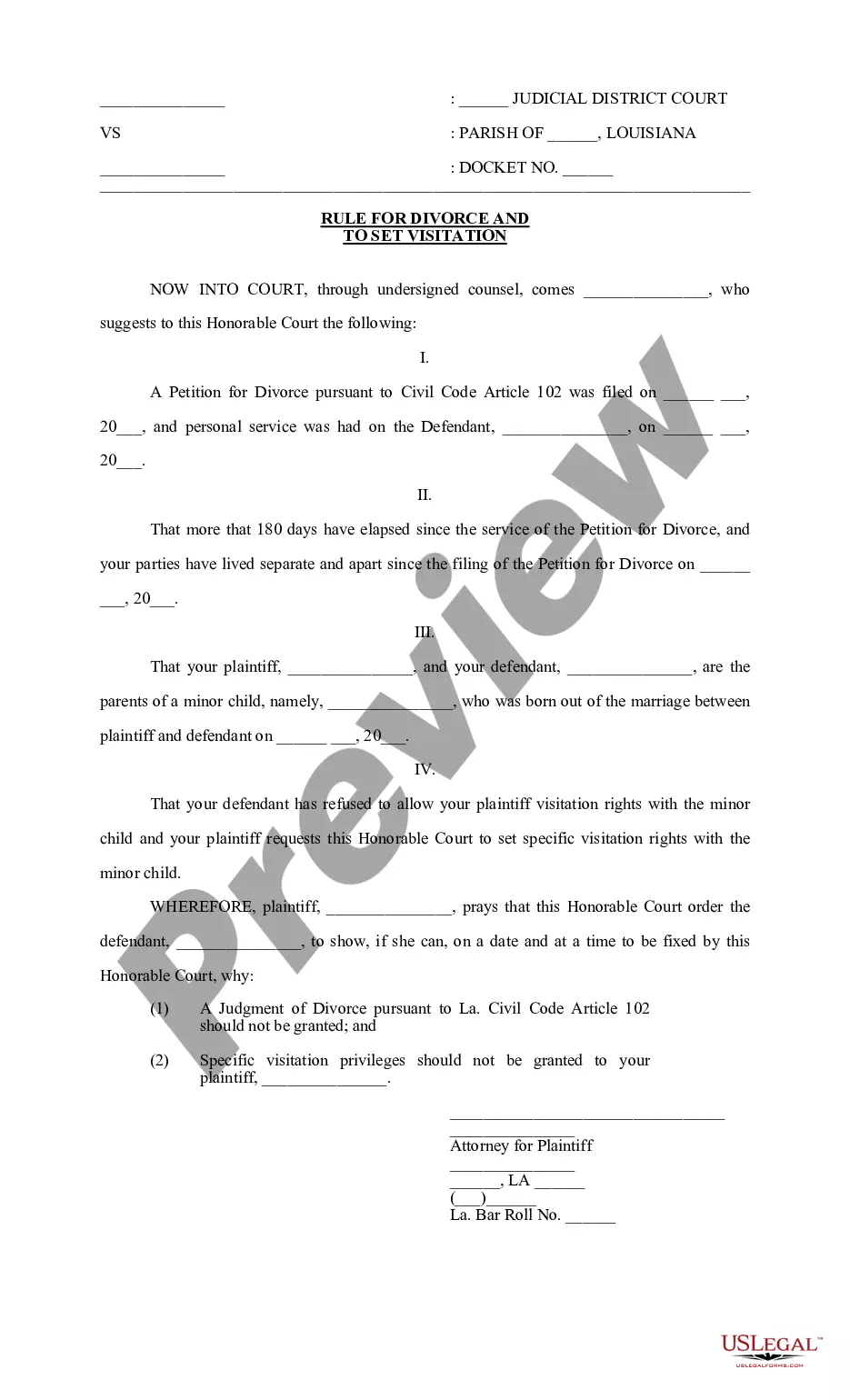
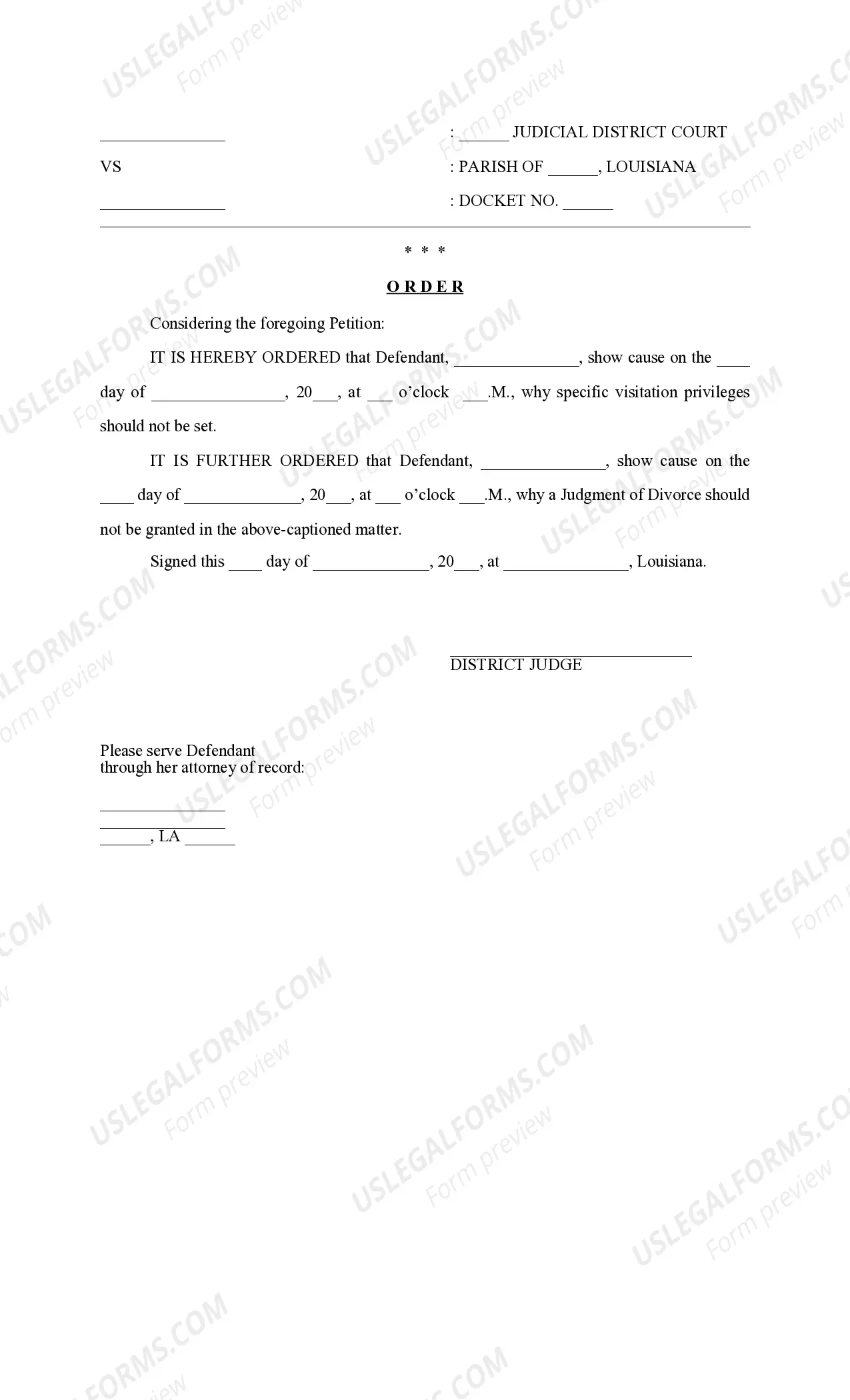
- Court Order: Contains a request for the defendant to show cause for denying visitation and why the divorce should not be granted.
When this form is needed
This form should be used when one spouse wishes to initiate divorce proceedings in Louisiana while also seeking legal enforcement of visitation rights concerning children from the marriage. Common scenarios include situations where one parent is denied access to their minor child, necessitating a legal framework to establish visitation rights alongside the divorce process.
Intended users of this form
- Individuals filing for divorce in Louisiana who have minor children with their spouse.
- Petitioners who have been separated from their spouse for more than 180 days.
- Parents seeking to establish or modify visitation rights in legal proceedings.
Completing this form step by step
- Identify the parties involved by entering the names of the petitioner and defendant.
- Provide the relevant dates, including when the petition for divorce was filed and when the defendant was served.
- Specify the details about the minor child, including their name and date of birth.
- Clearly state the request for specific visitation rights in the petition.
- Review the completed form for accuracy before submitting it to the court.
Notarization guidance
This form usually doesn’t need to be notarized. However, local laws or specific transactions may require it. Our online notarization service, powered by Notarize, lets you complete it remotely through a secure video session, available 24/7.
Get your form ready online
Our built-in tools help you complete, sign, share, and store your documents in one place.
Make edits, fill in missing information, and update formatting in US Legal Forms—just like you would in MS Word.
Download a copy, print it, send it by email, or mail it via USPS—whatever works best for your next step.
Sign and collect signatures with our SignNow integration. Send to multiple recipients, set reminders, and more. Go Premium to unlock E-Sign.
If this form requires notarization, complete it online through a secure video call—no need to meet a notary in person or wait for an appointment.
We protect your documents and personal data by following strict security and privacy standards.

Make edits, fill in missing information, and update formatting in US Legal Forms—just like you would in MS Word.

Download a copy, print it, send it by email, or mail it via USPS—whatever works best for your next step.

Sign and collect signatures with our SignNow integration. Send to multiple recipients, set reminders, and more. Go Premium to unlock E-Sign.

If this form requires notarization, complete it online through a secure video call—no need to meet a notary in person or wait for an appointment.

We protect your documents and personal data by following strict security and privacy standards.
Mistakes to watch out for
- Failing to provide complete and accurate information about the parties and the child.
- Not adhering to the required timeframe of 180 days of separation before filing.
- Neglecting to include specific visitation requests in the petition.
- Submitting the form to the wrong jurisdiction or court.
Why use this form online
- Convenience: Download and complete the form from the comfort of your home.
- Editability: Modify the form as needed to suit your specific circumstances.
- Access to Legal Expertise: Templates are drafted by licensed attorneys to ensure compliance with state laws.
Legal use & context
- This form serves as an official request to the court, which can significantly influence visitation rulings.
- Proper completion and filing can improve the chances of favorable court decisions regarding both divorce and visitation rights.
- Using this form helps create a clear legal record that can be referenced in future disputes.
Key takeaways
- The Rule for Divorce and to Set Visitation is essential for parents navigating divorce with children.
- Accurate and honest information is critical for successful outcomes.
- This form addresses both the divorce process and child visitation in one legal document.
Looking for another form?
Form popularity
FAQ
The law calls this reasonable visitation. Reasonable visitation generally means the parents of the child must come up with a schedule a parenting plan, which is a schedule with days and times for visitation.The custodial parent has no legal duty to agree to any proposed visitation scheduled.
If by dating you mean going out, yes. If you have sexual relations with someone before your divorce is final (even after you have filed for divorce, but before the divorce is granted by the Court), you are committing adultery. If your ex proves that, he or she can get an immediate divorce based on your adultery.
Legally, you can date while going through divorce proceedings. If you have a covenant marriage, as recognized by the state of Louisiana, you may need to go through significant counseling before moving on, including dating, since a covenant marriage makes it much more difficult to pursue divorce.
The relationship between the child and each parent. The relationship between the child and any siblings residing in the parents' households. Each parent's ability to care for the child. Each parent's ability to provide shelter, clothing, and food for the child.
Louisiana law states that a child has a right to time with both parents, so if the court awards one parent primary physical custody, the judge will order visitation for the noncustodial parent.
Visitation rights may be determined by the agreement of the parents or by a court order if the parents cannot agree. Courts will generally consider the wishes of the child, if age appropriate, when reviewing custody and visitation issues.The parents can draft a specific agreement which may include: Specific weekends.
If there is a valid, court-approved custody order in force, denying visitation is illegal and can have serious legal repercussions for the parent who denies visitation.However, the custodial parent must still take specific steps before denying visitation, such as notifying the appropriate authorities.
Unfortunately, there is no law requiring parents to meet halfway during time-sharing to exchange the children.