Louisiana Easement for Electric Pole, Wires, etc
About this form
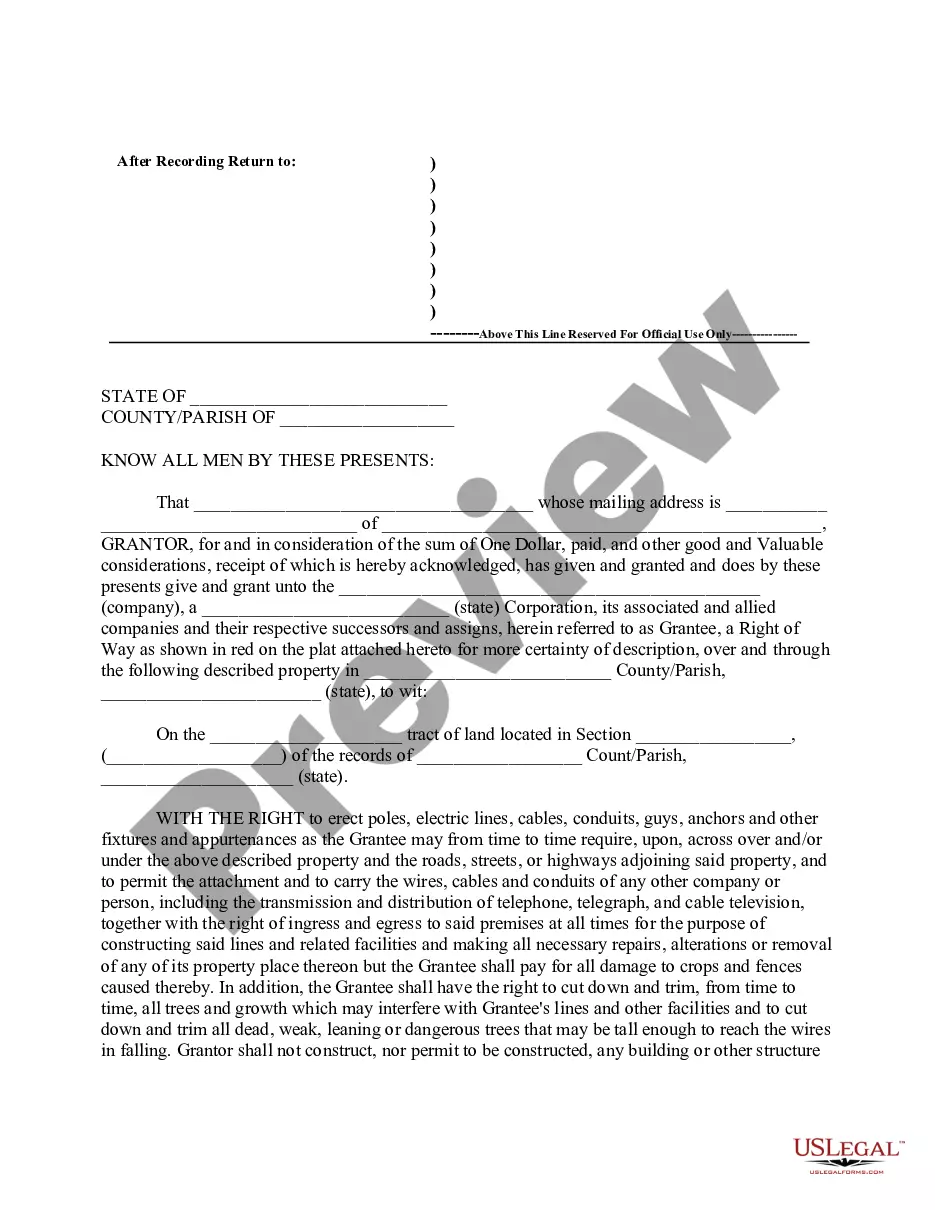
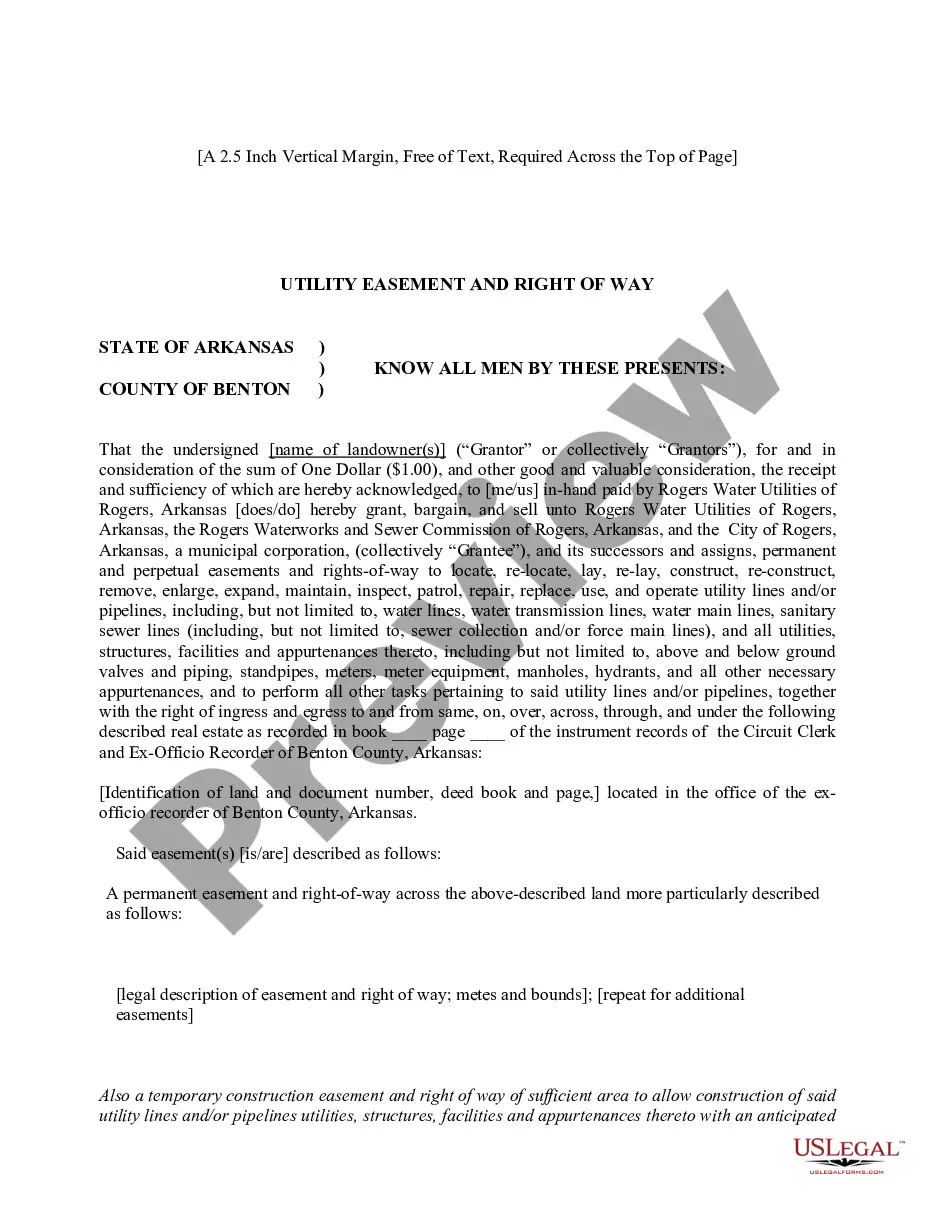
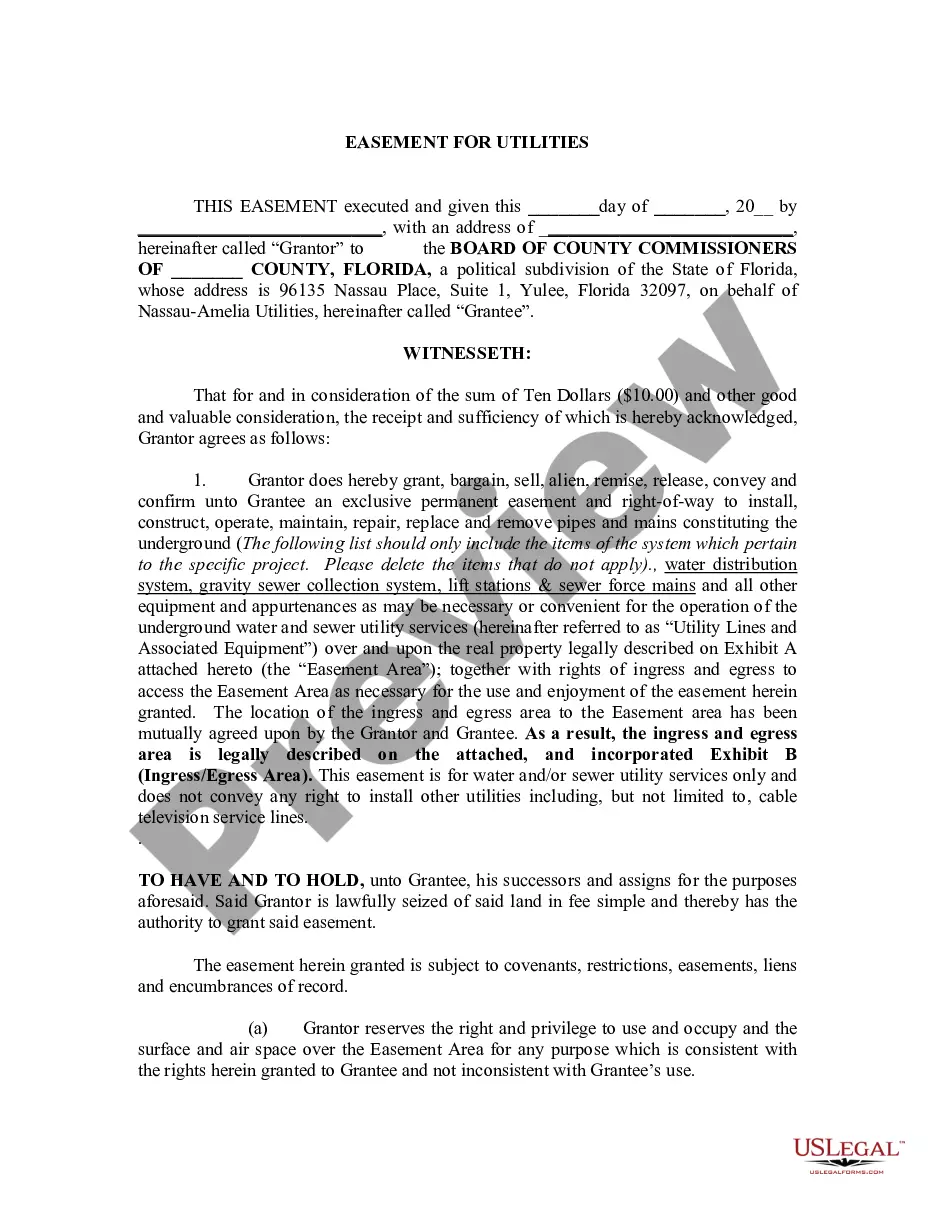
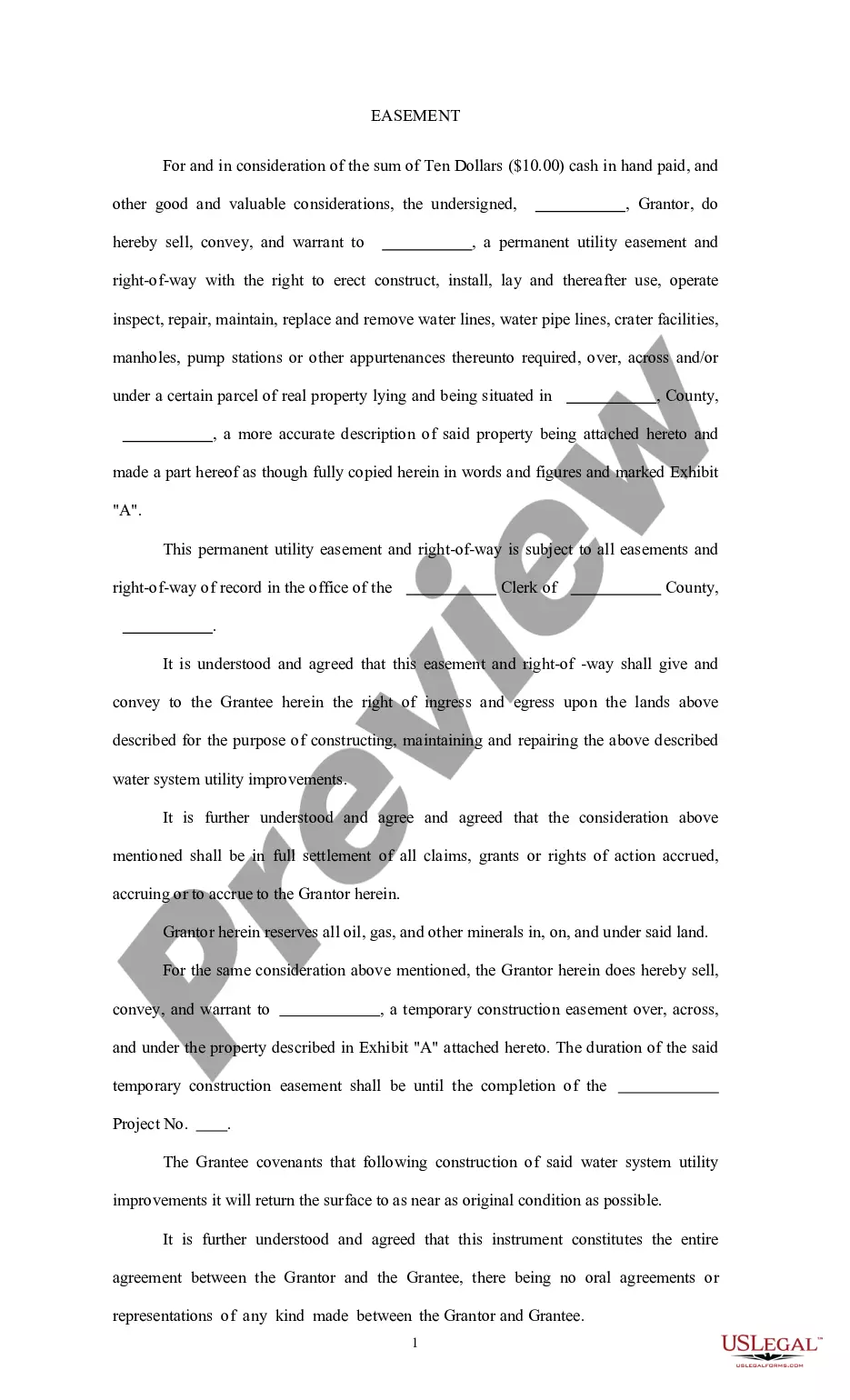
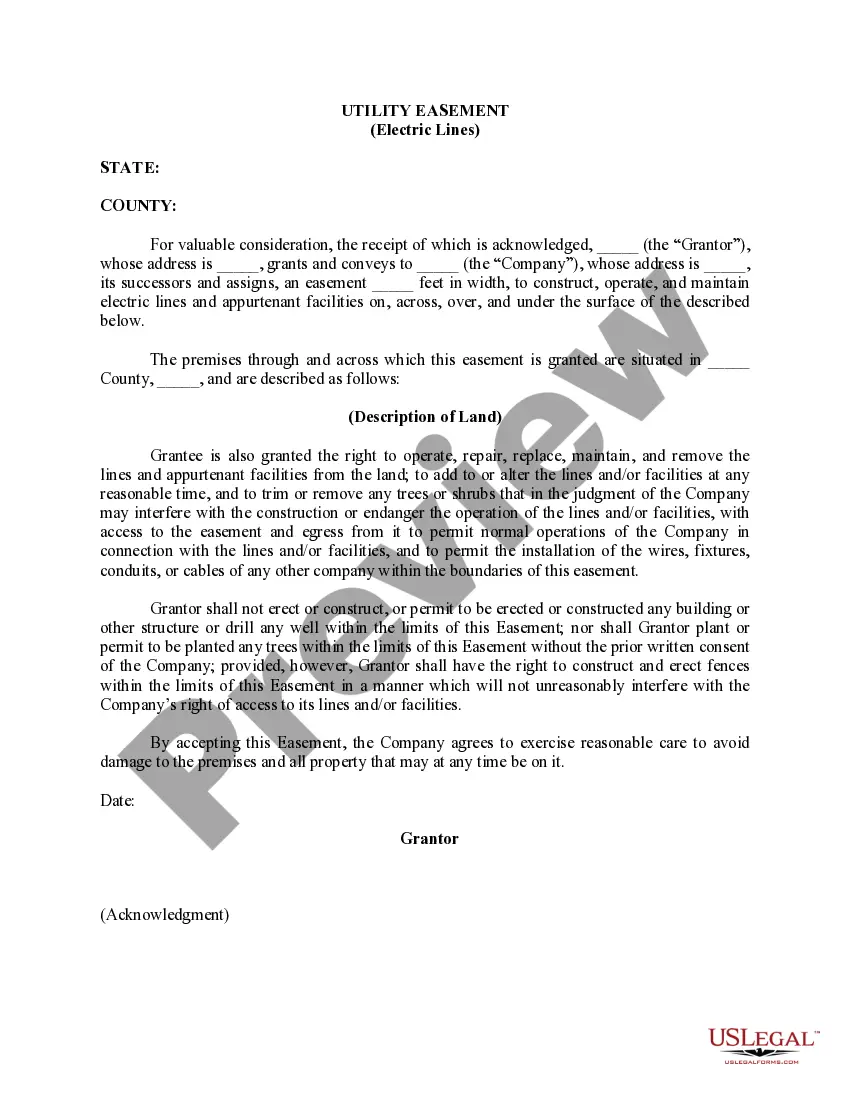
An Easement for Electric Pole, Wires, etc. is a legal document granting permission for a utility company to install and maintain electric poles, wires, and related facilities on a specified piece of property. Unlike other real estate documents, this easement does not transfer ownership but allows designated access rights to utility providers, ensuring they can safely provide essential services without causing disruptions for property owners.
Main sections of this form
- Grantor and Grantee information: The legal names and addresses of the property owner (Grantor) and the utility company (Grantee).
- Property description: A detailed description of the property where the easement will be granted, including any relevant plat diagrams.
- Rights granted: Specifies the rights the Grantee has to construct and maintain utility lines and infrastructure on the property.
- Conditions of use: Details any conditions that the Grantee must follow, such as compensation for damages to crops or property.
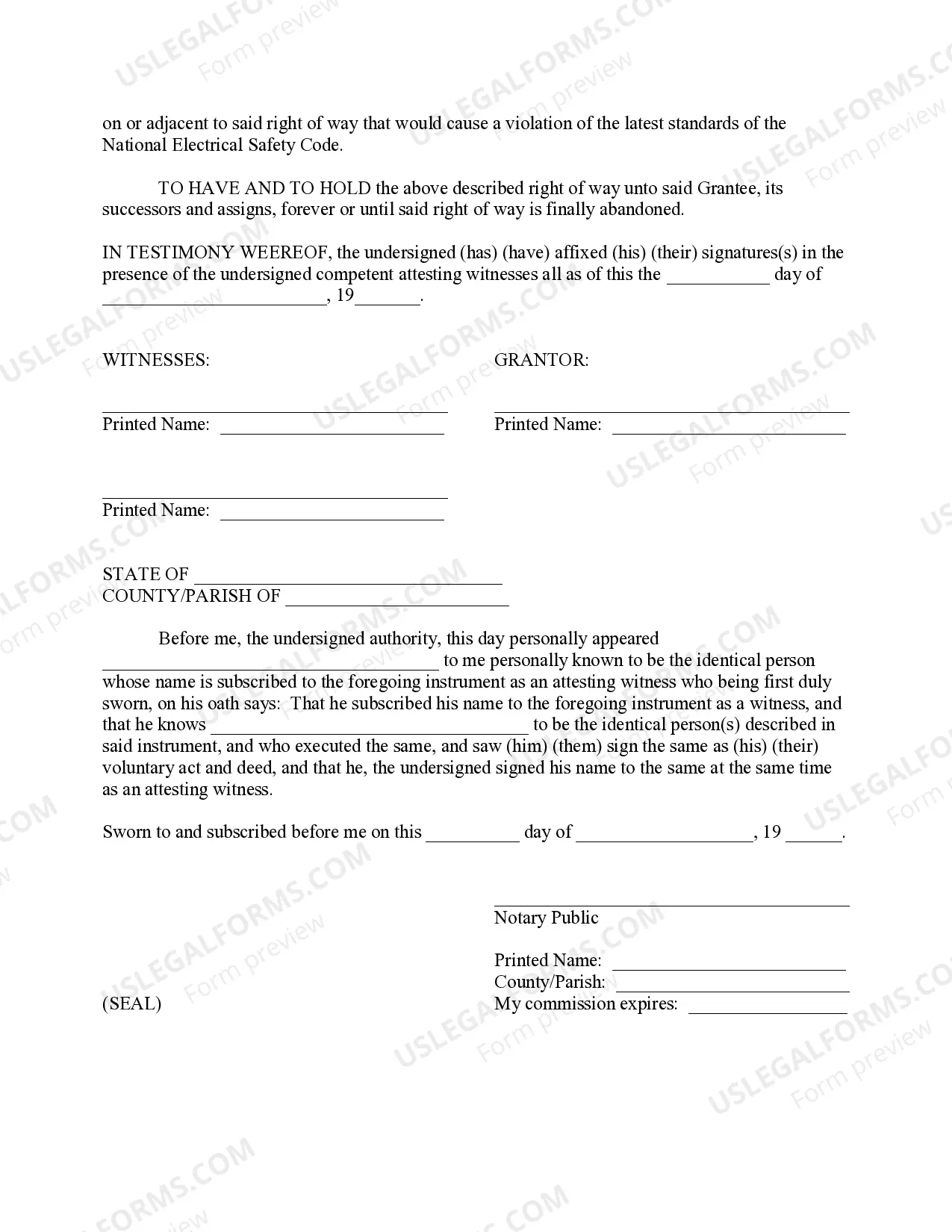
- Signatures and notarization requirements: Places for the Grantor's and witnesses' signatures, along with areas for notary acknowledgment.
Common use cases
This form should be used when a utility company needs to access private property to install, maintain, or repair electric poles and lines. Typically, it is necessary when existing infrastructure needs to be updated or extended, and it is essential for property owners to ensure that the utility's access does not infringe upon their property rights.
Who this form is for
- Property owners granting access to utility companies.
- Utility companies requiring a legal right-of-way for infrastructure installation.
- Real estate professionals facilitating utility easements in transactions.
- Anyone involved in managing land with existing utility lines that require legal clarification of access rights.
Steps to complete this form
- Identify the parties: Fill in the names and addresses of the Grantor (property owner) and Grantee (utility provider).
- Specify the property: Enter the detailed description of the property to which the easement applies, referencing the attached plat if necessary.
- Detail the rights granted: Clearly outline the rights given to the Grantee regarding installation and maintenance of the utility infrastructure.
- Include compensation clauses: State any agreements regarding compensation for damages or other considerations.
- Sign and date: Have all parties sign the form in the presence of witnesses and a notary, if required.
Does this form need to be notarized?
This document requires notarization to meet legal standards. US Legal Forms provides secure online notarization powered by Notarize, allowing you to complete the process through a verified video call, available 24/7.
Get your form ready online
Our built-in tools help you complete, sign, share, and store your documents in one place.
Make edits, fill in missing information, and update formatting in US Legal Forms—just like you would in MS Word.
Download a copy, print it, send it by email, or mail it via USPS—whatever works best for your next step.
Sign and collect signatures with our SignNow integration. Send to multiple recipients, set reminders, and more. Go Premium to unlock E-Sign.
If this form requires notarization, complete it online through a secure video call—no need to meet a notary in person or wait for an appointment.
We protect your documents and personal data by following strict security and privacy standards.

Make edits, fill in missing information, and update formatting in US Legal Forms—just like you would in MS Word.

Download a copy, print it, send it by email, or mail it via USPS—whatever works best for your next step.

Sign and collect signatures with our SignNow integration. Send to multiple recipients, set reminders, and more. Go Premium to unlock E-Sign.

If this form requires notarization, complete it online through a secure video call—no need to meet a notary in person or wait for an appointment.

We protect your documents and personal data by following strict security and privacy standards.
Common mistakes
- Failing to include complete property descriptions, which can lead to disputes regarding easement boundaries.
- Neglecting to have the document notarized when required, which can invalidate the easement.
- Not clearly outlining the rights and responsibilities of both parties, leading to misunderstandings.
Advantages of online completion
- Convenience of immediate access to the form online, avoiding potential delays in obtaining necessary paperwork.
- Editability allows users to customize the form according to their specific needs.
- Reliability of attorney-drafted templates ensures the document meets legal standards and requirements.
Looking for another form?
Form popularity
FAQ
Easement is a common law term; servitude is a civil law term.However, generally speaking, an easement and a servitude perform the same function. Each of them create a right against a parcel of property that can be asserted by another person who is not the owner of the parcel.
According to property legislation, a servitude is a registered right that someone has over the immovable property owned by another person. The servitude affords the holder the right to do something with the property, even if it may infringe upon the rights of the person who owns it.
If an authority has an easement registered over your land, they have the right to access the easement to maintain or repair the easement land or their equipment on the land.
Types of Easements An easement may be classified as either an easement appurtenant or an easement in gross. Easement Appurtenant. An easement appurtenant is an easement that benefits one parcel of land, known as the dominant tenement, to the detriment of another parcel of land, known as the servient tenement.
1 : a condition in which one lacks liberty especially to determine one's course of action or way of life. 2 : a right by which something (such as a piece of land) owned by one person is subject to a specified use or enjoyment by another.
Although the terms servitude and easement are sometimes used as synonyms, the two concepts differ. A servitude relates to the servient estate or the burdened land, whereas an EASEMENT refers to the dominant estate, which is the land benefited by the right.
No large-rooted trees may be planted within the servitude area. No buildings or other structures may be erected within the servitude area.
Easement holders have the right to use the land to their enjoyment as long as it does not place an unreasonable burden on the servient estate. Landowners have the right to make whatever use of the land as long as it doesn't unduly affect the easement.
Easements are legal designations that allow individuals or entities to use portions of your property (to build on or for physical access), even though you still own the land and technically have a right to build on it.There are utility easements that allow sewer and gas lines.