Missouri Mutual Aid Contract for Emergencies
Description


How to fill out Mutual Aid Contract For Emergencies?
If you require thorough, acquire, or produce legal document templates, utilize US Legal Forms, the premier collection of legal forms, available online.
Employ the site's straightforward and user-friendly search to locate the documents you need.
Numerous templates for business and individual purposes are categorized by categories and states, or keywords.
Step 4. Once you have found the form you need, click the Purchase now button. Select the pricing plan you prefer and enter your details to register for the account.
Step 5. Complete the transaction. You can use your credit card or PayPal account to finalize the payment.
- Utilize US Legal Forms to find the Missouri Mutual Aid Agreement for Emergencies with just a few clicks.
- If you are already a US Legal Forms user, Log In to your account and click the Download button to obtain the Missouri Mutual Aid Agreement for Emergencies.
- You can also access templates you previously downloaded from the My documents tab of your account.
- If you are using US Legal Forms for the first time, follow the instructions below.
- Step 1. Ensure you have selected the form for the correct city/state.
- Step 2. Use the Preview option to browse through the form’s content. Don’t forget to review the details.
- Step 3. If you are not satisfied with the form, use the Search field at the top of the screen to find alternative versions of the legal form template.
Form popularity
FAQ
An example of mutual aid can be seen when neighboring counties lend firefighting equipment and personnel during a large wildfire. This not only speeds up the response time but also maximizes available resources. The Missouri Mutual Aid Contract for Emergencies allows for such arrangements, ensuring that communities can respond effectively to crises together. These collaborations exemplify the strength of community support during challenging situations.
The Emergency Management Assistance Compact (EMAC) is designed to provide a legal framework for states to share emergency resources and assistance. Its primary purpose is to ensure that help flows quickly and effectively between states during disasters. The Missouri Mutual Aid Contract for Emergencies aligns with the principles of EMAC by promoting inter-jurisdictional cooperation. This partnership enhances the overall readiness and resilience of all participating communities.
Emergency mutual aid is a structured process where jurisdictions assist each other during emergencies by providing resources and services. This arrangement becomes vital when a single jurisdiction's capabilities are overwhelmed, ensuring that affected areas receive timely help. The Missouri Mutual Aid Contract for Emergencies facilitates this collaboration, creating a reliable support network. Through mutual aid, communities can better protect public safety and recover more quickly.
A comprehensive mutual aid agreement should include the scope of assistance, the roles and responsibilities of each party, liability clauses, and protocols for requesting aid. These elements clarify expectations and streamline cooperation during emergencies. The Missouri Mutual Aid Contract for Emergencies can serve as a template to ensure all necessary components are addressed. This thorough preparation strengthens community ties and improves response effectiveness.
Mutual aid refers to the voluntary exchange of services and resources between jurisdictions during emergencies. It's based on a simple principle: communities help each other when facing disasters. The Missouri Mutual Aid Contract for Emergencies fosters cooperation, ensuring that help is available when local resources fall short. This spirit of solidarity illustrates a commitment to public safety and welfare.
Through mutual aid agreements, various types of assistance can be provided, such as sharing personnel, equipment, and resources during emergencies. These agreements can extend to medical support, fire response, and disaster recovery. The Missouri Mutual Aid Contract for Emergencies formalizes these arrangements, allowing jurisdictions to respond swiftly and effectively to crises. This collaboration enhances community resilience during challenging times.
An aid agreement is a formal document that outlines the terms under which organizations agree to provide support to each other during emergencies. The Missouri Mutual Aid Contract for Emergencies serves as an excellent example, as it details how resources, personnel, and equipment will be shared among participating bodies. Such agreements play a crucial role in establishing clear expectations and fostering collaboration during critical situations.
Mutual aid involves a manual request for assistance between agencies, typically initiated during emergencies through a formal agreement, such as the Missouri Mutual Aid Contract for Emergencies. In contrast, automatic aid refers to an ongoing arrangement where resources are dispatched automatically without needing a request, usually based on geographic proximity. Understanding these differences can help organizations better prepare for emergencies.
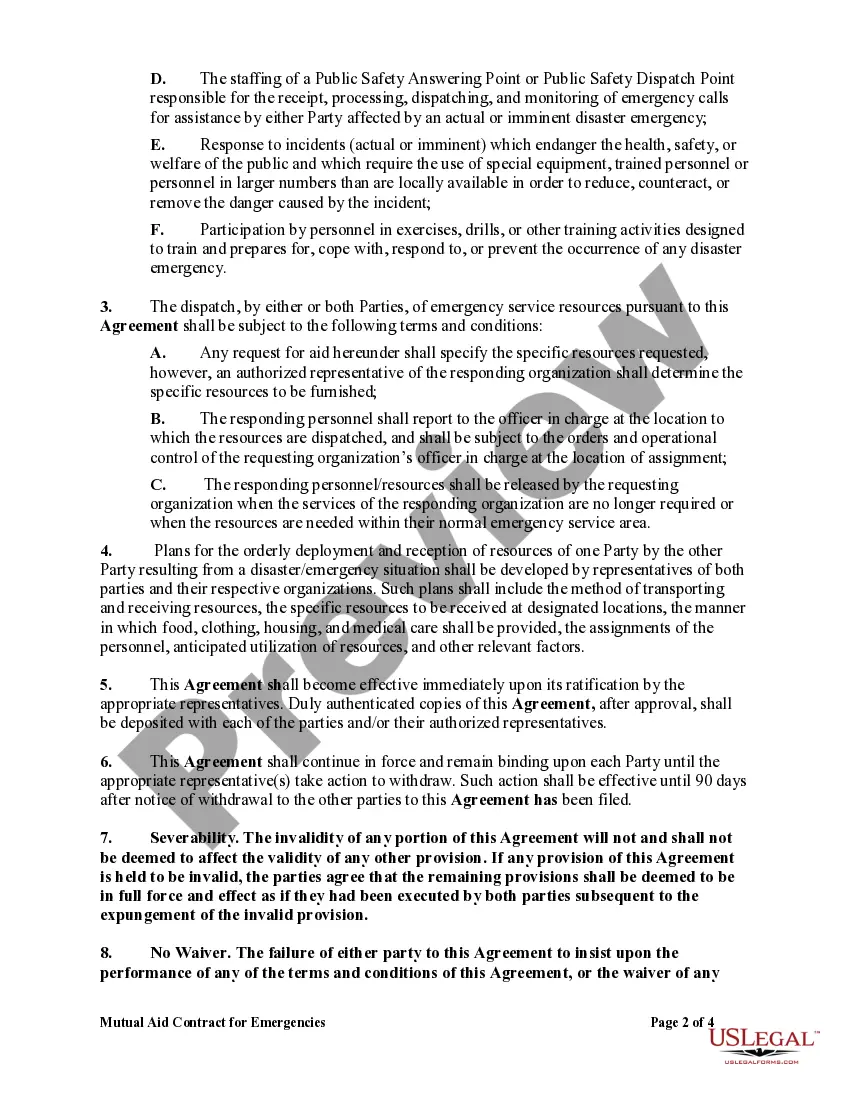
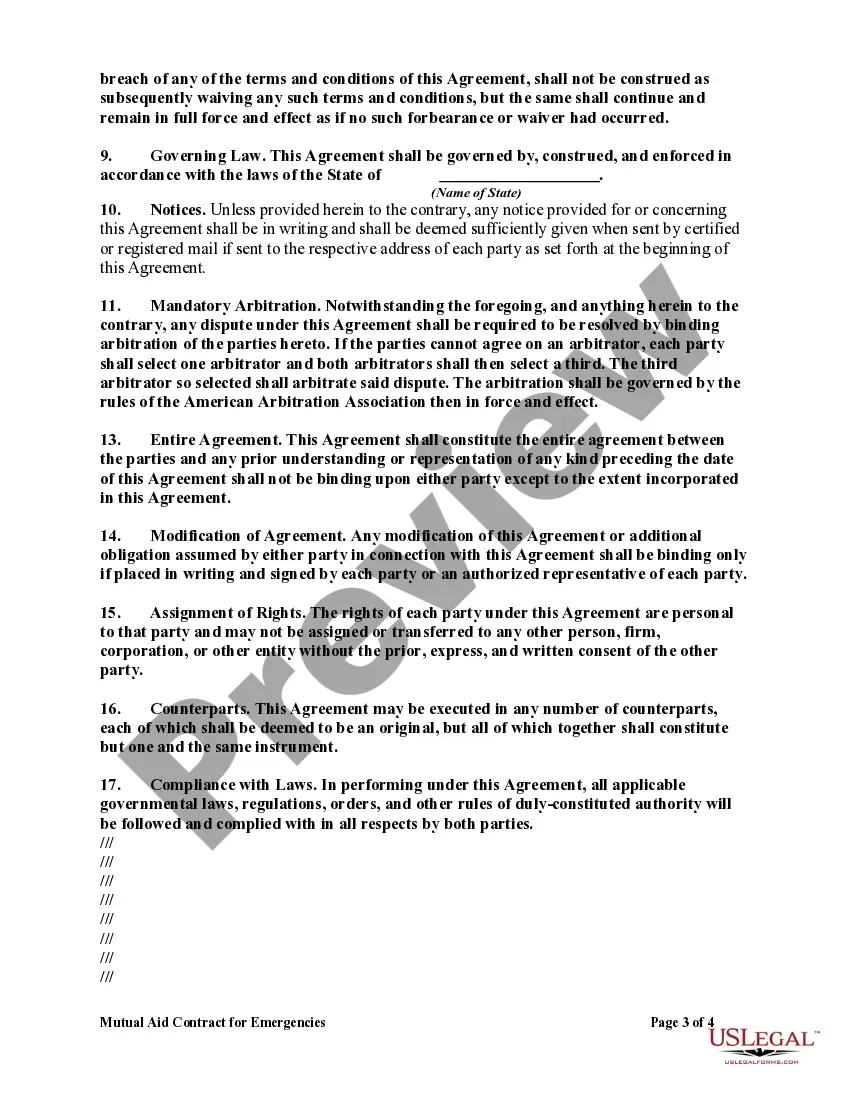
The Missouri Mutual Aid Contract for Emergencies typically includes provisions for resource sharing, personnel deployment, and support systems among participating agencies. It outlines the terms and conditions for assistance during emergencies, including responsibilities and liabilities. By signing this agreement, organizations ensure a coordinated response, enhancing overall safety and efficiency when facing crises.
The concept of mutual aid has roots in cooperative efforts among communities to support one another during emergencies. Historically, various organizations and professionals contributed to the development of formal mutual aid agreements. Today, platforms like uslegalforms provide essential resources for creating the Missouri Mutual Aid Contract for Emergencies, ensuring communities are better prepared to help each other.