Mississippi Answer to Interpleader Action
Description

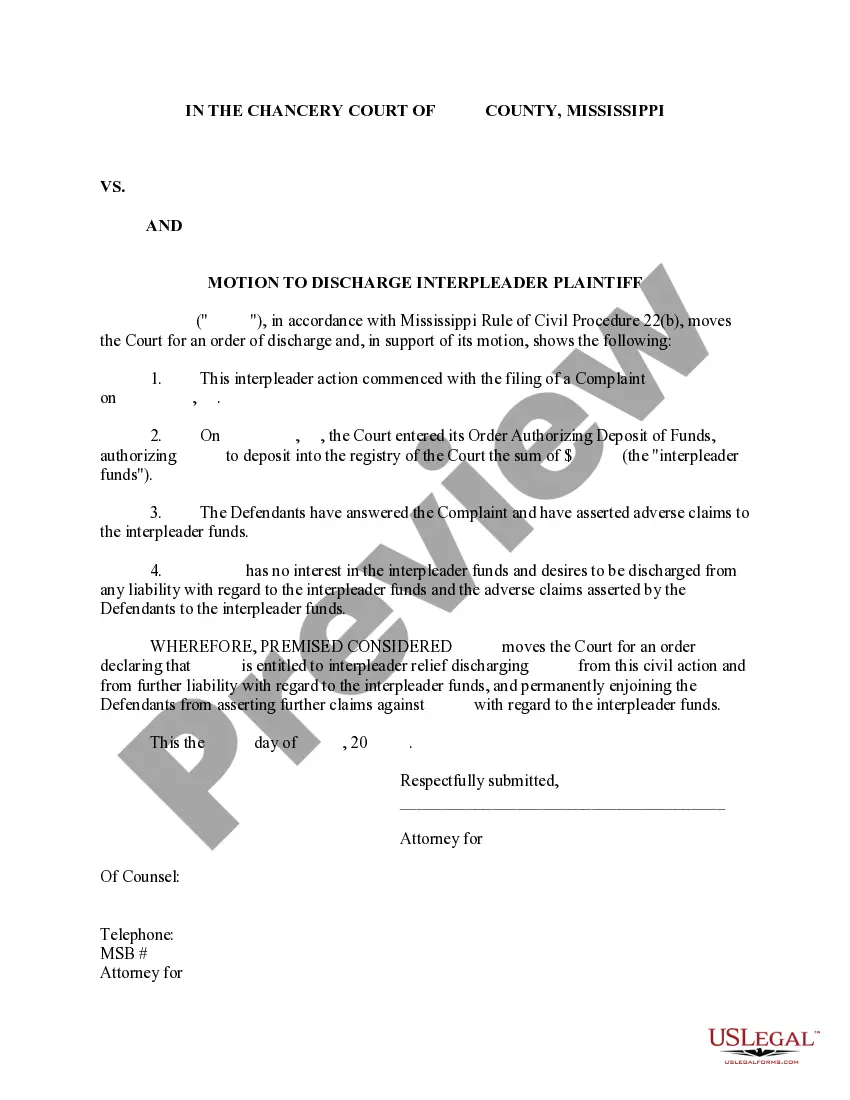
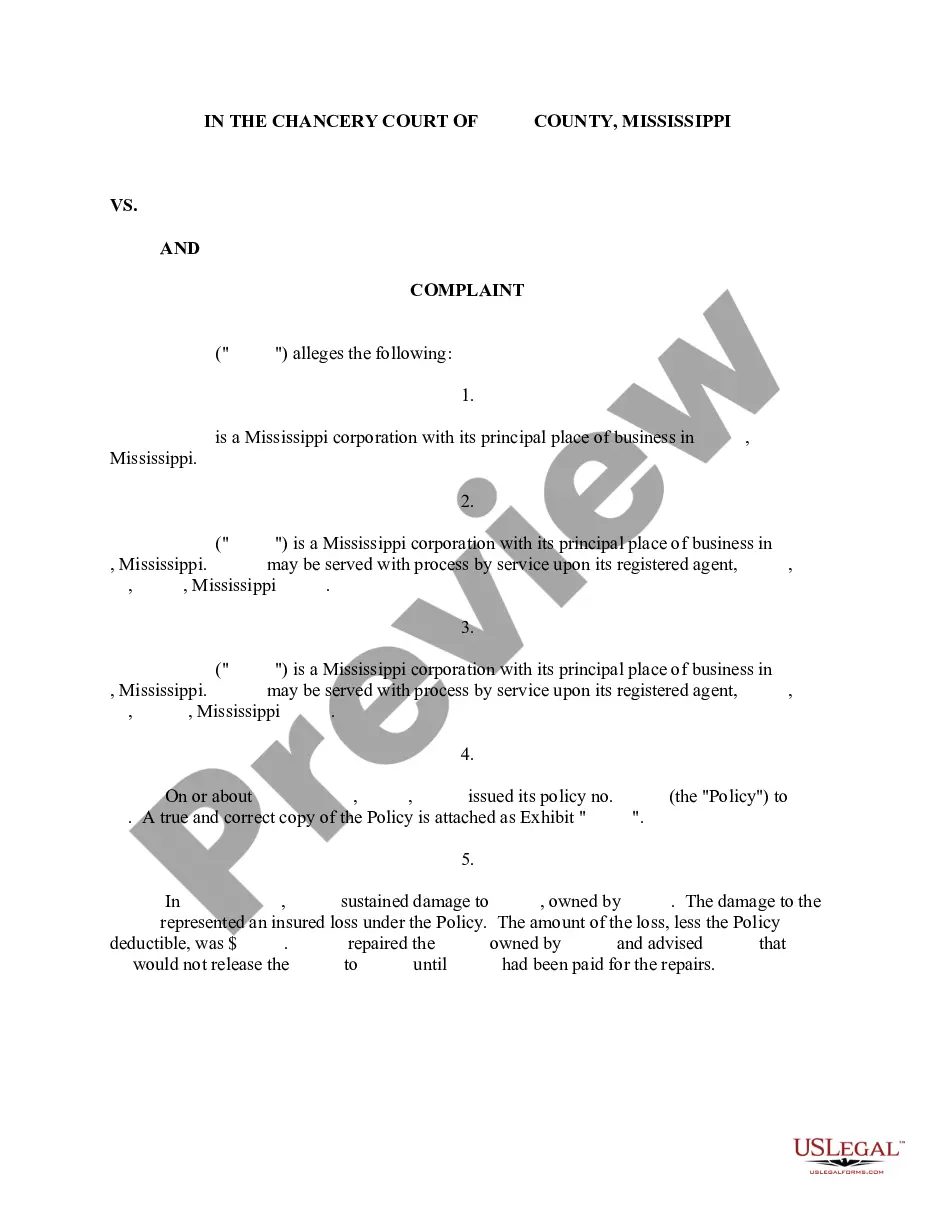
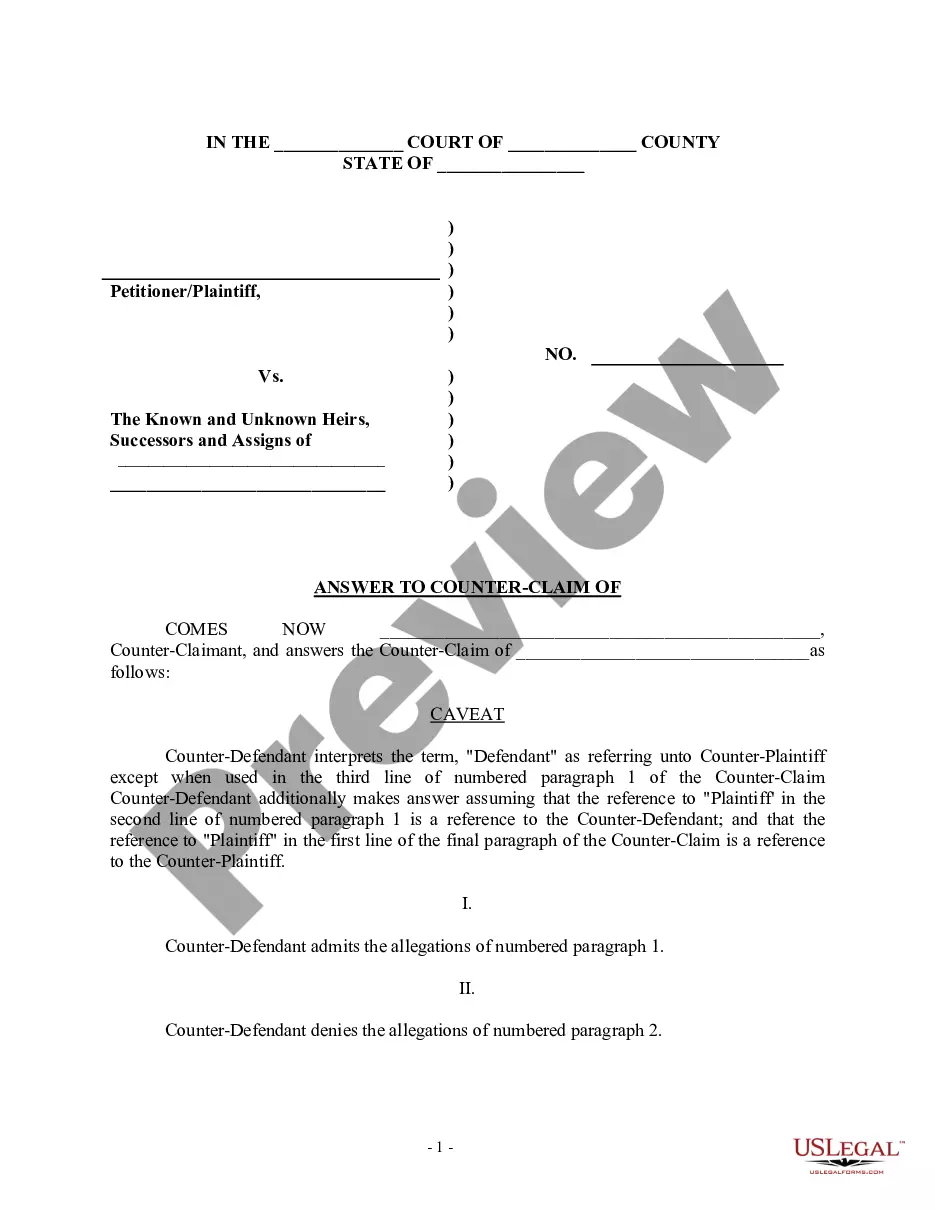

Key Concepts & Definitions
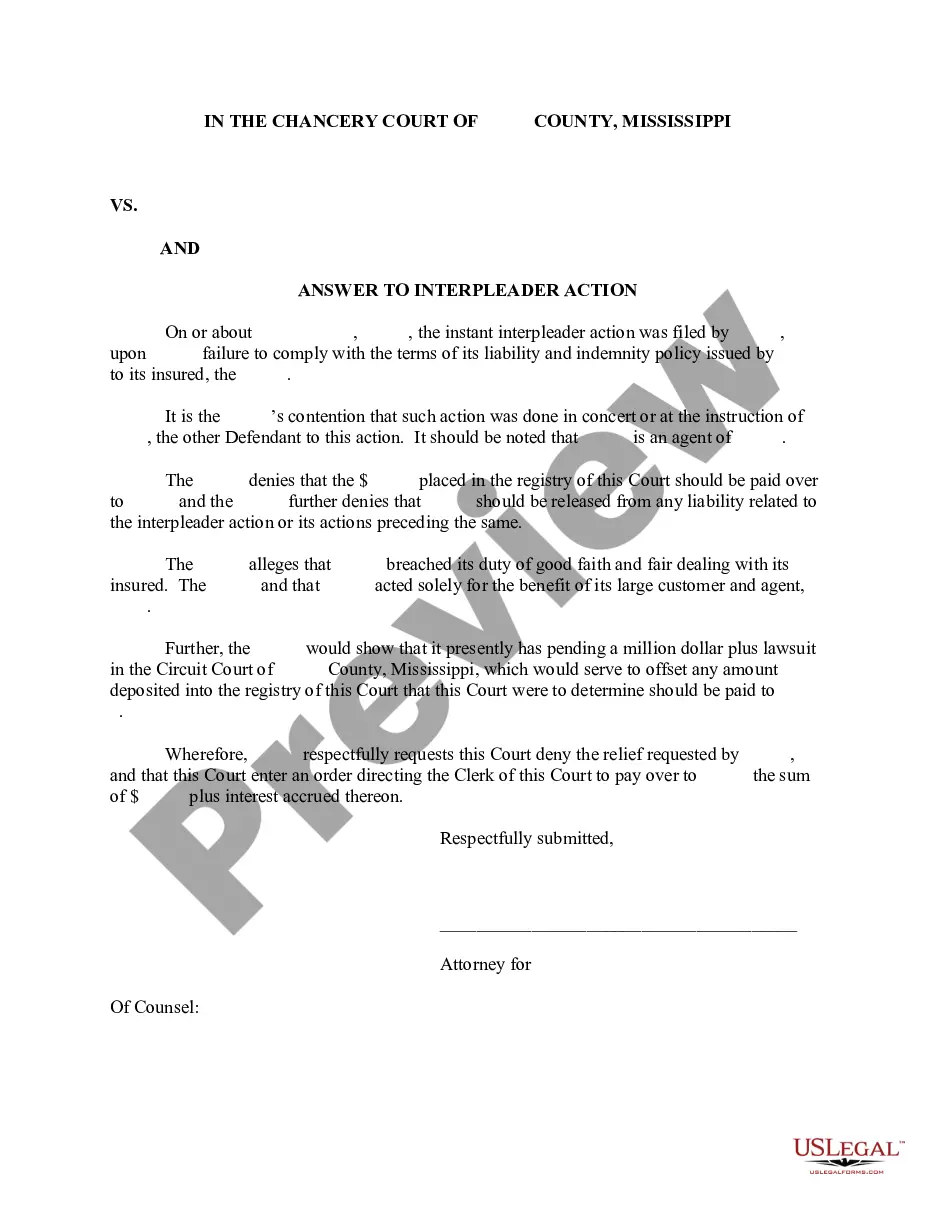
Interpleader Action: A legal procedure used typically by an insurance company to resolve disputes among multiple claimants to the same insurance benefits.
Interpleader Complaint: The formal document filed by the insurance company in either state or federal court, initiating an interpleader action when there is a beneficiary dispute over insurance benefits.
Step-by-Step Guide to Responding to an Interpleader Action
- Review the Interpleader Complaint: Understand the claims and identify the parties involved in the complaint.
- Consult a Lawyer: Seek legal advice to understand your rights and options in the interpleader action.
- File a Response: Submit a formal response to the court by the deadline, stating your claim to the insurance benefits.
- Prepare for Court: Gather necessary documents and evidence to support your claim in court.
- Attend Court Proceedings: Participate in the legal processes and advocate for your claim to the benefits.
Risk Analysis of Interpleader Actions
Potential Risks: Loss of legal rights to the insurance benefits, financial burdens from legal costs, and possible long-duration legal battles.
Risk Management: Engaging experienced legal counsel, comprehensive documentation, and proactive communication with all parties involved can mitigate these risks.
FAQ
- What triggers an interpleader action? Typically, an interpleader action is triggered in the context of life insurance when multiple beneficiaries claim rights to the insurance benefits after the policyholder's death.
- Can an interpleader action be filed in any court? An insurance company may file an interpleader complaint in either state or federal court, depending on the specifics of the case and jurisdiction issues.
- What should be submitted along with a response to an interpleader complaint? A response should include any legal documentation supporting your claim, such as a beneficiary designation form or a will, and any correspondence related to the disputed claim.
Best Practices
- Ensure Clear Beneficiary Designations: To avoid disputes, ensure all beneficiary designations on insurance policies are clear and updated regularly.
- Engage in Pre-Litigation Negotiations: Try to resolve disputes out of court by engaging in negotiations with other claimants, which can result in a quicker and less costly resolution.
How to fill out Mississippi Answer To Interpleader Action?
Acquire a printable Mississippi Response to Interpleader Action in just a few clicks from the largest collection of legal electronic files. Locate, download, and print expertly crafted and certified samples on the US Legal Forms platform. US Legal Forms has been the leading provider of economical legal and tax templates for US individuals and residents online since 1997.
Clients with a subscription should Log In directly to their US Legal Forms account, retrieve the Mississippi Response to Interpleader Action, and find it stored in the My documents section. Those without a subscription must adhere to the following guidelines.
After downloading your Mississippi Response to Interpleader Action, you can complete it in any online editor or print it out and fill it in manually. Utilize US Legal Forms to access 85,000 professionally prepared, state-specific documents.
- Ensure your form complies with your state's regulations.
- If available, review the form's description for additional information.
- If accessible, examine the document for further content.
- Once you are assured the template meets your requirements, click Buy Now.
- Establish a personal account.
- Choose a subscription plan.
- Make a payment through PayPal or credit card.
- Download the template in Word or PDF format.
Form popularity
FAQ
You typically must initiate your interpleader action by filing your complaint with the clerk of the court in the county where the money or property at issue is located. Depending on the defendants and the amount of money at stake, federal court may be proper.
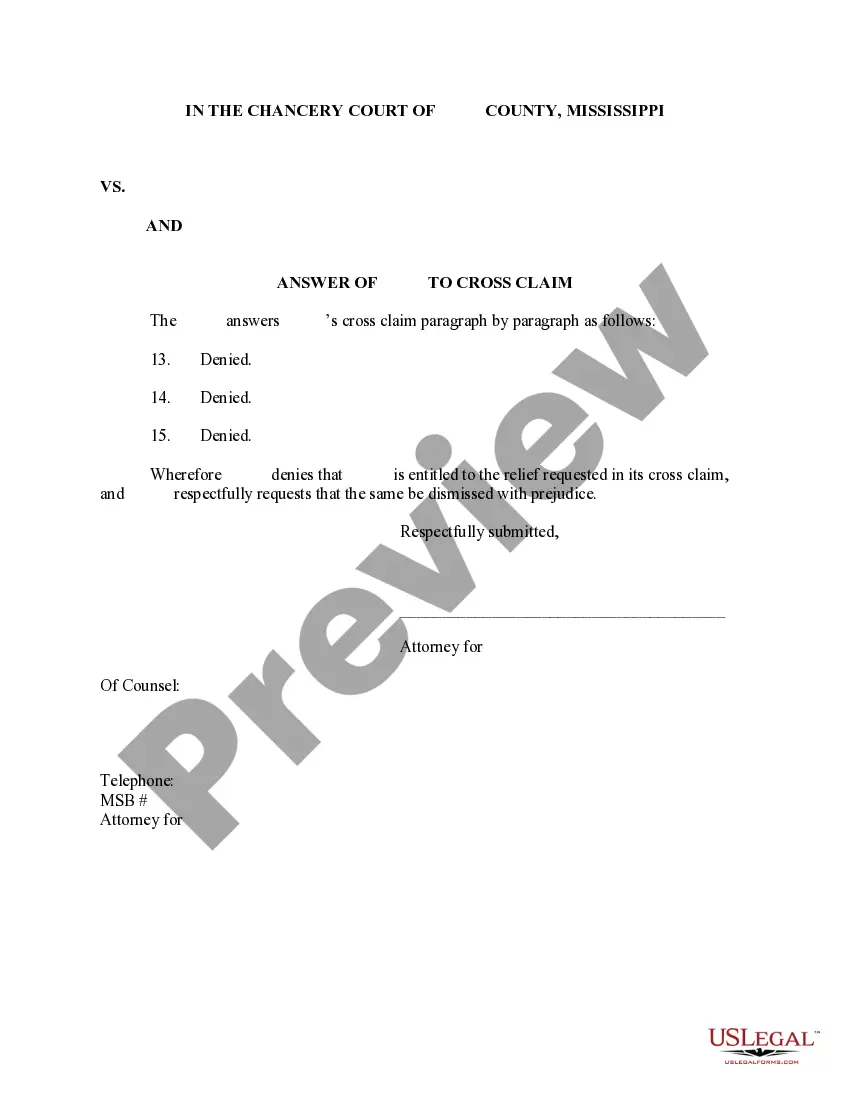
A complaint must state all of the plaintiff's claims against the defendant, and must also specify what remedy the plaintiff wants. After receiving the complaint, the defendant must respond with an answer.
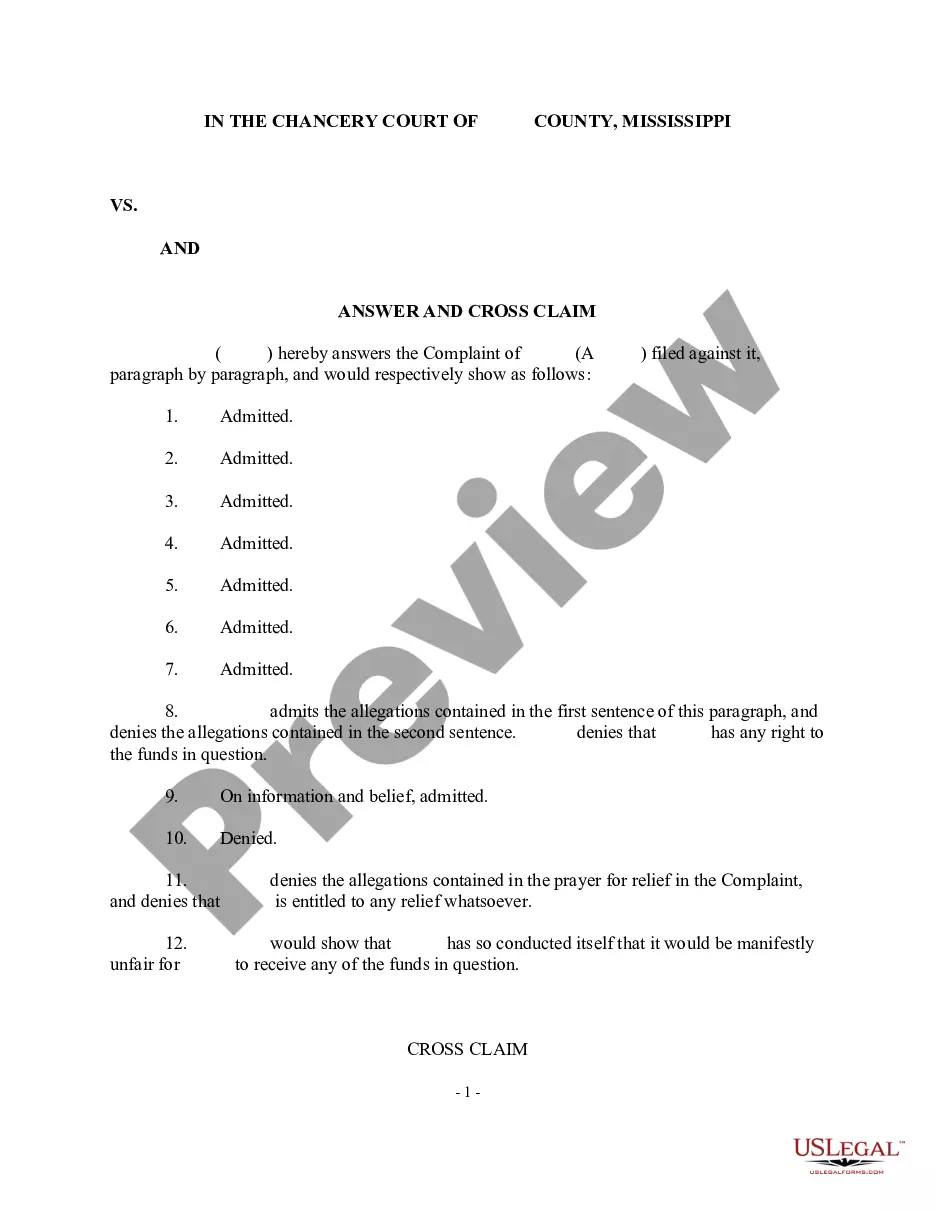
Your response to the complaint is called the answer. You should respond to each paragraph of the complaint matching your response to the exact number used in the complaint. Be very careful with the statement you make in your answer. These statements can become admissions of facts that could be used against you.
There is no obligation to respond to alleged affirmative defenses....they can be contested at trial or summary judgment.
(a) A defendant may file an answer with the reviewing official and the Office of Hearings and Appeals within 30 days of service of the complaint. An answer will be considered a request for an oral hearing.
The Answer. The defendant's response to a complaint is called the answer. The answer contains the defendant's version of the events leading to the lawsuit and may be based on the contents of the complaint. The filing of the answer is one option that the defendant has in deciding how to respond to the complaint.
The plaintiff must give you responses to your request for admissions within 30 days. You do not need to do anything if you do not get a response. The plaintiff has 30 days to deny or object to the statements.
Failure to Respond: If a defendant fails to answer the complaint or file a motion to dismiss within the time limit set forth in the summons, the defendant is in default. The plaintiff can ask the court clerk to make a note of that fact in the file, a procedure called entry of default.
Read the summons and make sure you know the date you must answer by. Read the complaint carefully. Write your answer. Sign and date the answer. Make copies for the plaintiff and yourself. Mail a copy to the plaintiff. File your answer with the court by the date on the summons.