North Carolina Complaint for Writ of Habeas Corpus
Description

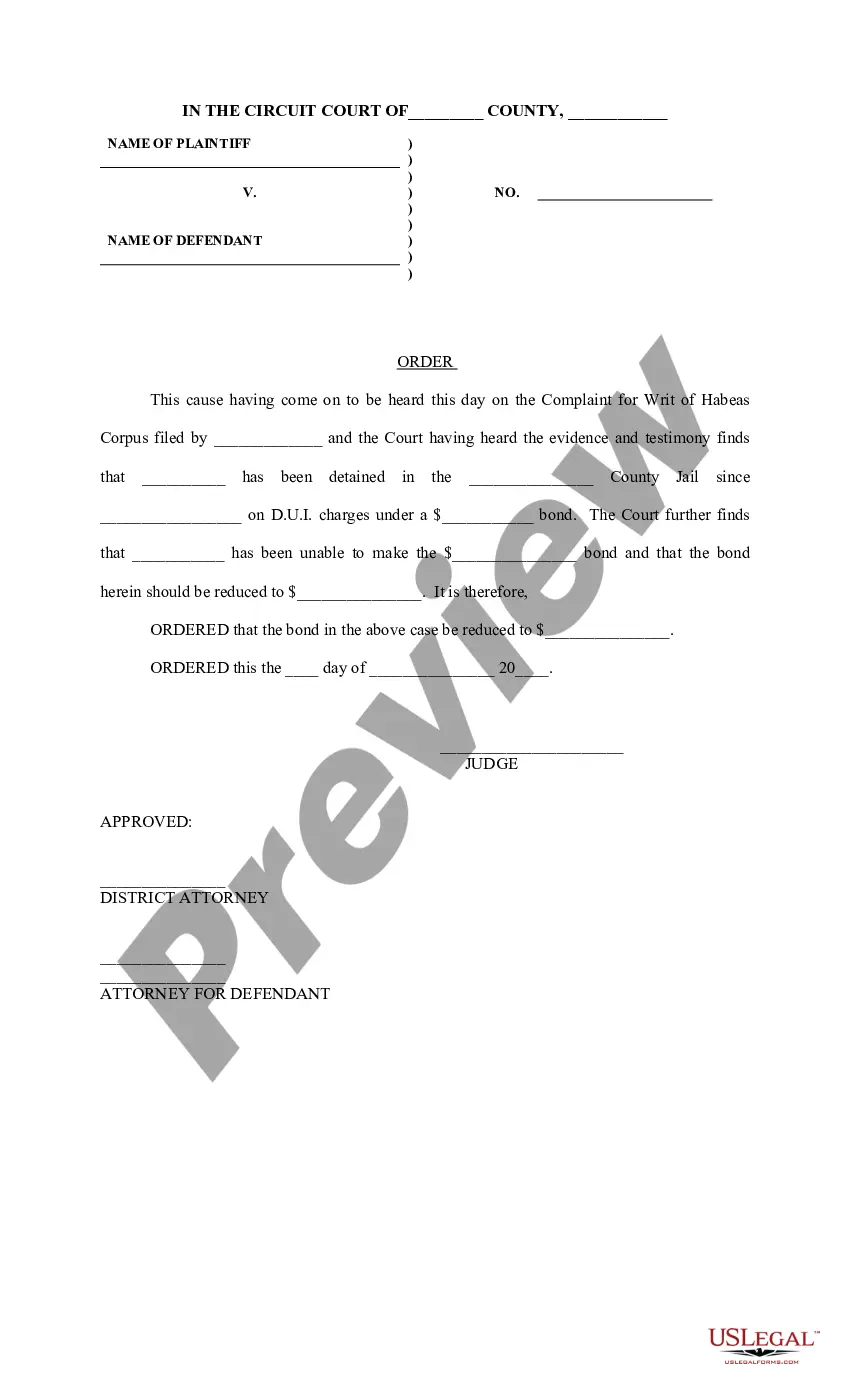
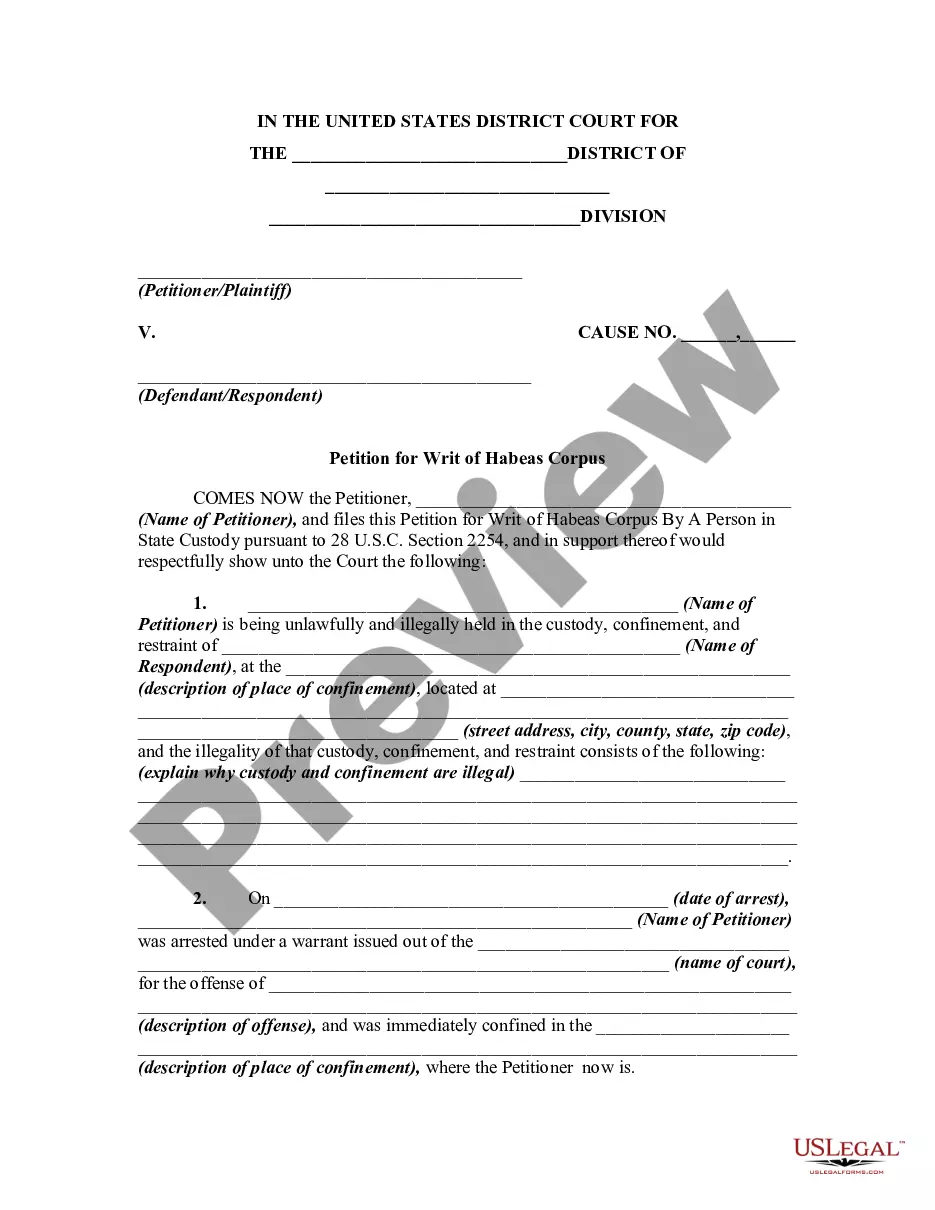
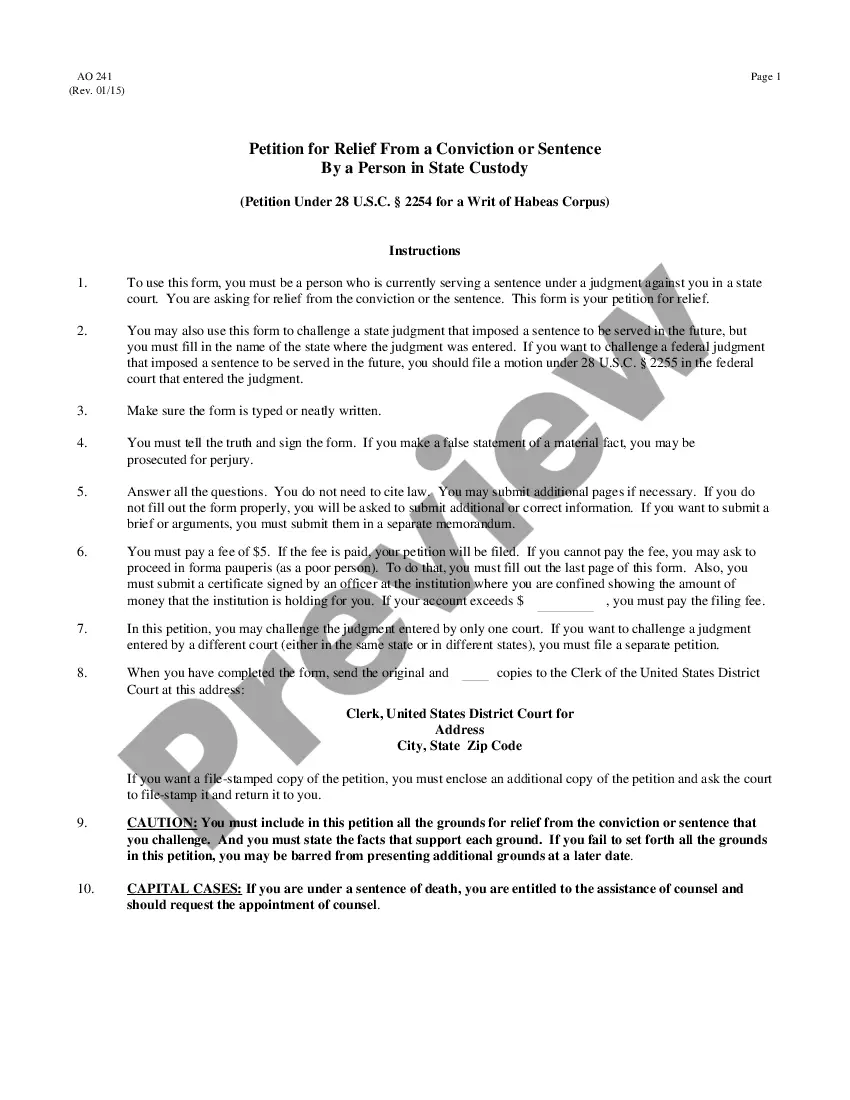
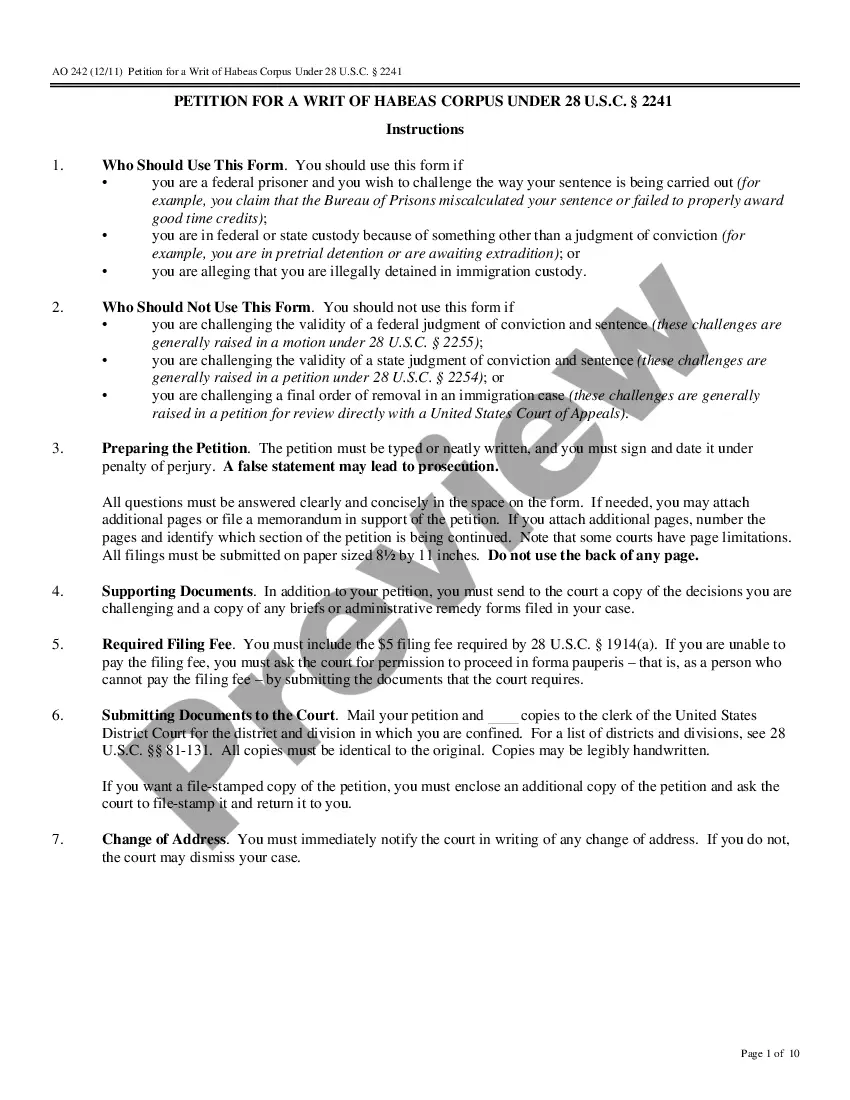
How to fill out Complaint For Writ Of Habeas Corpus?
If you require to complete, download, or print sanctioned document templates, utilize US Legal Forms, the largest assortment of legal forms available online.
Employ the site’s straightforward and efficient search to locate the documents you need.
Various templates for commercial and personal purposes are categorized by types and states, or keywords.
Step 4. After you have identified the form you require, click the Purchase now button. Choose the pricing plan you prefer and enter your credentials to register for an account.
Step 5. Complete the transaction. You can use your credit card or PayPal account to finalize the transaction. Step 6. Select the format of the legal form and download it to your device. Step 7. Fill out, modify, and print or sign the North Carolina Complaint for Writ of Habeas Corpus. Every legal document template you obtain is yours permanently. You have access to every form you acquired within your account. Click on the My documents section and choose a form to print or download again. Be proactive and download and print the North Carolina Complaint for Writ of Habeas Corpus with US Legal Forms. There are numerous professional and state-specific forms available for your business or personal needs.
- Utilize US Legal Forms to find the North Carolina Complaint for Writ of Habeas Corpus in just a few clicks.
- If you are already a US Legal Forms user, Log In to your account and select the Obtain option to access the North Carolina Complaint for Writ of Habeas Corpus.
- You can also access forms you have previously obtained from the My documents tab in your account.
- If you are using US Legal Forms for the first time, follow the instructions below.
- Step 1. Make sure you have selected the form for the correct city/state.
- Step 2. Use the Preview option to review the form’s content. Remember to check the details.
- Step 3. If you are not satisfied with the form, utilize the Search box at the top of the screen to find other variations of the legal form template.
Form popularity
FAQ
Thus, to succeed in bringing a habeas corpus claim, you must first establish that your claim is properly before the court and then prove the merits of your underlying claim. In general, anyone can file a petition for writ of habeas corpus challenging their conviction or sentence.
Common arguments for granting a habeas corpus petition include: You had incompetent legal counsel or a competent attorney was not provided. ... You were convicted under an unconstitutional law; You were convicted under a law that has since been changed, so what you did is no longer considered a crime;
The Writ of Habeas Corpus Generally Assuming you are unjustly or wrongfully detained or incarcerated, you can challenge the legal basis of that imprisonment by methodically bringing a Writ of Habeas Corpus. This enables you to challenge the duration and length of your imprisonment and even the manner.
Common arguments for granting a habeas corpus petition include: You had incompetent legal counsel or a competent attorney was not provided. ... You were convicted under an unconstitutional law; You were convicted under a law that has since been changed, so what you did is no longer considered a crime;
Any order denying a petition for writ of habeas corpus must contain a brief statement of the reasons for the denial. An order only declaring the petition to be "denied" is insufficient. (Subd (g) amended and relettered effective January 1, 2002; adopted as subd (e) effective January 1, 1982.)
For example, habeas corpus petitions in California can only be filed if the person is already in custody. In most states, judges will deny a habeas corpus case if the petition does not bring up any new evidence. The most common habeas corpus examples involve: Violation of rights or involuntary plea.
You will file a Habeas Corpus petition in California if you are arguing that your conviction violated a state law, or that a California law is unconstitutional.
The Privilege of the Writ of Habeas Corpus shall not be suspended, unless when in Cases of Rebellion or Invasion the public Safety may require it.
