Nebraska Consent to Collateral Assignment of Lease Agreement
About this form
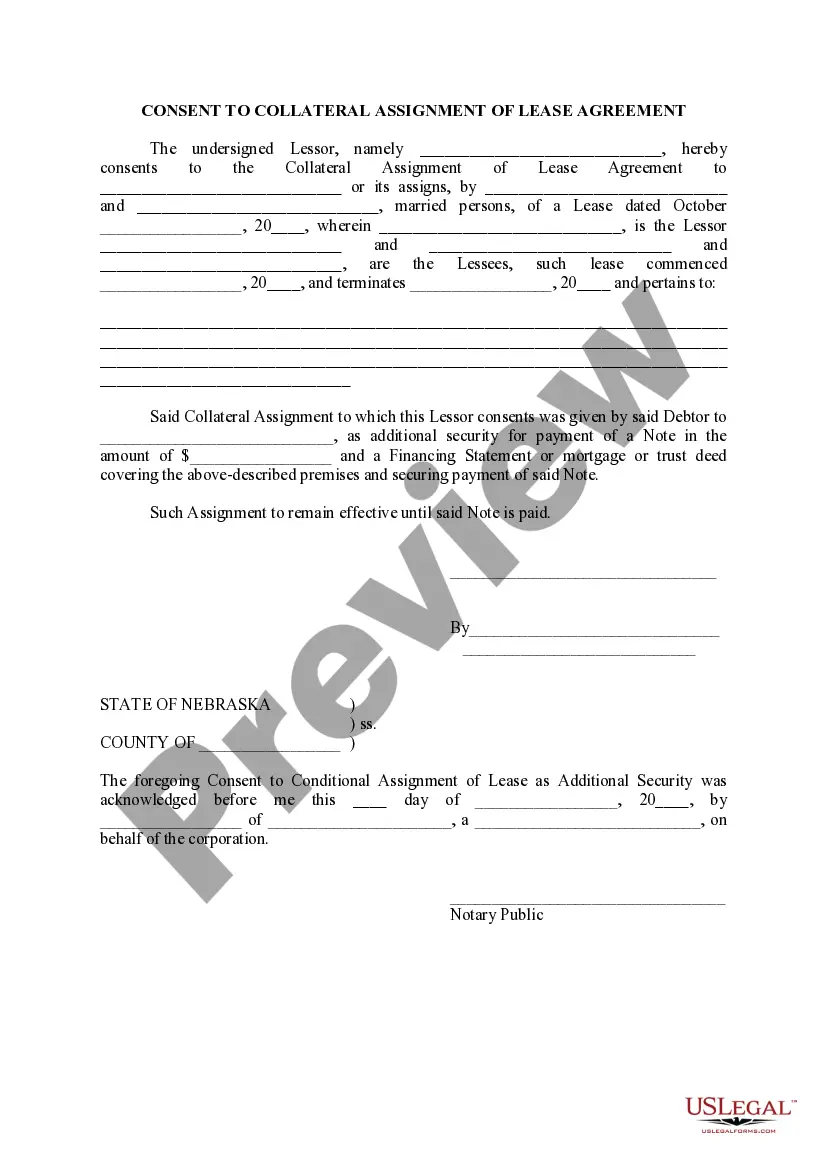
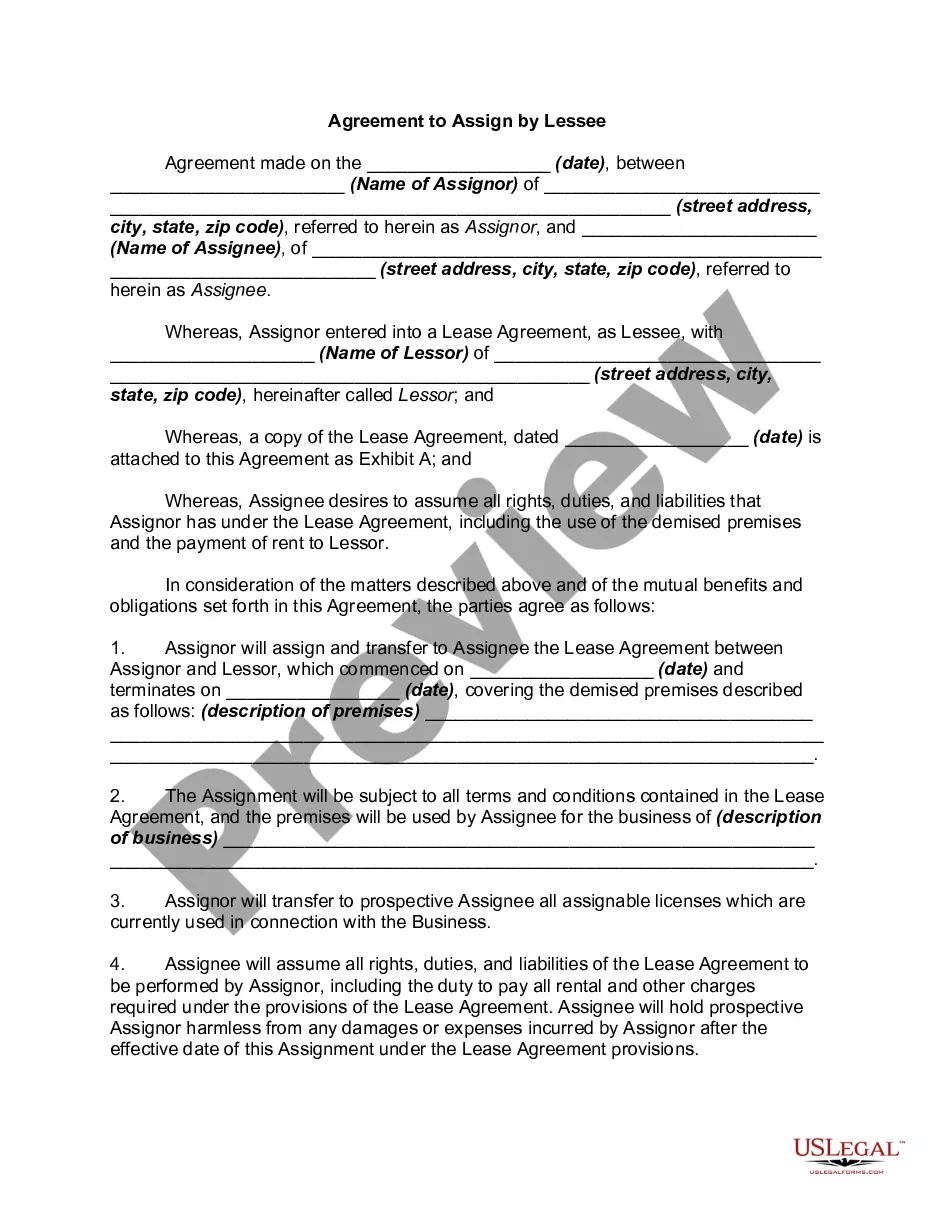
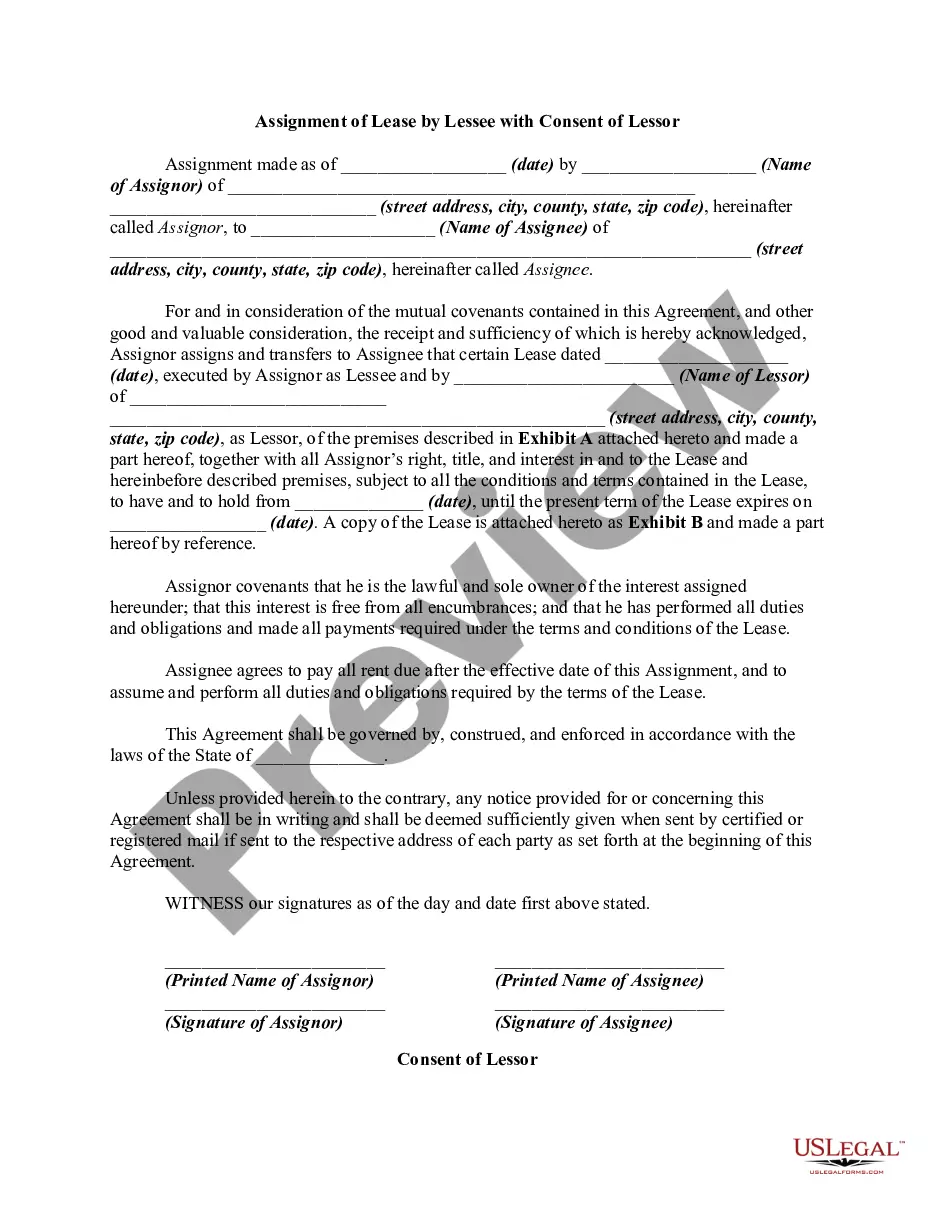
The Consent to Collateral Assignment of Lease Agreement is a legal document in which a lessor agrees to transfer their rights under a lease agreement to another individual or entity as collateral. This form is often used when a lessee pledges their lease rights as security for a promissory note, ensuring that the lessor remains informed of this assignment while it remains in effect, typically until the associated note is paid off.
Main sections of this form
- Identification of the lessor and lessees involved in the lease agreement.
- Details of the lease including commencement and termination dates.
- Information about the promissory note and the amount secured by the collateral assignment.
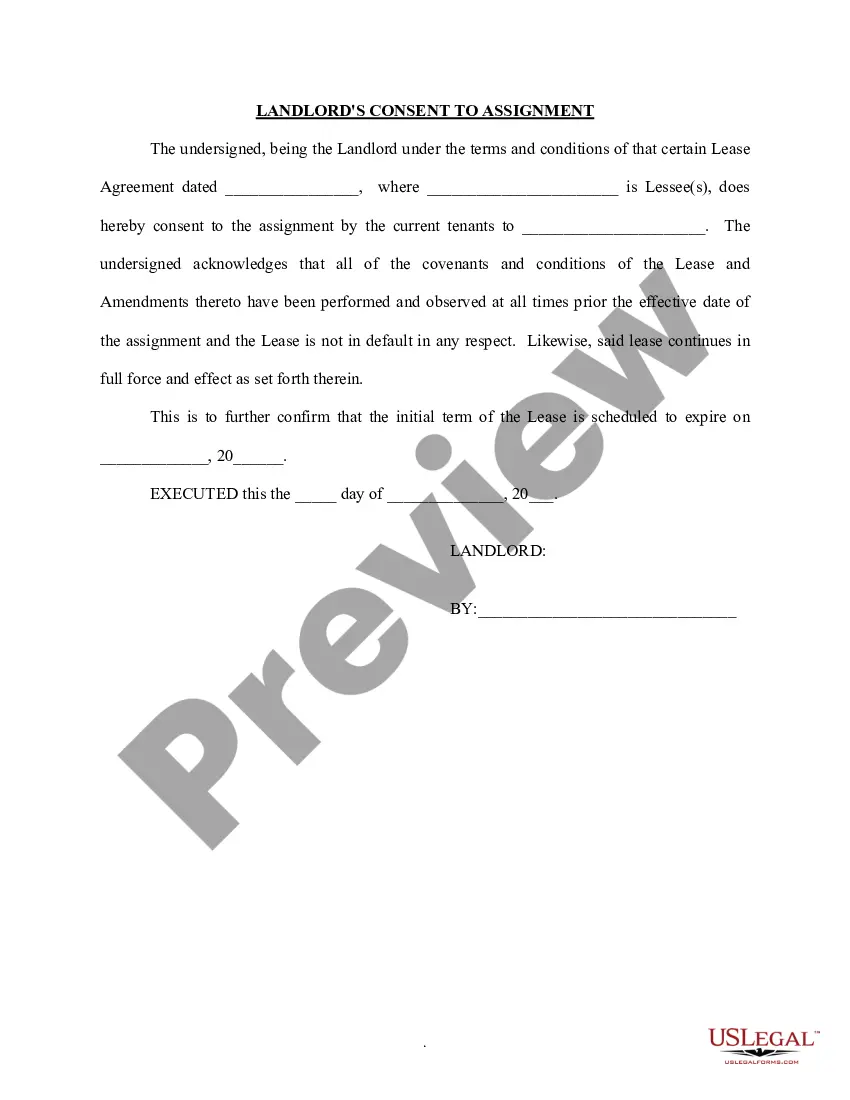
- Consent from the lessor regarding the collateral assignment of the lease.
- Notarization section for legal acknowledgment in specific states.
When this form is needed
This form is used in scenarios when a lessee needs to secure a loan or financial obligation using their lease rights as collateral. For instance, if a business is leasing property and takes out a loan, the lease agreement may be assigned to the lender to ensure repayment of the loan, while keeping the lessor informed of this agreement.
Who can use this document
This form is typically relevant for:
- Lessees who want to use their lease rights as collateral for loans or financial agreements.
- Lessors who need to consent to such arrangements to protect their interests.
- Financial institutions or lenders requiring collateral assignments as part of their lending process.
Steps to complete this form
- Identify the parties involved by filling in the names of the lessor and lessees.
- Specify the property details related to the lease agreement.
- Enter dates for the lease's commencement and termination.
- Fill out the amount of the promissory note that requires collateralization.
- Include the signatures of all relevant parties and obtain notarization if required.
Notarization requirements for this form
Yes, this form must be notarized to be legally valid. The notarization ensures that the signatures are authentic and that the document is executed properly according to state laws. US Legal Forms offers integrated online notarization services that are available 24/7, allowing secure video calls and ensuring legal equivalence without the need for travel.
Get your form ready online
Our built-in tools help you complete, sign, share, and store your documents in one place.
Make edits, fill in missing information, and update formatting in US Legal Forms—just like you would in MS Word.
Download a copy, print it, send it by email, or mail it via USPS—whatever works best for your next step.
Sign and collect signatures with our SignNow integration. Send to multiple recipients, set reminders, and more. Go Premium to unlock E-Sign.
If this form requires notarization, complete it online through a secure video call—no need to meet a notary in person or wait for an appointment.
We protect your documents and personal data by following strict security and privacy standards.

Make edits, fill in missing information, and update formatting in US Legal Forms—just like you would in MS Word.

Download a copy, print it, send it by email, or mail it via USPS—whatever works best for your next step.

Sign and collect signatures with our SignNow integration. Send to multiple recipients, set reminders, and more. Go Premium to unlock E-Sign.

If this form requires notarization, complete it online through a secure video call—no need to meet a notary in person or wait for an appointment.

We protect your documents and personal data by following strict security and privacy standards.
Mistakes to watch out for
- Failing to include all parties involved in the lease agreement.
- Omitting important lease details such as commencement and termination dates.
- Not notarizing the document when required by state law.
- Incorrectly stating the amount of the promissory note.
Benefits of using this form online
- Convenience of accessing the form from anywhere, anytime.
- Easy to fill out and edit without the need for physical paperwork.
- Reliability of using professionally drafted templates prepared by licensed attorneys.
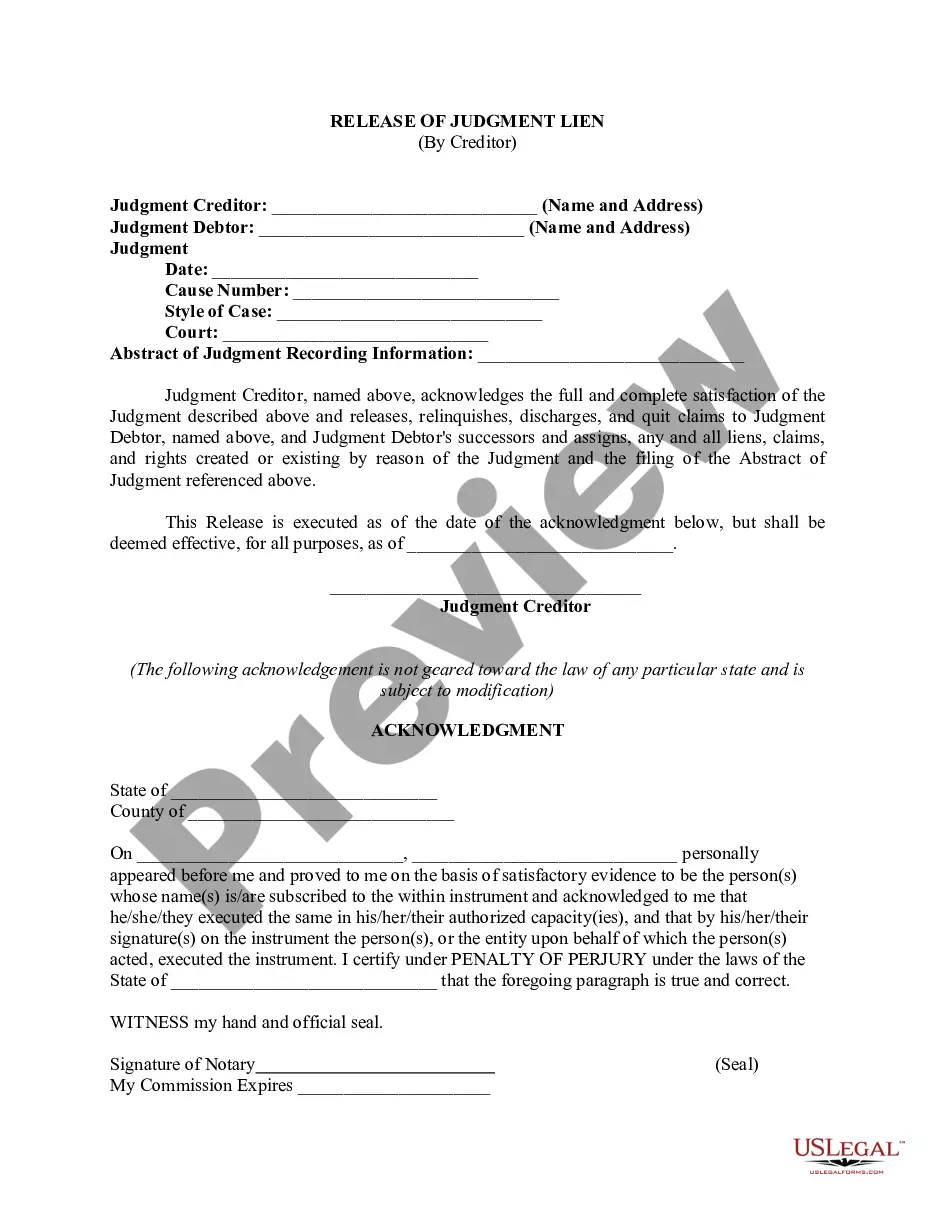
Looking for another form?
Form popularity
FAQ
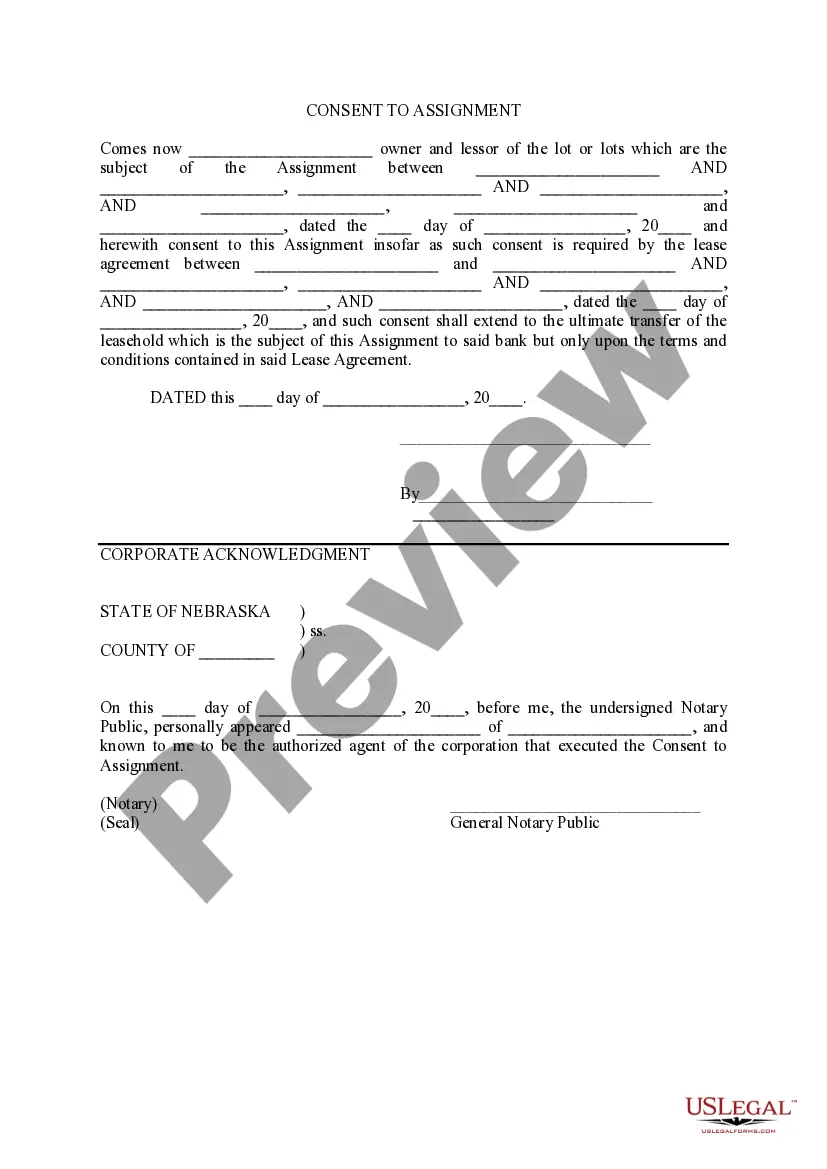
Consent to assignment refers to allowing a party of a contract (the assignor) to assign a contract and move the obligations to another party (the assignee).
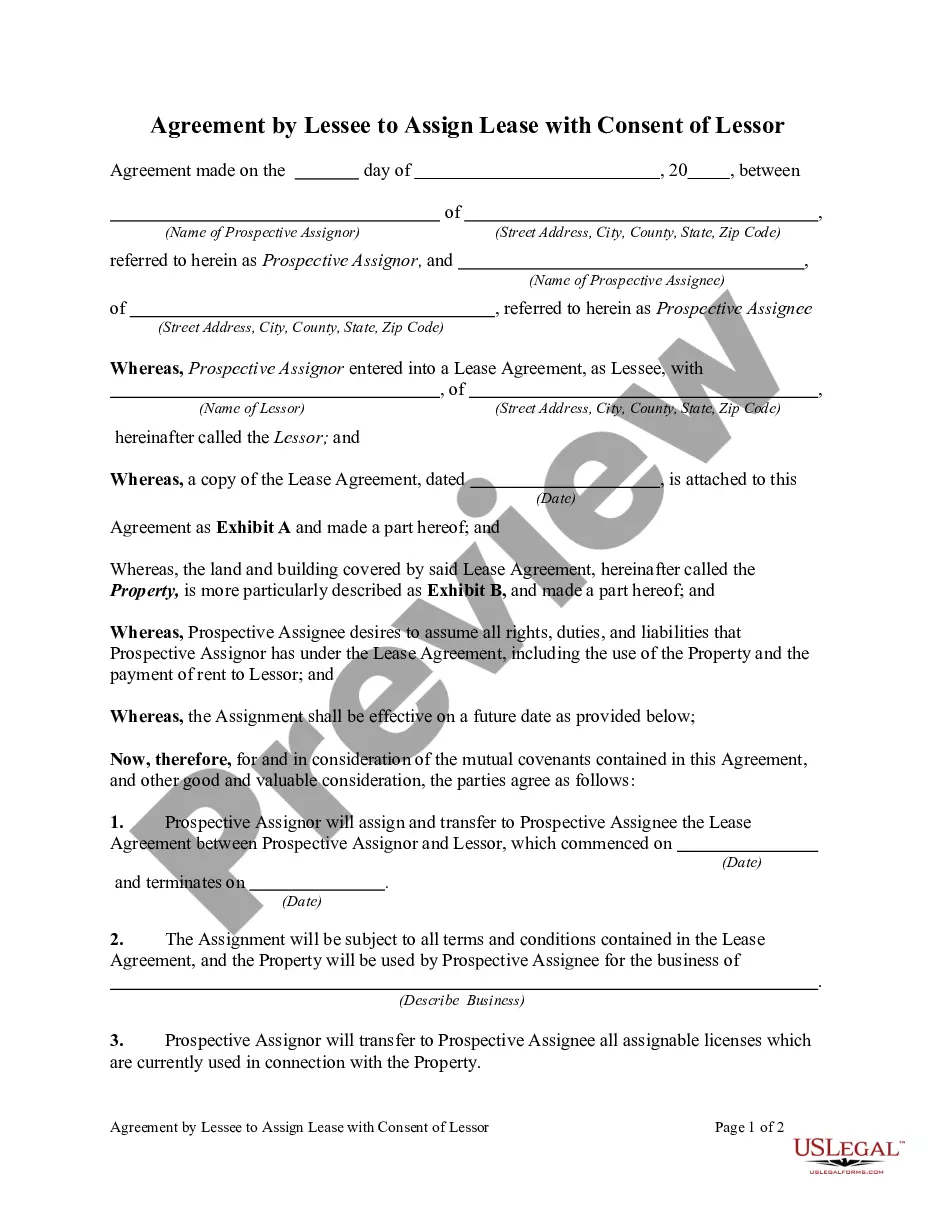
What is a Landlord's Consent to Lease Assignment? With a Landlord's Consent to Lease Assignment, landlords and property managers can give formal approval to tenants who wish to exit their lease agreement and transfer it to a new tenant before the rental term is complete.
Primary tabs. Assignment is a legal term whereby an individual, the assignor, transfers rights, property, or other benefits to another known as the assignee. This concept is used in both contract and property law. The term can refer to either the act of transfer or the rights/property/benefits being transferred.
In order for an assignment to be a legal assignment, the assignment must be agreed in writing, signed by the assignor, and the other party to the contract must be given notice of the assignment.Contracts often require the consent of the other party before any assignment can take place.
In both instances, assignment is the process whereby a person, the assignor, transfers rights or benefits to another, the assignee.While novation requires the consent of all parties, assignment needs no consent from other non-assigning parties.
Anti-assignment clauses protect only the obligor and do not affect the transaction between the assignee and assignor. Usually, a prohibition against the assignment of a contract does not prevent an assignment of the right to receive payments due, unless circumstances indicate the contrary.
Consent to assignment refers to allowing a party of a contract (the assignor) to assign a contract and move the obligations to another party (the assignee).
Collateral Assignment of Contracts means the assignment of representations, warranties, covenants, indemnities and rights to the Agent, in respect of the Loan Parties' rights under that certain Escrow Agreement executed in connection with the Riverstone Acquisition delivered on the Original Closing Date.
Generally speaking, contracts can be freely assigned to third parties.This contract cannot be assigned to anyone without the written consent of both parties.