New Jersey Complaint for Trespass to Lands
What is this form?
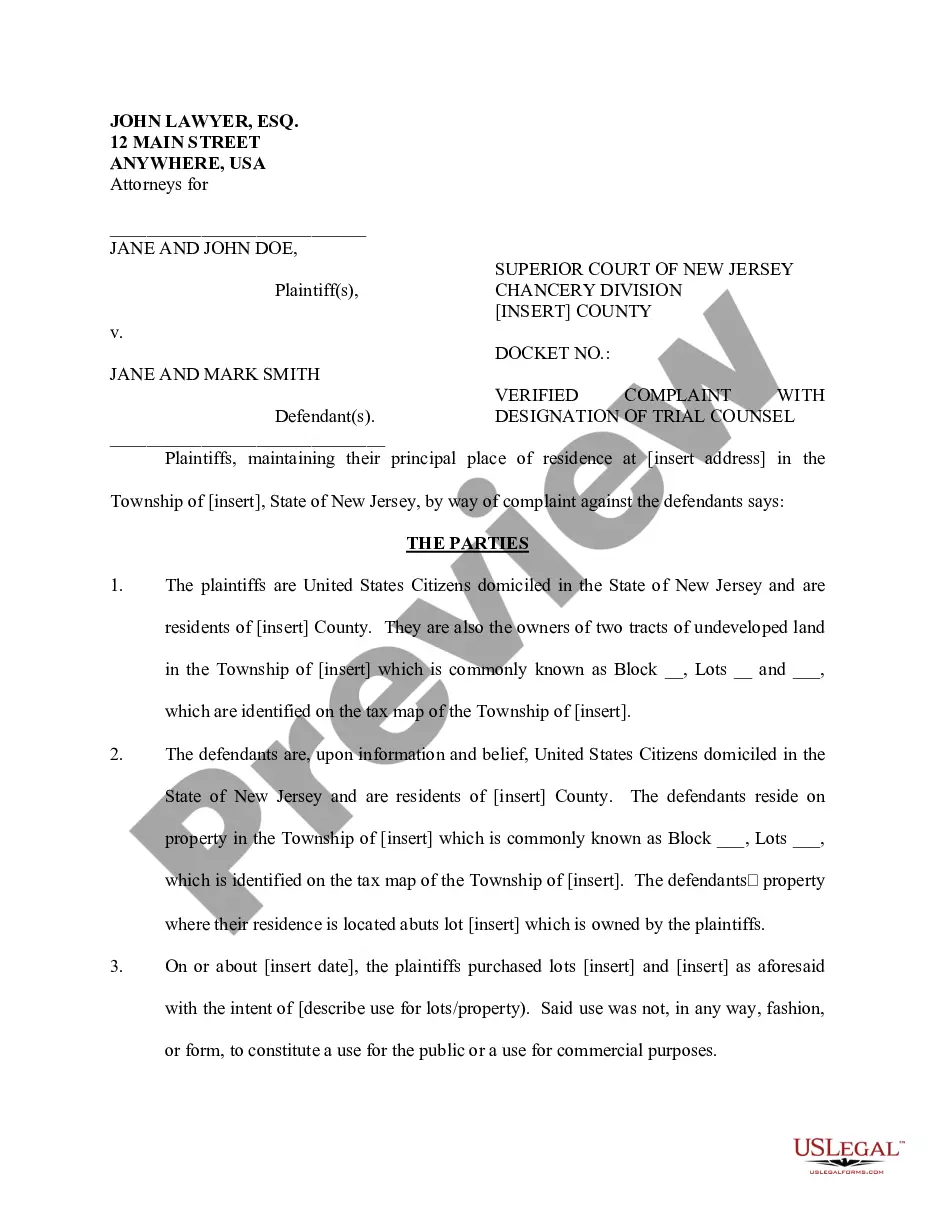
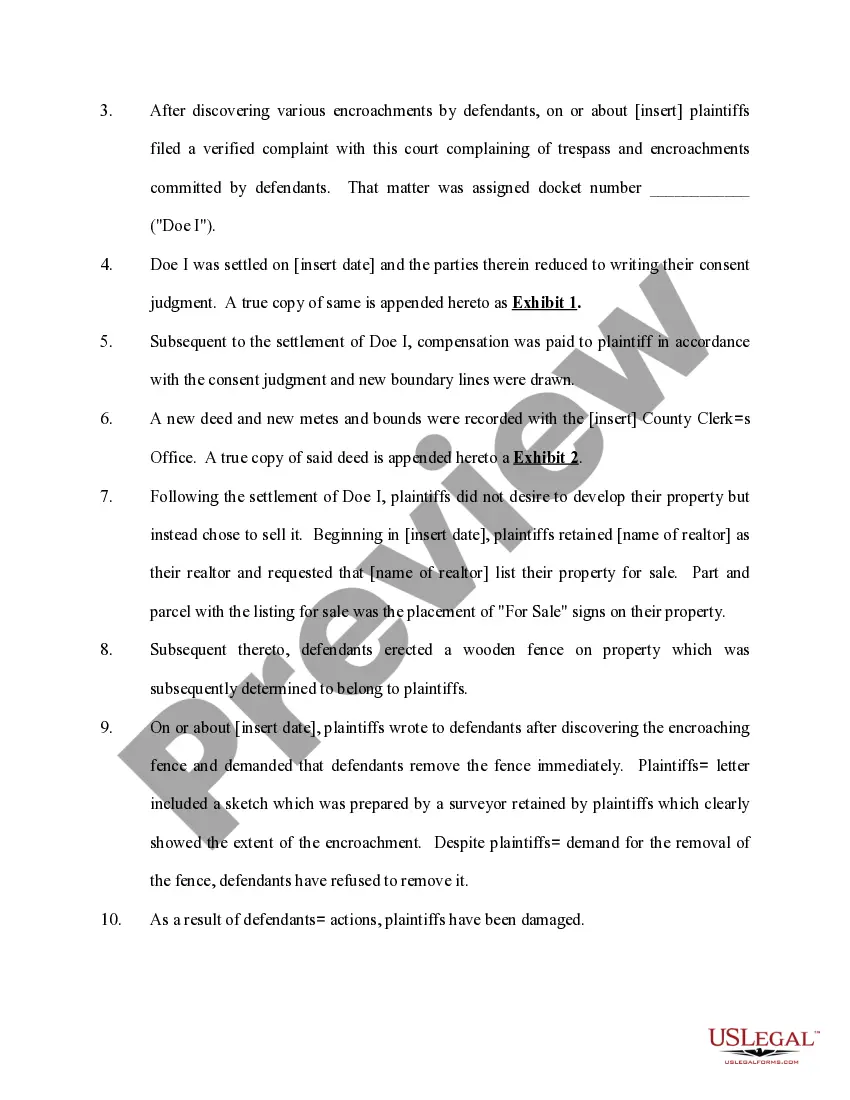
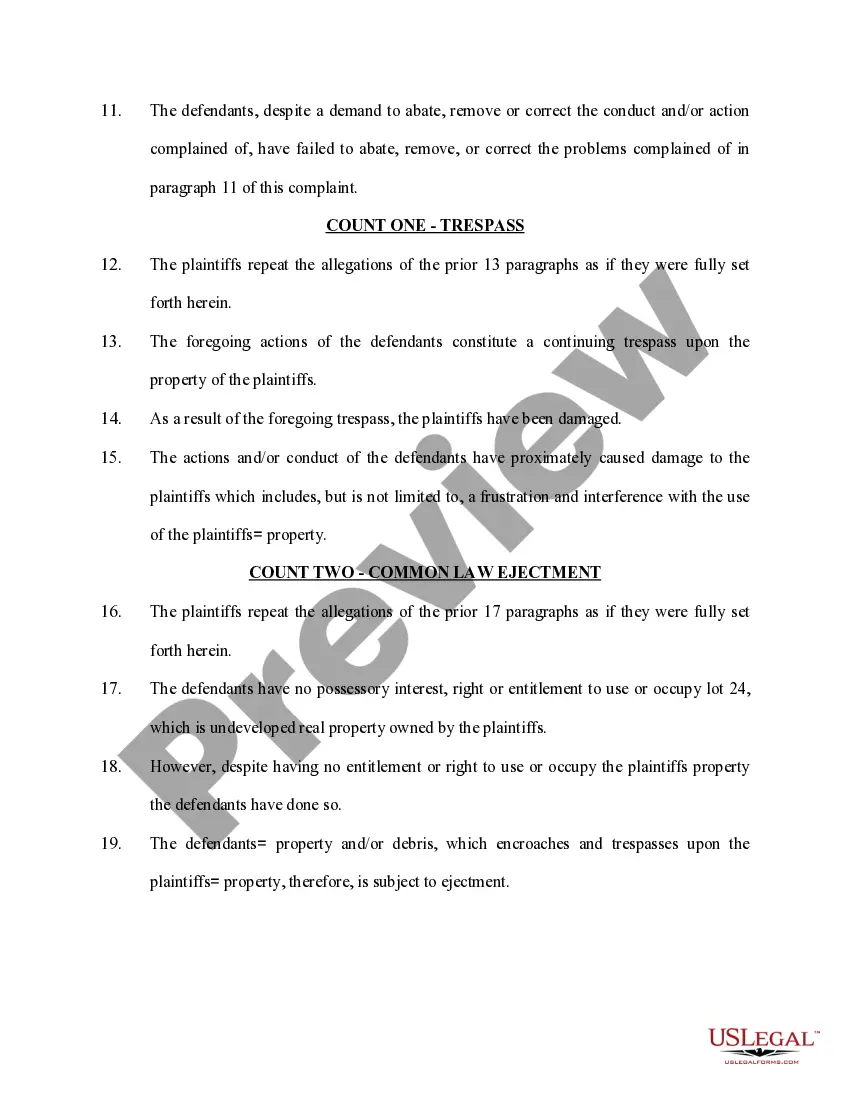
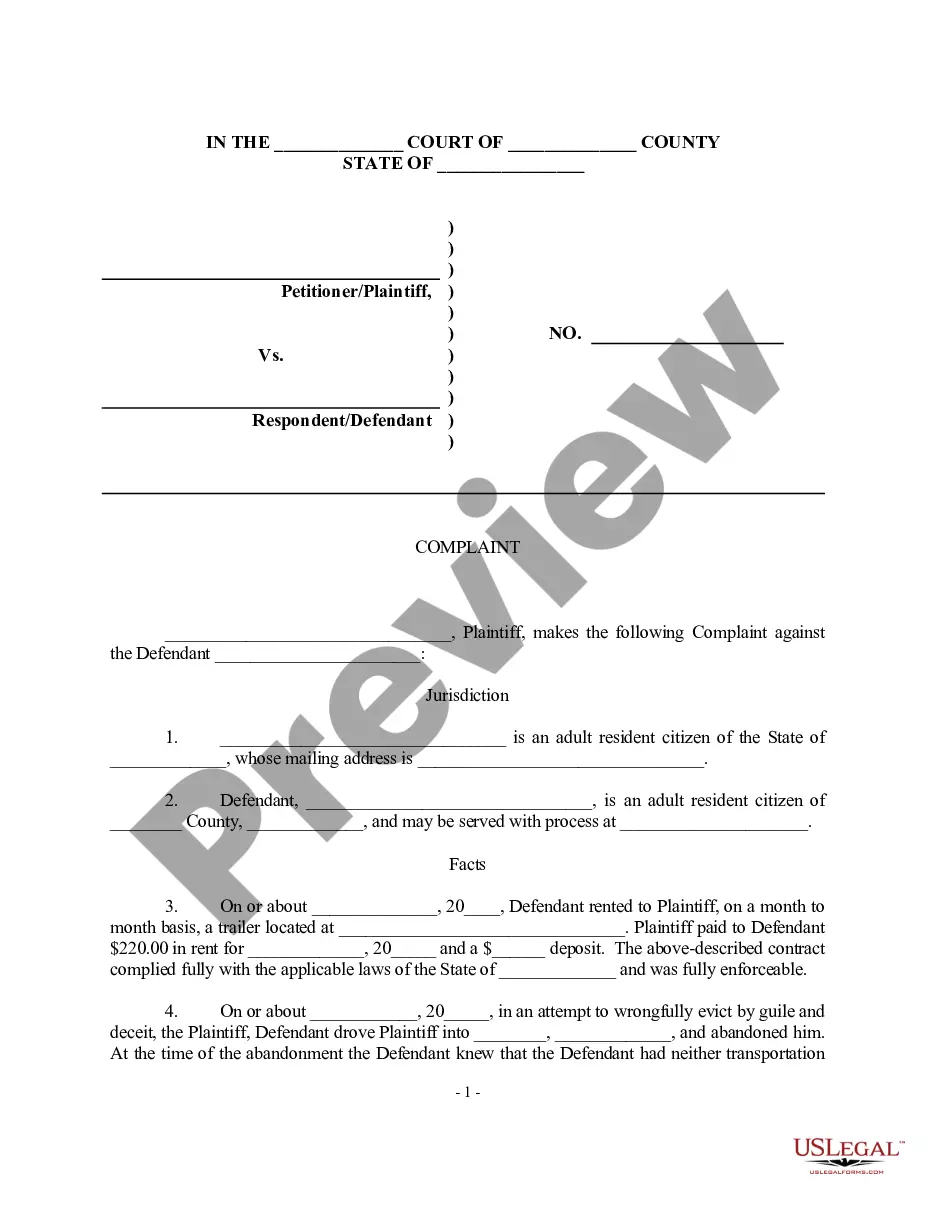
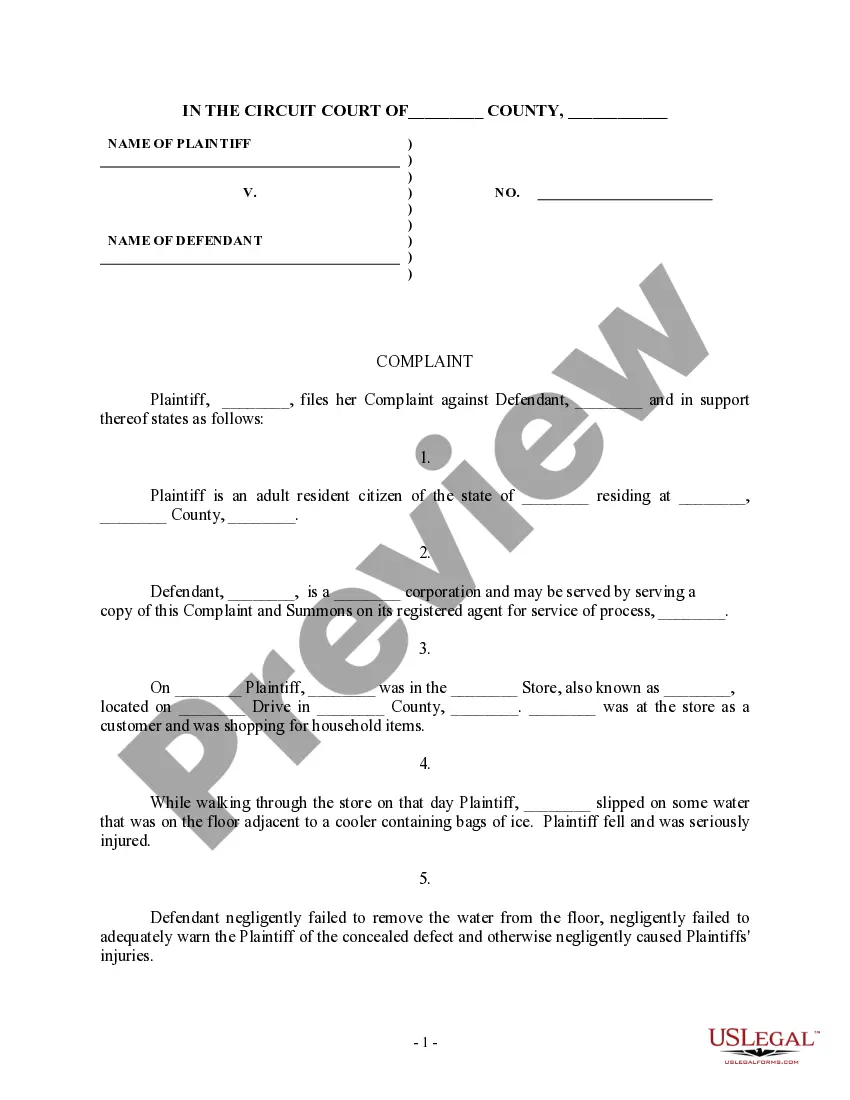
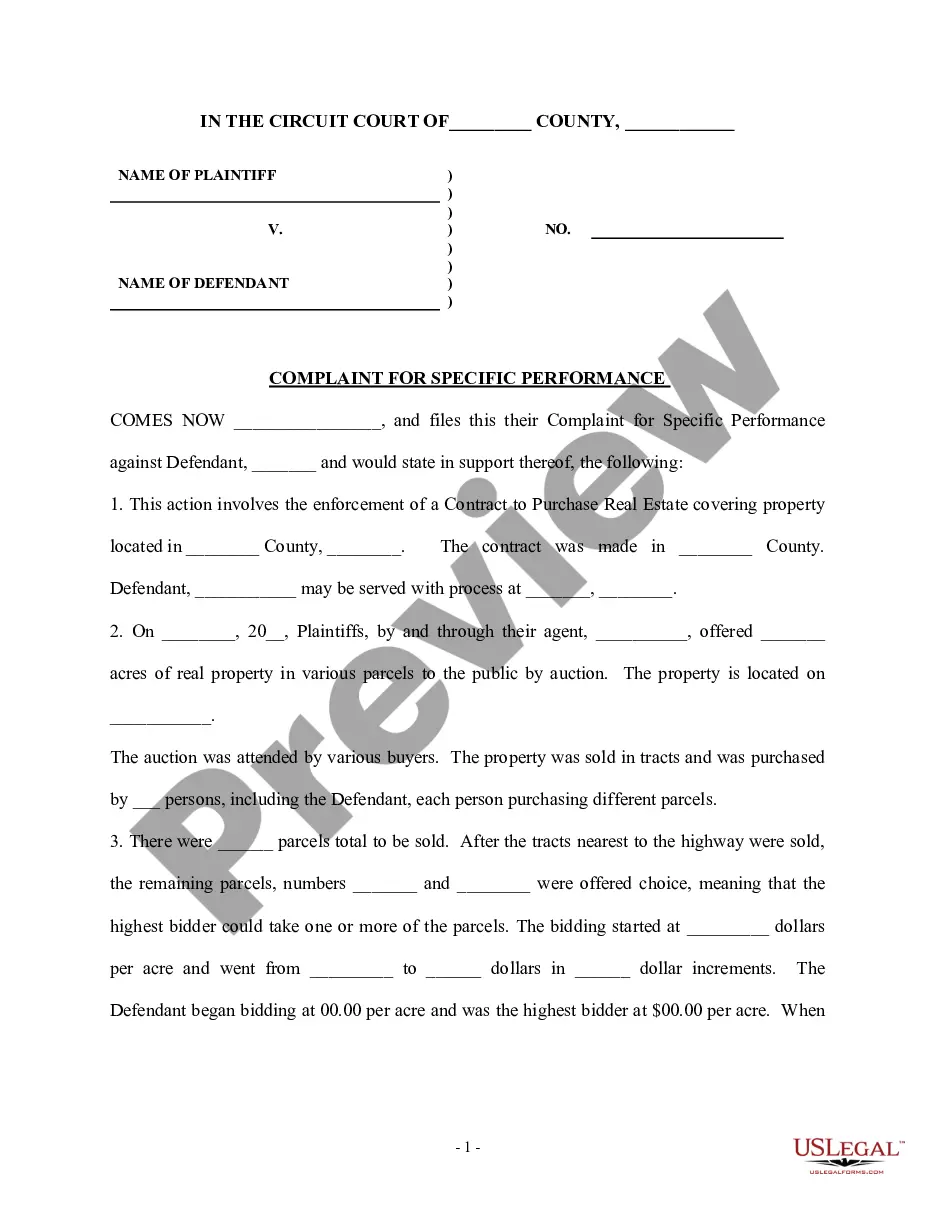
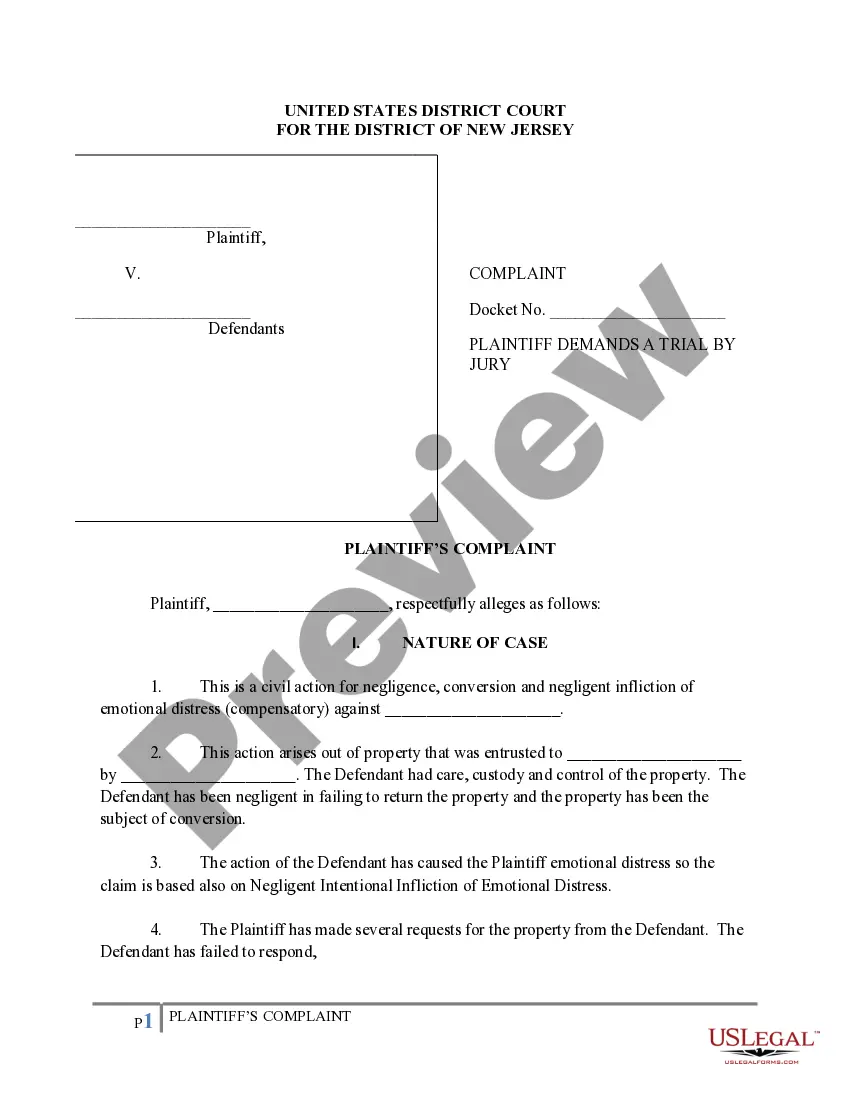
The Complaint for Trespass to Lands is a legal document used by property owners to bring a lawsuit against individuals who unlawfully enter or encroach upon their land. The form allows plaintiffs to assert various legal claims, including trespass, unjust enrichment, and nuisance. This form is distinct from other property-related legal forms as it focuses specifically on unauthorized entries and the legal remedies available to property owners facing these issues.
Main sections of this form
- Identification of parties involved, including plaintiffs and defendants.
- Specification of property details, including addresses and tax map references.
- Detailed description of trespass incidents and the nature of encroachments.
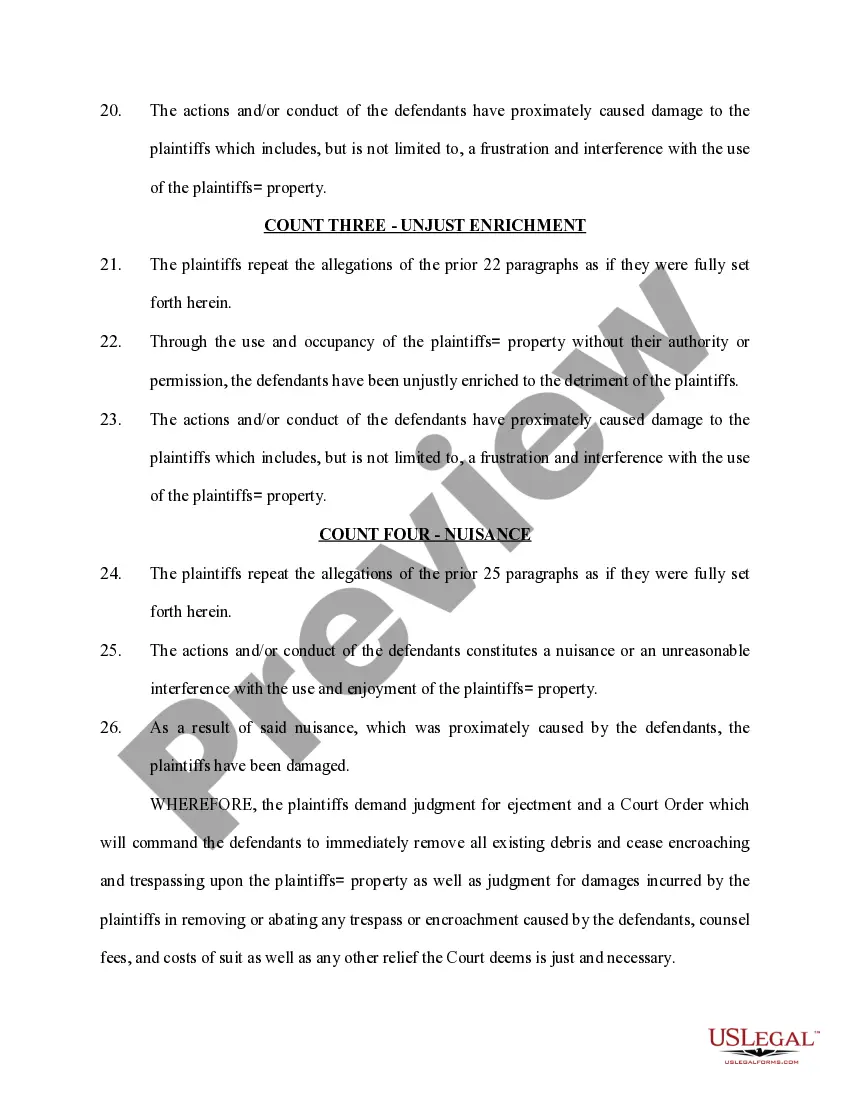
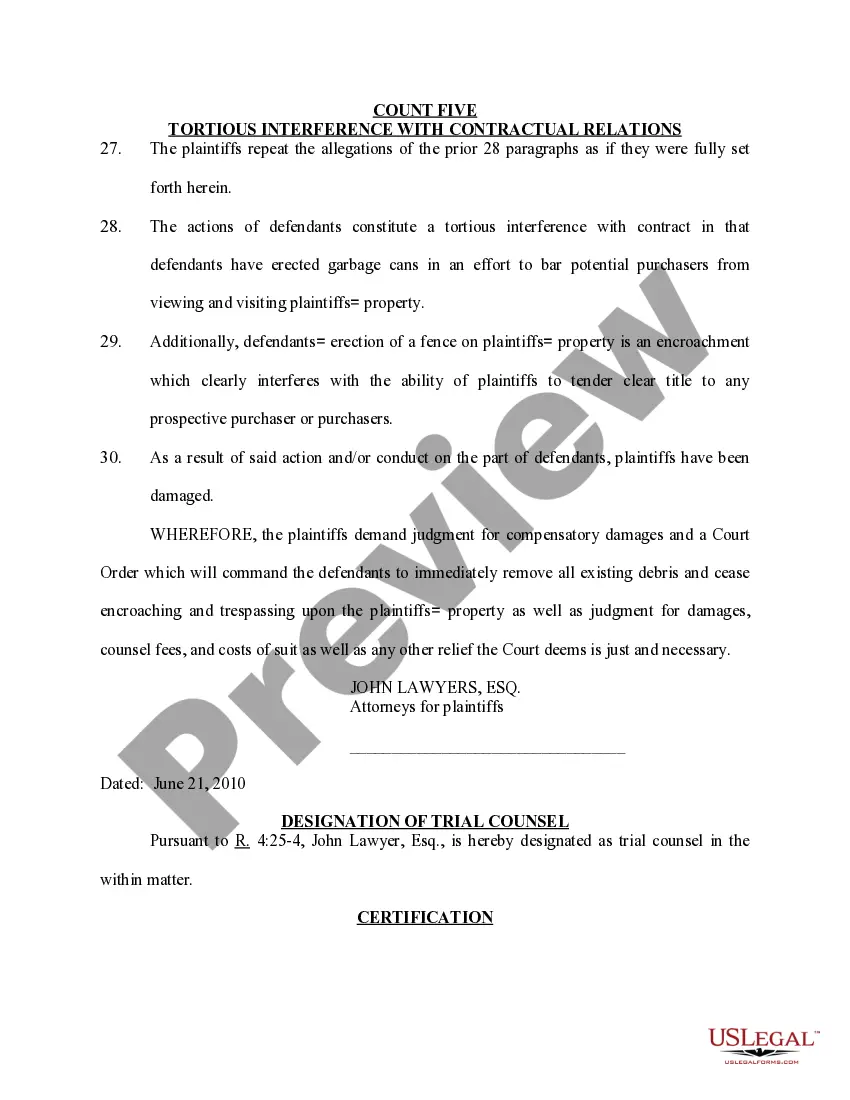
- Counts that outline specific legal claims such as trespass, nuisance, and unjust enrichment.
- A demand for judgment, including specific remedies sought by the plaintiffs.

Situations where this form applies
This form should be used when a property owner discovers unauthorized entry or encroachment by another party on their land. It is appropriate in situations where the property owner has made attempts to resolve the matter amicably, such as requesting the removal of encroachments, but the other party has not complied. This form is essential for legal recourse to protect property rights and seek damages for any harm caused by the trespass.
Who needs this form
This form is intended for:
- Individuals or entities who own property affected by trespass.
- Homeowners facing repeated encroachments from neighboring properties.
- Persons involved in disagreements about property boundaries or usage rights.
Completing this form step by step
- Identify and enter the names and addresses of both the plaintiffs and defendants.
- Clearly describe the property involved, including tax map details and any relevant boundaries.
- Detail the encroachment incidents, including dates and nature of the trespass.
- Specify the legal claims being made against the defendants in the complaint.
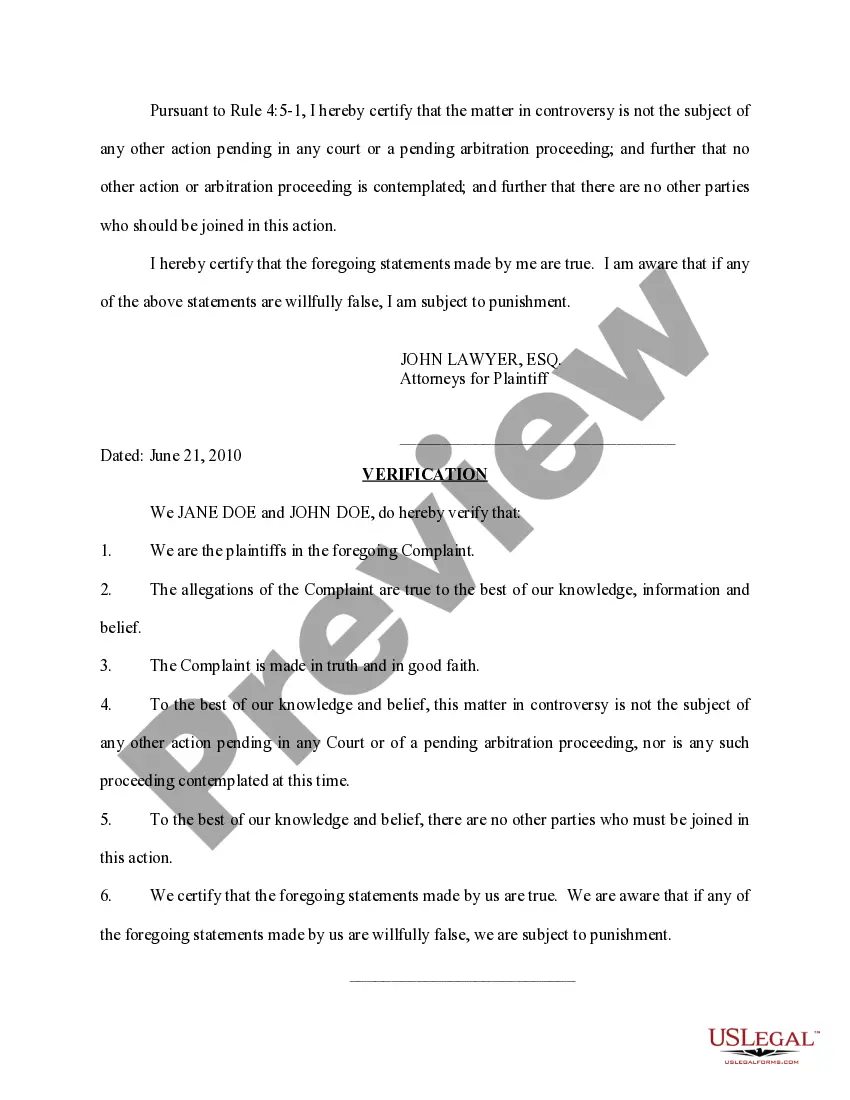
- Sign and date the form where indicated, ensuring all necessary certifications are included.
Notarization requirements for this form
To make this form legally binding, it must be notarized. Our online notarization service, powered by Notarize, lets you verify and sign documents remotely through an encrypted video session.
Get your form ready online
Our built-in tools help you complete, sign, share, and store your documents in one place.
Make edits, fill in missing information, and update formatting in US Legal Forms—just like you would in MS Word.
Download a copy, print it, send it by email, or mail it via USPS—whatever works best for your next step.
Sign and collect signatures with our SignNow integration. Send to multiple recipients, set reminders, and more. Go Premium to unlock E-Sign.
If this form requires notarization, complete it online through a secure video call—no need to meet a notary in person or wait for an appointment.
We protect your documents and personal data by following strict security and privacy standards.
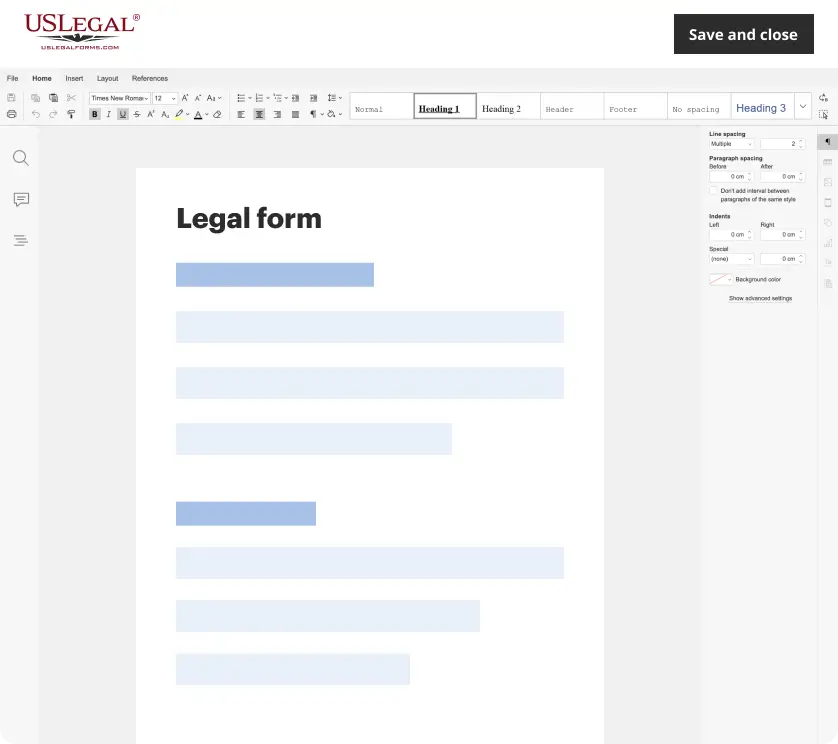
Make edits, fill in missing information, and update formatting in US Legal Forms—just like you would in MS Word.

Download a copy, print it, send it by email, or mail it via USPS—whatever works best for your next step.
Sign and collect signatures with our SignNow integration. Send to multiple recipients, set reminders, and more. Go Premium to unlock E-Sign.

If this form requires notarization, complete it online through a secure video call—no need to meet a notary in person or wait for an appointment.

We protect your documents and personal data by following strict security and privacy standards.
Mistakes to watch out for
- Failing to include all parties involved can lead to complications in the case.
- Neglecting to provide specific details about the encroachment can weaken the complaint.
- Not keeping copies of all communications with the defendants may hinder the case.
Why complete this form online
- Convenience of downloading the form immediately upon completion of your order.
- Editability allows you to customize the document to fit your specific needs.
- Access to legally vetted forms ensures compliance with state regulations.
Looking for another form?



Form popularity
FAQ
In order to constitute a trespass, entry is essential. Entry must be without permission. The land must be in possession of the plaintiff, it may be actual or constructive. Entry must be voluntary which means not against a person's will or by force. Entry must be intentional.
A trespass is an intentional, wrongful entry onto another person's land, without the owner's permission and without a legal privilege to do so.
The four elements of the tort trespass to land are intent, enter, land, and possession.
In order to prove that a defendant is guilty of trespassing, a prosecutor must be able to establish the following: The defendant willfully entered or remained on the property of another. The defendant did this with the specific intent of interfering with the other person's property rights.
Trespass is an area of criminal law or tort law broadly divided into three groups: trespass to the person, trespass to chattels, and trespass to land.
Trespass to land occurs when a person intentionally enters someone else's property without permission. The only intent required for this claim, is the intent to enter the property. So even if your neighbors accidently cross from their property into your lot, they can be liable for trespass.
Trespass to land occurs when a person intentionally enters someone else's property without permission. The only intent required for this claim, is the intent to enter the property.A trespass can also occur if someone causes a physical item, like a golf ball, to enter your property. Substantial injury is not required.
Trespass to land occurs when someone has the intent to enter the land in possession of another. The four elements of the tort trespass to land are intent, enter, land, and possession.
A person commits defiant trespassing when he or she enters a place despite having been given notice to stay off the premises.Defiant trespassing is a petty disorderly persons offense, and a conviction could expose the offender to 30 days in jail and a fine of $1,000.00.