Ohio Trade Secrets License Agreement and Assignment between Licensor and Licensee
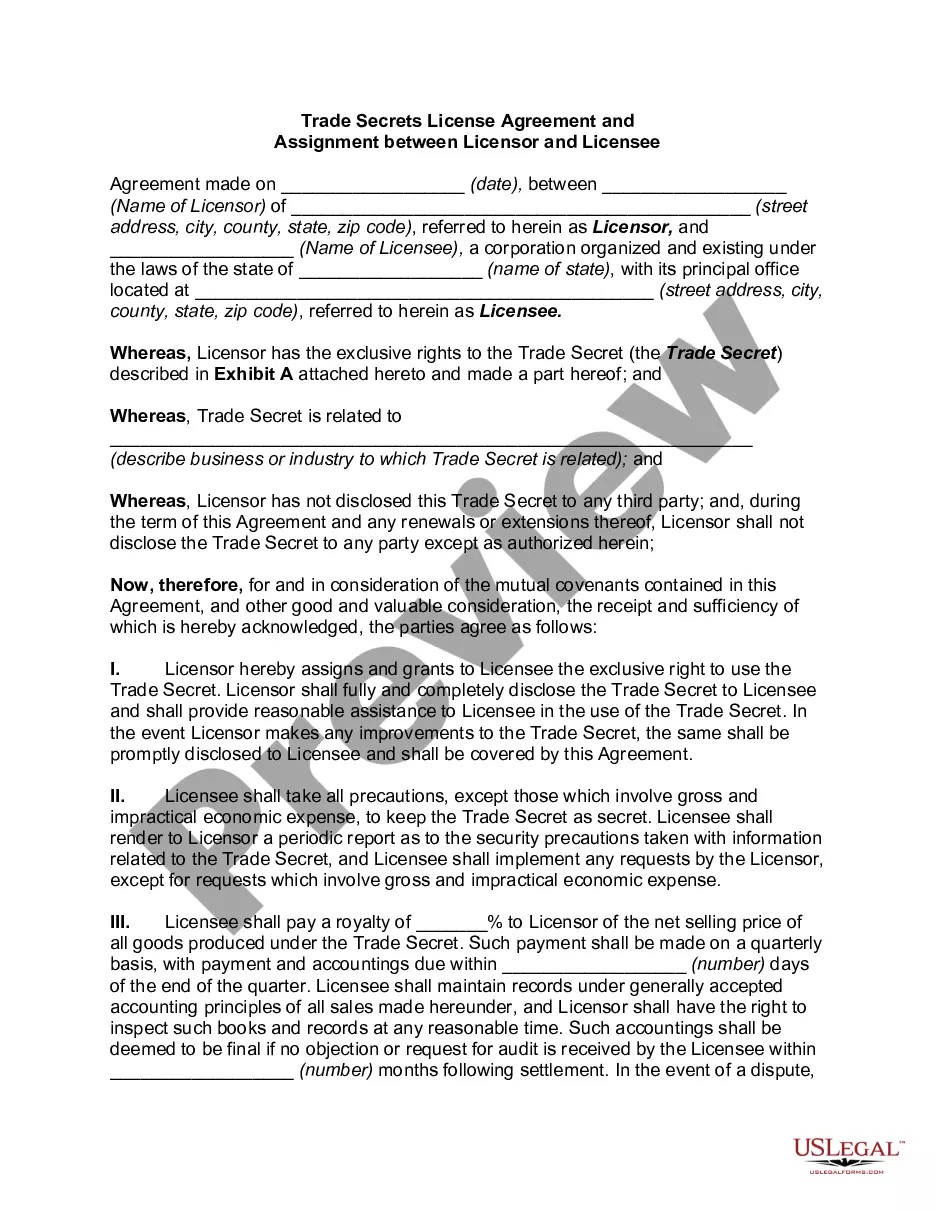
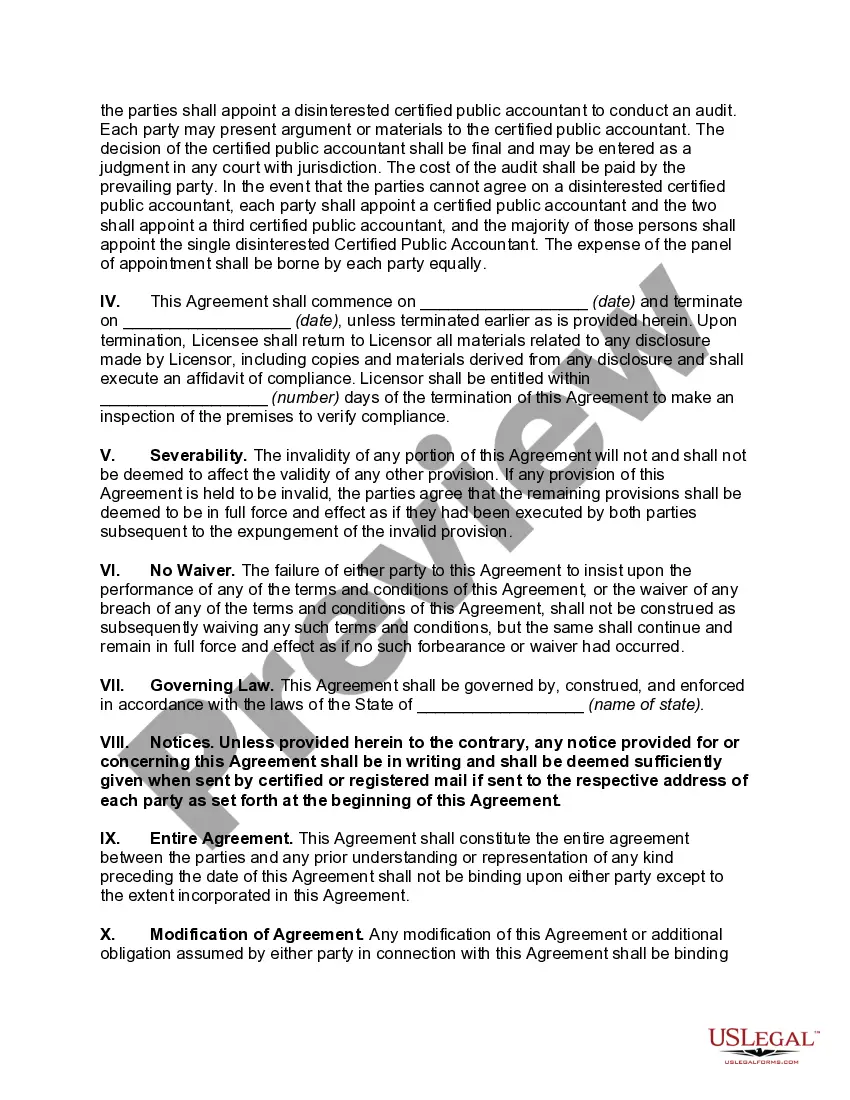
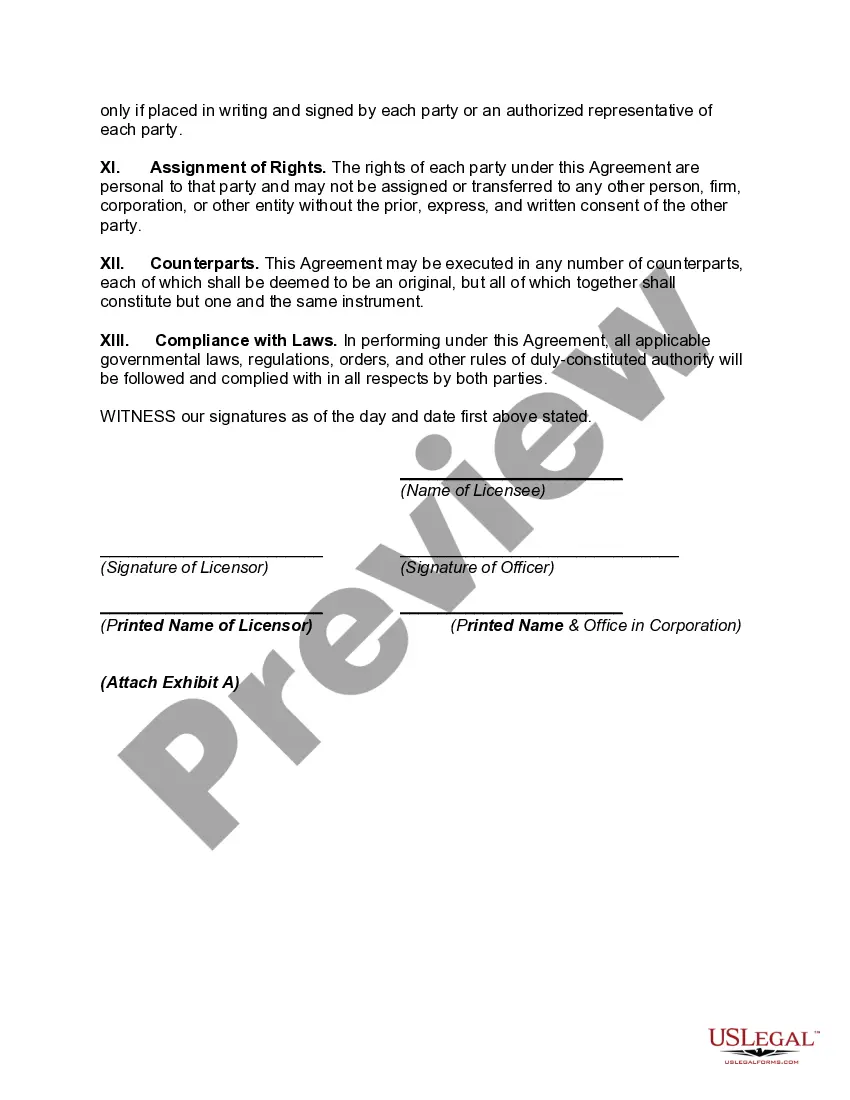
Description
Get your form ready online
Our built-in tools help you complete, sign, share, and store your documents in one place.
Make edits, fill in missing information, and update formatting in US Legal Forms—just like you would in MS Word.
Download a copy, print it, send it by email, or mail it via USPS—whatever works best for your next step.
Sign and collect signatures with our SignNow integration. Send to multiple recipients, set reminders, and more. Go Premium to unlock E-Sign.
If this form requires notarization, complete it online through a secure video call—no need to meet a notary in person or wait for an appointment.
We protect your documents and personal data by following strict security and privacy standards.

Make edits, fill in missing information, and update formatting in US Legal Forms—just like you would in MS Word.

Download a copy, print it, send it by email, or mail it via USPS—whatever works best for your next step.

Sign and collect signatures with our SignNow integration. Send to multiple recipients, set reminders, and more. Go Premium to unlock E-Sign.

If this form requires notarization, complete it online through a secure video call—no need to meet a notary in person or wait for an appointment.

We protect your documents and personal data by following strict security and privacy standards.
Looking for another form?
How to fill out Trade Secrets License Agreement And Assignment Between Licensor And Licensee?
US Legal Forms - one of the largest collections of legal documents in the United States - offers a range of legal document templates that you can download or print.
By using the website, you can access thousands of forms for business and personal purposes, categorized by type, state, or keywords. You can quickly acquire the latest editions of forms such as the Ohio Trade Secrets License Agreement and Assignment between Licensor and Licensee.
If you have an account, Log In and download the Ohio Trade Secrets License Agreement and Assignment between Licensor and Licensee from the US Legal Forms library. The Download button will appear on every form you view. All previously downloaded forms can be found in the My documents tab of your account.
Make modifications. Fill out, edit, print, and sign the downloaded Ohio Trade Secrets License Agreement and Assignment between Licensor and Licensee.
Every form you add to your account does not have an expiration date and is yours indefinitely. Therefore, if you want to download or print another version, just visit the My documents section and click on the form you need. Access the Ohio Trade Secrets License Agreement and Assignment between Licensor and Licensee with US Legal Forms, the most extensive library of legal document templates. Utilize thousands of professional and state-specific templates that fulfill your business or personal requirements.
- If you wish to use US Legal Forms for the first time, here are some simple steps to help you get started.
- Make sure you have chosen the correct form for your city/county. Click the Preview button to review the form's details. Check the form description to ensure you have selected the right form.
- If the form does not meet your needs, use the Search box at the top of the screen to find the one that does.
- If you are satisfied with the form, confirm your choice by clicking the Purchase now button. Then, choose the payment plan you prefer and provide your details to create an account.
- Complete the transaction. Use your credit card or PayPal account to finalize the transaction.
- Choose the format and download the form to your device.
Form popularity
FAQ
In particular, a licensee's rights are generally not assignable unless the license agreement expressly permits assignment or the licensor otherwise consents.
The licensee is, therefore, entitled to stock the shop with his choice of brands but he does not have the right to alter the intended intent, retain any consumer of his choosing and to set the price/conditions for his products. He can also lock the shop and open it whenever he wants at the end of business hours.
A licensing agreement is a partnership between an intellectual property rights owner, known as the licensor, and another who is authorised to use such rights, known as the licensee, in exchange for an agreed payment, known as royalty1. There is no transfer of ownership involved.
A licensee is any business, organization, or individual that has been granted legal permission by another entity to engage in an activity. The permission, or license, can be given on an express or implied basis.
In particular, a licensee's rights are generally not assignable unless the license agreement expressly permits assignment or the licensor otherwise consents.
Approve prospective licensees. Approve licensed products, packaging, marketing and collateral materials. Provide access to licensable assets and/or develop style guide. Register trademarks in appropriate categories.
Summary. A licensing agreement is a contract between a licensor and licensee in which the licensee gains access to the licensor's intellectual property. The party providing the intellectual property is called the licensor while the party receiving the intellectual property is called the licensee.
Practitioners and licensing executives often refer to three basic types of voluntary licenses: non-exclusive, sole, and exclusive. A non-exclusive licence allows the licensor to retain the right to use the licensed property and the right to grant additional licenses to third parties.
The definition of a licensor is a party or entity that grants a license to someone else. The DMV is an example of a licensor. One who grants a license. (law) A party that grants a license to another.