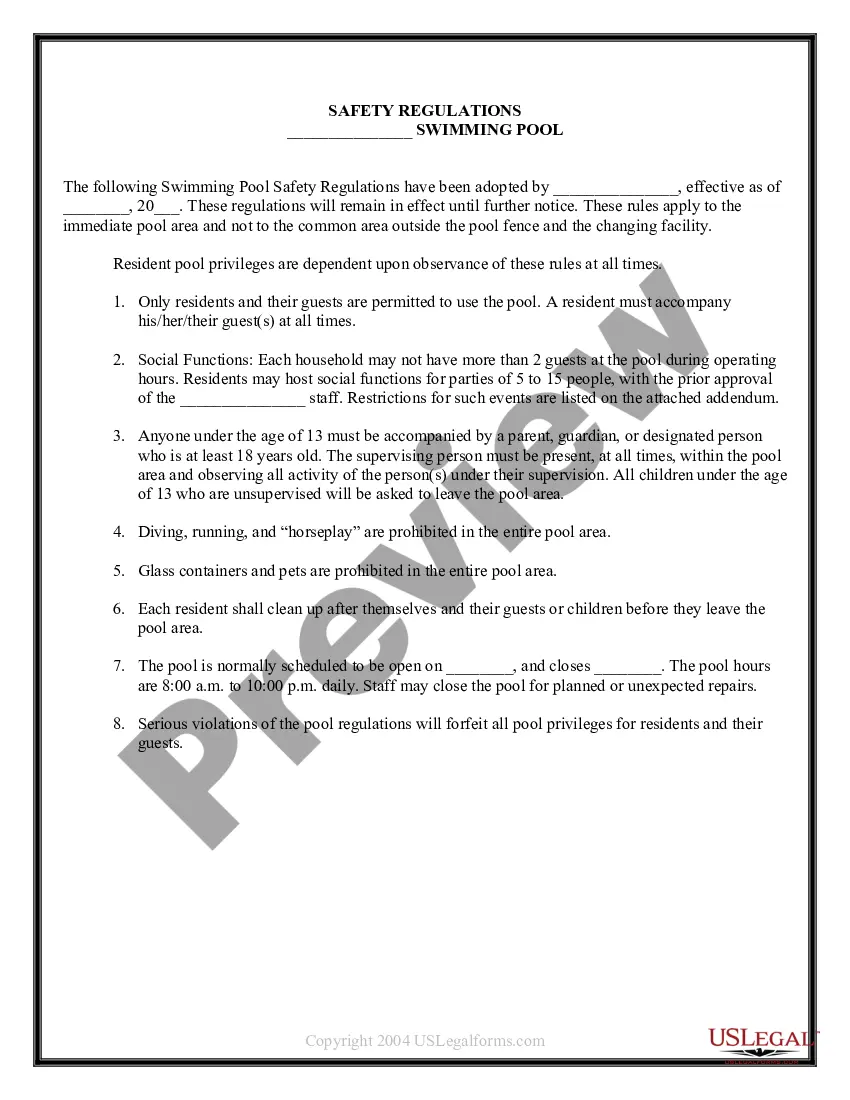
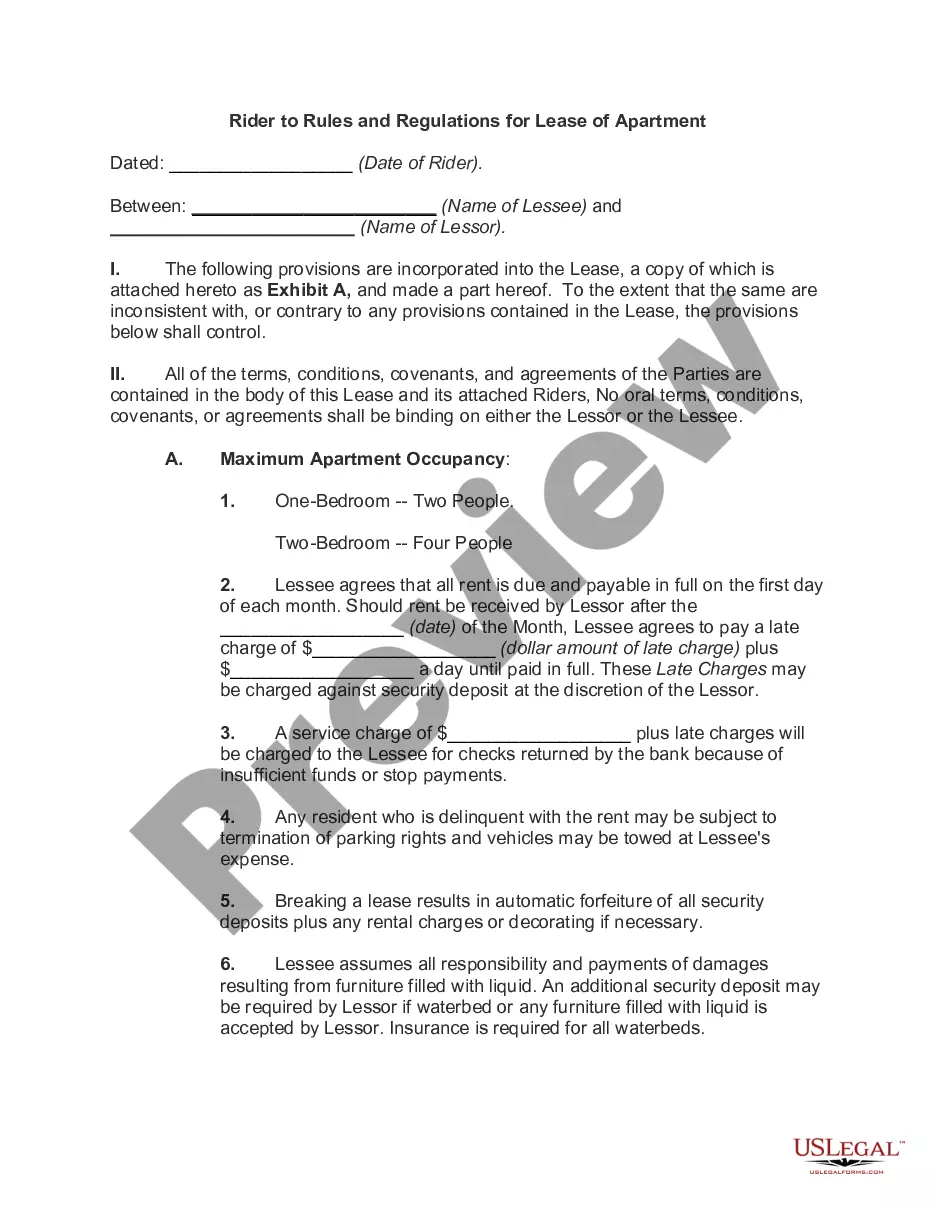
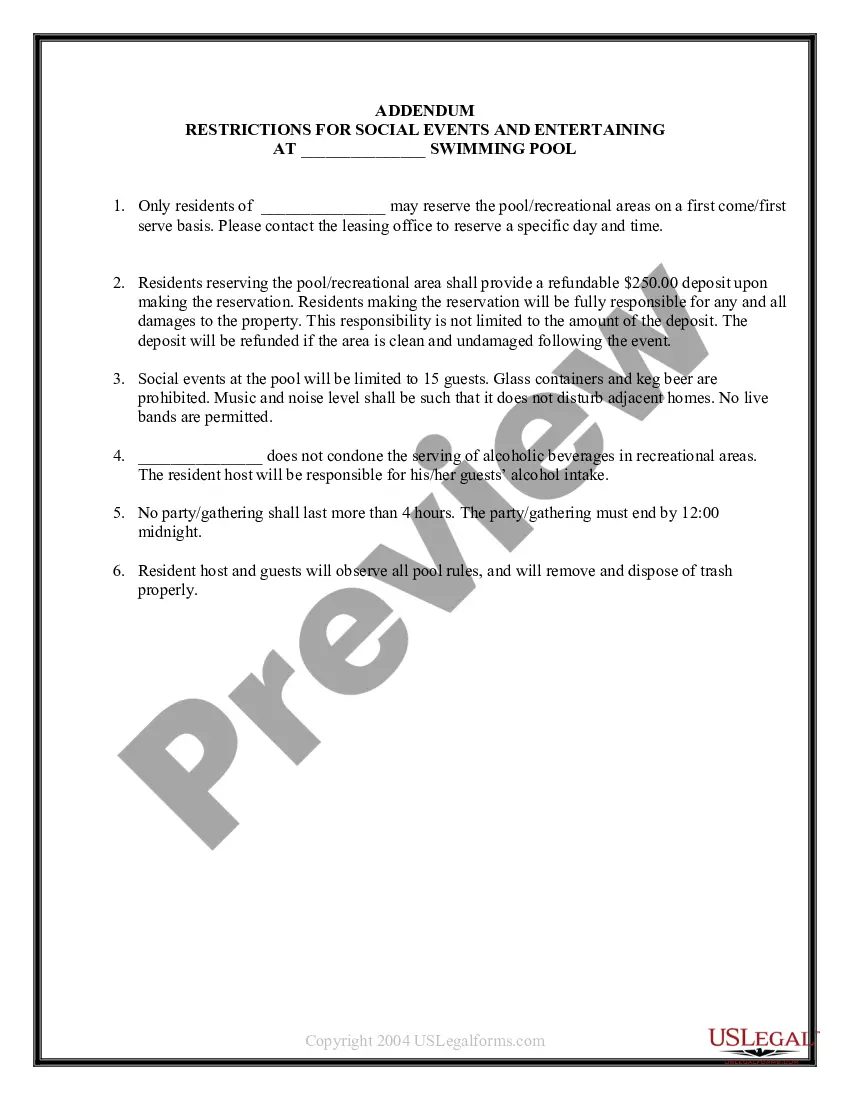
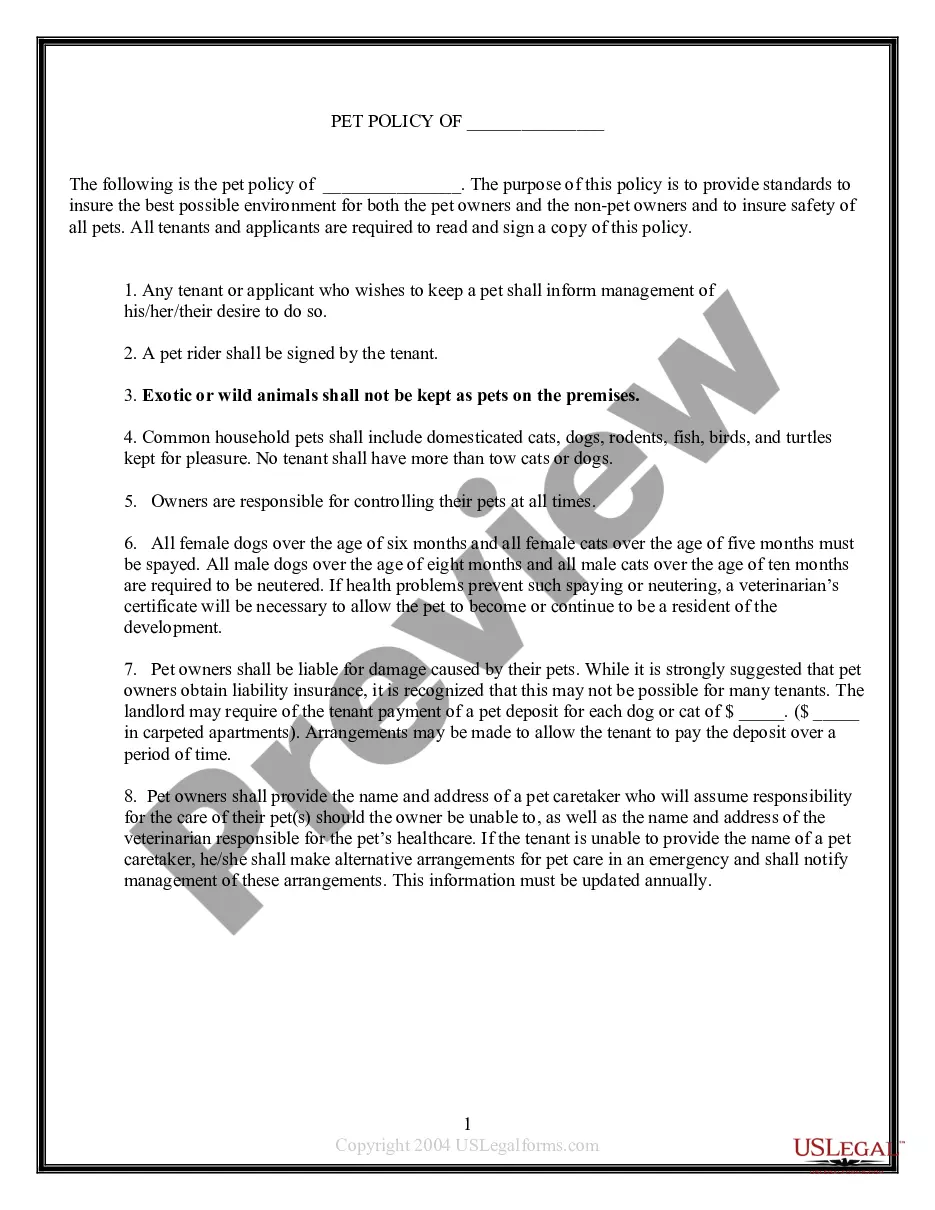
Apartment policy concerning the use of the complex swimming pool.
Oklahoma Apartment Complex Swimming Pool Policy
State:
Multi-State
Category:
Control #:
US-898LT
Format:
Word;
Rich Text
48 downloads
Description
Get your form ready online
Our built-in tools help you complete, sign, share, and store your documents in one place.
Built-in online Word editor
Make edits, fill in missing information, and update formatting in US Legal Forms—just like you would in MS Word.
Export easily
Download a copy, print it, send it by email, or mail it via USPS—whatever works best for your next step.
E-sign your document
Sign and collect signatures with our SignNow integration. Send to multiple recipients, set reminders, and more. Go Premium to unlock E-Sign.
Notarize online 24/7
If this form requires notarization, complete it online through a secure video call—no need to meet a notary in person or wait for an appointment.
Store your document securely
We protect your documents and personal data by following strict security and privacy standards.
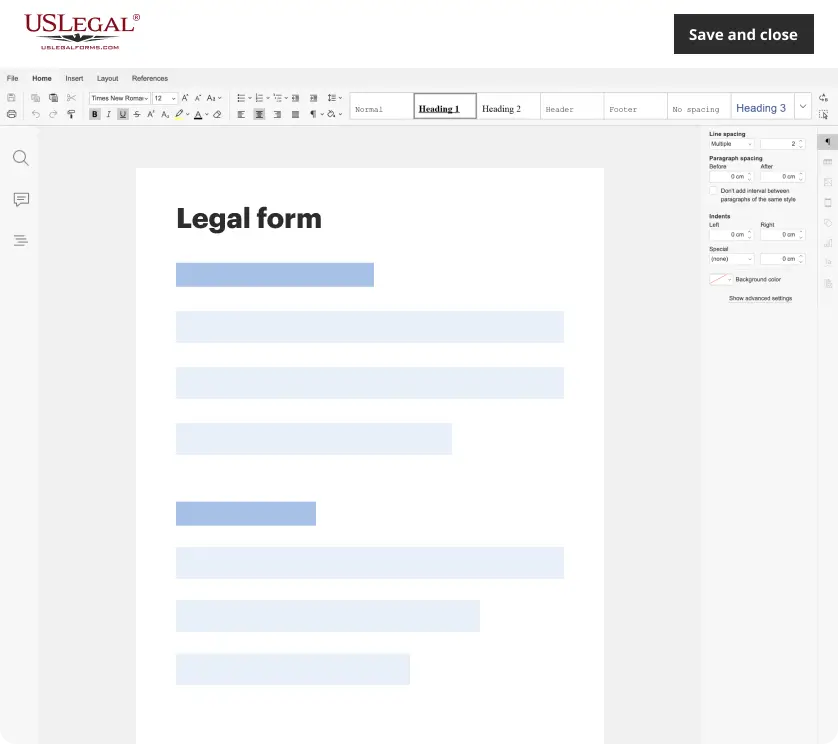
Make edits, fill in missing information, and update formatting in US Legal Forms—just like you would in MS Word.
Download a copy, print it, send it by email, or mail it via USPS—whatever works best for your next step.
Sign and collect signatures with our SignNow integration. Send to multiple recipients, set reminders, and more. Go Premium to unlock E-Sign.
If this form requires notarization, complete it online through a secure video call—no need to meet a notary in person or wait for an appointment.
We protect your documents and personal data by following strict security and privacy standards.
Looking for another form?

How to fill out Apartment Complex Swimming Pool Policy?
Selecting the ideal legal document template can be a challenge.
Certainly, there are a multitude of templates accessible online, but how can you find the legal form you need.
Utilize the US Legal Forms website. The platform offers thousands of templates, such as the Oklahoma Apartment Complex Swimming Pool Policy, which can serve both business and personal purposes.
You can browse the form using the Review button and read the form description to confirm it is suitable for you.
- All of the templates are vetted by professionals and comply with state and federal regulations.
- If you are already a member, Log In to your account and click the Download button to obtain the Oklahoma Apartment Complex Swimming Pool Policy.
- Use your account to review the legal forms you have previously purchased.
- Visit the My documents tab in your account to download another copy of the document you need.
- If you are a new user of US Legal Forms, here are some basic guidelines to follow.
- First, ensure you have selected the correct form for your area/region.
Form popularity
FAQ
Yes, you typically need a permit to install an above-ground pool in Oklahoma. The requirements can vary by city, so check local guidelines and community regulations. Compliance with the Oklahoma Apartment Complex Swimming Pool Policy is also necessary to avoid fines and ensure your pool meets safety standards.
The Oklahoma Apartment Complex Swimming Pool Policy outlines several essential rules for pool use. Residents must shower before entering the pool and ensure no glass containers are present. Additionally, swimming alone is discouraged, as safety is a priority for all guests.
The hardscape area around your swimming pool is called a surround, deck, or decking, even though it isn't always made of wood or composite, like traditional outdoor decks with which we most often associate the words. Traditionally, most in-ground swimming pool decks are made of concrete.
Large pools must have two accessible means of entry, with at least one being a pool lift or sloped entry; smaller pools are only required to have one accessible means of entry, provided that it is either a pool lift or a sloped entry. There are a limited number of exceptions to the requirements.
If you're putting your pool near the boundary line, you'll want to minimise disruption to your neighbours. A good rule to follow is to place the pool at least 1,000 millimetres from the boundary line, and the landscape between the boundary line and the pool to enhance the overall appearance of the space.
The CPSC recommends surrounding all pool areas with childproof fencing and gates, and that goes for above-ground pools, too. Above-ground pools have elevated edges that toddlers can't reach, but stairs and ramps that provide access to the pool's surface should be secured with gates and childproof locks.
Typically, a pool fence is required if the body of water is at least 18 inches deep. If there is a deck around the above ground pool, that may affect the requirements in some states, so you need to check your local laws. But, many do stick with the four feet pool fence rule.
Fencing In almost all cases, public-use pools are required to have some kind of fencing around the pool. States, cities, and counties usually specify exactly what is required of these fences in terms of material, spacing, gates, locks, and more.
Install A Pool Barrier Such As A Removable Pool Fence A barrier refers to a physical obstacle such as a removable fence, which surrounds a pool to limit to unsupervised swimmers. These barriers are fundamental to a safe swimming pool, and are required in most of the United States.
Here's a quick answer. Yes, an inflatable pool needs a fence or barrier surrounding it to prevent accidental drownings. Most states and counties require any pool that is more than 18 inches deep be enclosed by a fence or barrier at least 4 feet high. This includes inflatable or temporary pools in a residential area.