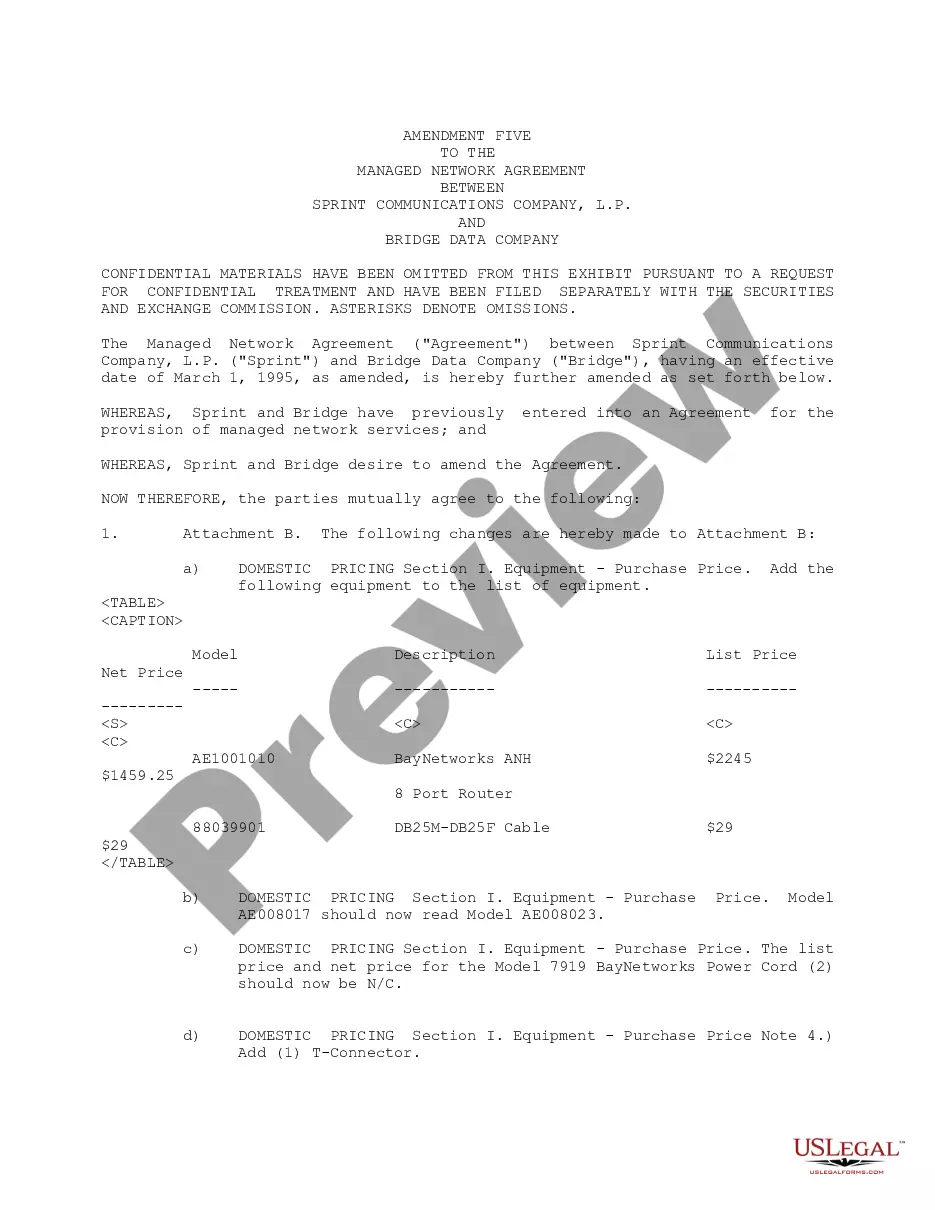
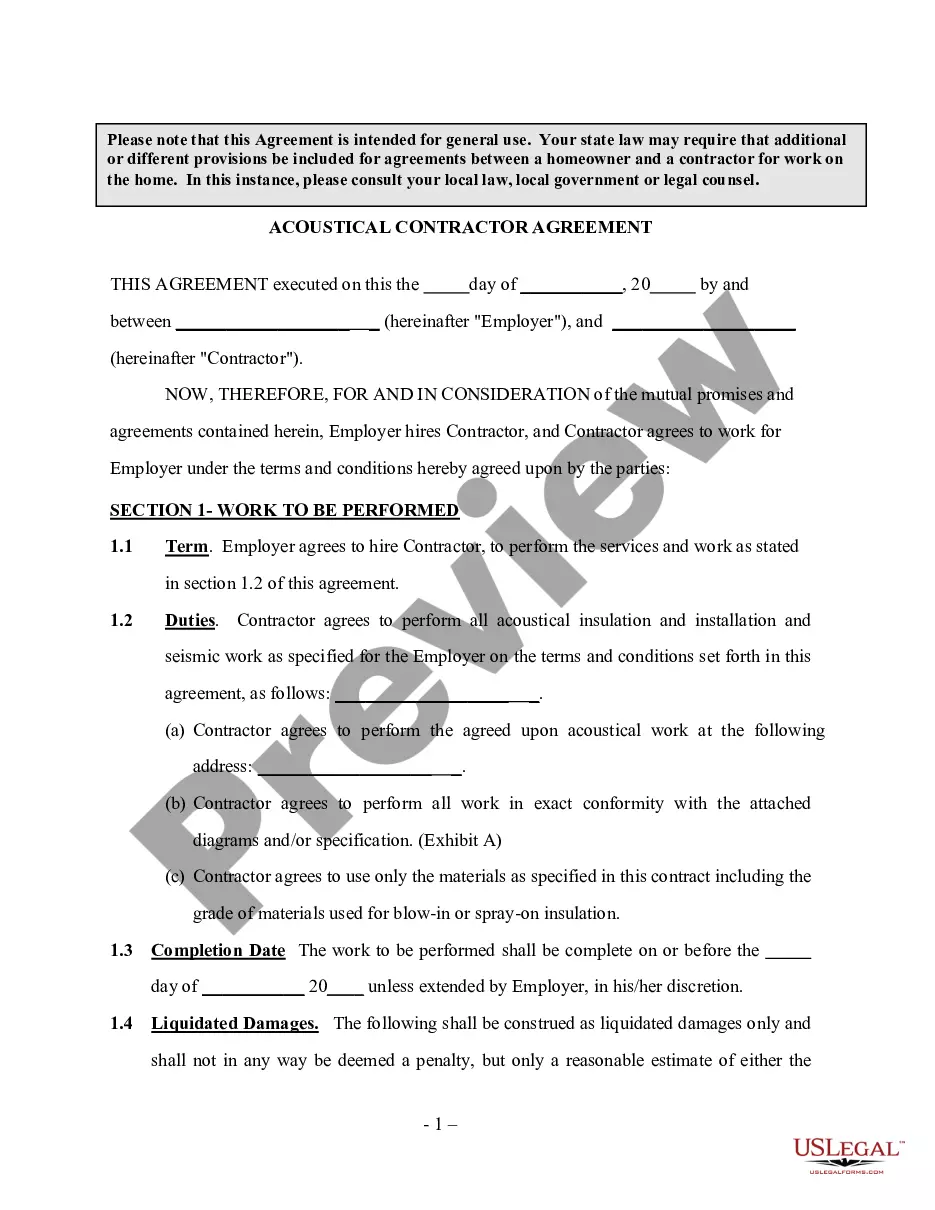
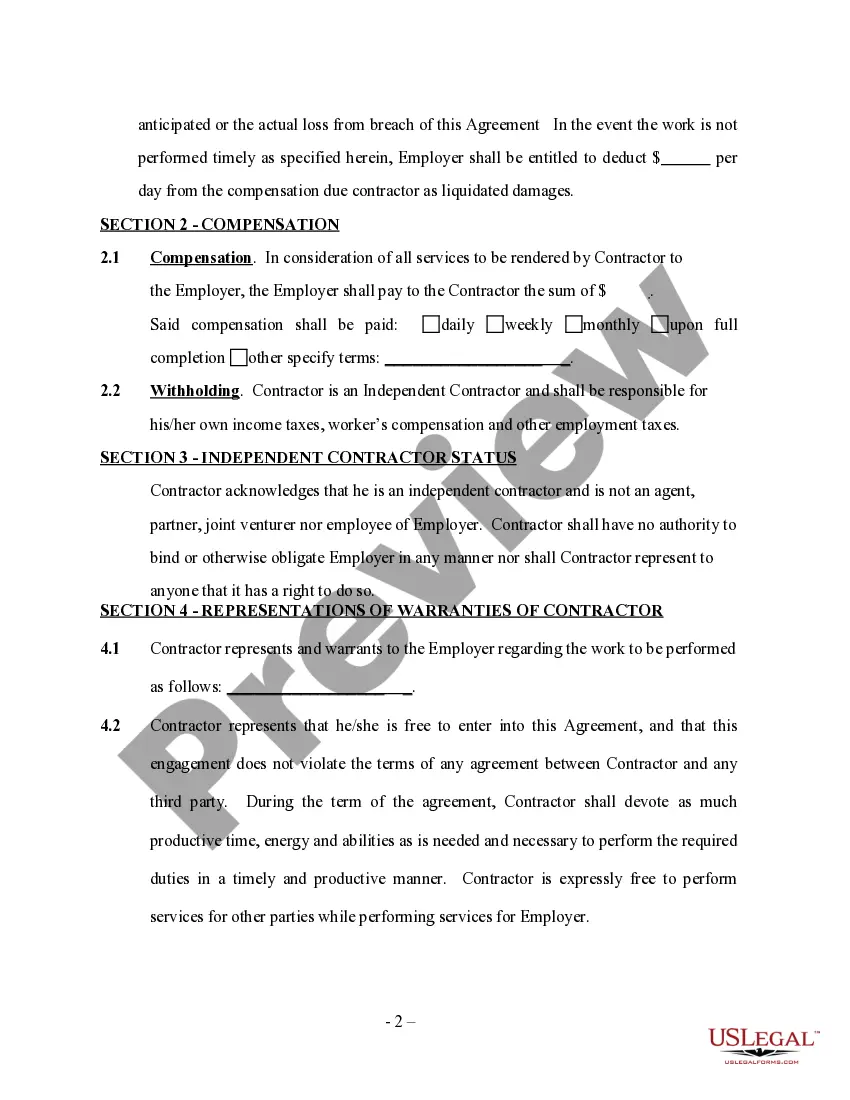
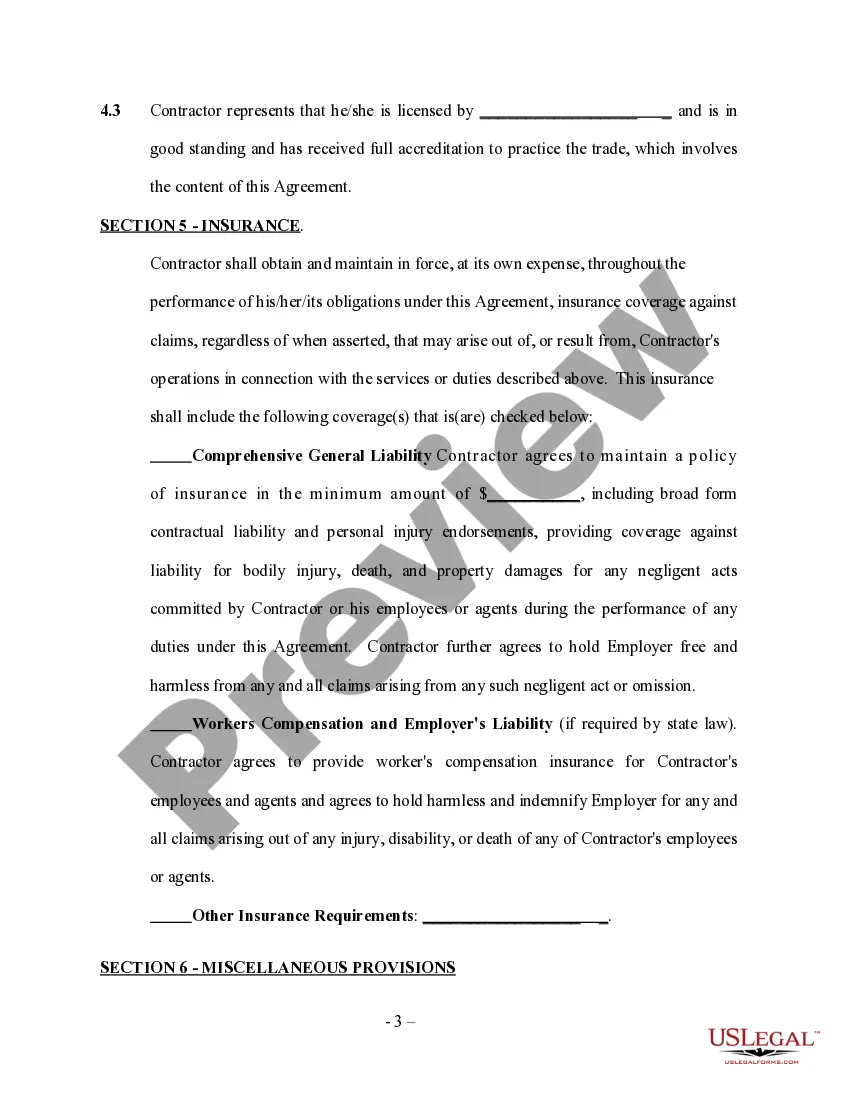
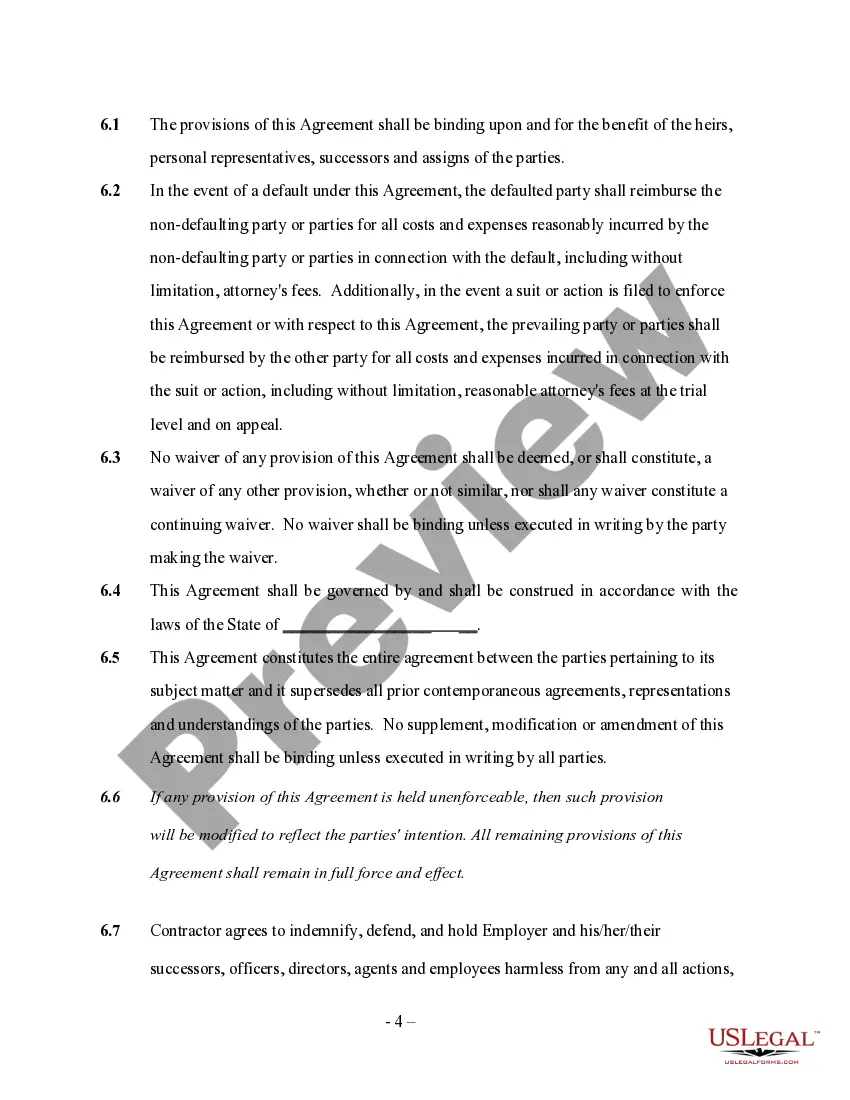
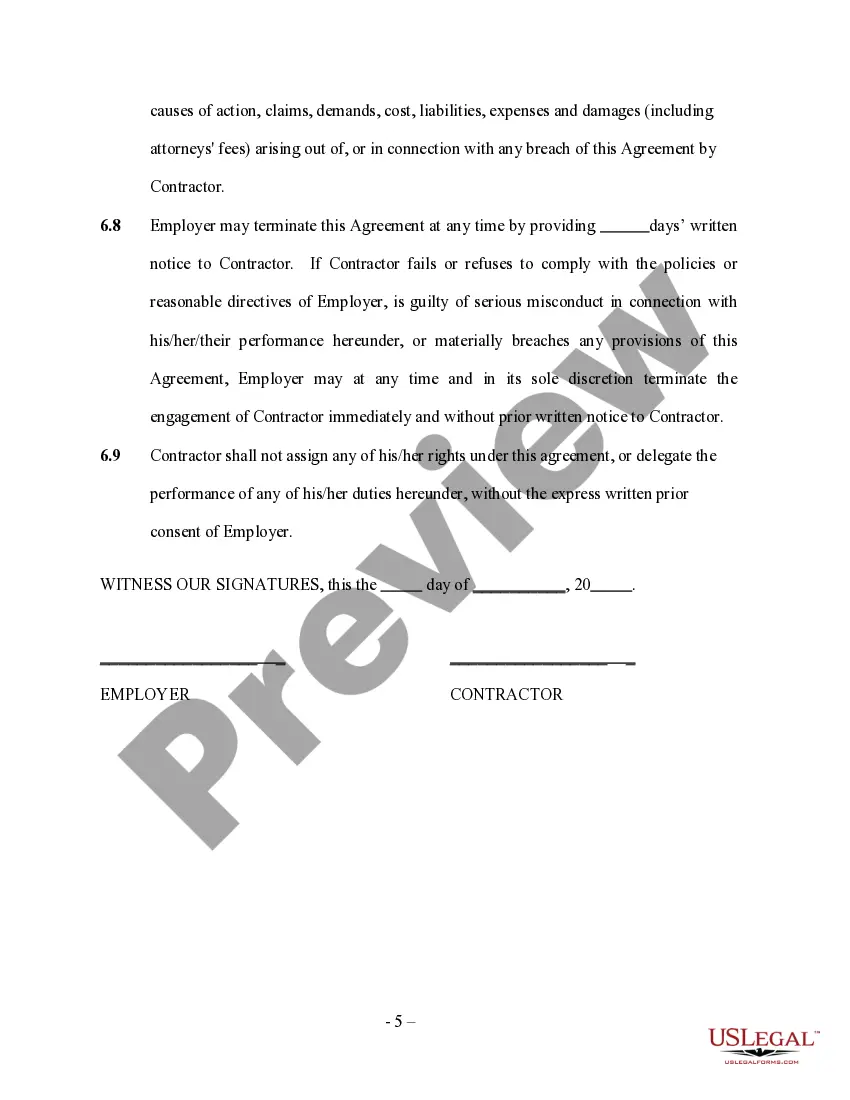
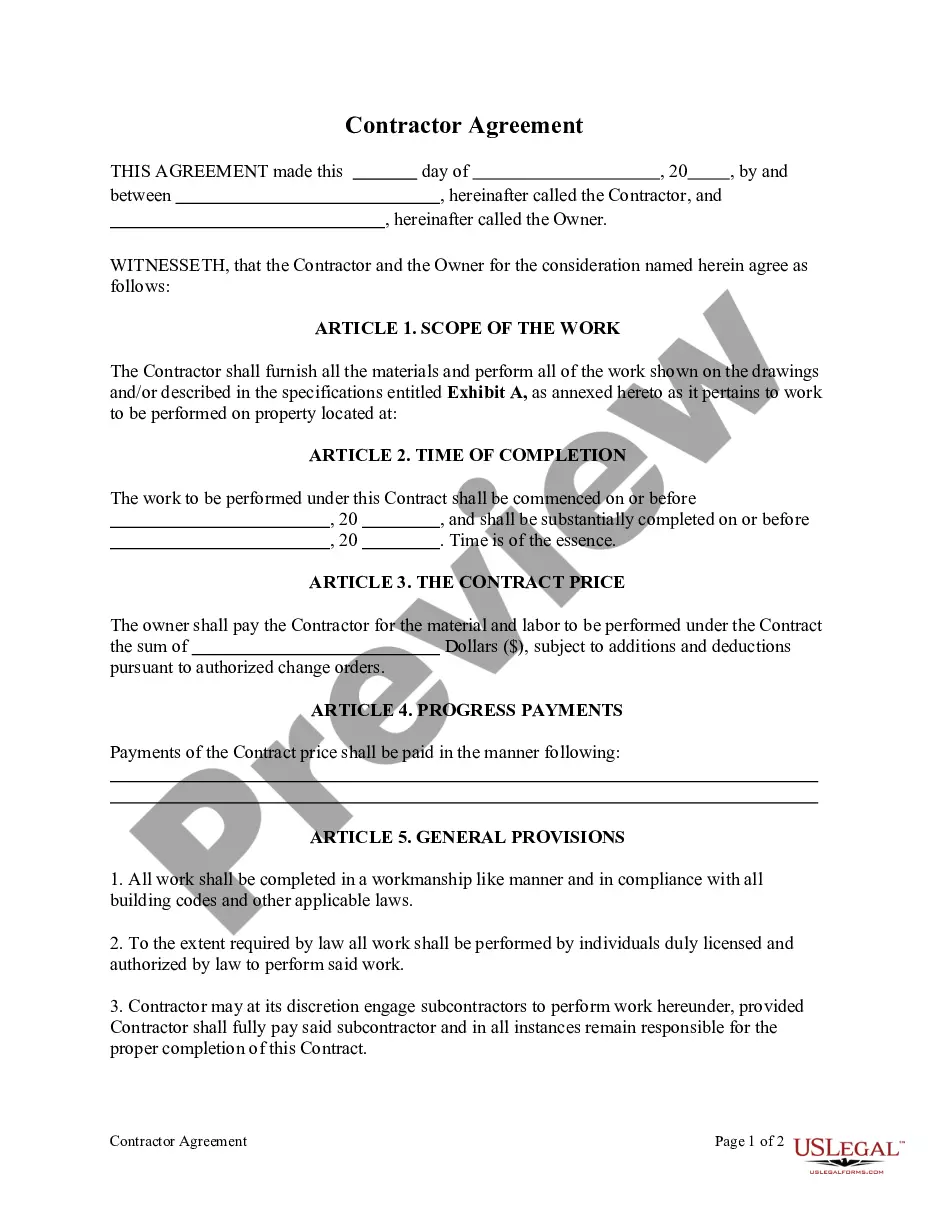
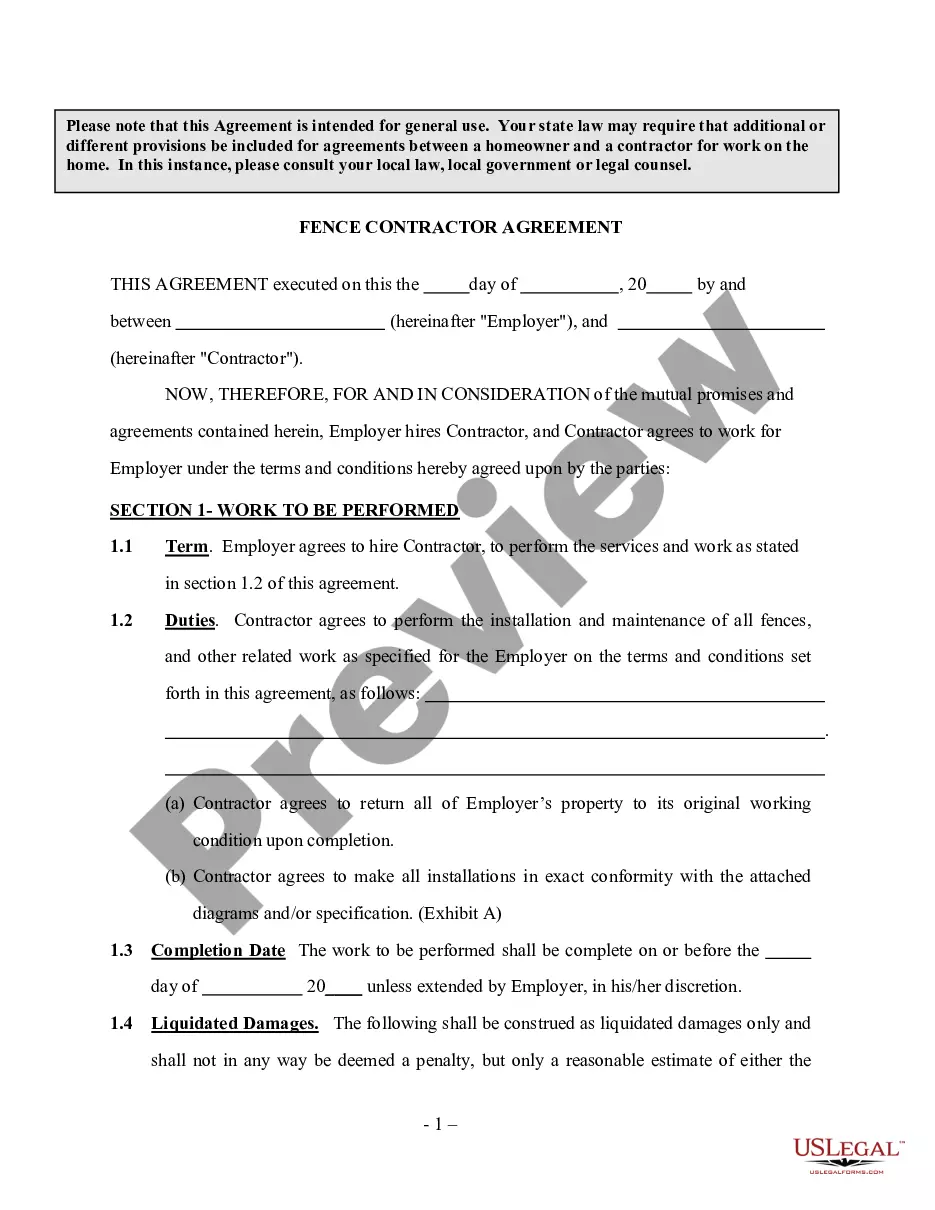
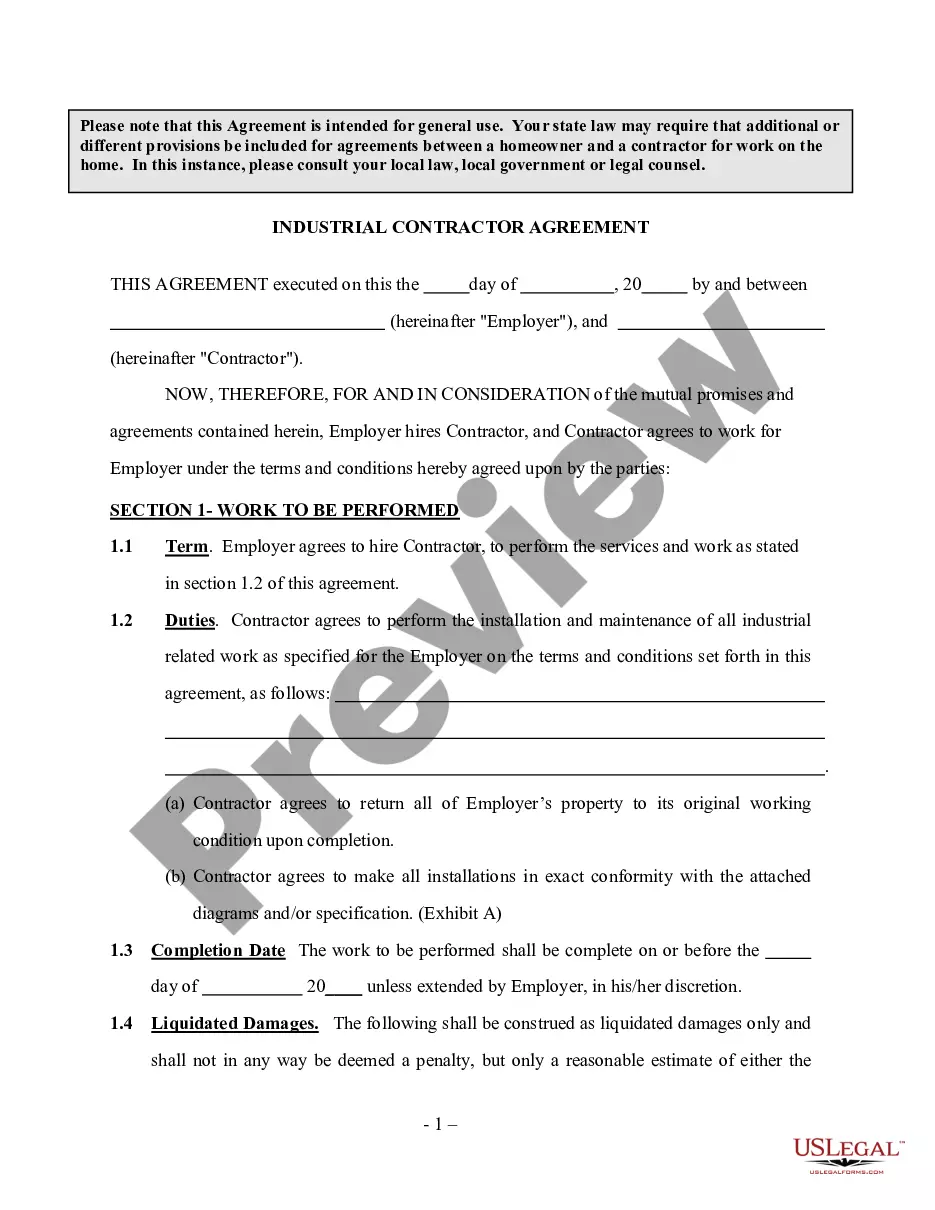
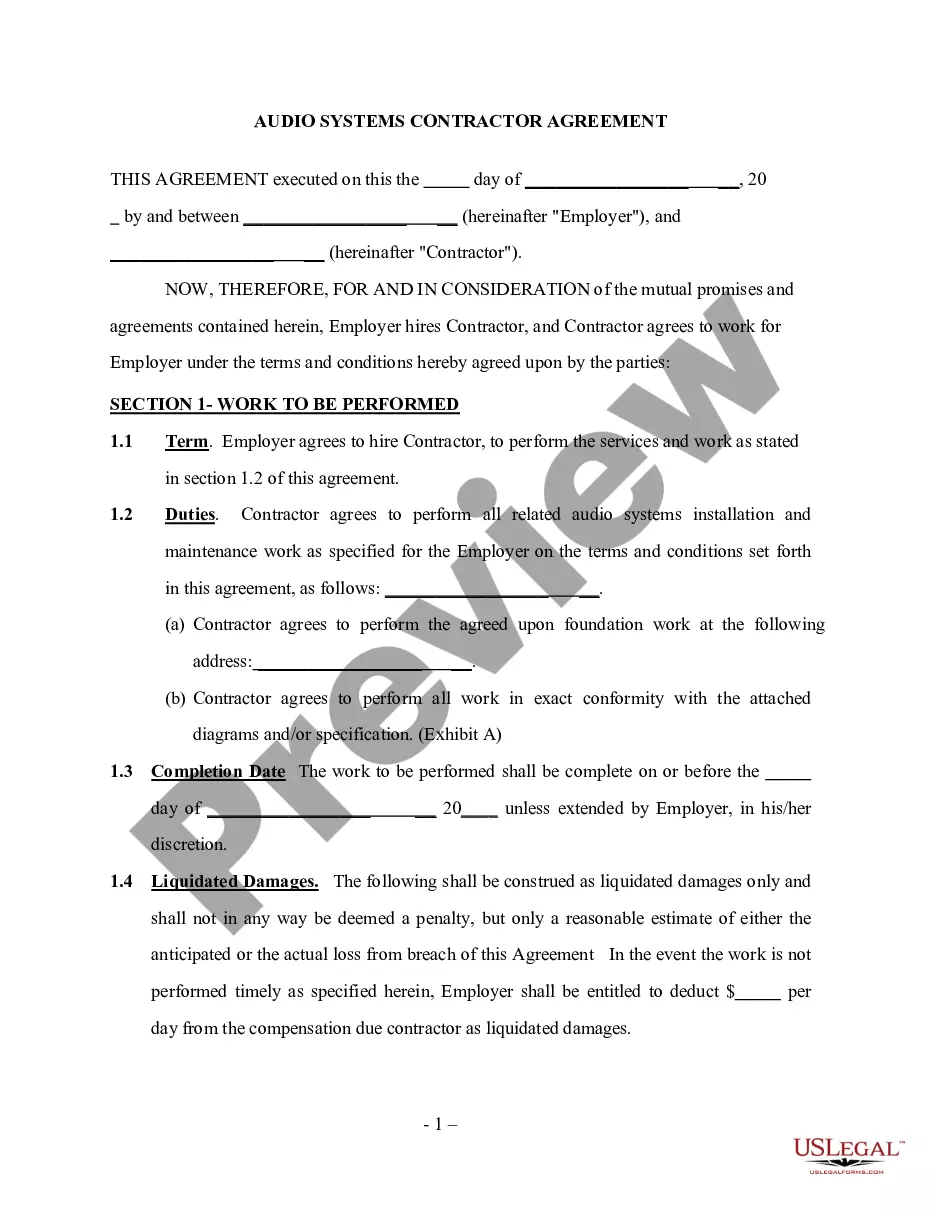
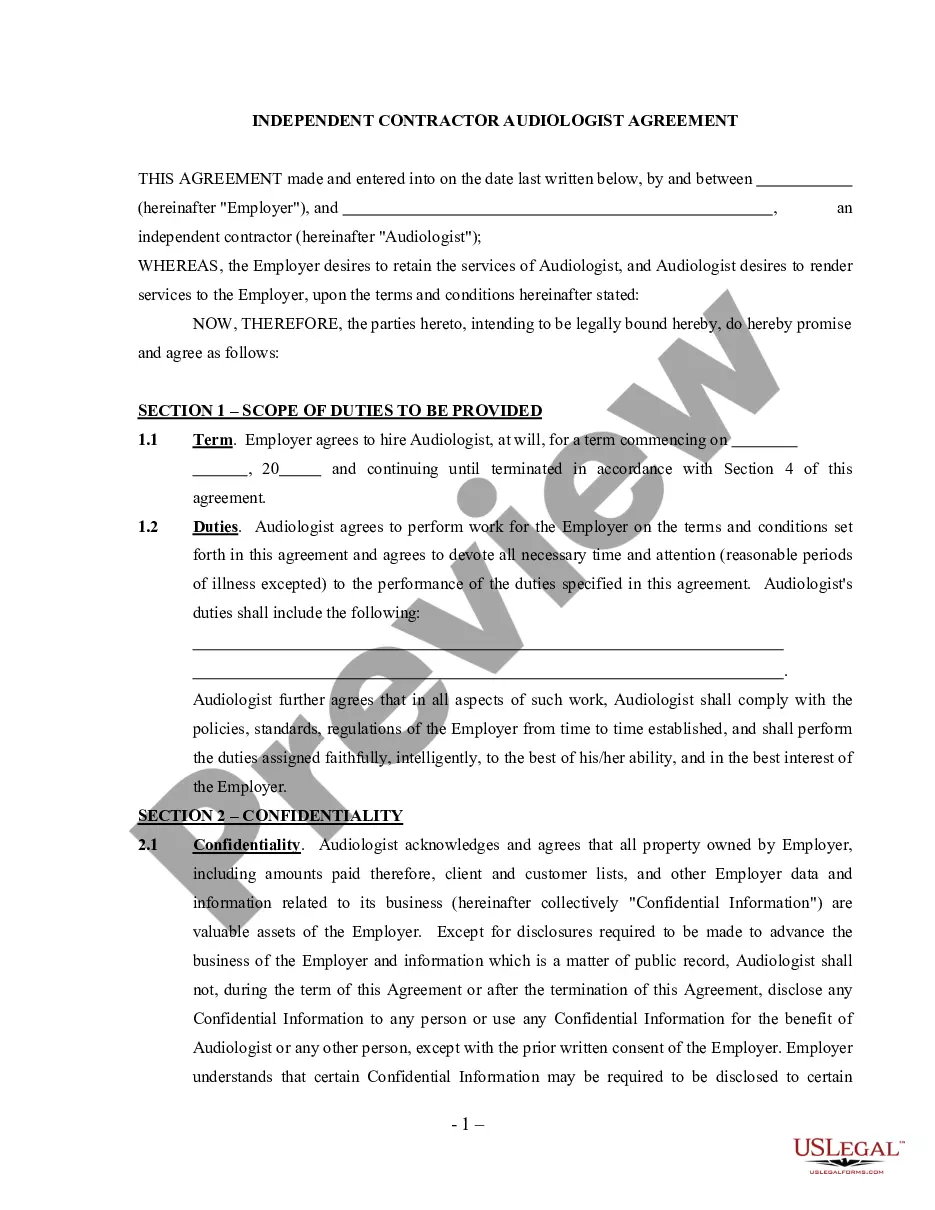
Employer contracts with an independent contractor to provide an acoustical area or building as specified and agreed upon in the contract. Please note that this Agreement is intended for general use. Your state law may require that additional or different provisions be included for agreements between a homeowner and a contractor for work on the home. In this instance, please consult your local law, local government or legal counsel.
Rhode Island Acoustical Contractor Agreement - Self-Employed
State:
Multi-State
Control #:
US-INDC-115
Format:
Word;
Rich Text
Instant download
Description
Free preview
Get your form ready online
Our built-in tools help you complete, sign, share, and store your documents in one place.
Built-in online Word editor
Make edits, fill in missing information, and update formatting in US Legal Forms—just like you would in MS Word.
Export easily
Download a copy, print it, send it by email, or mail it via USPS—whatever works best for your next step.
E-sign your document
Sign and collect signatures with our SignNow integration. Send to multiple recipients, set reminders, and more. Go Premium to unlock E-Sign.
Notarize online 24/7
If this form requires notarization, complete it online through a secure video call—no need to meet a notary in person or wait for an appointment.
Store your document securely
We protect your documents and personal data by following strict security and privacy standards.

Make edits, fill in missing information, and update formatting in US Legal Forms—just like you would in MS Word.

Download a copy, print it, send it by email, or mail it via USPS—whatever works best for your next step.

Sign and collect signatures with our SignNow integration. Send to multiple recipients, set reminders, and more. Go Premium to unlock E-Sign.

If this form requires notarization, complete it online through a secure video call—no need to meet a notary in person or wait for an appointment.

We protect your documents and personal data by following strict security and privacy standards.
Looking for another form?

How to fill out Acoustical Contractor Agreement - Self-Employed?
Are you currently in a situation where you need documents for occasional business or personal purposes almost every day? There are many legal document templates available online, but finding ones you can trust isn’t easy. US Legal Forms offers thousands of form templates, such as the Rhode Island Acoustical Contractor Agreement - Self-Employed, that are designed to comply with federal and state requirements.
If you are already acquainted with the US Legal Forms website and have an account, simply Log In. After that, you can download the Rhode Island Acoustical Contractor Agreement - Self-Employed template.
If you do not have an account and wish to start using US Legal Forms, follow these instructions.
Access all the document templates you have purchased in the My documents section. You can obtain another copy of the Rhode Island Acoustical Contractor Agreement - Self-Employed at any time if needed. Just select the required form to download or print the document template.
Utilize US Legal Forms, the largest collection of legal forms, to save time and avoid mistakes. The service provides professionally created legal document templates that you can use for various purposes. Create an account on US Legal Forms and start making your life a bit easier.
- Locate the form you require and ensure it is for your specific area/state.
- Use the Review button to examine the document.
- Read the description to confirm that you have chosen the correct form.
- If the form isn’t what you’re looking for, utilize the Search section to find the form that suits your needs and requirements.
- Once you have the right form, click Buy now.
- Select the pricing plan you prefer, complete the necessary information to create your account, and pay for your order using PayPal or Visa or Mastercard.
- Choose a convenient document format and download your copy.
Form popularity
FAQ
To fill out an independent contractor agreement, begin with your personal and business information, including your status as a self-employed professional. Clearly define the scope, payment details, and timelines for the work you will provide, particularly as an acoustical contractor. Ensure the agreement reflects the standards of the Rhode Island Acoustical Contractor Agreement - Self-Employed to foster a clear, professional relationship with your clients.
Writing a self-employed contract involves detailing the agreement between you and your client with a focus on services rendered, payment terms, and project timelines. Make sure to include your status as a self-employed acoustical contractor and any specific terms relevant to your work. Following the Rhode Island Acoustical Contractor Agreement - Self-Employed framework will provide clarity and protect both parties legally.
To write an independent contractor agreement, start by outlining the parties involved and the project details. Include clear terms on payment, deadlines, and responsibilities, specifically focusing on your services as an acoustical contractor. This document should align with the Rhode Island Acoustical Contractor Agreement - Self-Employed guidelines, ensuring both parties understand their roles and expectations.
When filling out an independent contractor form, begin by providing your personal details, such as name and address, as well as your business information. Clearly state the scope of work you will be performing, reflecting your expertise as an acoustical contractor. Properly complete all sections of the form to align with the Rhode Island Acoustical Contractor Agreement - Self-Employed standards and ensure clarity in your business relationship.
To fill out a declaration of independent contractor status form, first, gather all necessary personal and business information. Ensure that you accurately indicate your status as a self-employed individual, specifying your services as an acoustical contractor. Finally, review the form for completeness and clarity before submission to comply with the Rhode Island Acoustical Contractor Agreement - Self-Employed requirements.
To create an independent contractor agreement in Rhode Island, start by outlining the scope of work, payment terms, and project deadlines. Make sure to include any relevant details concerning the Rhode Island acoustical contractor agreement - self-employed sector. You can utilize US Legal Forms to access templates and ensure you cover all necessary terms legally and effectively. This will help protect both you and your contractor throughout the project.
In Rhode Island, you do need a contractor's license to operate legally as a contractor. This includes self-employed professionals working under an acoustical contractor agreement. It is essential to check the specific requirements for your type of work and ensure compliance with local regulations. If you need assistance, platforms like US Legal Forms offer resources to help you navigate the licensing process smoothly.
Contractors usually handle larger projects, such as renovations, remodels, or significant installations, while handymen focus on smaller tasks and repairs. A contractor often requires a license and may work with multiple subcontractors, while a handyman might operate independently or without formal licensing for minor jobs. When entering into a Rhode Island Acoustical Contractor Agreement - Self-Employed, it's important to distinguish between these roles. This understanding helps you choose the right professional for your specific needs.
In Rhode Island, whether a handyman needs a license depends on the scope of work they perform. Typically, if a handyman is offering services that exceed a specific monetary threshold, a license becomes necessary. As you consider the implications of a Rhode Island Acoustical Contractor Agreement - Self-Employed, be aware of the licensing requirements that may apply. Ensuring compliance leads to smoother operations and customer satisfaction.
Yes, Rhode Island requires certain contractors to possess a license to operate legally within the state. This licensing ensures that contractors meet specific qualifications and adhere to safety and regulatory standards. For those exploring the details of a Rhode Island Acoustical Contractor Agreement - Self-Employed, being licensed is crucial. A licensed contractor demonstrates professionalism and can build trust with clients.