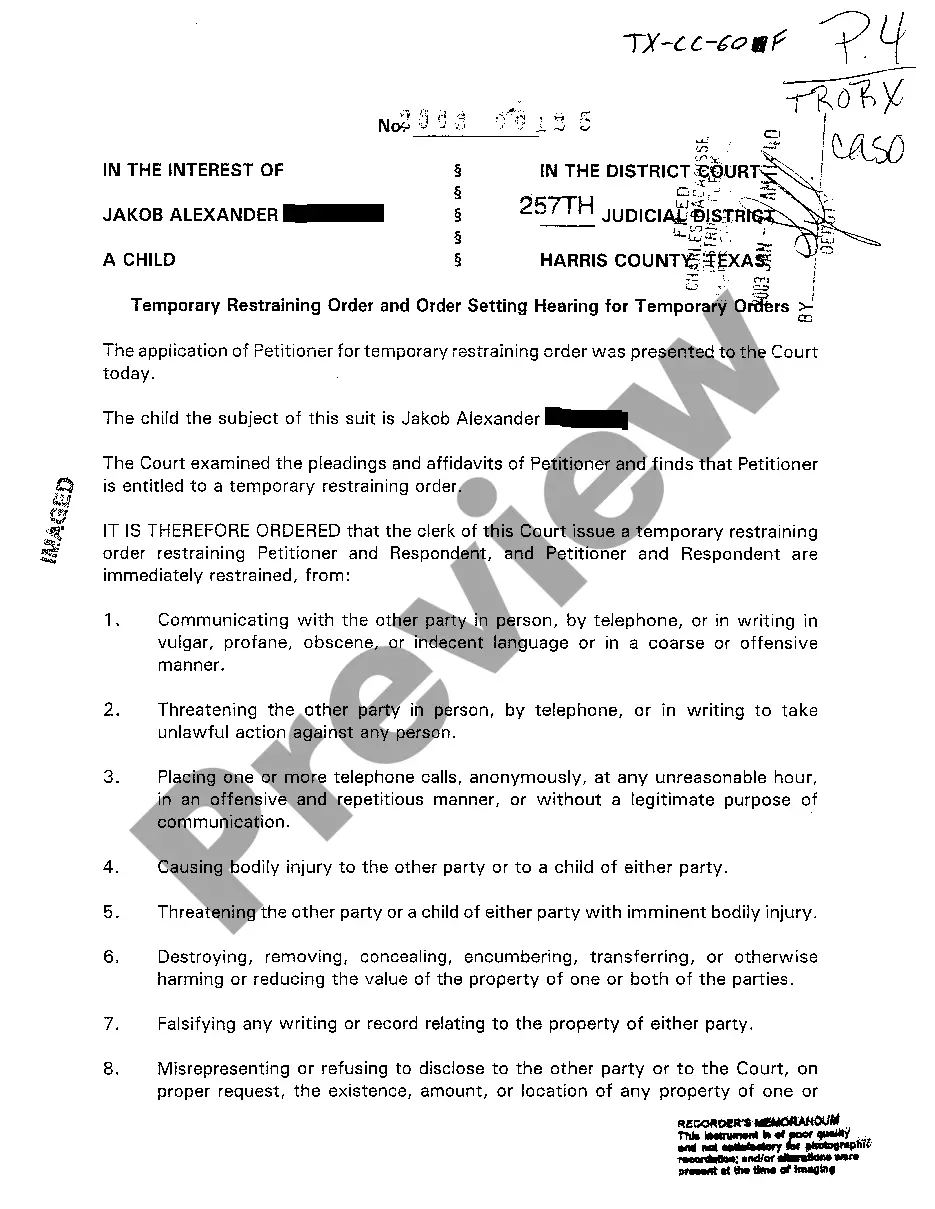
Texas Lead-Based Paint Addendum
What is this form?
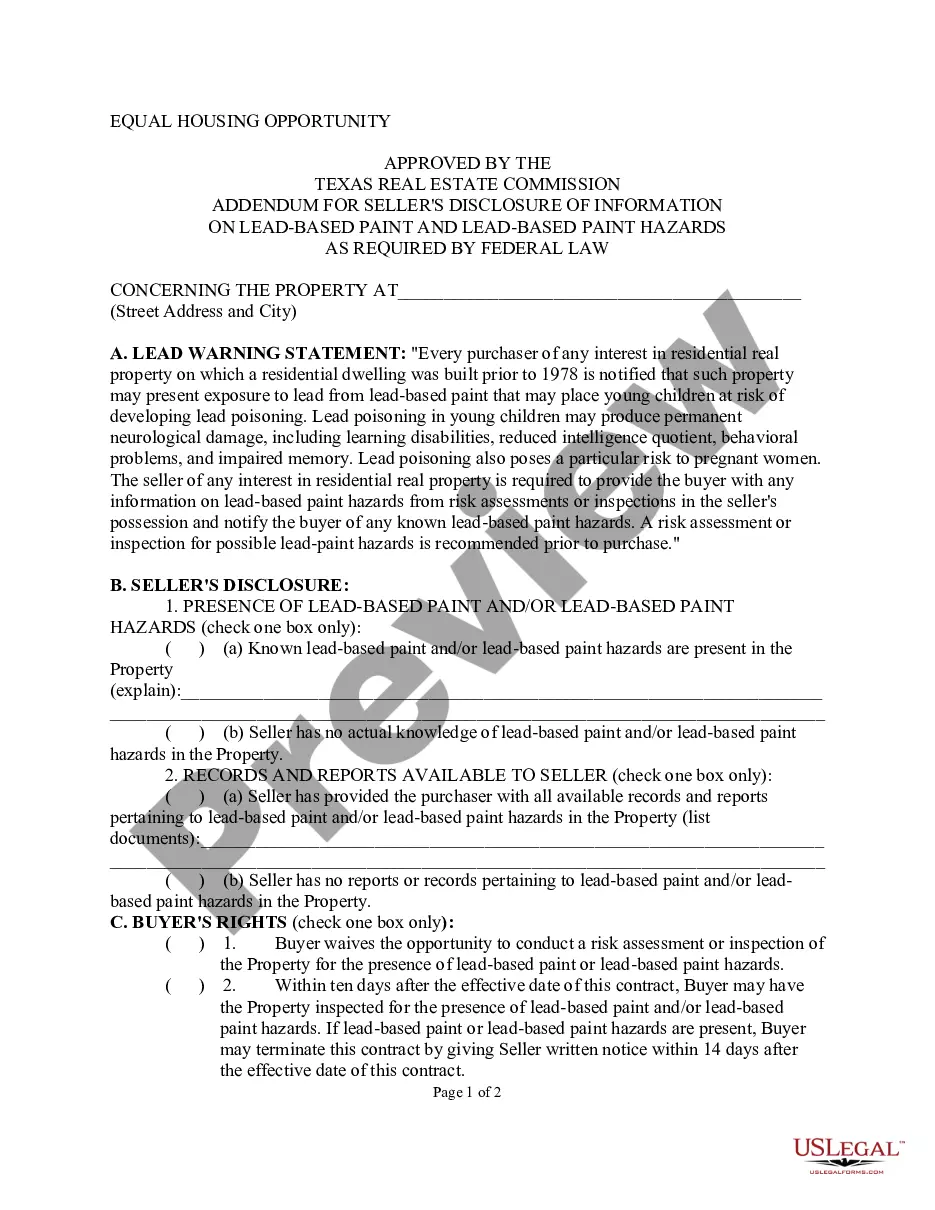
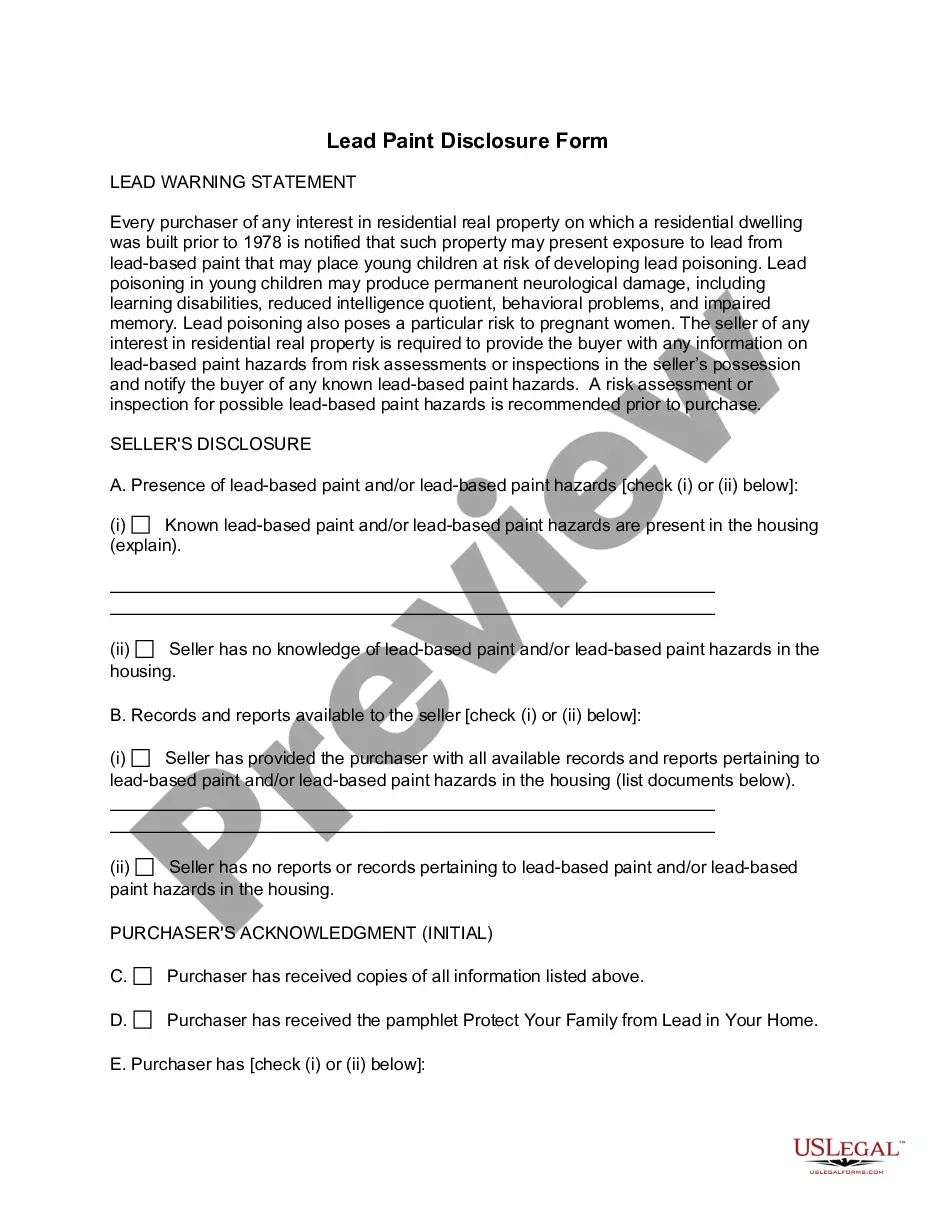
The Lead-Based Paint Addendum is a legal document required for the sale of residential properties built before 1978, alerting buyers to potential lead hazards. This addendum ensures compliance with federal and Texas state regulations regarding lead-based paint, providing essential information to protect buyers, particularly vulnerable populations such as young children and pregnant women. Unlike other real estate forms, this specific addendum addresses health risks associated with lead exposure and mandates disclosure from sellers about known hazards, thus safeguarding the buyerâs interest.
Main sections of this form
- Lead warning statement outlining the risks of lead exposure.
- Sellerâs disclosure regarding the presence of lead-based paint.
- Buyer's rights and options for conducting inspections.
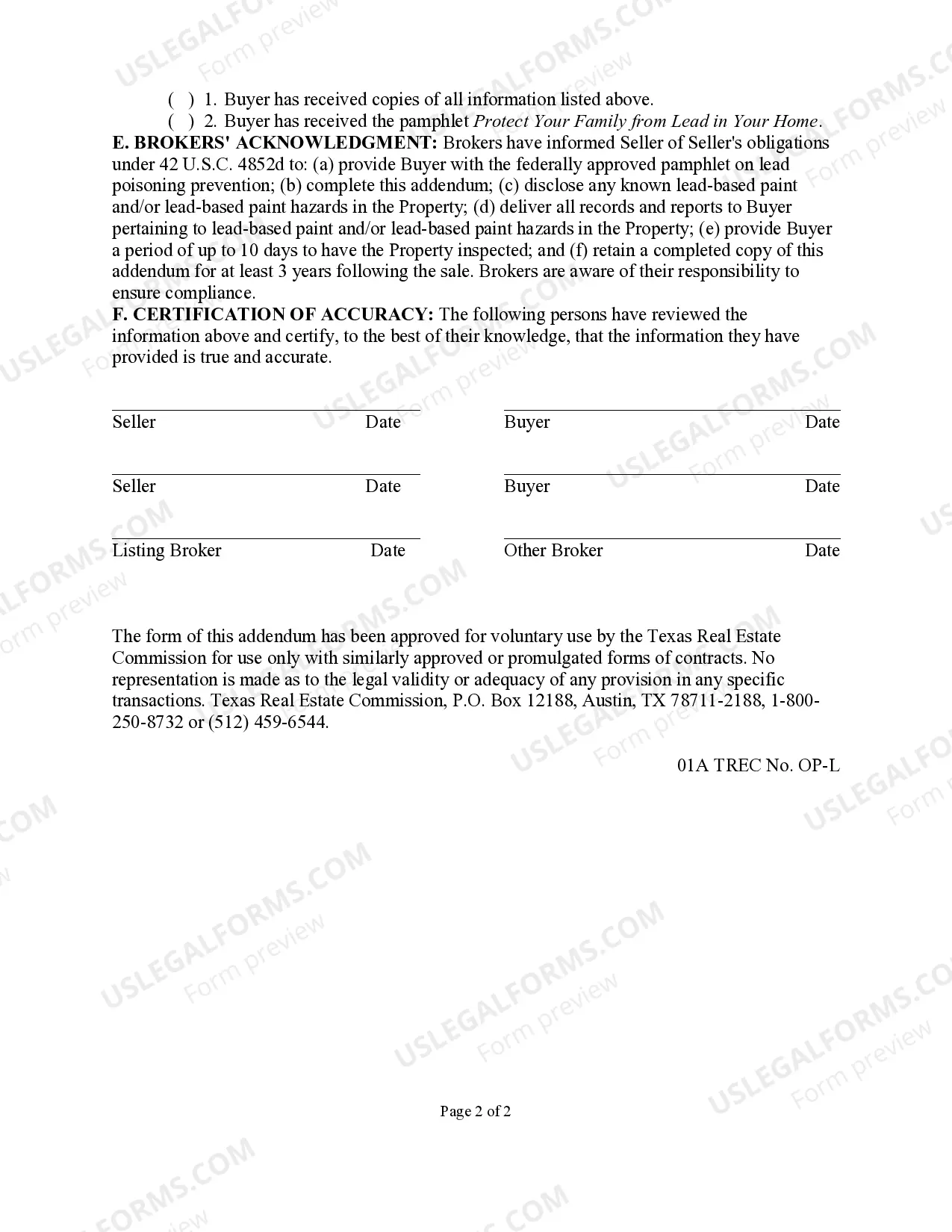
- Broker's acknowledgment of their responsibilities under U.S. law.
- Certification of accuracy by both parties ensuring the information is truthful.
When to use this document
This form is necessary when a residential property built before 1978 is being sold. It protects buyers by providing important information about lead-based paint hazards, ensuring they are informed before finalizing the purchase. Use this form if you're a seller required to disclose this information or a buyer wishing to understand potential risks associated with the property you intend to buy.
Who this form is for
- Home sellers with properties constructed before 1978.
- Buyers of residential real estate who need to be informed about lead-based paint risks.
- Real estate agents handling transactions involving pre-1978 properties.
- Landlords of rental properties built before 1978 seeking compliance with federal regulations.
Steps to complete this form
- Fill in the property address where lead hazards may be present.
- Indicate whether known lead-based paint hazards exist.
- Check the appropriate boxes regarding the records and reports available to the seller.
- Specify the buyer's rights concerning inspections.
- Have both parties (seller and buyer) sign and date the form to certify its accuracy.
Notarization requirements for this form
This form does not typically require notarization unless specified by local law. Ensure to verify any additional state or local requirements that may apply in your specific region.
Get your form ready online
Our built-in tools help you complete, sign, share, and store your documents in one place.
Make edits, fill in missing information, and update formatting in US Legal Forms—just like you would in MS Word.
Download a copy, print it, send it by email, or mail it via USPS—whatever works best for your next step.
Sign and collect signatures with our SignNow integration. Send to multiple recipients, set reminders, and more. Go Premium to unlock E-Sign.
If this form requires notarization, complete it online through a secure video call—no need to meet a notary in person or wait for an appointment.
We protect your documents and personal data by following strict security and privacy standards.

Make edits, fill in missing information, and update formatting in US Legal Forms—just like you would in MS Word.

Download a copy, print it, send it by email, or mail it via USPS—whatever works best for your next step.

Sign and collect signatures with our SignNow integration. Send to multiple recipients, set reminders, and more. Go Premium to unlock E-Sign.

If this form requires notarization, complete it online through a secure video call—no need to meet a notary in person or wait for an appointment.

We protect your documents and personal data by following strict security and privacy standards.
Avoid these common issues
- Failing to provide the Buyer with copies of all available records related to lead hazards.
- Not allowing the Buyer sufficient time to conduct an inspection.
- Incorrectly filling out the Lead Warning Statement or disclosures, affecting legal compliance.
- Not securing signatures from all required parties to validate the form.
Benefits of using this form online
- Immediate access to legally compliant templates drafted by licensed attorneys.
- Convenience of downloading and editing the form to fit specific needs.
- Ensures up-to-date legal standards are reflected in the document.
- Time-saving technology for sellers and buyers navigating real estate transactions.
Legal use & context
- This addendum is legally required for property transactions involving homes built before 1978.
- Failure to comply with the disclosure may lead to legal liabilities for the seller.
- Both buyers and sellers must keep signed copies for their records.
Main things to remember
- The Lead-Based Paint Addendum is crucial for transactions involving properties built before 1978.
- Both sellers and buyers have specific rights and obligations regarding lead disclosure.
- Careful completion of the form helps protect against future legal issues.
Looking for another form?
Form popularity
FAQ
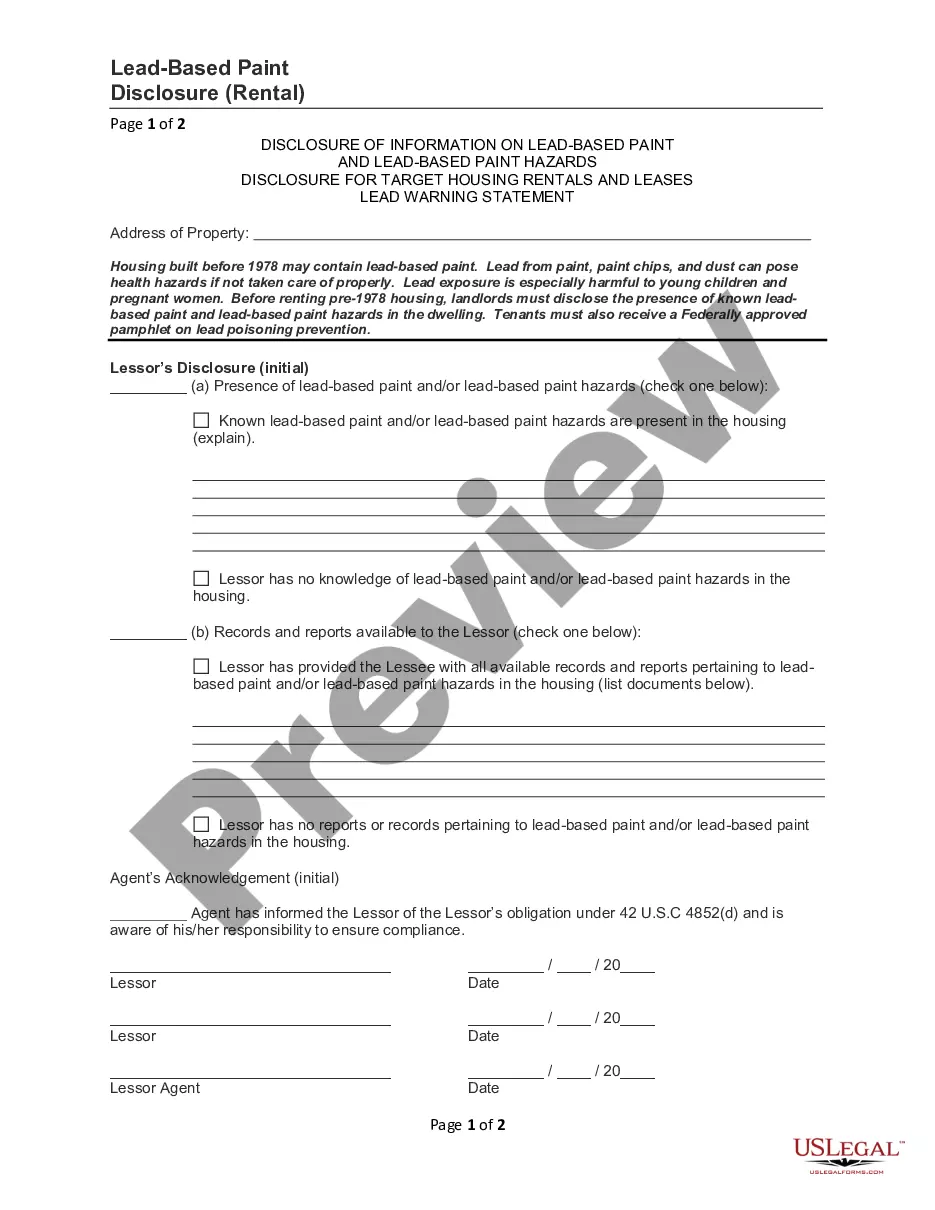
The Rule states that if an agent is involved in a transaction to sell target housing, the "Lead Warning Statement" must include a statement signed by the agent that the agent has informed the seller of the seller's legal obligations and that the agent is aware of his/her duty to ensure compliance with the Rule.
The lead-based paint disclosure form is a required form to be issued to all tenants and potential buyers for residential properties built before 1978.The forms were written to warn any new owners or tenants of the potential existence of this within the interior walls of the residence.
Federal law requires you to provide certain important information about lead-based paint and/or lead-based paint hazards before a prospective buyer is obligated under a contract to purchase your home.Inform the seller of his or her obligations under the Real Estate Notification and Disclosure Rule.
Lead-based paints were banned for residential use in 1978. Homes built in the U.S. before 1978 are likely to have some lead-based paint. When the paint peels and cracks, it makes lead paint chips and dust.
You can generally tell if the paint you are dealing with is lead-based if the sub-layers of paint are still present on a surface and the building was constructed before 1978, or by using a lead paint test kit on the paint in question.
Older Homes and Buildings In 1978, the federal government banned consumer uses of lead-based paint, but some states banned it even earlier. Lead paint is still present in millions of homes, sometimes under layers of newer paint. If the paint is in good shape, the lead paint is usually not a problem.
Most homes built before 1978 contain lead paint. In fact, some buyers specifically seek to purchase an older home for its charm and character.
Yes, you can paint over lead-based paint, but not with just any type of paint.Encapsulation is less expensive than lead paint removal and it's actually safer since it doesn't release lead dust or debris into the air. Keep in mind; conventional oil- or water-based paints are not encapsulants!