Motion to Remedy Prosecutorial Abuse
About this form
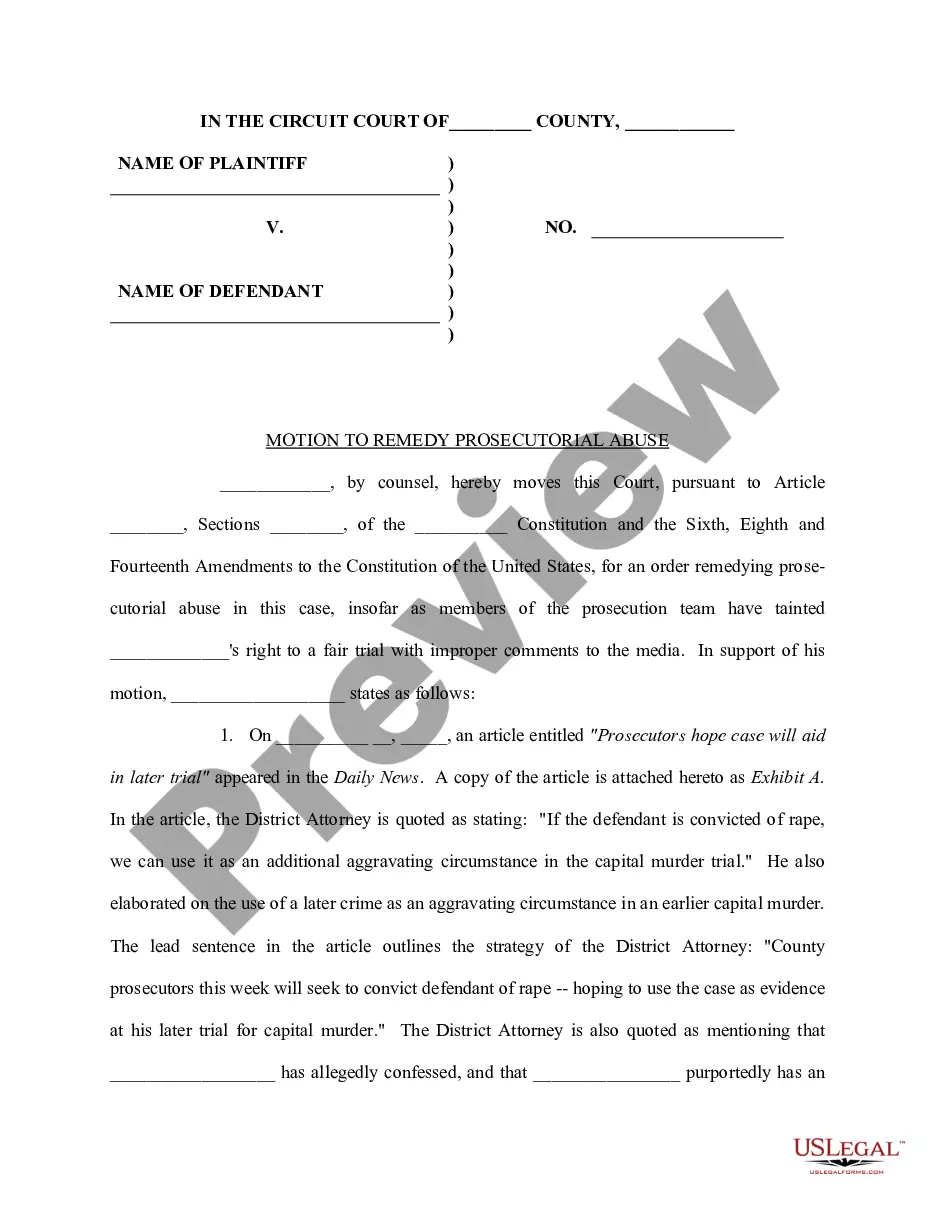
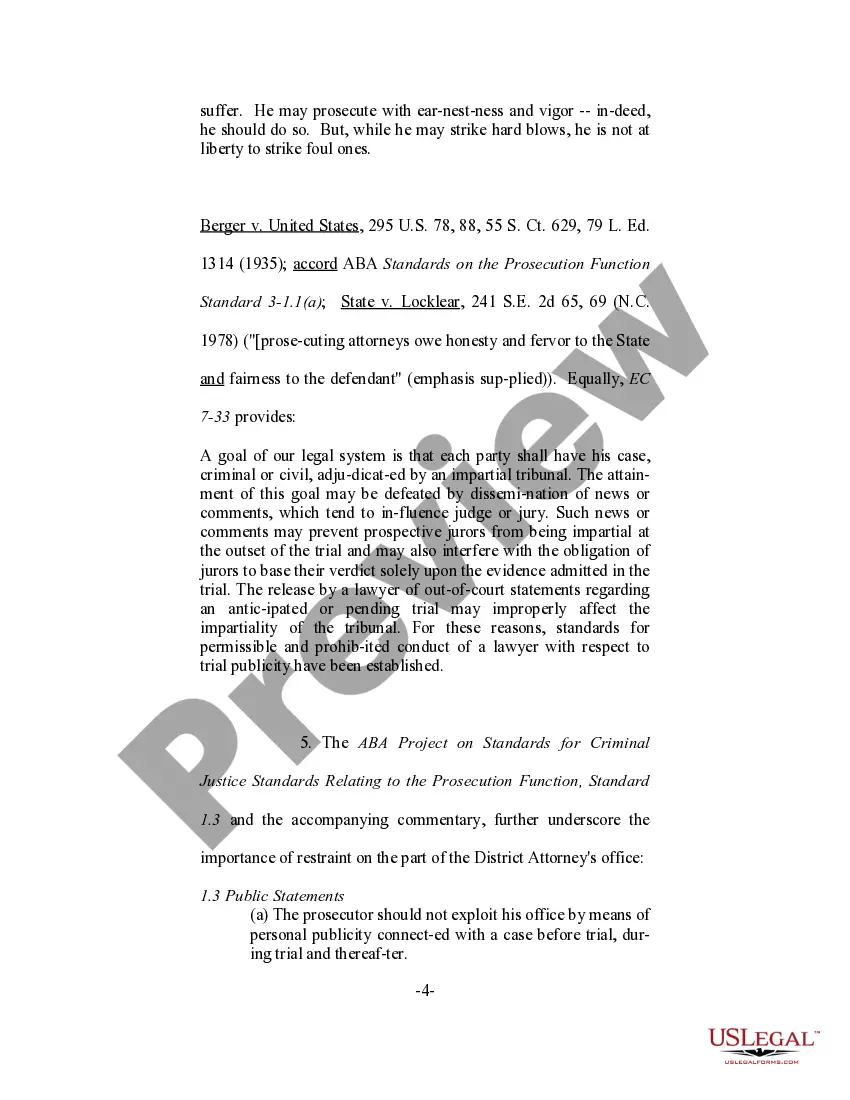
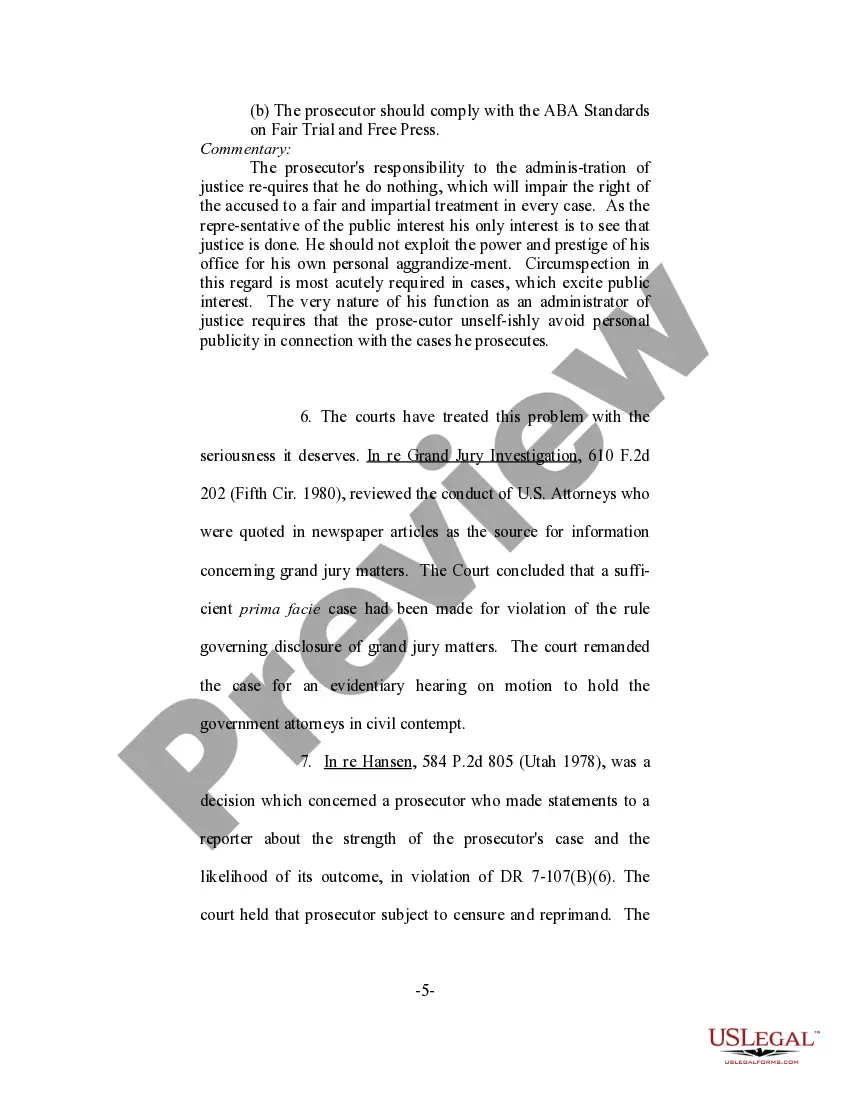
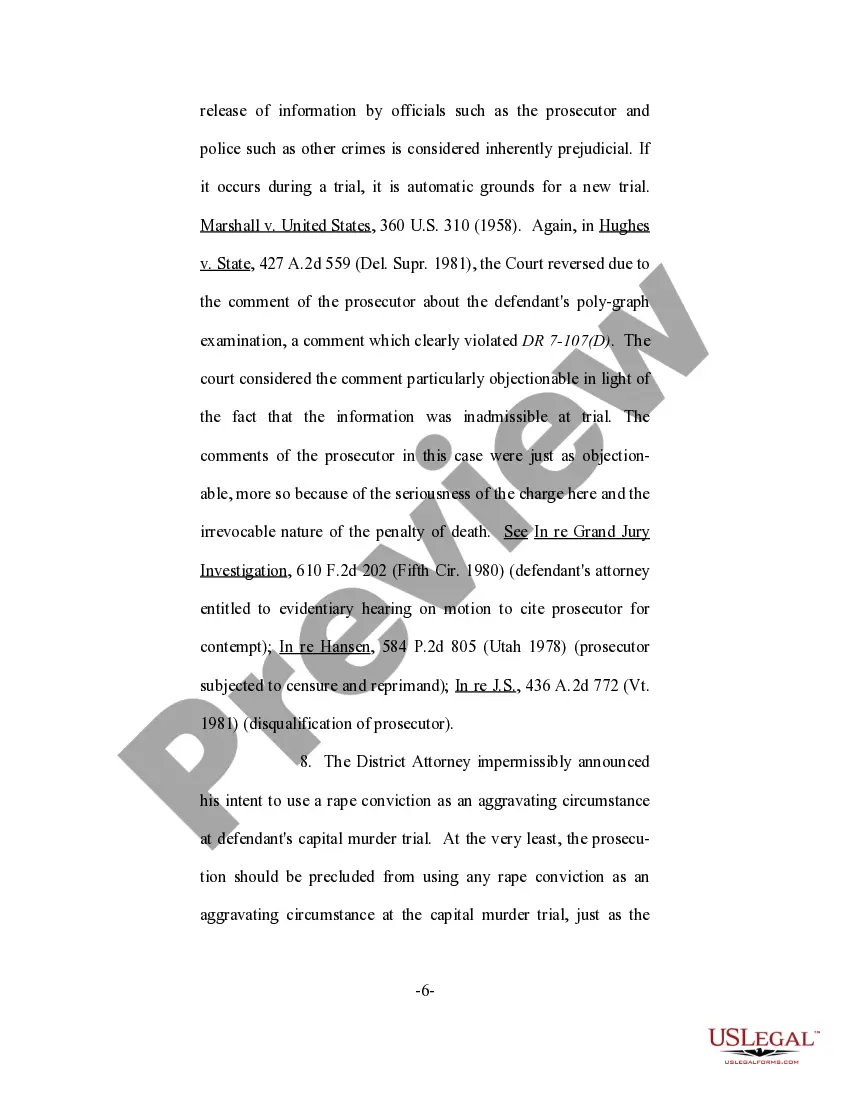
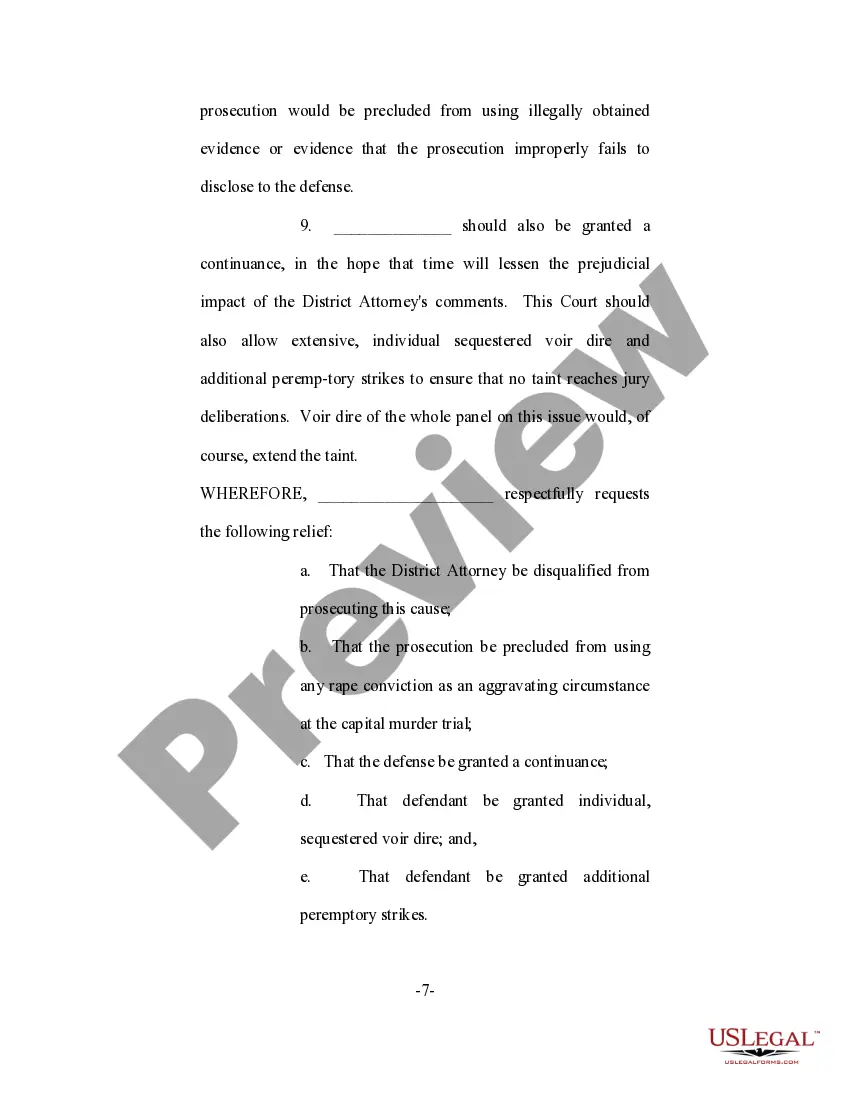
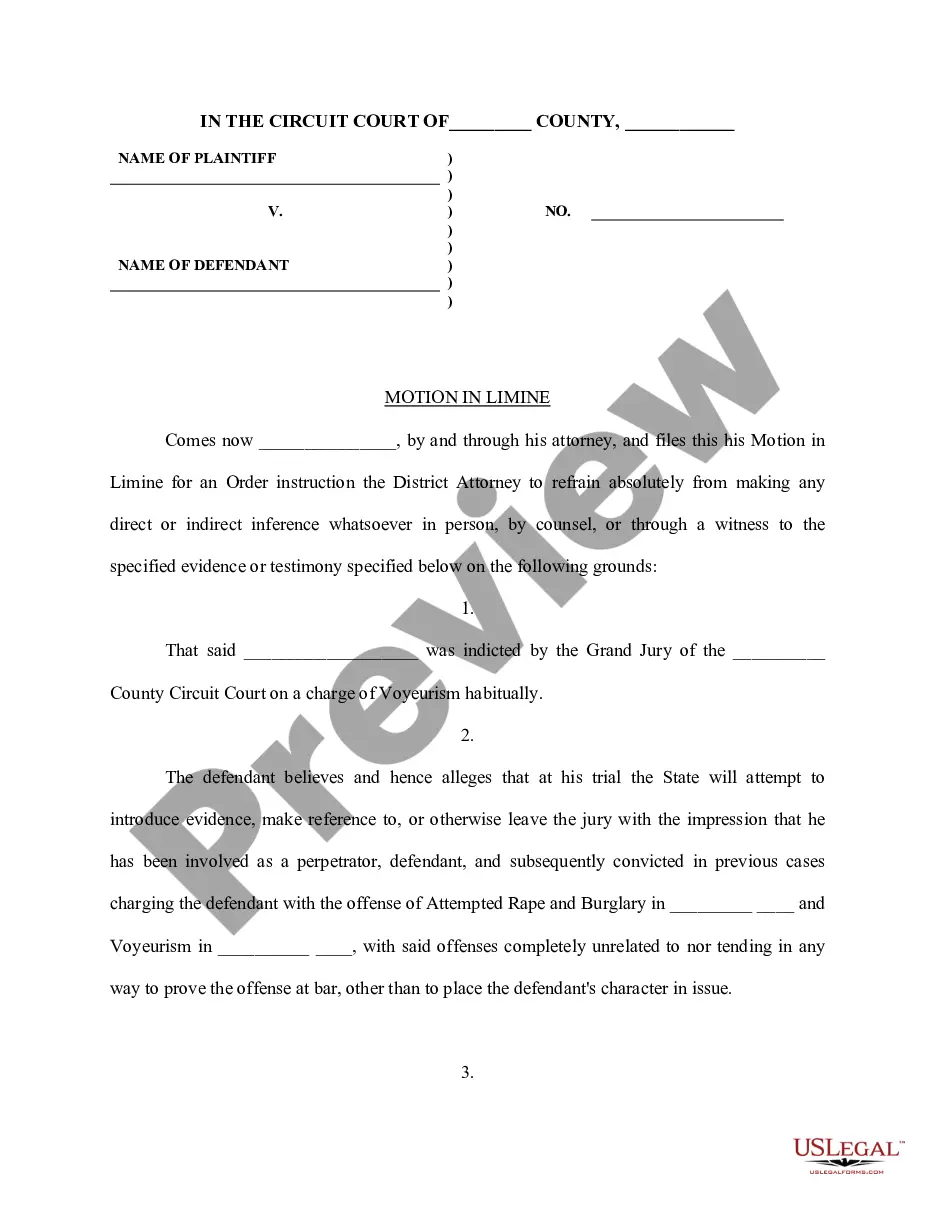
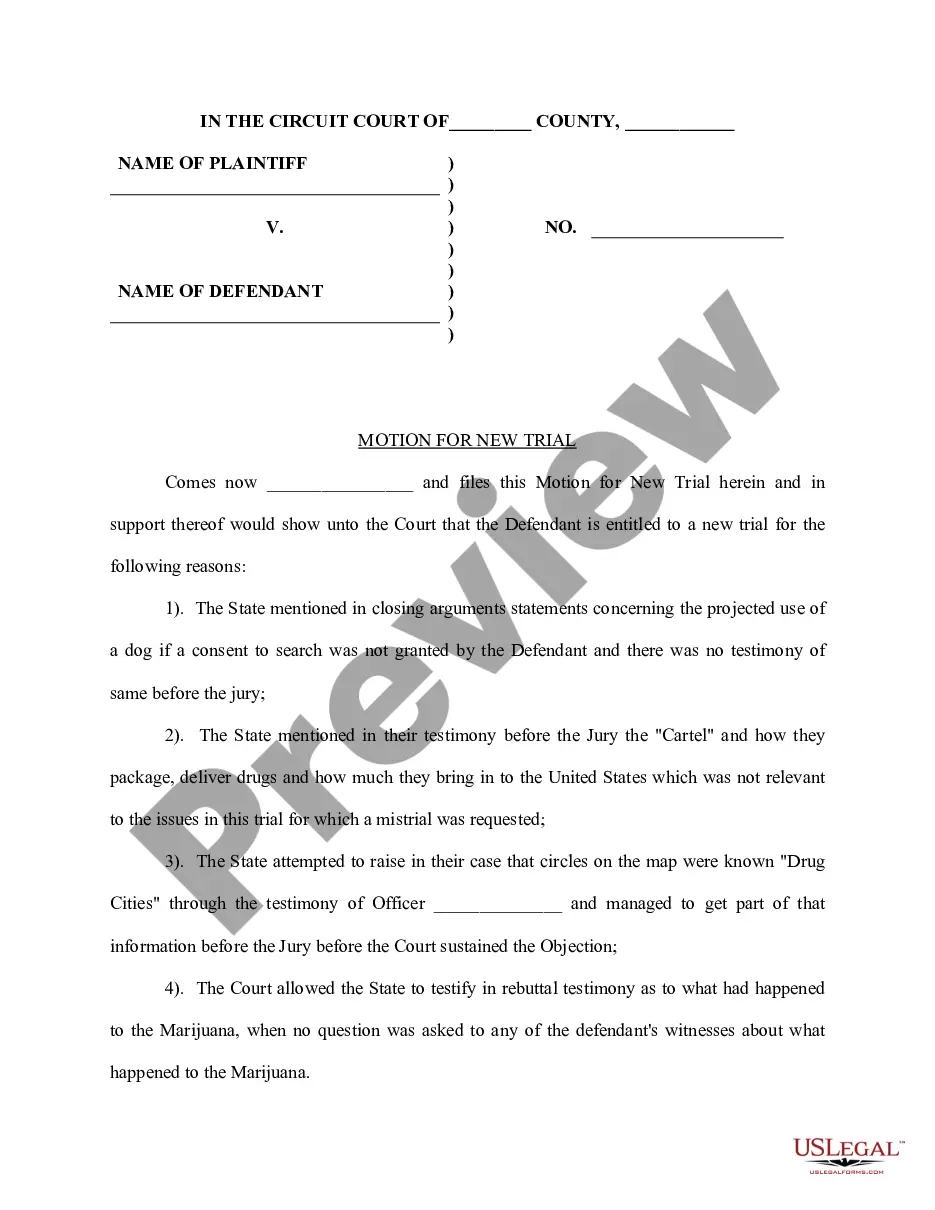
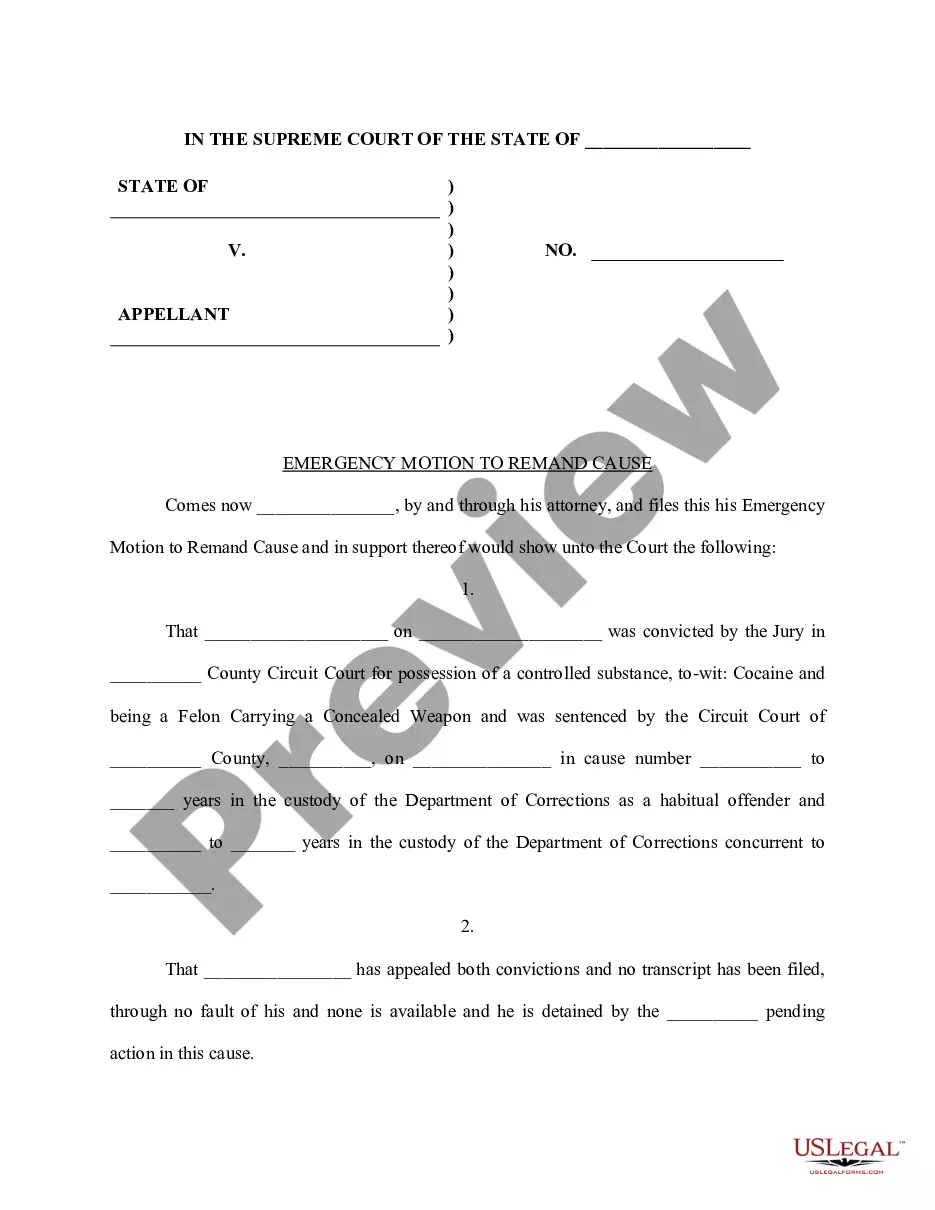
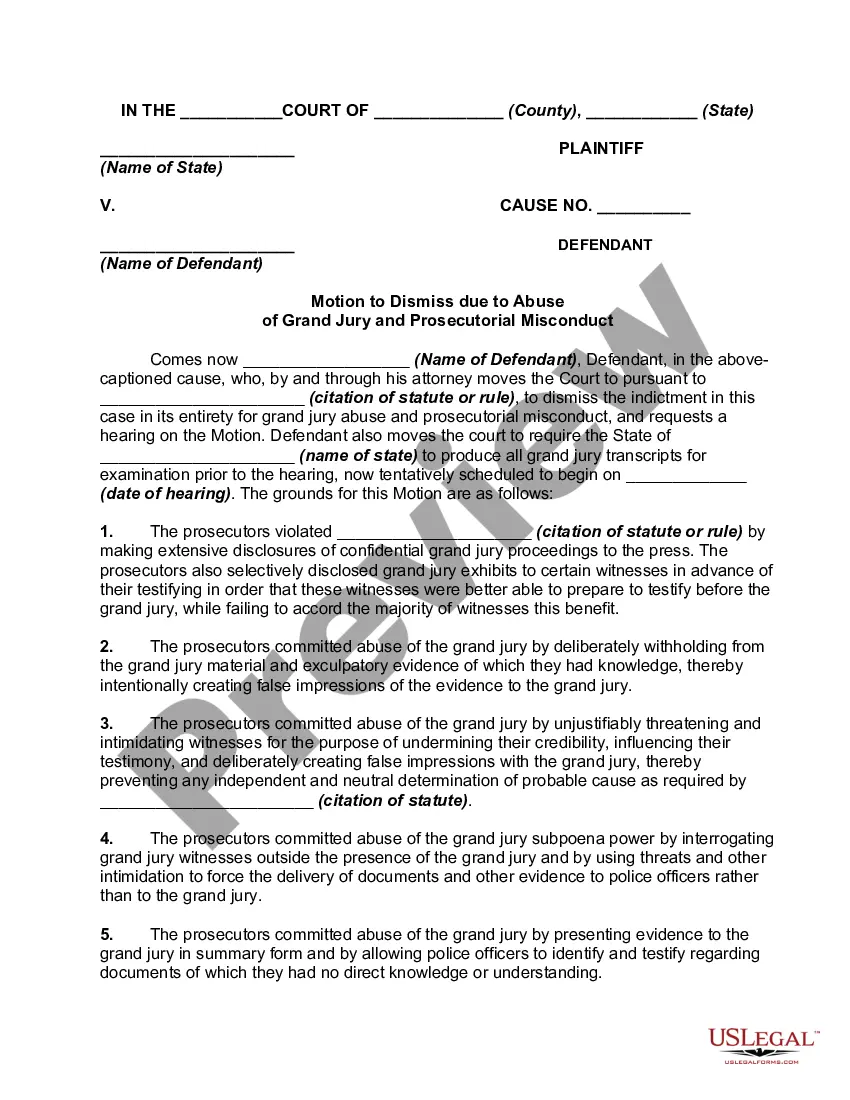
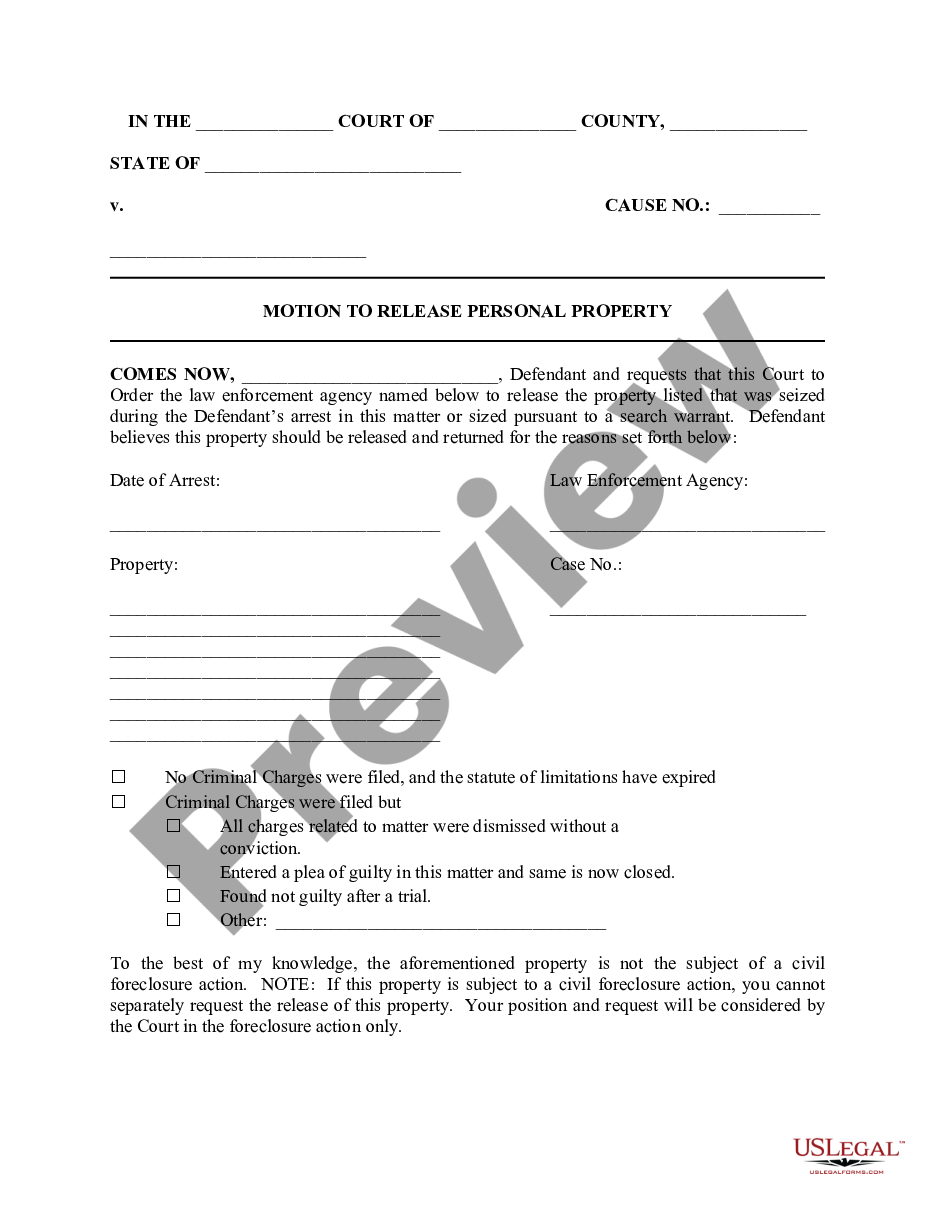
The Motion to Remedy Prosecutorial Abuse is a legal document designed to address misconduct by a prosecutor during a criminal trial. This form is specifically used when a prosecutor makes public statements that may prejudice a defendant's right to a fair trial. By requesting various sanctions, including the prosecutor's recusal, this motion aims to protect the defendant's constitutional rights and ensure an impartial trial, setting it apart from other motions that might address different legal issues.
Main sections of this form
- Details about the specific comments made by the prosecutor that prompted the motion.
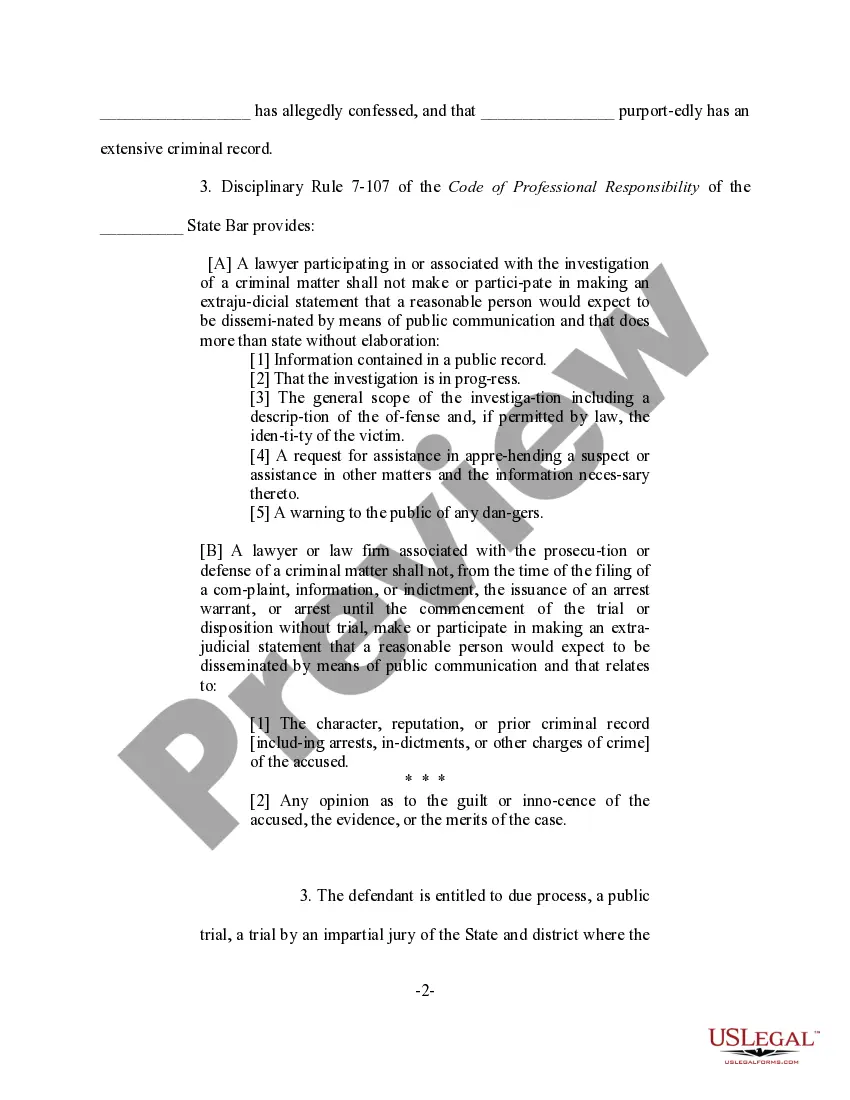
- Citations of relevant state and federal laws, as well as professional conduct rules.
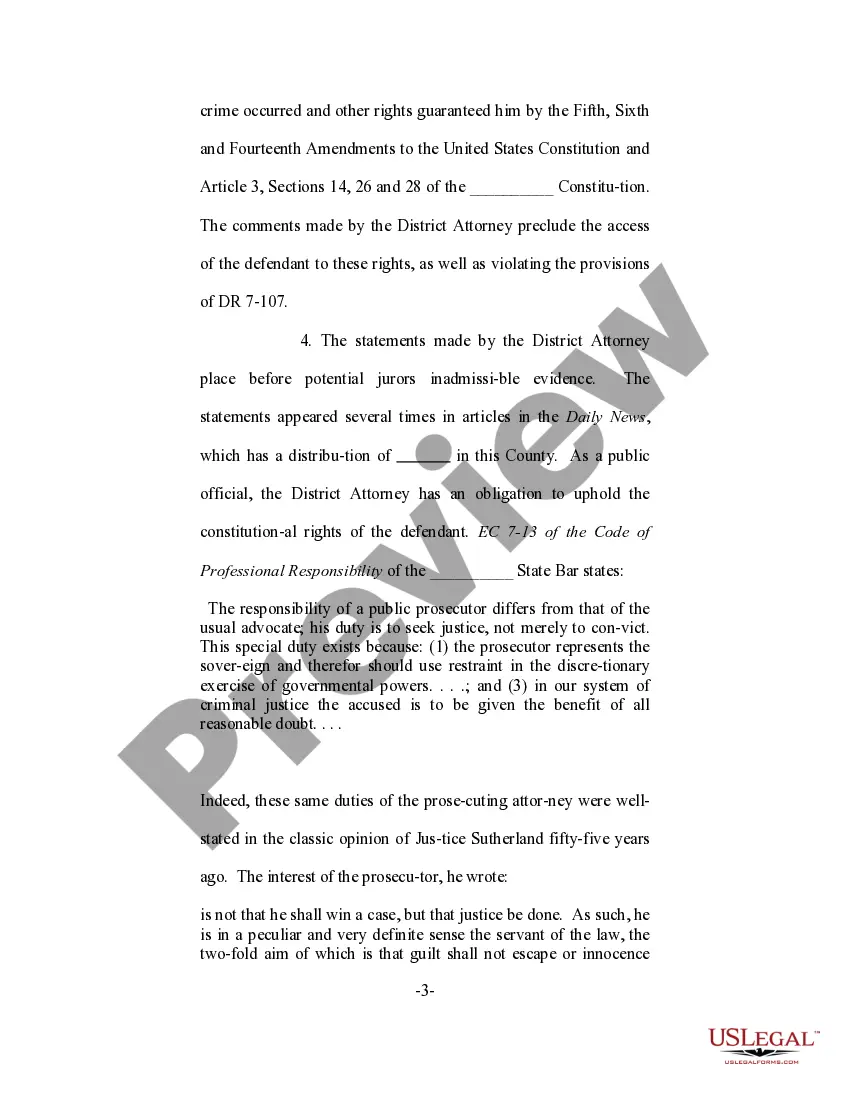
- Claims about how the prosecutor's statements infringe upon the defendant's rights.
- Requests for specific sanctions against the prosecutor, including recusal.
- Provisions for continuance and individual voir dire for jury selection.
When to use this document
This form should be used if you suspect that a prosecutor's comment may have compromised your right to a fair trial. For instance, if a prosecutor publicly discusses your prior criminal record or makes statements about the evidence before the trial, you can use this motion to request remedies such as sanctions or the recusal of the prosecutor. It can be particularly relevant in high-profile cases where public opinion may influence the jury.
Who can use this document
- Defendants facing criminal charges who believe their rights are being undermined by prosecutorial misconduct.
- Criminal defense attorneys seeking to protect their clients from potential bias due to pre-trial statements by the prosecutor.
- Individuals who have been unfairly characterized by the prosecution in the media.
Completing this form step by step
- Identify the date and nature of the prosecutor's misconduct.
- Attach a copy of any relevant articles or statements as Exhibit A.
- Cite specific rules and laws that support your motion.
- Clearly articulate the relief or remedies you are requesting from the court.
- Include your signature and any necessary dates to formally submit the motion.
Does this form need to be notarized?
This form usually doesn’t need to be notarized. However, local laws or specific transactions may require it. Our online notarization service, powered by Notarize, lets you complete it remotely through a secure video session, available 24/7.
Get your form ready online
Our built-in tools help you complete, sign, share, and store your documents in one place.
Make edits, fill in missing information, and update formatting in US Legal Forms—just like you would in MS Word.
Download a copy, print it, send it by email, or mail it via USPS—whatever works best for your next step.
Sign and collect signatures with our SignNow integration. Send to multiple recipients, set reminders, and more. Go Premium to unlock E-Sign.
If this form requires notarization, complete it online through a secure video call—no need to meet a notary in person or wait for an appointment.
We protect your documents and personal data by following strict security and privacy standards.
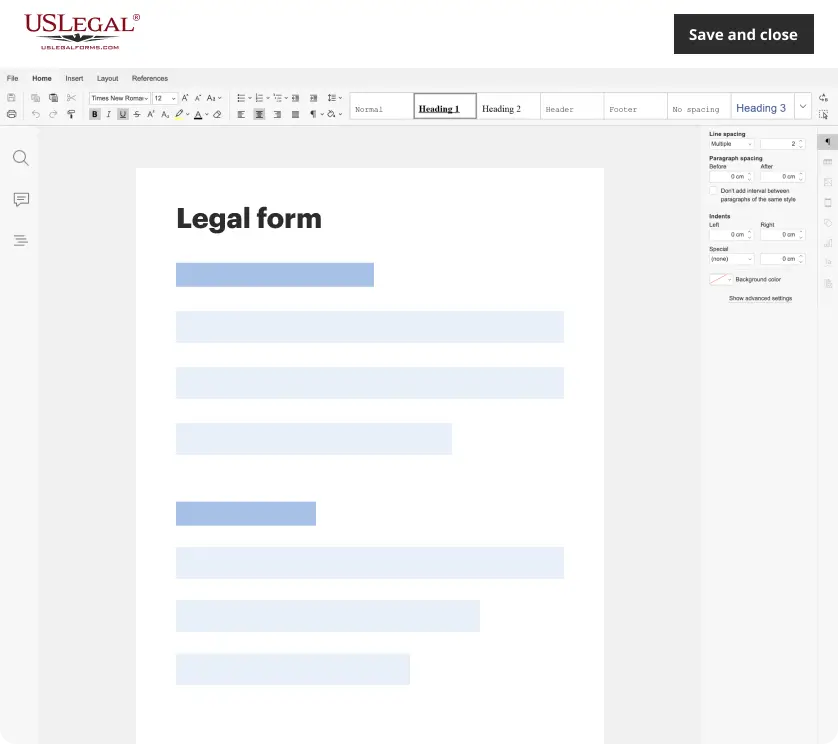
Make edits, fill in missing information, and update formatting in US Legal Forms—just like you would in MS Word.
Download a copy, print it, send it by email, or mail it via USPS—whatever works best for your next step.
Sign and collect signatures with our SignNow integration. Send to multiple recipients, set reminders, and more. Go Premium to unlock E-Sign.

If this form requires notarization, complete it online through a secure video call—no need to meet a notary in person or wait for an appointment.
We protect your documents and personal data by following strict security and privacy standards.
Avoid these common issues
- Failing to attach relevant evidence, such as news articles or recordings of the prosecutor's statements.
- Not citing the proper legal rules or statutes applicable to the case.
- Submitting the motion past the appropriate deadline.
Advantages of online completion
- Convenience of accessing and filling out the form from anywhere.
- Editability allows for customization based on your specific circumstances.
- Reliability of obtaining a form drafted by licensed attorneys, ensuring legal validity.
Legal use & context
- The motion addresses and seeks remedies for prosecutorial misconduct, which can directly impact trial outcomes.
- It highlights the importance of maintaining an impartial jury, free from outside influences.
- The motion must be properly filed and supported with relevant legal documentation to be effective.
Looking for another form?
Form popularity
FAQ
Prosecutorial misconduct occurs when a prosecutor breaks a law or a code of professional ethics in the course of a prosecution.First and foremost, it is the prosecutor's job to seek justice and present the judge and jury with facts and legal arguments that result in the conviction of the guilty defendant.
Making statements to the media that prejudice the jury pool. Engaging in improper plea-bargaining for example, convincing a defendant to plead guilty through false promises or misrepresentations about the existence of incriminating evidence. Failing to turn over exculpatory evidence. Tampering with evidence.
Unethical Prosecutors are Never Prosecuted A prosecutor's refusal to reveal exculpatory evidence may be immoral, unethical and illegal and it may result in the imprisonment or death of innocent individuals but the unethical prosecutor is never prosecuted.
Require open file discovery. Adopt standardized, rigorous procedures for dealing with the government's disclosure obligations. Adopt standardized, rigorous procedures for eyewitness identification. Video record all suspect interrogations.
Four types of prosecutorial misconduct are offering inadmissible evidence in court, suppressing evidence from the defense, encouraging deceit from witnesses, and prosecutorial bluffing (threats or intimidation).
If a prosecutor files such a case and the charges are dismissed, the defendant can sue for malicious prosecution and seek financial damages. The law that allows a malicious prosecution suit is aimed at preventing and addressing abuse of the legal process.
To show that prosecutorial misconduct requires dismissal of the indictment or a mistrial, the defendant usually has to show that the prosecutor willfully engaged in misconduct and that the misconduct prejudiced the defendant.