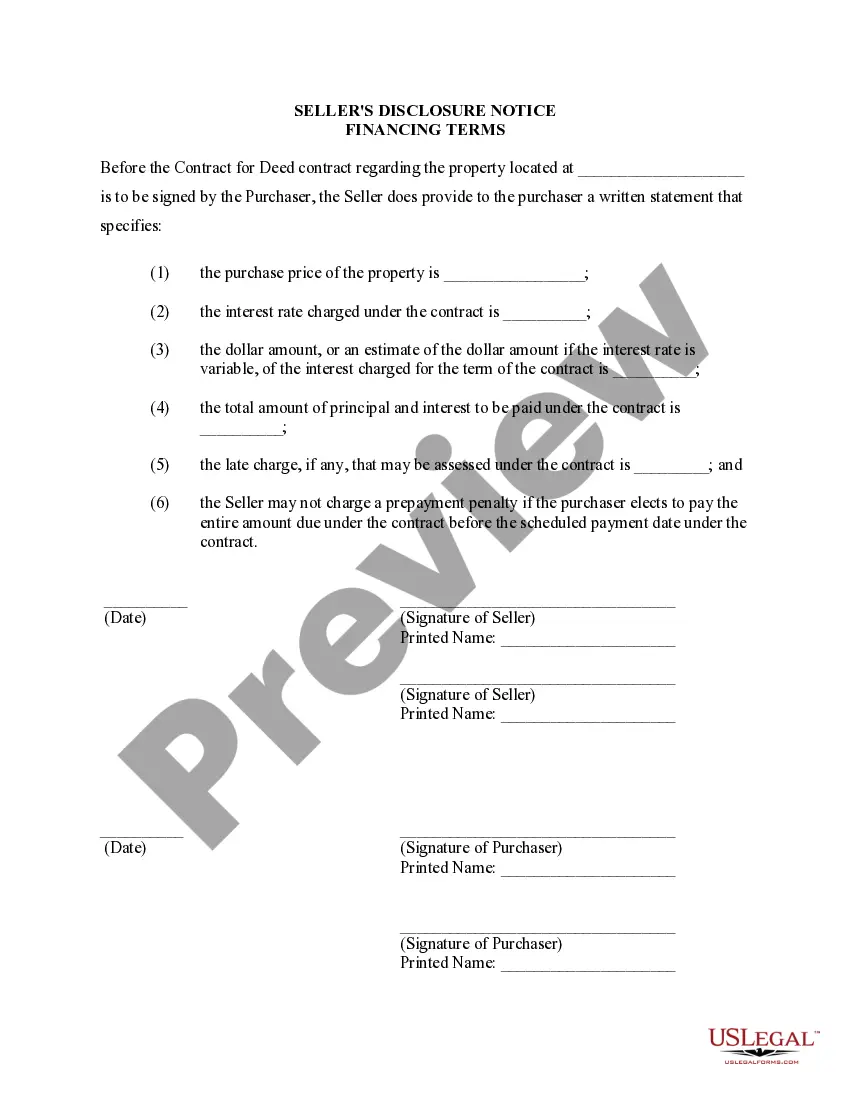
Motion for Permission to Proceed Ex Parte on Applications for Funds
About this form
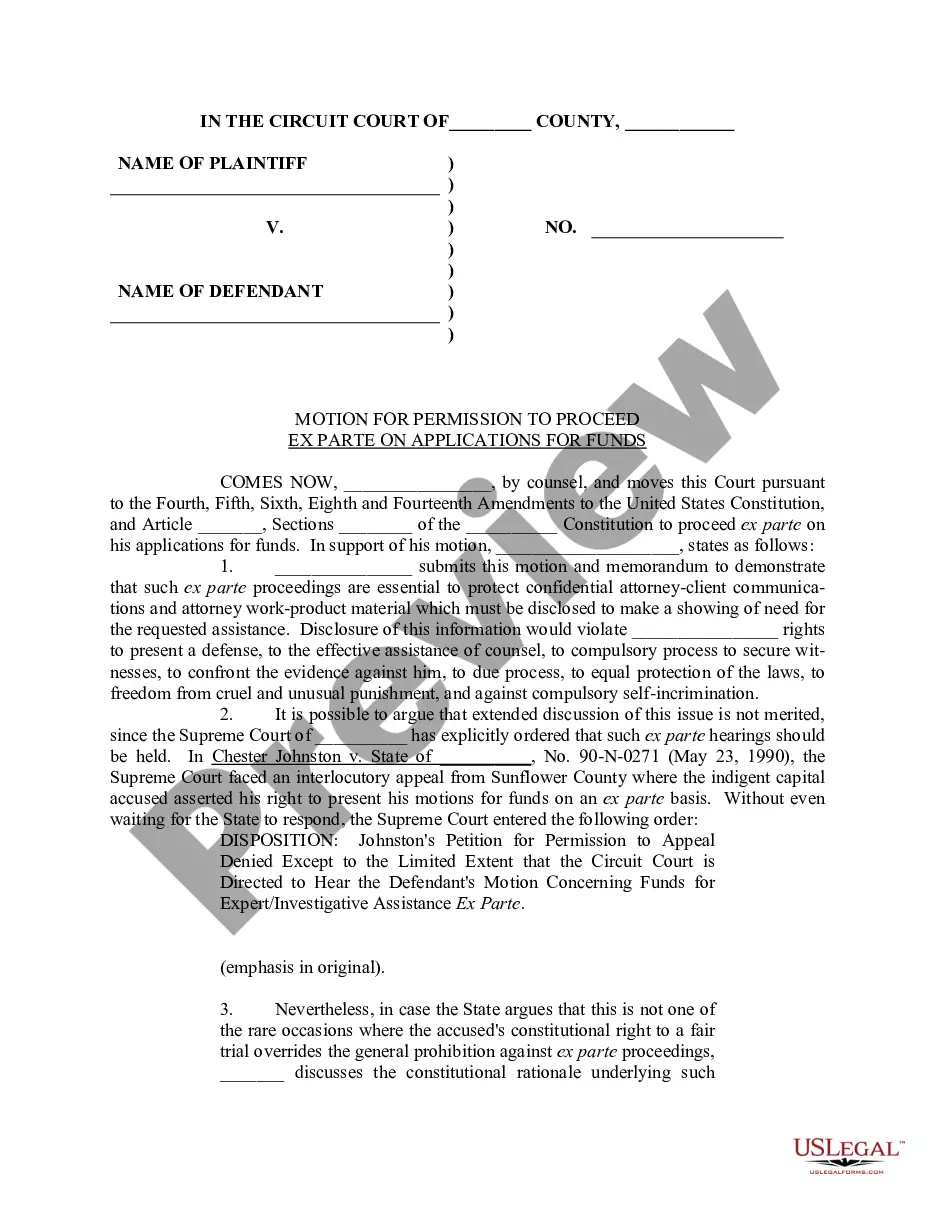
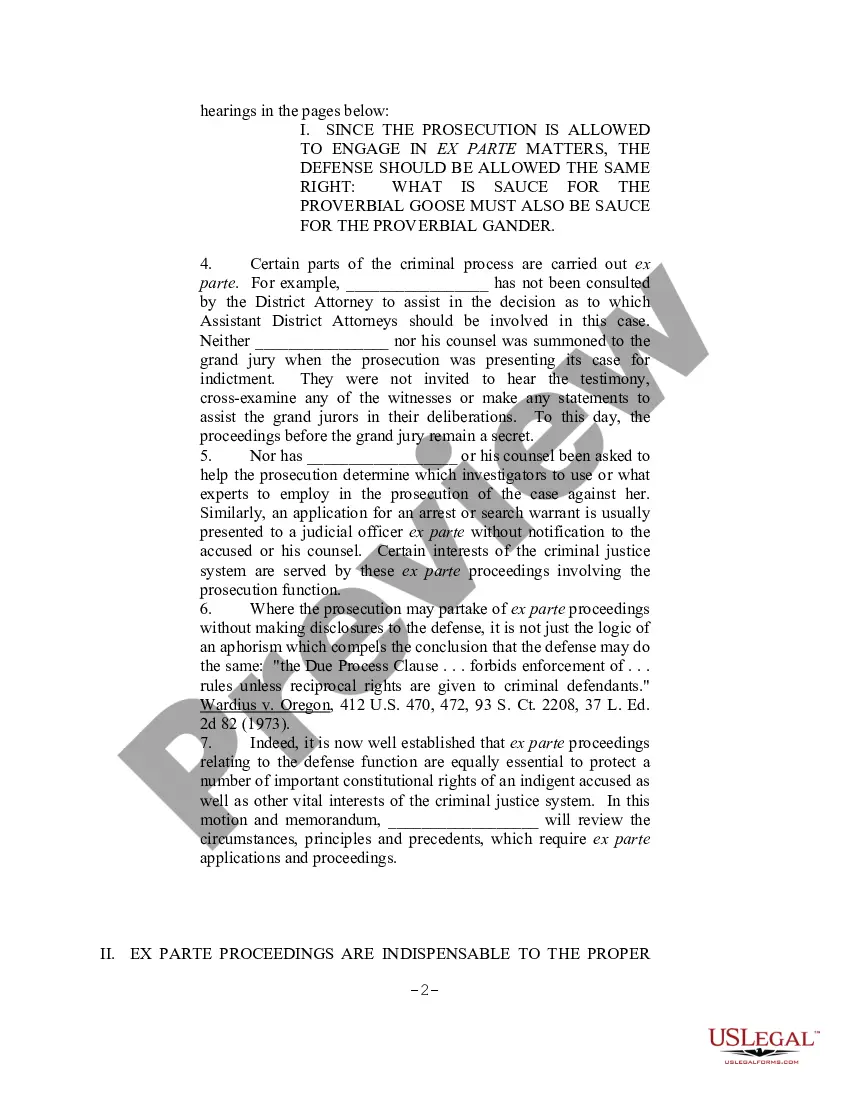
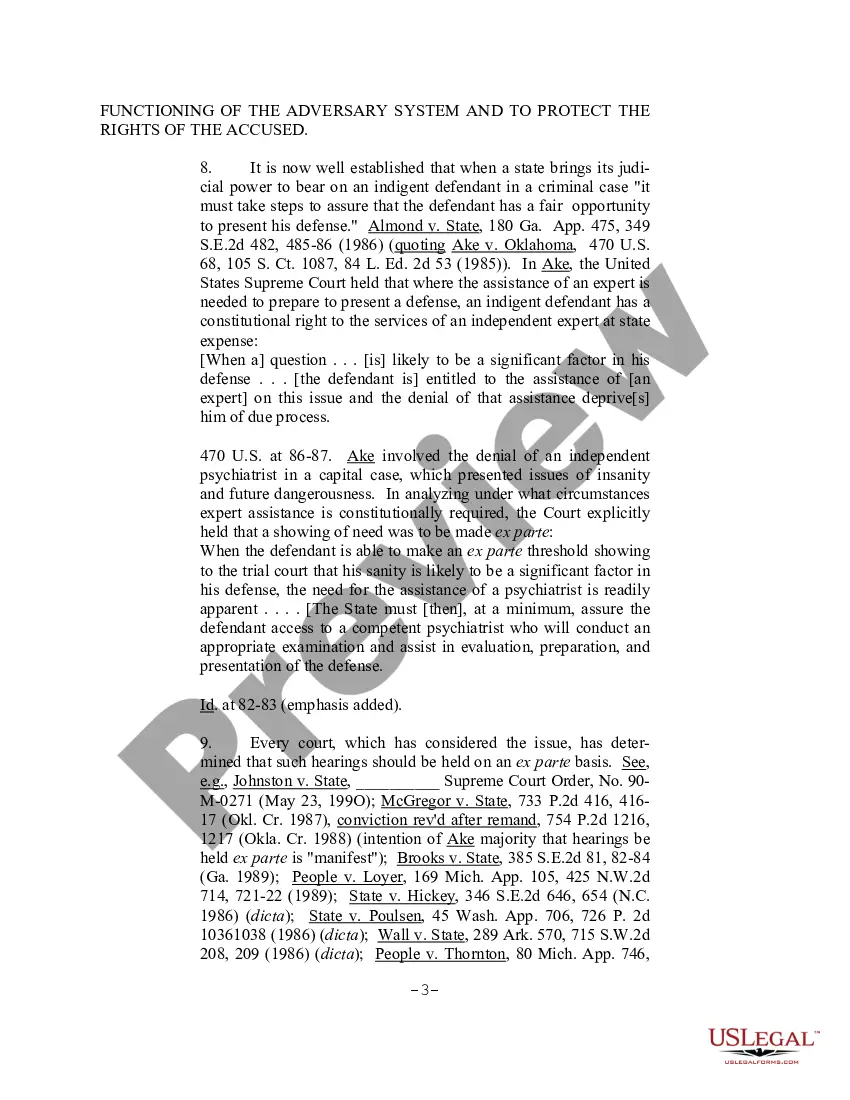
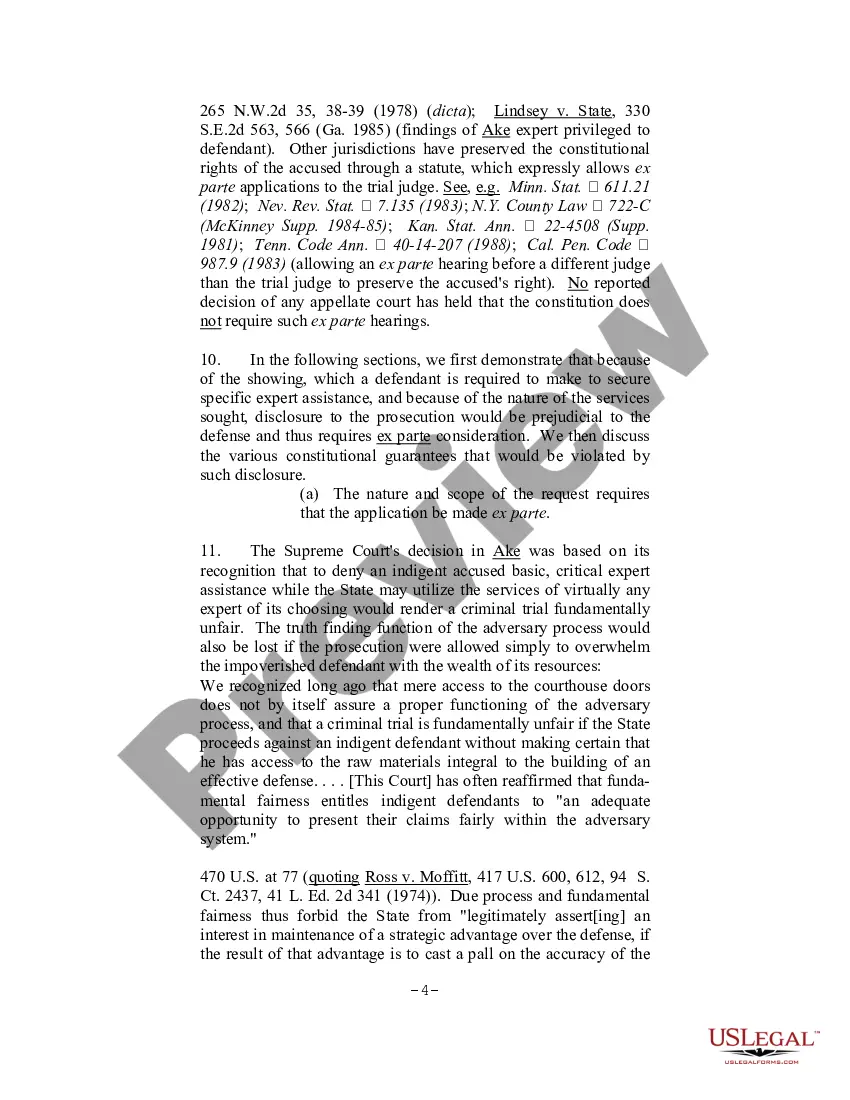
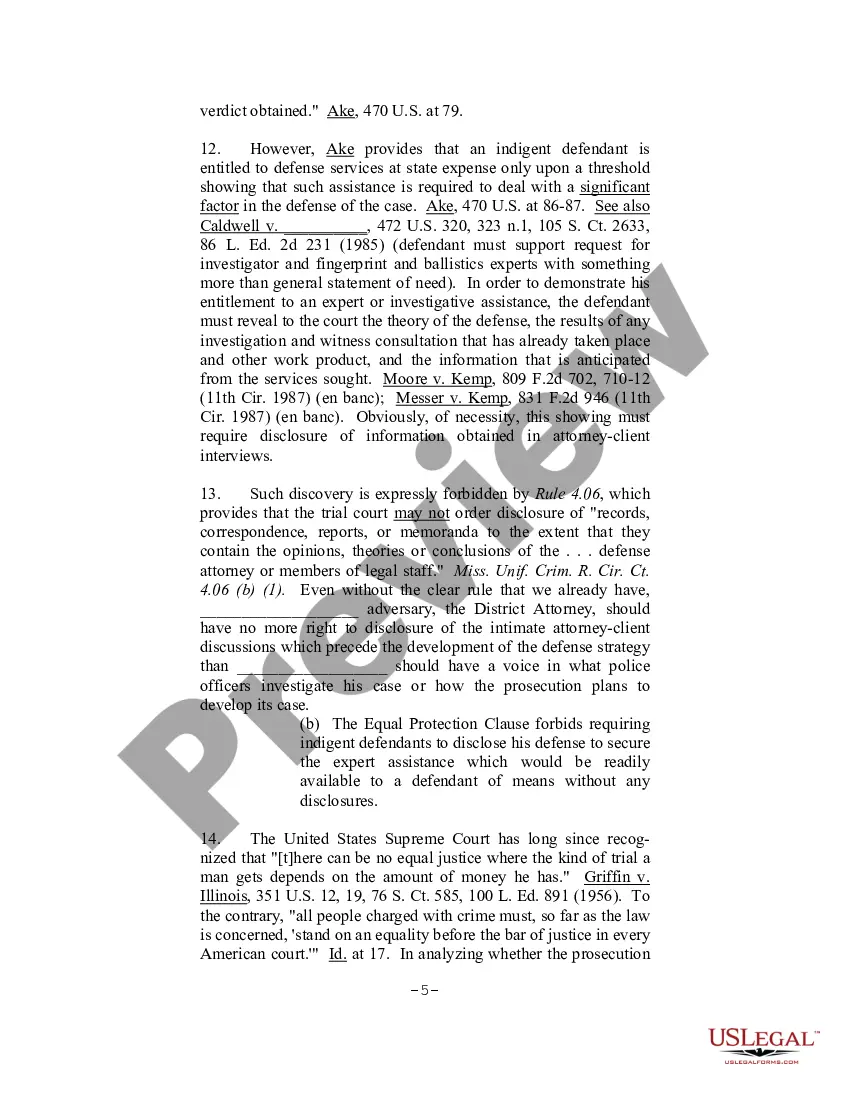
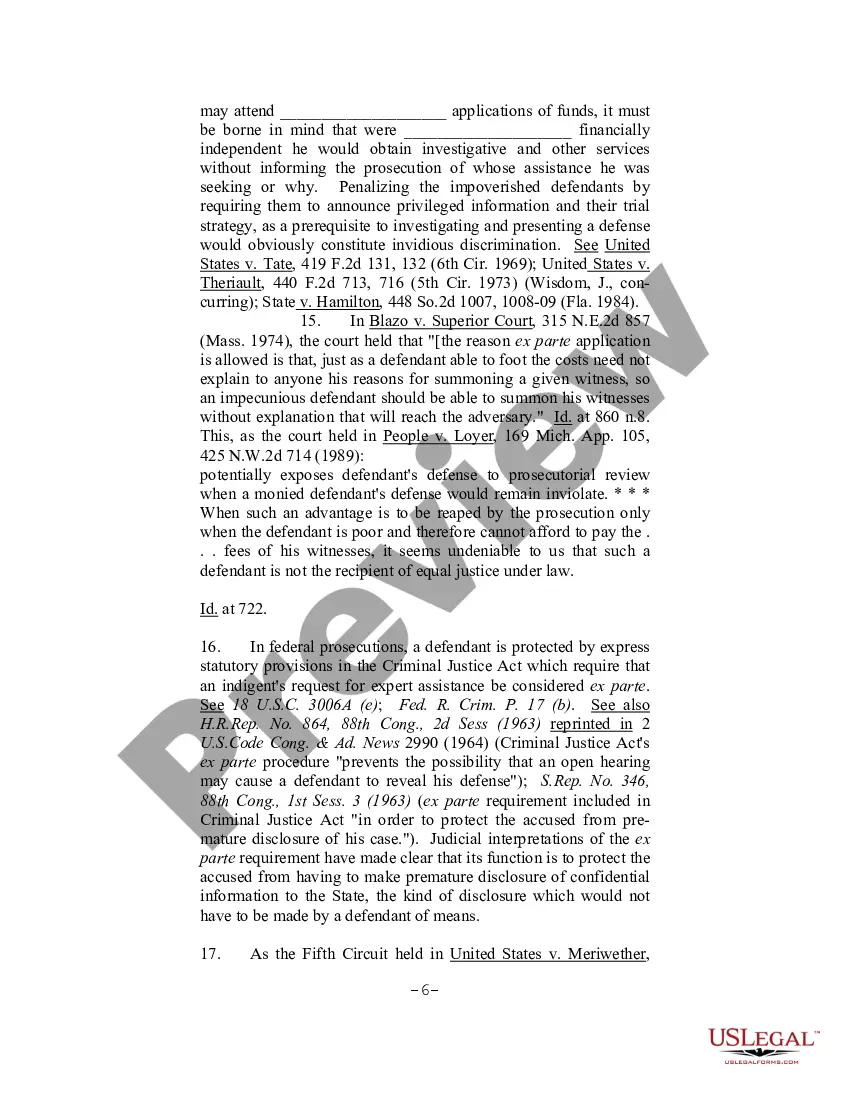
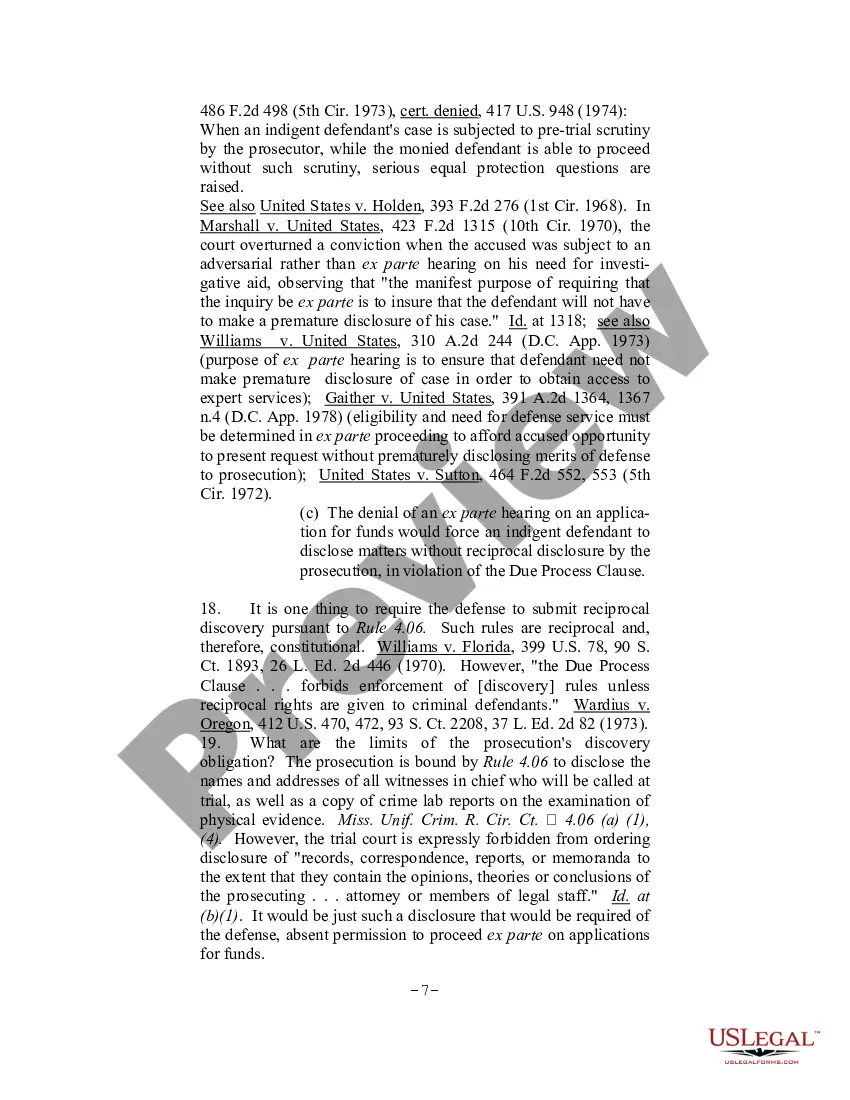
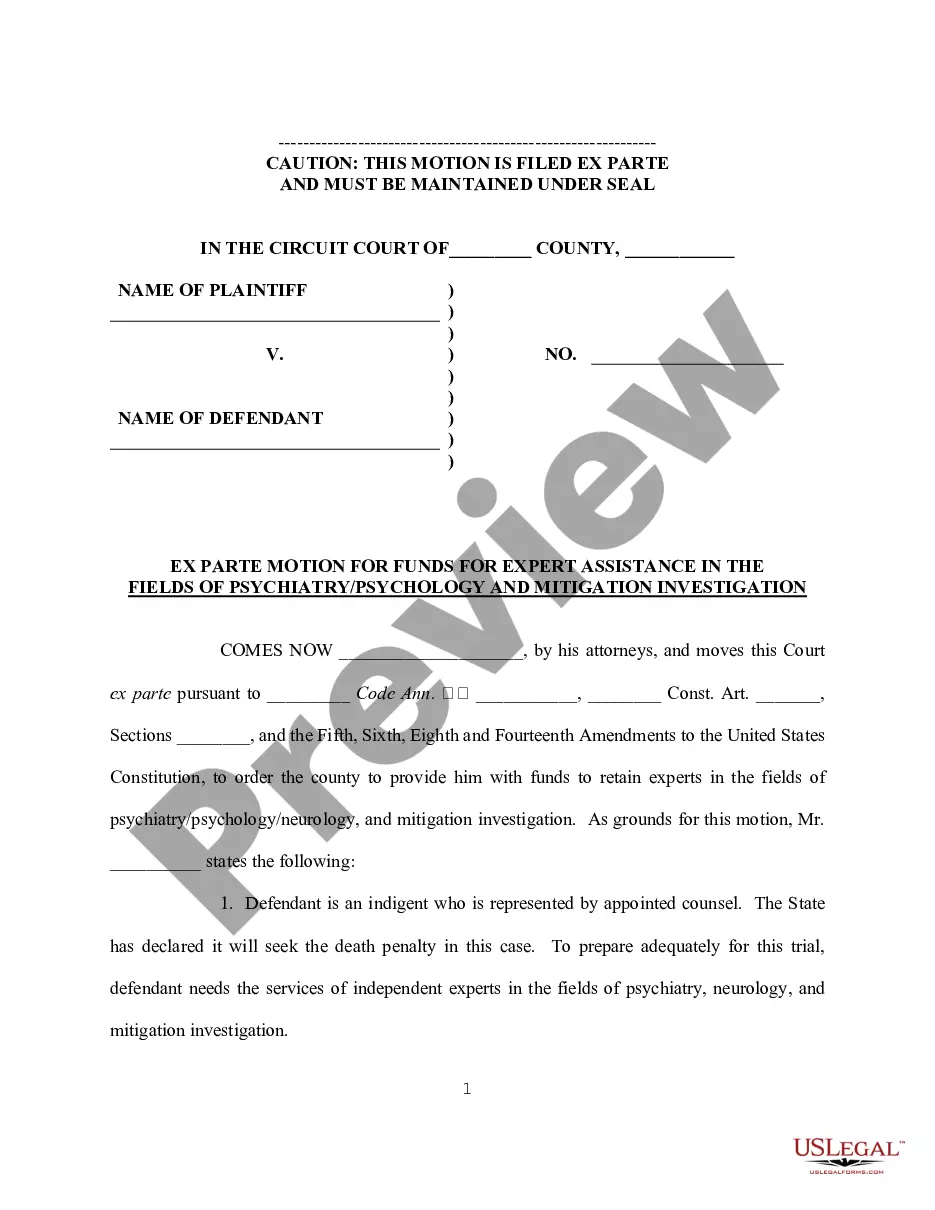
The Motion for Permission to Proceed Ex Parte on Applications for Funds is a legal document that allows a defendant to request court approval to proceed with specific applications for funds without notifying the prosecution. This form protects the confidentiality of attorney-client communications and other sensitive information by allowing certain legal matters to be discussed privately in front of the judge. This form is essential for defendants who require financial support for legal assistance, ensuring they retain their constitutional rights during the criminal process.
Main sections of this form
- Identification of the moving party and legal representation
- Reference to constitutional provisions supporting the ex parte motion
- Statement detailing the need for ex parte proceedings
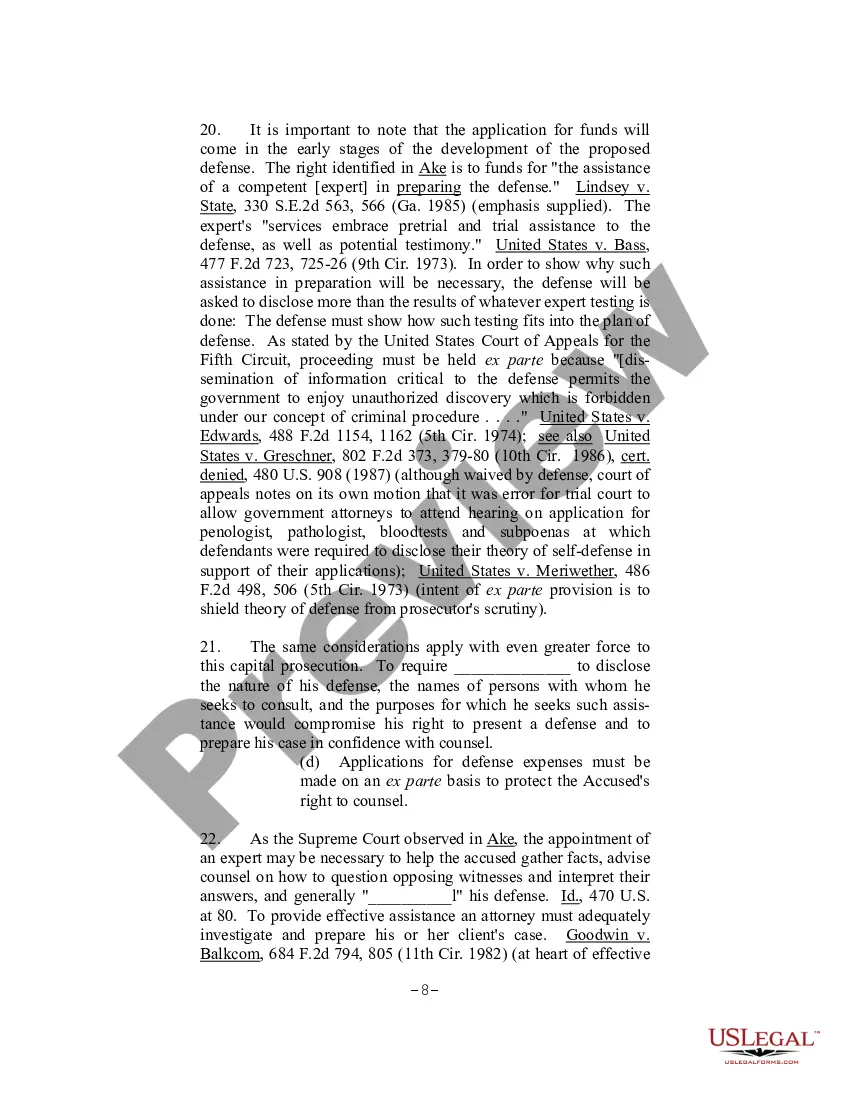
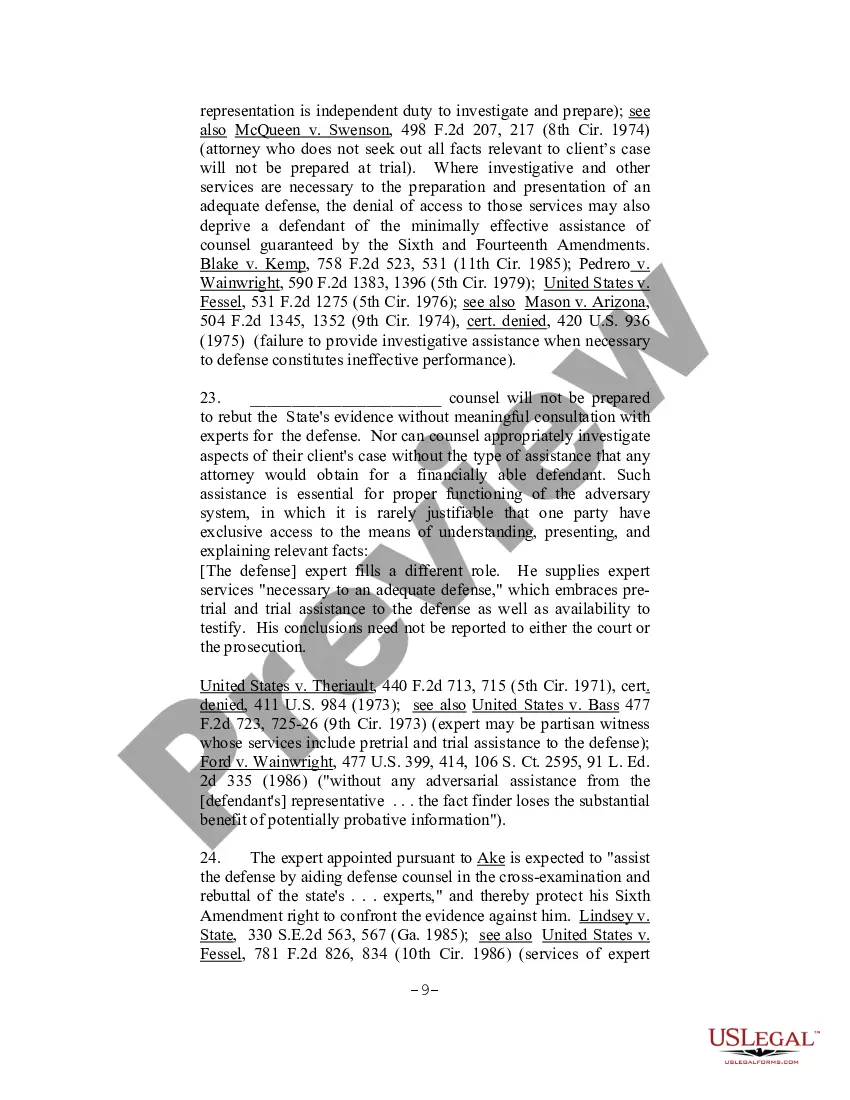
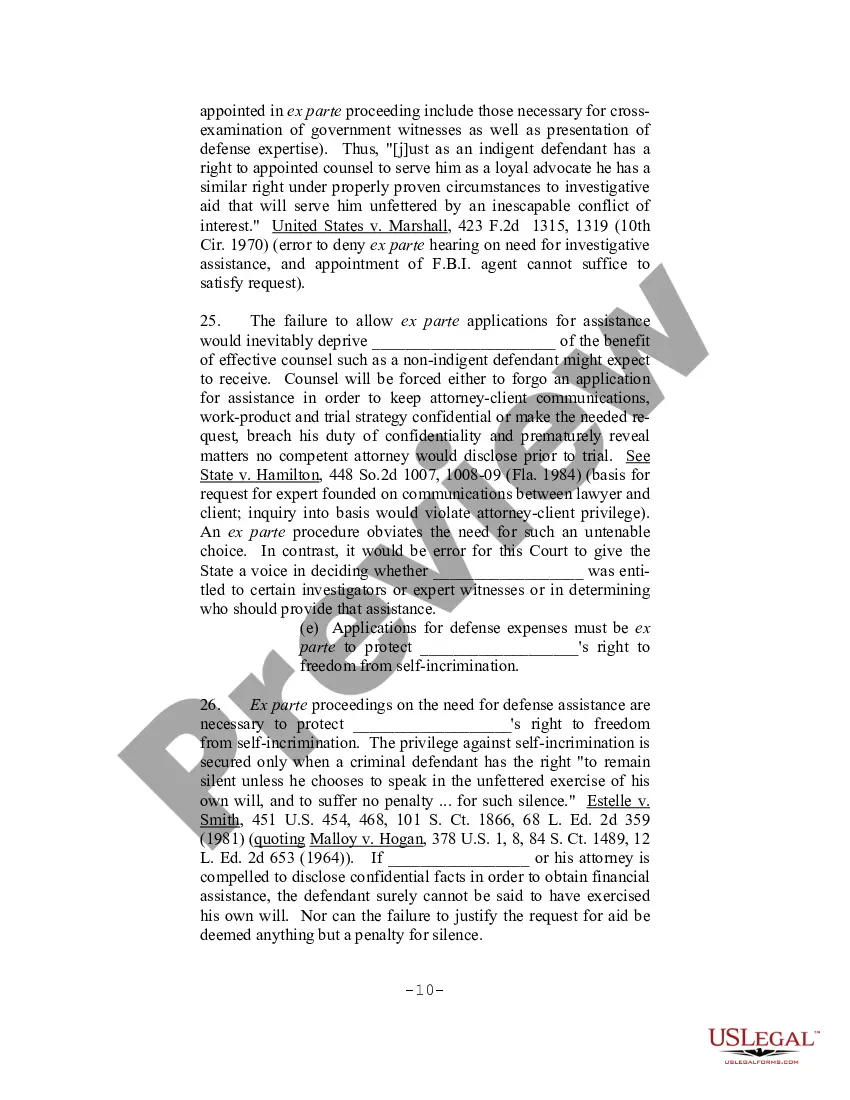
- Case precedent supporting the request for confidentiality
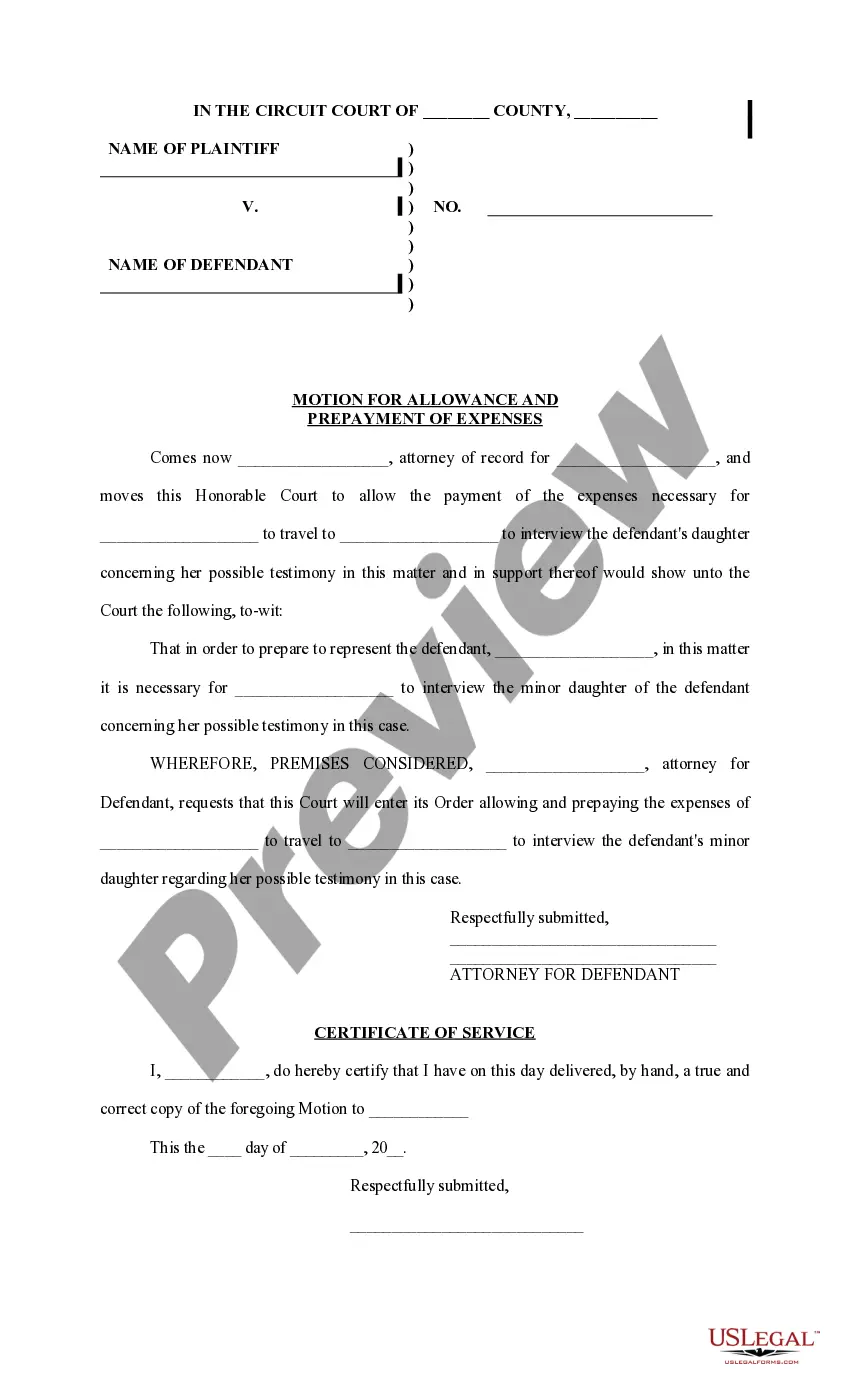
- Certificate of service indicating delivery of the motion to the relevant parties

Situations where this form applies
This form is necessary in situations where a defendant needs to seek financial assistance for expert witnesses or investigative services but fears that disclosing the details of their request would compromise their defense strategy. It is particularly relevant in criminal cases where confidentiality is crucial to uphold the defendant's right to a fair trial.
Who can use this document
- Defendants in criminal cases seeking financial aid for legal representation
- Individuals facing severe financial limitations and needing expert testimonies
- Attorneys representing indigent defendants who require confidential court proceedings
Steps to complete this form
- Enter the name and details of the defendant along with legal representation information.
- Specify the relevant constitutional amendments and statutes that support the motion.
- Illustrate the necessity for ex parte proceedings, emphasizing the need for confidentiality.
- Cite any relevant case law that supports the request for a sealed motion.
- Complete the certificate of service to confirm delivery to appropriate parties.
Does this document require notarization?
Notarization is not commonly needed for this form. However, certain documents or local rules may make it necessary. Our notarization service, powered by Notarize, allows you to finalize it securely online anytime, day or night.
Get your form ready online
Our built-in tools help you complete, sign, share, and store your documents in one place.
Make edits, fill in missing information, and update formatting in US Legal Forms—just like you would in MS Word.
Download a copy, print it, send it by email, or mail it via USPS—whatever works best for your next step.
Sign and collect signatures with our SignNow integration. Send to multiple recipients, set reminders, and more. Go Premium to unlock E-Sign.
If this form requires notarization, complete it online through a secure video call—no need to meet a notary in person or wait for an appointment.
We protect your documents and personal data by following strict security and privacy standards.

Make edits, fill in missing information, and update formatting in US Legal Forms—just like you would in MS Word.

Download a copy, print it, send it by email, or mail it via USPS—whatever works best for your next step.

Sign and collect signatures with our SignNow integration. Send to multiple recipients, set reminders, and more. Go Premium to unlock E-Sign.

If this form requires notarization, complete it online through a secure video call—no need to meet a notary in person or wait for an appointment.

We protect your documents and personal data by following strict security and privacy standards.
Mistakes to watch out for
- Failing to provide adequate justification for the need for confidentiality.
- Not citing relevant case law to support claims.
- Omitting the certificate of service or mislabeling other parties involved.
- Using legal jargon without providing clear explanations.
Benefits of completing this form online
- Convenience of accessing and completing the form from any location.
- Editability allows users to tailor the document to their specific needs.
- Reliability, as the forms are drafted by licensed attorneys to ensure correctness.
Legal use & context
- This form is a recognized legal mechanism in the U.S. to protect the rights of defendants seeking financial assistance.
- Ex parte proceedings are constitutionally supported to ensure fair trial rights are preserved.
- The confidentiality offered through this process upholds essential due process protections.
Summary of main points
- The form allows a defendant to seek funds confidentially.
- Understanding the critical need for ex parte proceedings is essential.
- This motion is vital for ensuring the defendant's rights are respected throughout the legal process.
Looking for another form?
Form popularity
FAQ
Motion to dismiss. Discovery motions. Motion to compel. Motion to strike. Motion for summary judgment. Motion for a directed verdict. Motion for nolle prosequi. Motion in Limine.
A motion is an application to the court made by the prosecutor or defense attorney, requesting that the court make a decision on a certain issue before the trial begins. The motion can affect the trial, courtroom, defendants, evidence, or testimony. Only judges decide the outcome of motions.
In civil procedure, ex parte is used to refer to motions for orders that can be granted without waiting for a response from the other side. Generally, these are orders that are only in place until further hearings can be held, such as a temporary restraining order.
There are different types of motion: translational, rotational, periodic, and non periodic motion. A type of motion in which all parts of an object move the same distance in a given time is called translational motion.
(Entry 1 of 2) : a high-crested helmet with no visor.
In physics, motion is the phenomenon in which an object changes its position over time. Motion is mathematically described in terms of displacement, distance, velocity, acceleration, speed, and time.One can also speak of motion of images, shapes, and boundaries.
Noun. the action or process of moving or of changing place or position; movement. power of movement, as of a living body.a bodily movement or change of posture; gesture.
The definition of a motion is a movement or a proposal for action. An example of motion is a waving hand. An example of motion is a request by a committee member that a recommendation be accepted. noun.
A motion is an application to the court made by the prosecutor or defense attorney, requesting that the court make a decision on a certain issue before the trial begins.