Order Releasing Defendant on Earned Probation
What is this form?
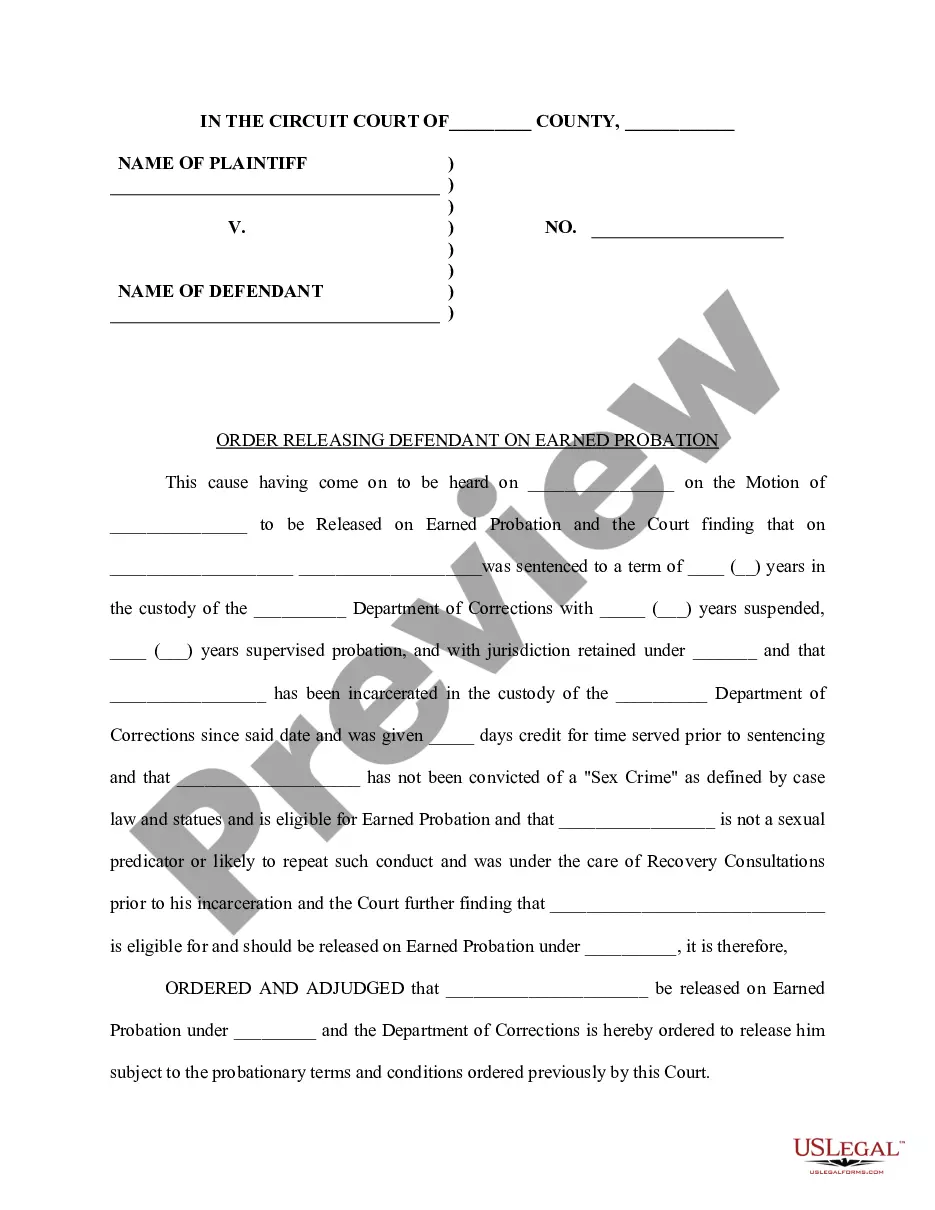
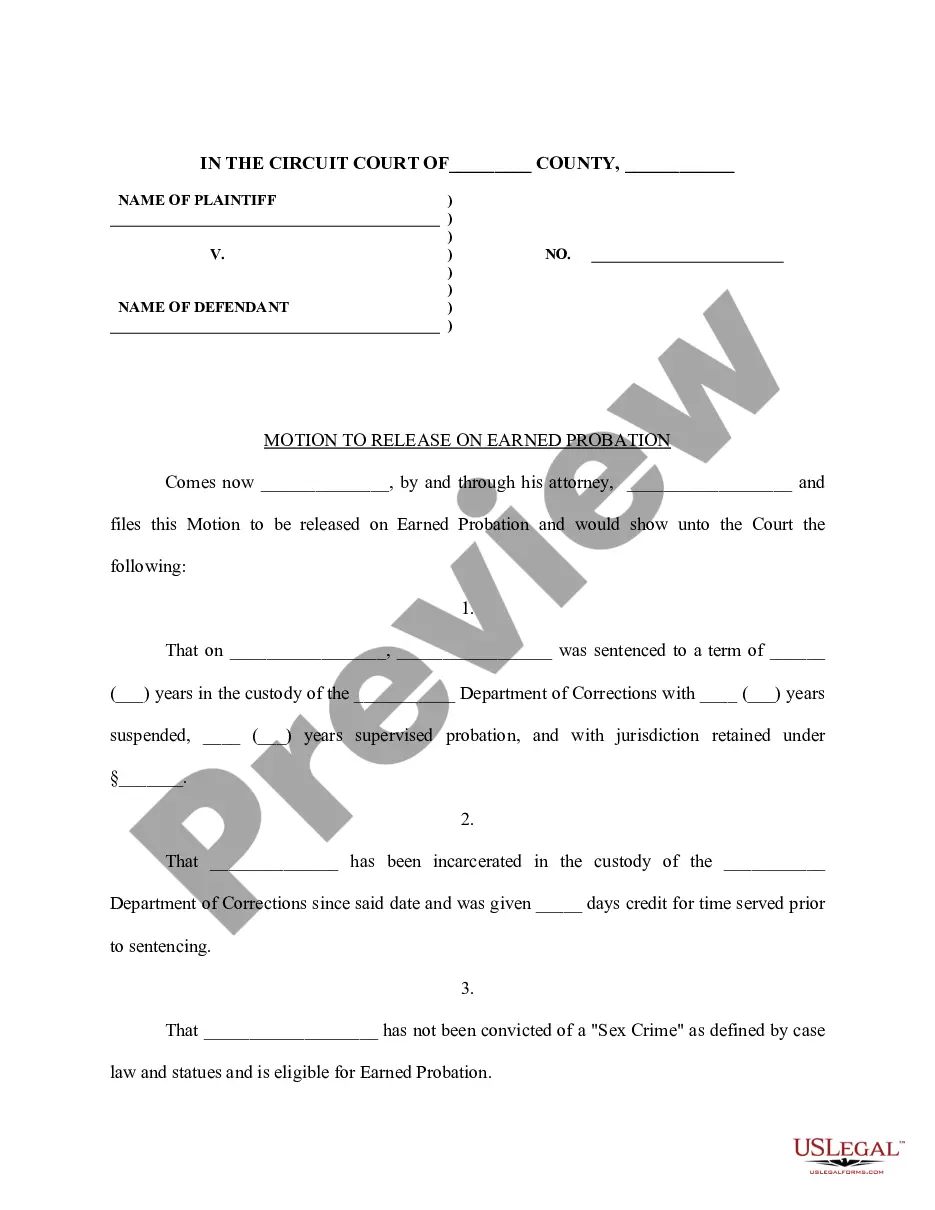
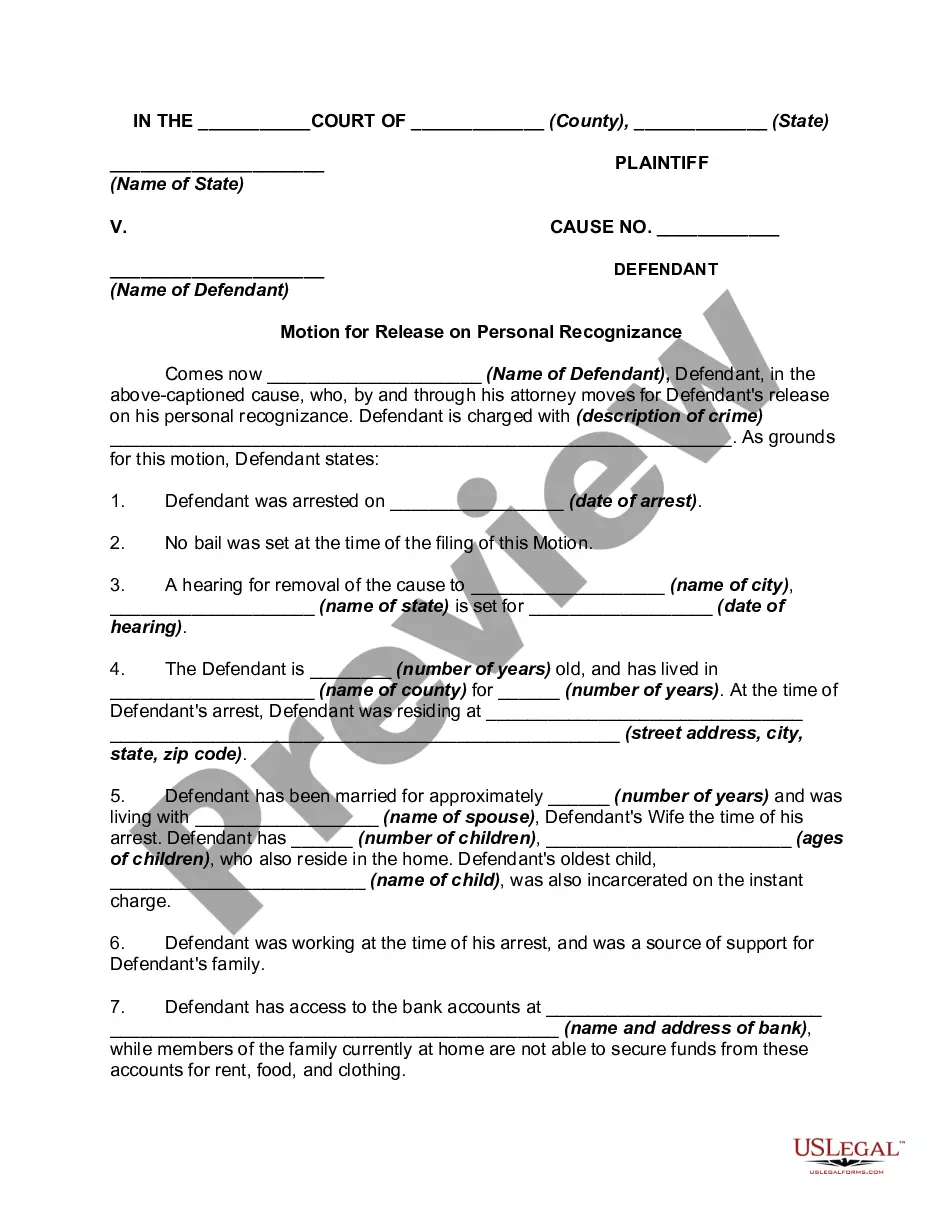
The Order Releasing Defendant on Earned Probation is a legal document used to request the release of a defendant who has satisfied specific conditions while incarcerated. This form is particularly essential for individuals seeking to transition from custody to probation after demonstrating good behavior. Unlike other legal forms related to probation, this document specifically addresses situations involving earned probation and eligibility based on time served and compliance with court orders.
What’s included in this form
- Date of the hearing
- Motions filed by the parties involved
- Details about the original sentence, including term durations
- Court findings regarding eligibility for earned probation
- Conditions under which the defendant is to be released
- Signature of the Circuit Judge

Common use cases
This form should be used when a defendant has completed a portion of their sentence and seeks to be released on earned probation. Situations include when the defendant has not been convicted of a sex crime, has received credit for time served, and has complied with the conditions set by the court prior to sentencing. It is crucial for individuals who have demonstrated positive behavior while incarcerated and wish to reintegrate into society under probationary conditions.
Who needs this form
- Defendants seeking release from incarceration after serving a portion of their sentence.
- Family members or legal representatives acting on behalf of the defendant.
- Legal professionals assisting clients in the probation application process.
- Individuals who meet the eligibility criteria for earned probation.
Instructions for completing this form
- Identify the date of the hearing and enter it at the top of the document.
- Fill in the details of the motion and the parties involved in the request.
- Specify the original sentence and the credit for time served.
- Include findings about eligibility for earned probation based on court assessments.
- Have the Circuit Judge sign and date the order to finalize the document.
Does this document require notarization?
Notarization is generally not required for this form. However, certain states or situations might demand it. You can complete notarization online through US Legal Forms, powered by Notarize, using a verified video call available anytime.
Get your form ready online
Our built-in tools help you complete, sign, share, and store your documents in one place.
Make edits, fill in missing information, and update formatting in US Legal Forms—just like you would in MS Word.
Download a copy, print it, send it by email, or mail it via USPS—whatever works best for your next step.
Sign and collect signatures with our SignNow integration. Send to multiple recipients, set reminders, and more. Go Premium to unlock E-Sign.
If this form requires notarization, complete it online through a secure video call—no need to meet a notary in person or wait for an appointment.
We protect your documents and personal data by following strict security and privacy standards.
Make edits, fill in missing information, and update formatting in US Legal Forms—just like you would in MS Word.
Download a copy, print it, send it by email, or mail it via USPS—whatever works best for your next step.
Sign and collect signatures with our SignNow integration. Send to multiple recipients, set reminders, and more. Go Premium to unlock E-Sign.

If this form requires notarization, complete it online through a secure video call—no need to meet a notary in person or wait for an appointment.
We protect your documents and personal data by following strict security and privacy standards.
Typical mistakes to avoid
- Failing to provide accurate sentencing information.
- Not including evidence of good behavior while incarcerated.
- Leaving sections blank or incomplete, which may delay processing.
- Forgetting to secure the judge's signature before submitting the form.
Why use this form online
- Convenience of accessing and downloading the form instantly.
- Editable format allowing users to input their specific information easily.
- Access to forms drafted by licensed attorneys ensuring legal reliability.
- Efficient completion of paperwork from the comfort of home, saving time and effort.
Key takeaways
- The Order Releasing Defendant on Earned Probation facilitates an easier transition for eligible defendants back into the community.
- Accurate completion of the form is crucial for successful processing and release.
- Understanding state-specific requirements is essential for compliance and effective use of the form.
Looking for another form?
Form popularity
FAQ
Under California Penal Code Section 1203.3, you could have your probation terminated.A probation termination does not automatically get granted. It will be up to a judge and their discretion to determine the outcome of your case.
Yes, the applicant may be released under the bail he filed in the criminal case, or under recognizance. 13. HOW MANY TIMES CAN ONE BE GRANTED PROBATION? Only once.
Probation and WorkProbation agreements usually require the probationer to find or maintain full-time employment. If you fail to find or keep a job while on probation, the probation officer can find you in violation and you can be sent to jail.
What is the difference between probation, parole or supervised release? Probation is a term of community supervision imposed by the court in lieu of a prison sentence.Supervised release is a period of community supervision imposed by the court to be completed after release from a jail or prison sentence.
It shall deny the application for probation of a convicted offender if it finds that: 1) the offender is in need of correctional treatment that can be provided most effectively by his commitment to an institution; 2) there is an undue risk that during the period of probation the offender will commit another crime; or 3
In the federal system, supervised release (sometimes also called special or mandatory parole) is a preliminary period of freedom for recently released prisoners. It's imposed at the time of sentencing, and is for the prisoner to serve after completing his or her prison sentence.
Yes, the applicant may be released under the bail he filed in the criminal case, or under recognizance. 13. HOW MANY TIMES CAN ONE BE GRANTED PROBATION? Only once.
Parole is a conditional release from prison that allows a prisoner to rejoin the community after serving all, or a part, of his or her prison term. Probation, on the other hand, is a sentencing order that allows a person convicted of a crime to remain out of jail altogether.