Complaint or Petition to Enforce Statutory Lien on Tenant's Personal Property with Regard to a Commercial Lease
Understanding this form
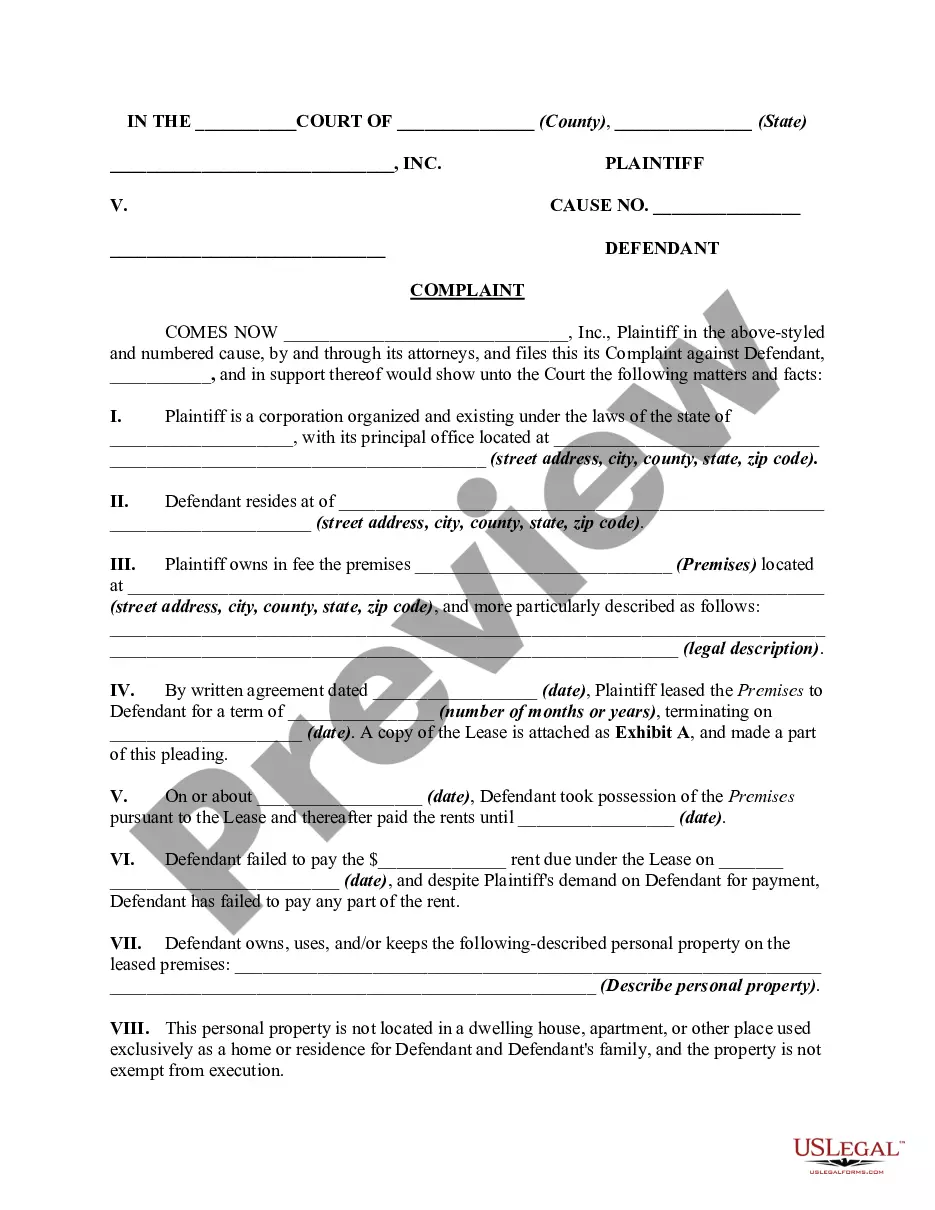
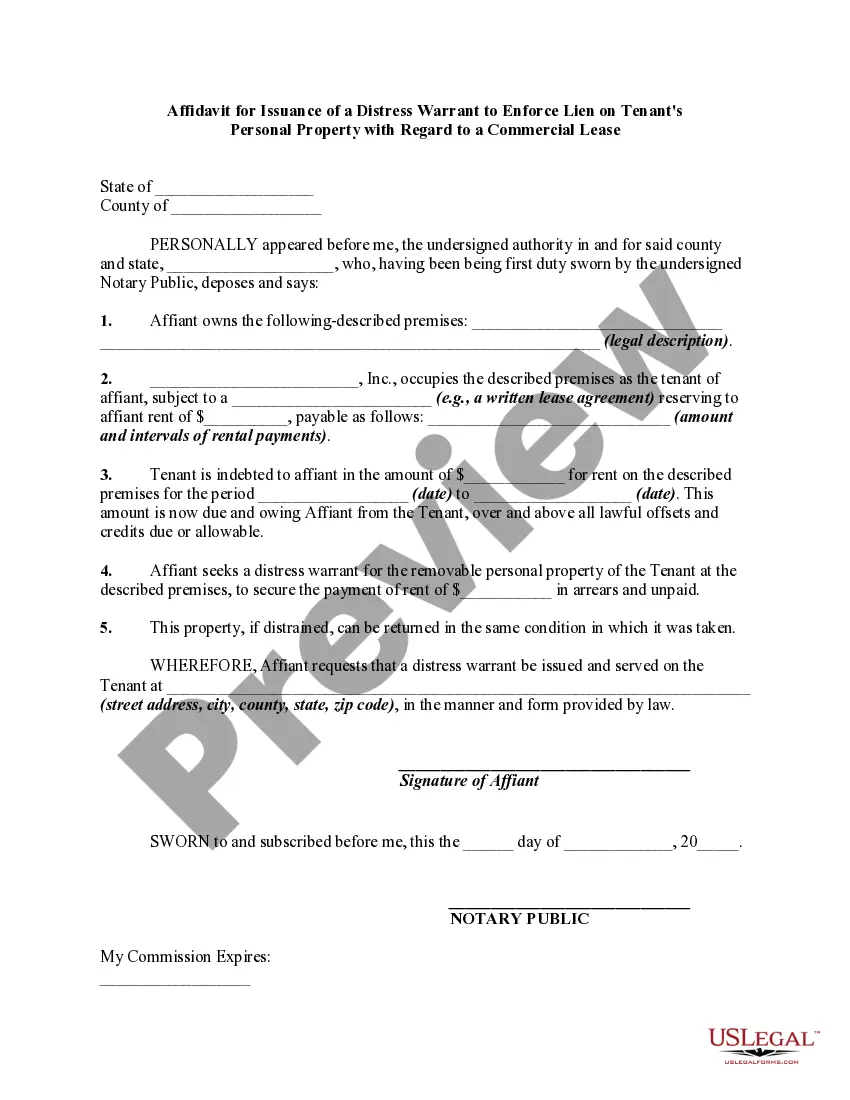
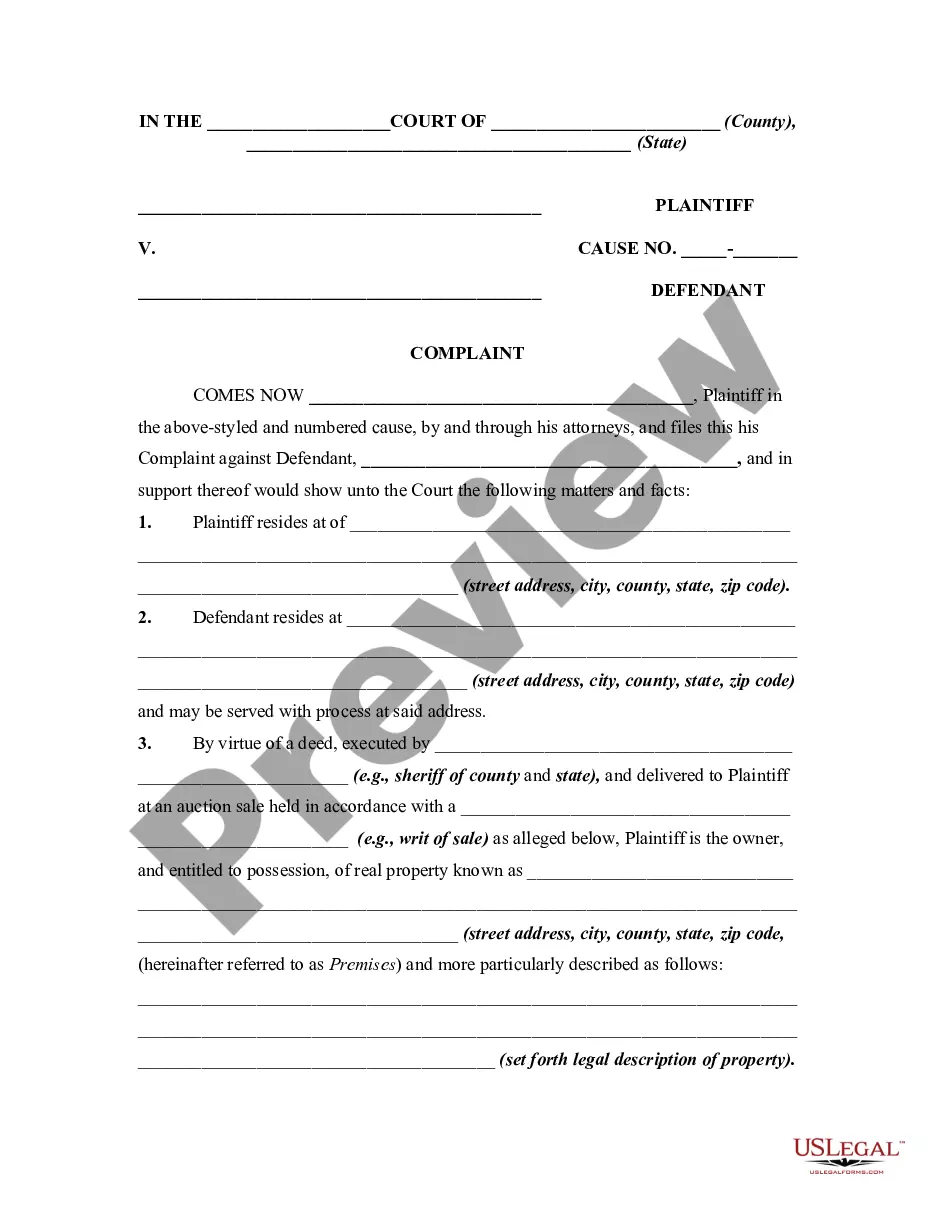
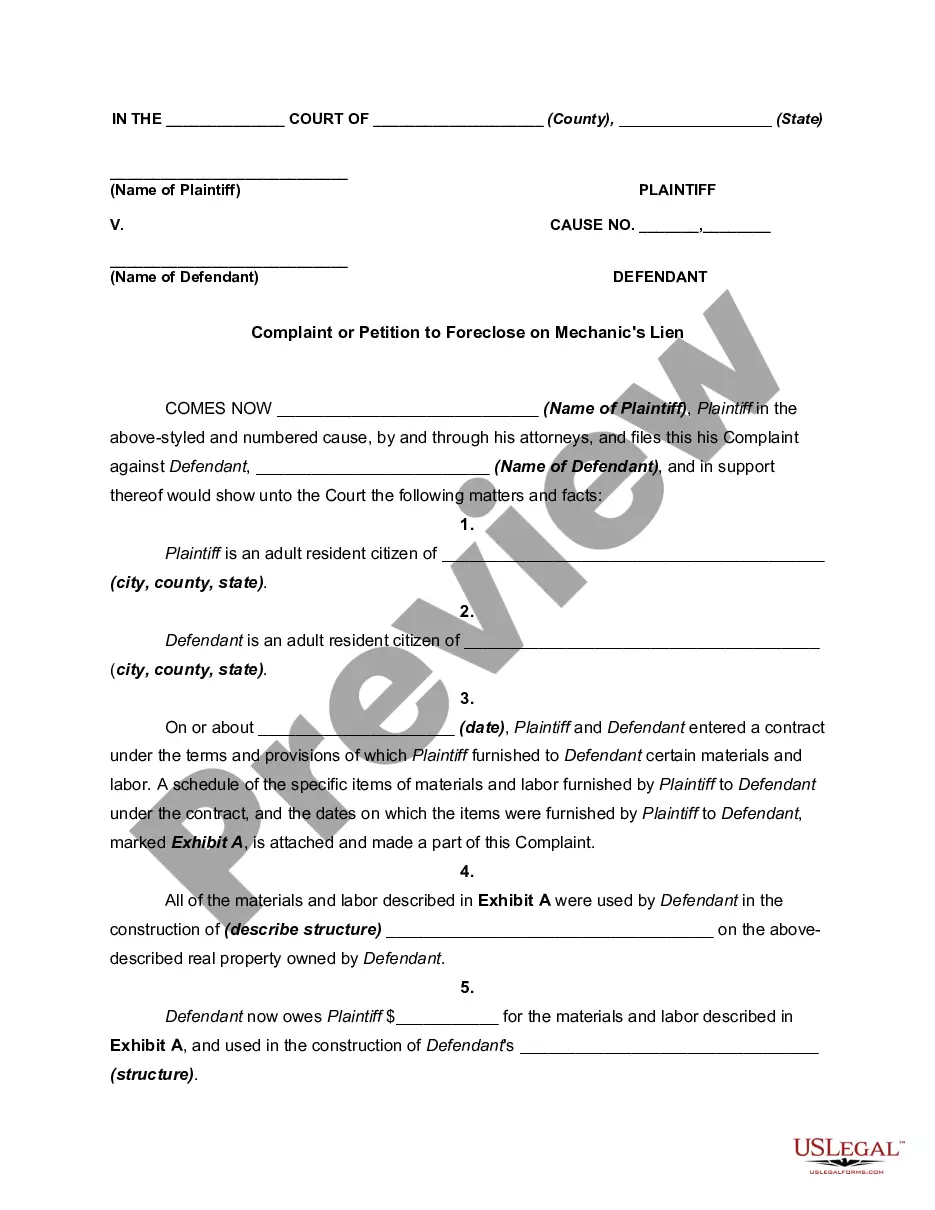
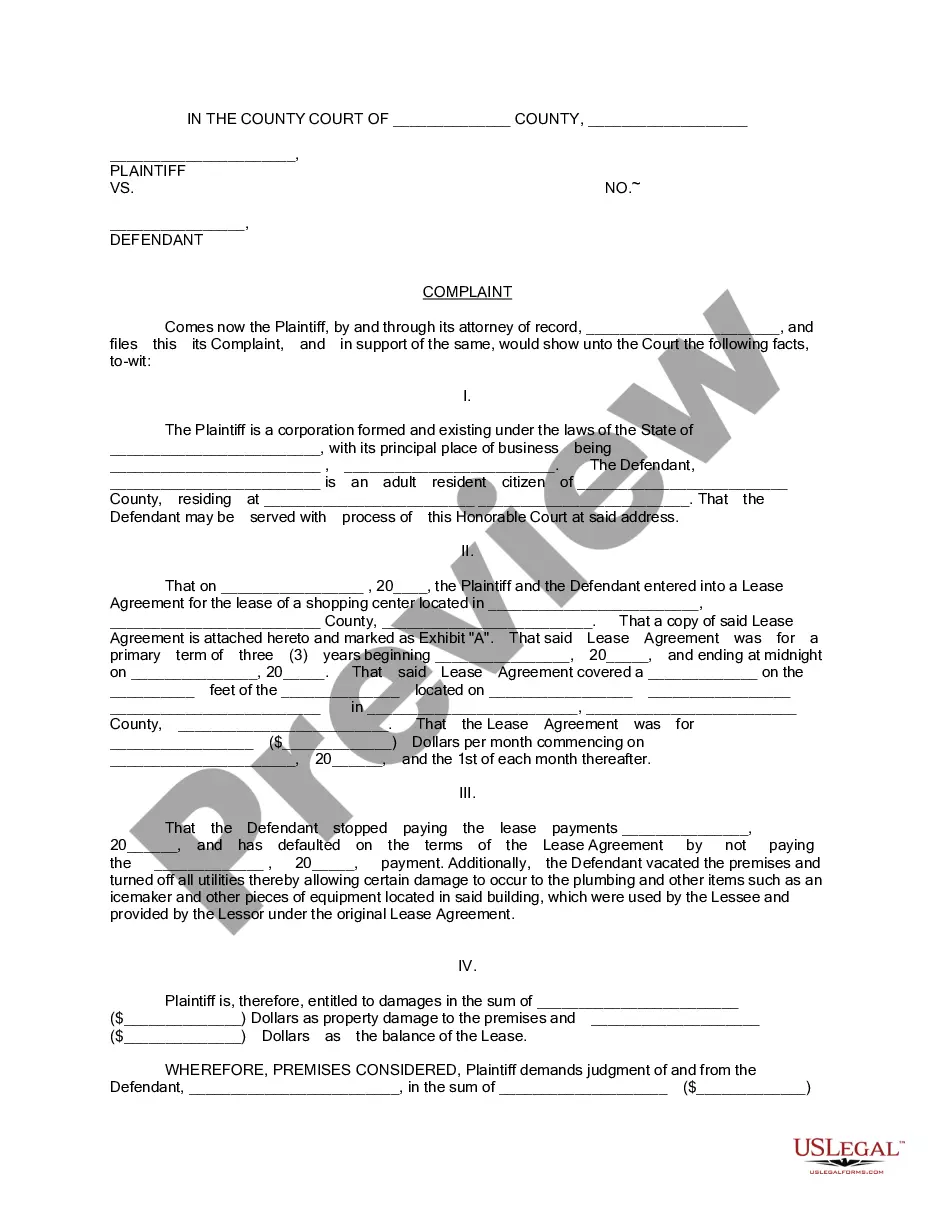
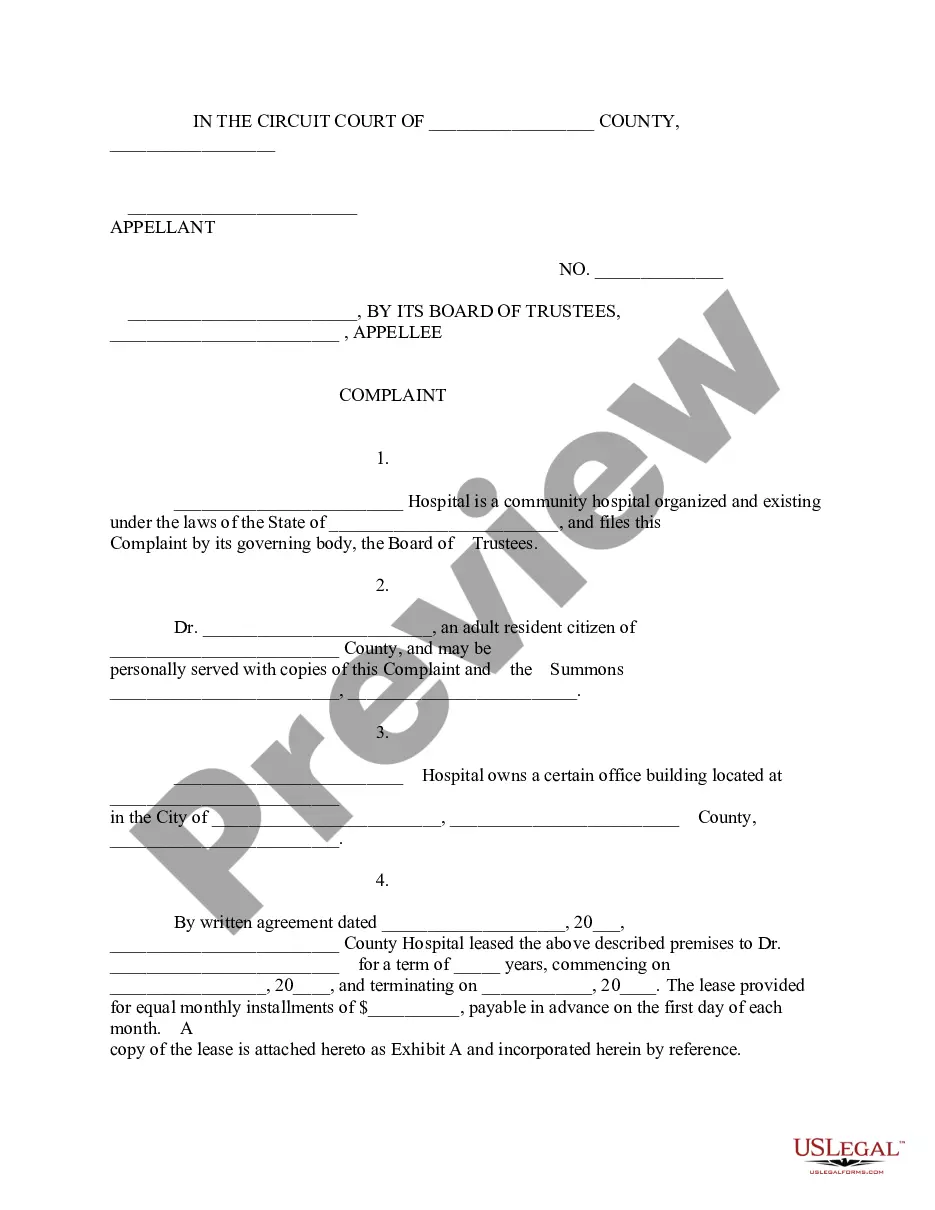
This form is a Complaint or Petition to Enforce Statutory Lien on Tenant's Personal Property related to a commercial lease. It is used by landlords seeking legal recourse to recover unpaid rent by enforcing their lien rights on the tenantâs personal property located on the leased premises. This form ensures that landlords follow the appropriate legal procedures specific to their state when filing such complaints, differentiating it from general collection actions or eviction notices.
Form components explained
- Identification of plaintiff and defendant, including corporate details and addresses.
- Description of the leased premises and reference to the lease agreement.
- Specification of unpaid rent and timeline of payments.
- Detail of the tenant's personal property subject to lien.
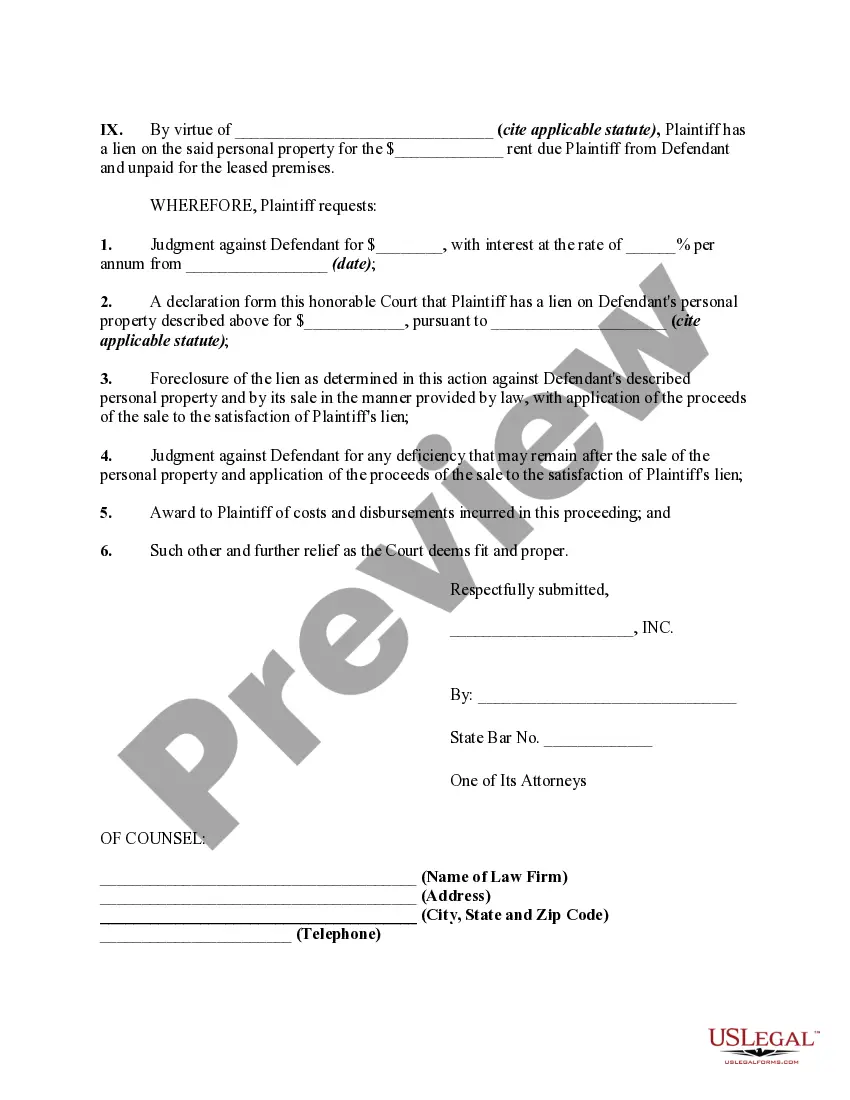
- Citation of applicable statutes that support enforcement of the lien.
- Request for judgment and for relief, including possible foreclosure of the lien.
When to use this document
This form is necessary when a landlord has a tenant that has failed to pay rent for a leased commercial property and has left personal property on the premises. It enables landlords to seek court intervention to enforce their rights under statutory law, allowing them to potentially recover the unpaid rent through the sale of the tenant's personal property. This process is particularly relevant after the landlord has made demands for payment without successful resolution.
Who should use this form
- Landlords or property managers overseeing commercial properties.
- Corporate entities that lease property and require formal legal recourse for unpaid rents.
- Legal representatives acting on behalf of landlords or property management companies.
Steps to complete this form
- Identify the parties involved by filling in the names and addresses of the plaintiff and defendant.
- Specify the property leased, including the address and legal description.
- Provide the relevant dates for the lease agreement and the timeline of rent payments.
- Detail the personal property that the tenant has on the leased premises that may be subject to the lien.
- Cite the applicable statute that grants the landlord's lien rights.
- Sign the complaint and include legal representation details where applicable.
Does this document require notarization?
This form usually doesn’t need to be notarized. However, local laws or specific transactions may require it. Our online notarization service, powered by Notarize, lets you complete it remotely through a secure video session, available 24/7.
Get your form ready online
Our built-in tools help you complete, sign, share, and store your documents in one place.
Make edits, fill in missing information, and update formatting in US Legal Forms—just like you would in MS Word.
Download a copy, print it, send it by email, or mail it via USPS—whatever works best for your next step.
Sign and collect signatures with our SignNow integration. Send to multiple recipients, set reminders, and more. Go Premium to unlock E-Sign.
If this form requires notarization, complete it online through a secure video call—no need to meet a notary in person or wait for an appointment.
We protect your documents and personal data by following strict security and privacy standards.
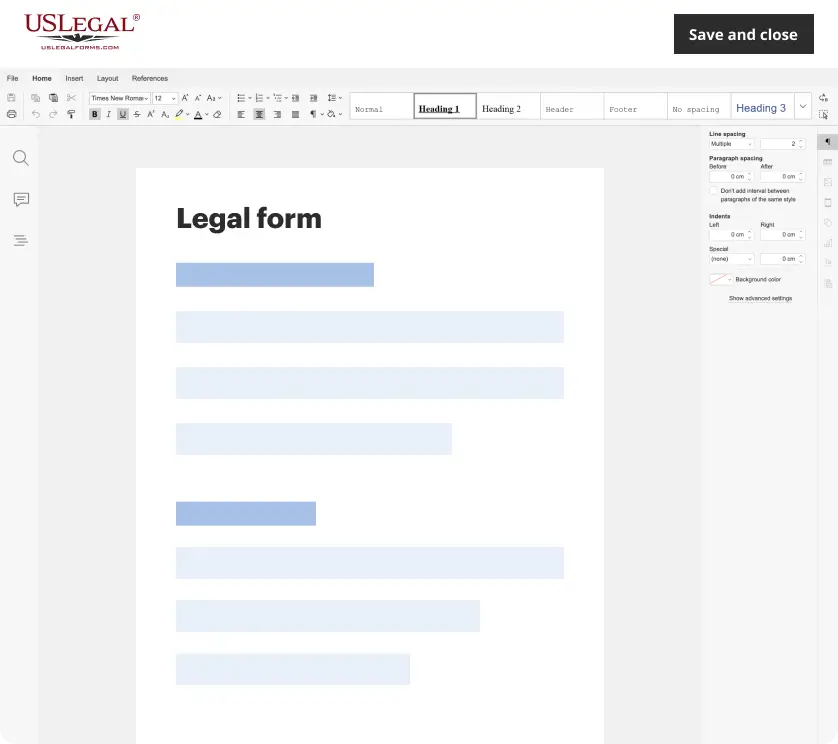
Make edits, fill in missing information, and update formatting in US Legal Forms—just like you would in MS Word.
Download a copy, print it, send it by email, or mail it via USPS—whatever works best for your next step.
Sign and collect signatures with our SignNow integration. Send to multiple recipients, set reminders, and more. Go Premium to unlock E-Sign.
If this form requires notarization, complete it online through a secure video call—no need to meet a notary in person or wait for an appointment.
We protect your documents and personal data by following strict security and privacy standards.
Mistakes to watch out for
- Failing to include all necessary parties in the complaint.
- Not providing accurate property descriptions or legal information.
- Omitting the citation of applicable statutes that support the lien.
- Incorrectly documenting dates and payment history for rent.
Why complete this form online
- Convenient access to legal forms drafted by licensed attorneys.
- Immediate download and easy editing to fit specific needs.
- Reliable resource ensuring compliance with relevant legal requirements.
Looking for another form?



Form popularity
FAQ
The landlord is often responsible for anything structural unless an issue is caused by the tenant's negligence. This would include the foundation, walls and roof of the building. The landlord is also usually responsible for the electrical, heating and ventilation systems.
Can the landlord refuse consent to an Assignment? Most leases will say that the Landlord cannot unreasonably withhold consent. According to section 19 (1A) of the Landlord and Tenant Act 1927 the landlord can insert conditions in the lease, which need to be met in the case of an assignment.
Paying the remainder of the rent still owed on the lease in full; Paying a specified amount of liquidated damages as outlined in the contract terms; Paying an additional amount of punitive damages, dependent on local state laws; and/or.
As the landlord of a commercial property, your main responsibilities will be to keep up with any maintenance and repairs to the property and to ensure it is a safe place for people to work.
If the commercial tenant is a shell corporation and/or does not have any assets of value, the commercial tenant may choose to walk away from its commercial lease obligations.In the event of default, the landlord will be able to sue the guarantor for the outstanding debt of the commercial tenant.
Maintenance and repair If damage is found in the building by the tenant, the landlord is responsible for ensuring it is safely repaired. This includes the roof and roofline of the building and the general structural integrity of the building.
A commercial landlord is someone who leases or rents commercial property to a tenant via a lease agreement. The landlord is bound by certain duties by law. These duties include performing all the terms of the commercial lease agreement.
General upkeep and maintenance. Making repairs when necessary. Gas safety including ensuring there is an annual inspection, the Gas Safety Certificate is obtained and a copy given to the tenant.
Fixtures and fittings. Any fixtures and fittings you have installed in the property need to be safe to use. Gas and electricity. Gov.uk says that tenants should maintain equipment according to the manufacturer's instructions. Maintenance and repair. Asbestos. Fire safety.