Sample Letter for Request for Deposition - Discovery
Overview of this form
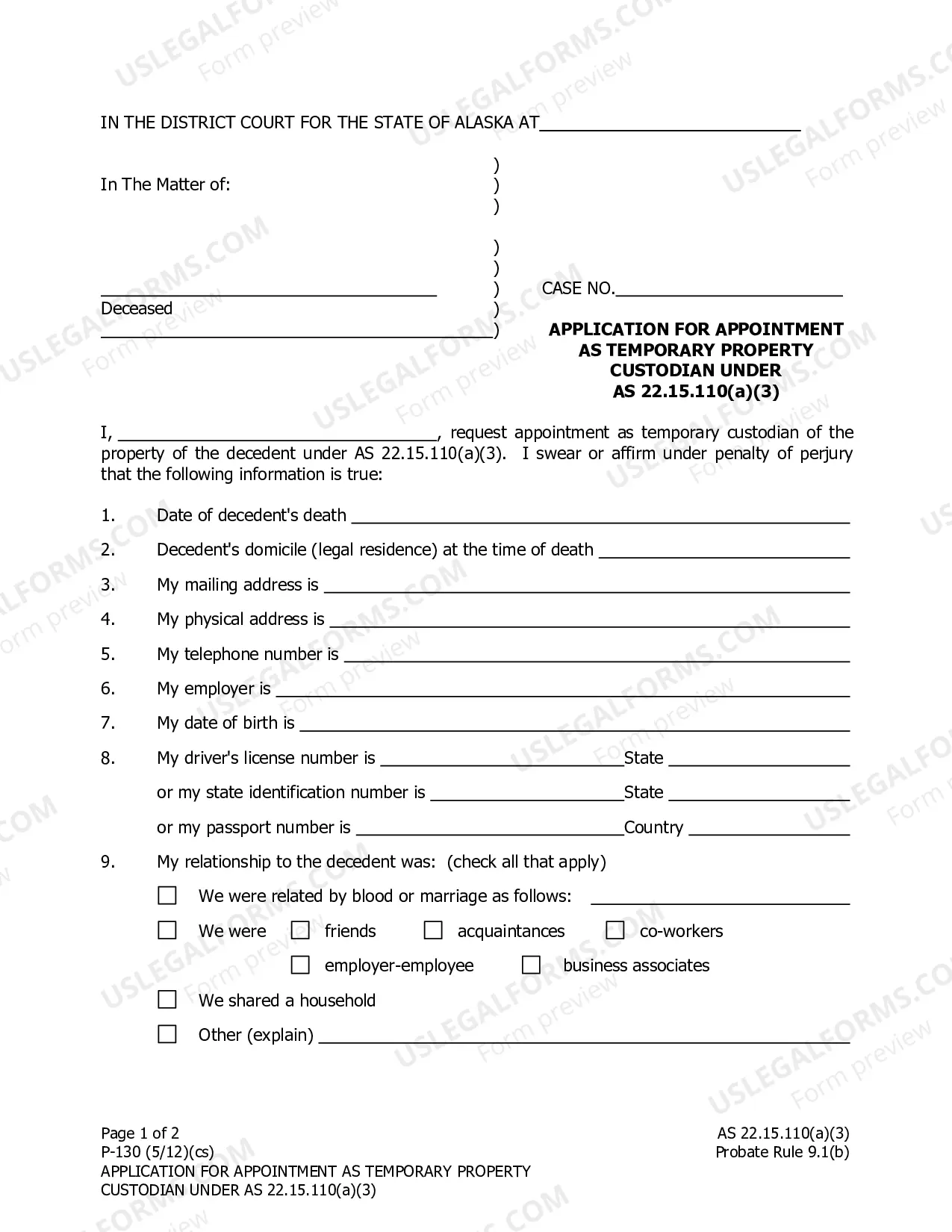
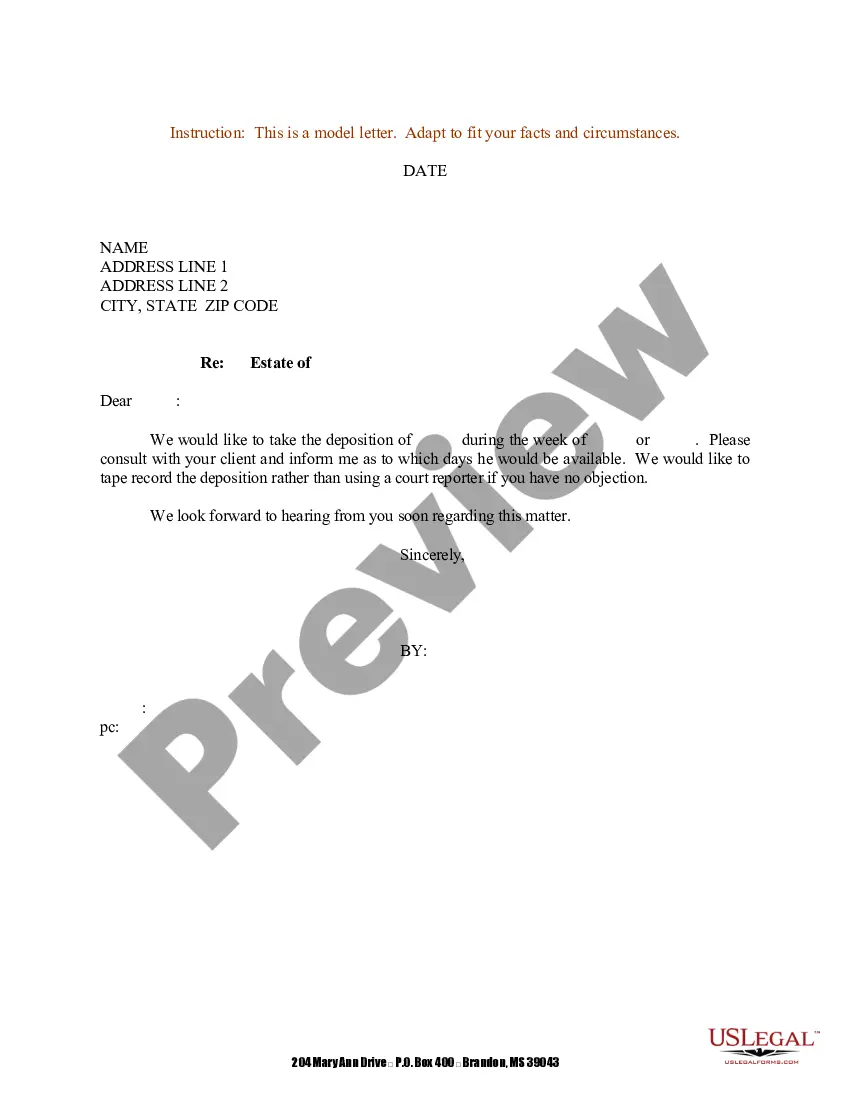
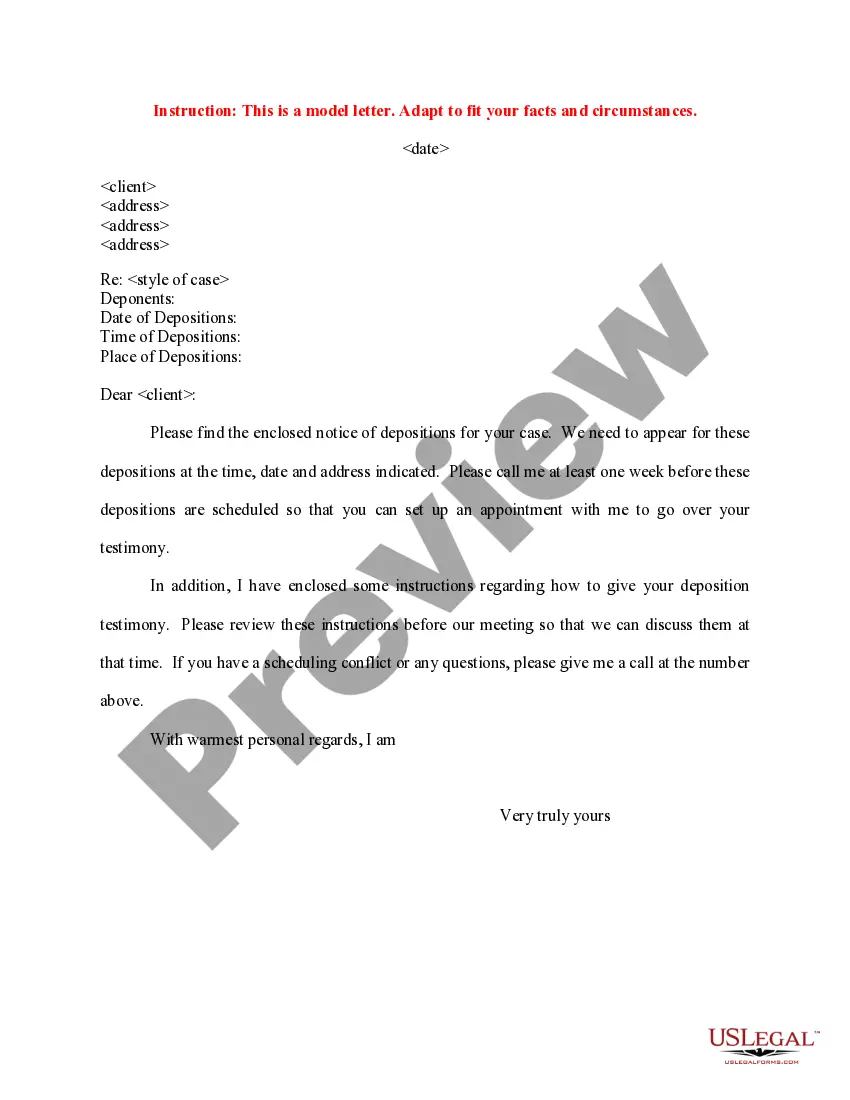
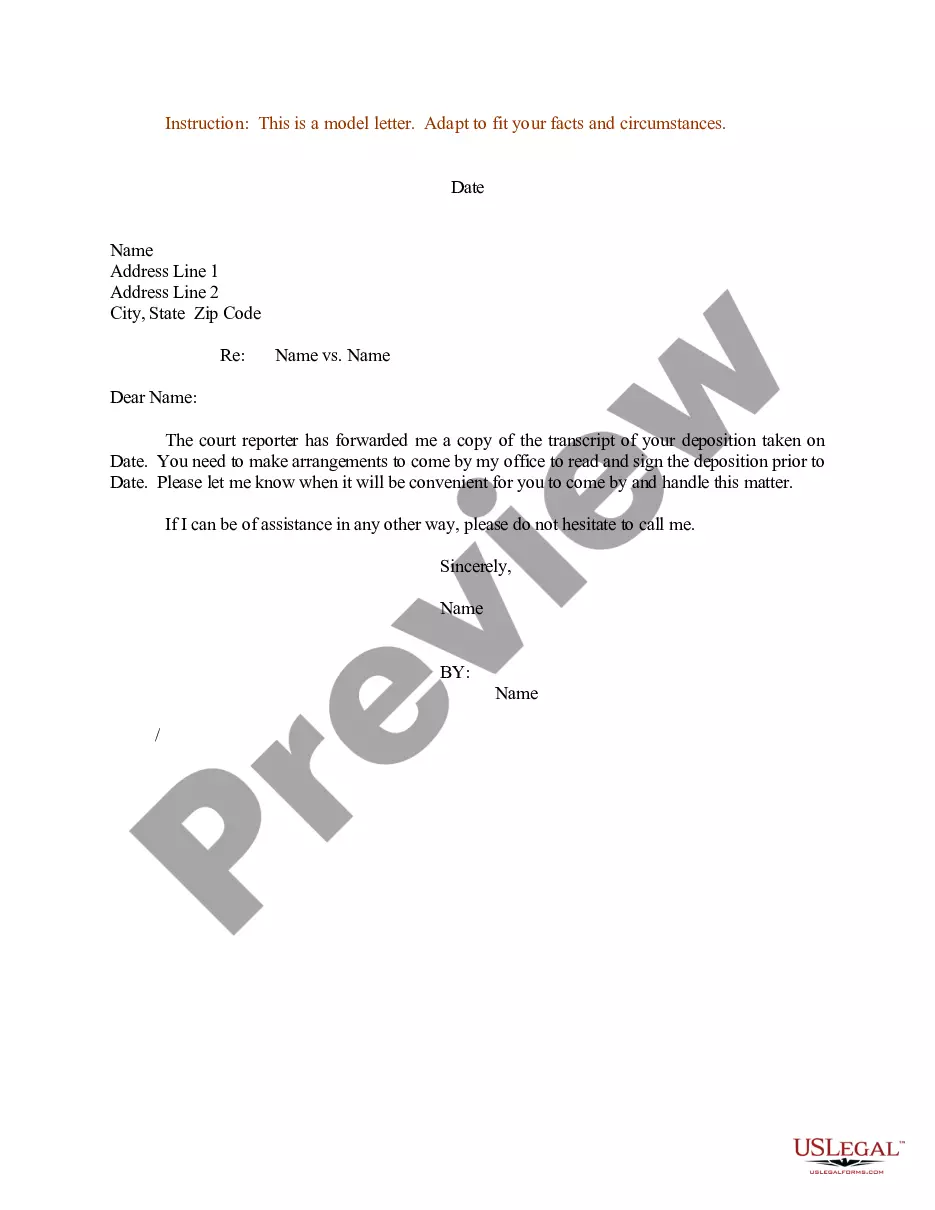
The Sample Letter for Request for Deposition - Discovery is a template designed for individuals or legal practitioners who need to formally request a deposition during the discovery phase of litigation. This letter serves as a structured means to inform the involved parties of the intentions to take testimonial evidence under oath, which is essential for building a case. Unlike general correspondence, this sample letter provides the specific legal framework necessary to ensure compliance with procedural rules.
Main sections of this form
- Date of the letter
- Recipient's name and address
- Clear subject line indicating the deposition request
- Explanation of the purpose of the deposition
- Proposed dates and times for the deposition
- Signature and contact information of the sender

When this form is needed
This form should be used when legal counsel or a party involved in a lawsuit intends to request testimony from a witness. It can be utilized in various civil and criminal cases where the information derived from the deposition is necessary for evidence gathering. This formal request helps to establish timelines and expectations for all parties involved.
Who this form is for
- Attorneys representing clients in litigation
- Individuals involved in a lawsuit who are acting pro se
- Legal assistants supporting attorney clients
How to prepare this document
- Enter the current date at the top of the letter.
- Fill in the recipient's name and address accurately.
- Draft a clear subject line indicating the deposition request.
- Provide a brief explanation of the purpose of the deposition.
- Suggest potential dates and times for the deposition.
- Sign the letter and include your contact information.
Notarization guidance
Notarization is generally not required for this form. However, certain states or situations might demand it. You can complete notarization online through US Legal Forms, powered by Notarize, using a verified video call available anytime.
Get your form ready online
Our built-in tools help you complete, sign, share, and store your documents in one place.
Make edits, fill in missing information, and update formatting in US Legal Forms—just like you would in MS Word.
Download a copy, print it, send it by email, or mail it via USPS—whatever works best for your next step.
Sign and collect signatures with our SignNow integration. Send to multiple recipients, set reminders, and more. Go Premium to unlock E-Sign.
If this form requires notarization, complete it online through a secure video call—no need to meet a notary in person or wait for an appointment.
We protect your documents and personal data by following strict security and privacy standards.

Make edits, fill in missing information, and update formatting in US Legal Forms—just like you would in MS Word.

Download a copy, print it, send it by email, or mail it via USPS—whatever works best for your next step.

Sign and collect signatures with our SignNow integration. Send to multiple recipients, set reminders, and more. Go Premium to unlock E-Sign.

If this form requires notarization, complete it online through a secure video call—no need to meet a notary in person or wait for an appointment.

We protect your documents and personal data by following strict security and privacy standards.
Avoid these common issues
- Not including complete recipient contact information.
- Failing to provide alternative dates for the deposition.
- Omitting a clear subject line, which can lead to confusion.
- Neglecting to proofread for grammatical or factual errors.
Benefits of completing this form online
- Convenient download of a legally vetted template.
- Editability allows customization to fit specific needs.
- Access to up-to-date legal formatting and language.
- Reliable source, ensuring compliance with standard legal practices.
Key takeaways
- The Sample Letter for Request for Deposition - Discovery is crucial in legal proceedings for notifying a witness of a deposition.
- It is important to provide clear and precise information in the letter to avoid misunderstandings.
- This form can be used across multiple jurisdictions, but specific state rules should be reviewed.
Looking for another form?
Form popularity
FAQ
The Sample Letter for Request for Deposition - Discovery is a template used to formally request a witness's deposition during the discovery phase of litigation. It communicates the intention to take testimony under oath and guides the process with sections for the date, recipient, subject, purpose, proposed dates, and the sender’s signature and contact information, as described in the form.
A deposition letter is a formal written request asking a witness to appear for a deposition during discovery. This form provides a ready-to-use deposition letter template that includes the date, recipient, subject line, purpose explanation, proposed dates, and signer details to ensure clear, compliant communication.
To draft a discovery request using this form, fill in the letter date, recipient’s name and address, a clear subject indicating the deposition request, a concise explanation of the deposition’s purpose, proposed dates and times, and the sender’s signature and contact information. This creates a structured, compliant deposition request during discovery.
A formal discovery request is a structured written instrument used to obtain information or testimony in litigation during the discovery phase. This form represents a specific type of formal discovery request designed to obtain a deposition, including fields for date, recipient, subject, purpose, proposed dates, and signature.
The four common discovery tools are interrogatories, requests for production, requests for admissions, and depositions. This form pertains to the deposition type and provides a templated letter to request a witness’s deposition during discovery, with sections for date, recipient, subject, purpose, proposed dates, and signature.
This form is a ready-to-use template specifically for requesting a deposition during discovery, with named sections (date, recipient, subject, purpose, proposed dates, signature) and guidance on who should use it. A deposition notice, by contrast, typically serves as procedural scheduling or compulsion under rules and may lack the template fields.