Sample Letter for Assets and Liabilities of Decedent's Estate
Understanding this form
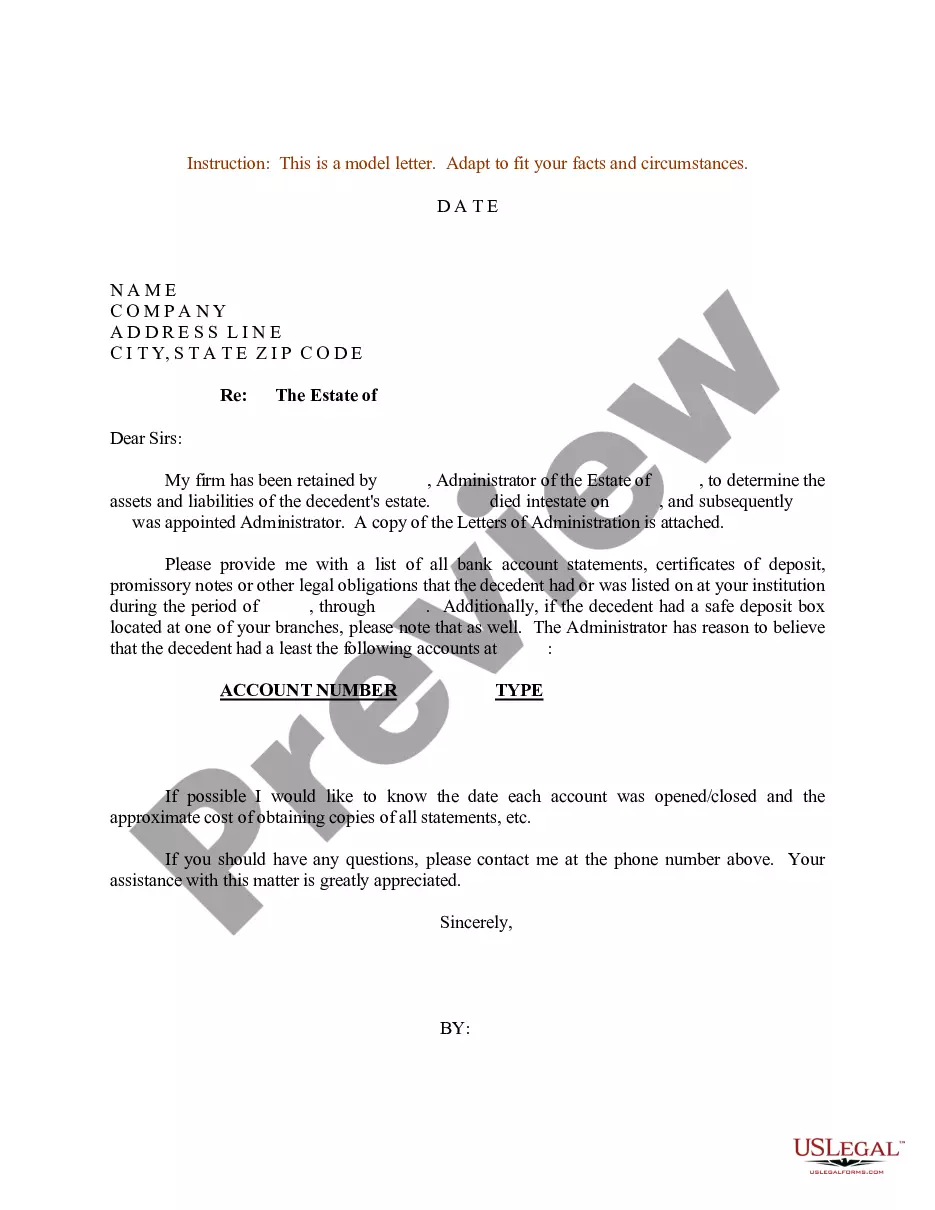
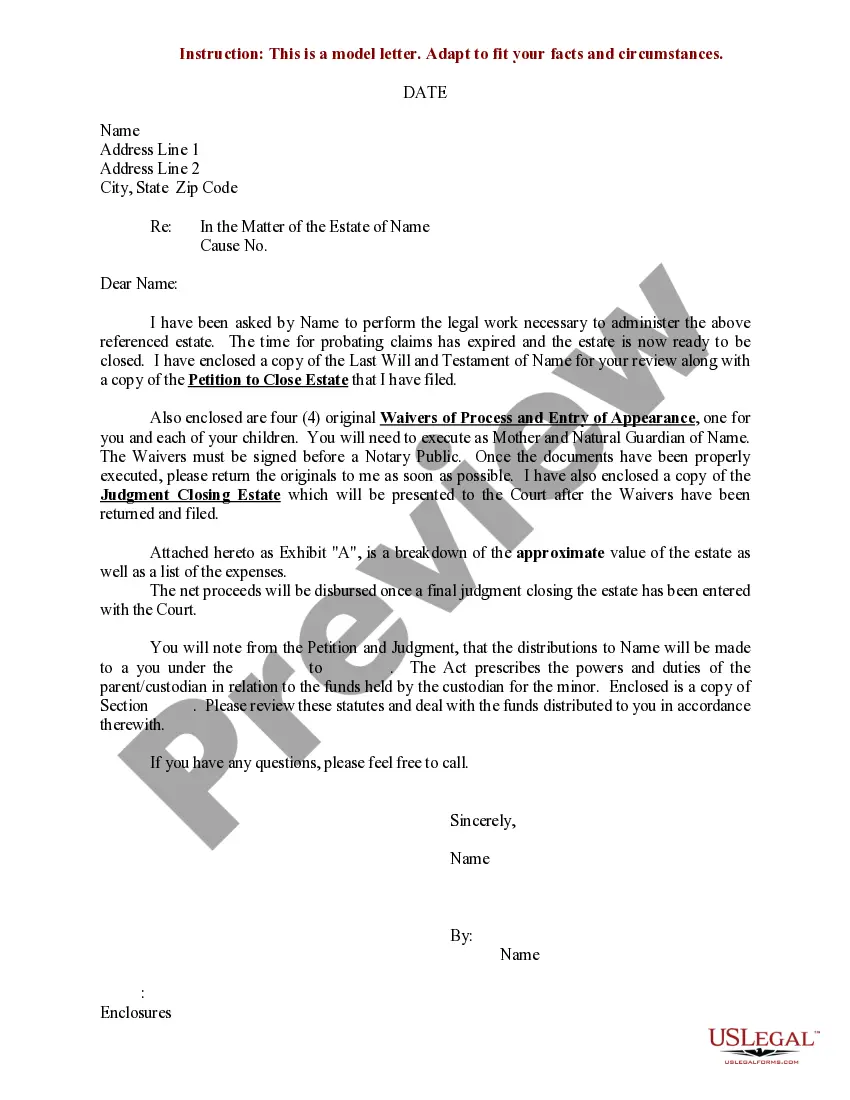
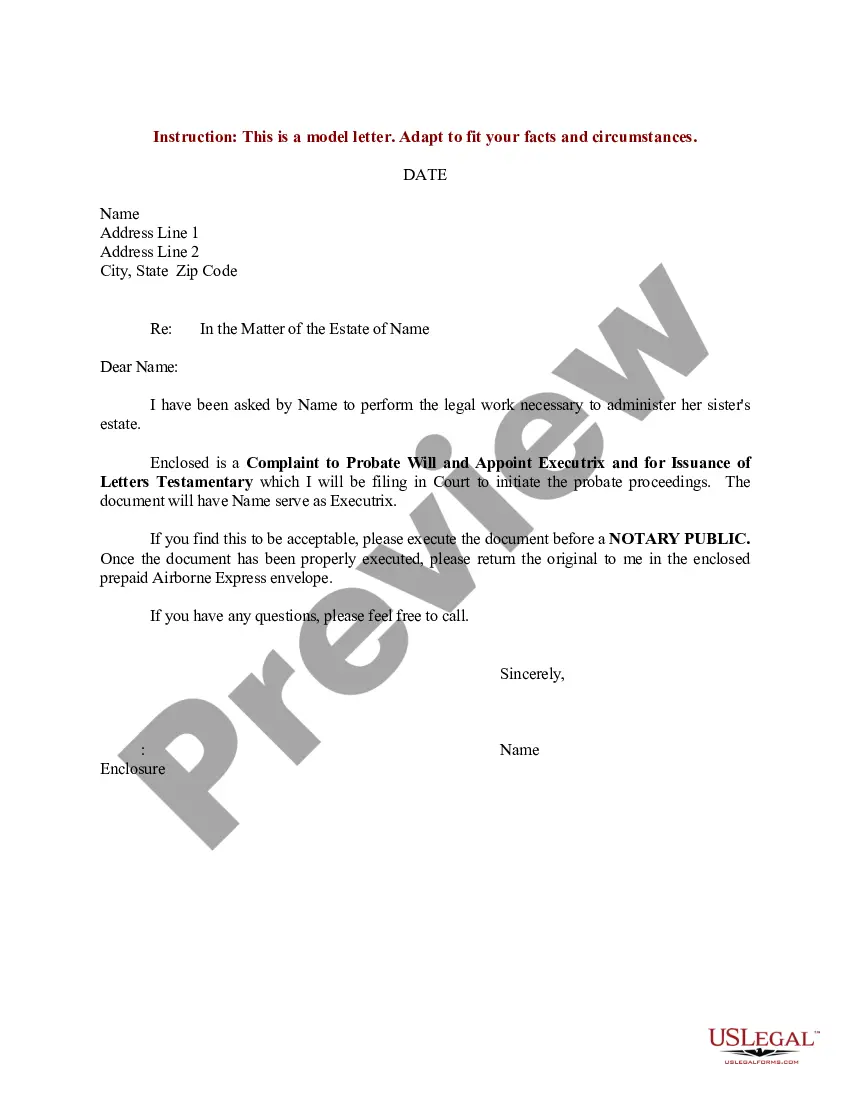
This Sample Letter for Assets and Liabilities of Decedent's Estate is a template designed to assist in outlining the financial details surrounding the estate of a deceased individual. It serves as a formal communication to notify interested parties about the assets and liabilities that need to be addressed. Unlike other estate documents, this letter specifically focuses on conveying information in a clear and concise manner, making it useful for both legal and personal purposes.
What’s included in this form
- Date of the letter
- Addressing information for the recipient
- Details of the decedent's assets
- List of liabilities associated with the estate
- Signature area for formal acknowledgment

Situations where this form applies
This form is typically used when settling the estate of a deceased individual. It is essential for notifying heirs, creditors, and other interested parties about the financial state of the estate. You should consider using this letter when preparing for probate, communicating with family members, or when seeking to clarify the estateâs financial obligations.
Who should use this form
This letter is intended for:
- Executors or administrators of a decedent's estate
- Heirs or beneficiaries of the estate
- Legal representatives managing the estate
- Creditors seeking settlement of debts
Completing this form step by step
- Identify the date when the letter is being drafted.
- Enter the recipientâs full name and address for proper delivery.
- Clearly list all assets belonging to the decedentâs estate.
- Provide a detailed account of any debts or liabilities associated with the estate.
- Sign the letter to formally execute the document.
Does this form need to be notarized?
This form does not typically require notarization unless specified by local law. However, it is advisable to check with local regulations to ensure compliance for estate documentation.
Get your form ready online
Our built-in tools help you complete, sign, share, and store your documents in one place.
Make edits, fill in missing information, and update formatting in US Legal Forms—just like you would in MS Word.
Download a copy, print it, send it by email, or mail it via USPS—whatever works best for your next step.
Sign and collect signatures with our SignNow integration. Send to multiple recipients, set reminders, and more. Go Premium to unlock E-Sign.
If this form requires notarization, complete it online through a secure video call—no need to meet a notary in person or wait for an appointment.
We protect your documents and personal data by following strict security and privacy standards.

Make edits, fill in missing information, and update formatting in US Legal Forms—just like you would in MS Word.

Download a copy, print it, send it by email, or mail it via USPS—whatever works best for your next step.

Sign and collect signatures with our SignNow integration. Send to multiple recipients, set reminders, and more. Go Premium to unlock E-Sign.

If this form requires notarization, complete it online through a secure video call—no need to meet a notary in person or wait for an appointment.

We protect your documents and personal data by following strict security and privacy standards.
Mistakes to watch out for
- Omitting important details about assets or liabilities.
- Failing to accurately address the recipient.
- Not signing the letter, which may invalidate the document.
- Using ambiguous language that could lead to misinterpretation.
Benefits of completing this form online
- Convenient access to a professionally drafted template.
- Easily editable to suit specific estate circumstances.
- Immediate download for quick use during estate administration.
- Reliable format ensures compliance with standard practices.
What to keep in mind
- The Sample Letter for Assets and Liabilities of Decedent's Estate is essential for estate communication.
- Proper completion and delivery of the letter can help avoid misunderstandings among beneficiaries.
- Using this template simplifies the process of informing creditors and others about the estate's financial status.
Looking for another form?
Form popularity
FAQ
An inventory and appraisal is a required filing in California probate. The inventory and appraisal is a single document that (1) inventories the property in the decedent's estate and (2) contains an appraisal of the property in the inventory. California Probate Code § 8800(a).
Your inventory should include the number of shares of each type of stock, the name of the corporation, and the name of the exchange on which the stock is traded. Meanwhile, you should note the total gross amount of a bond, the name of the entity that issued it, the interest rate on the bond, and its maturity date.
Determine Your State's Laws Regarding Inventory Forms. Review the Instructions Provided. Identify Real Property. Identify Personal Property. Identify Bank Accounts. Identify Retirement Accounts. Identify Non-Probate Assets. File the Form With the Court.
The first step in probating an estate is to locate all of the decedent's estate planning documents and other important papers, even before being appointed to serve as the personal representative or executor.
When calculating the value of an estate, the gross value is the sum of all asset values, and the net value is the gross value minus any debts: in other words, the actual worth of the estate.
Letters of Office (also called Letters Testamentary) issued to appointed executor when the executor is designated under a valid Will; Letters of Administration issued to administrator when the decedent died without a valid Will (intestate estate); or.
When calculating the value of an estate, the gross value is the sum of all asset values, and the net value is the gross value minus any debts: in other words, the actual worth of the estate.
Sometimes an owner dies and his or her heirs fail to claim assets left to them because they don't know about the inheritance. To search for these assets, go to www.missingmoney.com, which you can also reach by typing www.unclaimed.org and clicking on the MissingMoney.com link.