Motion To Seal Juvenile Records
Understanding this form
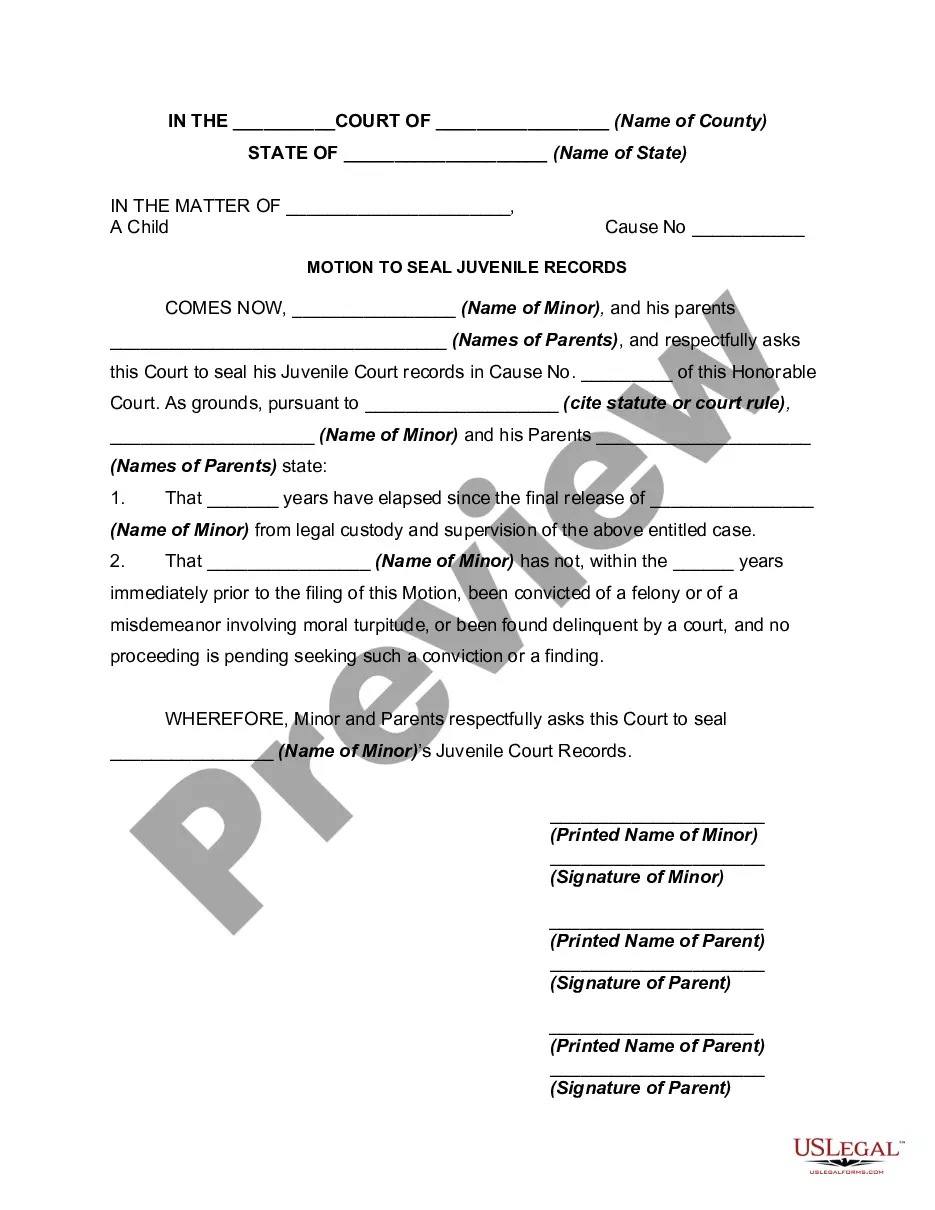
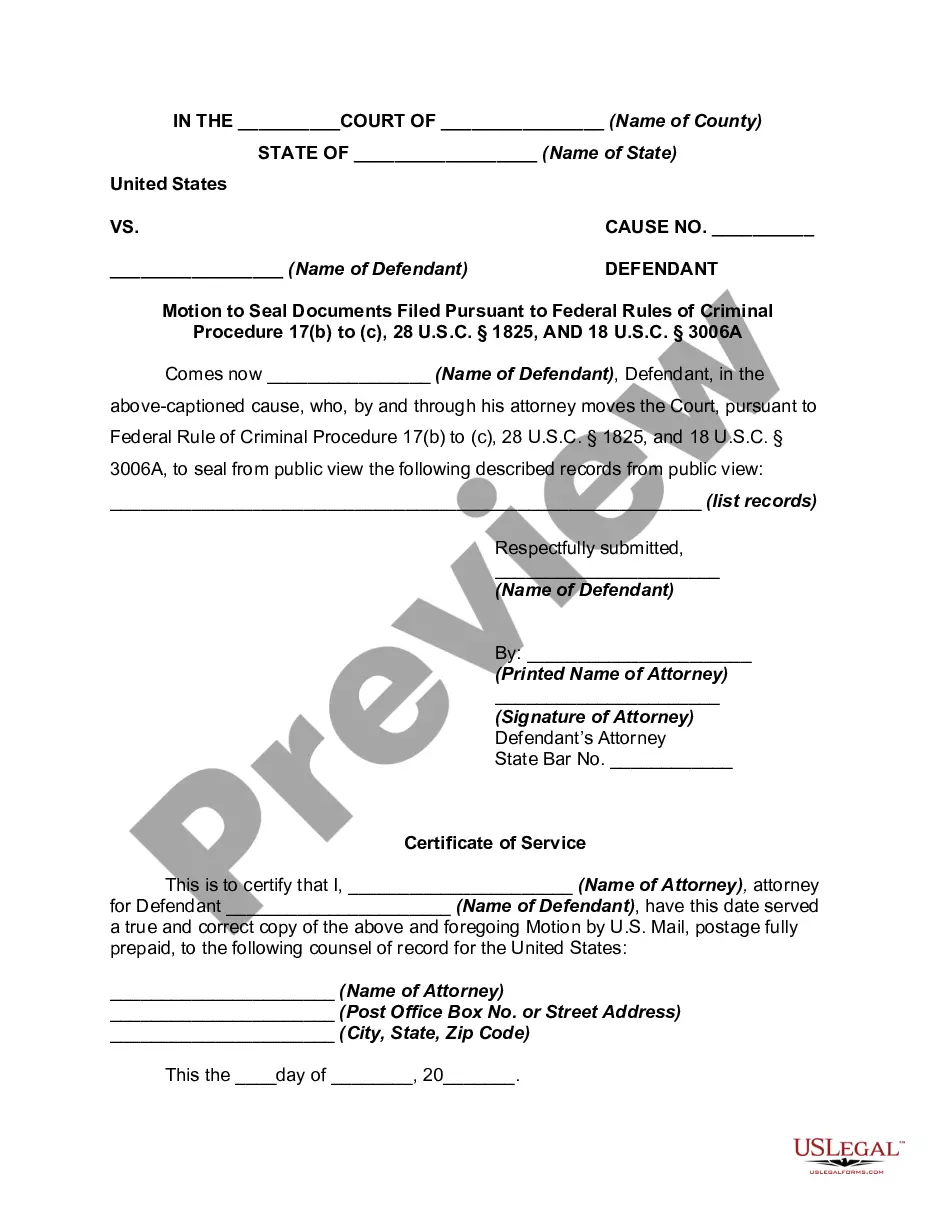
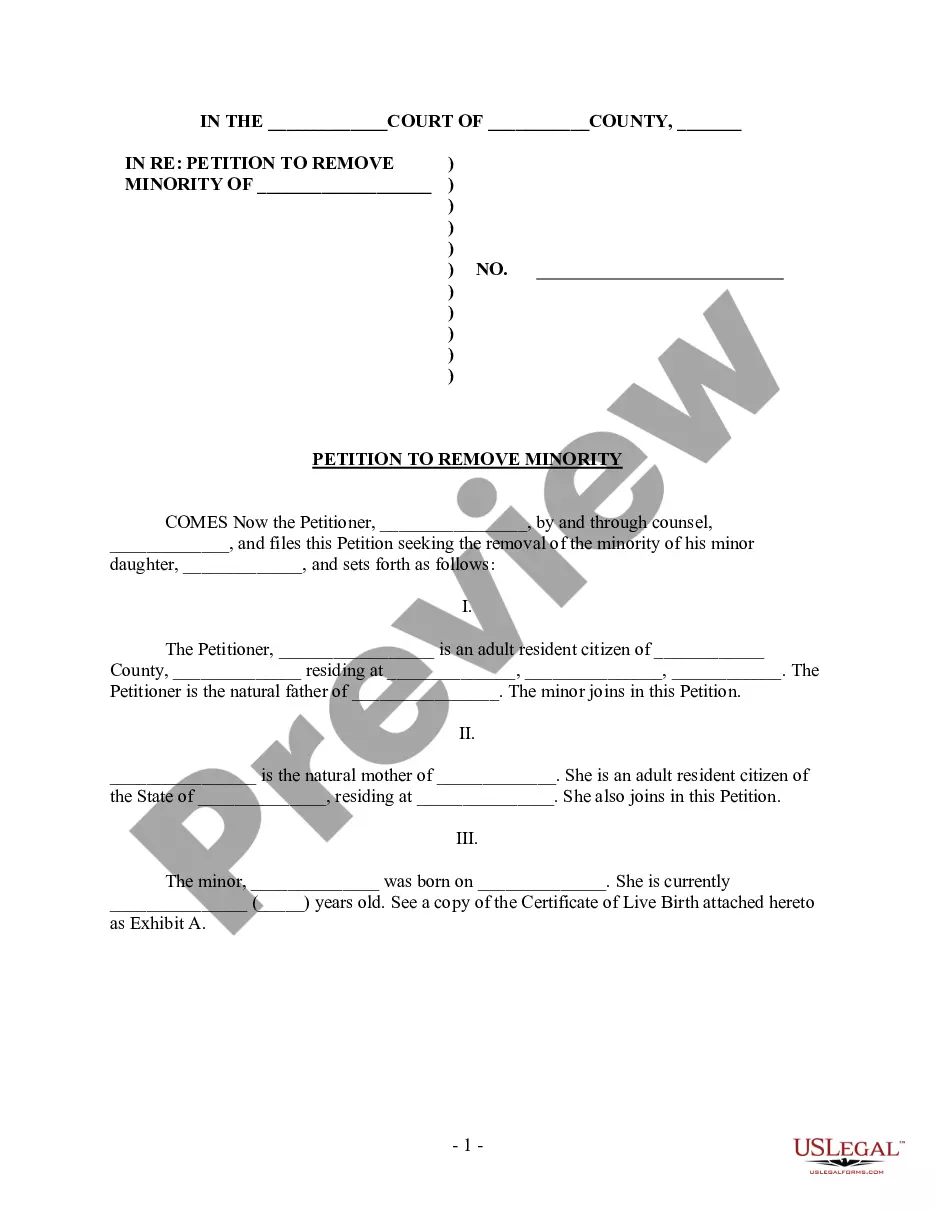
A Motion to Seal Juvenile Records is a formal legal request submitted to a court to prevent the public from accessing certain court records related to a minor. This motion is typically initiated by a licensed attorney, but in some jurisdictions, private citizens can file it directly with the court. This form specifically addresses situations where the release of juvenile records could harm the welfare of the minor involved, distinguishing it from other sealing motions which might not pertain specifically to juvenile cases.
What’s included in this form
- Name of the minor and parents submitting the motion
- Details of the case, including cause number
- Citation of relevant statutes or court rules
- Grounds for sealing the records, including time elapsed since custody and any criminal history
- Signatures of the minor and parents
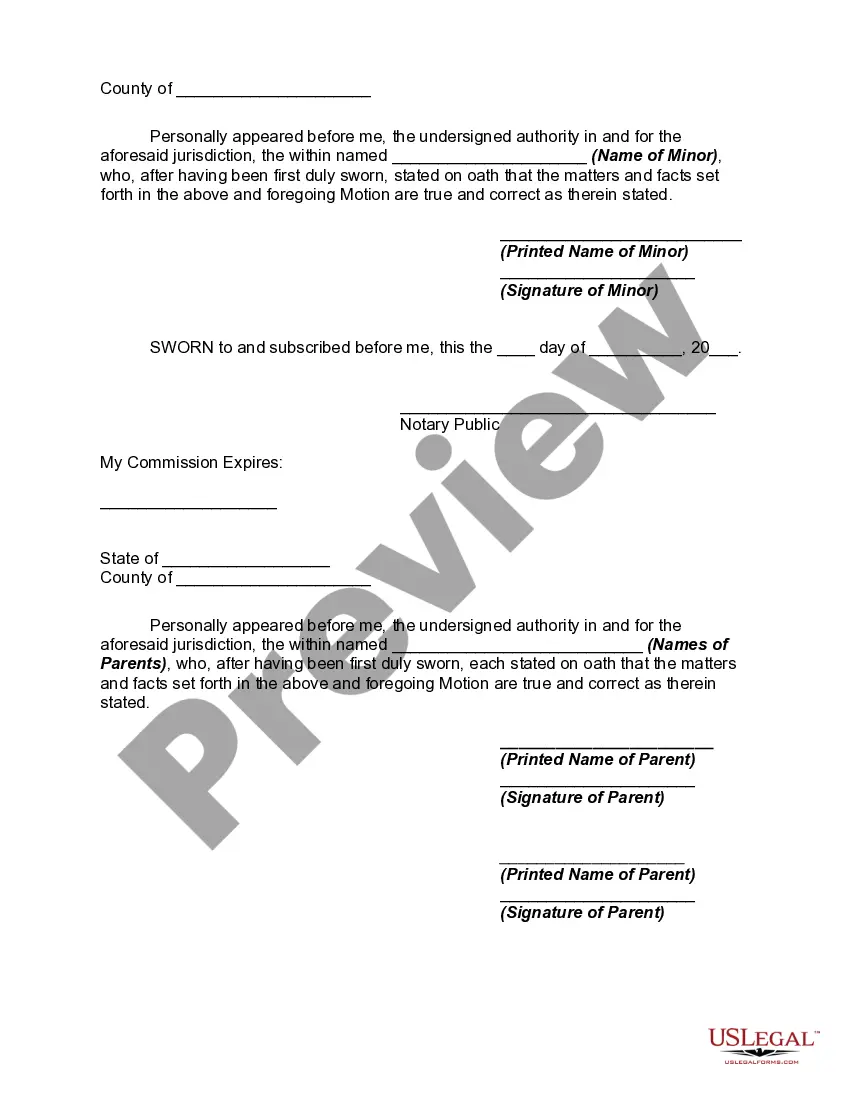
- Notary acknowledgment for validation

Common use cases
This form is used when a minor seeks to have their juvenile court records sealed. Common scenarios include instances where the minor has successfully completed legal supervision, has demonstrated good conduct, and wishes to prevent potential negative consequences of having those records available to the public. Such situations may arise after the conclusion of a case, provided the minor has not been involved in any further criminal activity.
Who should use this form
- Minors who have been adjudicated in juvenile court
- Parents or legal guardians of minors seeking to protect their child's privacy
- Individuals who want to ensure that their past juvenile records do not adversely affect their future opportunities
How to prepare this document
- Enter the name of the minor and their parents in the designated fields.
- Provide the cause number associated with the juvenile case.
- Cite the relevant statute or court rule that allows for sealing the records.
- Fill in the required grounds for sealing, ensuring all conditions are met.
- Collect signatures from both the minor and their parents.
- Arrange for notarization of the completed document.
Notarization requirements for this form
Notarization is required for this form to take effect. Our online notarization service, powered by Notarize, lets you verify and sign documents remotely through an encrypted video session, available 24/7.
Get your form ready online
Our built-in tools help you complete, sign, share, and store your documents in one place.
Make edits, fill in missing information, and update formatting in US Legal Forms—just like you would in MS Word.
Download a copy, print it, send it by email, or mail it via USPS—whatever works best for your next step.
Sign and collect signatures with our SignNow integration. Send to multiple recipients, set reminders, and more. Go Premium to unlock E-Sign.
If this form requires notarization, complete it online through a secure video call—no need to meet a notary in person or wait for an appointment.
We protect your documents and personal data by following strict security and privacy standards.
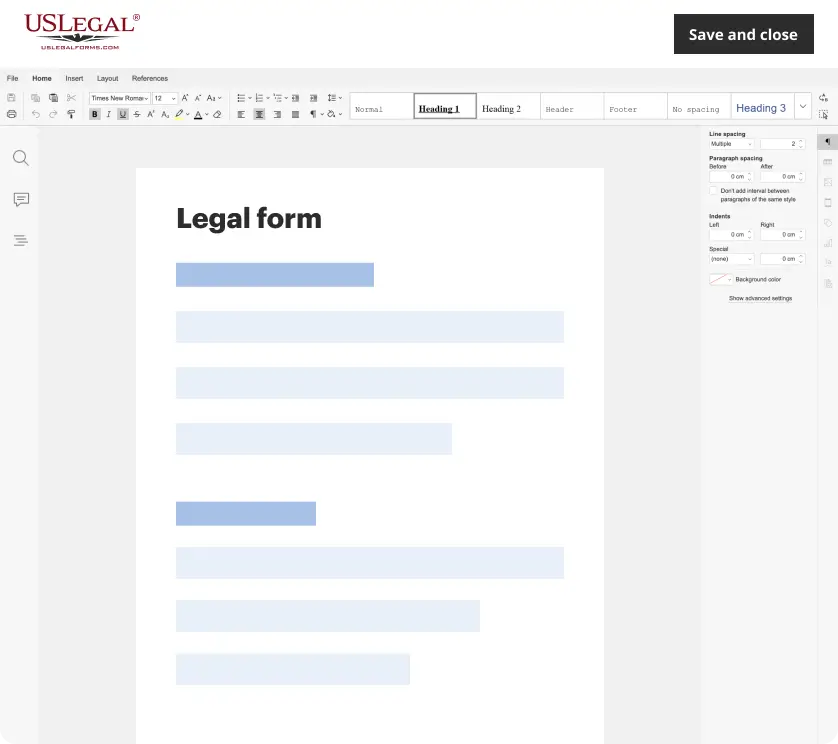
Make edits, fill in missing information, and update formatting in US Legal Forms—just like you would in MS Word.
Download a copy, print it, send it by email, or mail it via USPS—whatever works best for your next step.
Sign and collect signatures with our SignNow integration. Send to multiple recipients, set reminders, and more. Go Premium to unlock E-Sign.

If this form requires notarization, complete it online through a secure video call—no need to meet a notary in person or wait for an appointment.
We protect your documents and personal data by following strict security and privacy standards.
Typical mistakes to avoid
- Failing to include the correct cause number or case details.
- Not allowing sufficient time to pass since the case closed before filing the motion.
- Missing signatures from both the minor and parent(s).
- Not providing the necessary citations to statutes or court rules.
- Neglecting to have the form notarized when required.
Why complete this form online
- Convenience of filling out the form at your own pace from home.
- Access to templates that are compliant with current legal standards.
- Immediate download options for quick filing.
- Editable formats that allow for tailoring to specific circumstances.
Main things to remember
- A Motion to Seal Juvenile Records protects minors from public access to their legal history.
- Eligibility typically requires good conduct and the passage of time since the completion of juvenile matters.
- Proper completion involves attention to detail and adherence to local regulations.
Looking for another form?



Form popularity
FAQ
How Long Does a Youth Record Last?Once the access period ends, youth records are sealed and/or destroyed. However, if someone over the age of 18 with an open youth record commits another crime, the youth record will become part of that person's adult record.
Yes. Having a juvenile record can stand in the way of enlisting in the military. Because the branches of the mili- tary are federal agencies they are allowed to apply their own rules and regulations, which may be different from state law. The military can see your juvenile record even if you got it expunged.
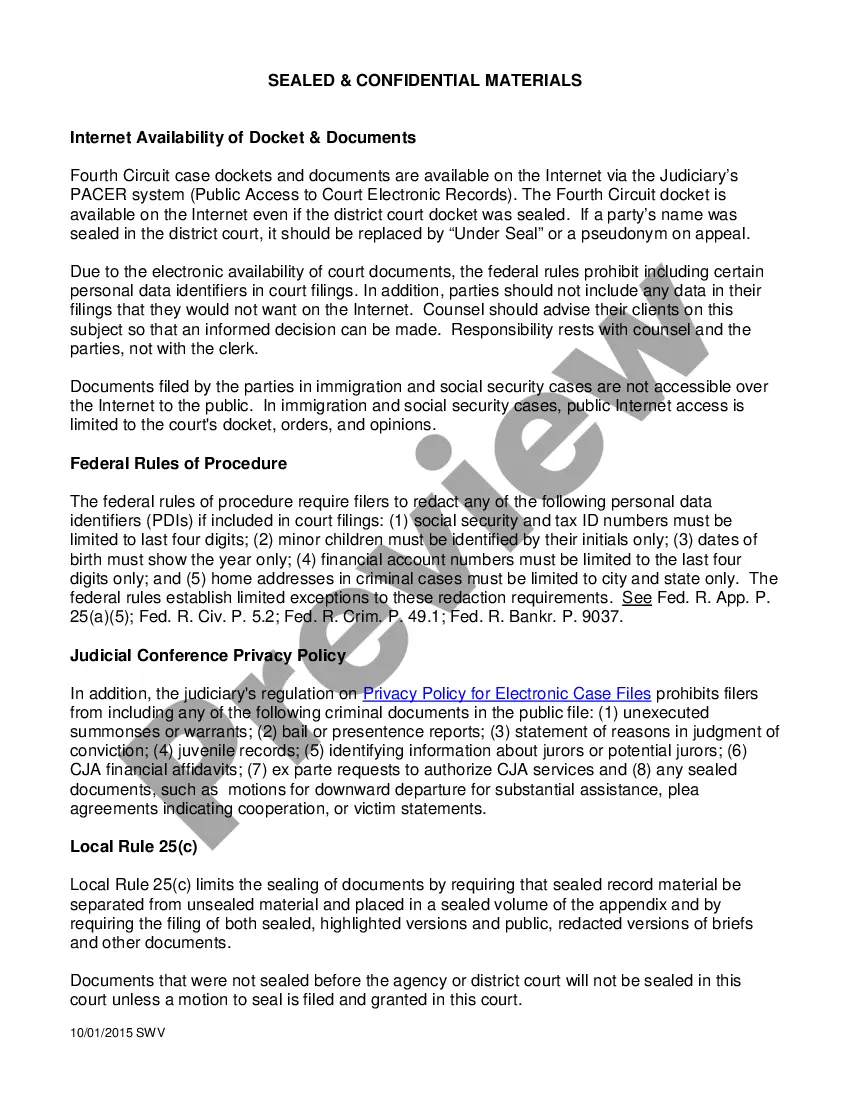
Sealing your juvenile criminal record will prevent prospective employers, state licensing agencies, lenders, landlords, and school officials from discriminating against you because of mistakes you made when you were young.
Age. The person seeking the sealing must be an adult. When the offense was committed. Often, a juvenile record cannot be sealed until some period of time has passed. Type of juvenile offense. Subsequent arrests or convictions. File a petition. Pay a fee.
No, there is no way to seal the records and at this point, there is no way to get your federal gun rights back.
For juvenile adjudications, court records are automatically sealed at the end of the juvenile case. An expunged juvenile record is completely destroyed and removed from the juvenile records system.Expunged juvenile records are completely destroyed and treated as though they never existed.
The military can see your juvenile record even if you got it expunged. The military requires moral fitness of its soldiers. Having certain juvenile adjudications on your record may lead to the military concluding that you are not morally fit for enlistment based on their regulations.
Sealed records still exist but are not reported on background checks. They can be accessed by court order but are no longer part of the public record. Due to these factors, a background check that looks for records at a specific court house, should not be able to retrieve sealed or expunged records.