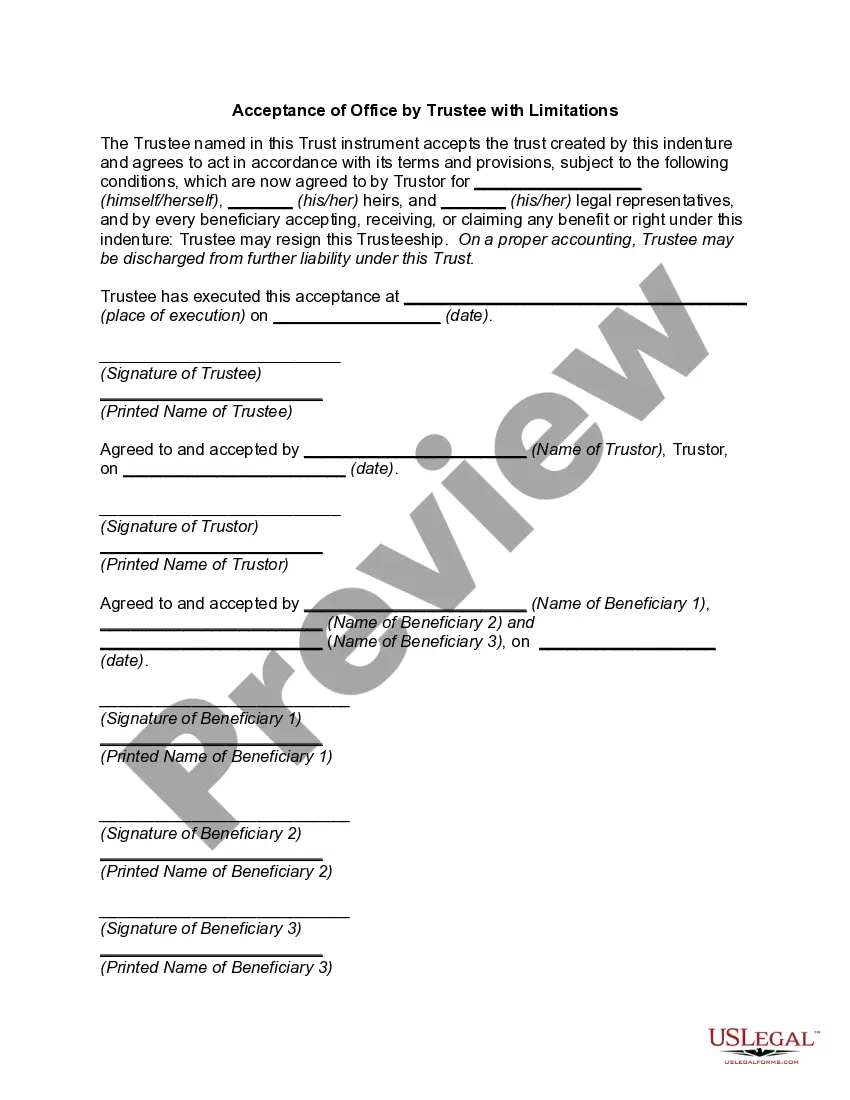
Acceptance of Office by Trustee with Limitations
About this form
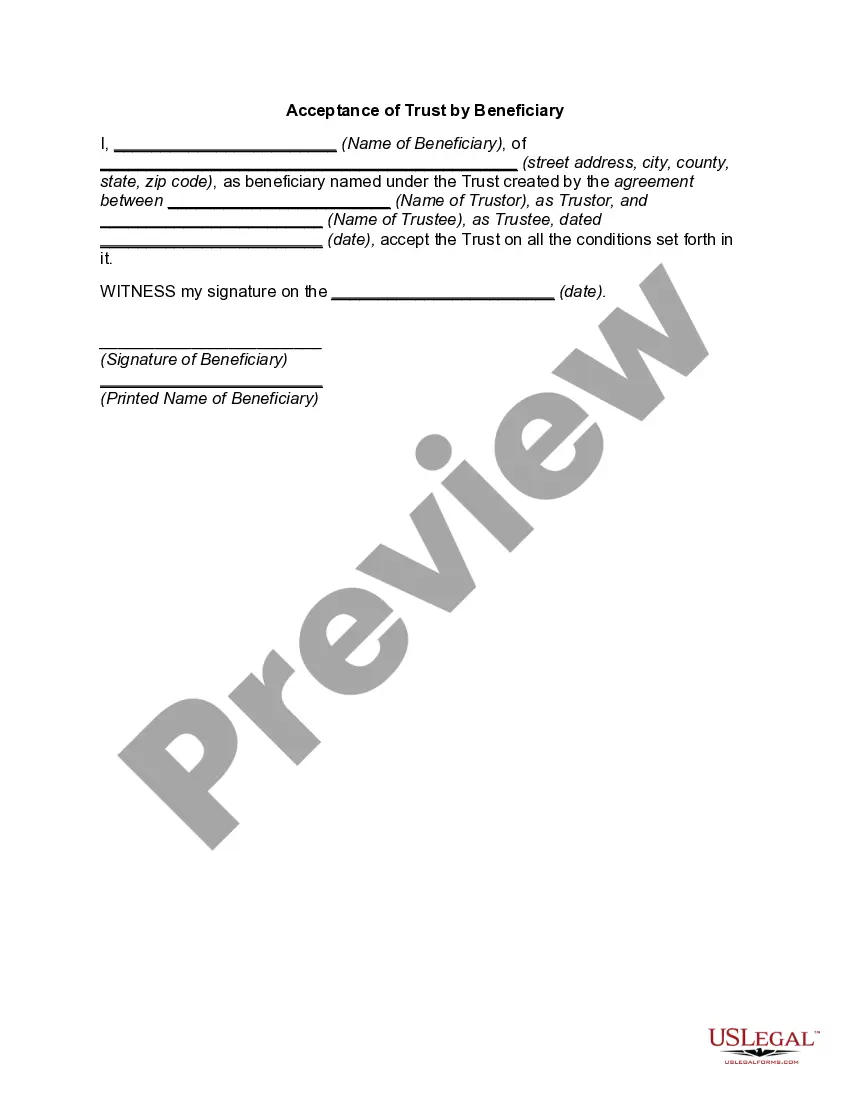
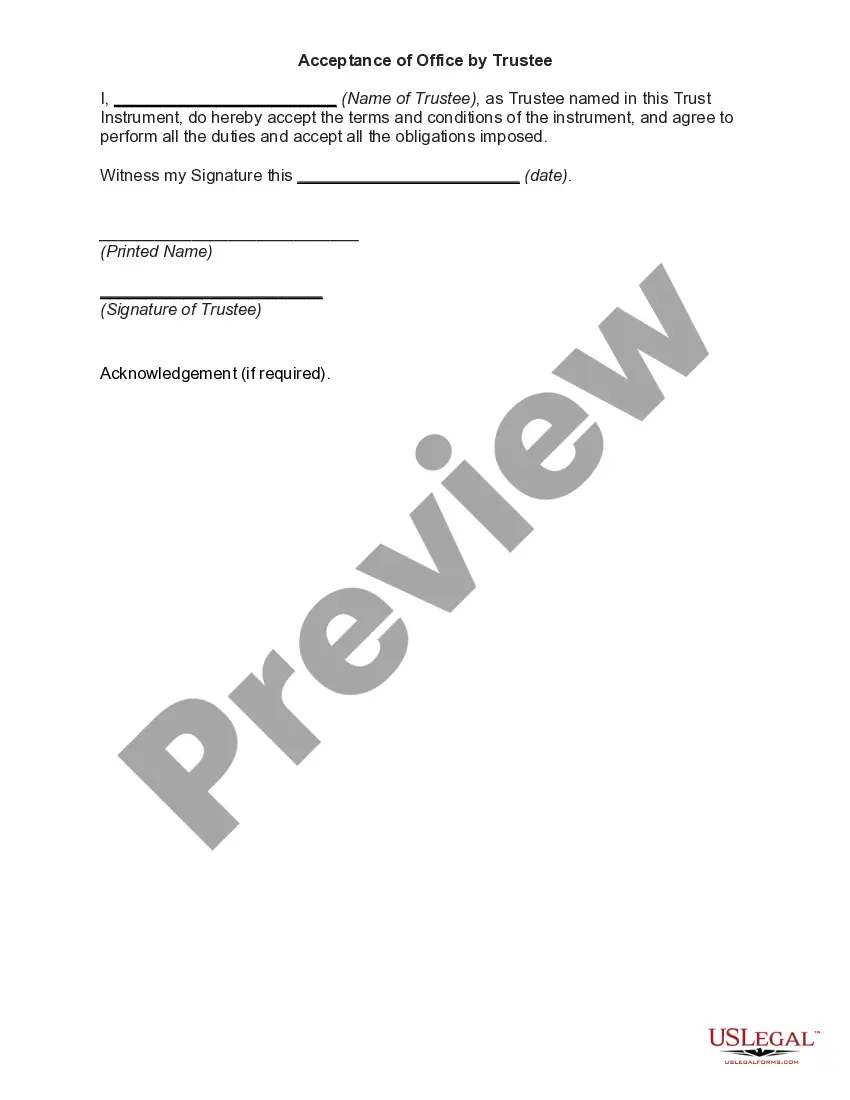
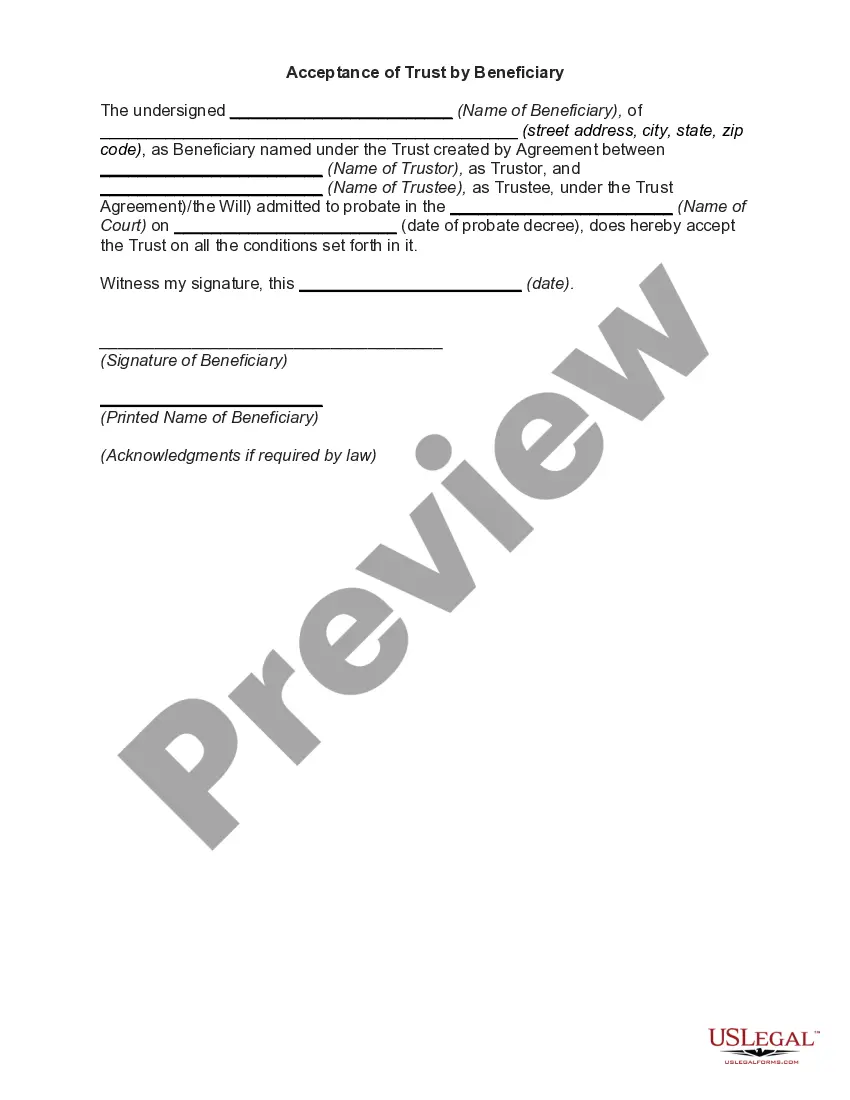
The Acceptance of Office by Trustee with Limitations is a legal document that formalizes the acceptance of a trust by the designated trustee. While an acceptance is not required for the validity of the trust itself, it is necessary for the trustee to assume the responsibilities and liabilities associated with managing the trust. This form serves to clarify the terms under which the trustee agrees to act, including any limitations on their authority and the process for resignation.
Main sections of this form
- Identification of the trustee, trustor, and beneficiaries.
- Acceptance of the trust with agreed-upon limitations.
- Conditions under which the trustee may resign from their role.
- Provision for discharge from liability following a proper accounting.
- Signatures and printed names of all parties involved.
When to use this document
This form is used when a person has been designated as a trustee in a trust document and wishes to formally accept the role while specifying any limitations on their responsibilities. It is also appropriate to use when the trustor and beneficiaries need to acknowledge the trustee's acceptance and the conditions associated with it. This is particularly important for establishing clear expectations and legal protections for all parties involved in the trust arrangement.
Intended users of this form
Eligibility
- Individuals designated as trustees in a trust document.
- Trustors who are creating or managing a trust.
- Beneficiaries who receive benefits or rights under the trust instrument.
How to complete this form
- Identify the trustee and include their name and signature.
- Provide the name of the trustor and their acceptance signature.
- List the names of the beneficiaries along with their signatures.
- Specify the date and place of execution for the acceptance.
- Ensure all parties have printed their names clearly alongside their signatures.
Notarization requirements for this form
In most cases, this form does not require notarization. However, some jurisdictions or signing circumstances might. US Legal Forms offers online notarization powered by Notarize, accessible 24/7 for a quick, remote process.
Get your form ready online
Our built-in tools help you complete, sign, share, and store your documents in one place.
Make edits, fill in missing information, and update formatting in US Legal Forms—just like you would in MS Word.
Download a copy, print it, send it by email, or mail it via USPS—whatever works best for your next step.
Sign and collect signatures with our SignNow integration. Send to multiple recipients, set reminders, and more. Go Premium to unlock E-Sign.
If this form requires notarization, complete it online through a secure video call—no need to meet a notary in person or wait for an appointment.
We protect your documents and personal data by following strict security and privacy standards.

Make edits, fill in missing information, and update formatting in US Legal Forms—just like you would in MS Word.

Download a copy, print it, send it by email, or mail it via USPS—whatever works best for your next step.

Sign and collect signatures with our SignNow integration. Send to multiple recipients, set reminders, and more. Go Premium to unlock E-Sign.

If this form requires notarization, complete it online through a secure video call—no need to meet a notary in person or wait for an appointment.

We protect your documents and personal data by following strict security and privacy standards.
Common mistakes
- Failing to include all required signatures from the trustor and beneficiaries.
- Neglecting to specify any limitations clearly, which can lead to misunderstandings.
- Not dating the form, which may complicate legal interpretations.
Benefits of completing this form online
- Convenience of downloading and filling out the form at your own pace.
- Editability allows for easy changes before finalizing the document.
- Access to professionally drafted legal language ensures reliability and clarity.
Legal use & context
- Acceptance by the trustee creates a legal obligation to manage the trust responsibly.
- Failure to fulfill the duties may expose the trustee to legal consequences.
- The form clarifies the terms of acceptance, protecting the interests of all parties involved.
Main things to remember
- The Acceptance of Office by Trustee with Limitations formalizes the trustee's role in managing a trust.
- Removing ambiguities about responsibilities protects both the trustee and the beneficiaries.
- Clear documentation is essential to prevent disputes regarding the management of the trust.
Looking for another form?
Form popularity
FAQ
An acceptance of office by a trustee is the mutual understanding that a person has with an estate that implies they will assume administrative duties after being nominated. Acceptance of office by trustee is basically a formal way of giving consent to serve as a trustee.
While trusts are highly structured, they do not protect your assets from creditors seeking restitution. In fact, creditors can file a claim against the beneficiaries of the estate should they learn of the person's passing.
A trustee can end up having to pay taxes out of their own personal funds if they fail to take action on behalf of the estate in a timely way. Of course, they can also face criminal liability for such crimes as taking money out of a trust to pay for their own kids' college tuition.
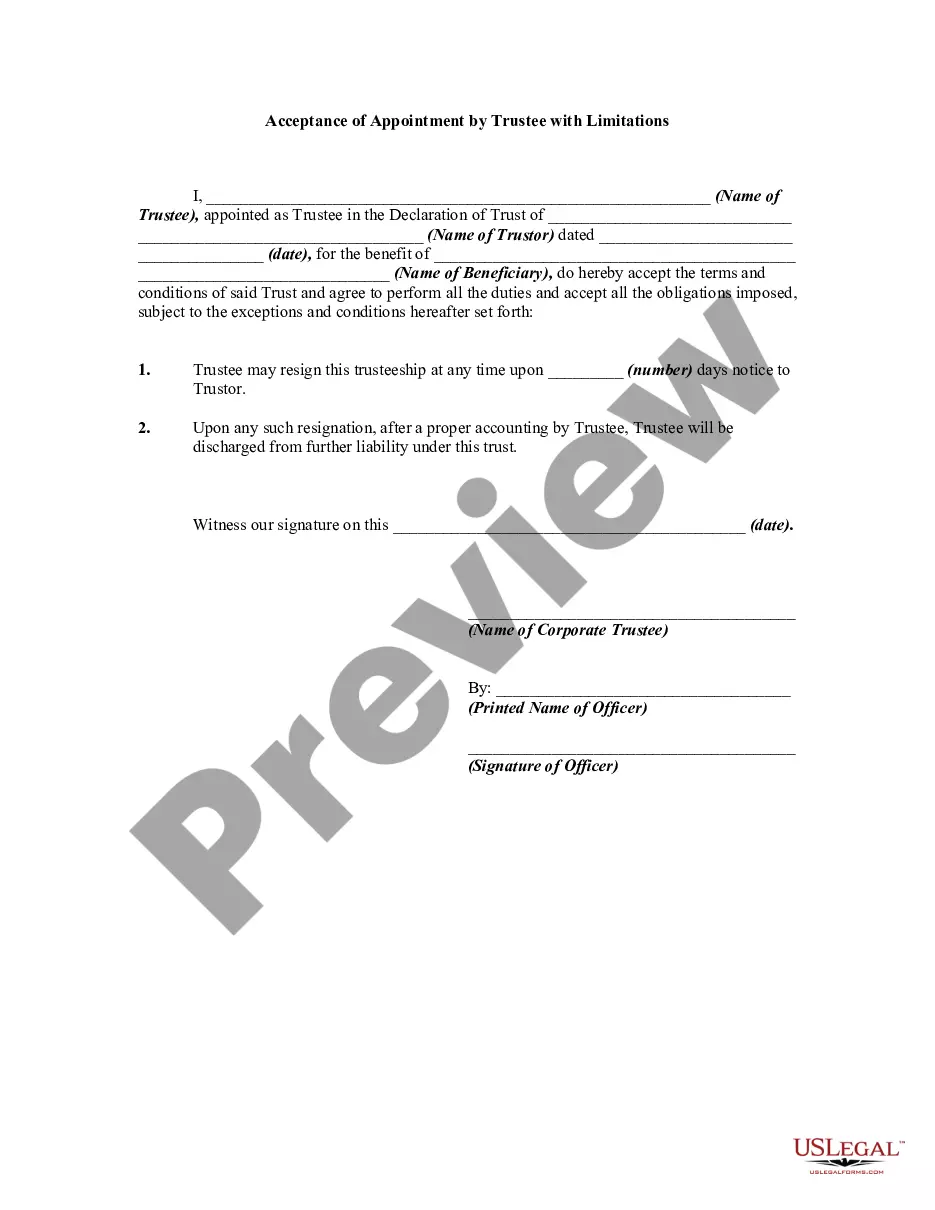
Limitation of liability clauses a trustee is entering into a contract in its capacity as the trustee of the trust; and. a trustee's liabilities under the contract will be limited to the property which the trustee holds on trust for the beneficiaries of its trust.
His or her three primary jobs include investment, administration, and distribution. A trustee is personally liable for a breach of his or her fiduciary duties. The trustee's fiduciary duties include a duty of loyalty, a duty of prudence, and subsidiary duties.
What assets cannot be placed in a trust? Retirement assets. While you can transfer ownership of your retirement accounts into your trust, estate planning experts usually don't recommend it.Health savings accounts (HSAs)Assets held in other countries.Vehicles.Cash.
Can a Beneficiary Override a Trustee? No, beneficiaries generally cannot override a trustee unless the trustee fails to follow the terms of the trust instrument or breaches their fiduciary duty.
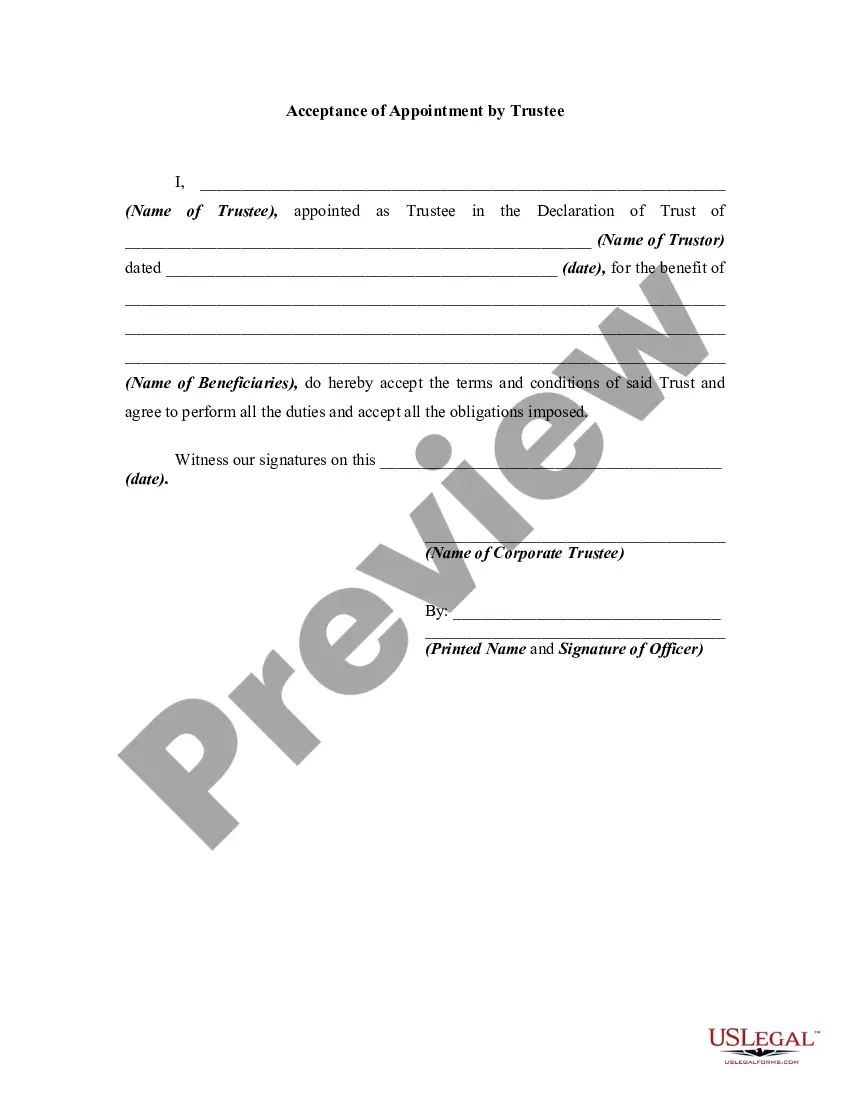
A document used to accept an appointment as trustee of a revocable or irrevocable inter vivos trust or a testamentary trust in Florida.