Sample Letter for Complaint to Close Estate - Itemization
Overview of this form
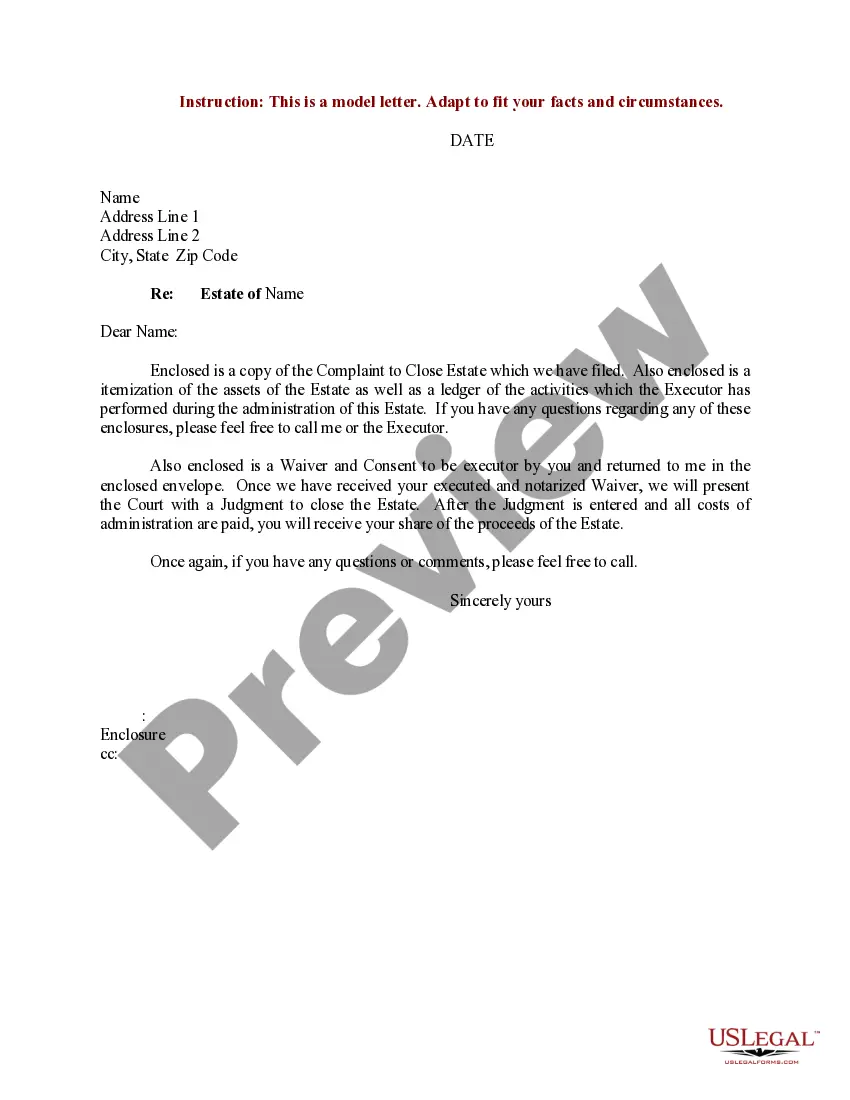
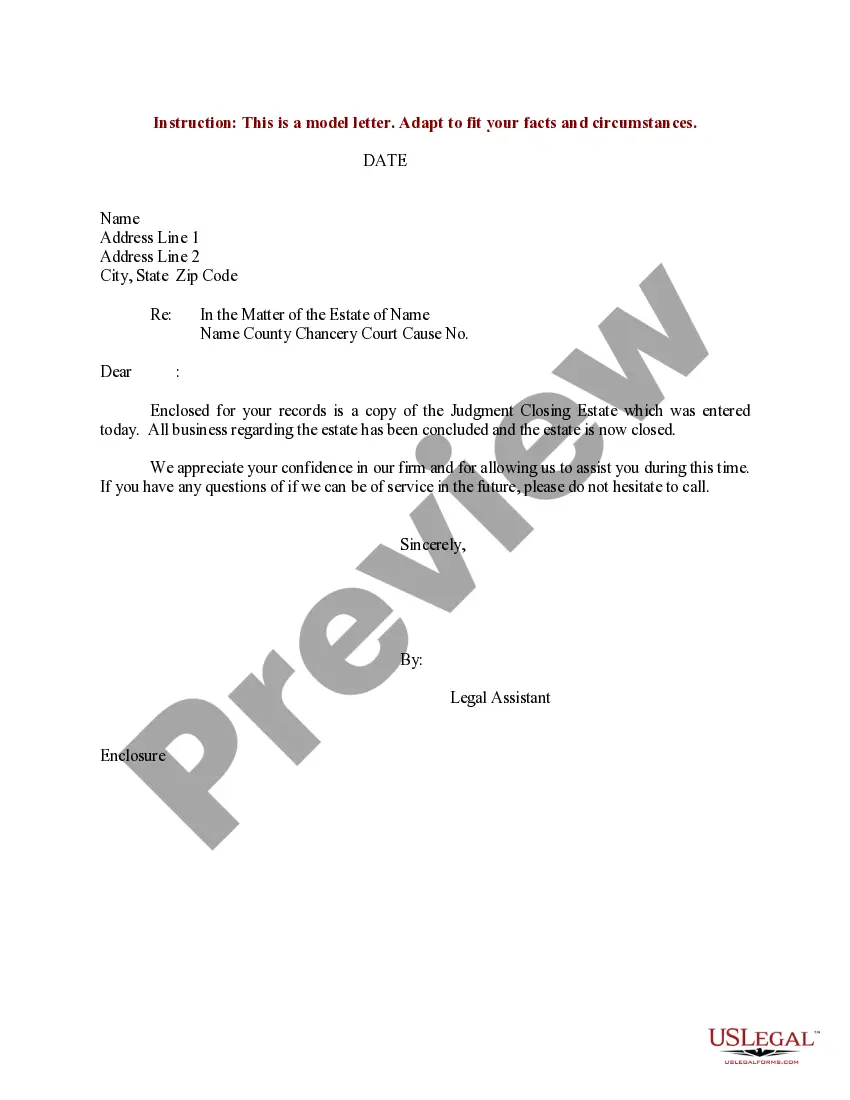
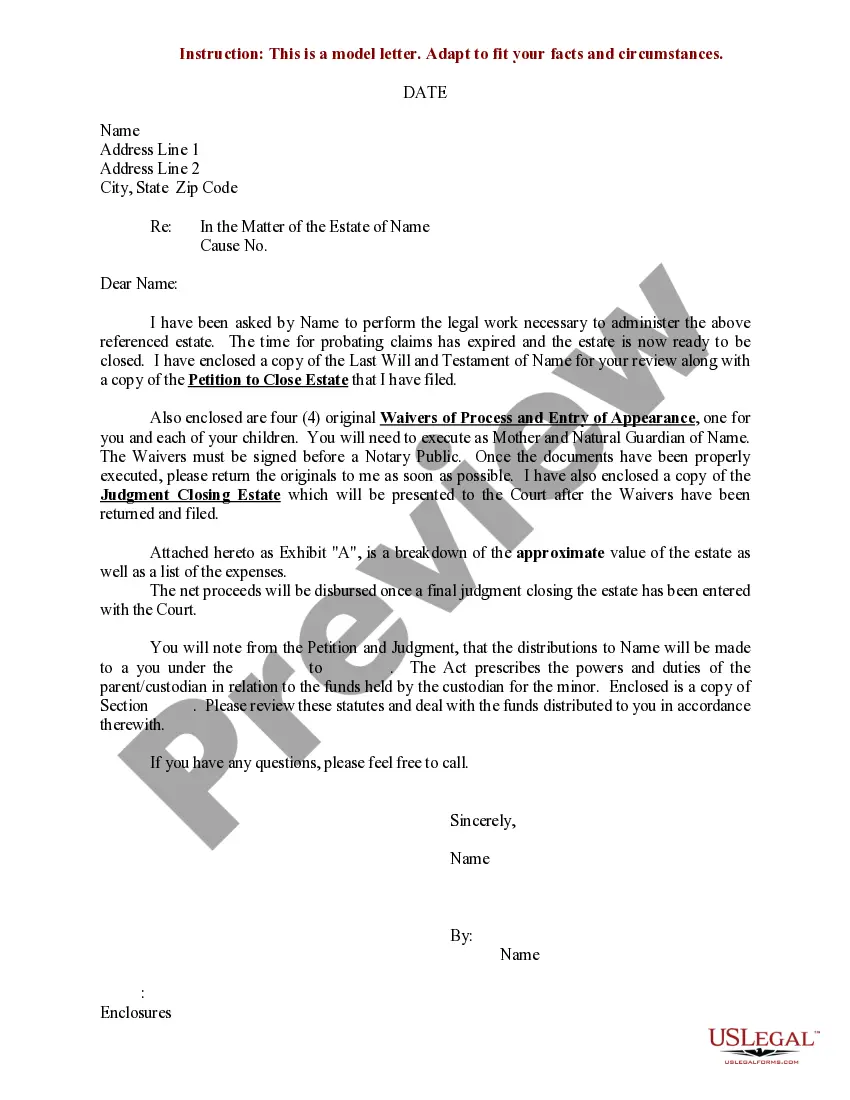
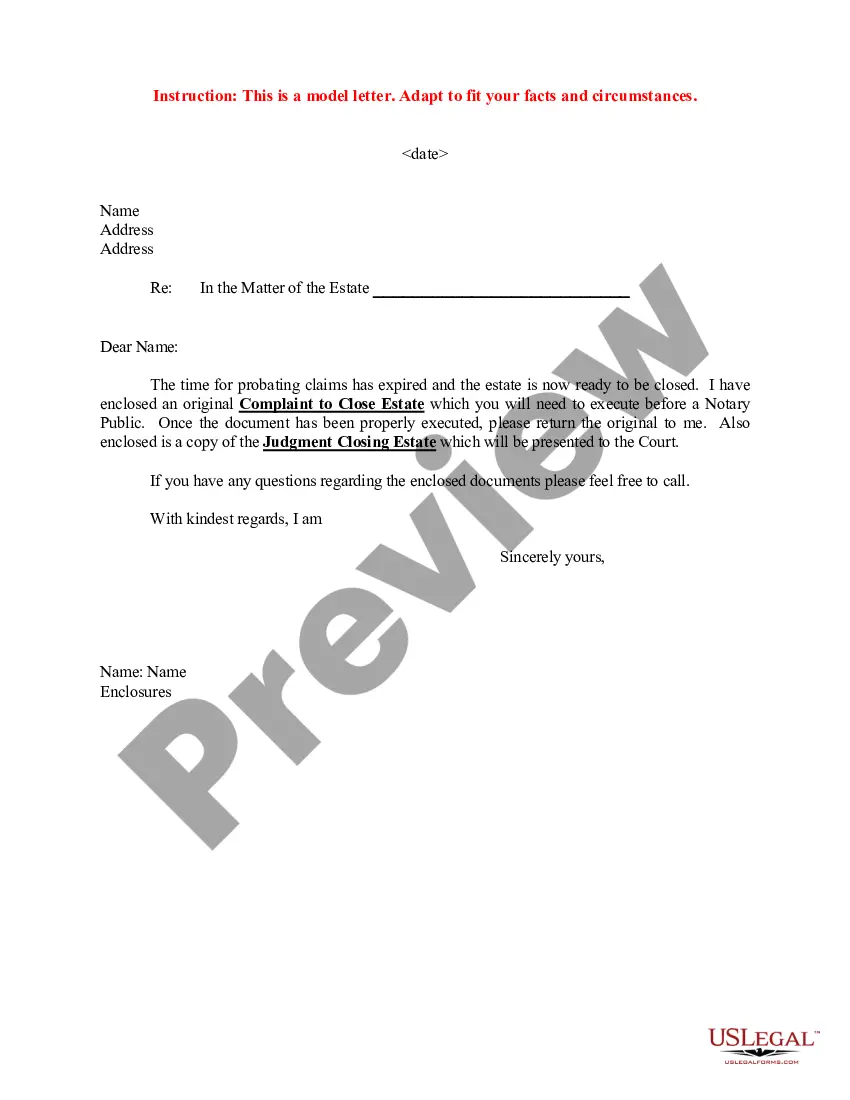
The Sample Letter for Complaint to Close Estate - Itemization is a legal document used to communicate the status of an estate closure to interested parties. It serves as a formal notification and includes an itemization of assets and a ledger detailing actions taken by the Executor. This letter is distinct from other estate forms as it emphasizes communication regarding the estate's closure and the associated financial details, ensuring transparency and compliance with legal requirements.
Form components explained
- Date of the letter.
- Sender's name and contact information.
- Recipient's name and address.
- Reference to the specific estate in question.
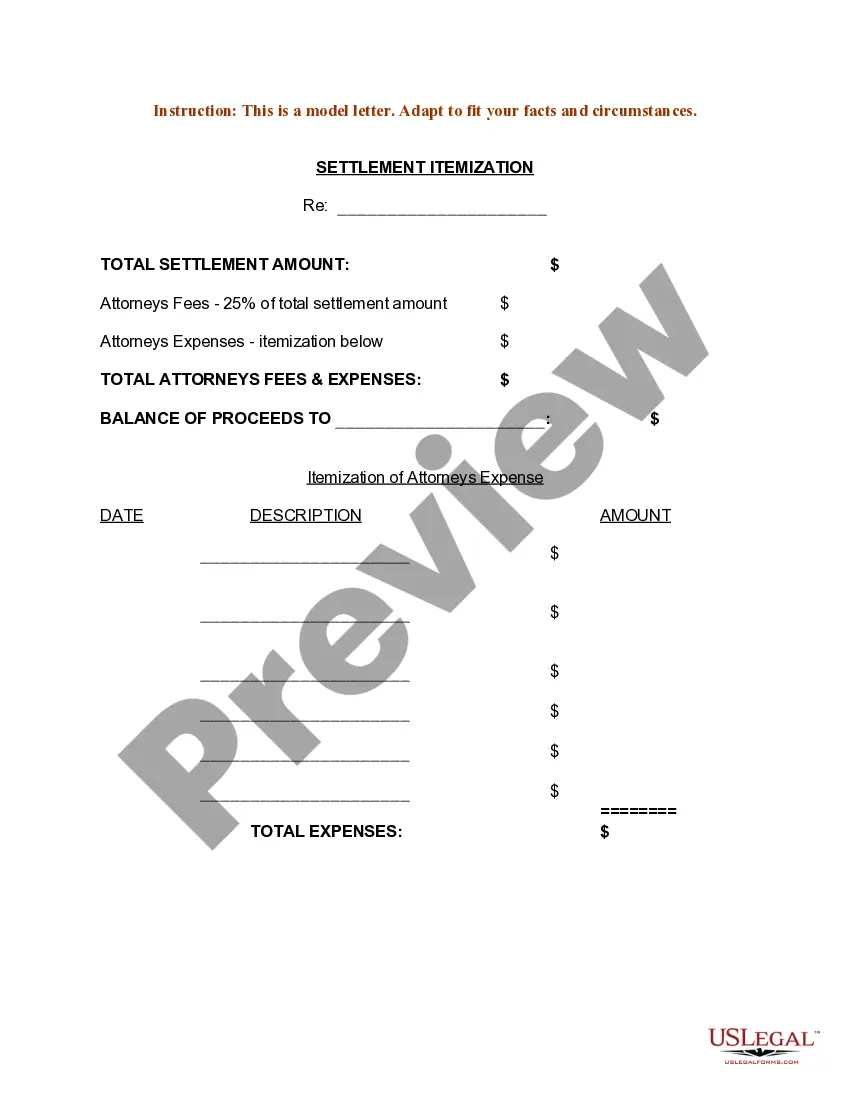
- Enclosures, including the Complaint to Close the Estate and the itemization of assets.
- Contact details for the Executor and additional counsel.
When this form is needed
This form is typically used when an estate is nearing closure and the Executor needs to provide an update to beneficiaries or interested parties. It is essential in scenarios where the administration process has been completed, and all assets have been accounted for. Using this letter can help maintain clear communication and ensure that all parties are informed about the estate's financial status.
Intended users of this form
- Executors of an estate responsible for finalizing estate matters.
- Beneficiaries seeking updates on the estate closure process.
- Legal representatives assisting with estate administration.
- Estate administrators needing a formal template to communicate with interested parties.
How to complete this form
- Fill in the date at the top of the letter.
- Include your name and address in the sender section.
- Enter the recipient's name and address accurately.
- Reference the estate's name in the subject line of the letter.
- Attach the Complaint to Close Estate and the itemization of assets as enclosures.
- Provide your contact information along with that of the Executor.
Notarization guidance
Notarization is not commonly needed for this form. However, certain documents or local rules may make it necessary. Our notarization service, powered by Notarize, allows you to finalize it securely online anytime, day or night.
Get your form ready online
Our built-in tools help you complete, sign, share, and store your documents in one place.
Make edits, fill in missing information, and update formatting in US Legal Forms—just like you would in MS Word.
Download a copy, print it, send it by email, or mail it via USPS—whatever works best for your next step.
Sign and collect signatures with our SignNow integration. Send to multiple recipients, set reminders, and more. Go Premium to unlock E-Sign.
If this form requires notarization, complete it online through a secure video call—no need to meet a notary in person or wait for an appointment.
We protect your documents and personal data by following strict security and privacy standards.

Make edits, fill in missing information, and update formatting in US Legal Forms—just like you would in MS Word.

Download a copy, print it, send it by email, or mail it via USPS—whatever works best for your next step.

Sign and collect signatures with our SignNow integration. Send to multiple recipients, set reminders, and more. Go Premium to unlock E-Sign.

If this form requires notarization, complete it online through a secure video call—no need to meet a notary in person or wait for an appointment.

We protect your documents and personal data by following strict security and privacy standards.
Avoid these common issues
- Not including complete contact information for both the sender and the recipient.
- Failing to attach necessary documents like the itemization of assets.
- Omitting the specific estate name or reference in the subject line.
- Sending the letter without proofreading for errors or clarity.
Why use this form online
- Convenient downloading in Word format for easy editing.
- Templates are drafted by licensed attorneys for legal accuracy.
- Reduces time and effort compared to creating documents from scratch.
- Instant access to the most current legal language and format.
Looking for another form?
Form popularity
FAQ
Ask for a refund in a polite and formal language. Include details about the productwhat was purchased, when, and what the price was. Explain why you want to return the item. Mention relevant aspects of the transaction such as dates and place of delivery.
It is important to underline the subject. Short introduction paragraph- Provide details about the product or service that is the subject of the complaint. Include dates, location, and the specifications about the item or service. State the issue with item or service.
Identify Your Complaint. Clarify your reason for making a complaint against your boss. Collect Evidence. The next step is to collect evidence. Find Help. Next, identify who is most likely to be able to help you. Ask for a Meeting. Request a private meeting to register your complaints. Other Considerations.
Rule 1: Know what you want to achieve. Rule 2: Threaten the company's reputation. Rule 3: Aim high and get personal. Rule 4: Write or go in person, don't phone. Rule 5: Use social media, especially if you don't get an immediate response. Rule 6: Expect the unexpected. Rule 7: Rule 8:
Your complaint must contain a caption (or heading) that includes the name of the court and county, the parties to the case (and their designation, like plaintiff or defendant), the case number (if you have one), and the title of the document.
Start by apologising for writing directly to the CEO, but say that you think they need to know about the problem. Include all the facts. Give a full but concise history. Reference numbers, dates and names of people you've dealt with are all very good things to include.
Identify exactly the kind of workplace harassment that took place. Write down the details about the harassment. Introduce yourself and your purpose. Present the facts of the harassment. Explain in great detail how you responded.
I would like to place a formal complaint against my manager, first & last name of manager. It has become increasingly difficult for me to remain happy/productive in my present position because of the negativity from my manager. No matter how well I perform in my job, I feel he/she never recognizes me.
An effective complaint often has three steps: explaining the problem; stating your feelings; and asking for action. The first step is to explain the problem. To do it effectively, you must use polite, respectful language. In English, polite language is usually indirect.
The definition of a complaint is an expression of, or the cause of, pain, anger, discontent, regret or annoyance. An example of complaint is a statement about how poorly a certain shop runs its business. An example of complaint is a major fault in a chain restaurant.