Offer to Purchase Goodwill and Right to use Name and Trademark
Overview of this form
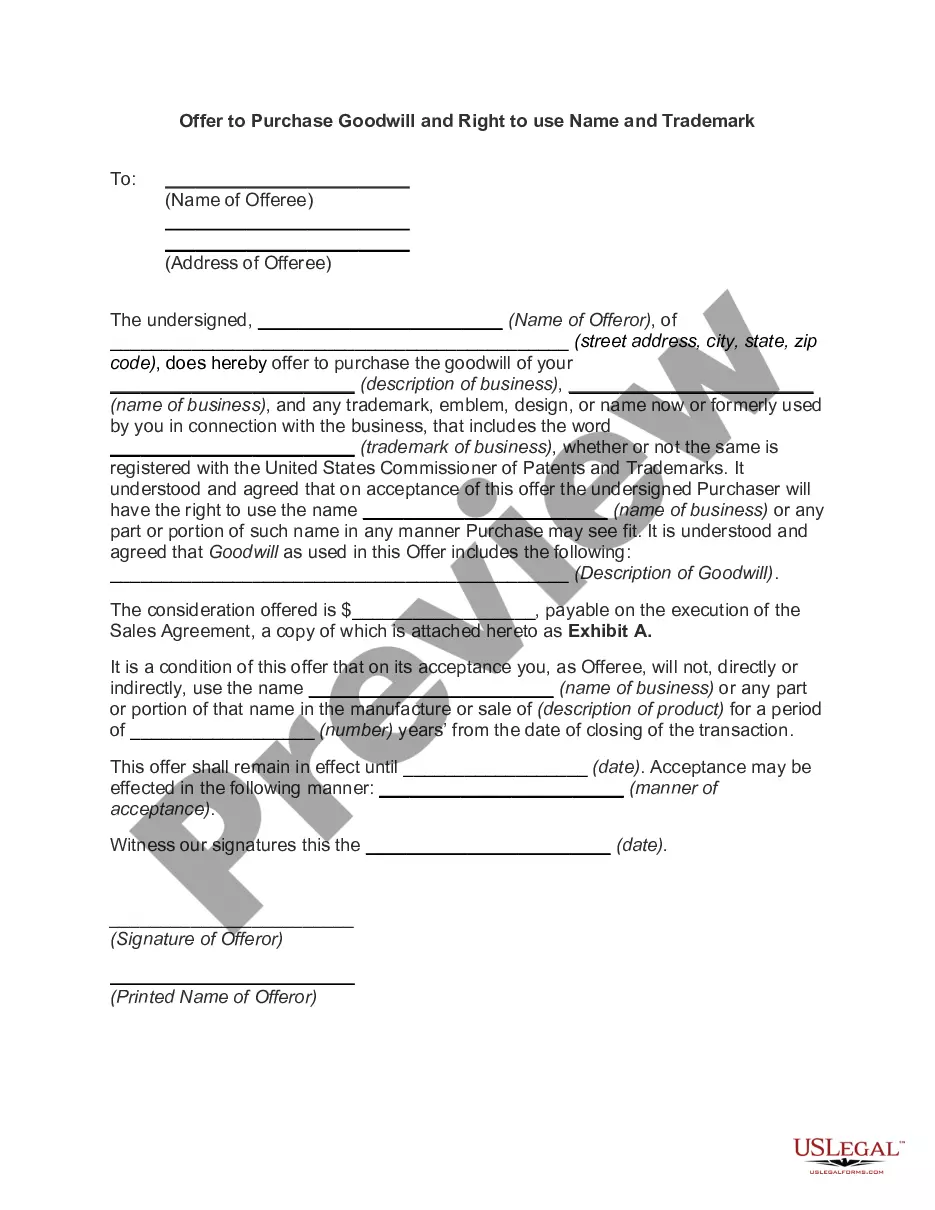
The Offer to Purchase Goodwill and Right to Use Name and Trademark is a legal document that allows a buyer to acquire the goodwill of a business alongside its trademarks, names, and emblems. This form is essential for individuals or entities looking to purchase a business's intangible assets. By clearly outlining the specifics of the purchase, including the price and conditions of use, this form helps facilitate the transfer of business goodwill and ensures both parties understand their rights and obligations.
What’s included in this form
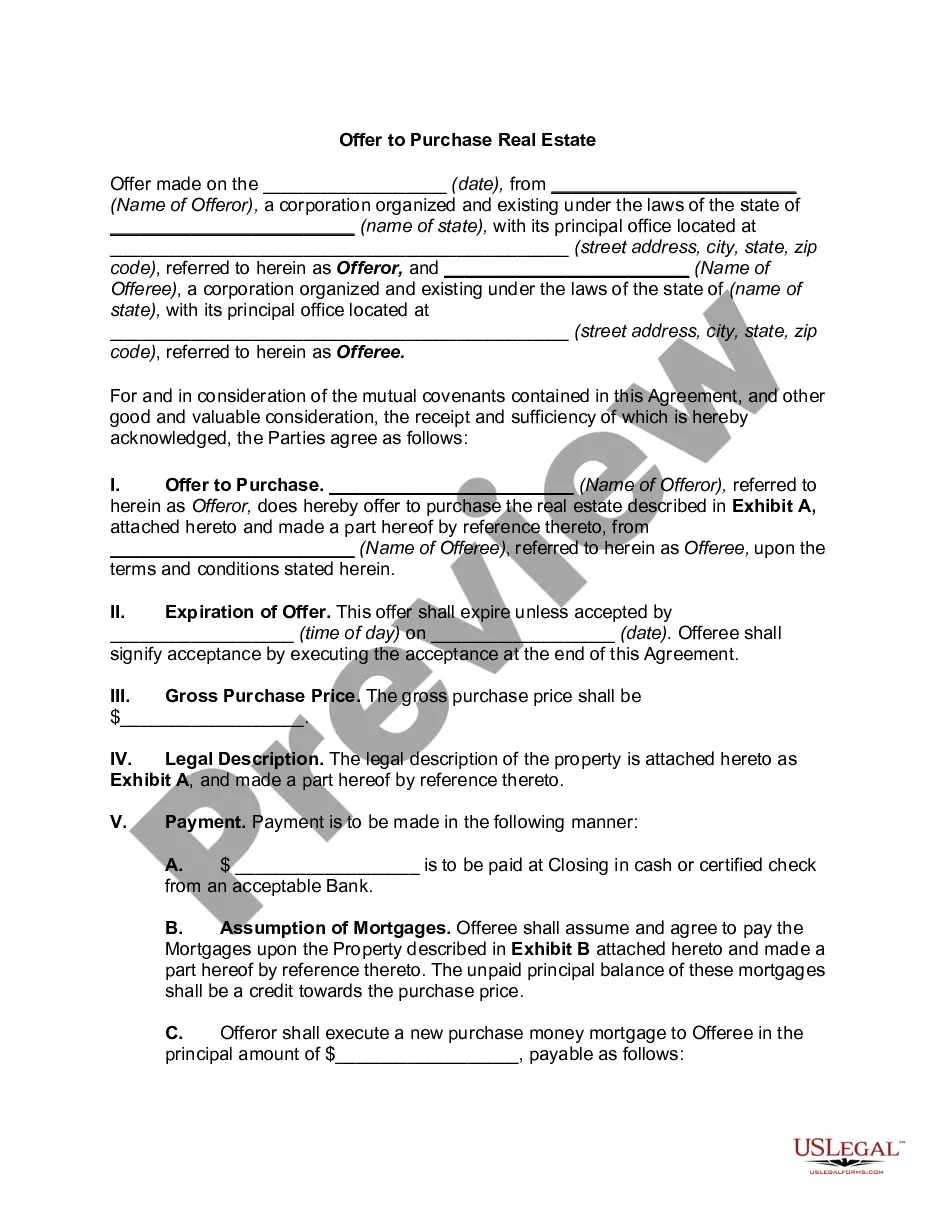
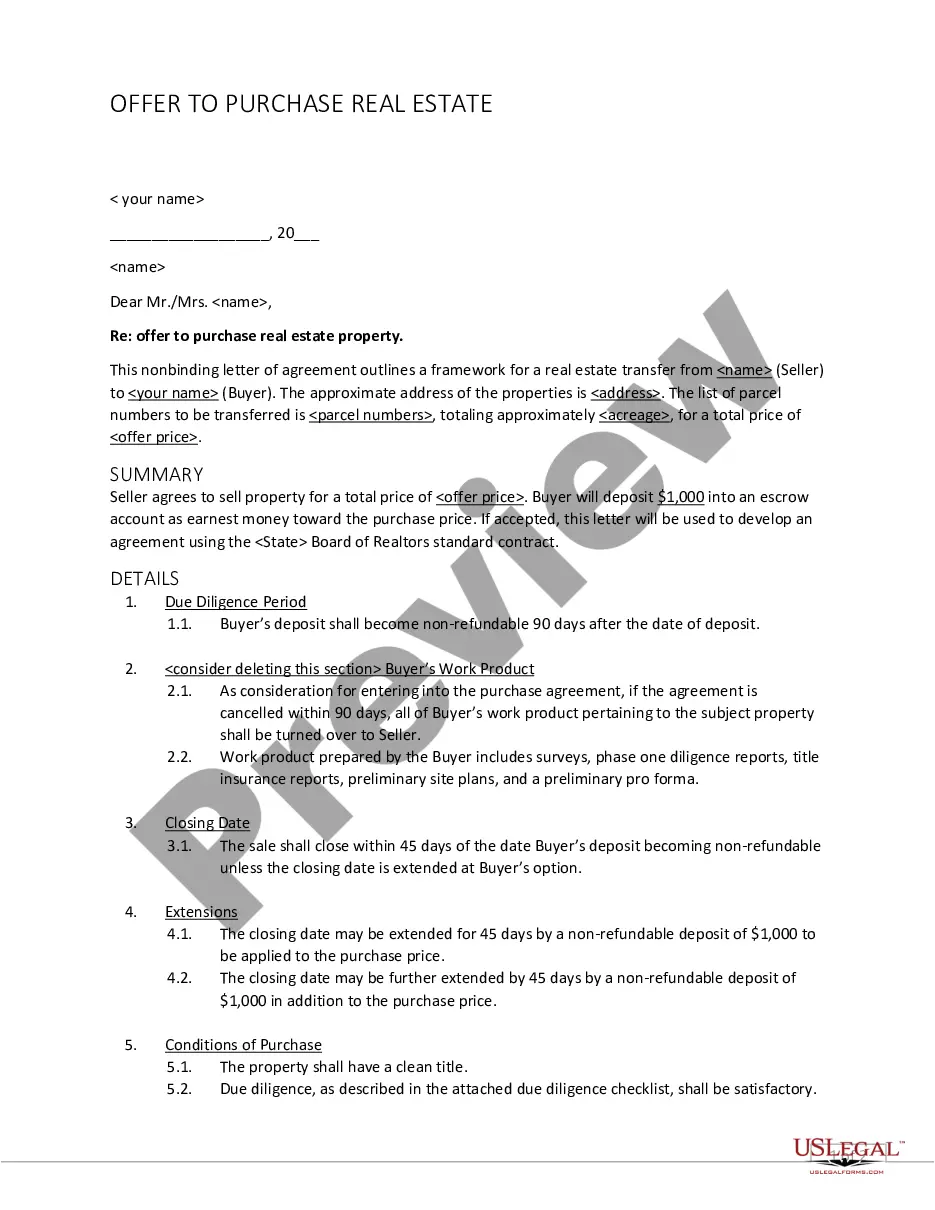
- Contact information of both the offeror (buyer) and offeree (seller).
- Description of the business and its goodwill being purchased.
- Specific details about the trademark and name rights included in the sale.
- Consideration amount (purchase price) and payment terms.
- Conditions regarding the use of the business name by the seller post-transaction.
- Deadline for the offer validity and acceptance methods.

Common use cases
This form is used when a buyer intends to purchase the goodwill of a business, along with the rights to use its name and trademarks. It is particularly useful when the seller is willing to transfer their reputation and customer loyalty associated with their brand. This situation may arise during business sales, mergers, or acquisitions where the brand value is significant.
Who can use this document
- Business owners looking to sell their brand and goodwill.
- Entrepreneurs interested in acquiring an existing business's intangible assets.
- Legal professionals assisting clients in business transactions.
Steps to complete this form
- Identify the parties involved: both the offeror and offeree must provide their names and addresses.
- Describe the business and its goodwill being purchased to clarify what is included in the offer.
- Specify the trademark or name rights that are part of this transaction.
- Enter the amount being offered and outline the payment terms.
- Include any restrictions on the sellerâs use of the trademark or business name, specifying the duration of these restrictions.
- Set a deadline for acceptance of the offer and describe how acceptance can be communicated.
Is notarization required?
This form does not typically require notarization unless specified by local law. It is essential to review any specific state requirements that may apply.
Get your form ready online
Our built-in tools help you complete, sign, share, and store your documents in one place.
Make edits, fill in missing information, and update formatting in US Legal Forms—just like you would in MS Word.
Download a copy, print it, send it by email, or mail it via USPS—whatever works best for your next step.
Sign and collect signatures with our SignNow integration. Send to multiple recipients, set reminders, and more. Go Premium to unlock E-Sign.
If this form requires notarization, complete it online through a secure video call—no need to meet a notary in person or wait for an appointment.
We protect your documents and personal data by following strict security and privacy standards.

Make edits, fill in missing information, and update formatting in US Legal Forms—just like you would in MS Word.

Download a copy, print it, send it by email, or mail it via USPS—whatever works best for your next step.

Sign and collect signatures with our SignNow integration. Send to multiple recipients, set reminders, and more. Go Premium to unlock E-Sign.

If this form requires notarization, complete it online through a secure video call—no need to meet a notary in person or wait for an appointment.

We protect your documents and personal data by following strict security and privacy standards.
Mistakes to watch out for
- Failing to clearly define the goodwill being purchased.
- Omitting the expiration date of the offer.
- Not specifying the method of acceptance, leading to confusion.
- Forget to outline any conditions on the seller's future use of the trademarks.
Benefits of completing this form online
- Convenience of accessing and downloading the form at any time.
- Editability to customize the form to fit specific business needs.
- Reliability, as the forms are drafted by licensed attorneys, ensuring legal compliance.
Looking for another form?
Form popularity
FAQ
Other types of intellectual property, like trademarks, can be wrapped up in a business's goodwill value. Consumers may be attracted to a particular trademark because they associate it with products or services they trust. In that case, the trademark has its own goodwill.
It's simply the legal right to use a name, logo or other identifier in business. As such, trademarks on the balance sheet will commonly be included in an entry for "intangible assets." These usually appear in the "non-current assets" or "long-term assets" portion of the assets section.
Common methods used to determine a trademark's value include the following: Using past and expected future profits (the income approach) Using comparative transaction with similar assets (the market approach) Using the cost of creating a trademark (the cost approach)
The "goodwill" of a trademark relates to the inherent value of your trademarks - that is the recognition of your mark among consumers and the extra earning power that it generates.
This is known as trademark licensing.
To obtain federal trademark registration, you must file an application with the USPTO and have it approved. Registering a trademark with the USPTO gives you a legal presumption that you have the right to use the trademark nationwide and prevent others from using a similar mark for the same types of goods or services.
It calculates the added value of the brand by comparing the added revenue/profits to a generic version. If, for example, the branded product sells for $2.00 and the generic sells for $1.50, the differential of 50 cents per unit is attributed to the brand value.
This valuation should most likely be between $0 and $12,000 for a trademark that doesn't include a matching .com domain name. While a formal valuation from a trademark broker may still be necessary, hopefully this article has given you a better sense of what your trademark might be worth if you decide to sell it.