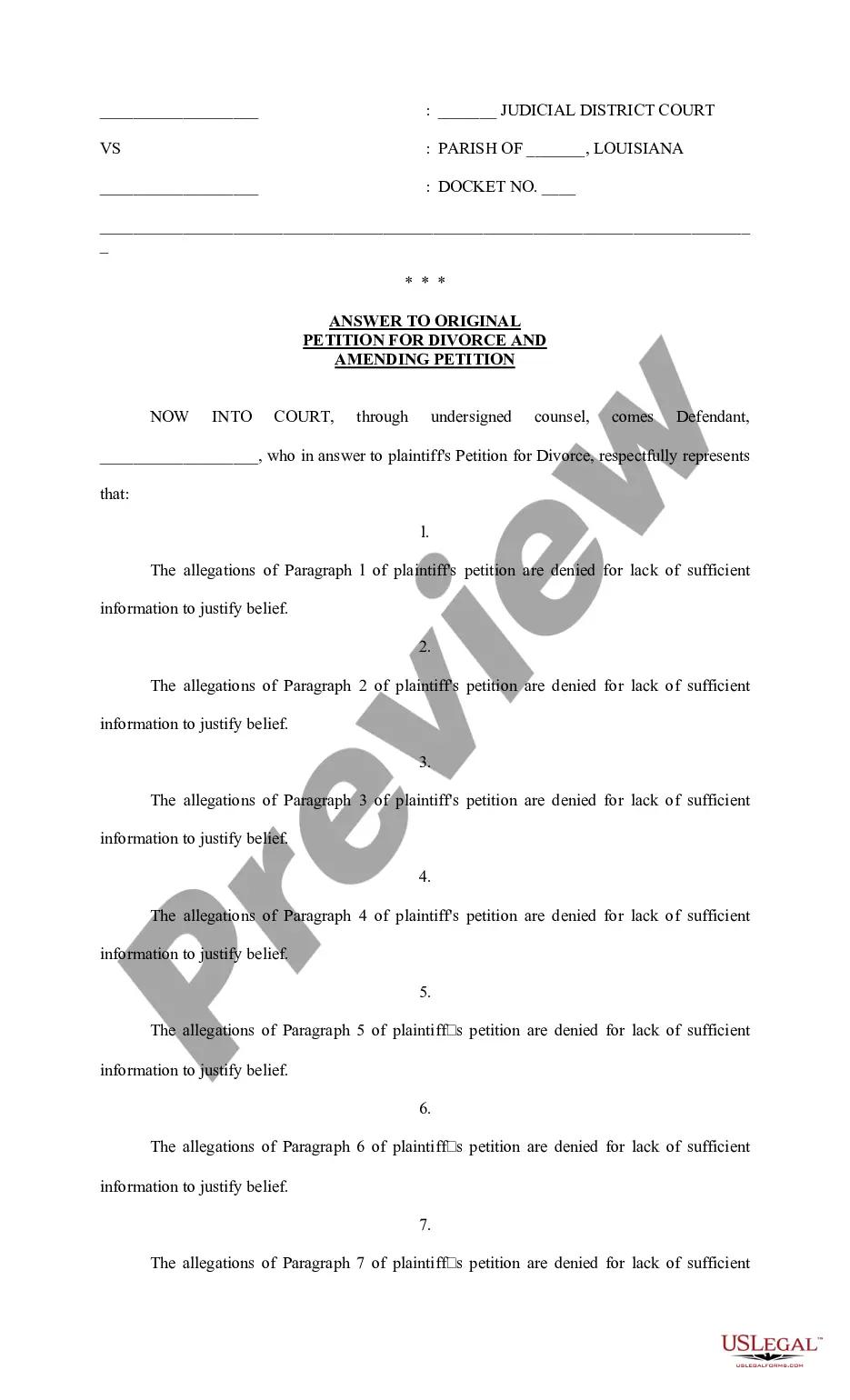
Agreement between Adjoining Landowners Creating an Easement for a Common Driveway with New Construction of Houses and Garages
What this document covers
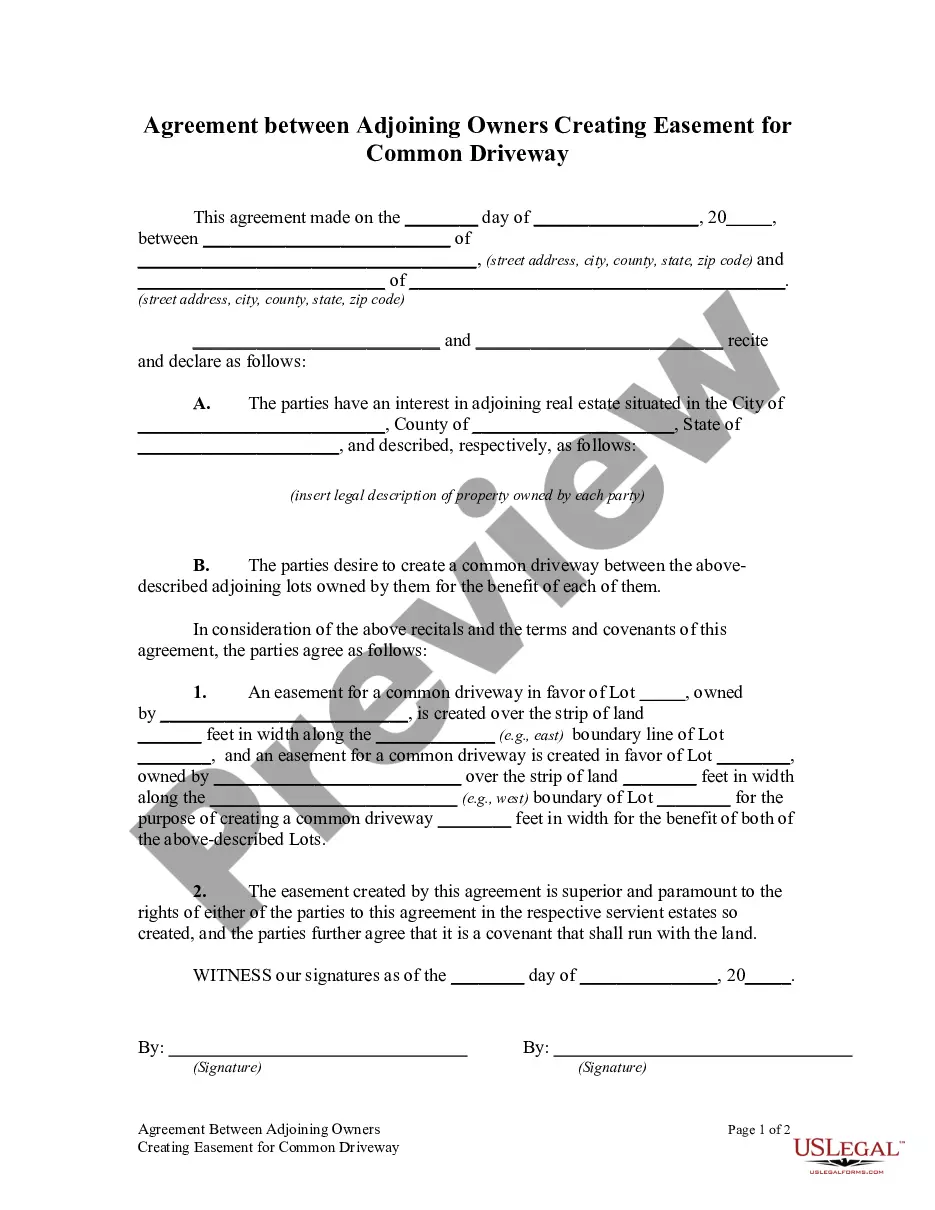
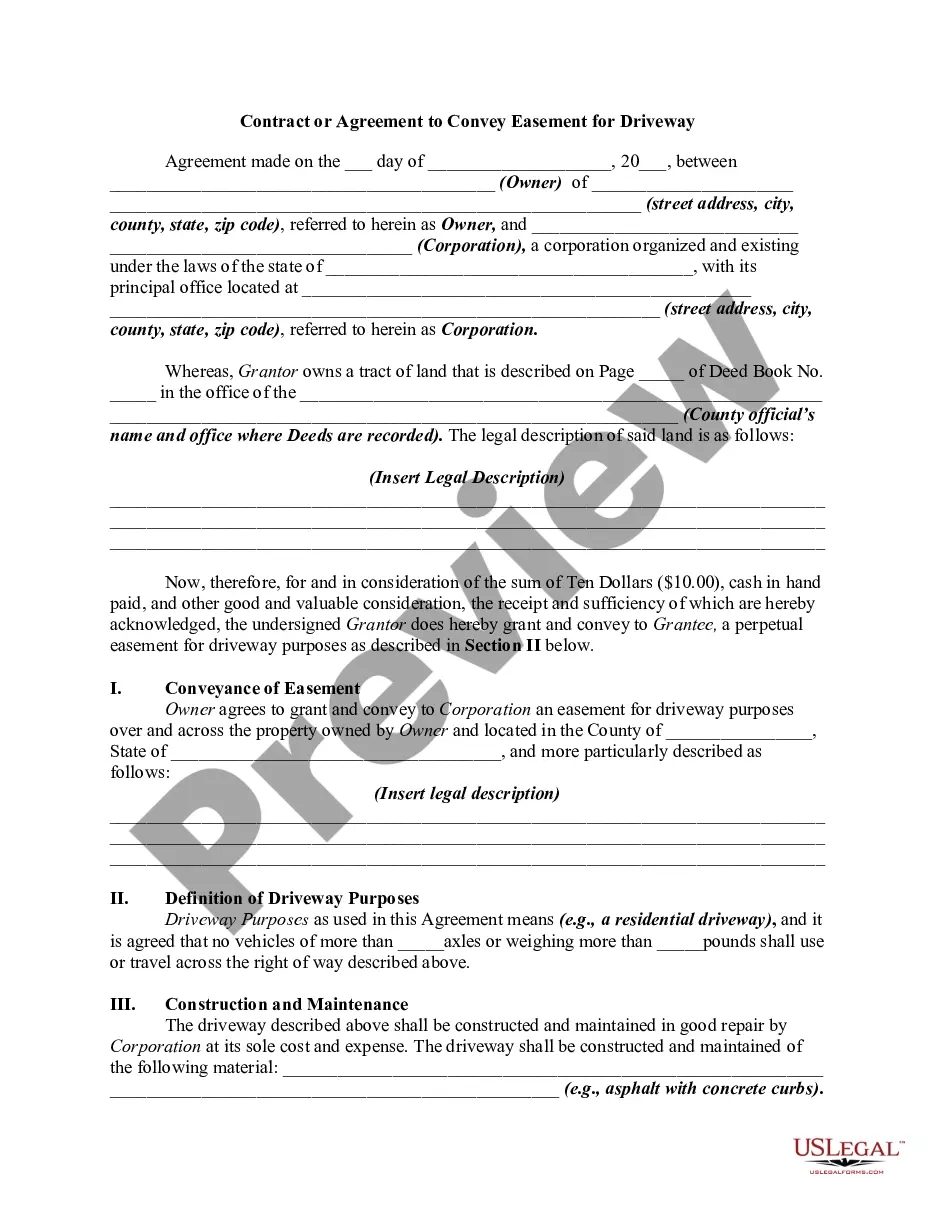
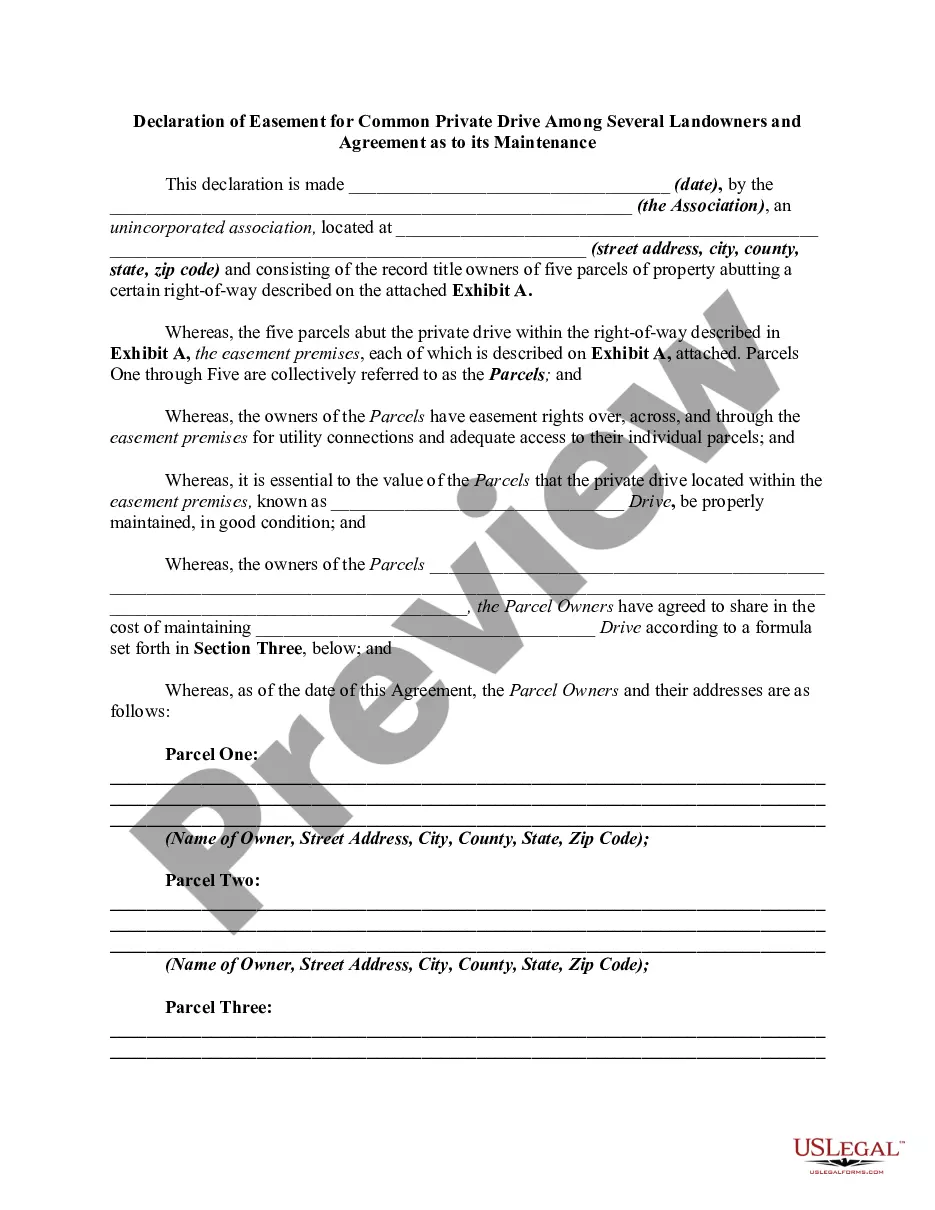
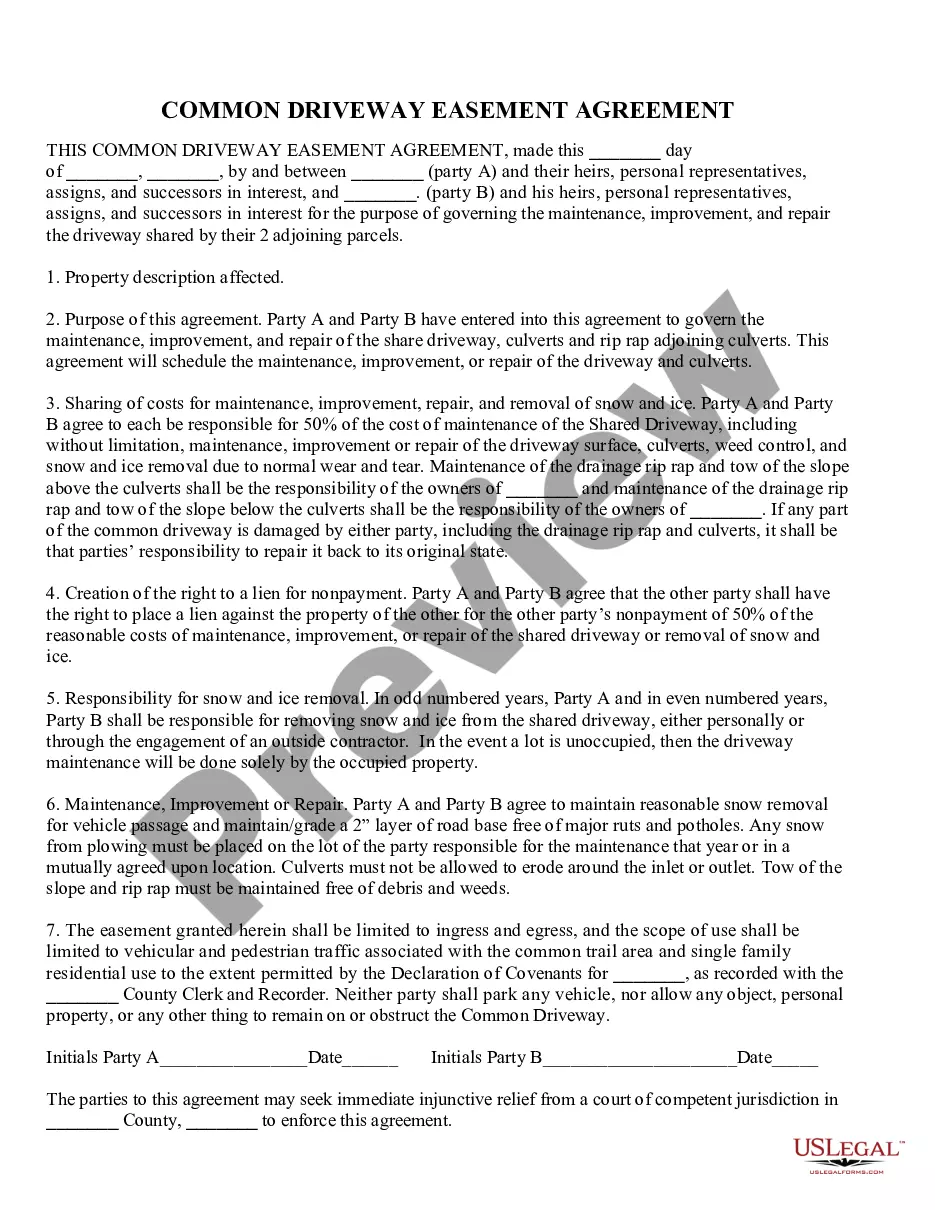
This Agreement between Adjoining Landowners Creating an Easement for a Common Driveway with New Construction of Houses and Garages is a legal document that allows two adjacent property owners to establish mutual rights to use a shared driveway. This form is essential for defining the terms of the easement, which grants each property owner legal access to the necessary portions of each other's land to install and maintain the driveway, benefiting both parties. It differs from other agreements by specifically addressing rights related to new construction and mutual use of a driveway.
Main sections of this form
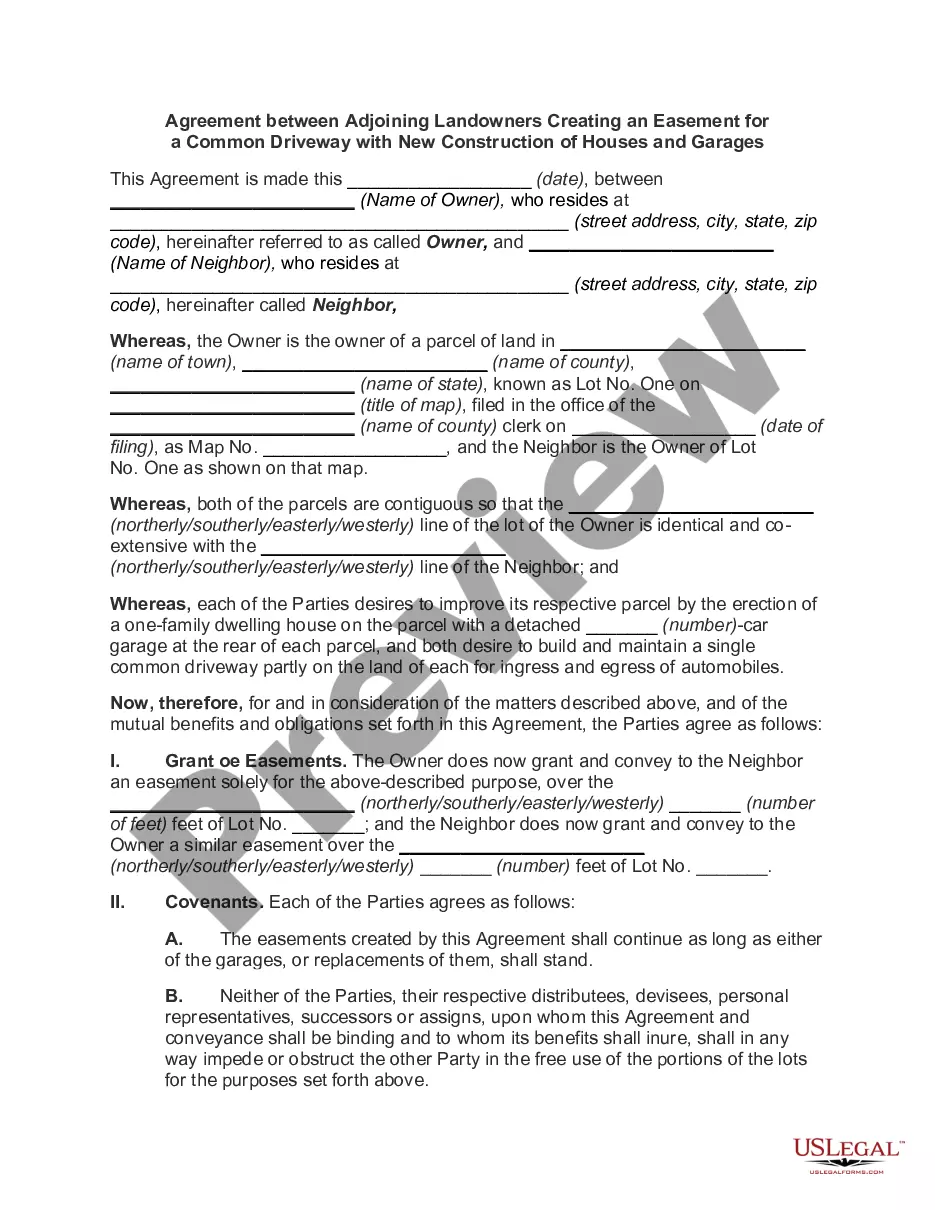
- Identification of the Parties: Names and addresses of both property owners.
- Description of the Properties: Details about each property and their contiguous lines.
- Easement Grant: Establishes the easement location and usage rights for the driveway.
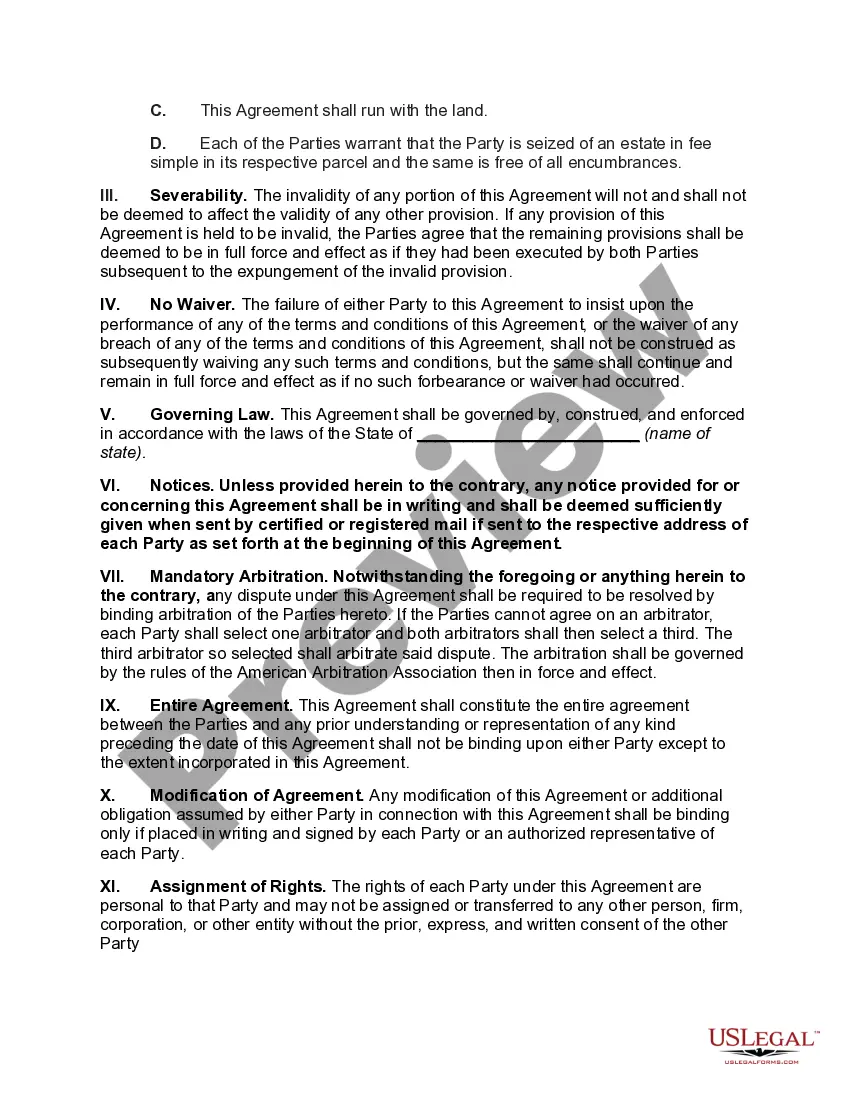
- Covenants: Obligations of each party regarding the easement and property usage.
- Severability and Waivers: Provisions on the validity of certain clauses and enforcement of the agreement.
When to use this document
This form is used when two neighboring property owners wish to create a legal agreement that allows for shared access to a common driveway, particularly when planning new construction such as houses and garages. It is crucial when properties are situated in a way that both owners would benefit from a shared access route, ensuring that both can utilize their garages and maintain legal rights to the driveway.
Who can use this document
- Property owners who have adjacent lots and plan to build new homes and garages.
- Individuals seeking to establish legal access rights to a shared driveway.
- Landowners looking to formalize arrangements to avoid disputes over property access.
Instructions for completing this form
- Identify the parties involved by entering their full names and addresses at the beginning of the form.
- Specify the properties involved, including details such as lot numbers and county information.
- Clearly define the easement area by indicating the dimensions and location on the respective properties.
- Read and understand the covenants section to ensure mutual obligations are clear.
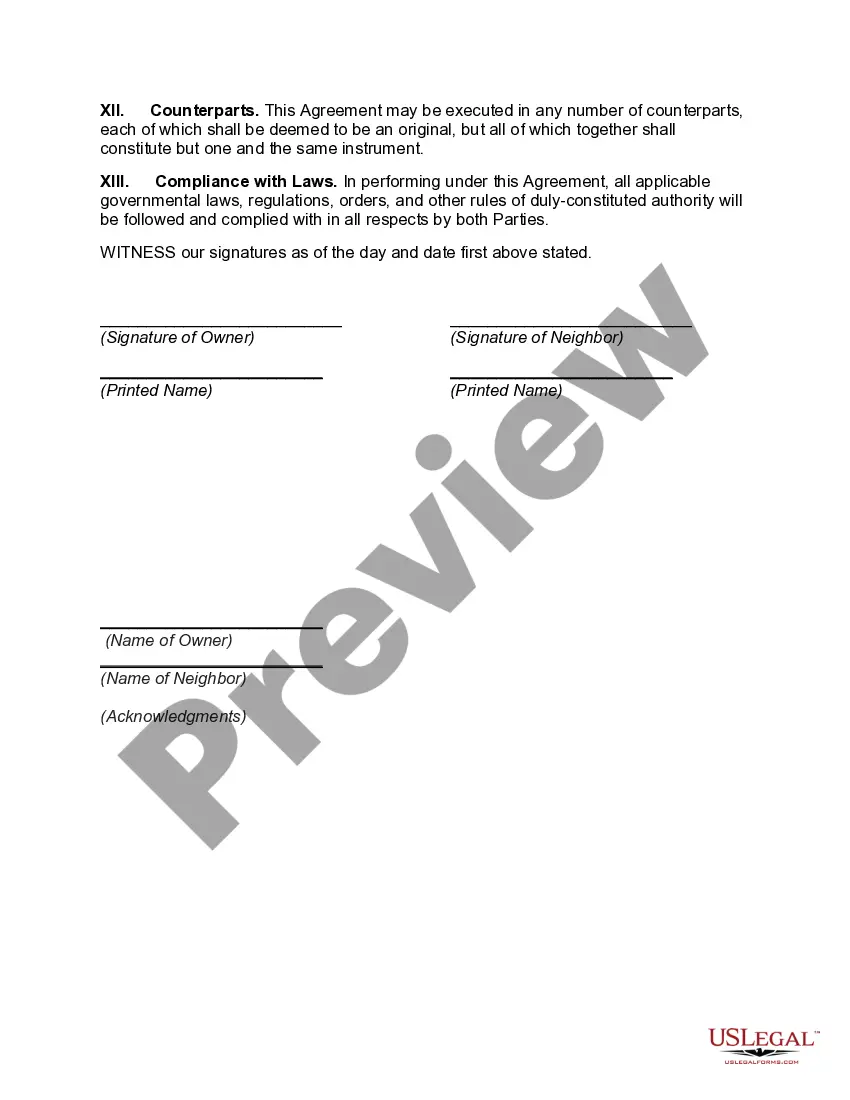
- Have both parties sign the agreement and provide printed names for legal validity.
Notarization guidance
This form does not typically require notarization unless specified by local law. However, notarization can strengthen the document's validity and ensure that both parties willingly enter the agreement.
Get your form ready online
Our built-in tools help you complete, sign, share, and store your documents in one place.
Make edits, fill in missing information, and update formatting in US Legal Forms—just like you would in MS Word.
Download a copy, print it, send it by email, or mail it via USPS—whatever works best for your next step.
Sign and collect signatures with our SignNow integration. Send to multiple recipients, set reminders, and more. Go Premium to unlock E-Sign.
If this form requires notarization, complete it online through a secure video call—no need to meet a notary in person or wait for an appointment.
We protect your documents and personal data by following strict security and privacy standards.

Make edits, fill in missing information, and update formatting in US Legal Forms—just like you would in MS Word.

Download a copy, print it, send it by email, or mail it via USPS—whatever works best for your next step.

Sign and collect signatures with our SignNow integration. Send to multiple recipients, set reminders, and more. Go Premium to unlock E-Sign.

If this form requires notarization, complete it online through a secure video call—no need to meet a notary in person or wait for an appointment.

We protect your documents and personal data by following strict security and privacy standards.
Mistakes to watch out for
- Failing to accurately describe the properties involved, which could lead to disputes.
- Not specifying the easement dimensions, creating ambiguity in access rights.
- Neglecting to have both parties sign and date the agreement, making it invalid.
Benefits of completing this form online
- Convenient access to a ready-made legal document tailored for property easements.
- Editable format allows personalization to suit specific property details.
- Drafted by licensed attorneys, ensuring legal soundness and compliance.
Looking for another form?
Form popularity
FAQ
Servient Tenement - the land that gives the easement for the benefit of another.
Easement by prescription occurs where someone uses another's property for a certain amount of time without permission in a way in which the owner should be aware of. States set the time limits required for someone to achieve a prescriptive easement which can range from a few years to over twenty.
An easement appurtenant is when an easement runs with one parcel of land but benefits another. The parcel that benefits is called the dominant tenement, or the dominant estate, and the other parcel on which the easement exists is called the servient tenement, or sometimes the servient estate.
An easement is a limited right to use another person's land for a stated purpose. For example, an easement may allow someone to use a road on their neighbor's land to get to their own.
A private easement is an agreement between two property owners giving the owner of one property the right to use another's property for a specific purpose. For example, such an easement might be drawn up if a neighbor needs to run pipe under your property to get to their house.
An easement appurtenant is a specific type of easement where two properties are linked together as servient tenement and dominant tenement estates. The servient estate is the estate that allows the easement, while the dominant estate is the one that benefits from the easement.
An easement is a privilege or right that the owner of one parcel of real property (called a dominant estate or dominant tenement) has concerning another parcel of an estate (called a servient estate), and the owner of a servient estate is obligated not to interfere with that privilege.
Explanation: An easement is a nonpossessory interest. It gives the easement holder a right to use the land, but not title or a right of possession. An easement created through long-term use of land without the permission of the owner is an easement by: Answer - A: Prescription.