Prior Statement of Non-testifying Defendant in Multi-Defendant Trial (revised 2016)
What this document covers
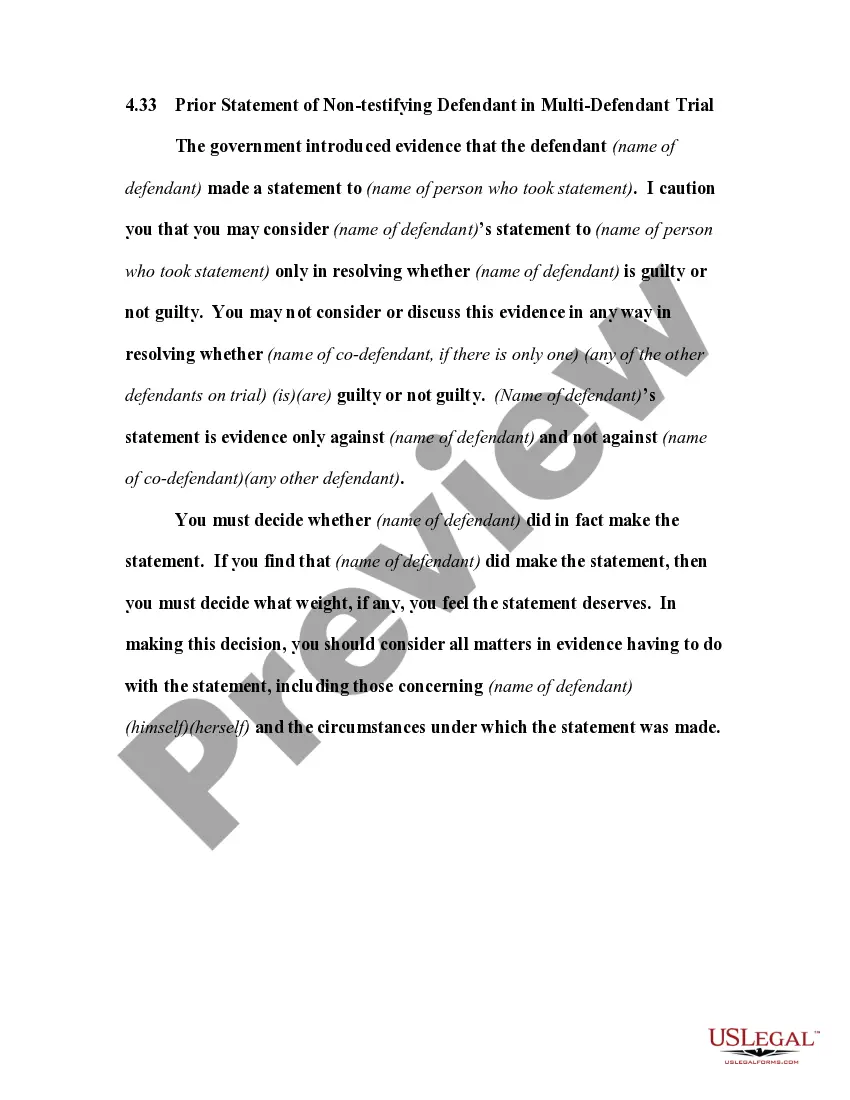
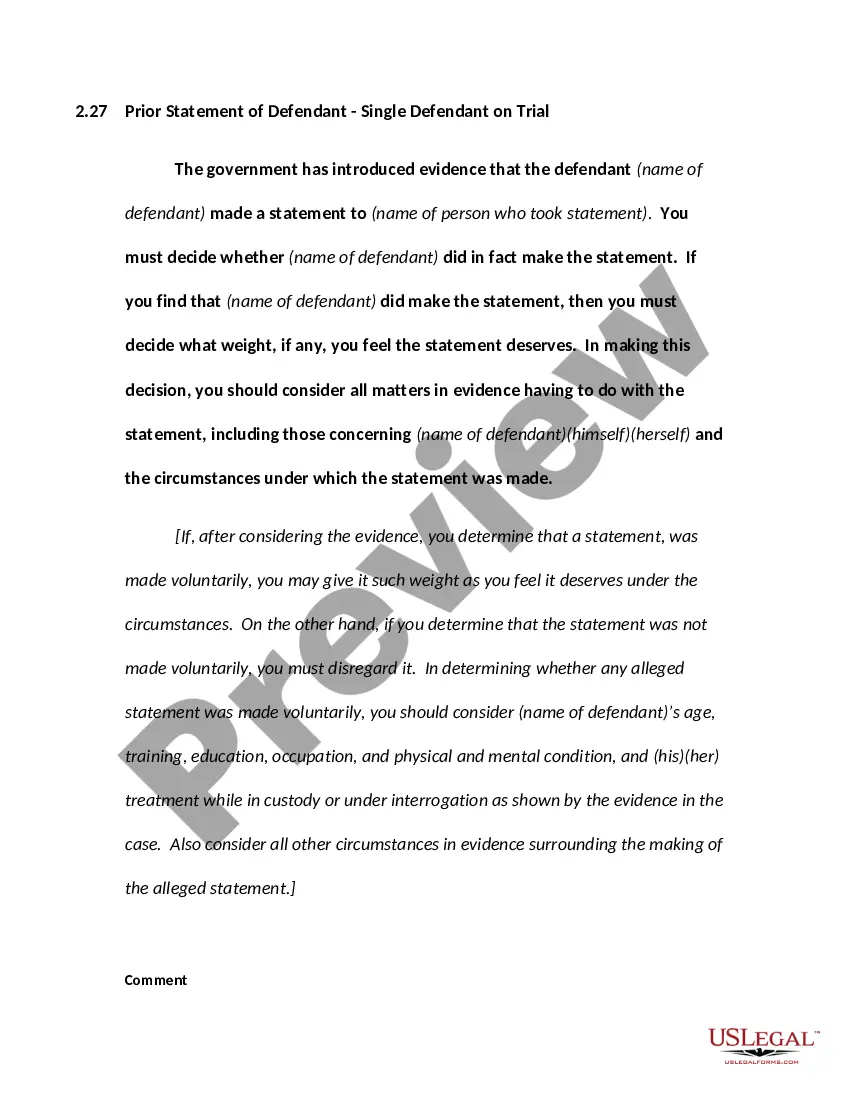
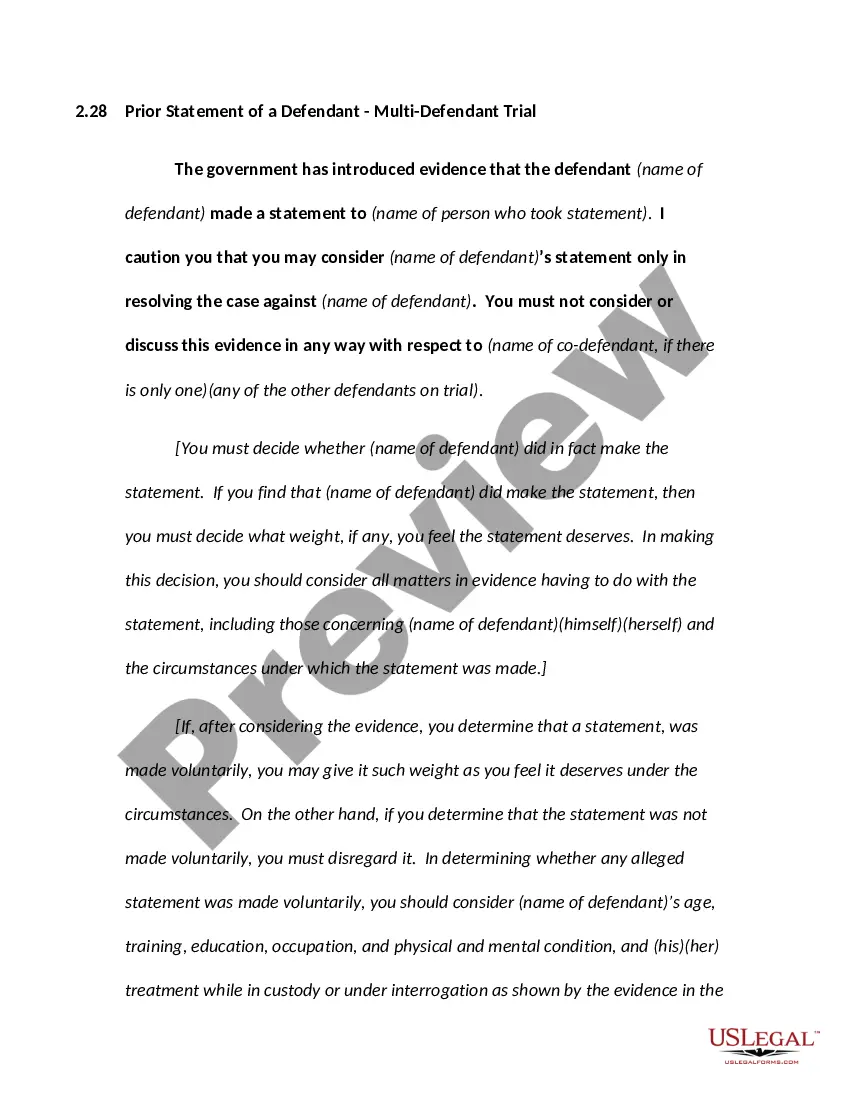
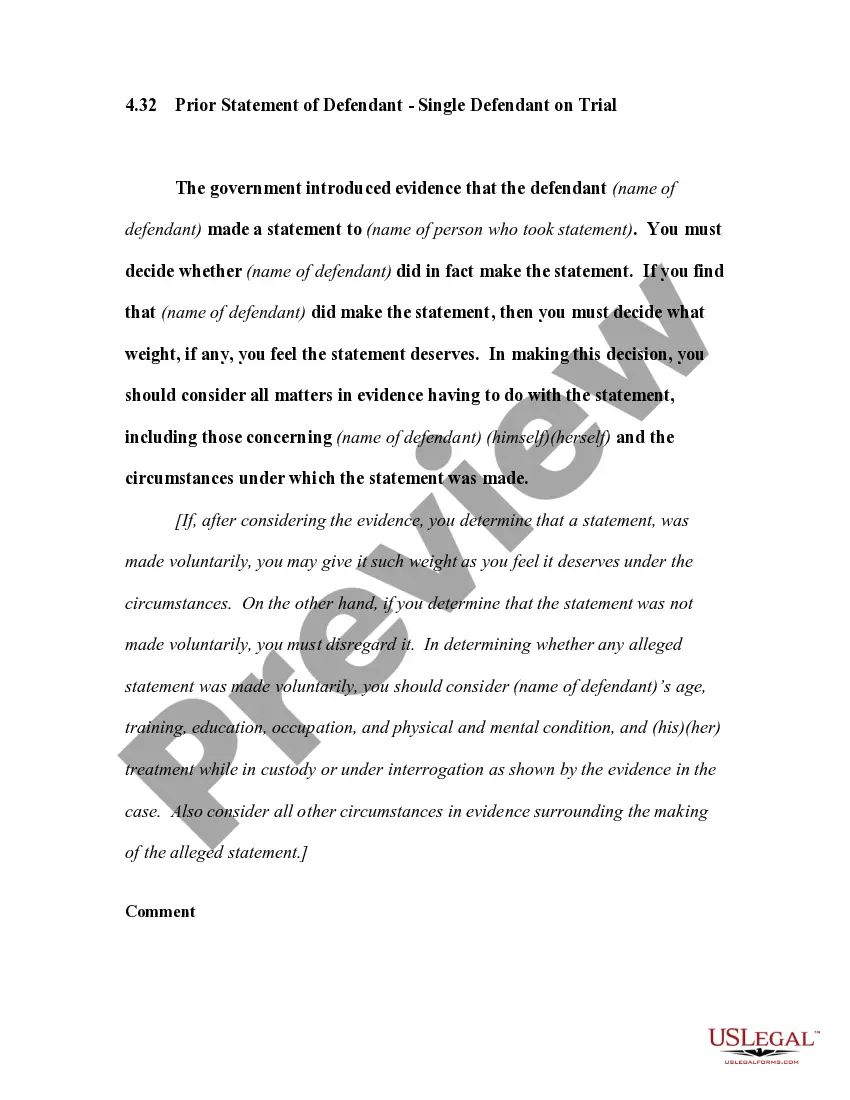
The Prior Statement of Non-testifying Defendant in Multi-Defendant Trial is a legal document used in criminal trials involving multiple defendants. This form provides instructions for the jury on how to handle statements made by a defendant who does not testify during the trial. It emphasizes that such statements are only applicable to the defendant who made them and not to any co-defendants. This form is particularly significant as it helps protect the rights of defendants in joint trials by establishing clear limitations on the use of testimony against them.
What’s included in this form
- The name of the defendant whose statement is being evaluated.
- The identity of the person who took the defendant's statement.
- Guidelines for the jury regarding the limitations on considering the statement.
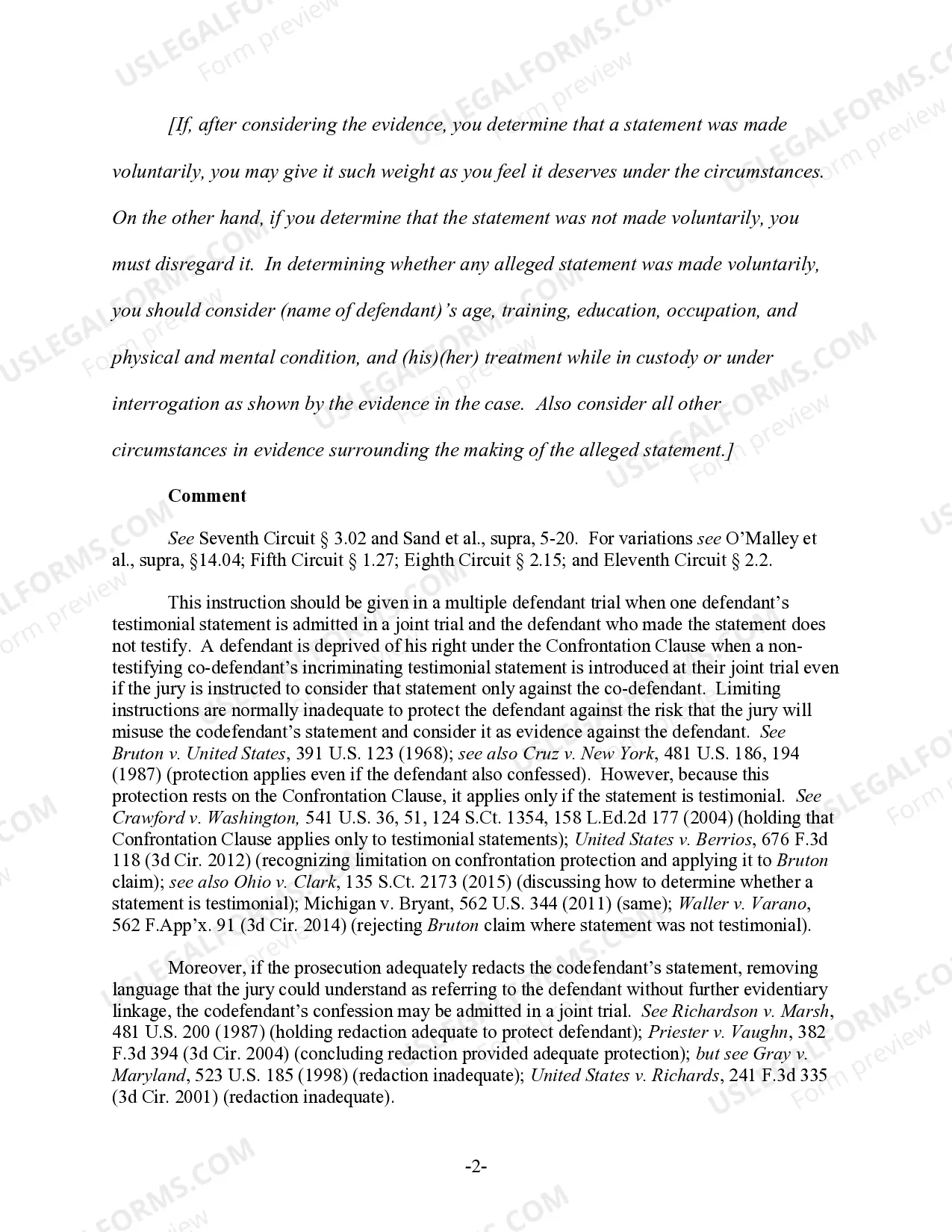
- Criteria for determining the voluntariness of the statement.
- Consideration of the circumstances surrounding the statement's creation.
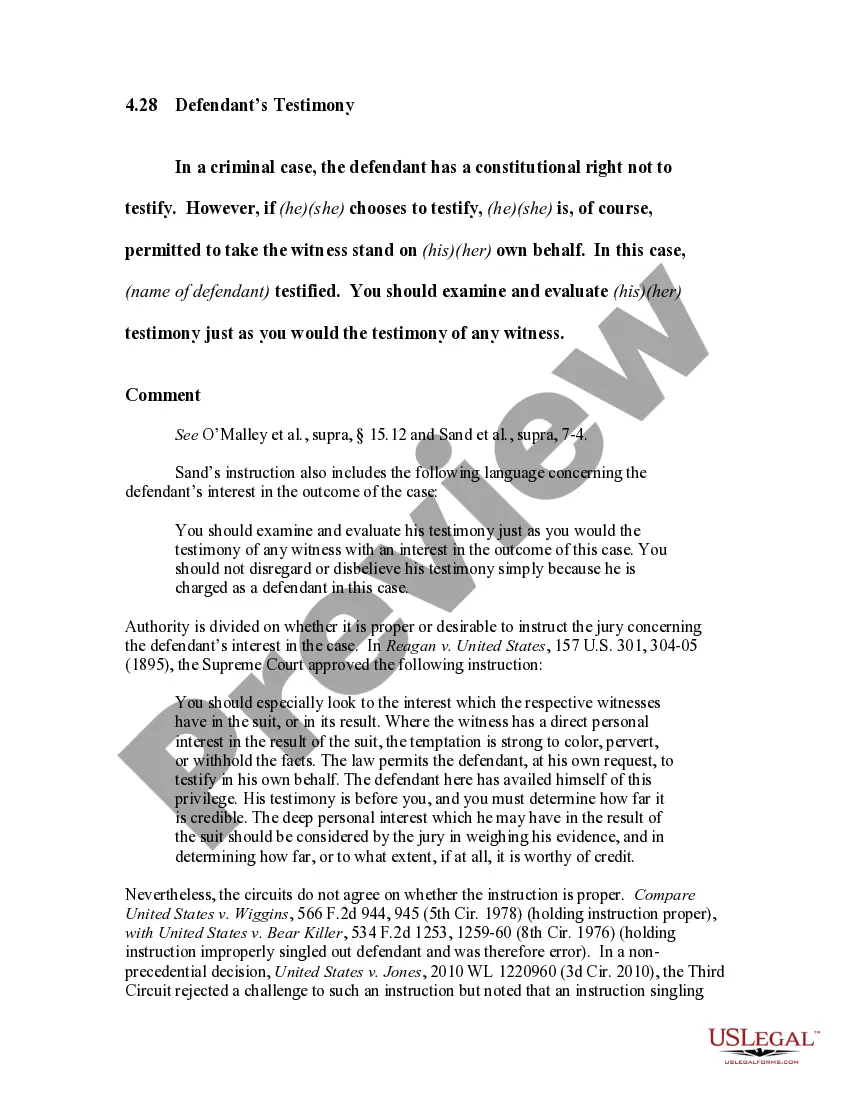
- Legal references related to the use of testimonial statements in joint trials.
When this form is needed
This form should be used in multi-defendant criminal trials when a statement made by one defendant is introduced as evidence but that defendant does not take the stand to testify. Its purpose is to clarify for the jury how they should interpret and weigh the statement without allowing it to prejudice their view of any other co-defendant during deliberations.
Who can use this document
- Judges presiding over multi-defendant trials.
- Legal representatives of defendants involved in joint trials.
- Juries tasked with evaluating evidence in multi-defendant cases.
- Prosecutors introducing statements from non-testifying defendants.
How to complete this form
- Identify and insert the name of the defendant who made the statement.
- Specify the name of the person who recorded the statement.
- Provide clear instructions to the jury regarding the limitations of considering the statement.
- Assess the voluntariness of the statement and include any relevant conditions or circumstances.
- Cite applicable legal precedents or guidelines as necessary.
Notarization requirements for this form
This form does not typically require notarization to be legally valid. However, some jurisdictions or document types may still require it. US Legal Forms provides secure online notarization powered by Notarize, available 24/7 for added convenience.
Get your form ready online
Our built-in tools help you complete, sign, share, and store your documents in one place.
Make edits, fill in missing information, and update formatting in US Legal Forms—just like you would in MS Word.
Download a copy, print it, send it by email, or mail it via USPS—whatever works best for your next step.
Sign and collect signatures with our SignNow integration. Send to multiple recipients, set reminders, and more. Go Premium to unlock E-Sign.
If this form requires notarization, complete it online through a secure video call—no need to meet a notary in person or wait for an appointment.
We protect your documents and personal data by following strict security and privacy standards.

Make edits, fill in missing information, and update formatting in US Legal Forms—just like you would in MS Word.

Download a copy, print it, send it by email, or mail it via USPS—whatever works best for your next step.

Sign and collect signatures with our SignNow integration. Send to multiple recipients, set reminders, and more. Go Premium to unlock E-Sign.

If this form requires notarization, complete it online through a secure video call—no need to meet a notary in person or wait for an appointment.

We protect your documents and personal data by following strict security and privacy standards.
Typical mistakes to avoid
- Failing to clearly distinguish between statements made by the defendant and those made by co-defendants.
- Not providing adequate instructions to the jury on how to interpret the statement's relevance.
- Ignoring the assessment of voluntariness and relevant circumstances of the statement.
Benefits of using this form online
- Accessible 24/7, allowing immediate retrieval and use in legal proceedings.
- Easy to edit and customize to fit specific case requirements.
- Ensures compliance with updated legal standards and practices.
- Reduces the chance of errors compared to handwritten documentation.
Legal use & context
- This form is essential for protecting defendants' rights in multi-defendant trials.
- Limiting instructions are crucial to mitigate the risk of unfair prejudice from co-defendants' statements.
- The effectiveness of this form is backed by legal precedents, ensuring it is a reliable tool in court settings.
Summary of main points
- Understanding how to appropriately use the statement in court is crucial for fair trials.
- The form ensures jurors are informed about the limitations on how to use evidence against different defendants.
- Proper instructions help mitigate risks of jury confusion or bias during trials involving multiple defendants.
Looking for another form?
Form popularity
FAQ
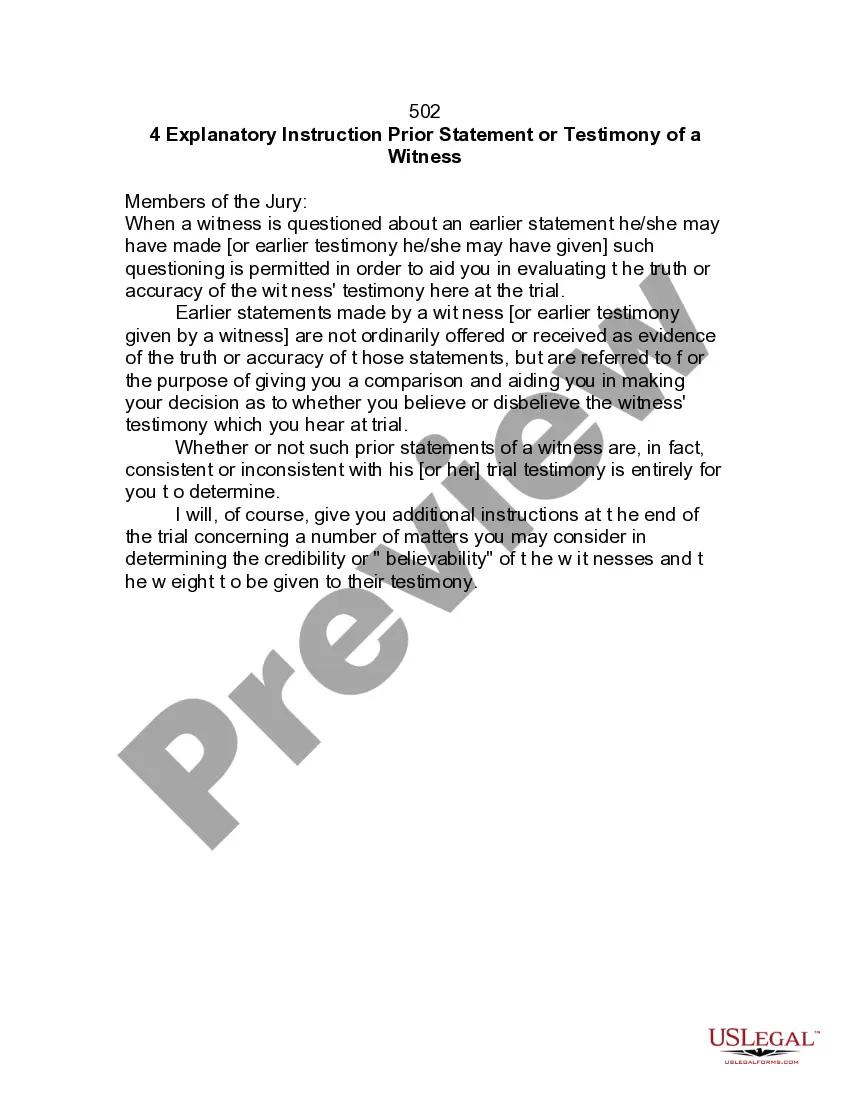
Impeachment by prior inconsistent statement is used when a witness remembers a fact, but previously made a different statement about that fact.
Under Federal Rule 801(d)(1)(A), prior inconsistent statements may be used for impeachment purposes, as well as substantive evidence, as long as the requirements of the rule have been satisfied: the statement was inconsistent with declarant's testimony and the statement was given under oath.
In criminal trials, former testimony is admissible against the defendant only if the defendant was present at the prior hearing and represented by counsel, or the defendant waived his right to be present at that prior hearing.
Rule 613(b) allows a party to use a prior inconsistent statement to impeach a witness, but if the witness is called to the stand for sole purpose of impeaching him, the ?impeachment? is really a subterfuge for admitting the hearsay.
Repeat. First, the most basic step, is to have the witness repeat the testimony from today's hearing that you want to impeach. You cannot effectively impeach unless the witness repeats a fact they said during the current hearing that clearly contradicts a prior statement.
Extrinsic evidence of a witness's prior inconsistent statement is admissible only if the witness is given an opportunity to explain or deny the statement and an adverse party is given an opportunity to examine the witness about it, or if justice so requires.
613(b) in that extrinsic evidence of a prior inconsistent statement is not admissible unless the statement is shown or disclosed to the witness during the witness's examination. Paragraph (b) is intended to give the witness and the party a fair opportunity to explain or deny the allegation.