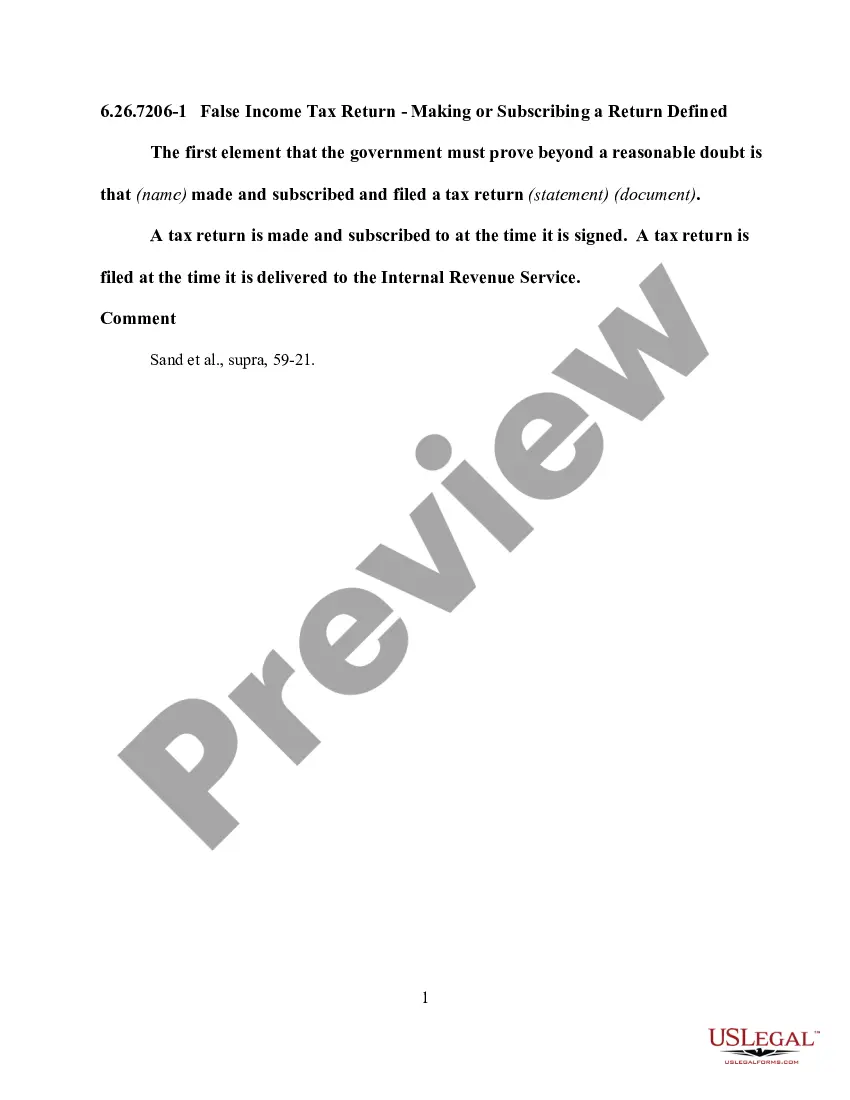
False Income Tax Return - Making or Subscribing a Return Defined
What this document covers
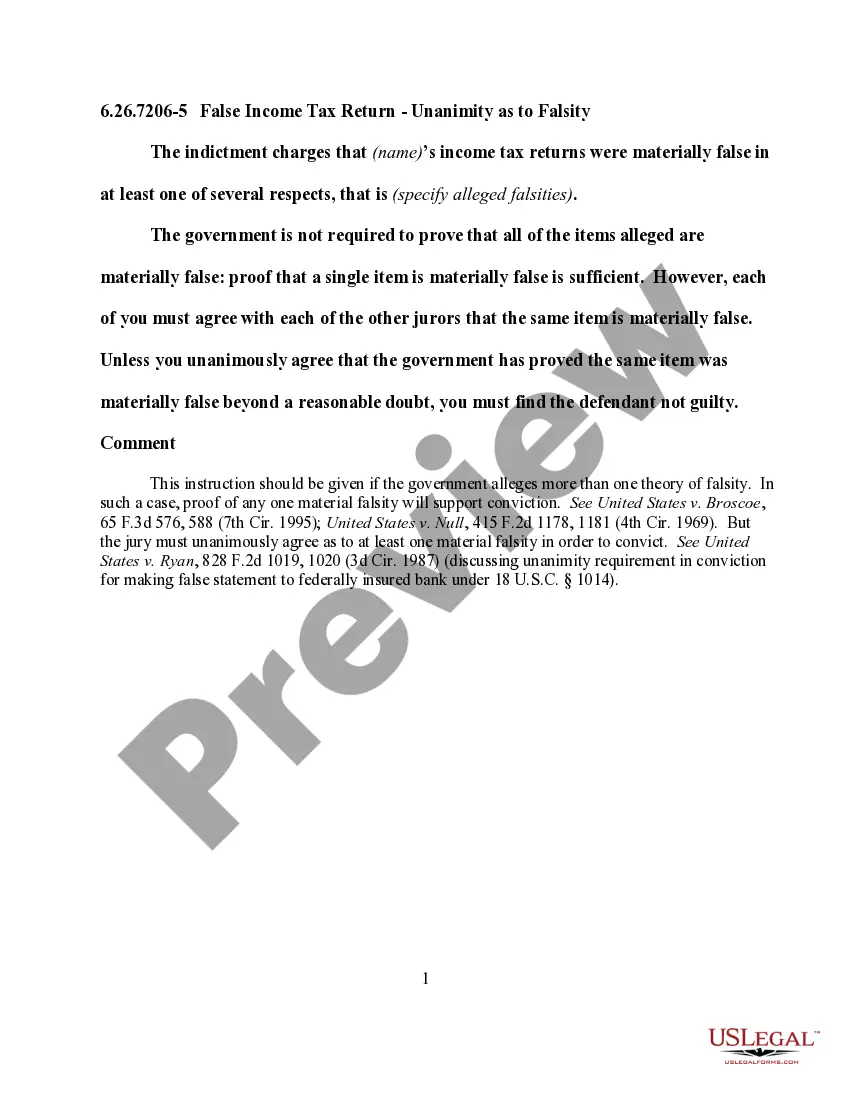
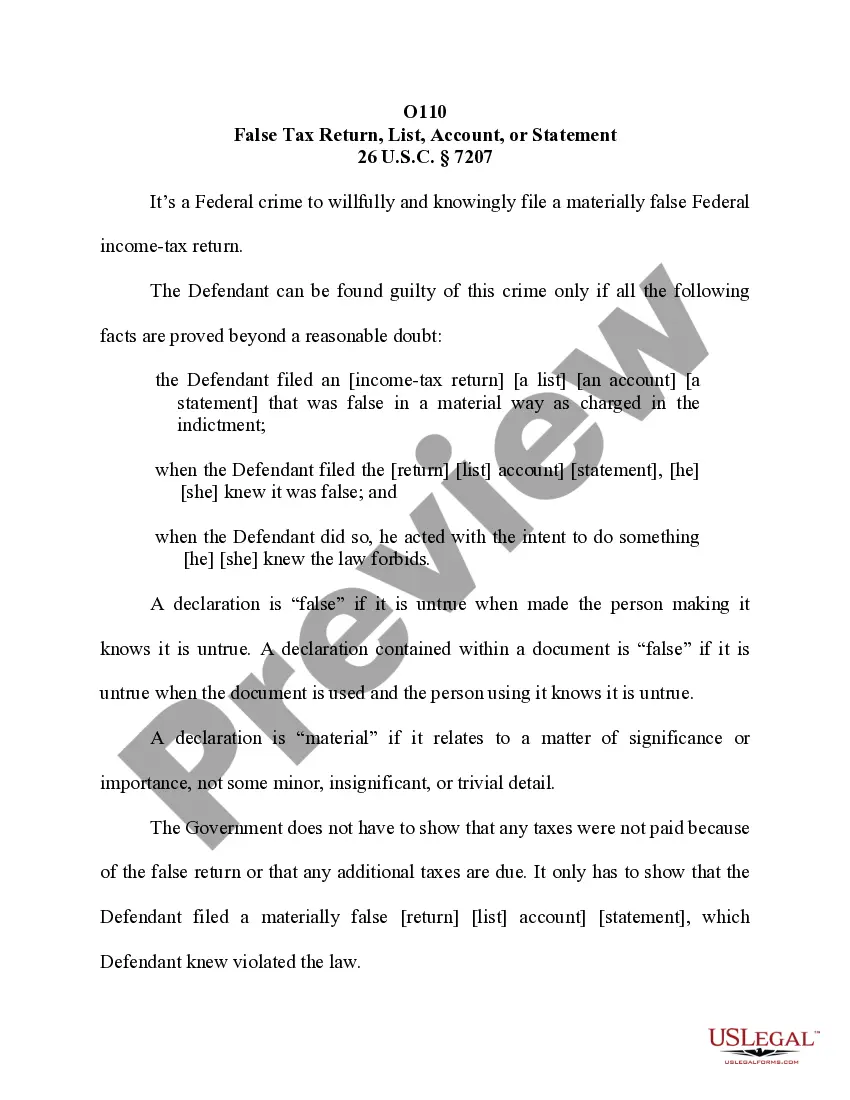
The False Income Tax Return form is used to legally define the act of making or subscribing to a false tax return. This form outlines the legal implications of filing an inaccurate income tax statement with the Internal Revenue Service (IRS). It is essential for individuals or entities facing legal scrutiny related to false tax filings, helping them understand the seriousness of this offense and the importance of truthful reporting in tax returns.
Key components of this form
- Definition of tax return: Clarifies what constitutes making and subscribing to a tax return.
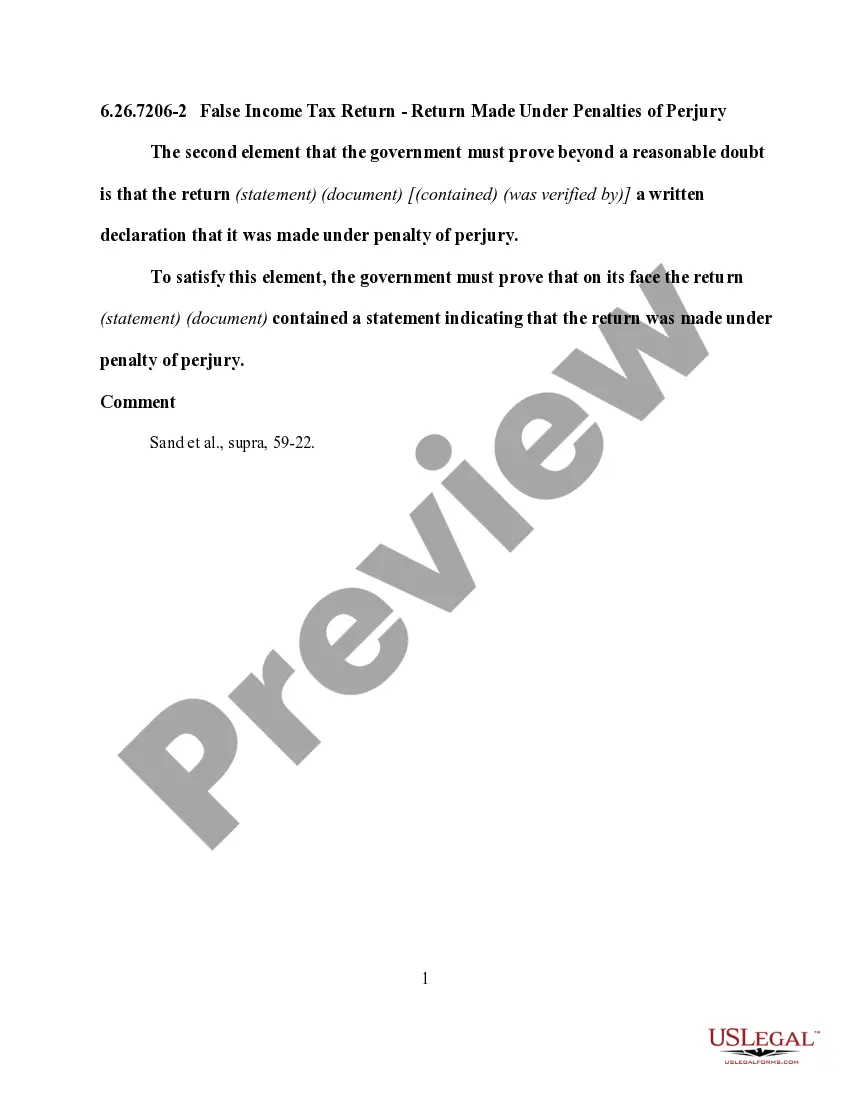
- Evidence requirements: Outlines what the government must prove, including signatures and filing timelines.
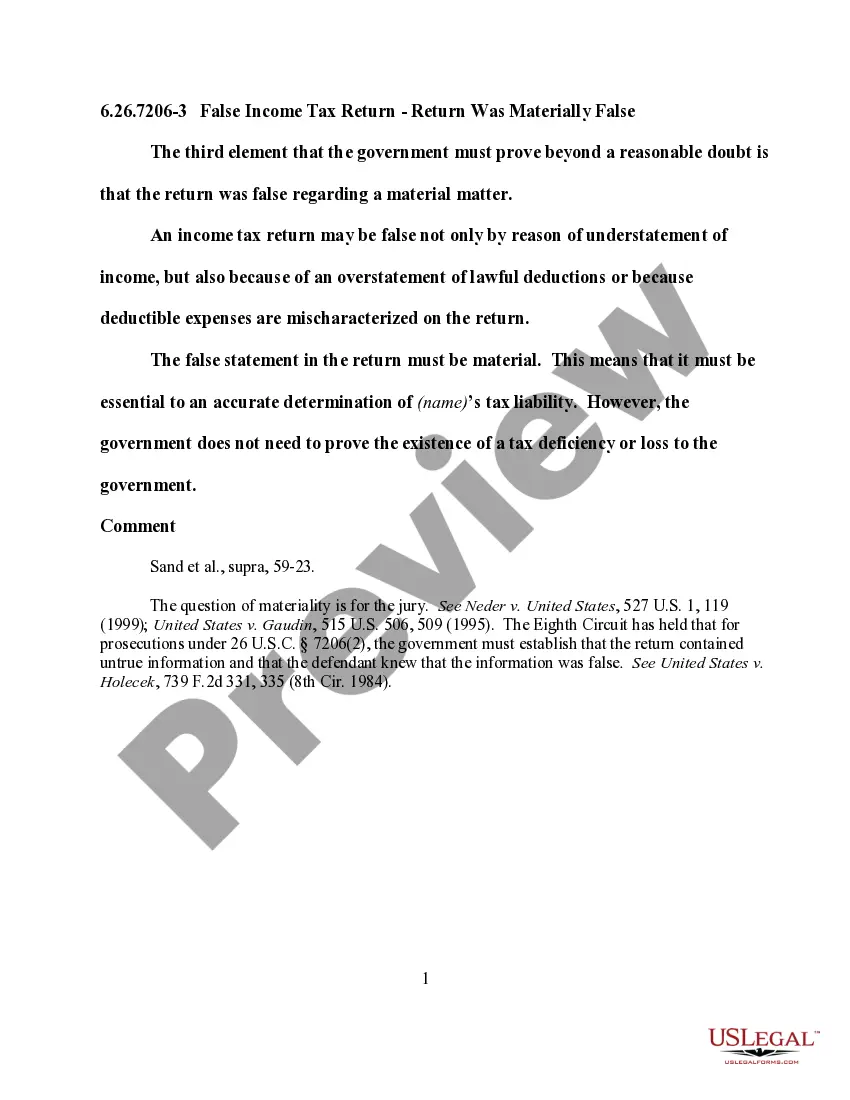
- Legal context: Provides the framework within which false tax return charges are assessed by the government.

Common use cases
This form is utilized in situations where an individual or entity is facing allegations of filing a false income tax return. It serves as a critical reference for understanding the legal definitions and consequences associated with such charges, particularly useful in preparing for legal proceedings where tax returns are being contested.
Who needs this form
- Individuals accused of submitting false income tax returns.
- Tax professionals needing clarity on legal definitions of false filings.
- Entities involved in disputes regarding tax return accuracy.
Steps to complete this form
- Read and understand the definition of a tax return as stated in the form.
- Gather all relevant tax documentation to support your claims or defenses.
- Document the timeline of your tax filing process, including dates and signatures.
- If needed, consult with a legal advisor to clarify any aspects of your situation.
- Ensure accuracy and truthfulness in all statements before submission.
Notarization guidance
Notarization is generally not required for this form. However, certain states or situations might demand it. You can complete notarization online through US Legal Forms, powered by Notarize, using a verified video call available anytime.
Get your form ready online
Our built-in tools help you complete, sign, share, and store your documents in one place.
Make edits, fill in missing information, and update formatting in US Legal Forms—just like you would in MS Word.
Download a copy, print it, send it by email, or mail it via USPS—whatever works best for your next step.
Sign and collect signatures with our SignNow integration. Send to multiple recipients, set reminders, and more. Go Premium to unlock E-Sign.
If this form requires notarization, complete it online through a secure video call—no need to meet a notary in person or wait for an appointment.
We protect your documents and personal data by following strict security and privacy standards.

Make edits, fill in missing information, and update formatting in US Legal Forms—just like you would in MS Word.

Download a copy, print it, send it by email, or mail it via USPS—whatever works best for your next step.

Sign and collect signatures with our SignNow integration. Send to multiple recipients, set reminders, and more. Go Premium to unlock E-Sign.

If this form requires notarization, complete it online through a secure video call—no need to meet a notary in person or wait for an appointment.

We protect your documents and personal data by following strict security and privacy standards.
Common mistakes
- Failing to provide accurate details on all required fields.
- Misunderstanding the definition of a false income tax return.
- Neglecting to gather supporting documentation.
Legal use & context
- This form is crucial for individuals facing legal action related to false income tax filings.
- Understanding the definitions and elements involved helps in building a robust defense.
- Failure to comply with tax laws may result in legal penalties or criminal charges.
Looking for another form?
Form popularity
FAQ
A borrower can easily alter a real tax return PDF received from IRS.gov, and simply add an extra zero or two to their actual recorded income. While they're advertised as joke forms, there's nothing funny about the myriad tax form generators that a quick internet search reveals are hidden in plain sight.
Return preparer fraud generally involves the preparation and filing of false income tax returns by preparers who claim inflated personal or business expenses, false deductions, unallowable credits or excessive exemptions on returns prepared for their clients.
Signs that the IRS might be investigating you Abrupt change in IRS agent behavior.Disappearance of the IRS auditor.Bank records being summoned or subpoenaed.Accountant contacted by CID or subpoenaed.Selection of a previous tax return for audit.
Examples of tax fraud include claiming false deductions; claiming personal expenses as business expenses; using a false Social Security number; and not reporting income. Tax evasion, or illegally avoiding payment of taxes owed, may be construed as an example of tax fraud.
Intentionally fails to pay taxes owed. Willfully fails to file a federal income tax return. Fails to report all income. Makes false or fraudulent claims.
SCAM PREVENTION DURING TAX SEASON Scammers use stolen names and Social Security numbers to file phony electronic tax returns and receive fraudulent refunds in the mail.
The IRS can audit you. The IRS has a formula for picking out returns to audit. The IRS is more likely to audit certain types of tax returns ? and people who lie on their returns can create mismatches or leave other clues that could result in an audit. Audits can be costly and long.
Shall be guilty of a felony and, upon conviction thereof, shall be fined not more than $100,000 ($500,000 in the case of a corporation), or imprisoned not more than 3 years, or both, together with the costs of prosecution.