Unanimity of Theory
About this form
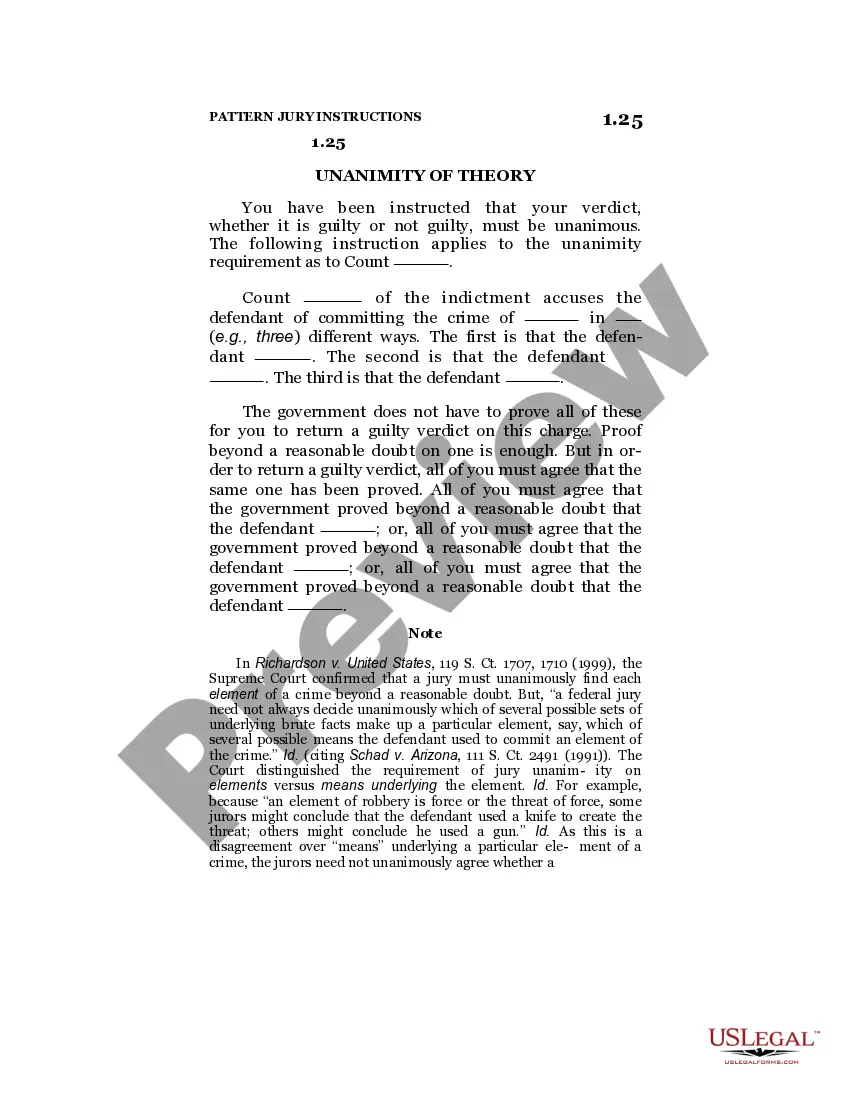
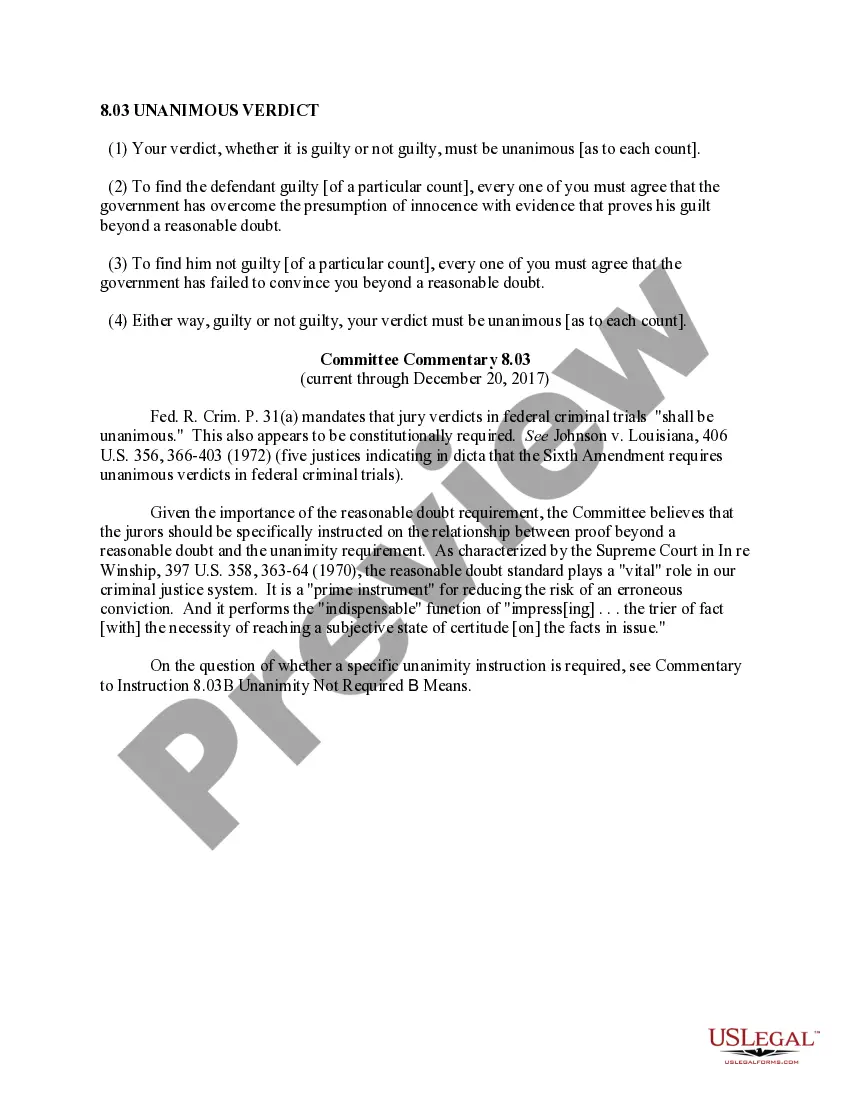
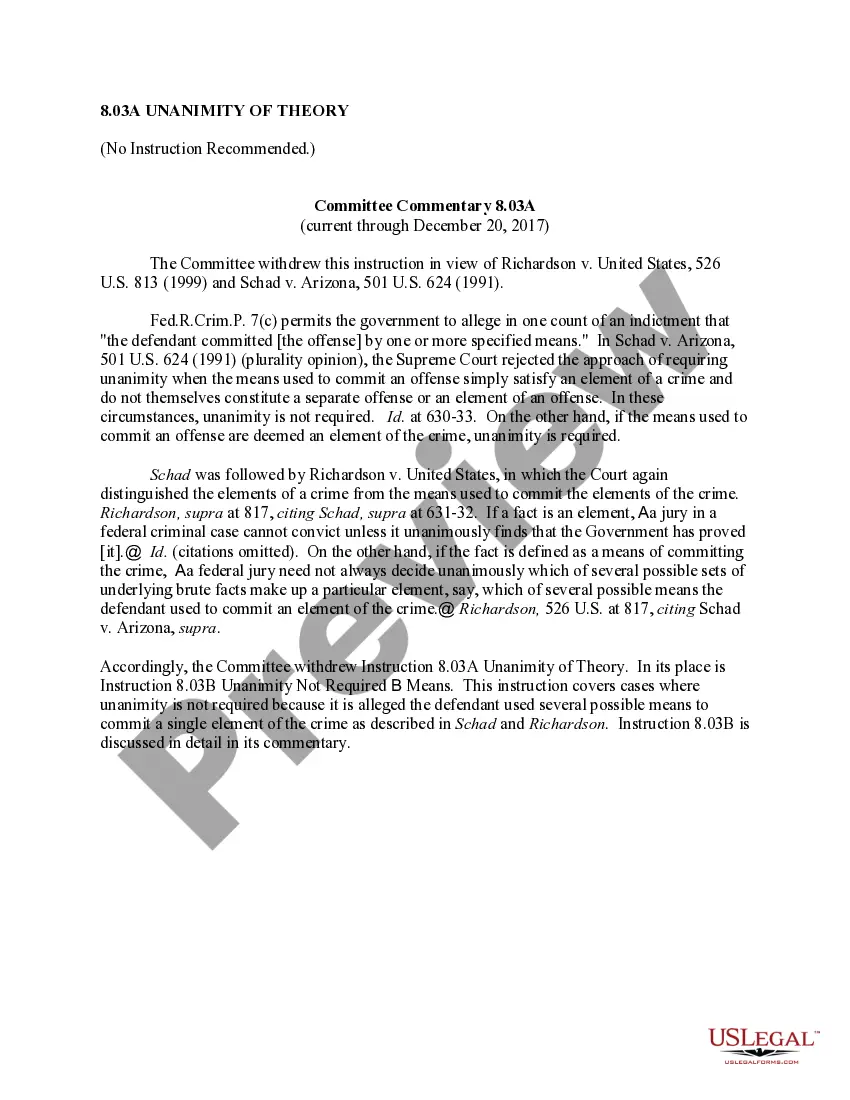
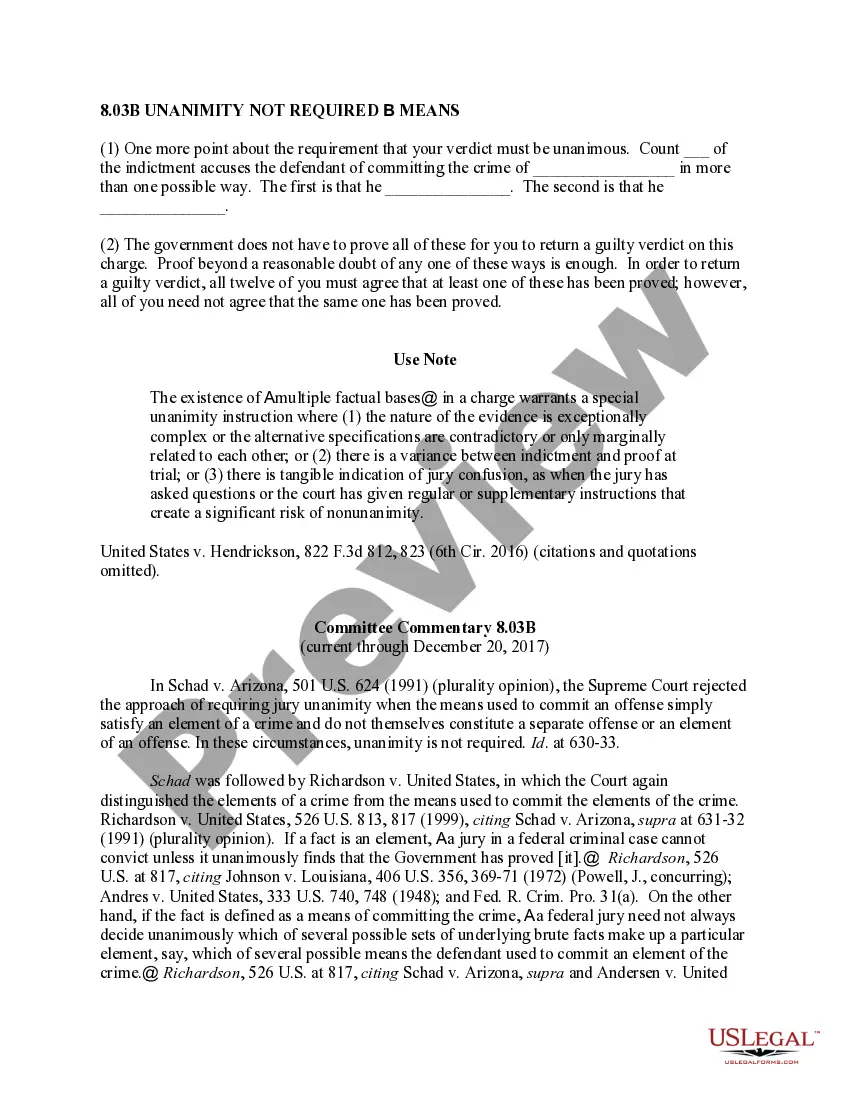
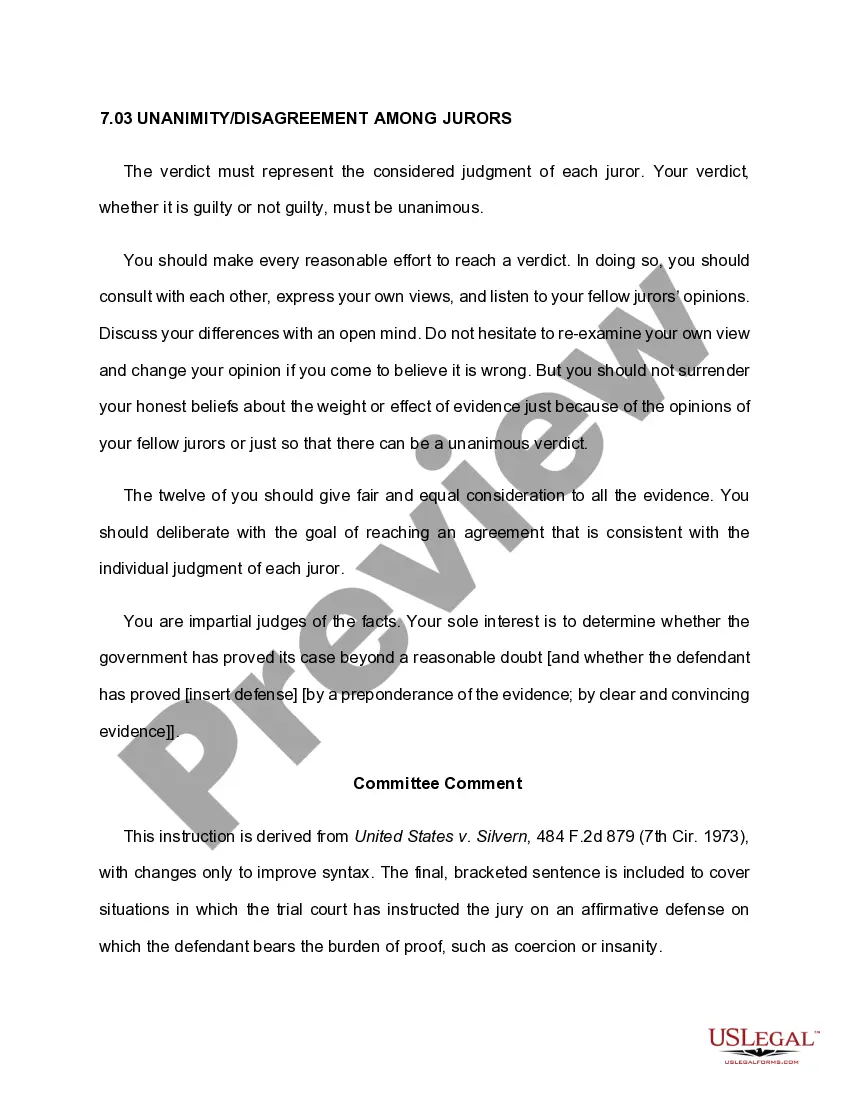
The Unanimity of Theory form is a legal instruction used in jury trials, highlighting the necessity for jurors to reach a unanimous decision regarding the defendant's guilt or innocence. It underscores that while jurors must agree on the same element of the crime, they do not need to agree on the specific means by which the crime was committed. This form is crucial for ensuring that all jurors have a shared understanding of the evidence and verdict, helping to uphold the integrity of the legal process.
Main sections of this form
- Definition of the requirement for a unanimous verdict
- Instructions regarding the different counts and theories of crime
- Clarification that not all theories need to be proven, just one agreed upon by all jurors
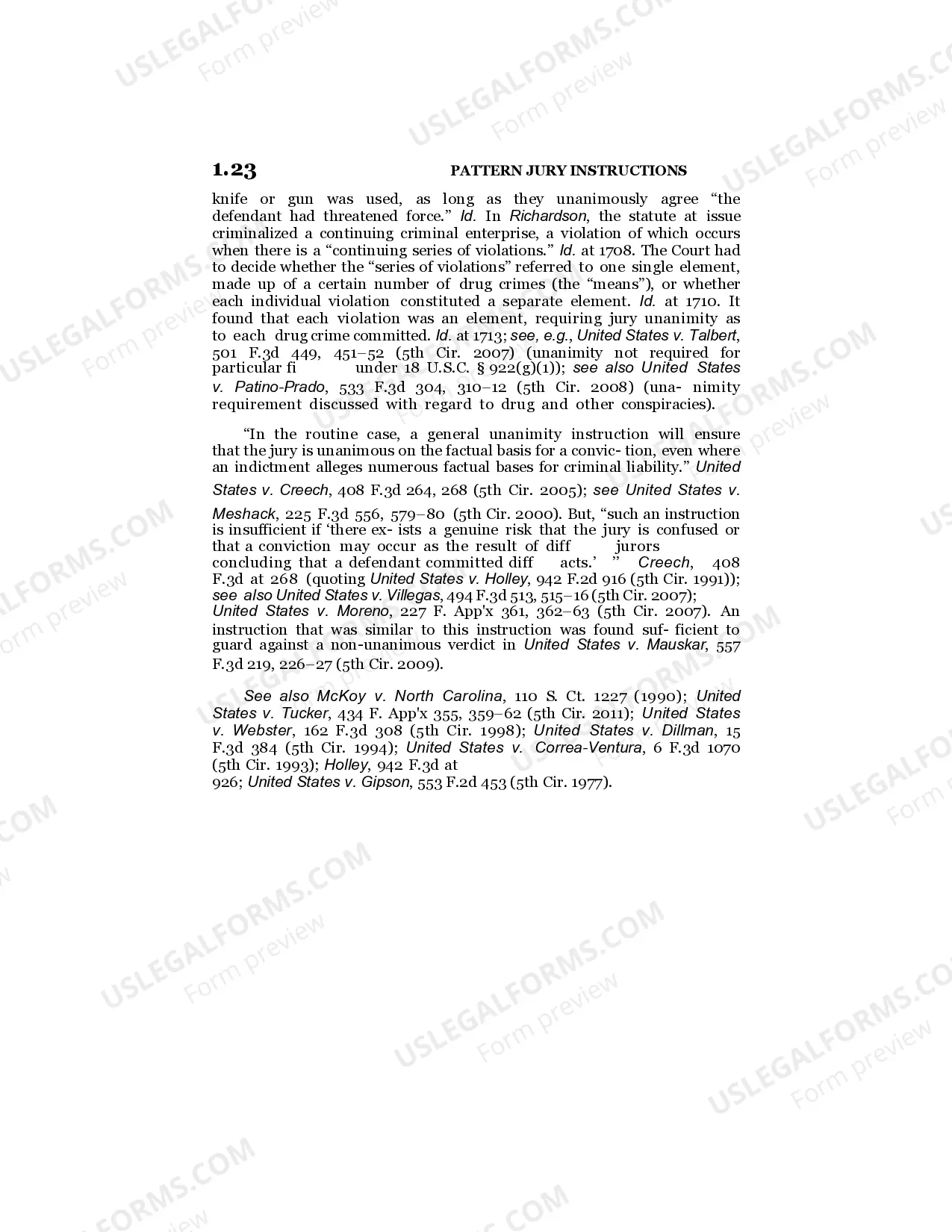
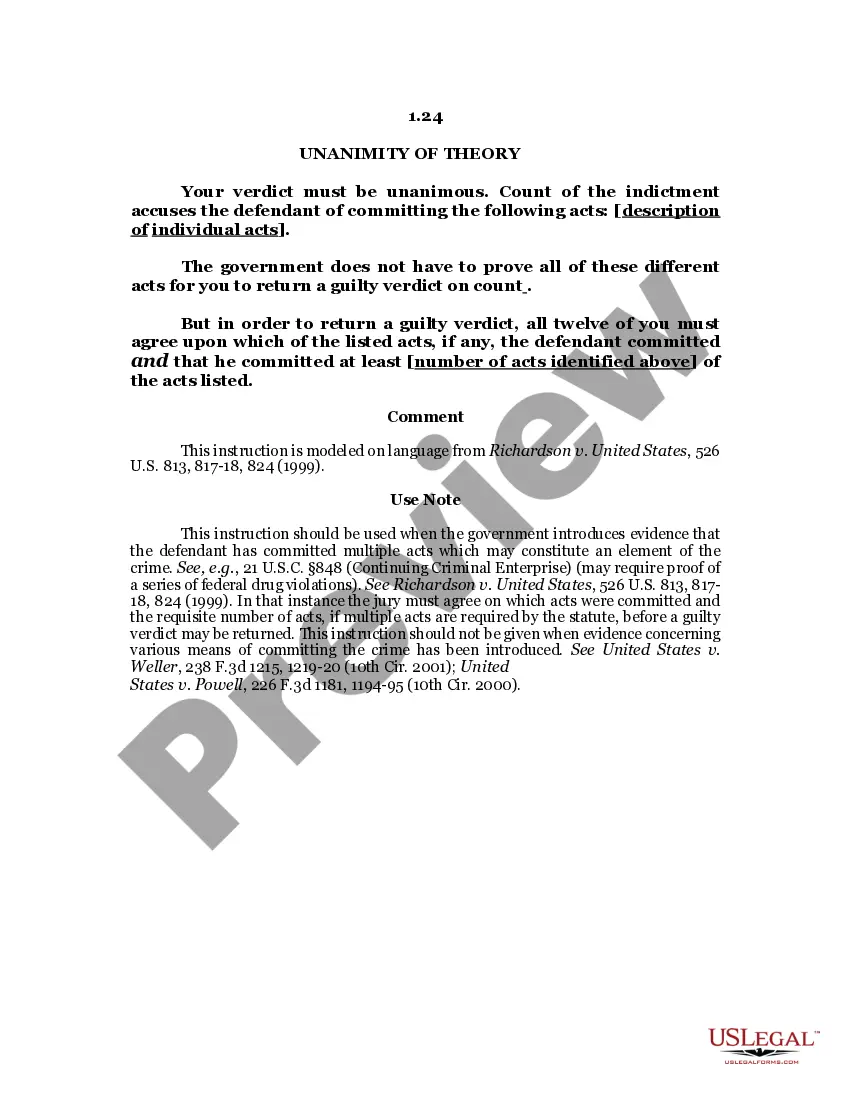
- Judicial precedents cited for clarification of the unanimity requirement
When to use this document
This form should be utilized in criminal trials where the indictment includes multiple counts or theories under which the defendant is being charged. It is essential when the jury needs clear guidance on reaching a verdict for complex cases involving different possible actions or means of committing a crime. The instruction aids in preventing confusion amongst jurors and ensures a just and lawful verdict.
Who should use this form
- Judges presiding over criminal trials
- Jury members tasked with deliberating a verdict
- Attorneys involved in criminal defense or prosecution
How to prepare this document
- Review the charges and understand the counts against the defendant.
- Identify the different theories of how the alleged crime was committed.
- Ensure that jurors understand they need to agree on at least one theory unanimously.
- Consider judicial precedents for clarity on the unanimity requirement.
- Confirm that the verdict reflects the agreement on the same theory of guilt or innocence.
Does this form need to be notarized?
This form usually doesn’t need to be notarized. However, local laws or specific transactions may require it. Our online notarization service, powered by Notarize, lets you complete it remotely through a secure video session, available 24/7.
Get your form ready online
Our built-in tools help you complete, sign, share, and store your documents in one place.
Make edits, fill in missing information, and update formatting in US Legal Forms—just like you would in MS Word.
Download a copy, print it, send it by email, or mail it via USPS—whatever works best for your next step.
Sign and collect signatures with our SignNow integration. Send to multiple recipients, set reminders, and more. Go Premium to unlock E-Sign.
If this form requires notarization, complete it online through a secure video call—no need to meet a notary in person or wait for an appointment.
We protect your documents and personal data by following strict security and privacy standards.

Make edits, fill in missing information, and update formatting in US Legal Forms—just like you would in MS Word.

Download a copy, print it, send it by email, or mail it via USPS—whatever works best for your next step.

Sign and collect signatures with our SignNow integration. Send to multiple recipients, set reminders, and more. Go Premium to unlock E-Sign.

If this form requires notarization, complete it online through a secure video call—no need to meet a notary in person or wait for an appointment.

We protect your documents and personal data by following strict security and privacy standards.
Typical mistakes to avoid
- Failing to address the possibility of different means of committing a crime.
- Assuming all jurors must agree on every element of the crime rather than just one theory.
- Not referencing relevant judicial precedents that clarify the unanimity requirement.
Benefits of using this form online
- Convenient access to authoritative legal wording and guidance.
- Editable form allows for adjustments based on case specifics.
- Reliable reference material that is consistent with legal standards.
What to keep in mind
- The Unanimity of Theory form ensures jurors agree on a singular basis for a guilty verdict.
- This form is vital in trials with multiple counts or theories regarding a crime.
- Jurors should be instructed clearly to prevent confusion and ensure due process.
Looking for another form?
Form popularity
FAQ
The court could hold you in contempt and / or impose a $50 fine for each time you fail to appear. If you lose your jury summons, contact the Clerk of Superior Court office in your county as soon as possible to obtain reporting information. Procedures to request an excuse or deferral vary from county to county.
In any trial the judge is the ultimate decision maker and has the power to overturn a jury verdict if there is insufficient evidence to support that verdict or if the decision granted inadequate compensatory damages.
Petit, or trial jurors receive $12 for the first day of service and $20 thereafter. If jurors serve more than five days, they will receive $40 per day. Grand jurors receive $20 per day. The Clerk of Court will issue jury payment in the form of a check after the jury service concludes.
The jury must be unanimous as to the "series" of underlying offenses in a CCE prosecution. That is, the jury must unanimously agree not only that the defendant committed some "continuing series of violations," but also about which specific "violations" make up that continuing series.
The unanimity requirement as commonly applied means that all the members of the jury must agree upon the verdict?whether for conviction or acquittal. If any of the jurors fail to agree, the jury is "hung"?that is, unable to reach a verdict.
In North Carolina, a case involving a felony charge must have a jury of 12 persons, all of whom must agree on a guilty verdict in order for a defendant to be convicted. A defendant charged with a misdemeanor in North Carolina does not have the right to a jury trial.
In a civil case, the judge will tell you how many jurors must agree in order to reach a verdict. In a criminal case, the unanimous agreement of all 12 jurors is required.
Jury verdicts will not be reversed merely because they are ?inconsistent.? To require reversal, jury verdicts must be both inconsistent and legally contradictory (i.e., "mutually exclusive"). The most significant North Carolina appellate case on inconsistent jury verdicts is State v.