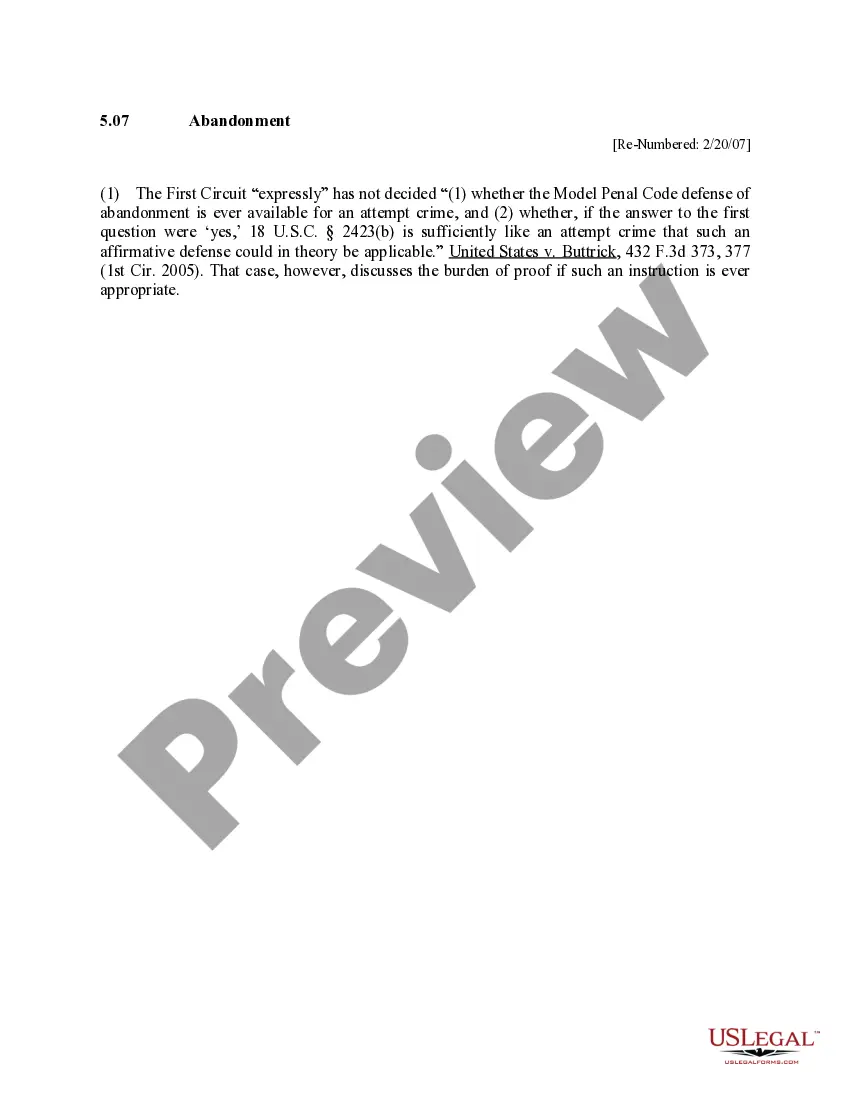
Misprision of a Felony
What is this form?
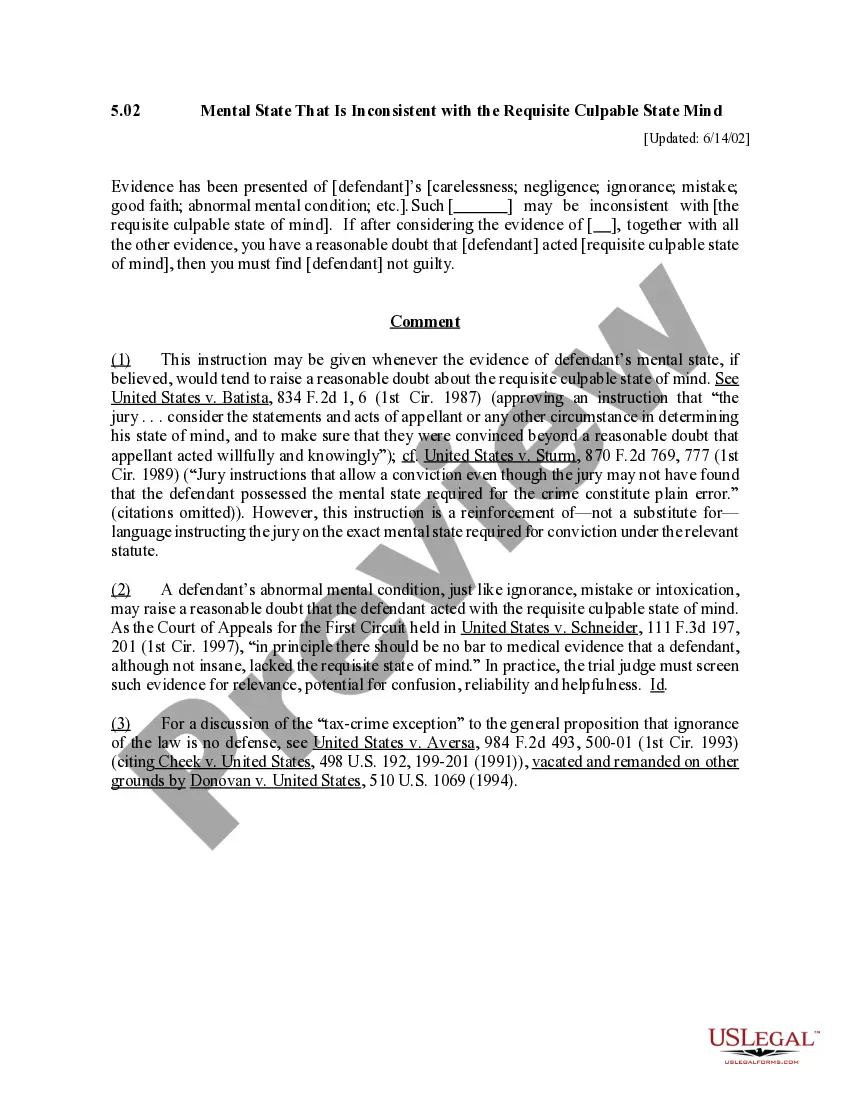
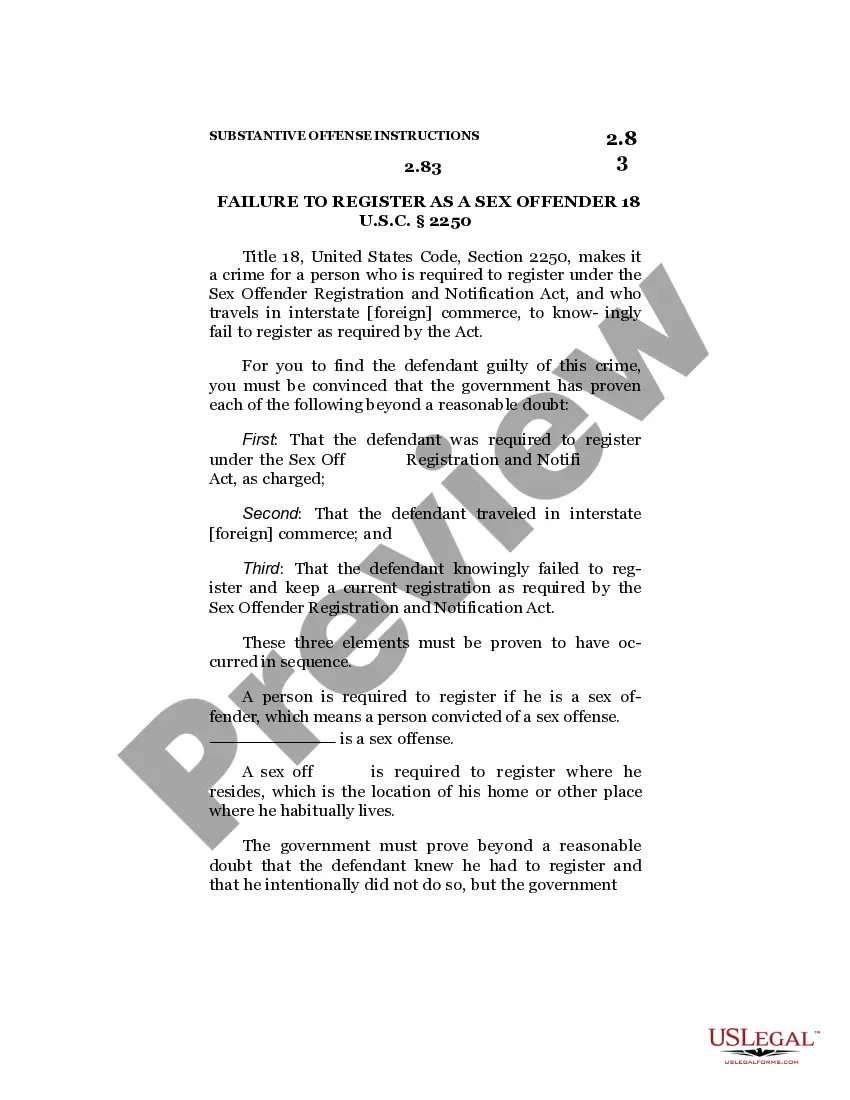
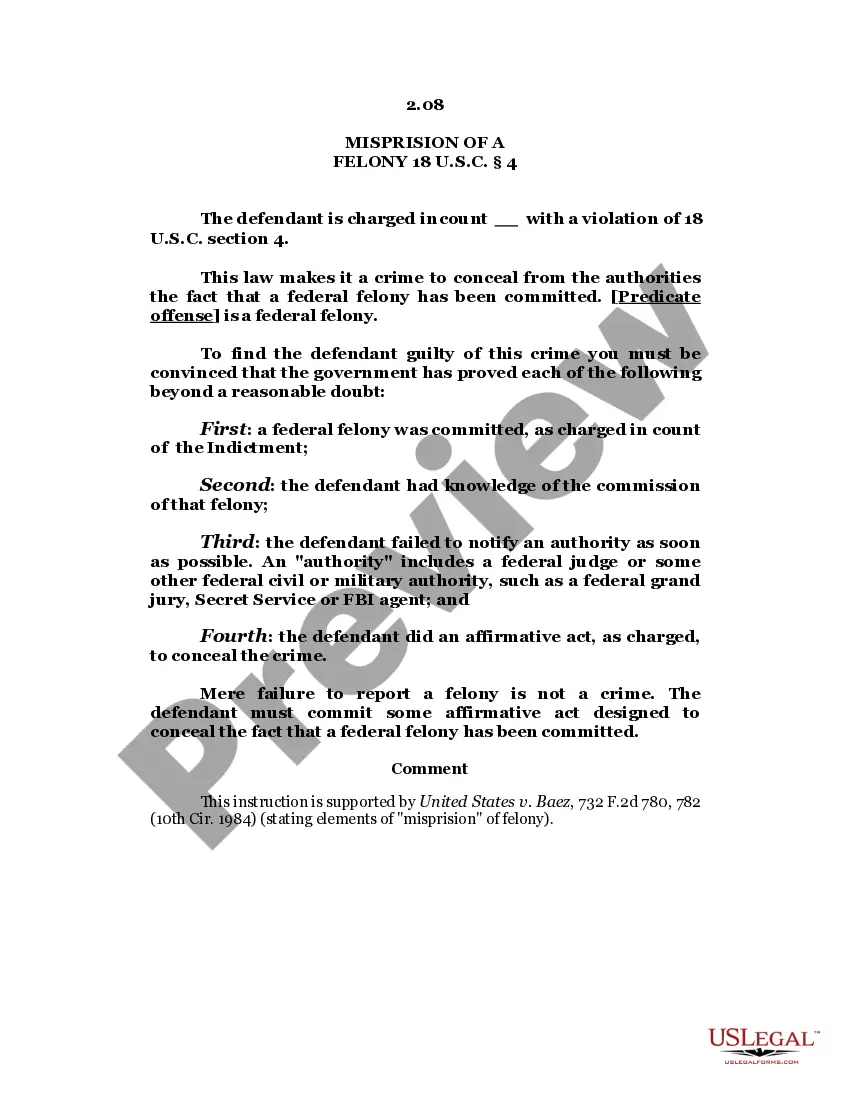
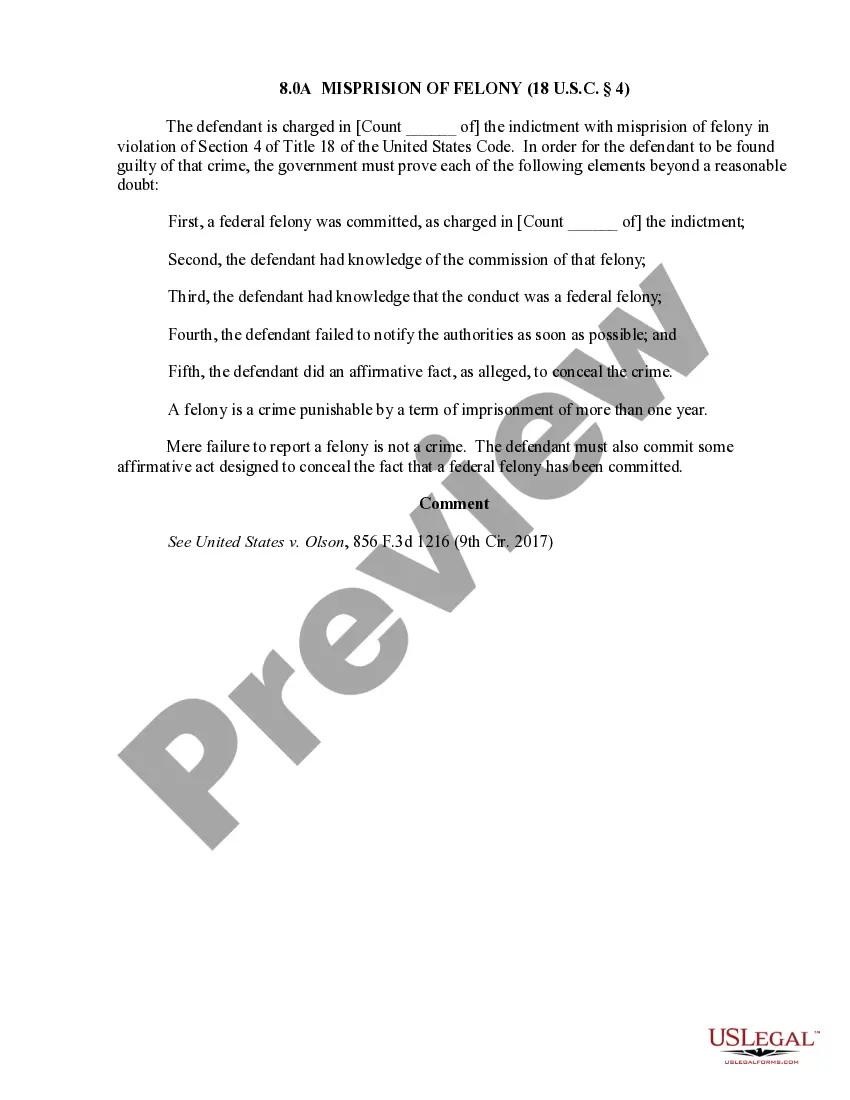
The Misprision of a Felony form is a legal document that addresses the crime of concealing a federal felony from authorities. Under Title 18, United States Code, Section 4, it is unlawful for any person to fail to report knowledge of a federal felony. This form clarifies the specific legal requirements for proving misprision, distinguishing it from other related offenses like aiding and abetting a felony.
What’s included in this form
- Clarification of the definition of misprision of a felony.
- Elements necessary to prove the crime, including knowledge and affirmative acts of concealment.
- Instructions for identifying the underlying felony associated with the charge.
- References to relevant legal cases that define and provide context for the offense.


When to use this document
This form is relevant in legal contexts where an individual has knowledge of a federal felony and has not reported it to the authorities. It is particularly significant for legal professionals working on cases involving concealment of terror-related activities, large-scale fraud, or other serious federal crimes. It can also be used when assessing the legal implications of failing to report such knowledge.
Intended users of this form
- Legal professionals representing defendants accused of misprision.
- Individuals seeking to understand their responsibilities under U.S. law regarding felony concealment.
- Anyone involved in a legal defense strategy concerning knowledge of federal crimes.
Completing this form step by step
- Identify the federal felony that has been concealed.
- Document your knowledge of the commission of the felony.
- Detail any affirmative acts taken to conceal the crime.
- Specify authorities to whom you failed to report the felony.
- Ensure all information is accurate and complete before submission.
Notarization requirements for this form
This form usually doesn’t need to be notarized. However, local laws or specific transactions may require it. Our online notarization service, powered by Notarize, lets you complete it remotely through a secure video session, available 24/7.
Get your form ready online
Our built-in tools help you complete, sign, share, and store your documents in one place.
Make edits, fill in missing information, and update formatting in US Legal Forms—just like you would in MS Word.
Download a copy, print it, send it by email, or mail it via USPS—whatever works best for your next step.
Sign and collect signatures with our SignNow integration. Send to multiple recipients, set reminders, and more. Go Premium to unlock E-Sign.
If this form requires notarization, complete it online through a secure video call—no need to meet a notary in person or wait for an appointment.
We protect your documents and personal data by following strict security and privacy standards.

Make edits, fill in missing information, and update formatting in US Legal Forms—just like you would in MS Word.

Download a copy, print it, send it by email, or mail it via USPS—whatever works best for your next step.

Sign and collect signatures with our SignNow integration. Send to multiple recipients, set reminders, and more. Go Premium to unlock E-Sign.

If this form requires notarization, complete it online through a secure video call—no need to meet a notary in person or wait for an appointment.

We protect your documents and personal data by following strict security and privacy standards.
Avoid these common issues
- Failing to accurately identify the underlying felony.
- Misunderstanding the requirement for an affirmative act beyond mere failure to report.
- Submitting incomplete forms or lacking necessary documentation.
Why use this form online
- Convenient access to download and complete the form at any time.
- Editable format allows for easy customization and input of required information.
- Reliable templates drafted by licensed attorneys ensure compliance with legal standards.
Legal use & context
- Misprision of a felony is a serious offense, often leading to significant legal consequences.
- This legal form helps establish the basis for liability, emphasizing the need for action upon knowledge of a crime.
- Understanding the nuances of this law is vital for legal defense and compliance.
Looking for another form?
Form popularity
FAQ
Misprision of felony is a crime committed when a person knows that someone has been involved in a felony but fails to report it to law enforcement authorities. The crime of misprision of felony originated in the common law of Great Britain. In the U.S., however, it has never been adopted as a crime by most states.
First enacted into U.S. law in 1789, misprision of a felony in the federal system is a felony punishable by a fine and up to three years in prison.
Courts have determined the following crimes, when aggravating factors are not present, should generally not be classified as crimes involving moral turpitude: Driving under the influence, for first-time offenders. Domestic violence against a person other than your spouse. Possession of marijuana.
Misprision of a felony has been categorically considered a CIMT for immigration purposes by the BIA, and the circuit courts that have re- viewed the question have generally concurred, with the exception of the Ninth Circuit.
A crime involving moral turpitude (?CIMT?) has been vaguely defined as a depraved or immoral act, or a violation of the basic duties owed to fellow man, or recently as a ?reprehensible act? with a mens rea of at least recklessness.
What Is a Crime Involving Moral Turpitude? A crime involving moral turpitude (CIMT) is a criminal or offensive act that can be defined as vile and/or insulting to one's moral compass. A crime of moral turpitude is a crime that disrespects and antagonizes societal norms.
Misprision, in law, criminal misconduct of various types. Concealment of a serious crime by one who knows of its commission but was not a party to it is misprision. Similarly, the failure of a citizen to attempt to prevent the perpetration of an offense can be characterized as misprision.
§ 4 has the following elements: (1) that the principal committed and completed the felony alleged; (2) that the defendant had full knowledge of that fact; (3) that he failed to notify the authorities; and (4) that he took affirmative steps to conceal the crime of the principal.