Receiving Bribe by a Public Official
Overview of this form
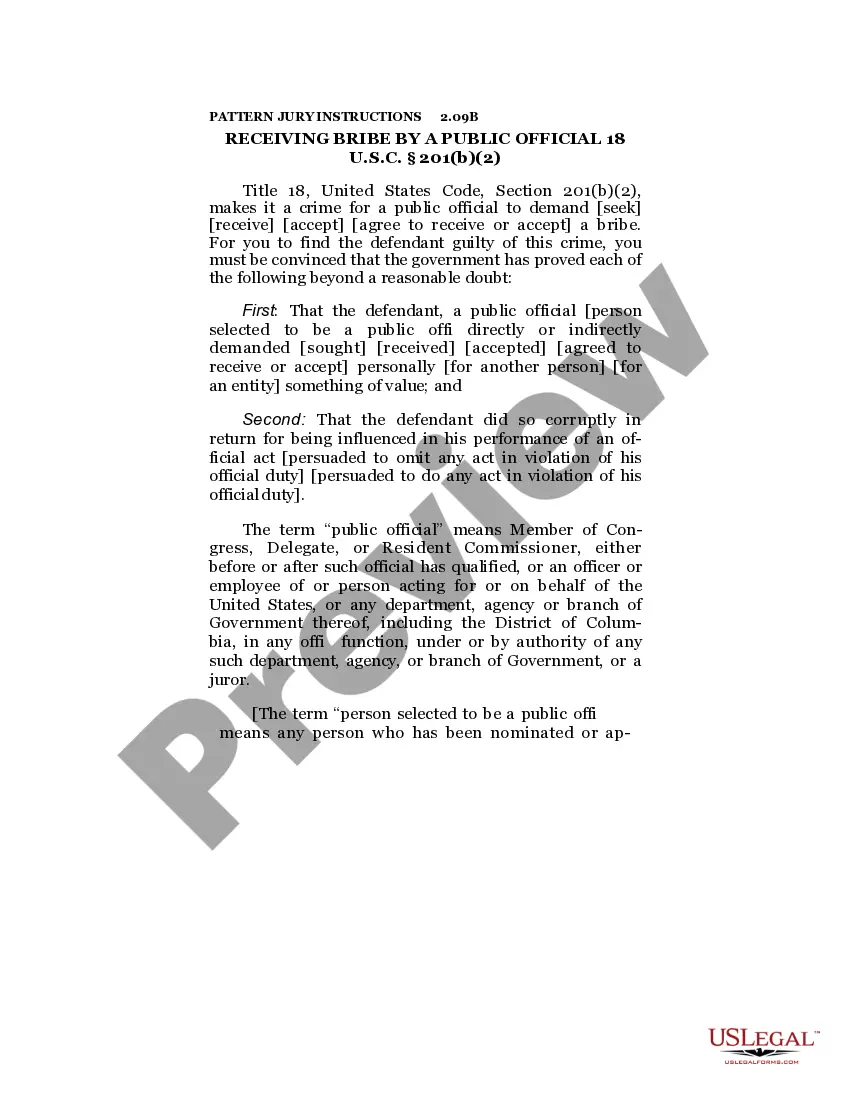
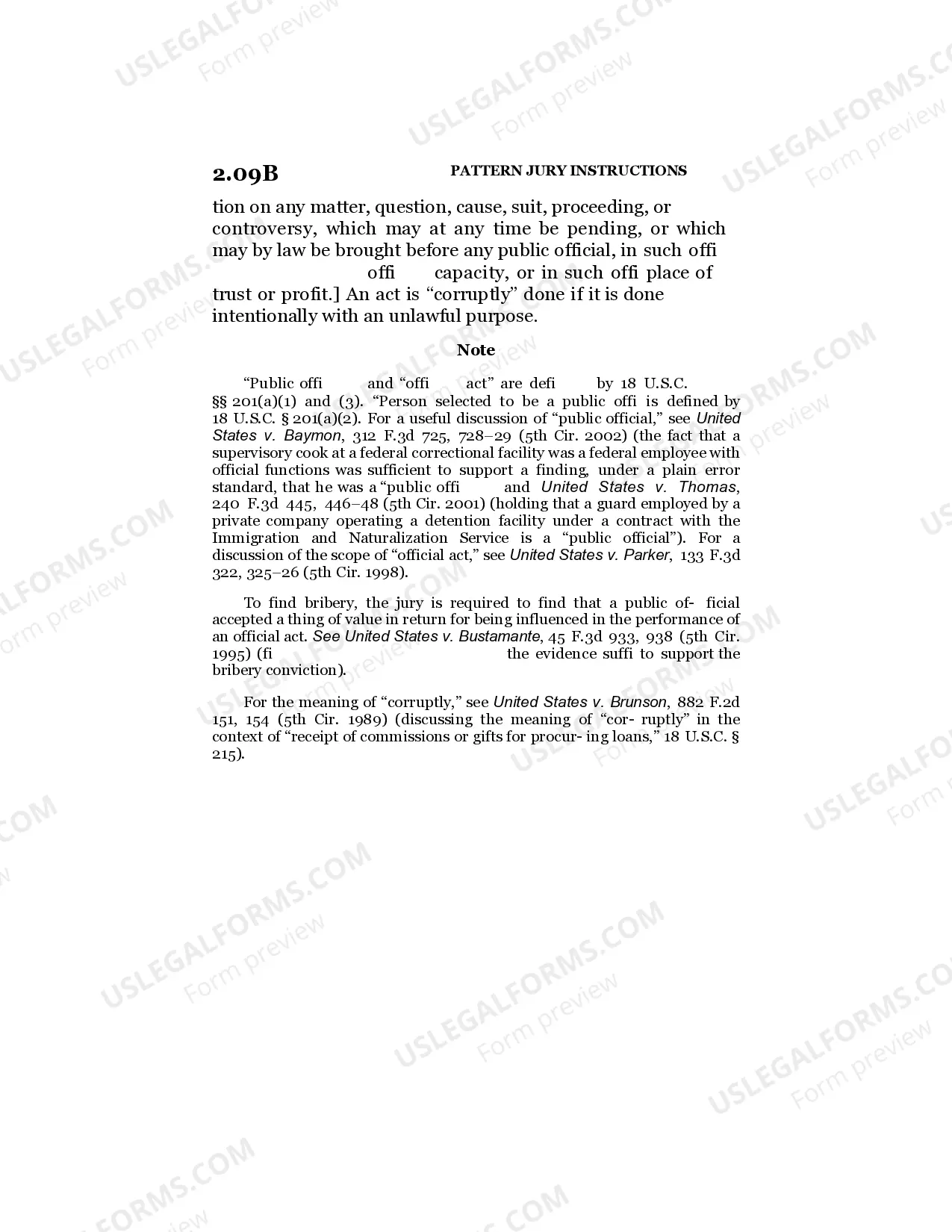
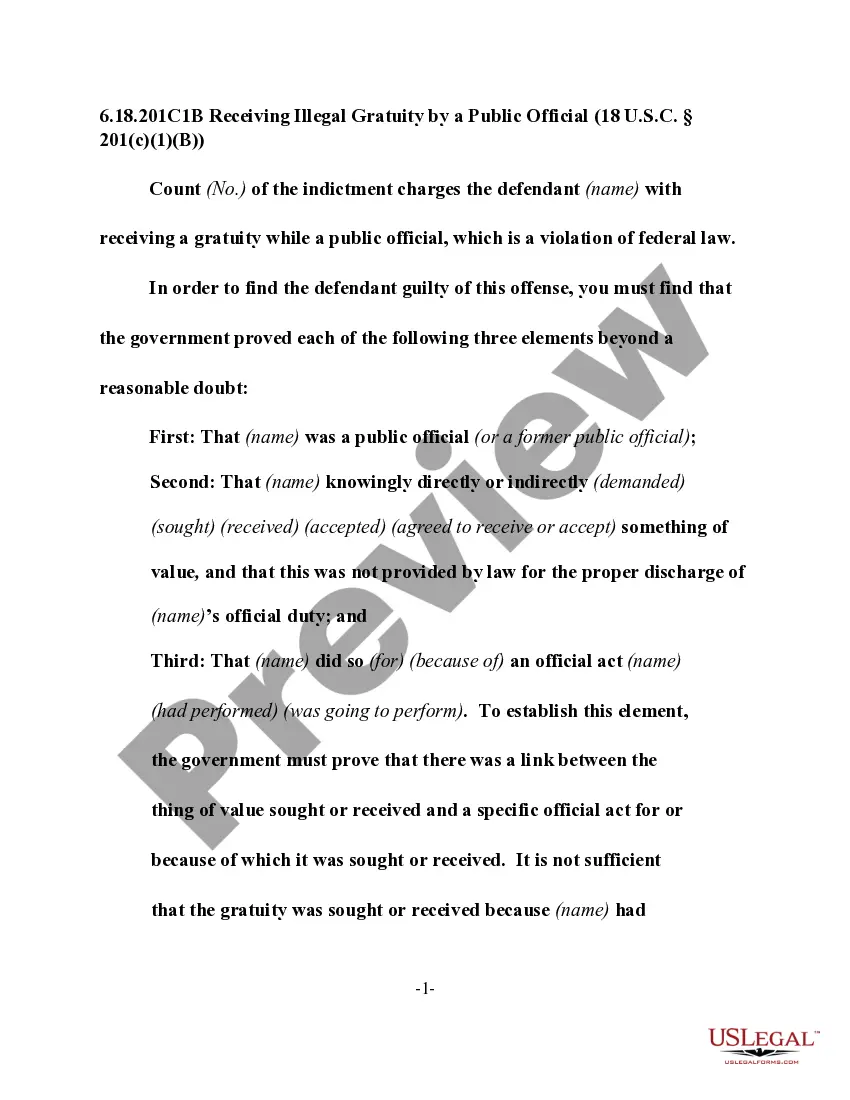
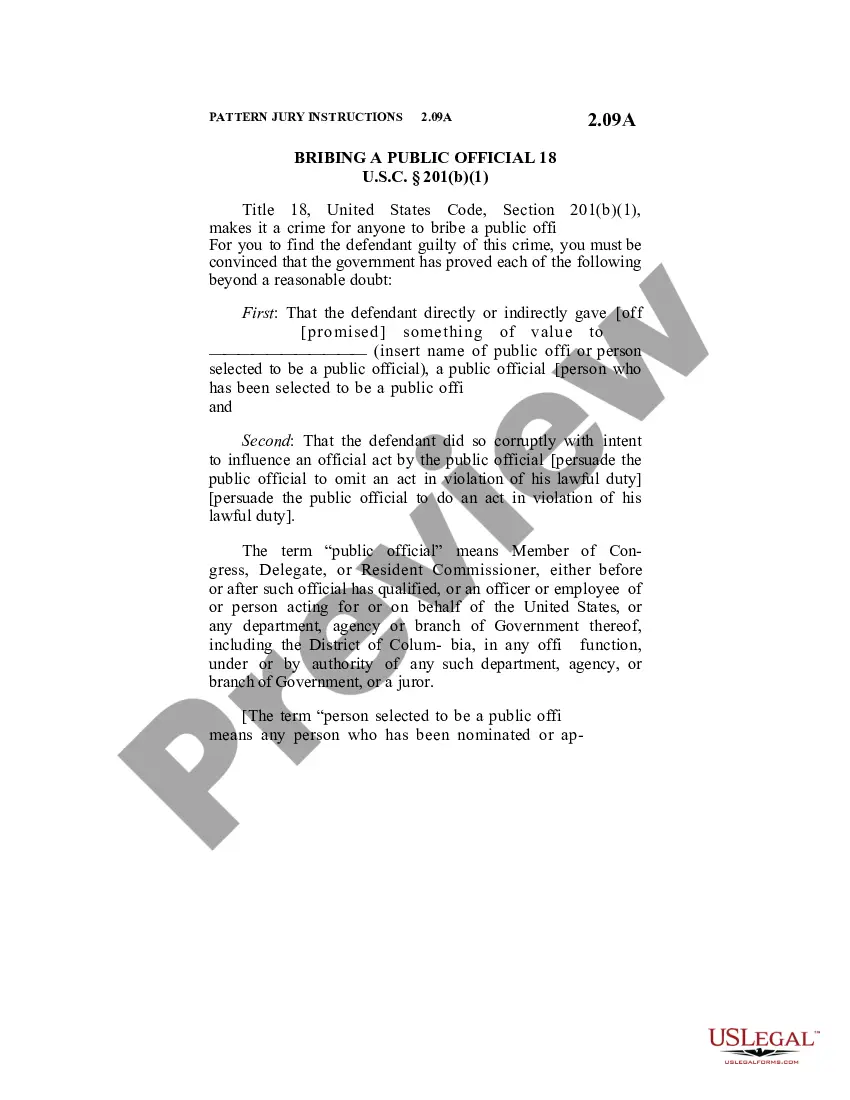
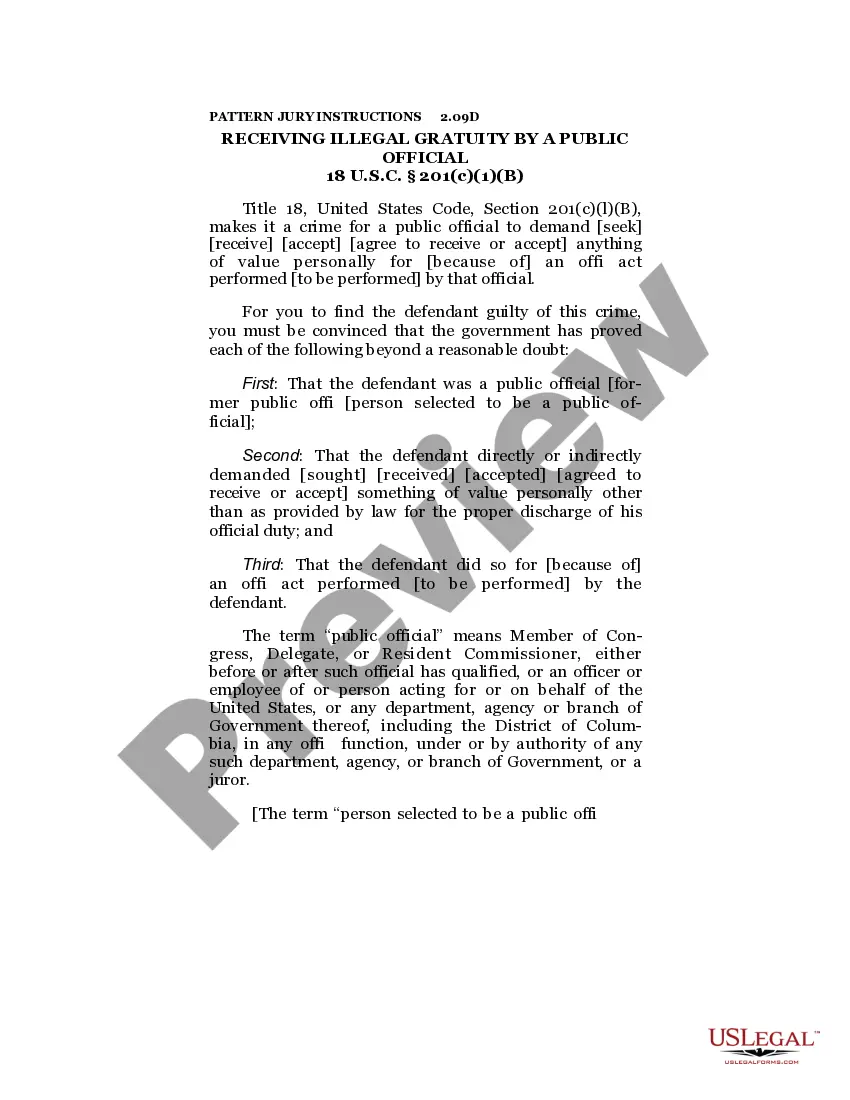
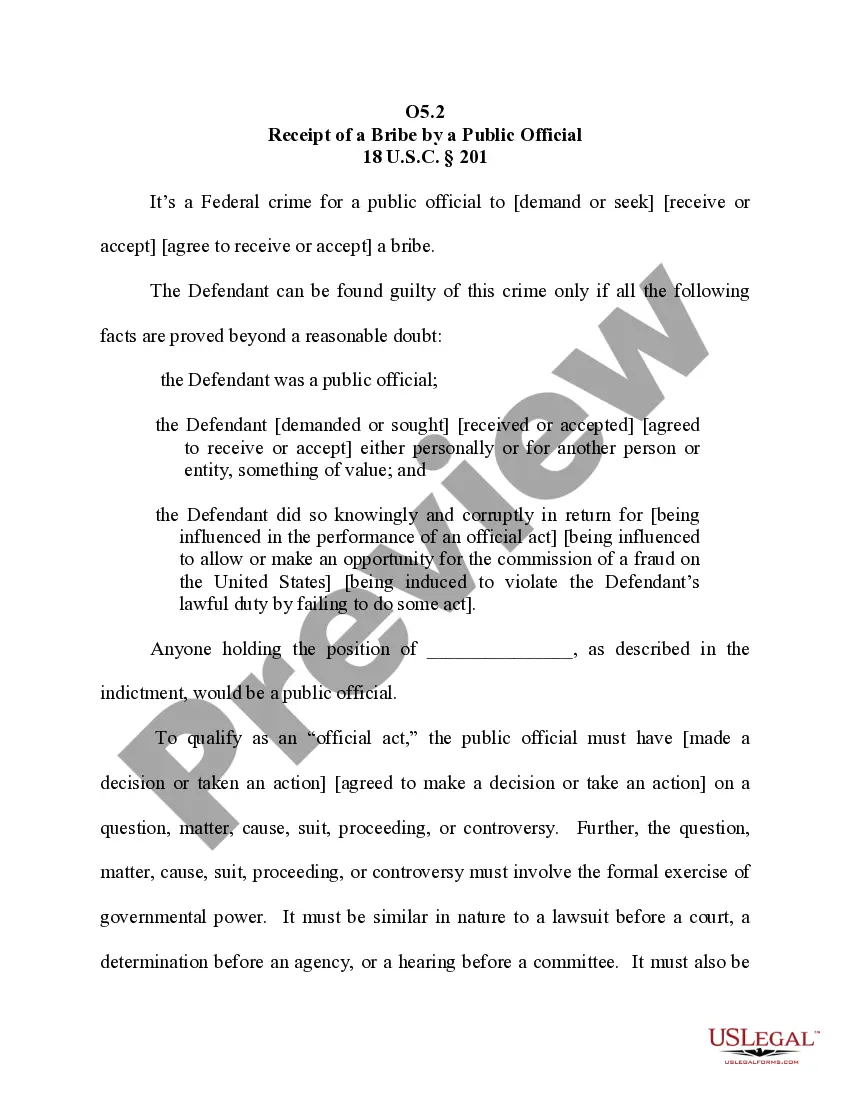
The Receiving Bribe by a Public Official form is a legal template that outlines the federal offense of bribery involving public officials, as defined by Title 18, United States Code, Section 201(b)(2). This form is specifically designed for legal professionals and individuals involved in cases concerning corruption, detailing the criteria for what constitutes a bribe and the elements required for prosecution. It differs from similar forms by focusing specifically on the actions of public officials in relation to receiving bribes, offering a framework for legal compliance and clarification of statutory definitions.
Key components of this form
- Definition of a public official and the scope of their duties.
- Criteria for determining if a bribe was offered or accepted.
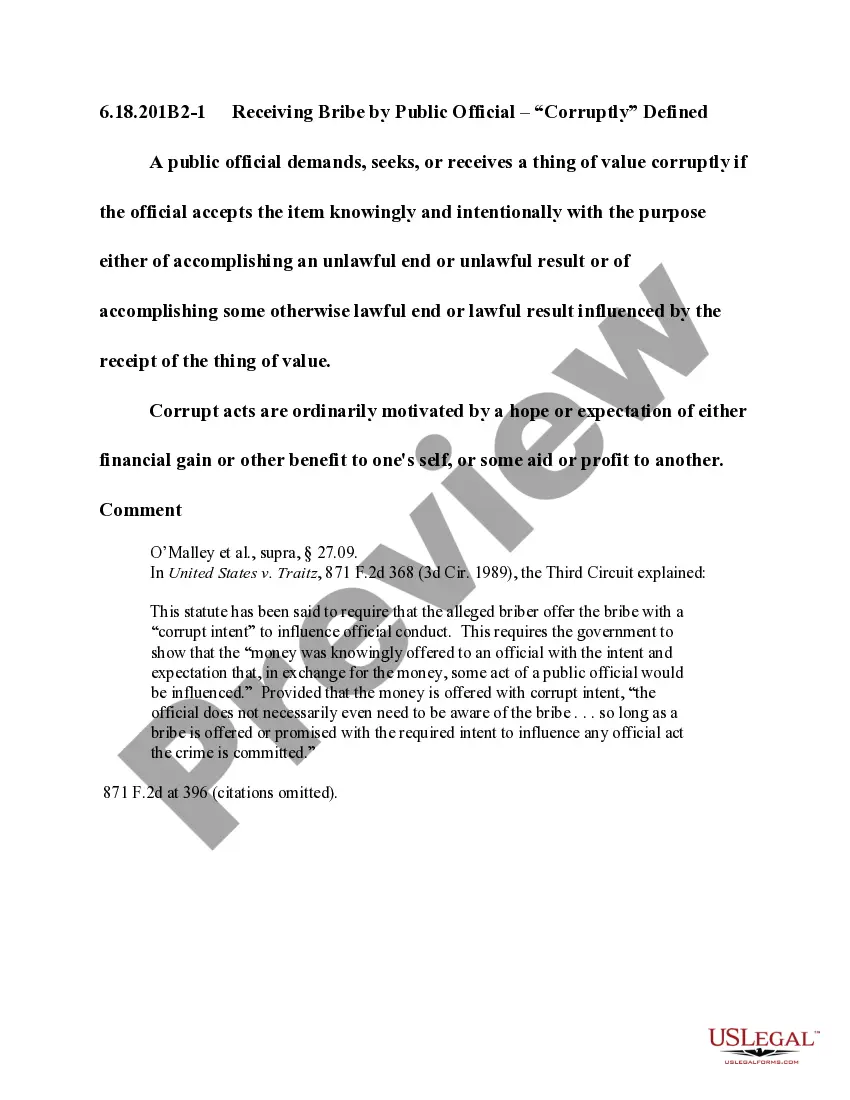
- Explanation of what constitutes acting "corruptly" in this context.
- Legal ramifications and potential penalties associated with bribery.
- Judicial interpretations and relevant case law for context.
Situations where this form applies
This form should be used in scenarios involving allegations of bribery against public officials. It is appropriate for legal professionals drafting charges, defendants preparing a defense, or those involved in investigations. Additionally, this form is relevant during whistleblowing procedures or when reporting misconduct involving public officials.
Intended users of this form
- Legal practitioners handling criminal cases related to public corruption.
- Government employees needing clarification on ethical conduct.
- Individuals wishing to report or defend against allegations of bribery.
- Whistleblowers or activists pursuing accountability in public office.
Instructions for completing this form
- Identify the parties involved: the accused public official and the entity or individual making the bribe.
- Specify the nature of the bribe: detail what was offered or received.
- Include the context: describe the official act that was influenced or omitted.
- Enter legal definitions as applicable, referencing pertinent statutes.
- Collect supporting evidence or documentation to substantiate claims.
Is notarization required?
Notarization is not commonly needed for this form. However, certain documents or local rules may make it necessary. Our notarization service, powered by Notarize, allows you to finalize it securely online anytime, day or night.
Get your form ready online
Our built-in tools help you complete, sign, share, and store your documents in one place.
Make edits, fill in missing information, and update formatting in US Legal Forms—just like you would in MS Word.
Download a copy, print it, send it by email, or mail it via USPS—whatever works best for your next step.
Sign and collect signatures with our SignNow integration. Send to multiple recipients, set reminders, and more. Go Premium to unlock E-Sign.
If this form requires notarization, complete it online through a secure video call—no need to meet a notary in person or wait for an appointment.
We protect your documents and personal data by following strict security and privacy standards.

Make edits, fill in missing information, and update formatting in US Legal Forms—just like you would in MS Word.

Download a copy, print it, send it by email, or mail it via USPS—whatever works best for your next step.

Sign and collect signatures with our SignNow integration. Send to multiple recipients, set reminders, and more. Go Premium to unlock E-Sign.

If this form requires notarization, complete it online through a secure video call—no need to meet a notary in person or wait for an appointment.

We protect your documents and personal data by following strict security and privacy standards.
Mistakes to watch out for
- Failing to clearly define the official act related to the bribery charge.
- Not providing sufficient evidence to demonstrate the corrupt nature of the act.
- Misunderstanding the definitions of "public official" and "bribery" in federal law.
Benefits of using this form online
- Convenient access to a legally sound template that saves time and resources.
- Edit and customize the form to suit specific case needs easily.
- Reliable guidance provided by legal professionals during the drafting process.
Looking for another form?
Form popularity
FAQ
The statute requires proof that the defendant intended to influence an official act. ?In other words, for bribery there must be a quid pro quo-a specific intent to give or receive something of value in exchange for an official act.? United States v.
Some examples of bribes might include: A construction guaranteeing an elected official ten percent in kickback money in exchange for a large public infrastructure contract. A manufacturing firm paying foreign officials money for preferential treatment or to smuggle unregistered goods across a border.
Yes, bribery is illegal. Bribery can be a crime under federal or state law, depending on who and what is involved. Most states have several types of bribery charges, such as bribery of public officials, witnesses, jurors, corporations, and sports officials.
To prove a bribery case, the government must demonstrate that a thing of value was offered and accepted, that there was an illegal intent, and the intent was to pay money and receive something in return that was illegal. That could be an illegal advantage in a bidding process to get a contract.
Section 201(b) requires that the offender have acted with the intent (as to the giver of a bribe) to influence or (as to the taker of a bribe) to be influenced. Thus, the bribery statute requires proof of an actual or intended quid pro quo: one thing given in exchange for another.
Bribery is defined generally as corrupt solicitation, acceptance, or transfer of value in exchange for official action.
In general, bribes can take the form of gifts or payments of money in exchange for favorable treatment, such as awards of government contracts. Other forms of bribes may include property, valuables, privileges, items of value, services, and favors.
The Section's public corruption work involves the investigation and prosecution of bribery, extortion, fraud, and embezzlement committed by elected and appointed officials, government employees, and those doing business with city, state, and federal government.