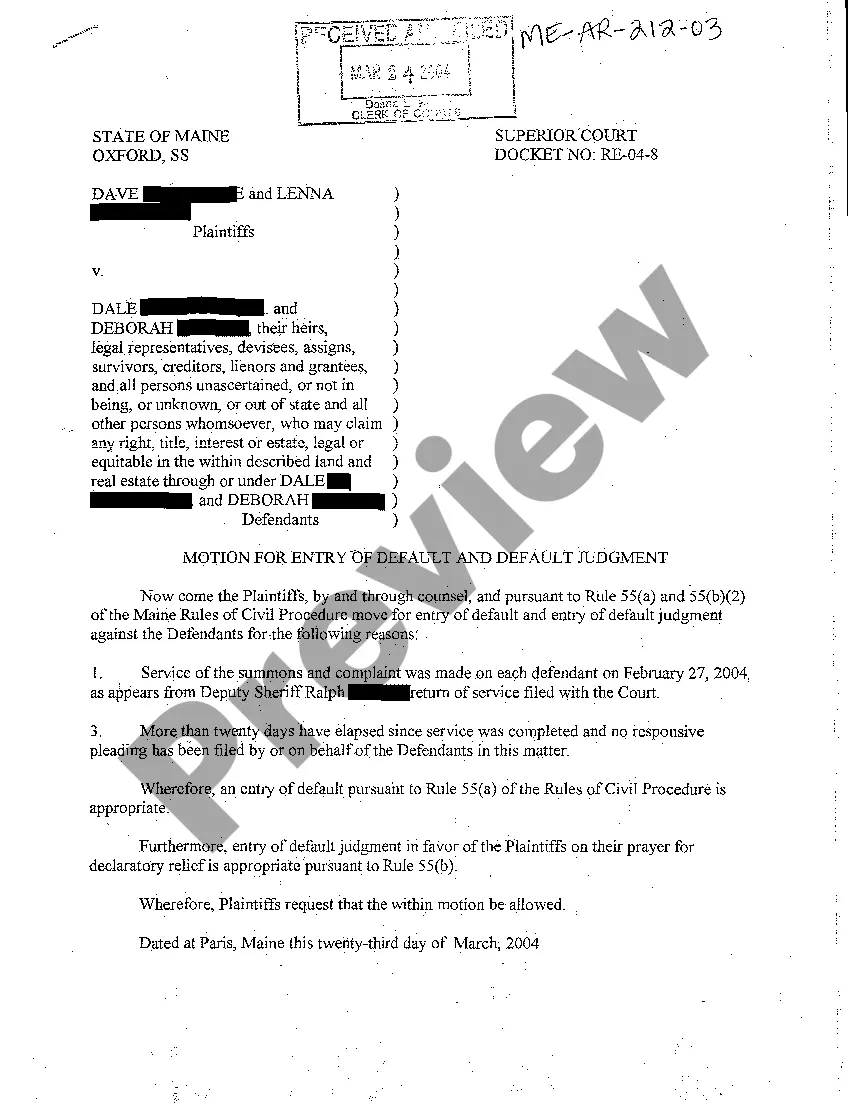
Theft Concerning Programs Receiving Federal Funds
About this form
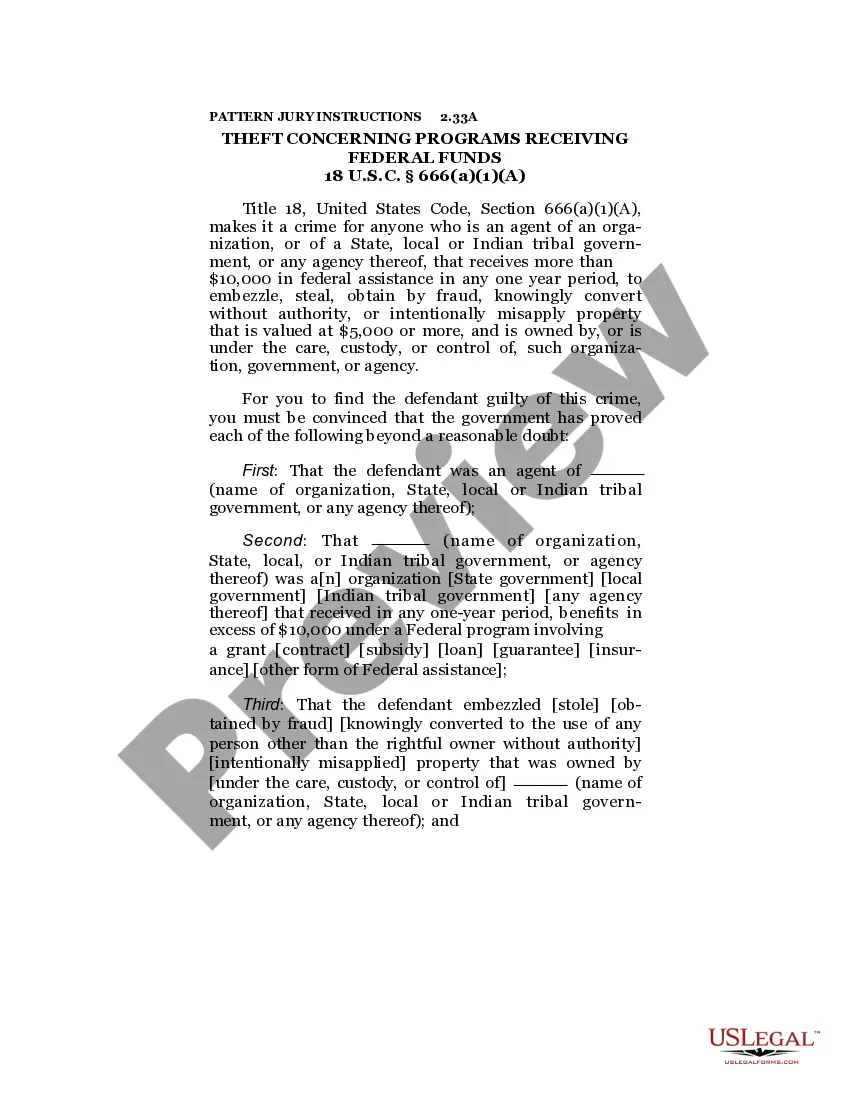
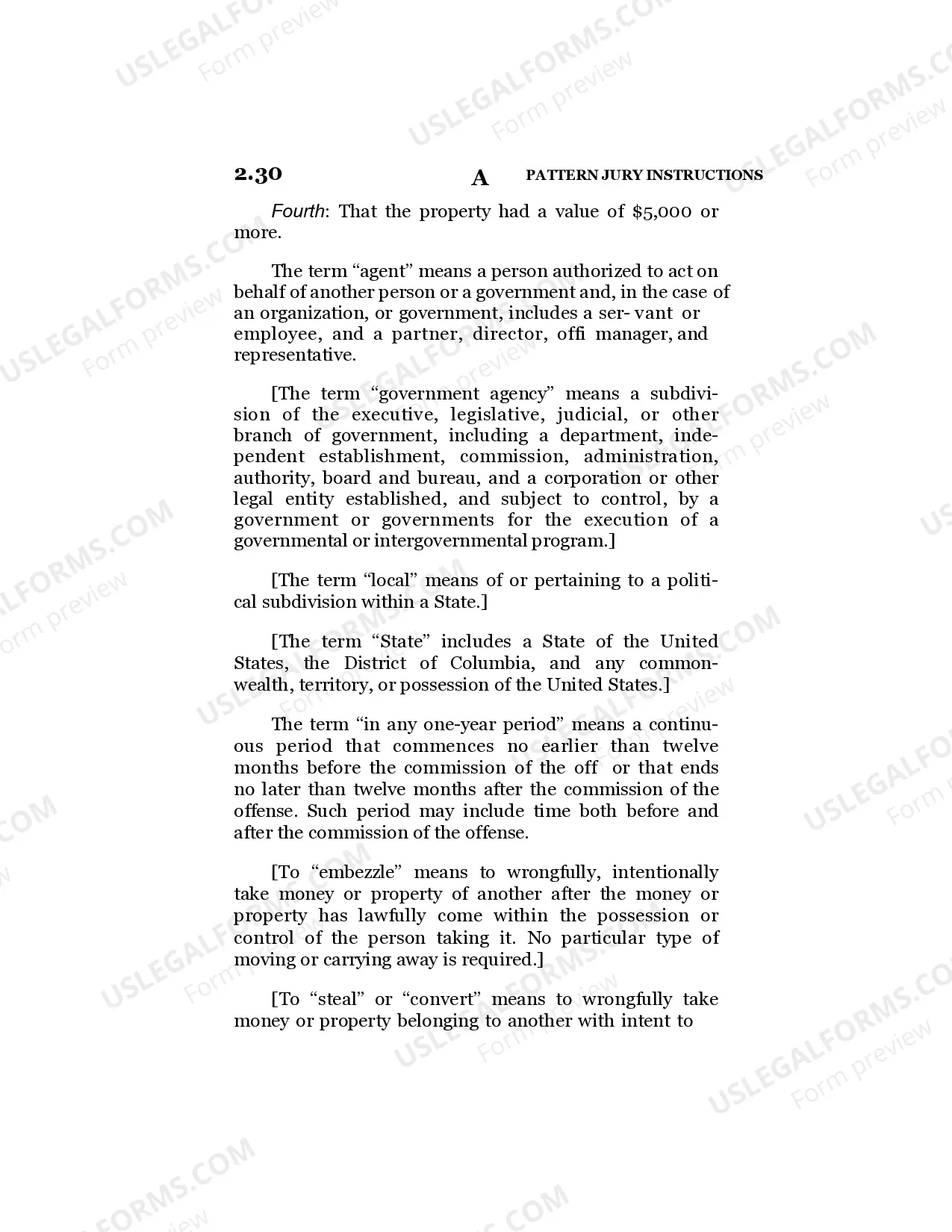
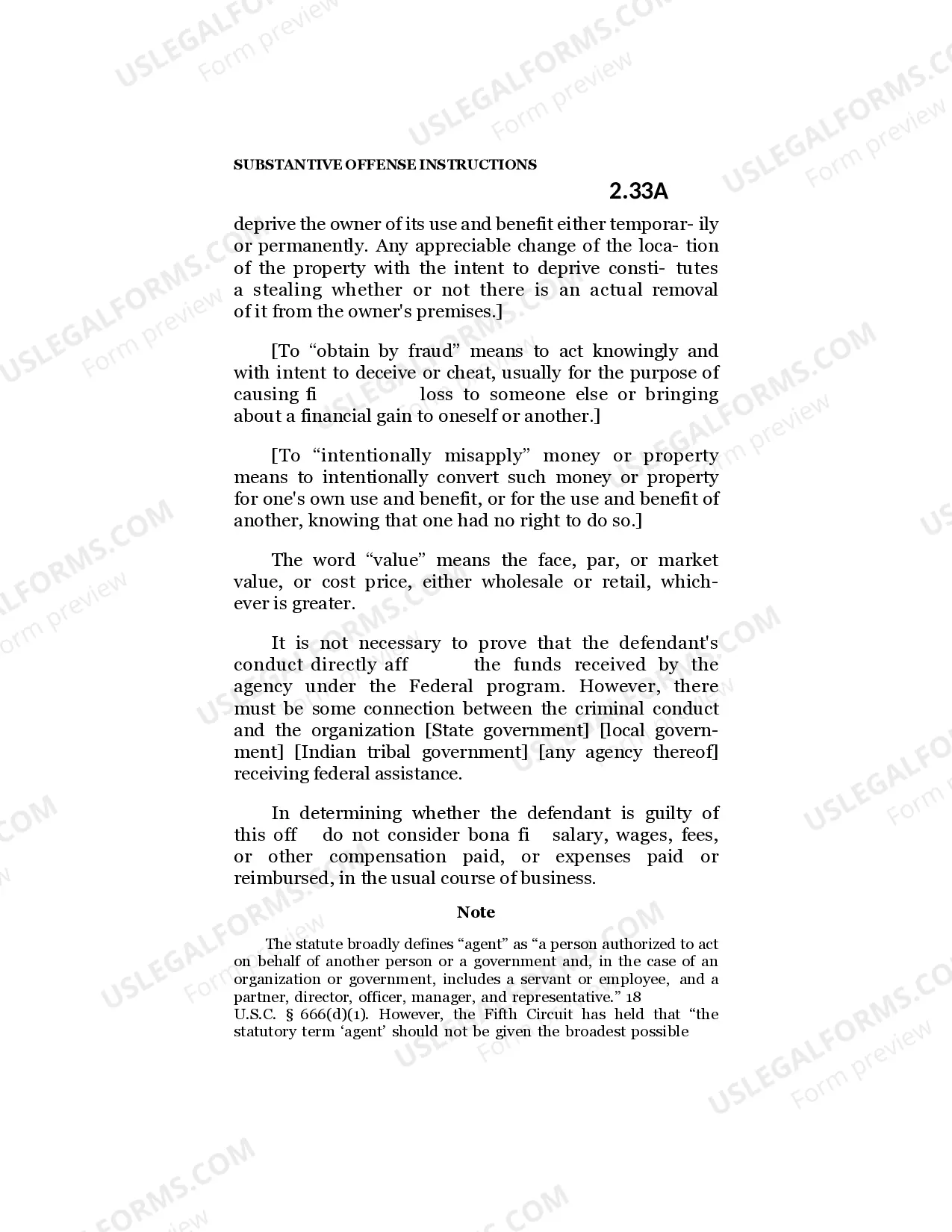
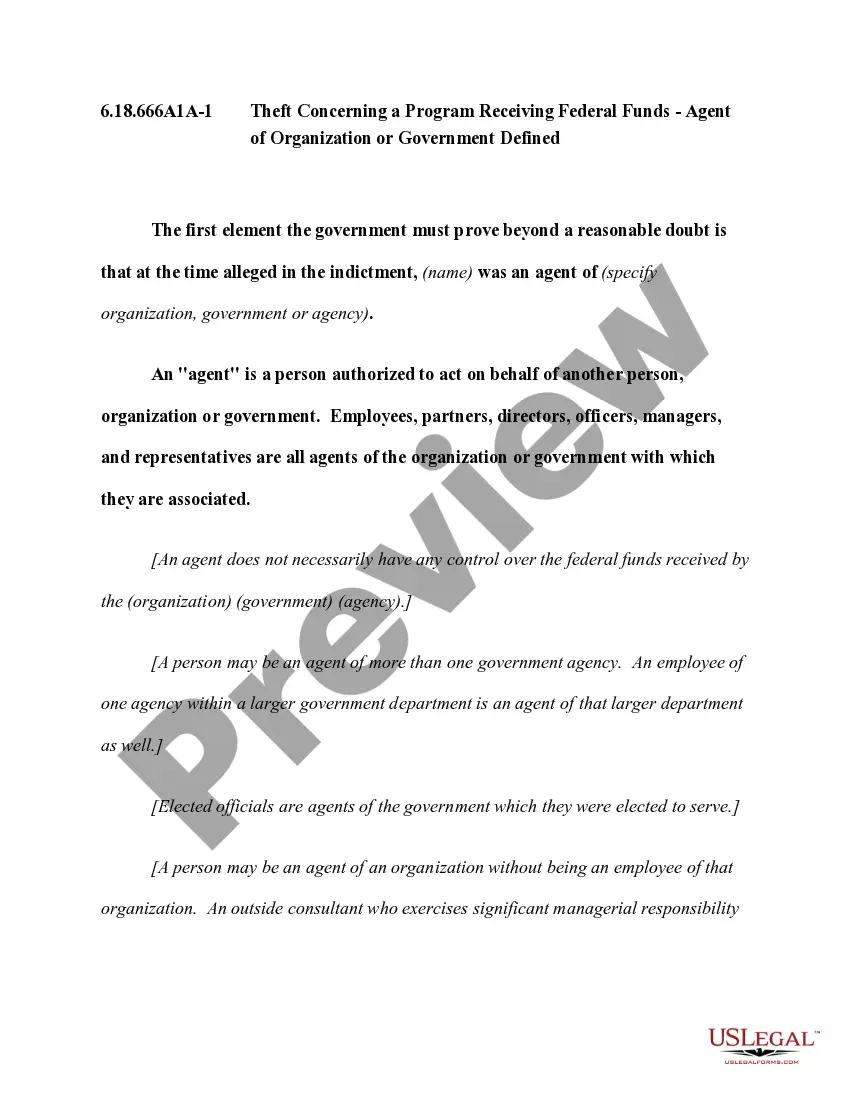
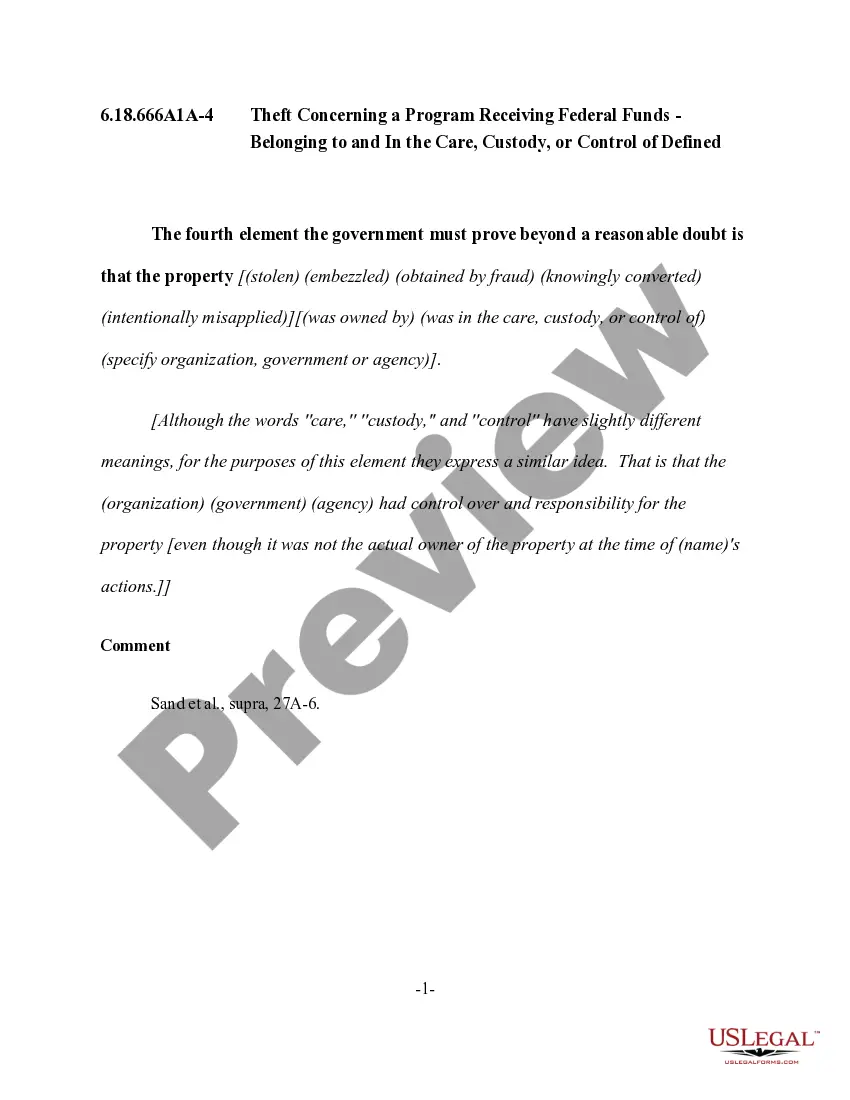
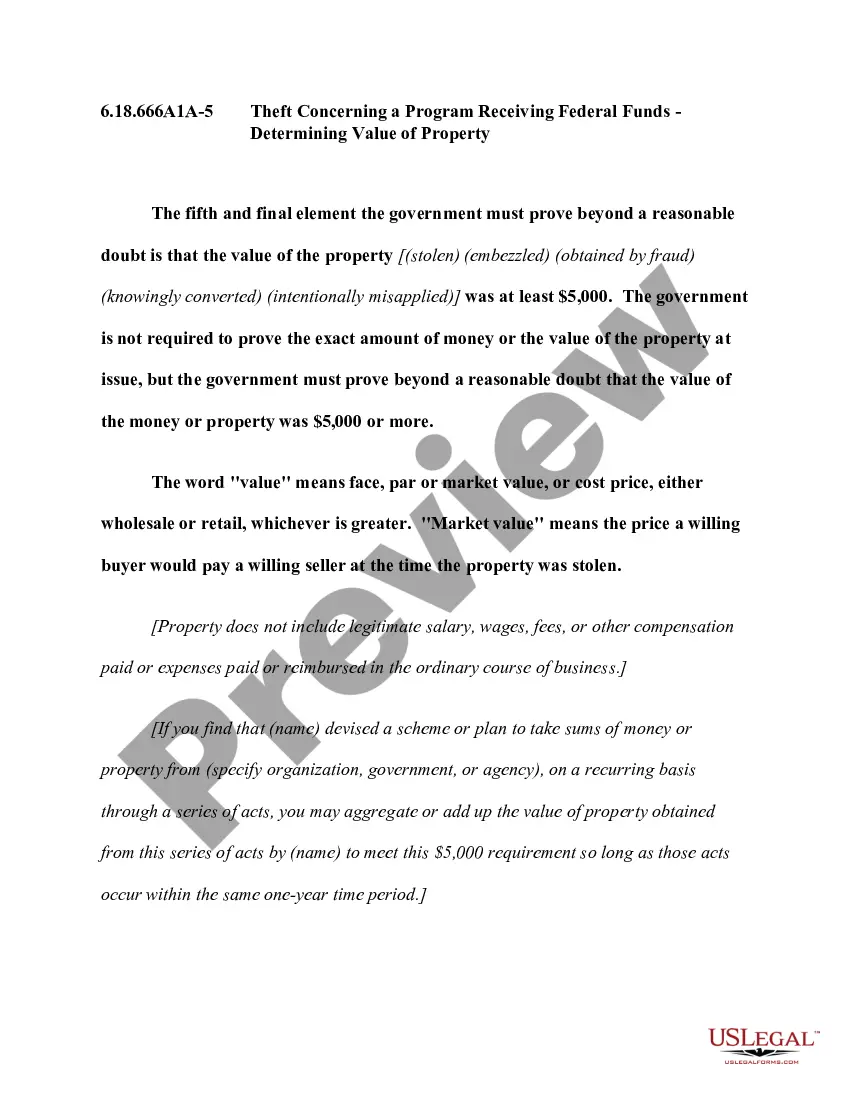
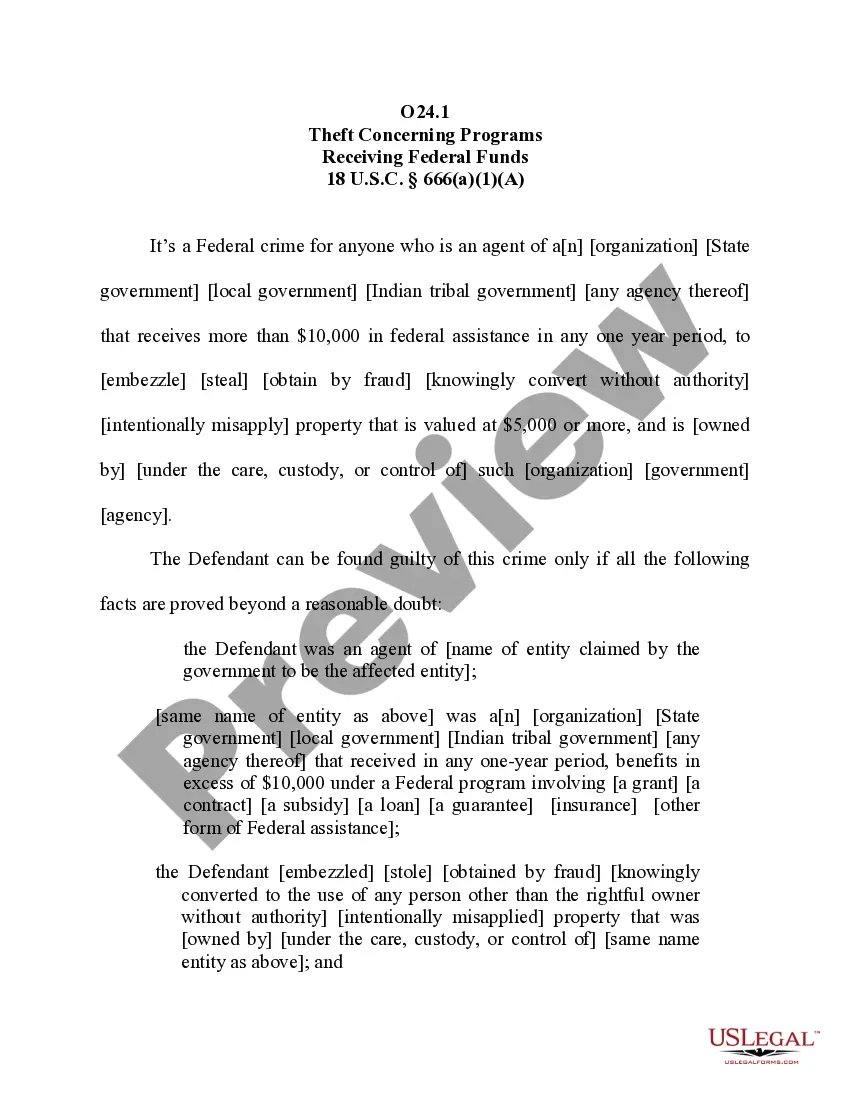
The Theft Concerning Programs Receiving Federal Funds form is a legal document that addresses criminal behavior specifically related to the theft of property from organizations or government entities receiving federal assistance. This form is utilized to outline the legal parameters and guidelines under Title 18 of the U.S. Code, Section 666(a)(1)(A). It is essential for situations involving agents who manage or oversee federal funds, as it clarifies unlawful practices like embezzlement, fraud, and misappropriation of property valued at $5,000 or more. Unlike general theft forms, this document is geared specifically towards offenses that impact federally funded programs.
Key components of this form
- Definition of terms used in the statute, such as "agent," "organization," and "government agency."
- Elements that need to be proven for the conviction, including the defendant's agency status and the federal funds received.
- Important conditions regarding the value of stolen property and the nature of the offense.
- Clarifications on what constitutes embezzlement, stealing, fraud, and misapplication of funds.
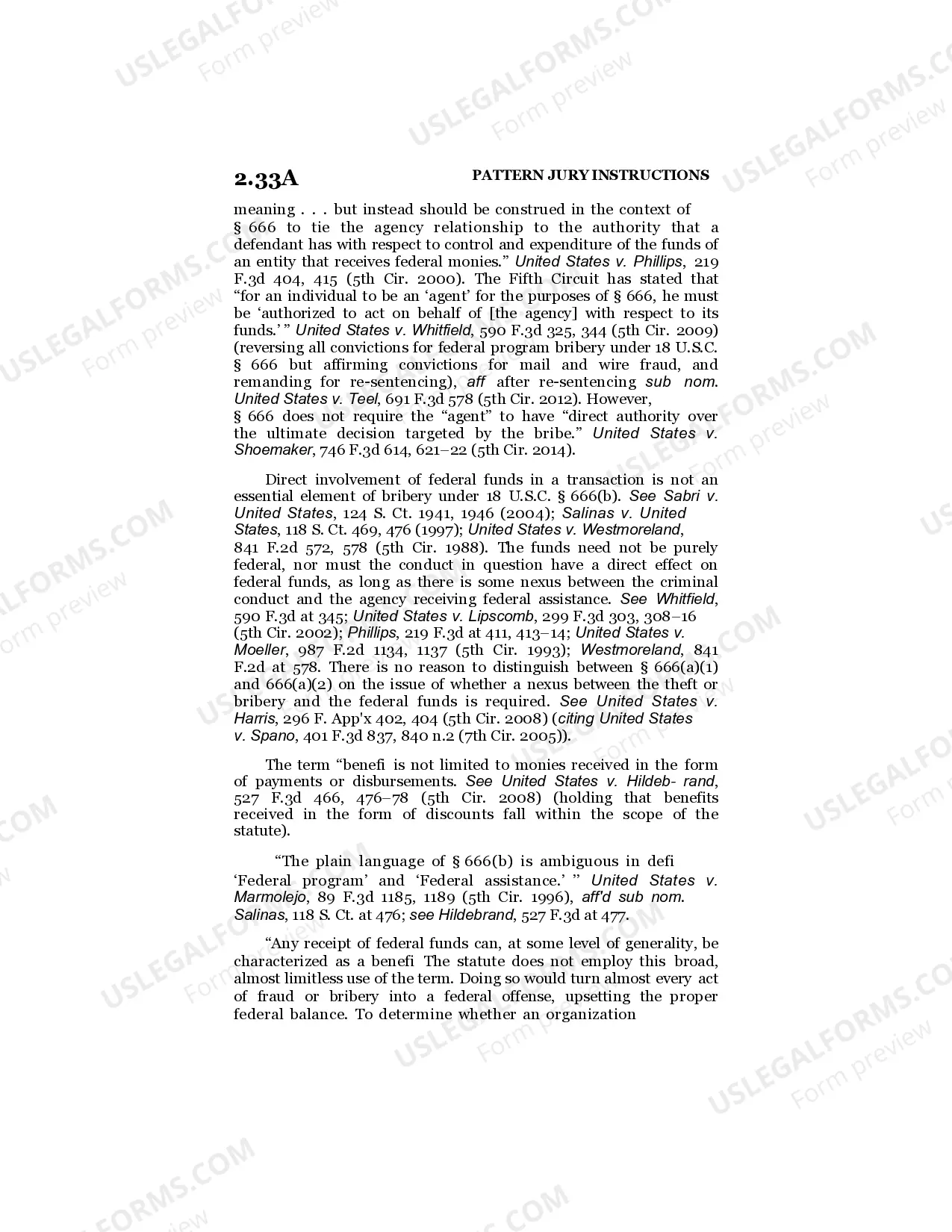
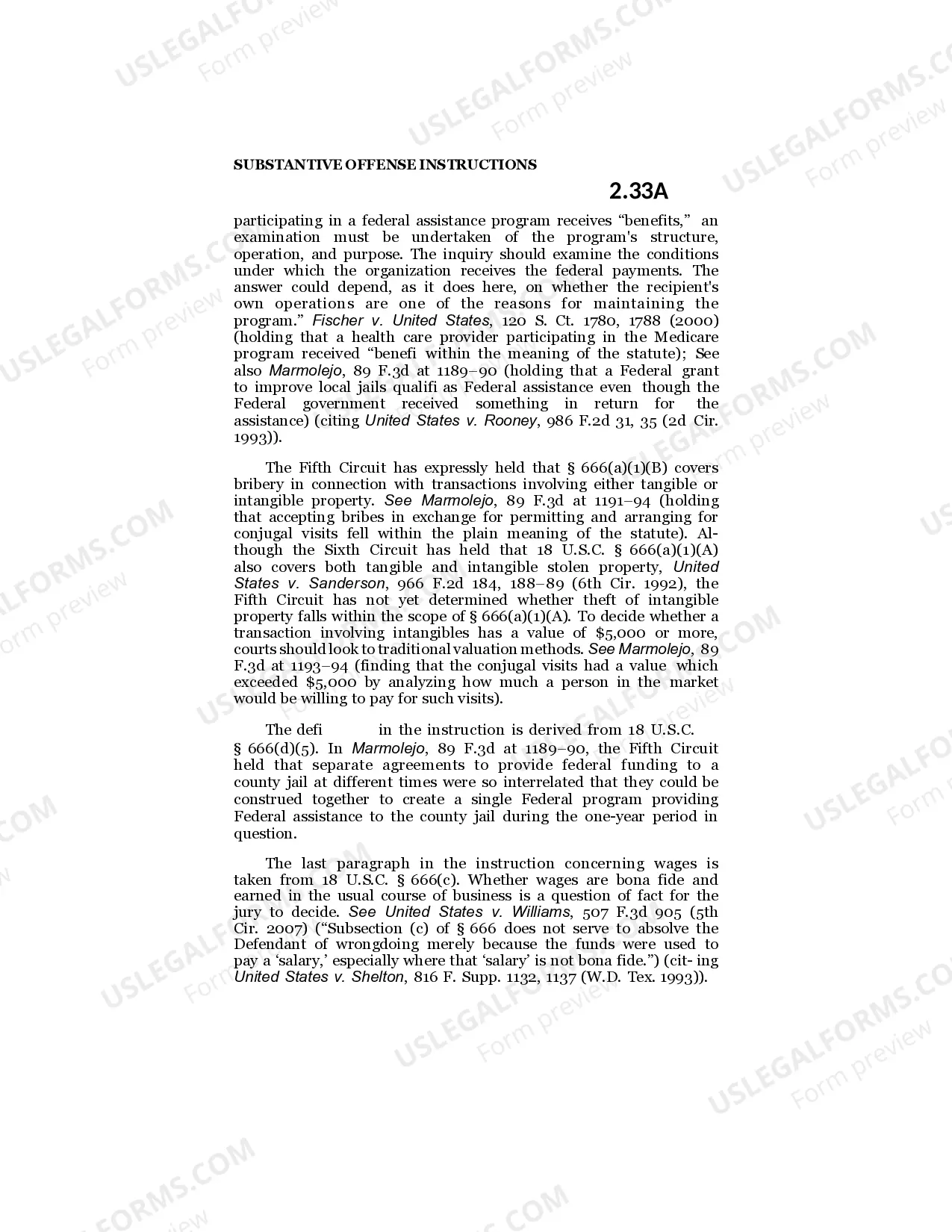
- Explanations of legal precedents affecting the interpretation of the statute.
Common use cases
This form is necessary in cases where there are allegations or investigations into theft or misapplication of property by agents of organizations or governmental bodies that receive federal funding. It can be used when documenting such incidents for legal proceedings or to establish a claim that an offense has occurred under federal law. This form is especially pertinent for organizations that manage grants, contracts, or loans that come from federal sources exceeding $10,000 in a given year.
Who needs this form
Intended users of this form include:
- Individuals charged with theft involving federal funds.
- Government agencies conducting investigations into alleged theft or fraud.
- Nonprofit organizations that manage federal assistance programs.
- Legal professionals representing clients involved in these matters.
Completing this form step by step
- Read the legal definitions and concepts outlined in the form to understand what qualifies as theft under federal law.
- Identify the defendant's agency status and the organization or government entity involved.
- Document the value of the property in question, ensuring it meets the $5,000 threshold.
- Gather evidence of the alleged theft, including dates, transactions, and witnesses, if applicable.
- Complete all required fields accurately, including names, dates, and signature lines.
Is notarization required?
Notarization is generally not required for this form. However, certain states or situations might demand it. You can complete notarization online through US Legal Forms, powered by Notarize, using a verified video call available anytime.
Get your form ready online
Our built-in tools help you complete, sign, share, and store your documents in one place.
Make edits, fill in missing information, and update formatting in US Legal Forms—just like you would in MS Word.
Download a copy, print it, send it by email, or mail it via USPS—whatever works best for your next step.
Sign and collect signatures with our SignNow integration. Send to multiple recipients, set reminders, and more. Go Premium to unlock E-Sign.
If this form requires notarization, complete it online through a secure video call—no need to meet a notary in person or wait for an appointment.
We protect your documents and personal data by following strict security and privacy standards.

Make edits, fill in missing information, and update formatting in US Legal Forms—just like you would in MS Word.

Download a copy, print it, send it by email, or mail it via USPS—whatever works best for your next step.

Sign and collect signatures with our SignNow integration. Send to multiple recipients, set reminders, and more. Go Premium to unlock E-Sign.

If this form requires notarization, complete it online through a secure video call—no need to meet a notary in person or wait for an appointment.

We protect your documents and personal data by following strict security and privacy standards.
Common mistakes to avoid
- Failing to specify the federal assistance received by the organization involved.
- Underestimating the value of stolen property, leading to claims below the $5,000 threshold.
- Not clearly identifying the role of the defendant as an agent or employee of the organization or government agency.
- Omitting relevant details about the connection between the theft and federal funds.
Why complete this form online
- Conveniently download and fill out the form from anywhere.
- Edit and customize the form easily to suit specific needs.
- Access legal templates drafted by licensed attorneys, ensuring reliability.
Looking for another form?


Form popularity
FAQ
Title 29 U.S.C. § 666(e) provides criminal penalties for any employer who willfully violates a safety standard prescribed pursuant to the Occupational Safety and Health Act, where that violation causes the death of any employee. Four elements must be proved in order to establish a criminal violation of 29 U.S.C.
Public corruption is a federal crime. Several federal statutes provide for federal prosecution of public corruption in the United States. Prosecutors regularly use most often use the Hobbs Act, Travel Act, RICO, the program bribery statute, and mail and wire fraud statutes to prosecute people for public corruption.
Section 666(b) requires that the organization, government or agency must have received, in any one year period, "benefits in excess of $10,000 under a Federal program involving a grant, contract, subsidy, loan, guarantee, insurance, or other form of Federal assistance." This provision does not distinguish between cash
The district court observed, and the government agrees, that the following elements comprise a violation of § 666(a)(1)(B): 1) corrupt solicitation; 2) of anything of value; 3) with the intention of being influenced in connection with any transaction of a local government or organization receiving at least $10,000 in
§ 666. The section is designed to facilitate the prosecution of persons who steal money or otherwise divert property or services from state and local governments or private organizations--for example, universities, foundations and business corporations--that receive large amounts of Federal funds.
Theft of government property under 18 U.S.C. § 641 makes it a crime to steal, embezzle, or knowing convert with intent for your own personal gain the property, or to sell, convey, or dispose of any record, voucher, money, or something of value issued by a department of the United States government.
18 U.S. Code § 666 - Theft or bribery concerning programs receiving Federal funds U.S. Code US Law LII / Legal Information Institute.
18 U.S. Code Chapter 31 - EMBEZZLEMENT AND THEFT.