Bribery Concerning Priograms Receiving Federal Funds (Offering a Bribe)
What is this form?
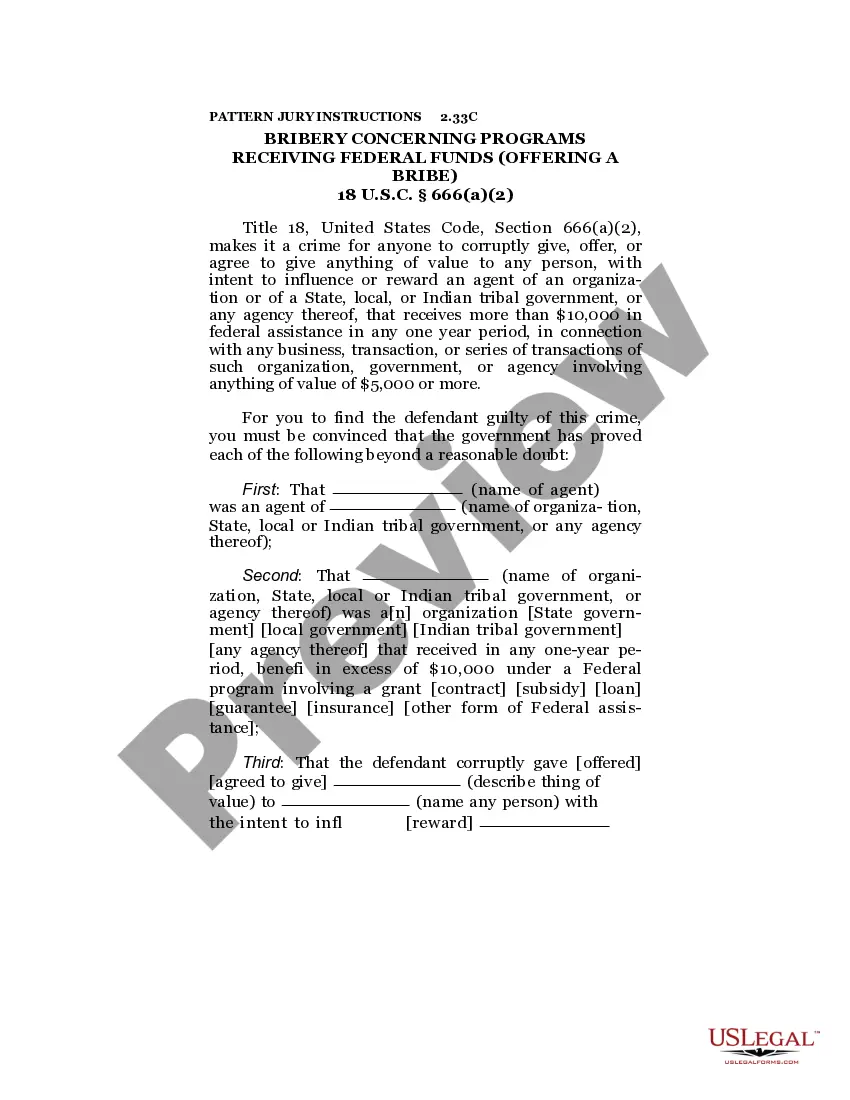
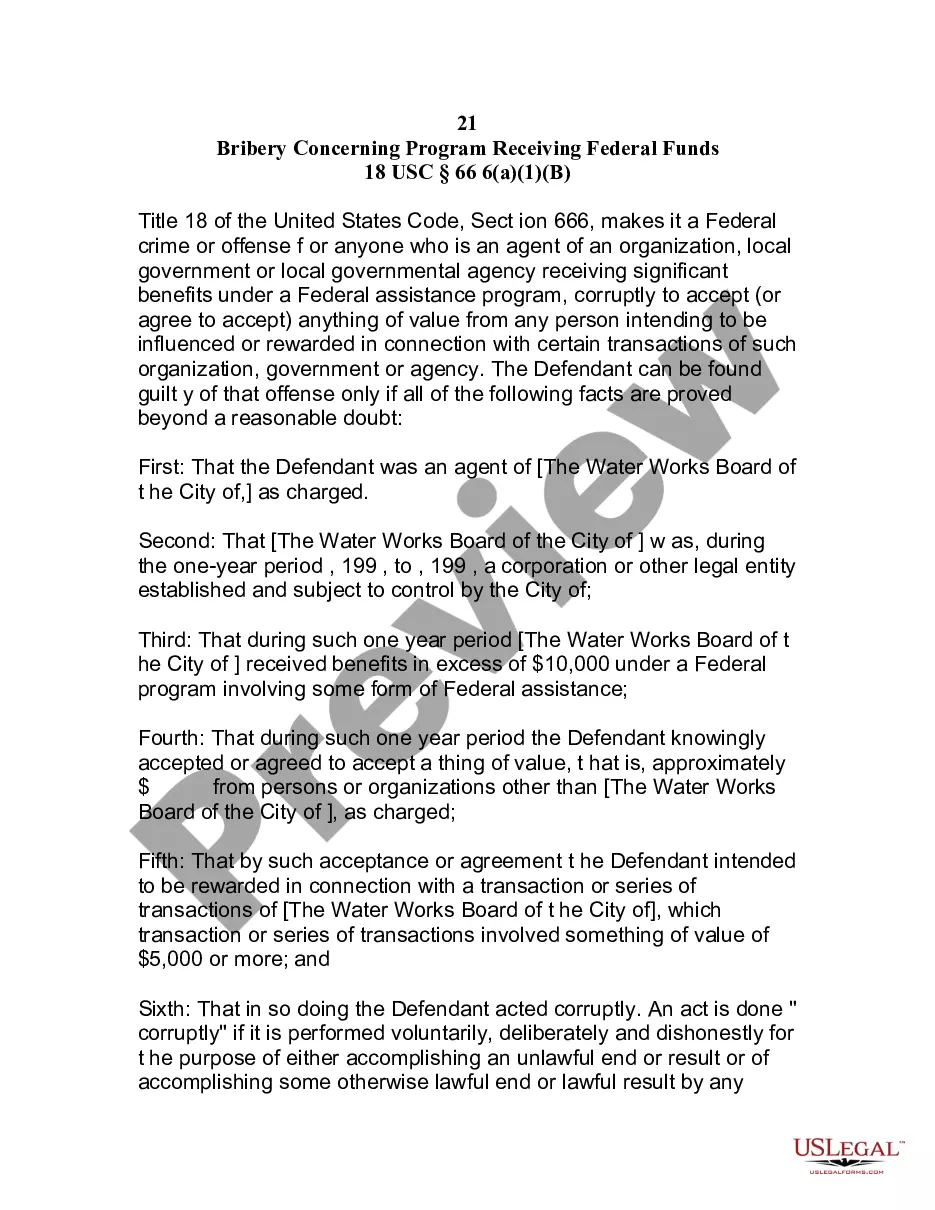
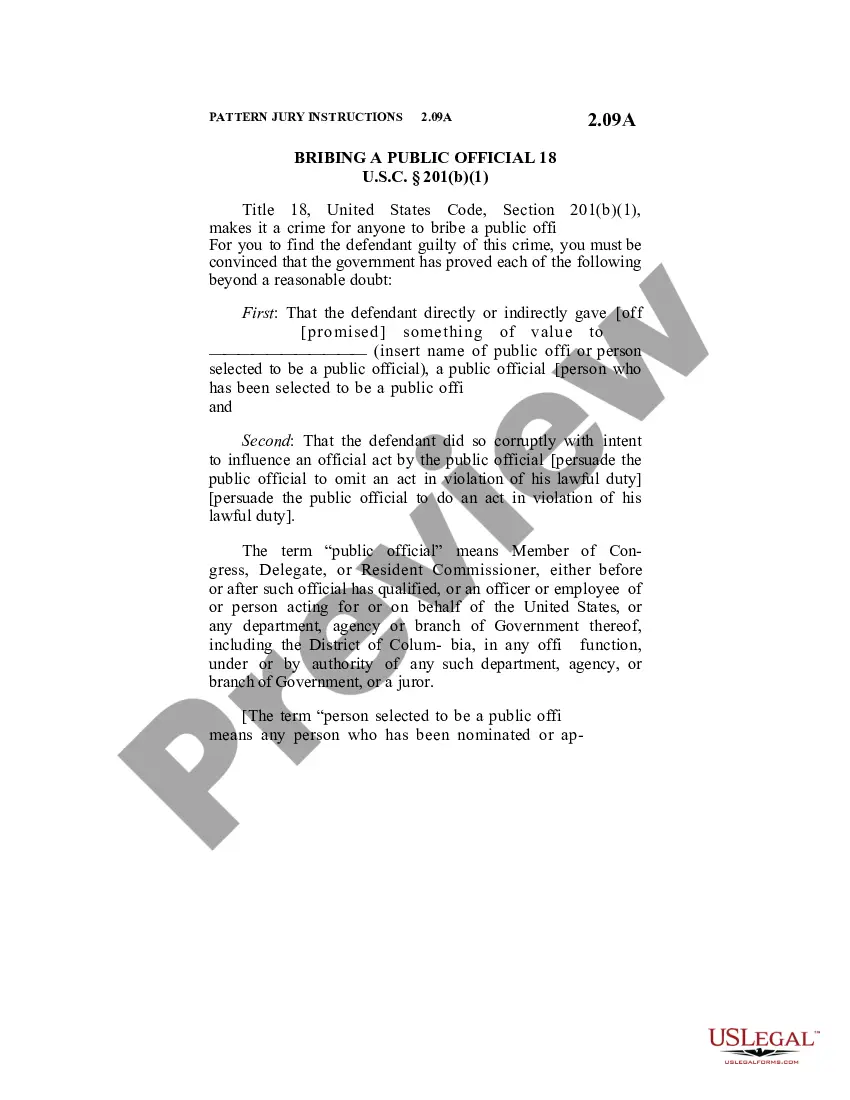
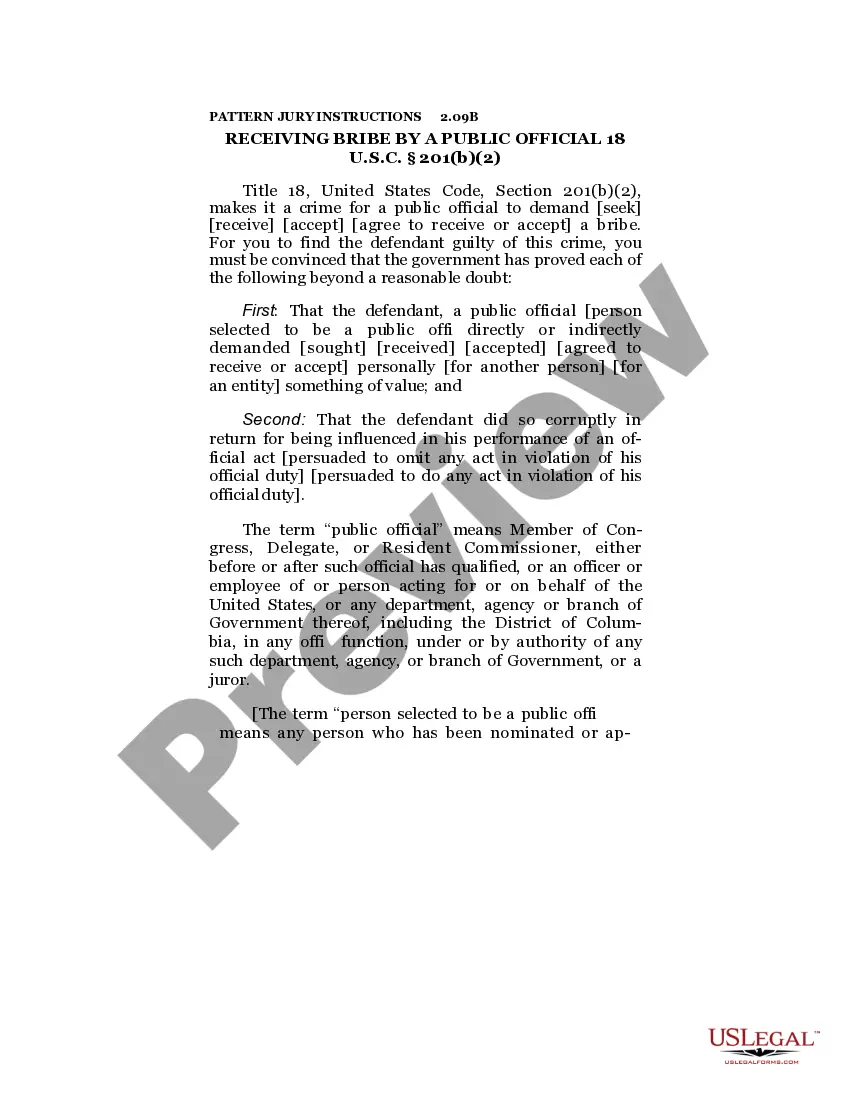
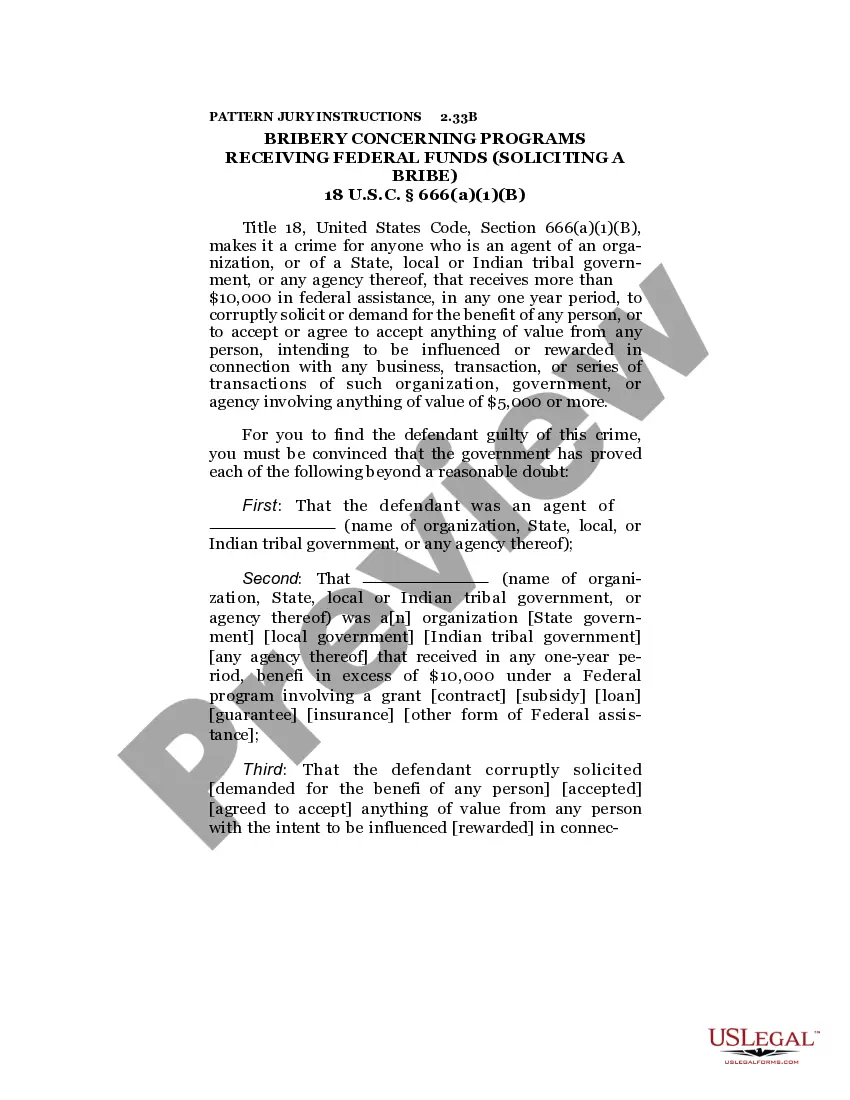
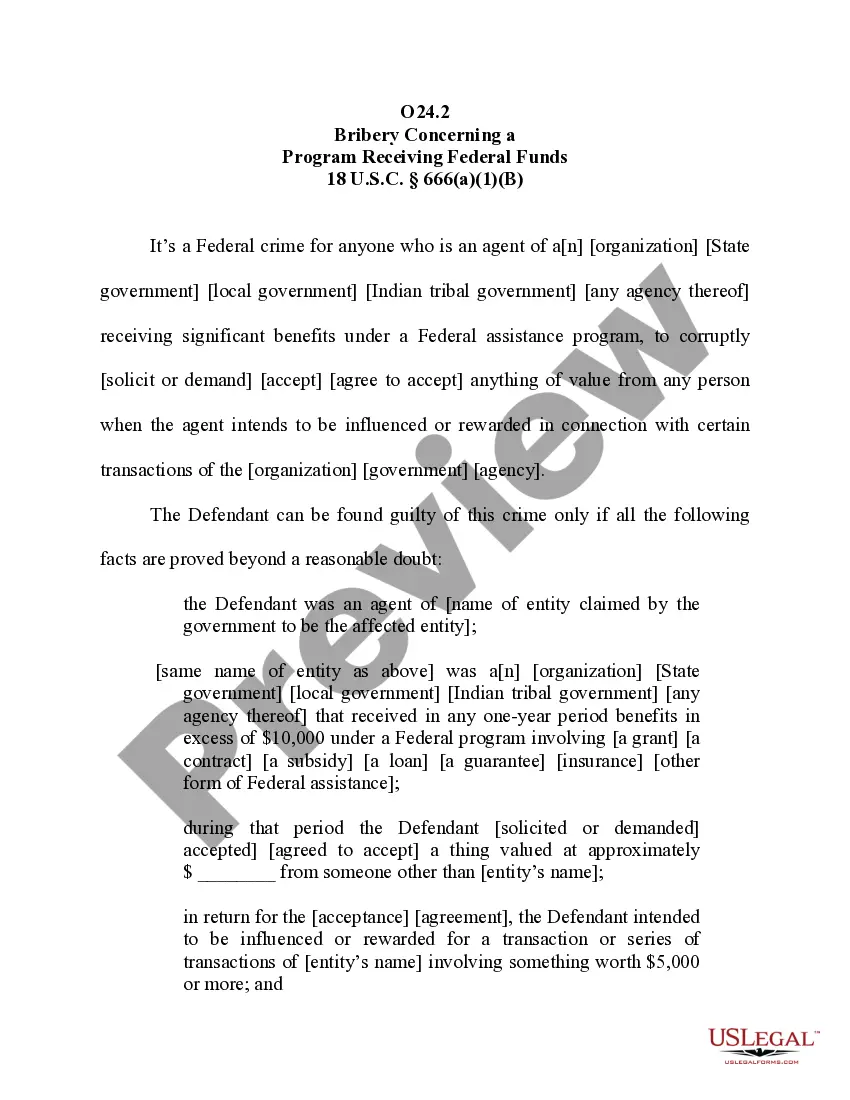
The Bribery Concerning Programs Receiving Federal Funds form is a legal document used to address offenses related to bribing federal officials for influencing decisions in organizations that receive federal assistance. It outlines criteria for what constitutes bribery under Title 18, United States Code, Section 666(a)(2). This form is essential for ensuring compliance with federal laws regarding anti-corruption and ethical conduct in government operations.
Form components explained
- Definition of bribery concerning federal programs.
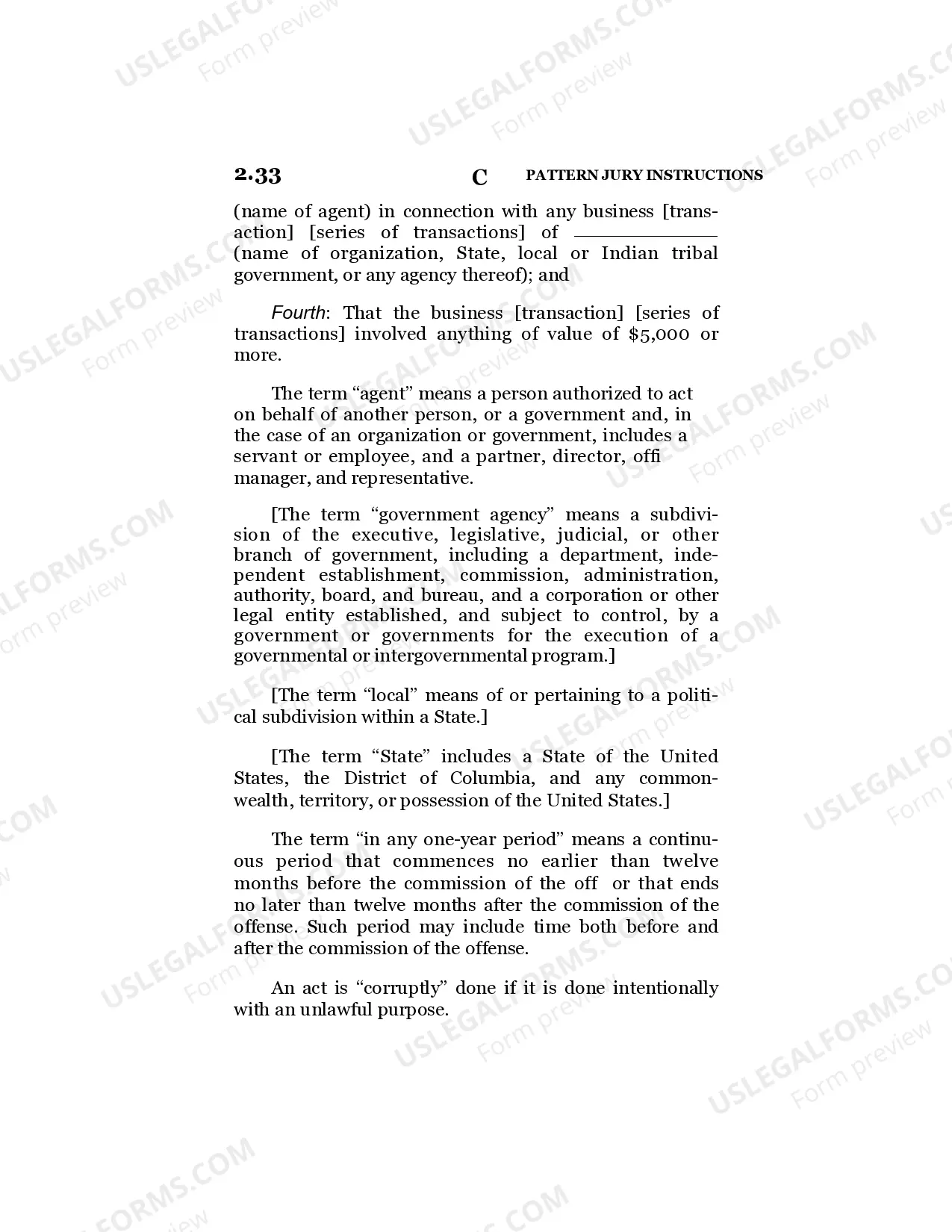
- Criteria for determining an agent's status within organizations receiving federal funds.
- Requirements for proving corrupt intent and the value of the bribe.
- Clarification of terms including agent, government, and organization.
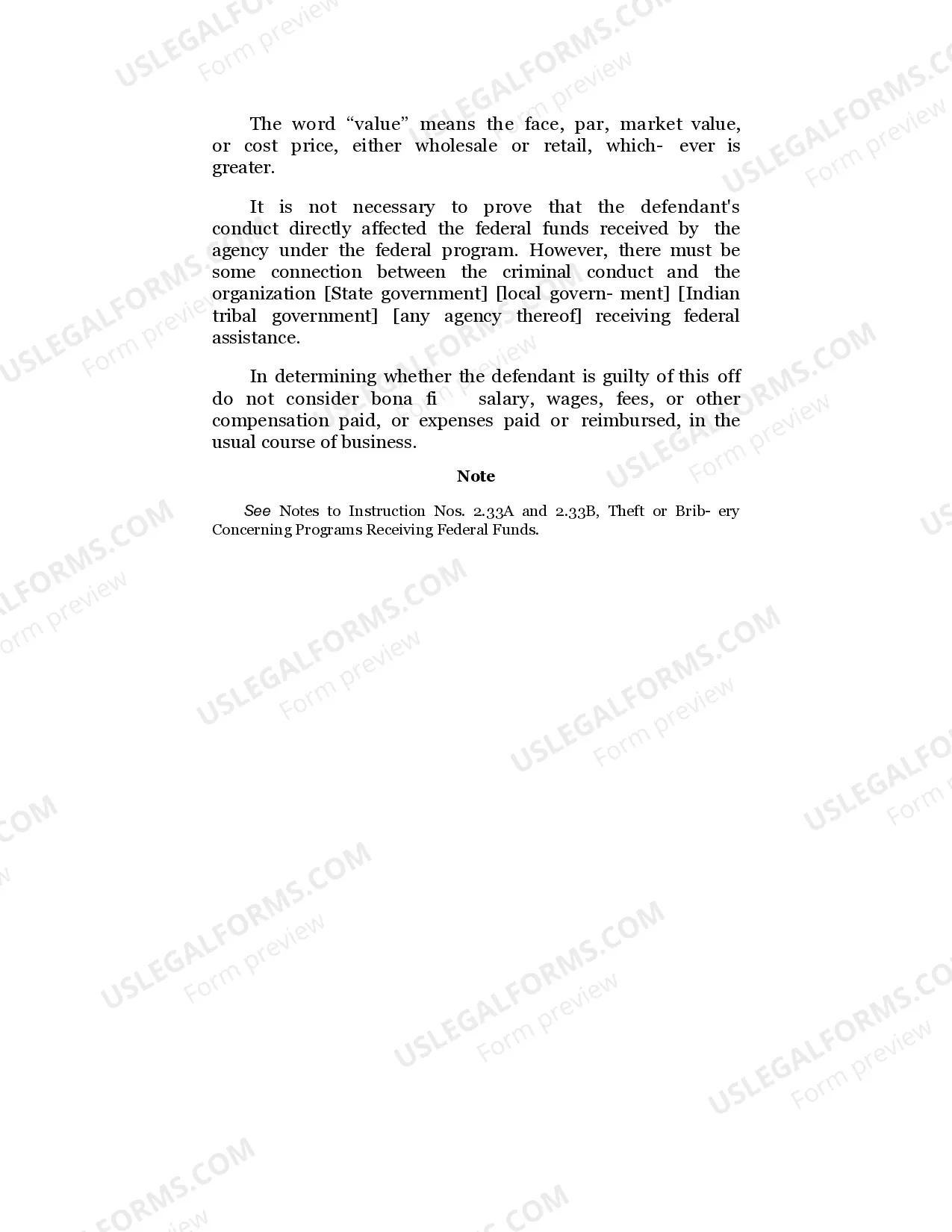
- Details on the necessary connection between the offense and federal assistance received.

Situations where this form applies
This form should be used in situations where there is an allegation or suspicion of bribery involving individuals associated with organizations receiving federal funding. It is pertinent in scenarios such as government contracts, grants, or any transactions exceeding specific monetary thresholds that may involve unethical practices.
Who can use this document
- Individuals or entities involved in federal funding transactions.
- Legal professionals addressing bribery allegations.
- Government officials ensuring compliance with anti-bribery laws.
- Organizations receiving over $10,000 in federal assistance seeking to understand their obligations.
How to prepare this document
- Identify and name the agent involved in the potential bribery case.
- Specify the organization or government entity receiving the federal assistance.
- Detail the item of value being offered as a bribe.
- Clarify the intent behind the bribe and its relevance to the business transaction.
- Document the nature of the transaction involving anything of value exceeding $5,000.
Notarization guidance
In most cases, this form does not require notarization. However, some jurisdictions or signing circumstances might. US Legal Forms offers online notarization powered by Notarize, accessible 24/7 for a quick, remote process.
Get your form ready online
Our built-in tools help you complete, sign, share, and store your documents in one place.
Make edits, fill in missing information, and update formatting in US Legal Forms—just like you would in MS Word.
Download a copy, print it, send it by email, or mail it via USPS—whatever works best for your next step.
Sign and collect signatures with our SignNow integration. Send to multiple recipients, set reminders, and more. Go Premium to unlock E-Sign.
If this form requires notarization, complete it online through a secure video call—no need to meet a notary in person or wait for an appointment.
We protect your documents and personal data by following strict security and privacy standards.

Make edits, fill in missing information, and update formatting in US Legal Forms—just like you would in MS Word.

Download a copy, print it, send it by email, or mail it via USPS—whatever works best for your next step.

Sign and collect signatures with our SignNow integration. Send to multiple recipients, set reminders, and more. Go Premium to unlock E-Sign.

If this form requires notarization, complete it online through a secure video call—no need to meet a notary in person or wait for an appointment.

We protect your documents and personal data by following strict security and privacy standards.
Mistakes to watch out for
- Failing to accurately identify the federal assistance received by the organization.
- Not clearly demonstrating the connection between the bribery and federal funds.
- Omitting key details regarding the agent and the transaction involved.
- Underestimating the importance of proving corrupt intent.
Why complete this form online
- Convenience of downloading and completing the form at your own pace.
- Easy access to editable templates that comply with legal standards.
- Resources for understanding legal nuances and completing the form effectively.
- Secure storage of your completed documents for future reference.
Legal use & context
- This form is used in the context of federal anti-bribery law enforcement.
- Understanding its legal use can aid in compliance for organizations receiving federal funding.
- Ensures a clear process for reporting and addressing bribery allegations.
Key takeaways
- The form addresses bribery offenses concerning organizations receiving federal funds.
- It specifies legal definitions and criteria needed to establish a bribery claim.
- Used by any party involved with federal aid, legal professionals, and government entities.
Looking for another form?
Form popularity
FAQ
California law defines bribery as offering, giving or taking something of value, with corrupt intent, in order unlawfully to influence a person in any public or official capacity. Bribery is typically prosecuted as a felony and is punishable by up to 4 years in jail or prison.
§ 666. The section is designed to facilitate the prosecution of persons who steal money or otherwise divert property or services from state and local governments or private organizations--for example, universities, foundations and business corporations--that receive large amounts of Federal funds.
International Bribery The Foreign Corrupt Practices Act provides for federal criminal charges involving the bribery of foreign officials. It is unlawful for certain people and businesses to make payments to foreign government officials to help with obtaining or retaining business.
Bribery is a white collar crime in which money, a favor or something else of value is promised to, given to, or taken from an individual or corporation in an attempt to sway his or its views, opinions, or decisions.
Overview: Bribery refers to the offering, giving, soliciting, or receiving of any item of value as a means of influencing the actions of an individual holding a public or legal duty.
Two of the most common white-collar crimes with which someone might be charged include bribery and extortion. It is true that both of these crimes involve an exchange of money, but there are some significant differences between them.
White-collar crime refers to nonviolent crimes, usually characterized by deceit or concealment in order to avoid or avoid losing money or to gain a personal or business advantage. This could include embezzlement, corporate and securities fraud, or money laundering.
White-collar crime is generally non-violent in nature and includes public corruption, health care fraud, mortgage fraud, securities fraud, and money laundering, to name a few.