Interstate Transmission of Extortionate Communication
Understanding this form
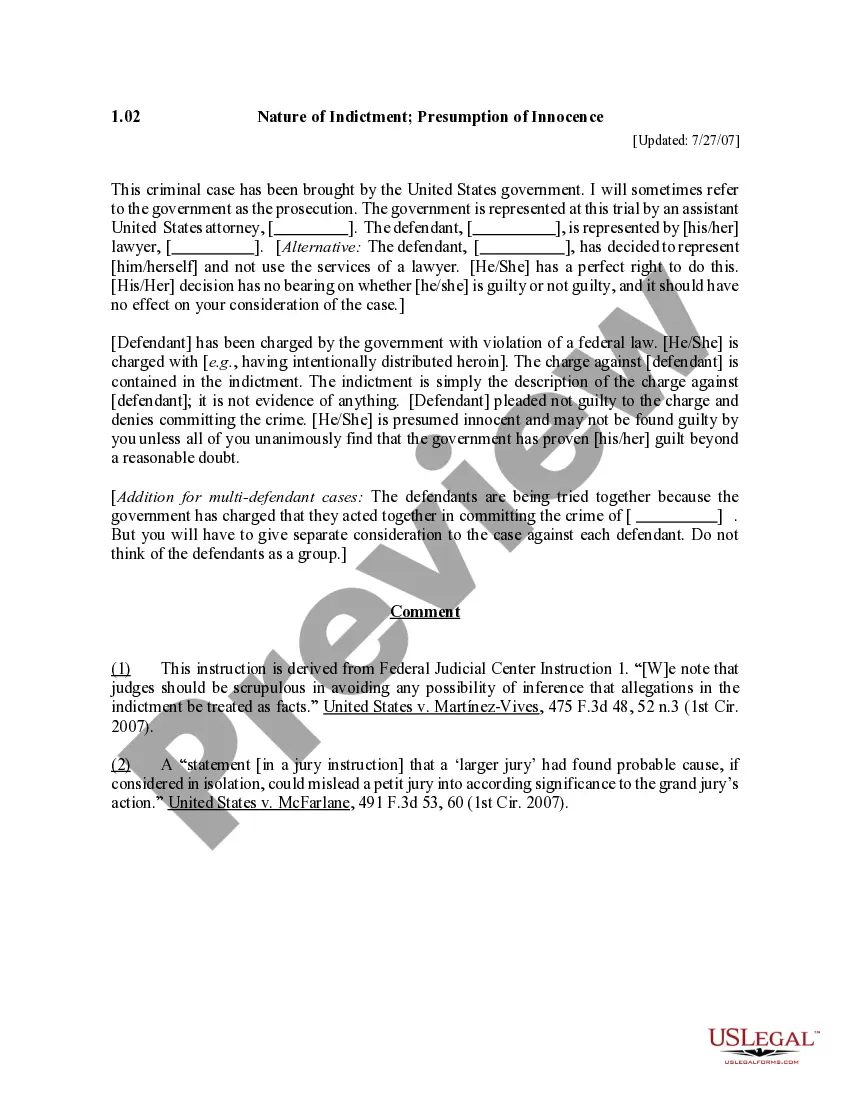
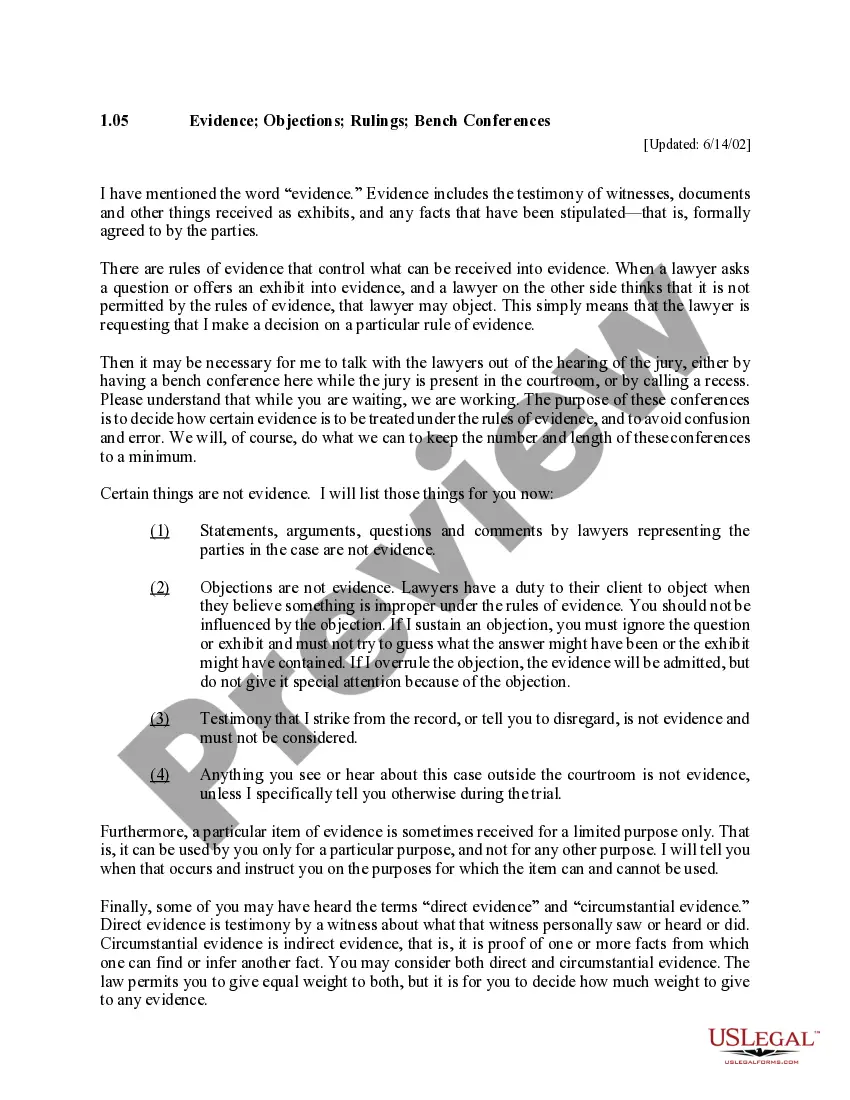
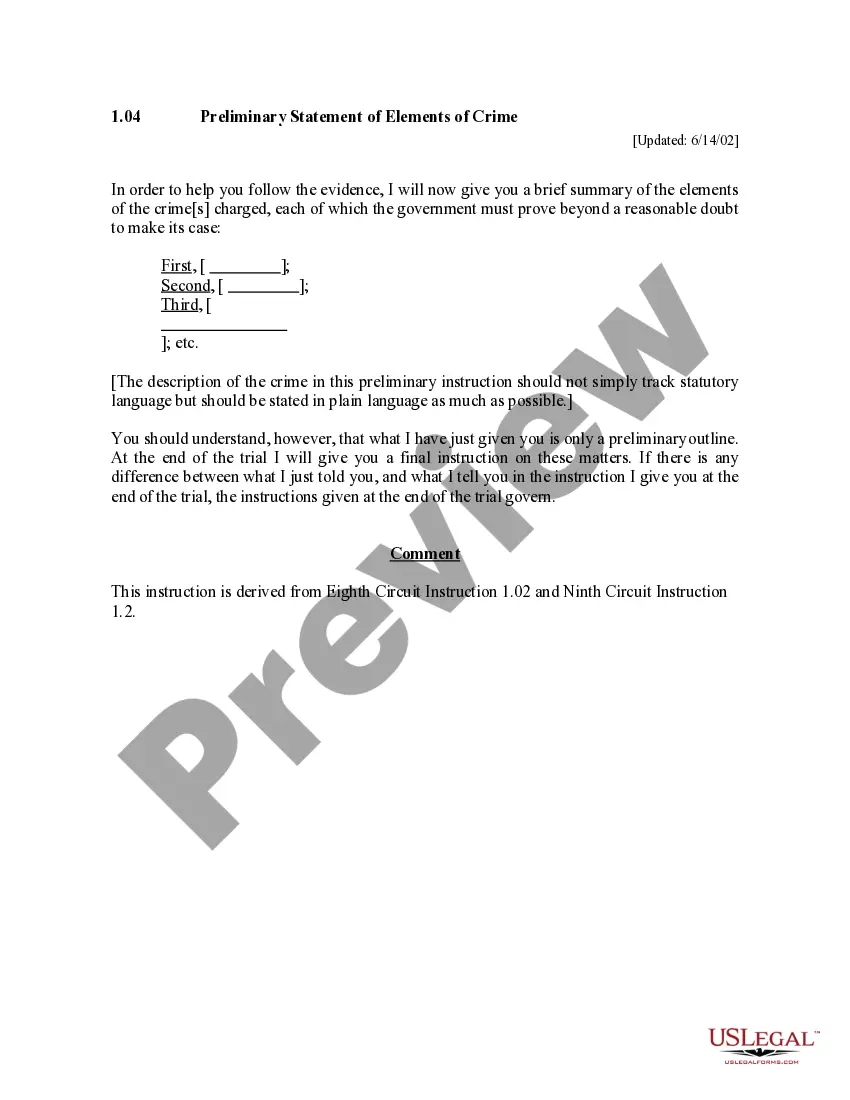
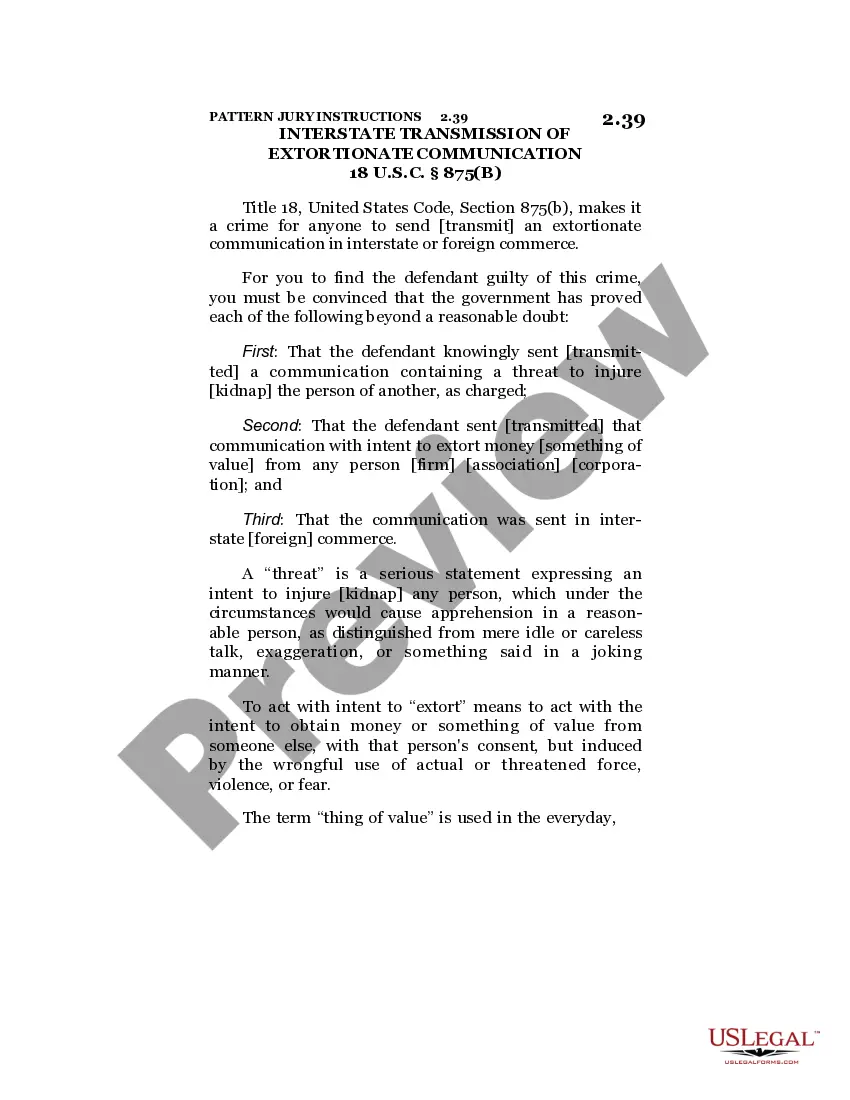
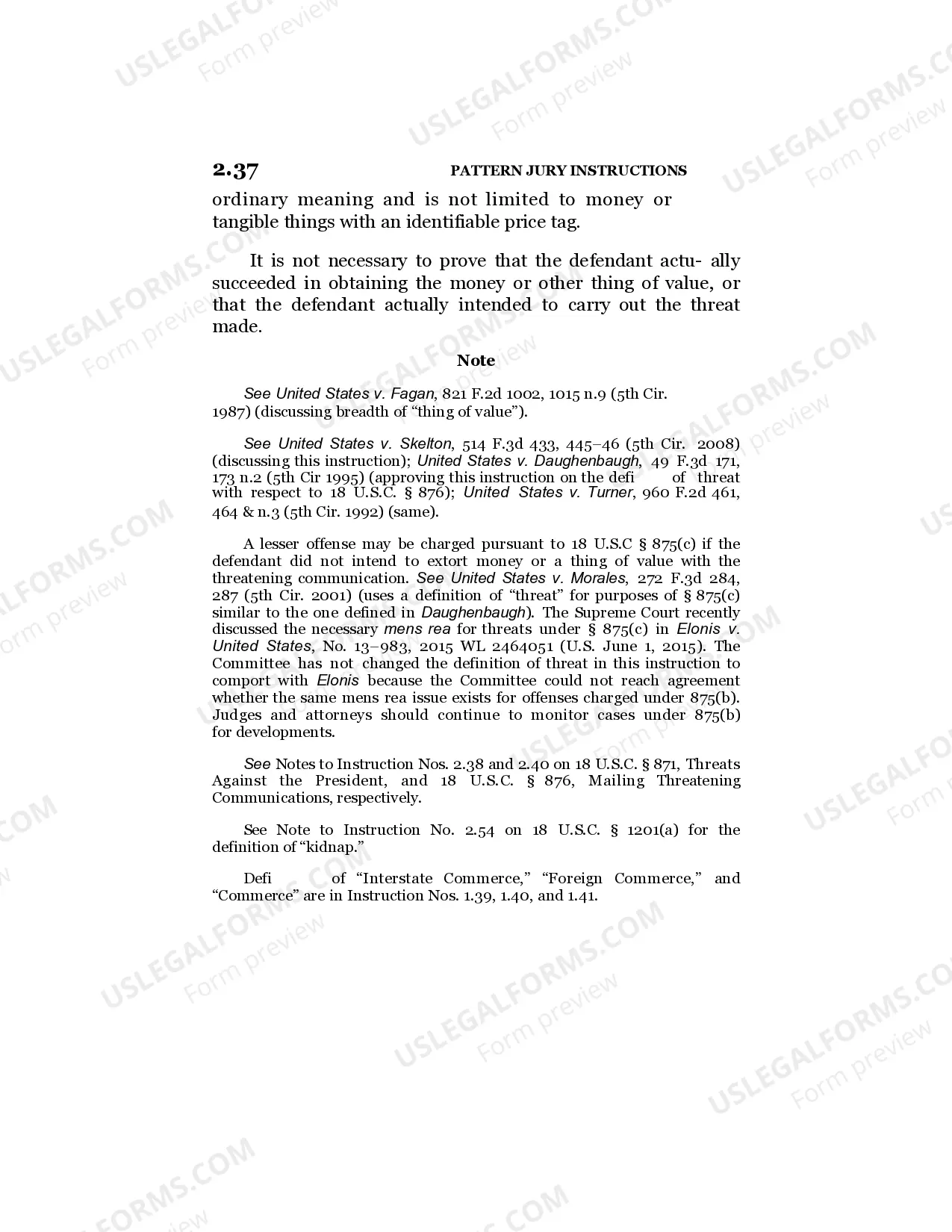
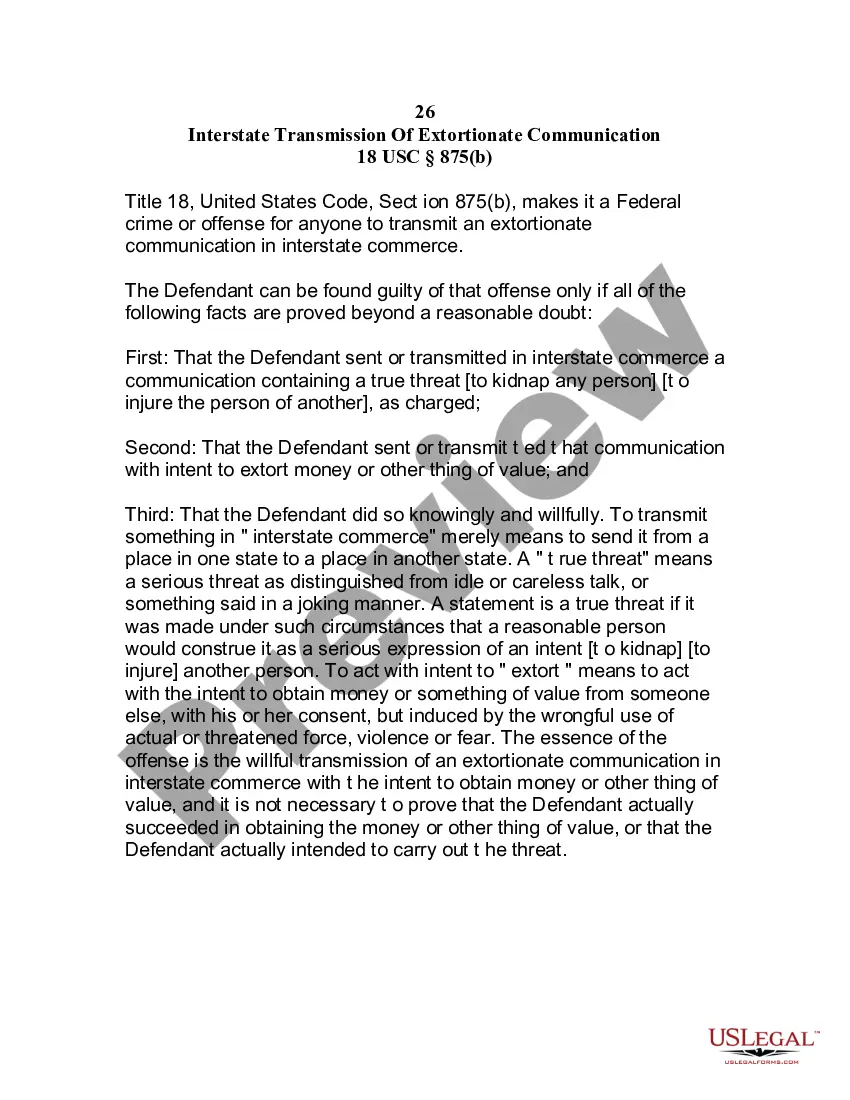
The Interstate Transmission of Extortionate Communication form is a legal document that outlines the unlawful act of sending extortionate threats over state or national lines. The form is based on 18 U.S.C. Section 875(b), which makes it a crime to transmit any communication that threatens injury or harm with the intent to extort money or other valuables. This form differs from similar forms by specifically addressing extortion communicated across state or international boundaries, emphasizing the serious nature of such offenses.
Key parts of this document
- Definition of extortionate communication
- Criteria for proving intent to extort
- Clarification on what constitutes a threat
- Details on jurisdiction and commerce related to the transmission
- Explanations of applicable case law and legal precedents
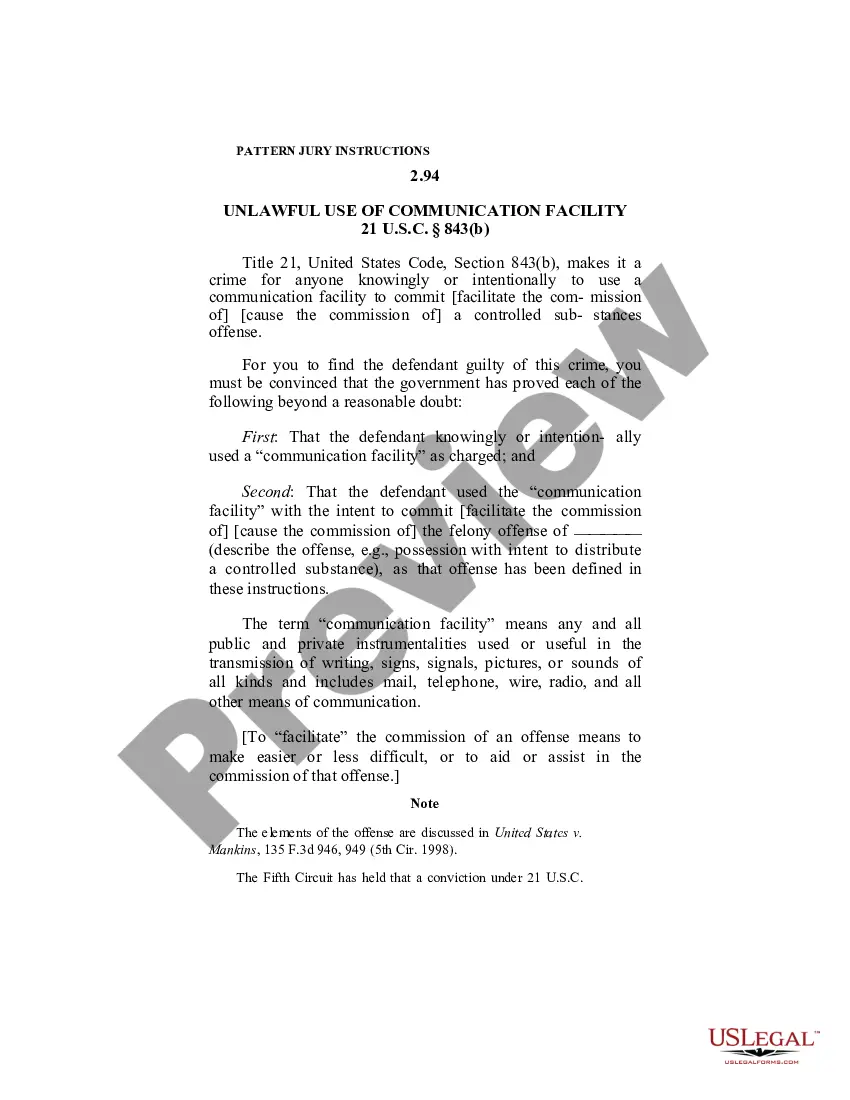
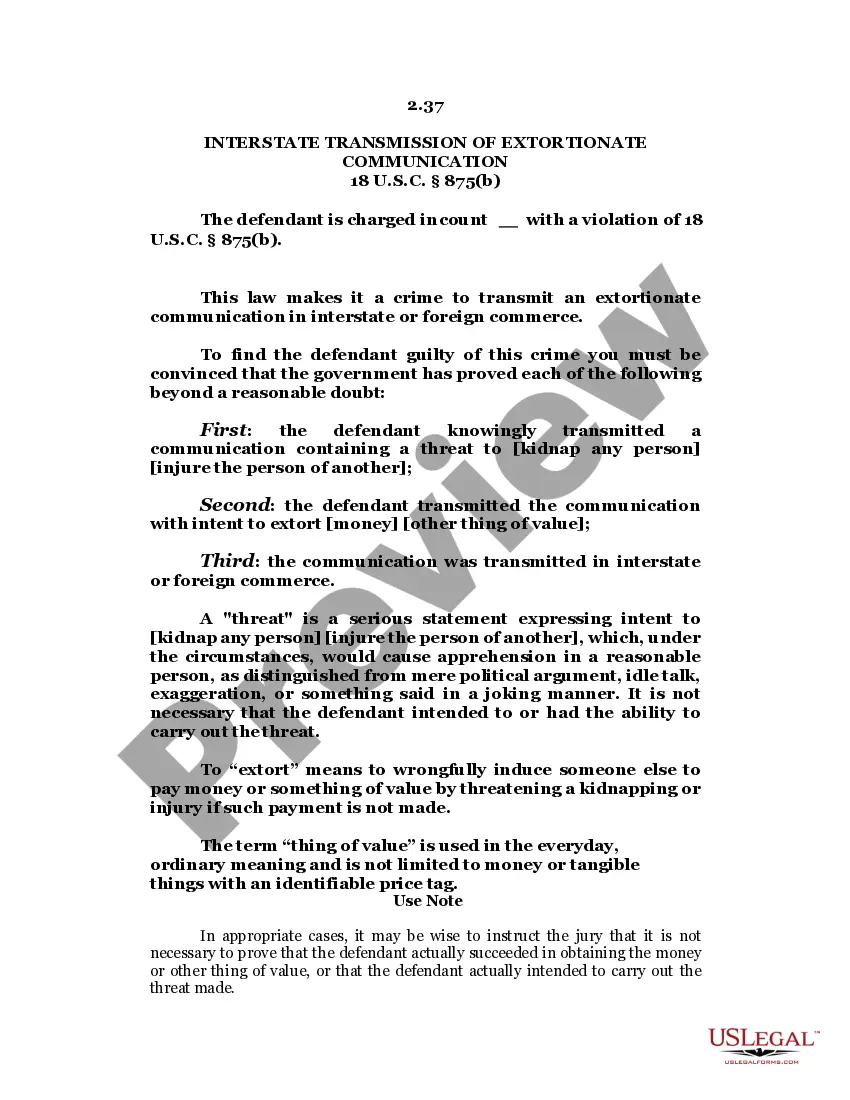
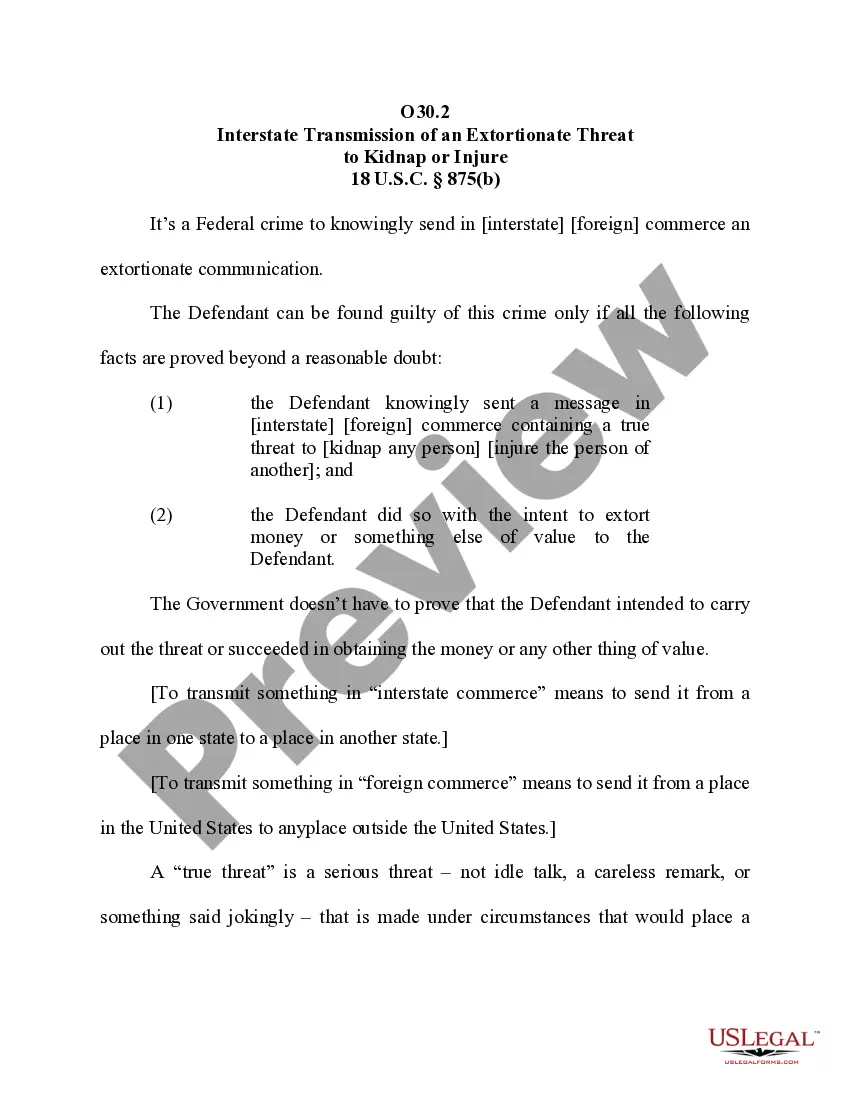
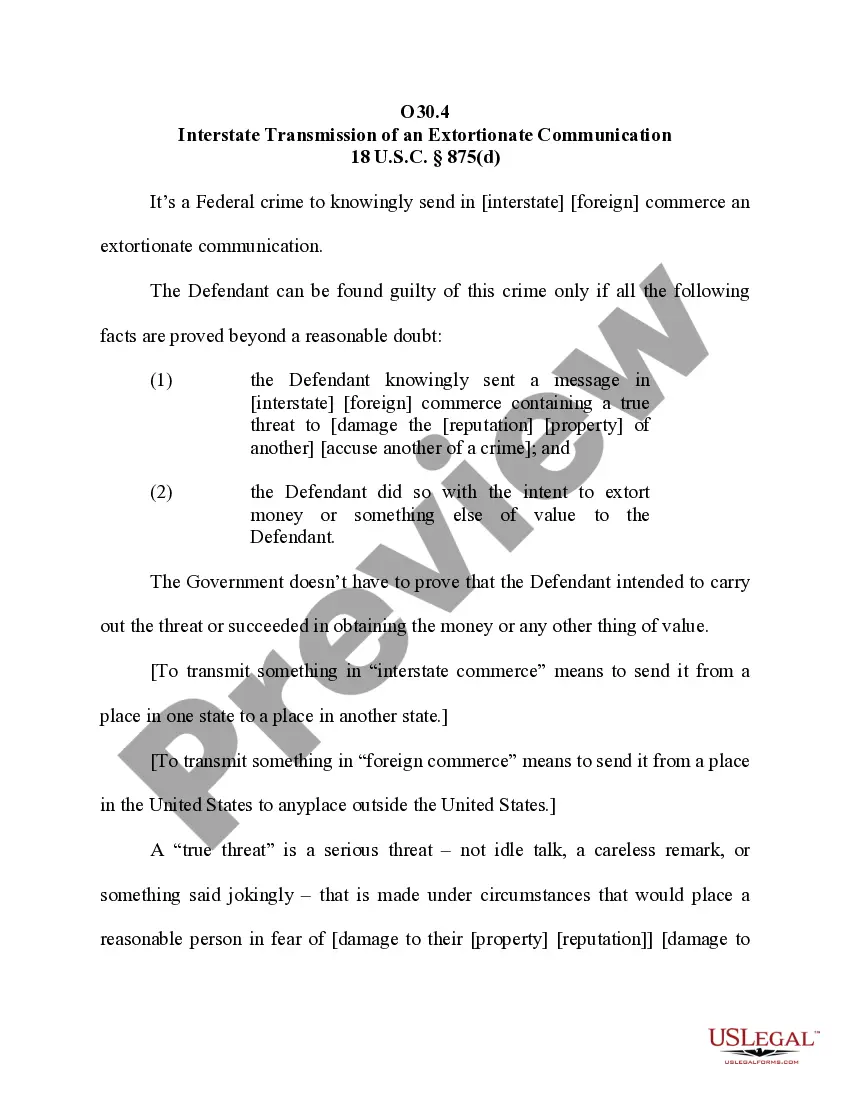
Situations where this form applies
This form is necessary when an individual or business needs to address a situation involving extortionate threats communicated across state lines, either to prepare for a legal response or to document the seriousness of the threat for law enforcement purposes. It may be particularly relevant in cases where payments are solicited under duress or when there is an intent to harm involved in communications.
Who can use this document
- Individuals who have received extortionate communications
- Businesses at risk of extortion through interstate communications
- Legal representatives preparing cases related to extortion
- Law enforcement officials investigating extortion cases
Completing this form step by step
- Identify the parties involved in the communication.
- Document the precise content of the extortionate communication received.
- Specify the intent behind the communication, particularly any demands made.
- Provide evidence of interstate or foreign commerce relating to the transmission.
- Include any relevant details about jurisdiction or case references if applicable.
Notarization guidance
This form usually doesn’t need to be notarized. However, local laws or specific transactions may require it. Our online notarization service, powered by Notarize, lets you complete it remotely through a secure video session, available 24/7.
Get your form ready online
Our built-in tools help you complete, sign, share, and store your documents in one place.
Make edits, fill in missing information, and update formatting in US Legal Forms—just like you would in MS Word.
Download a copy, print it, send it by email, or mail it via USPS—whatever works best for your next step.
Sign and collect signatures with our SignNow integration. Send to multiple recipients, set reminders, and more. Go Premium to unlock E-Sign.
If this form requires notarization, complete it online through a secure video call—no need to meet a notary in person or wait for an appointment.
We protect your documents and personal data by following strict security and privacy standards.

Make edits, fill in missing information, and update formatting in US Legal Forms—just like you would in MS Word.

Download a copy, print it, send it by email, or mail it via USPS—whatever works best for your next step.

Sign and collect signatures with our SignNow integration. Send to multiple recipients, set reminders, and more. Go Premium to unlock E-Sign.

If this form requires notarization, complete it online through a secure video call—no need to meet a notary in person or wait for an appointment.

We protect your documents and personal data by following strict security and privacy standards.
Avoid these common issues
- Failing to detail the communication clearly can lead to ambiguity.
- Not specifying the intent to extort which is crucial for legal standing.
- Overlooking state-specific legal standards that may apply.
Benefits of completing this form online
- Convenient access to the form anytime and from any location.
- Editable prior to submission, allowing for accuracy and completeness.
- Reliability in using attorney-drafted templates ensures legal compliance.
Looking for another form?
Form popularity
FAQ
§ 875(c) (2012). The statute provides: (c) Whoever transmits in interstate or foreign commerce any communication containing any threat to kidnap any person or any threat to injure the person of another, shall be fined under this title or imprisoned not more than five years, or both.
Section 875 of Title 18 prohibits the transmission in interstate or foreign commerce of: (1) any demand or request for ransom or reward for the release of any kidnapped person; (2) a threat to kidnap or injure any person, either with or without the intent to extort; or (3) with intent to extort, a threat to injure the
§875. Interstate communications. (a) Whoever transmits in interstate or foreign commerce any communication containing any demand or request for a ransom or reward for the release of any kidnapped person, shall be fined under this title or imprisoned not more than twenty years, or both.
§ 873 Blackmail or Extortion Penalties. Blackmail or extortion under Title 18 of the United States Code, Section 873 is a federal crime punishable by: up to one year in federal prison, a fine, or both imprisonment and a fine.
Interstate communications. (a) Whoever transmits in interstate or foreign commerce any communication containing any demand or request for a ransom or reward for the release of any kidnapped person, shall be fined under this title or imprisoned not more than twenty years, or both.
The term ?interstate communication? or ?interstate transmission? means communication or transmission (A) from any State, Territory, or possession of the United States (other than the Canal Zone), or the District of Columbia, to any other State, Territory, or possession of the United States (other than the Canal Zone),
875(c), which provides that any individual who "transmits in interstate or foreign commerce any communication containing any threat to ? injure the person of another" is guilty of a felony and faces up to five years in prison.
Section 875 of Title 18 prohibits the transmission in interstate or foreign commerce of: (1) any demand or request for ransom or reward for the release of any kidnapped person; (2) a threat to kidnap or injure any person, either with or without the intent to extort; or (3) with intent to extort, a threat to injure the