False Statements in Bank Records
Understanding this form
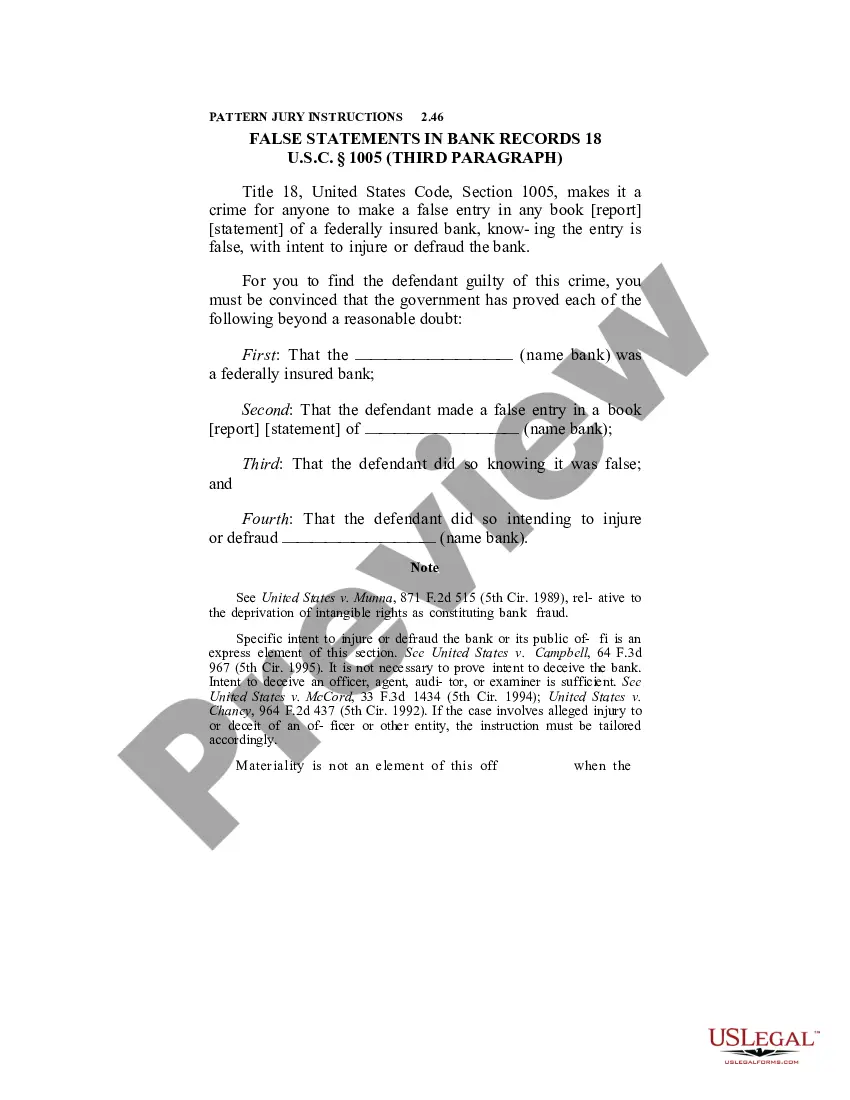
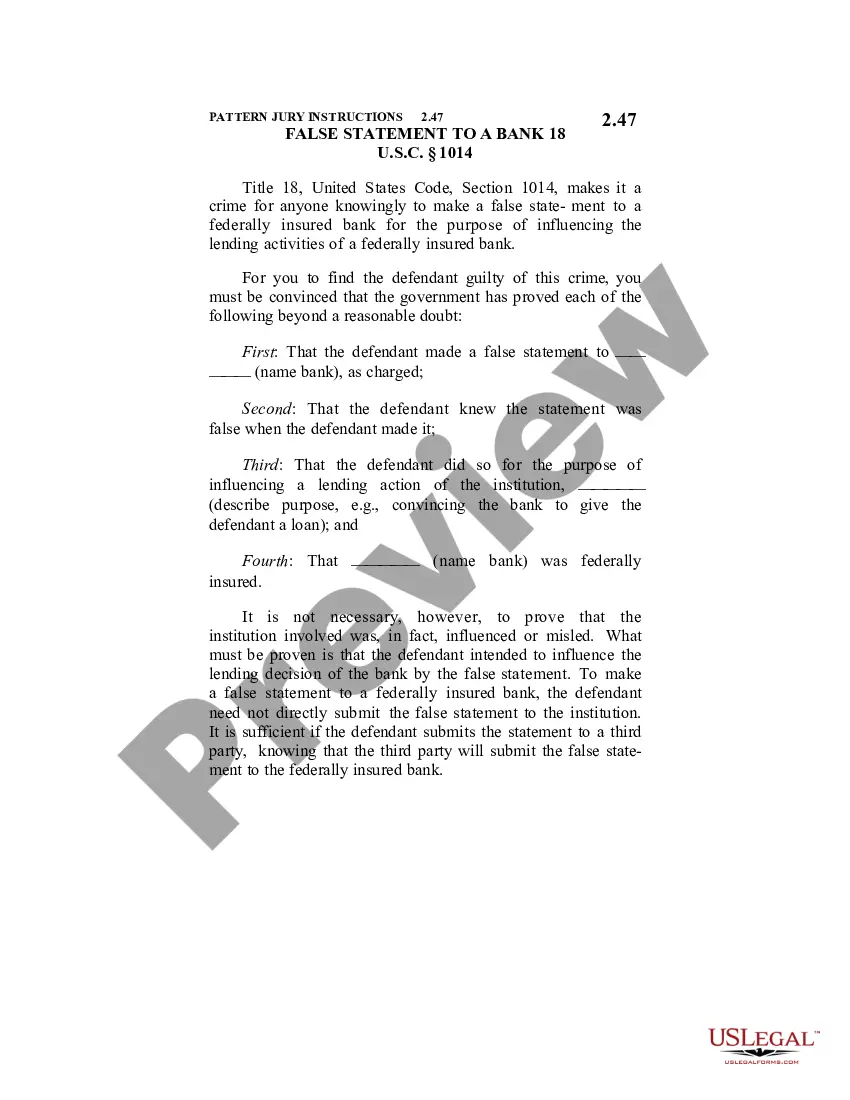
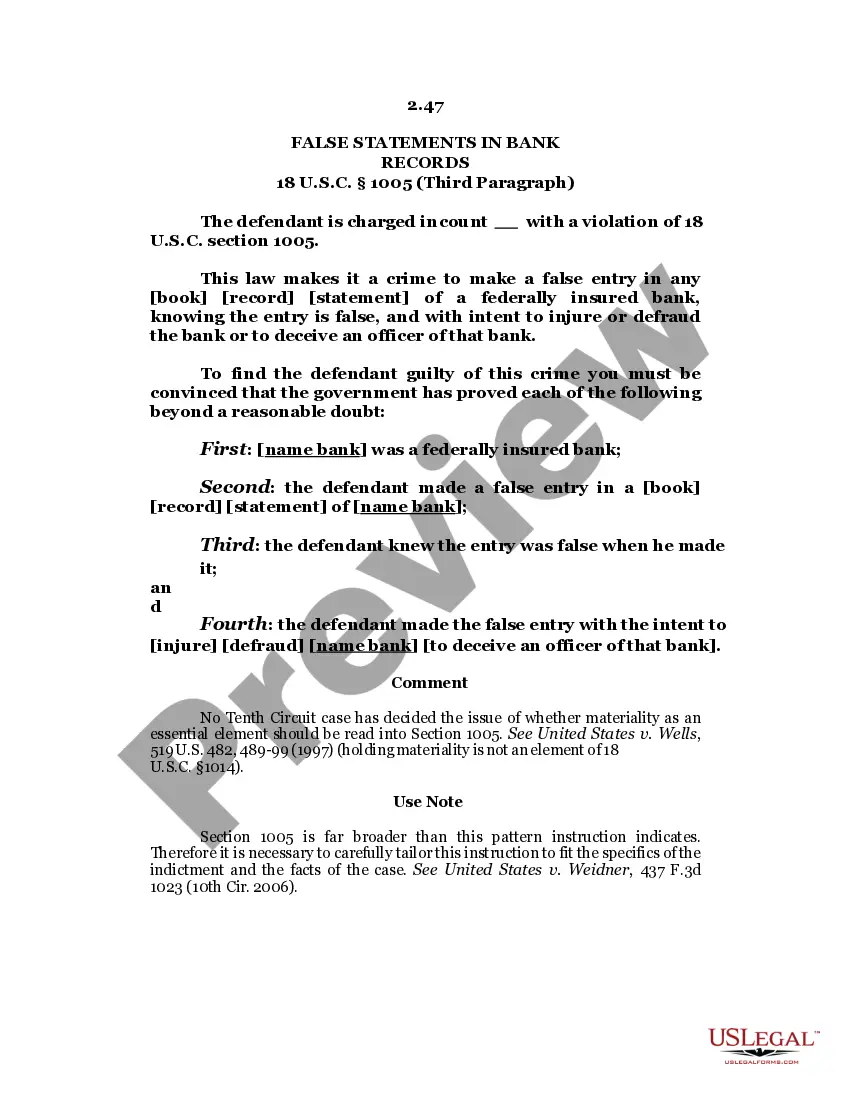
The False Statements in Bank Records form is a legal document related to Title 18, United States Code, Section 1005. This form is used to address the criminal act of making false entries in the records of federally insured banks. Unlike other financial documents, this form specifically focuses on the intent to deceive a bank by reporting fraudulent information that could lead to injury or fraud against that institution. Understanding this form is crucial for ensuring compliance with banking regulations and avoiding serious legal consequences.
Key components of this form
- Identification of the bank involved, confirming that it is federally insured.
- Details on the nature of the false entry made in the bank's records.
- Statement confirming the defendant's knowledge that the entry was false.
- Clarification of the intention behind making the false entry, specifically the intent to injure or defraud the bank.
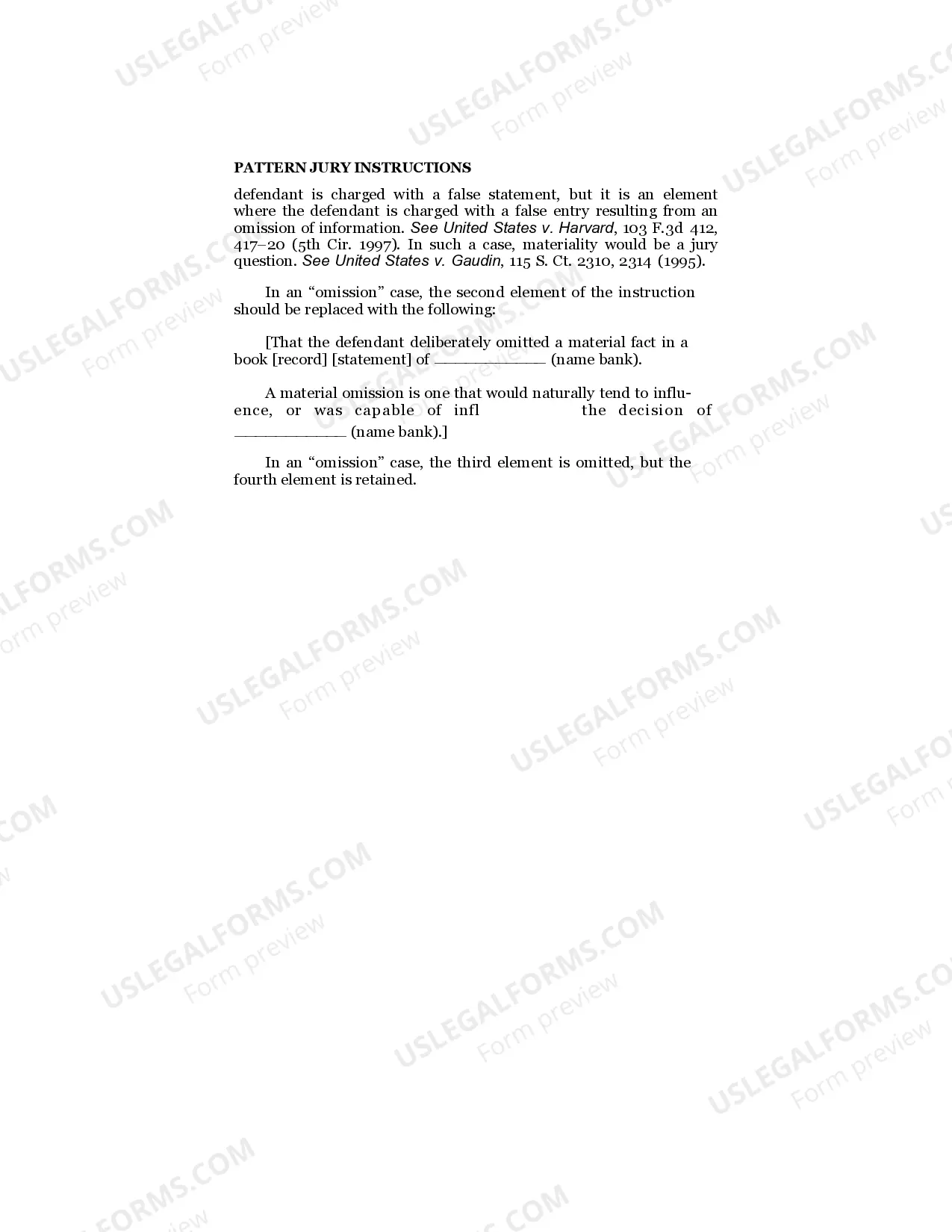
- Information about circumstances of material omission, if applicable, regarding the defendant's actions.
When to use this document
This form should be used in scenarios where an individual is accused of making false statements or entries in bank records. It is particularly relevant in cases involving allegations of fraud against banks, especially regarding misrepresentation of financial statements or failure to disclose critical information that could affect bank operations. If you are facing legal actions related to such charges, this form helps clarify the legal expectations and requirements to address those charges properly.
Who can use this document
- Defendants facing charges under Title 18, United States Code, Section 1005 for making false bank statements.
- Legal professionals assisting clients involved in bank fraud cases.
- Individuals seeking to understand the legal implications of their actions involving bank records.
How to complete this form
- Identify the federally insured bank involved in the case.
- State the false entry made in the bank's records clearly and concisely.
- Note the defendant's knowledge that the entry was false at the time it was made.
- Specify the intent to injure or defraud the bank associated with the false entry.
- In the case of omissions, detail the material facts that were omitted from the records.
Notarization requirements for this form
In most cases, this form does not require notarization. However, some jurisdictions or signing circumstances might. US Legal Forms offers online notarization powered by Notarize, accessible 24/7 for a quick, remote process.
Get your form ready online
Our built-in tools help you complete, sign, share, and store your documents in one place.
Make edits, fill in missing information, and update formatting in US Legal Forms—just like you would in MS Word.
Download a copy, print it, send it by email, or mail it via USPS—whatever works best for your next step.
Sign and collect signatures with our SignNow integration. Send to multiple recipients, set reminders, and more. Go Premium to unlock E-Sign.
If this form requires notarization, complete it online through a secure video call—no need to meet a notary in person or wait for an appointment.
We protect your documents and personal data by following strict security and privacy standards.

Make edits, fill in missing information, and update formatting in US Legal Forms—just like you would in MS Word.

Download a copy, print it, send it by email, or mail it via USPS—whatever works best for your next step.

Sign and collect signatures with our SignNow integration. Send to multiple recipients, set reminders, and more. Go Premium to unlock E-Sign.

If this form requires notarization, complete it online through a secure video call—no need to meet a notary in person or wait for an appointment.

We protect your documents and personal data by following strict security and privacy standards.
Avoid these common issues
- Failing to provide accurate information about the bank involved.
- Not clearly stating the false entry or failing to document it properly.
- Overlooking to mention the intent to defraud the bank.
- Neglecting to clarify details regarding any omissions of material facts.
Why use this form online
- Convenient access to a standardized legal form ready for use.
- Ability to edit the document to fit specific circumstances easily.
- Access to reliable legal templates drafted by licensed attorneys.
- Time-saving, as the form can be downloaded and completed at your convenience.
Looking for another form?
Form popularity
FAQ
For many loans, lenders must verify a large volume of bank statements, sometimes up to 24 months' worth of statements. Some lenders call the banks to verify account names, numbers, and deposit amounts. However, manual verification can slow down the underwriting process considerably.
"To prove a false statement in violation of 18 U.S.C. § 1001, the government must show that the defendant: (1) knowingly and willfully, (2) made a statement, (3) in relation to a matter within the jurisdiction of a department or agency of the United States, (4) with knowledge of its falsity." United States v.
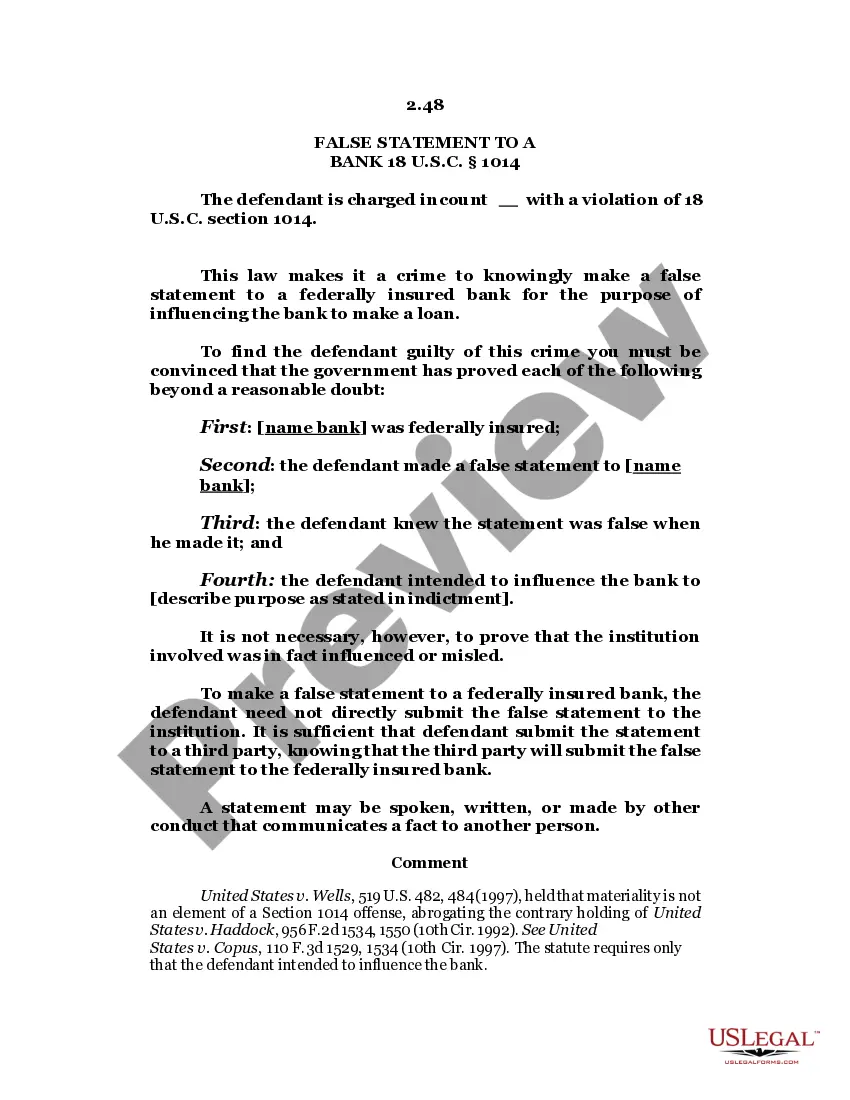
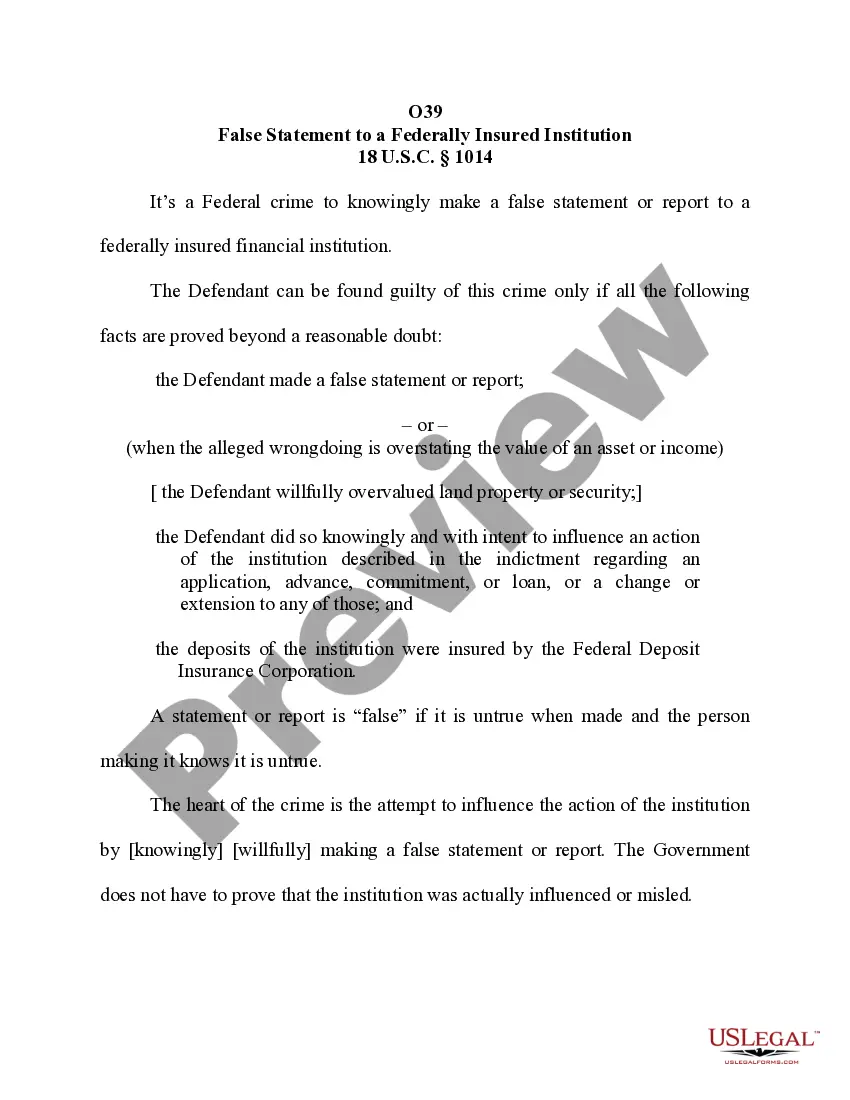
Section 1014 criminalizes the act of making false statements to a financial institution. If convicted of bank fraud you may be facing large fines of up to $1,000,000 and/or imprisonment of up to thirty years.
It is a federal crime for anyone to willfully make a false statement to a federally insured financial institution. Lending institutions rely upon a company's financial statements in extending credit or granting a loan.
It violates PC 532a(1) making false financial statements. If convicted of this crime, you could be facing up to 3 years in prison.
Highly sophisticated fraudsters create bank statements that can escape the scrutiny of human verifiers. Additionally, it can take many staffers and many hours for humans to manually verify all the documents needed to process a large number of loans.
If you present false financial information about yourself or your company, you'll likely face misdemeanor charges, resulting in up to 6 months in jail and fines up to $1000 if convicted. A conviction for false financial statements can lead to fines, restitution, probation, and jail time.
Ing to U.S. law, forgery (which includes faking a bank stub and passing it off as an original statement) is a federal crime. Depending on the type of document that was altered and the exact charges, punishments for individuals convicted of forgery are jail time and paying fines of up to $10,000, or both.