Corruptly Obstructing Administration of Justice
What this document covers
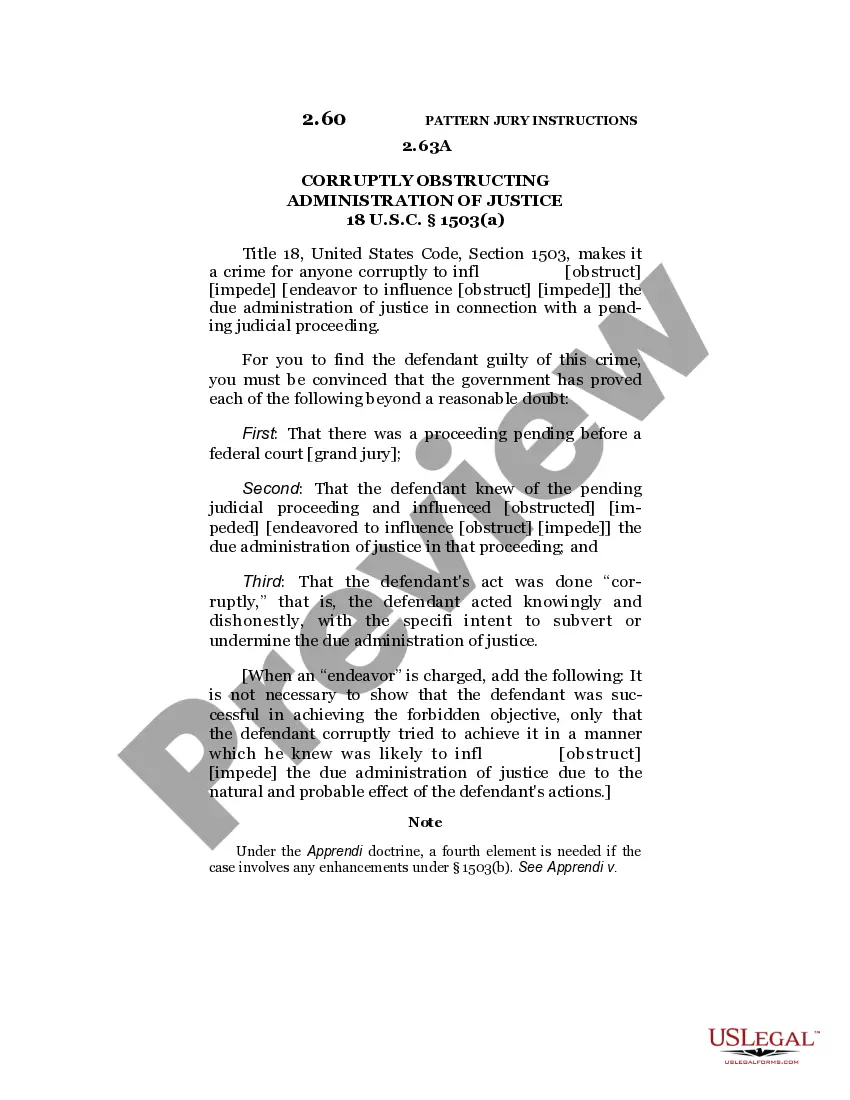
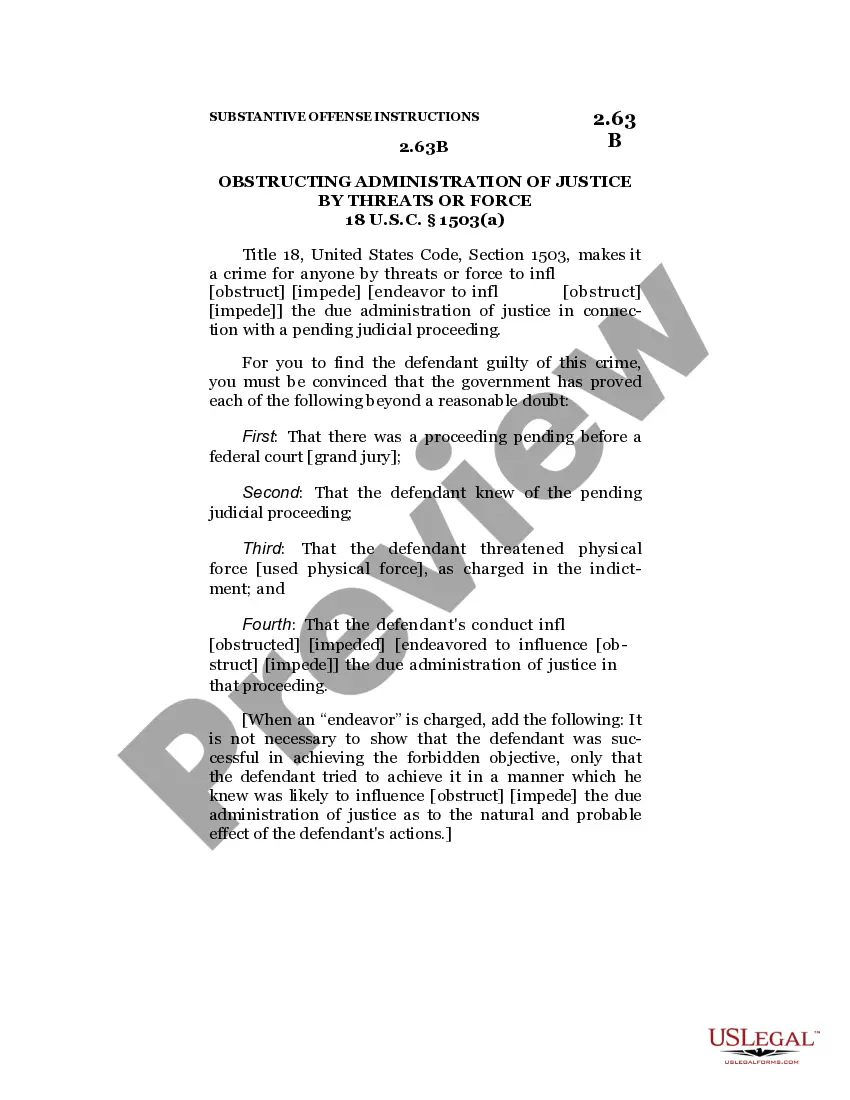
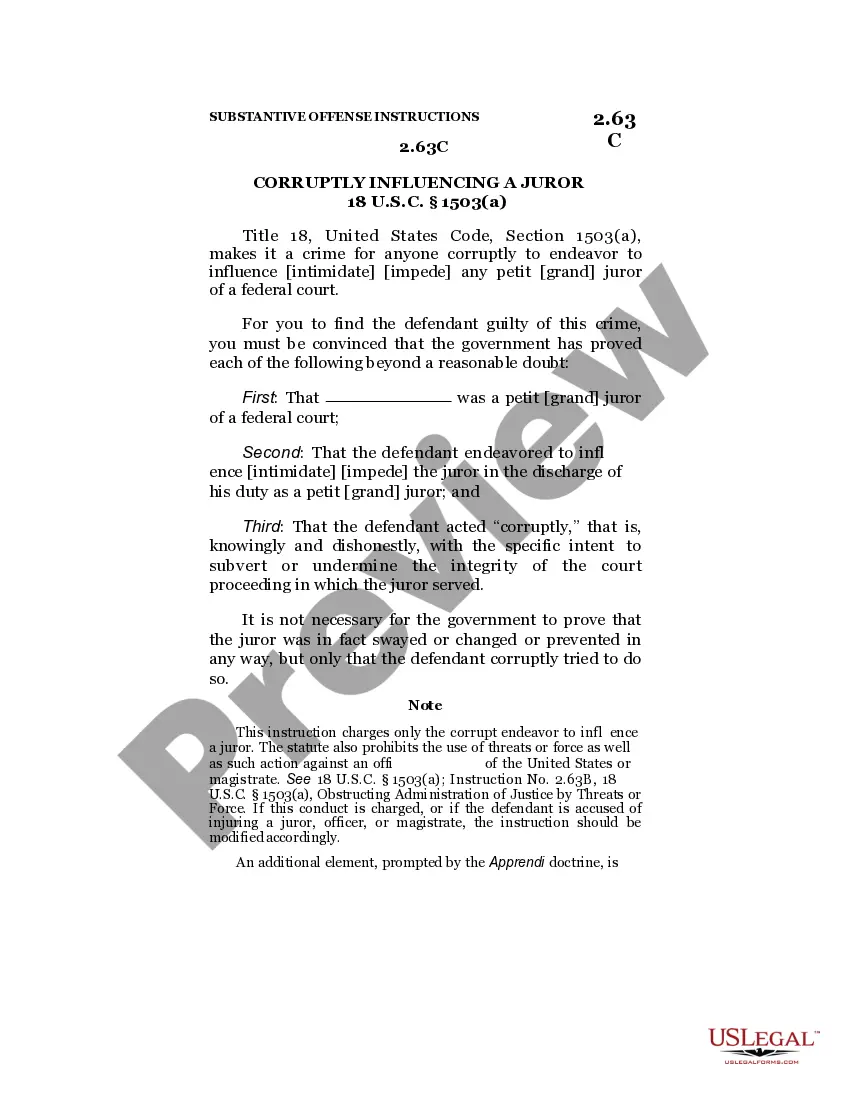
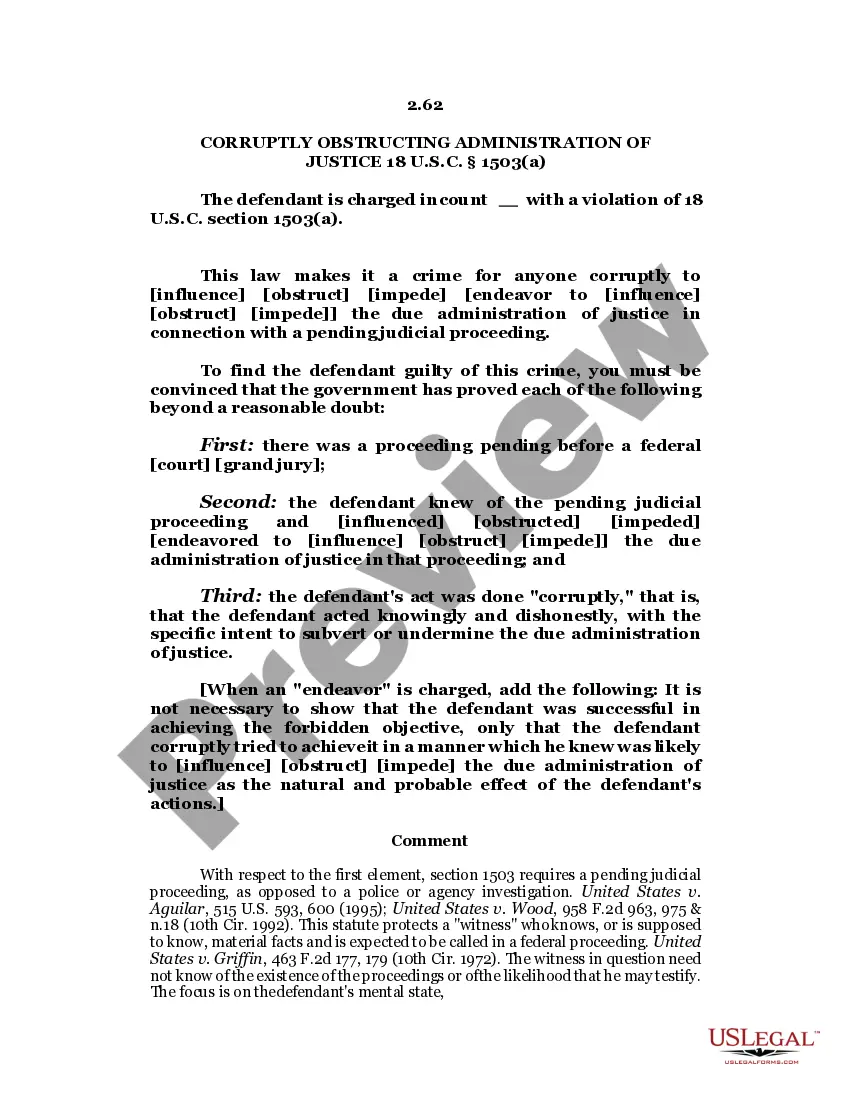
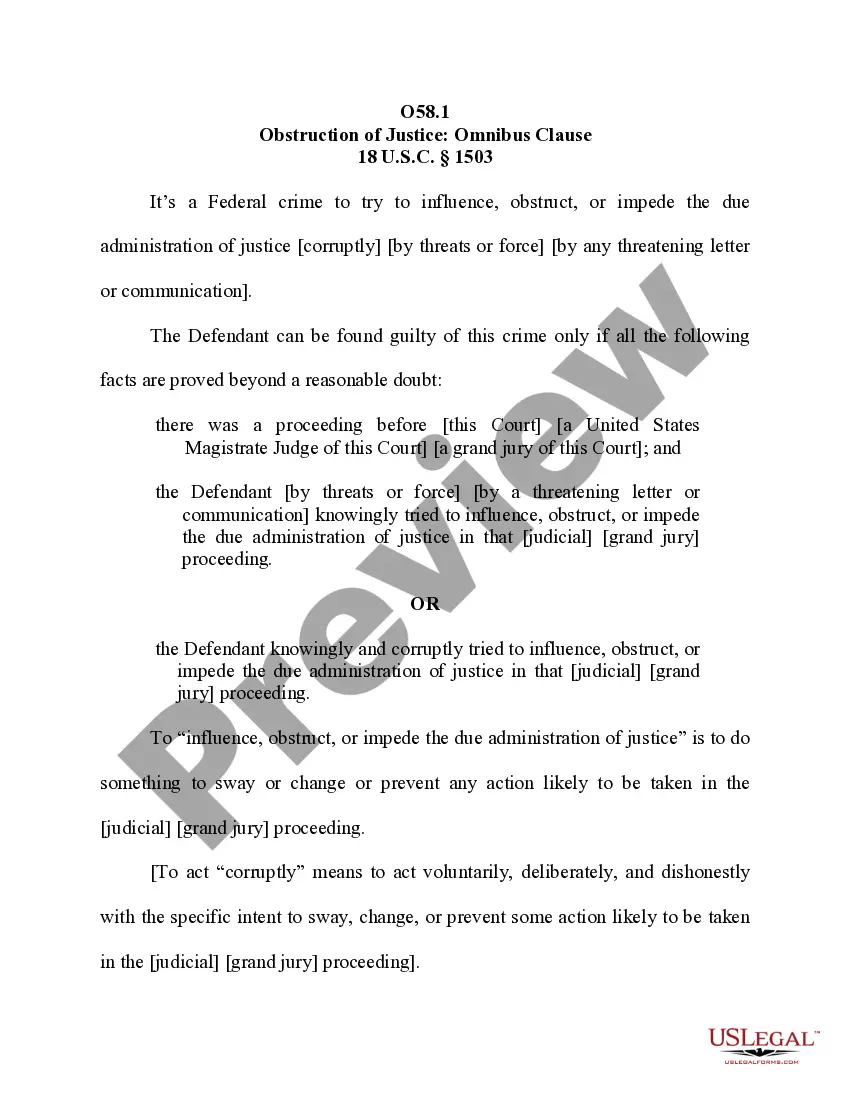
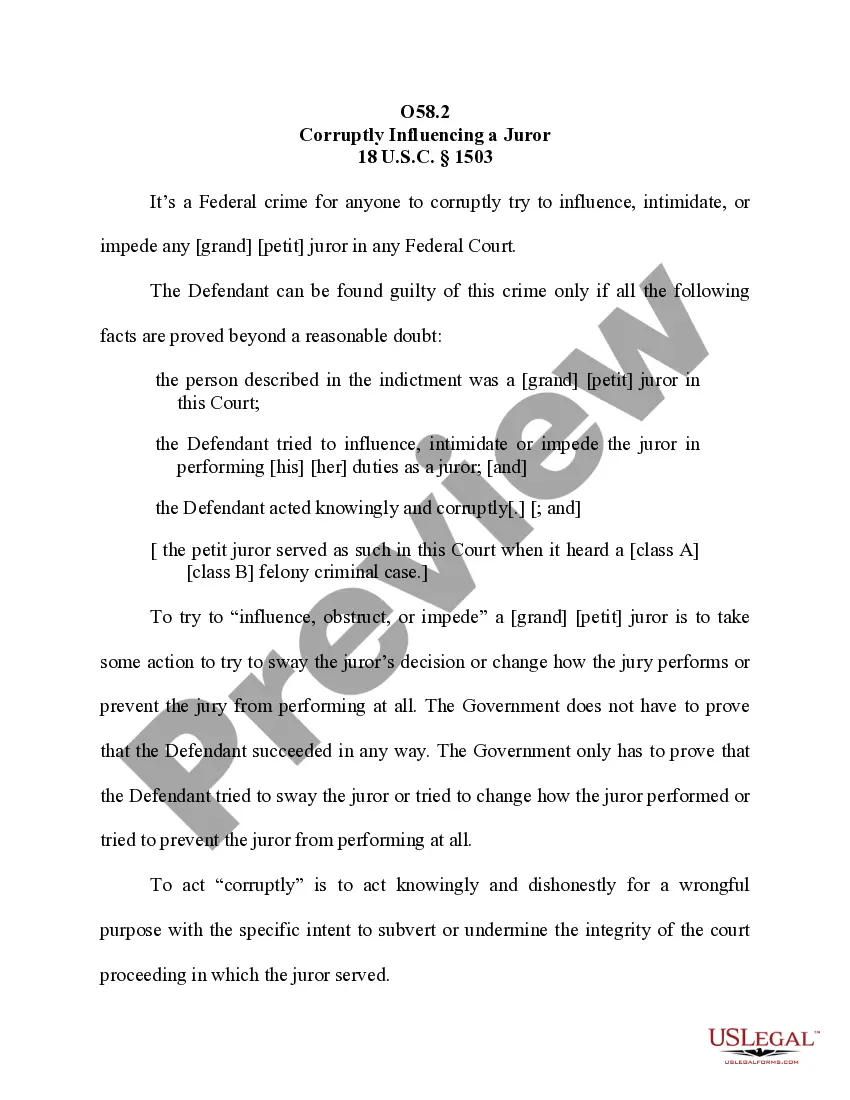
The form titled "Corruptly Obstructing Administration of Justice" is a legal document that addresses criminal behavior under Title 18, United States Code, Section 1503. This form is used in situations where an individual is accused of corruptly obstructing or attempting to influence the administration of justice during a pending judicial proceeding. It outlines specific legal definitions, necessary elements for proving guilt, and applicable case law, distinguishing it from other forms related to obstruction or justice interference.
Key components of this form
- The definition of corrupt obstruction and its criminal implications.
- The requirement that a judicial proceeding is pending.
- The defendant's knowledge of the proceeding and the corrupt intent to influence it.
- The element of "endeavor" which indicates an attempt to obstruct, regardless of success.
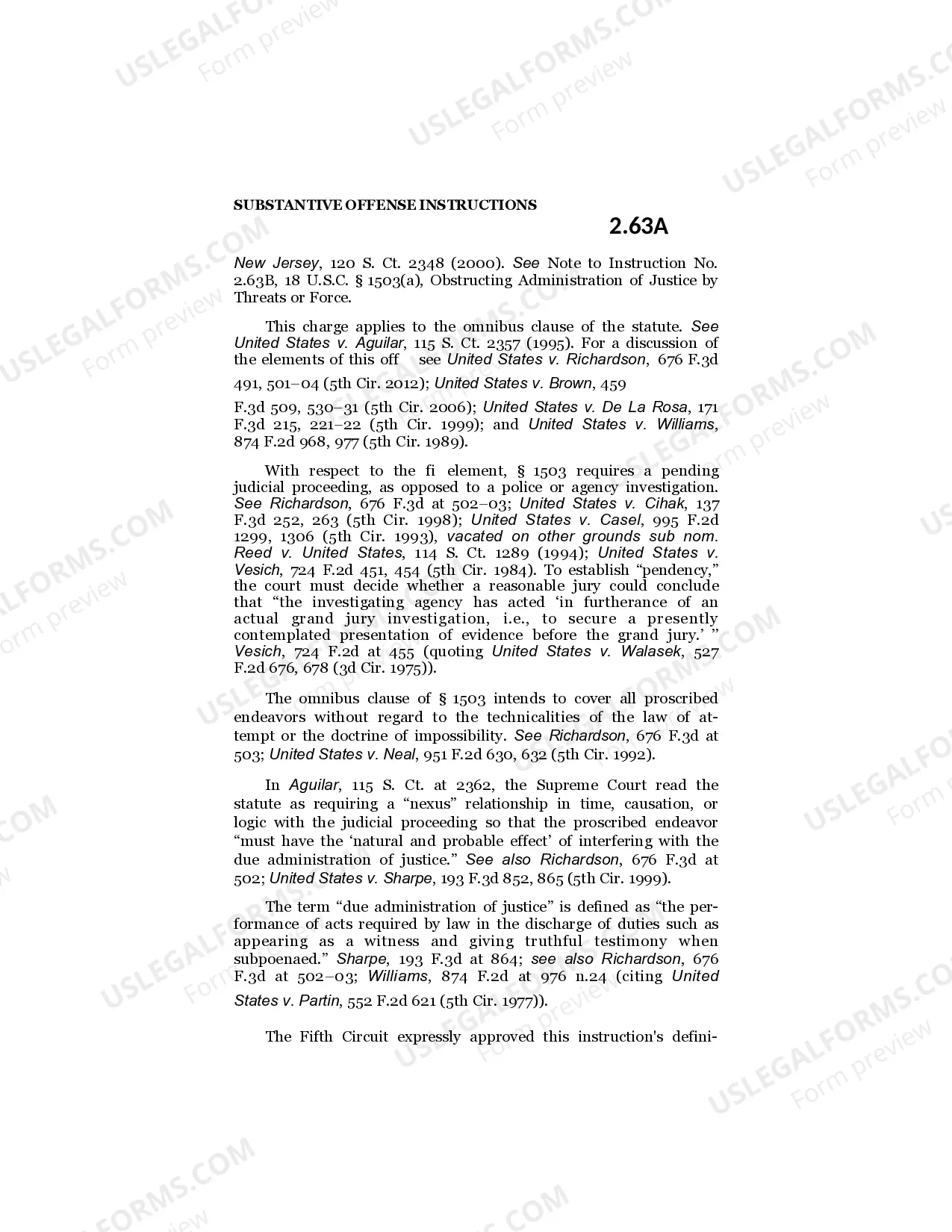
- Reference to relevant legal precedents that clarify application of the law.
Common use cases
This form should be used in legal contexts where an individual faces allegations of corruptly obstructing justice. This includes situations involving federal court proceedings, grand jury investigations, or other formal judicial processes where interference might undermine the legal process. It is essential when filing charges or defending against claims of obstruction under federal law.
Who should use this form
- Legal professionals representing clients accused of obstruction of justice.
- Prosecutors preparing to file formal charges against individuals for corruptly obstructing justice.
- Individuals seeking to understand their rights and possible defenses related to allegations of corruption.
- Anyone involved in a federal judicial proceeding who requires clarification on the legal implications of their actions.
How to prepare this document
- Identify the parties involved, including the defendant and relevant judicial authorities.
- Specify the details of the pending judicial proceeding.
- Indicate the actions taken by the defendant that are considered obstructive.
- Provide evidence demonstrating the corrupt intent behind the obstruction.
- Include relevant case law or precedent to support claims or defenses.
Does this document require notarization?
Notarization is generally not required for this form. However, certain states or situations might demand it. You can complete notarization online through US Legal Forms, powered by Notarize, using a verified video call available anytime.
Get your form ready online
Our built-in tools help you complete, sign, share, and store your documents in one place.
Make edits, fill in missing information, and update formatting in US Legal Forms—just like you would in MS Word.
Download a copy, print it, send it by email, or mail it via USPS—whatever works best for your next step.
Sign and collect signatures with our SignNow integration. Send to multiple recipients, set reminders, and more. Go Premium to unlock E-Sign.
If this form requires notarization, complete it online through a secure video call—no need to meet a notary in person or wait for an appointment.
We protect your documents and personal data by following strict security and privacy standards.

Make edits, fill in missing information, and update formatting in US Legal Forms—just like you would in MS Word.

Download a copy, print it, send it by email, or mail it via USPS—whatever works best for your next step.

Sign and collect signatures with our SignNow integration. Send to multiple recipients, set reminders, and more. Go Premium to unlock E-Sign.

If this form requires notarization, complete it online through a secure video call—no need to meet a notary in person or wait for an appointment.

We protect your documents and personal data by following strict security and privacy standards.
Avoid these common issues
- Failing to establish or document the pending judicial proceeding required by law.
- Neglecting to demonstrate the corrupt intent of the defendant clearly.
- Misunderstanding the difference between obstruction of justice and other legal obstructions.
- Overlooking relevant case law that could strengthen the case.
Benefits of using this form online
- Access to legally sound templates prepared by licensed attorneys, ensuring compliance.
- Convenience of downloading and filling out forms at your own pace.
- Editability allows for customization to fit specific case details easily.
- Immediate availability of forms without the need for in-person meetings with legal professionals.
Legal use & context
- This form is enforceable in federal court under Title 18, U.S. Code, Section 1503.
- It delineates specific legal standards for proving obstruction of justice.
- Understanding the intricacies of the law helps avoid penalties associated with misuse of judicial process.
- It applies to ongoing federal judicial proceedings rather than preliminary investigations.
Quick recap
- The form addresses corrupt obstruction of justice in federal law.
- It is essential for anyone involved in or accused during a federal trial.
- Understanding the legal definitions and court precedents can significantly affect case outcomes.
- Always check for state-specific laws that may influence the use of this federal form.
Looking for another form?
Form popularity
FAQ
Obstructing the administration of justice is also referred to as perverting the course of justice.
A person commits the criminal offense of obstruction of justice of a justice or policing official when he or she uses physical force, threats, or intimidation to interfere with the exercise of official duties by a justice or policing official.
Obstruction occurs when ?a person who by threats, menaces, acts or otherwise forcibly or illegally hinders or obstructs or attempts to hinder or obstruct a law-enforcement officer . . . .? W. Va.
Obstruction of justice, in United States jurisdictions, is an act that involves unduly influencing, impeding, or otherwise interfering with the justice system, especially the legal and procedural tasks of prosecutors, investigators, or other government officials.
Federal Obstruction of Justice Witness tampering, bribing juries, and destroying evidence are examples of obstructions at the federal level. Anyone who tampers with evidence with the intent to obstruct justice in a federal court case may face upwards of 20 years in prison.
The most common forms of obstruction of justice are witness tampering, perjury, and destroying evidence during the course of a government case. Obstruction of justice is a criminal offense under both federal and state law for which thousands of people go to prison every year.
Under federal law, any act that ?corruptly or by threats or force, or by any threatening letter or communication, influences, obstructs, or impedes, or endeavors to influence, obstruct, or impede, the due administration of justice? can be considered obstruction of justice.