Employee Confidentiality Policy with Certification
Overview of this form
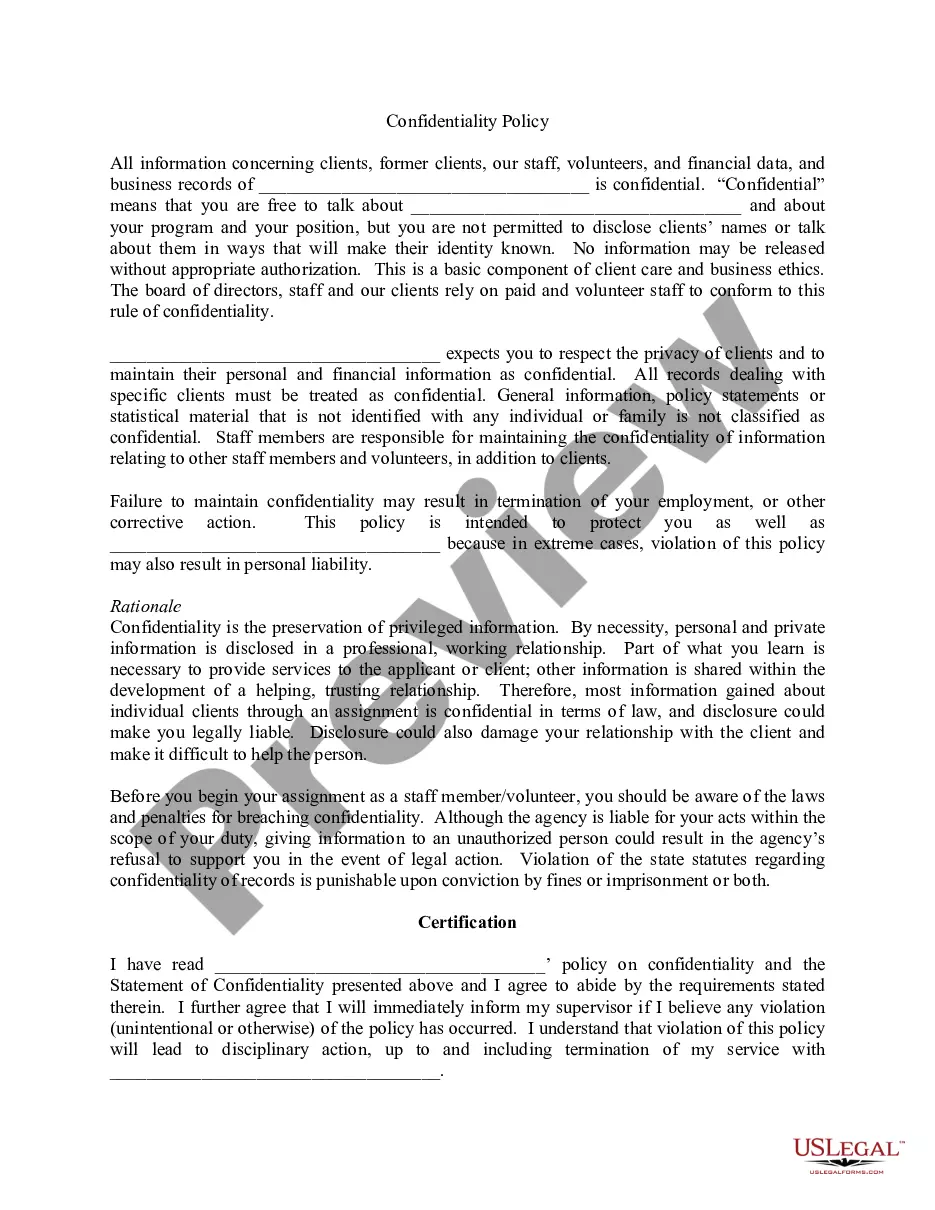
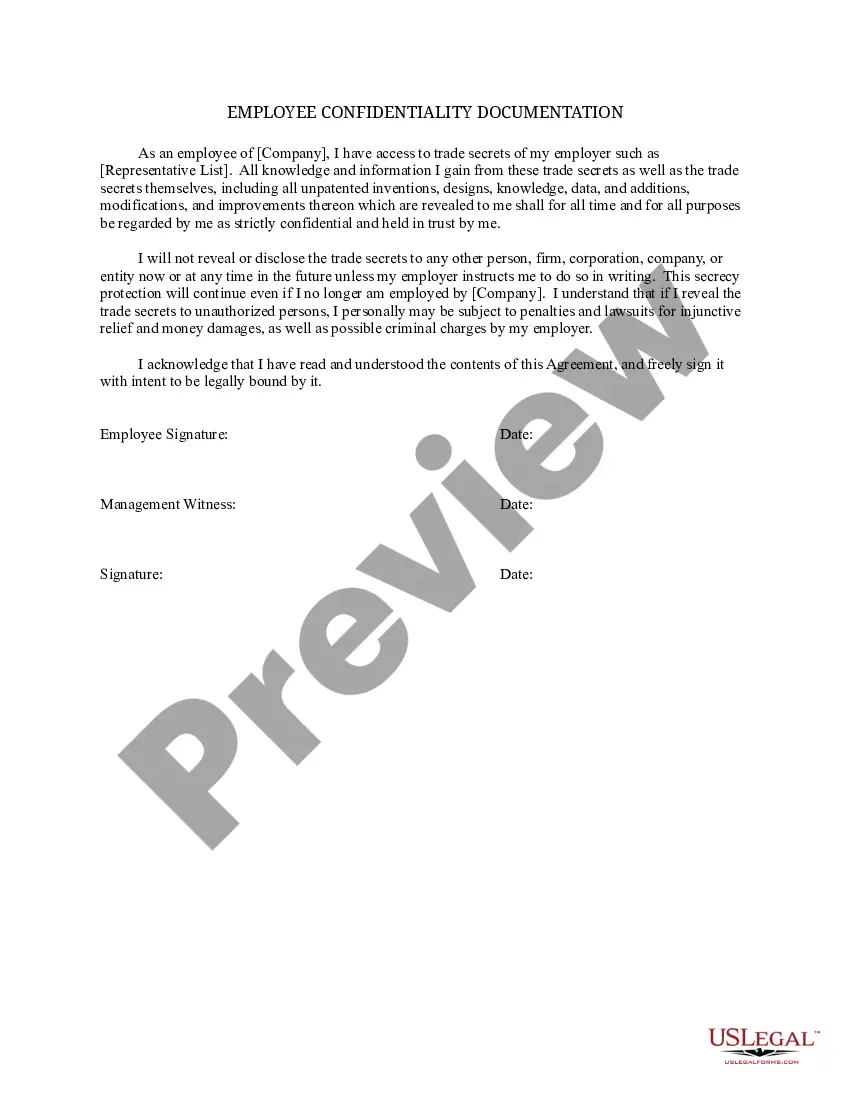
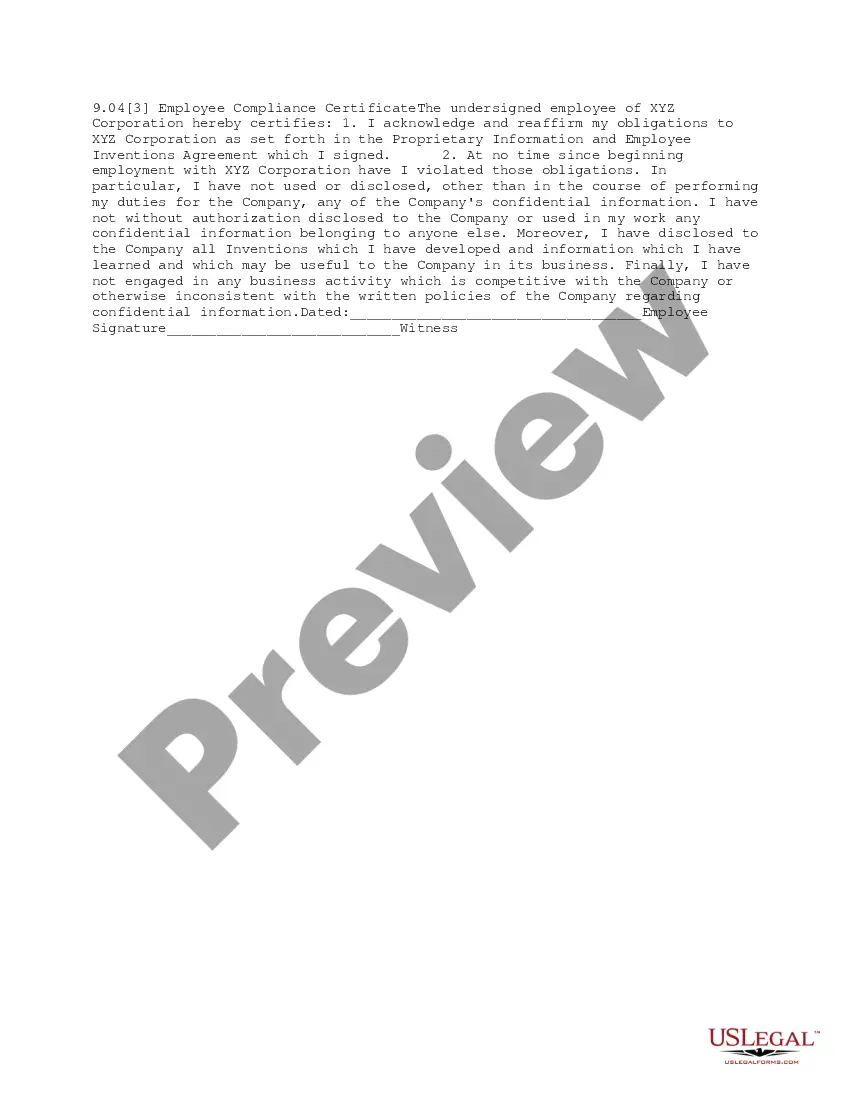
The Employee Confidentiality Policy with Certification is a legal document designed to protect sensitive information within a workplace. This form outlines the expectations for employee confidentiality regarding clients, staff, and business records. It differs from similar forms by integrating a certification statement where employees acknowledge their understanding and agreement to adhere to confidentiality rules. This ensures both the organization's integrity and the trust of clients are upheld.
Form components explained
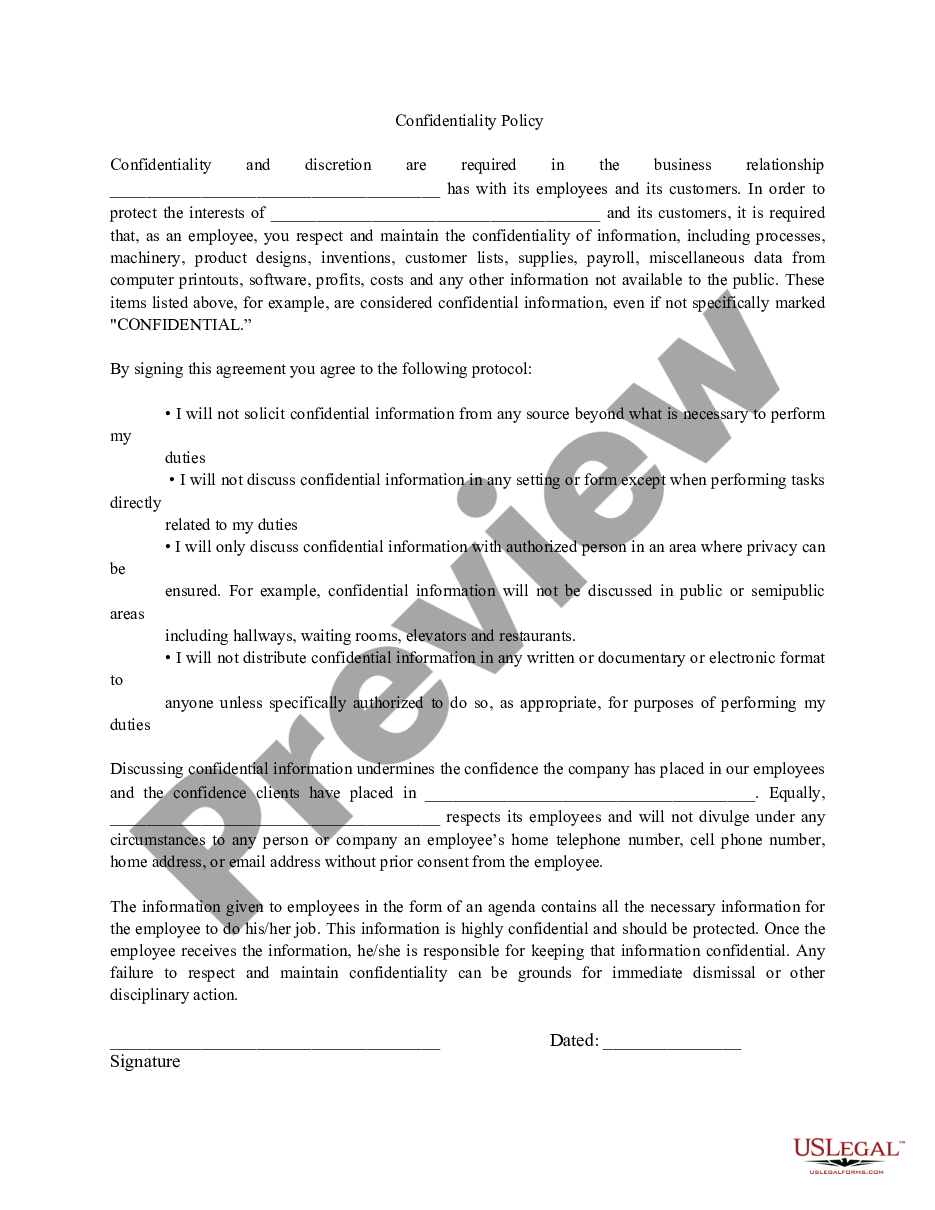
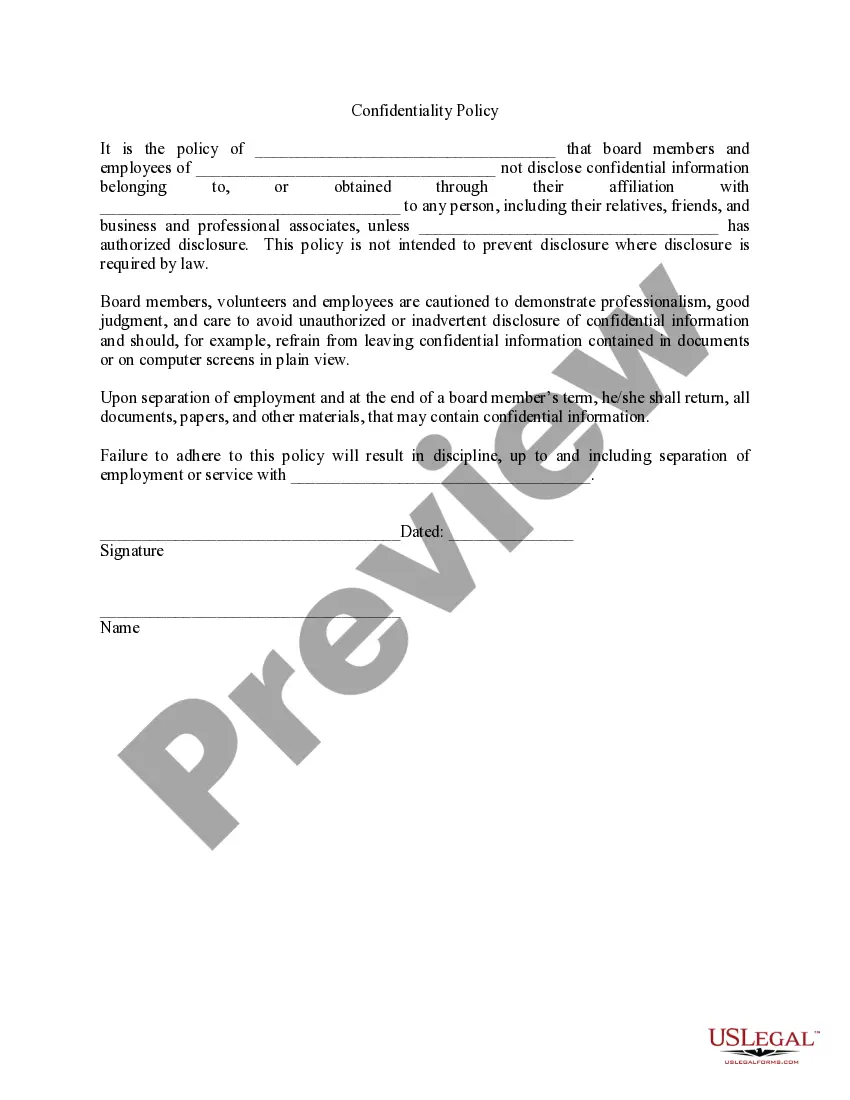
- Confidentiality Policy: Defines what information is considered confidential and the obligation of employees to protect it.
- Rationale: Explains the importance of confidentiality in professional relationships and the legal implications of breaches.
- Certification: A section for employees to affirm their understanding of the confidentiality policy and agree to comply with its terms.

Situations where this form applies
This form should be used when hiring or onboarding employees who will have access to sensitive information. It is particularly important in sectors where client confidentiality is paramount, such as healthcare, legal services, and financial institutions. Using this form helps ensure that all employees understand their roles in protecting confidential information from unauthorized disclosure.
Intended users of this form
This form is intended for:
- Employers in various industries who require employees to handle confidential information.
- Human resources professionals responsible for implementing workplace policies.
- Employees and volunteers who will be accessing sensitive business and client information.
How to complete this form
- Enter the name of the organization in the designated fields.
- Review the confidentiality policy details carefully.
- Fill in the date and sign the certification section to acknowledge understanding and agreement.
- Provide the name of the employee signing the form.
Is notarization required?
Notarization is not commonly needed for this form. However, certain documents or local rules may make it necessary. Our notarization service, powered by Notarize, allows you to finalize it securely online anytime, day or night.
Get your form ready online
Our built-in tools help you complete, sign, share, and store your documents in one place.
Make edits, fill in missing information, and update formatting in US Legal Forms—just like you would in MS Word.
Download a copy, print it, send it by email, or mail it via USPS—whatever works best for your next step.
Sign and collect signatures with our SignNow integration. Send to multiple recipients, set reminders, and more. Go Premium to unlock E-Sign.
If this form requires notarization, complete it online through a secure video call—no need to meet a notary in person or wait for an appointment.
We protect your documents and personal data by following strict security and privacy standards.

Make edits, fill in missing information, and update formatting in US Legal Forms—just like you would in MS Word.

Download a copy, print it, send it by email, or mail it via USPS—whatever works best for your next step.

Sign and collect signatures with our SignNow integration. Send to multiple recipients, set reminders, and more. Go Premium to unlock E-Sign.

If this form requires notarization, complete it online through a secure video call—no need to meet a notary in person or wait for an appointment.

We protect your documents and personal data by following strict security and privacy standards.
Common mistakes to avoid
- Not fully understanding the confidentiality policy before signing.
- Failing to notify a supervisor of any potential breaches.
- Leaving fields blank, such as the organization name and employee signature.
Why complete this form online
- Convenience: Employees can complete and submit the form from anywhere, at any time.
- Editability: The document can be easily modified as company policies evolve.
- Reliability: Downloadable templates ensure accuracy and consistency in legal compliance.
Legal use & context
This Employee Confidentiality Policy with Certification is enforceable as a contract, provided that all parties understand their obligations. It is important to ensure that employees are aware of the consequences of violating confidentiality policies, which may range from disciplinary action to legal liabilities.
Looking for another form?
Form popularity
FAQ
Here is a common example: CONFIDENTIALITY NOTICE: This message and any accompanying documents contain information belonging to the sender which may be confidential and legally privileged. This information is only for the use of the individual or entity to which it was intended.
The purpose of a confidentiality clause in an employment contract is to ensure that the employee does not share confidential information/business secrets with others, such as a competitor for instance. This obligation applies both during and after the termination of employment.
Examples of confidentiality clauses include: Example 1: Preventing employees from talking to the press. Example 2: Limiting the disclosure of on-site business practices. Example 3: Stopping business partners from sharing IP rights.
Staff are bound by their conditions of service to respect the confidentiality of any information that they may come into contact with and under no circumstances should such information be divulged or passed to any persons or organisation in any form unless such disclosure is authorised under this policy.
Ingly, to protect the Confidential Information that will be disclosed during employment, the Employee agrees as follows: Employee will hold the Confidential Information received from Company Name in strict confidence and will exercise a reasonable degree of care to prevent disclosure to others.
A typical confidentiality clause might say, "The phrases and circumstances of this Agreement are completely confidential between the parties and shall not be disclosed to anybody else. Any disclosure in violation shall be deemed a breach of this Agreement."