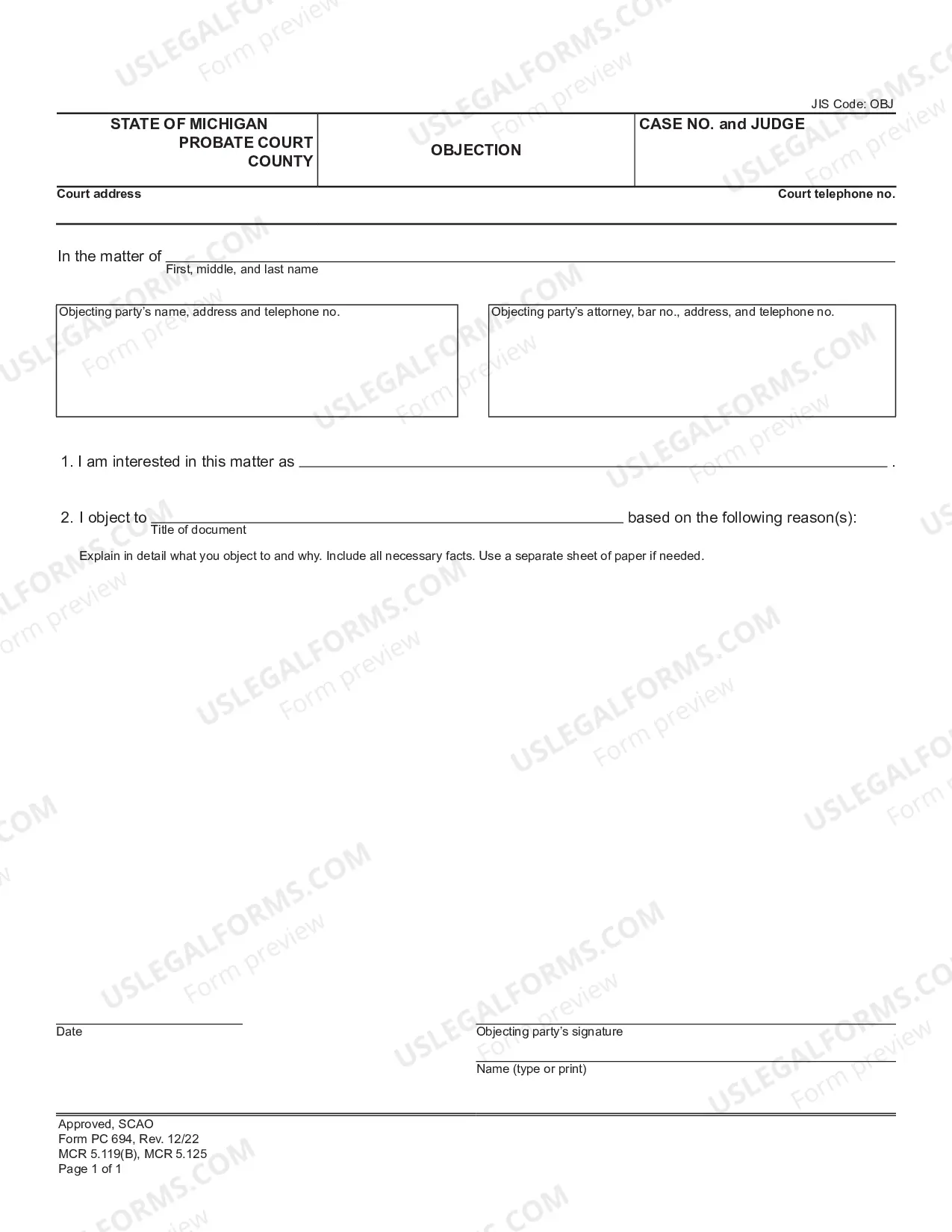
15.63 ELEMENTS OF DEFENSE: CONTRIBUTORY NEGLIGENCE
What is this form?
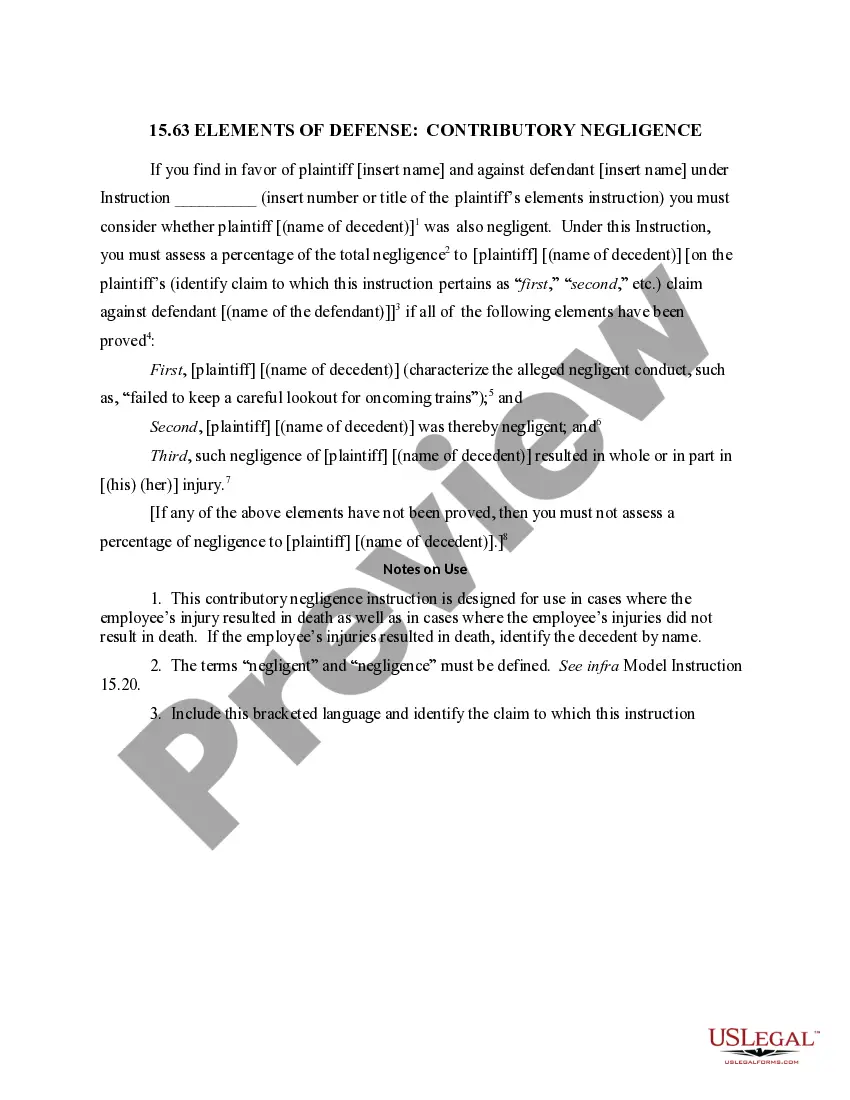
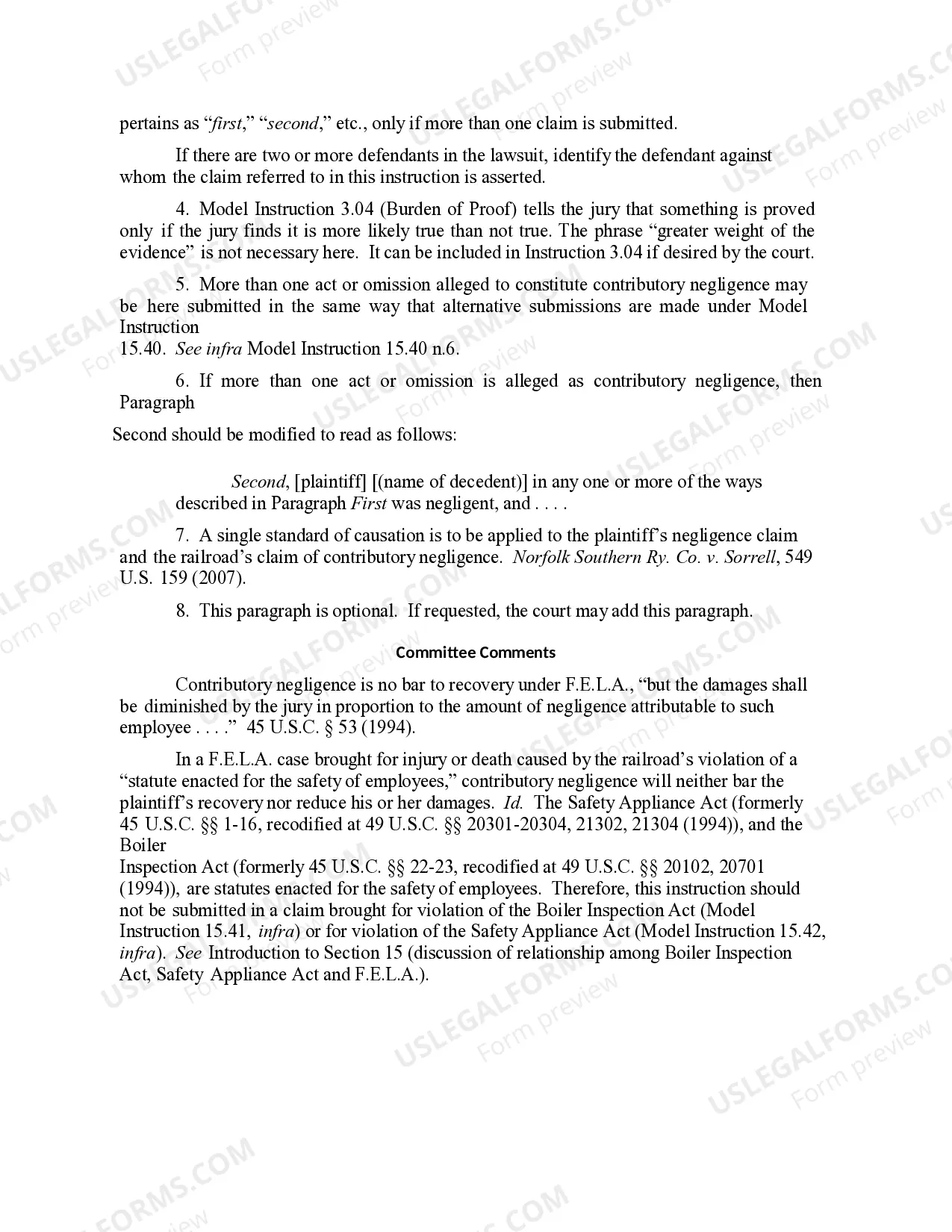
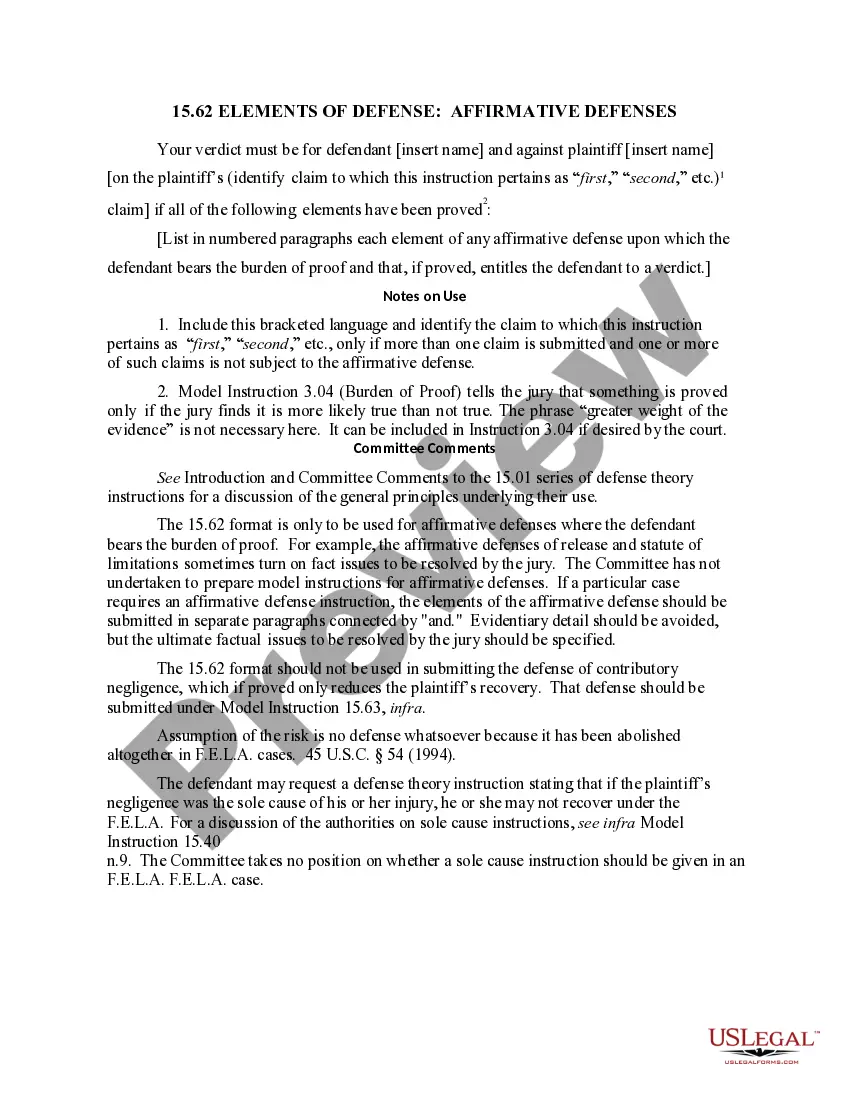
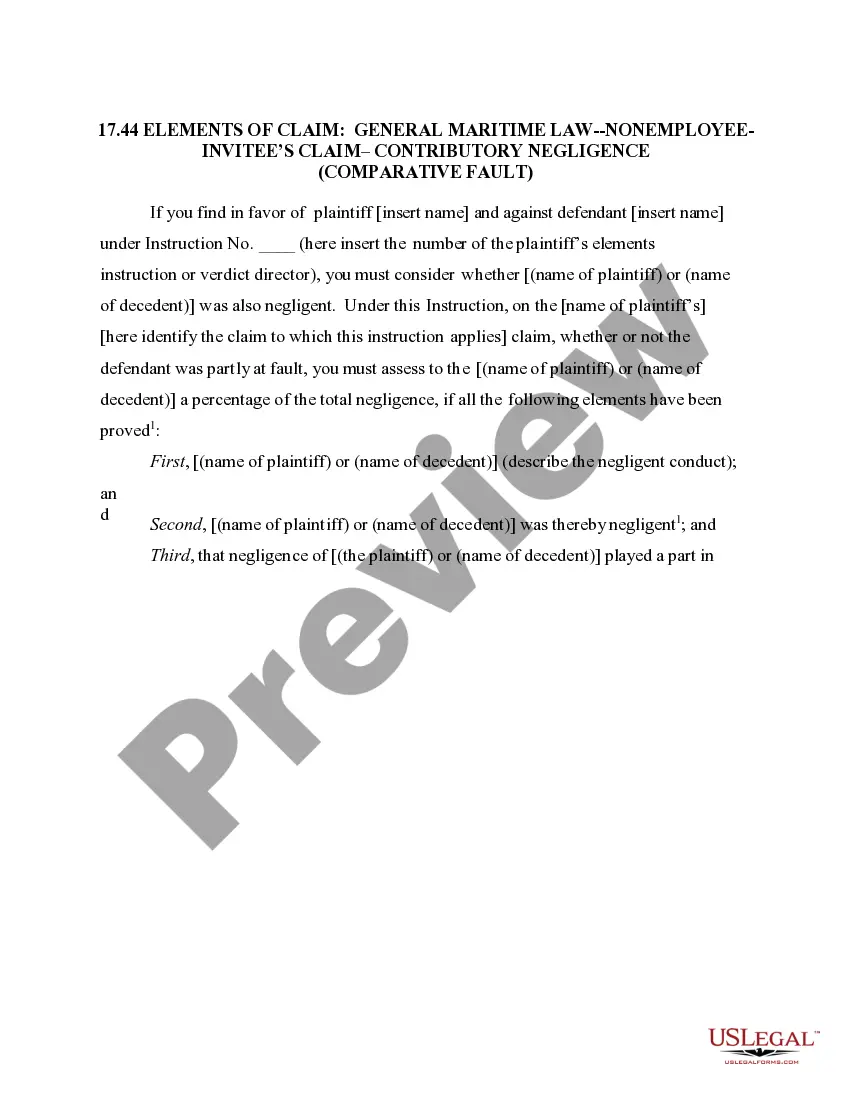
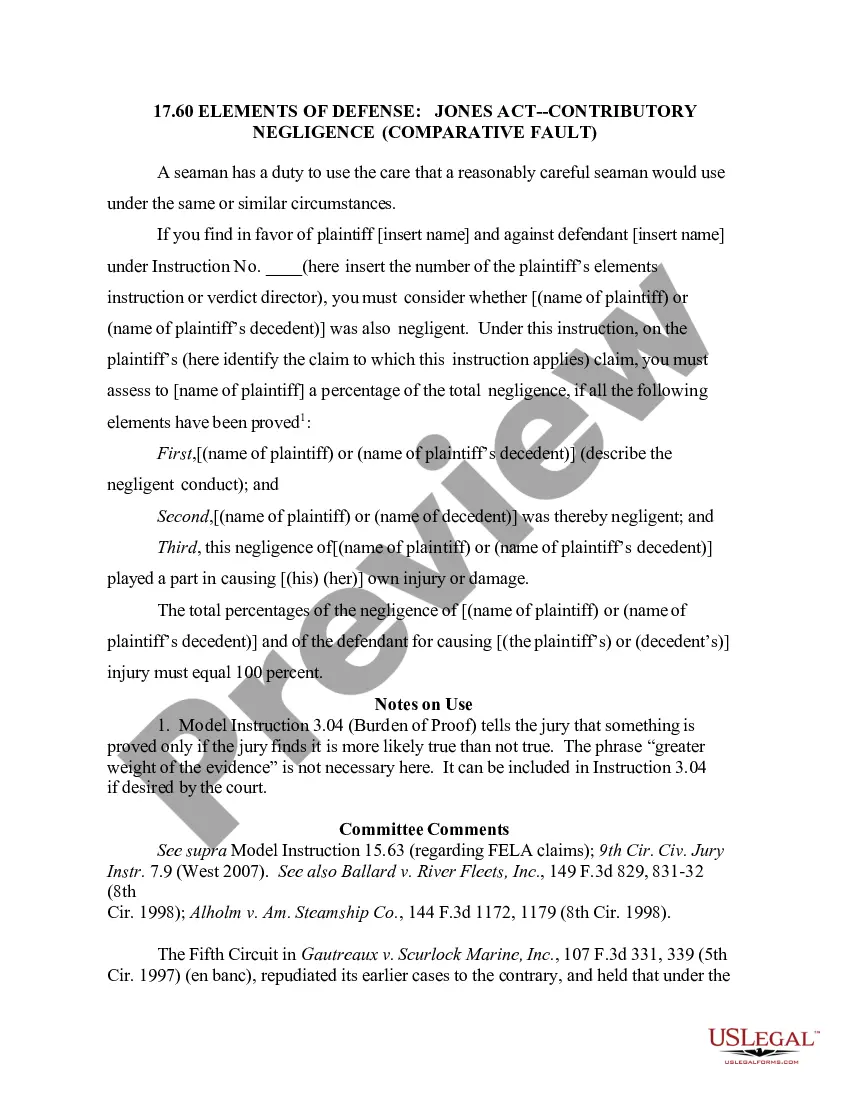
The 15.63 Elements of Defense: Contributory Negligence form is designed to facilitate legal proceedings in cases where the plaintiff may have contributed to their own injury through negligent actions. This form aids in assessing the percentage of negligence attributable to the plaintiff, which can affect the outcome of the case. Unlike other negligence forms, this one specifically addresses the role of contributory negligence in determining liability.
What’s included in this form
- Identification of the parties involved, including the plaintiff and defendant.
- Detailed characterization of the alleged negligent conduct of the plaintiff.
- Assessment criteria for determining if the plaintiff's negligence contributed to their injury.
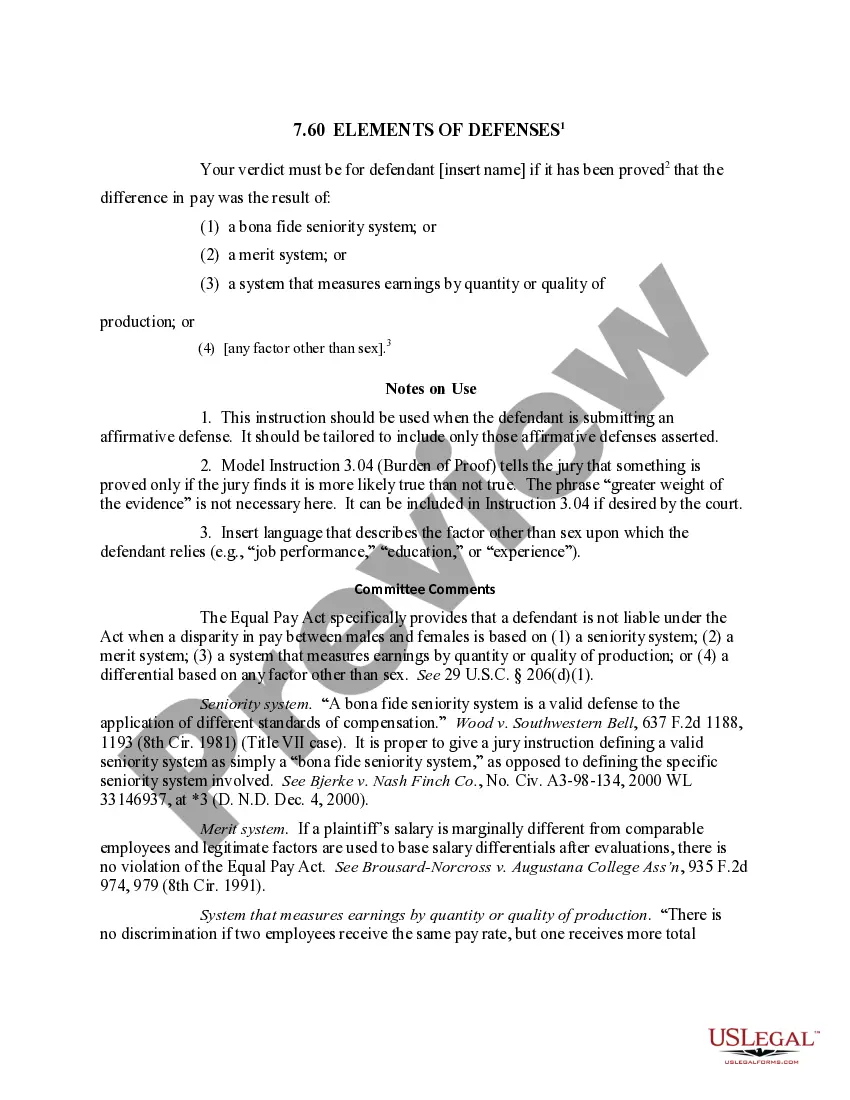
- Instructions for the jury on how to evaluate the negligence claims.
- Clarification regarding the relationship between contributory negligence and the Fair Labor Standards Act (F.E.L.A).
When to use this form
This form should be used in civil jury trials where the plaintiff's potential contributory negligence is a factor in determining liability. It is applicable in cases involving workplace injuries, especially under F.E.L.A. guidelines, where it is necessary to evaluate how the plaintiff's actions may have influenced the results of an accident or injury.
Intended users of this form
- Legal professionals handling negligence cases.
- Plaintiffs seeking compensation for injuries where contributory negligence may apply.
- Defendants in civil lawsuits who need to counter negligence claims with contributory factors.
Steps to complete this form
- Identify and enter the names of the plaintiff and defendant in the specified fields.
- Characterize the negligent conduct of the plaintiff clearly and concisely.
- Assess and specify the percentage of negligence attributed to the plaintiff.
- Determine the claim to which this instruction pertains and insert the relevant claim number or title.
- Ensure all necessary elements have been addressed before submission.
Is notarization required?
This form does not typically require notarization unless specified by local law.
Get your form ready online
Our built-in tools help you complete, sign, share, and store your documents in one place.
Make edits, fill in missing information, and update formatting in US Legal Forms—just like you would in MS Word.
Download a copy, print it, send it by email, or mail it via USPS—whatever works best for your next step.
Sign and collect signatures with our SignNow integration. Send to multiple recipients, set reminders, and more. Go Premium to unlock E-Sign.
If this form requires notarization, complete it online through a secure video call—no need to meet a notary in person or wait for an appointment.
We protect your documents and personal data by following strict security and privacy standards.

Make edits, fill in missing information, and update formatting in US Legal Forms—just like you would in MS Word.

Download a copy, print it, send it by email, or mail it via USPS—whatever works best for your next step.

Sign and collect signatures with our SignNow integration. Send to multiple recipients, set reminders, and more. Go Premium to unlock E-Sign.

If this form requires notarization, complete it online through a secure video call—no need to meet a notary in person or wait for an appointment.

We protect your documents and personal data by following strict security and privacy standards.
Common mistakes
- Failing to clearly define the alleged negligent conduct.
- Omitting necessary information regarding the claims involved.
- Miscalculating the percentage of negligence attributable to the plaintiff.
Benefits of completing this form online
- Convenience of instant access and download.
- Editable templates that can be customized to suit specific case details.
- Reliable and legally vetted content drafted by licensed attorneys.
Legal use & context
- This form is used in the context of civil trials where negligence is contested.
- Contributory negligence affects damage awards without barring recovery entirely.
- Applicable in Federal Employers Liability Act (F.E.L.A.) cases under specific conditions.
Key takeaways
- The form addresses how contributory negligence can influence legal outcomes in personal injury cases.
- Clear definitions and specifics of negligence are essential for jury instructions.
- Users should be aware of state-specific laws impacting the use of contributory negligence in litigation.
Looking for another form?
Form popularity
FAQ
Contributory negligence is a legal defense that comes into play in some personal injury cases. Under this defense, if the person who was hurt did anything themselves that contributed to the accident or injury, then the defendant is not responsible for the injury.
8.6 The basic principle underlying the defence of contributory negligence is that people should take reasonable care for their own safety as well as for that of others.
Since damages are asserted in the plaintiff's negligence claim against the defendant, the defendant's contributory negligence charge involves only three elements: duty, breach, and causation.
The major defenses to negligence are contributory negligence, comparative negligence, assumption of the risk, and statute of limitations. If the defendant is able to prove each element of a defense, then the outcome of the case may go in their favor.
States that Have Contributory Negligence Many states have now adopted comparative negligence laws, which are less harsh. There are five jurisdictions that still use contributory negligence: Alabama, Maryland, North Carolina, Virginia, and Washington, D.C.
Contributory negligence The defendant owed a duty to the plaintiff. The defendant breached that duty to the plaintiff. The plaintiff suffered harm due to the defendant's breach.
The most common negligence defenses are contributory negligence, comparative negligence, and assumption of risk. This article will discuss all three defenses, when they're used, and how they're established.