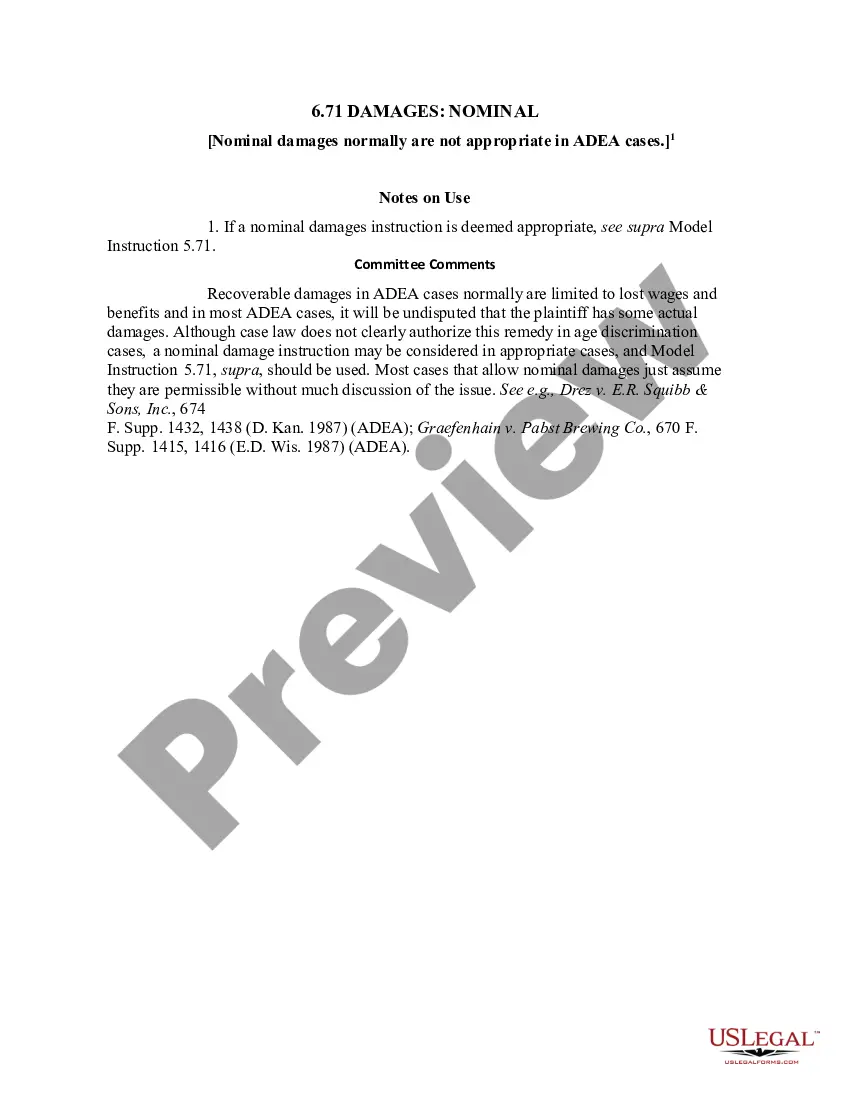
6.71 DAMAGES: NOMINAL
What this document covers
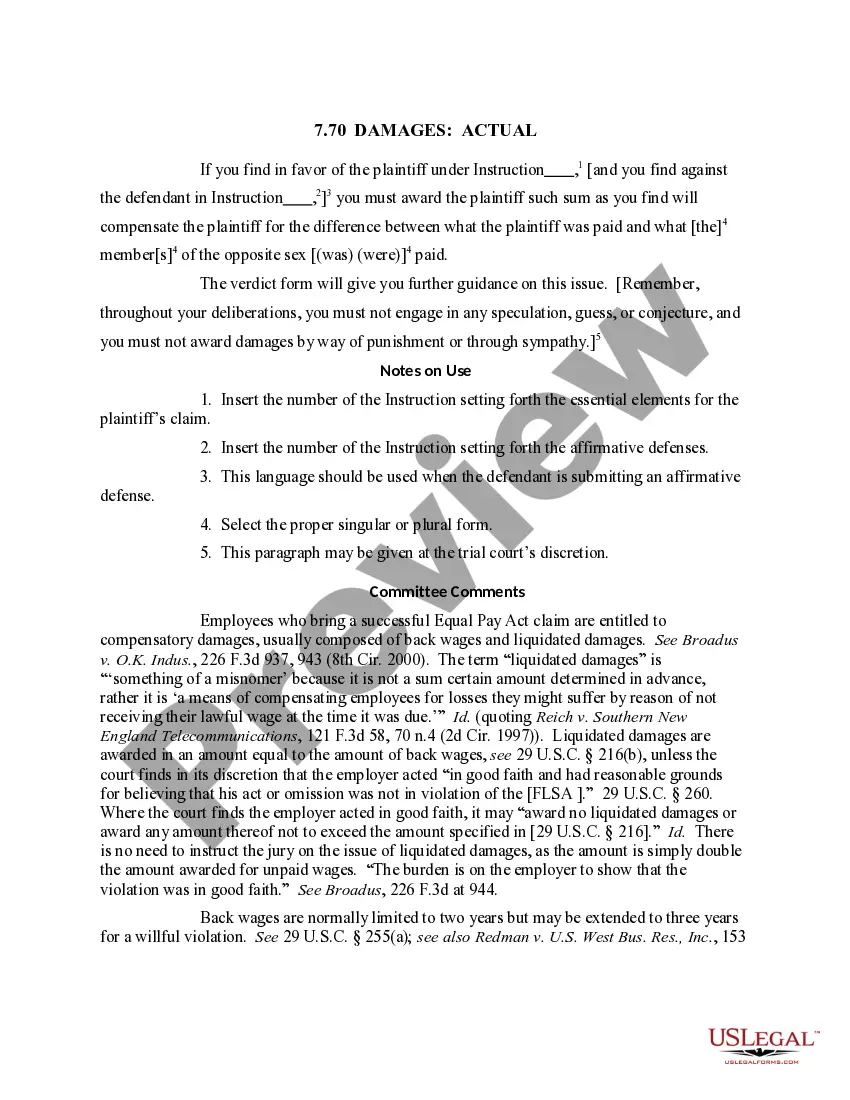
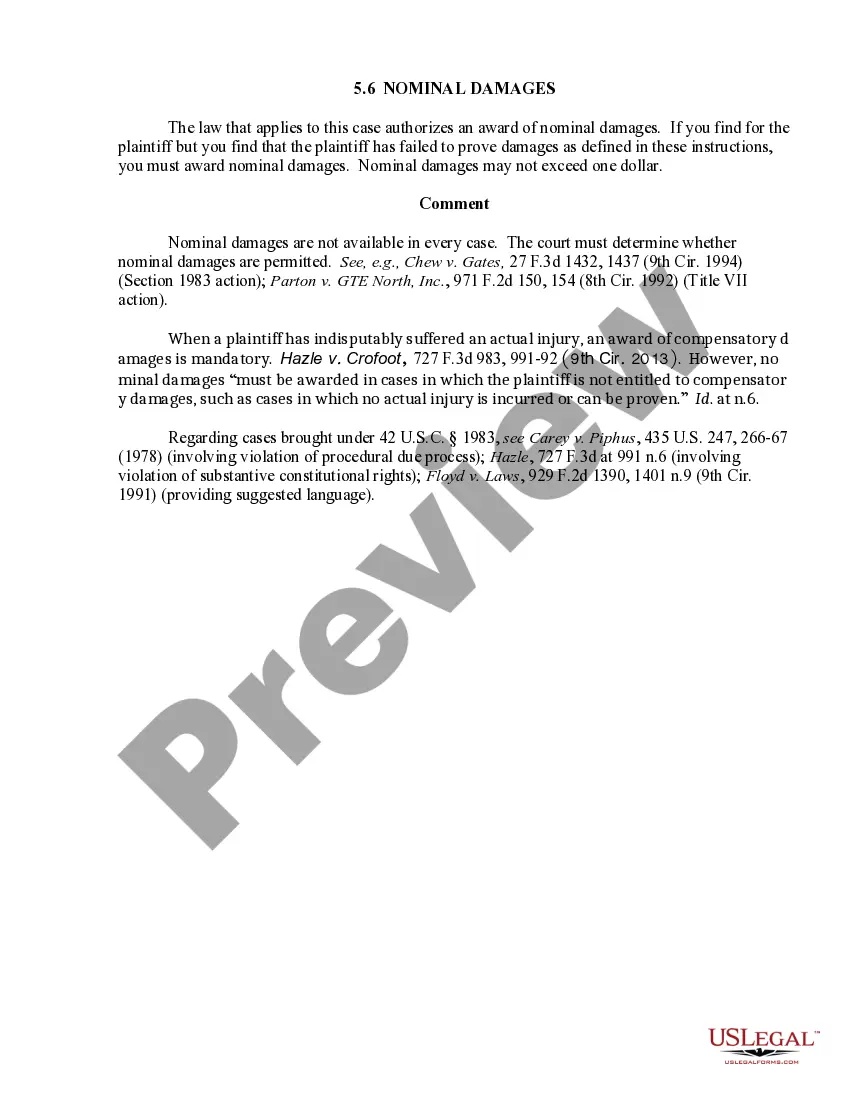
The Nominal Damages form is used in legal cases to claim a symbolic amount of money as compensation when a party's rights have been violated, but actual damages cannot be proven. This form is particularly relevant in cases involving age discrimination under the Age Discrimination in Employment Act (ADEA), although its application may vary as nominal damages are not typically sought in such cases. Understanding this form is essential for plaintiffs who may have experienced discrimination but are unable to establish measurable financial loss.
Form components explained
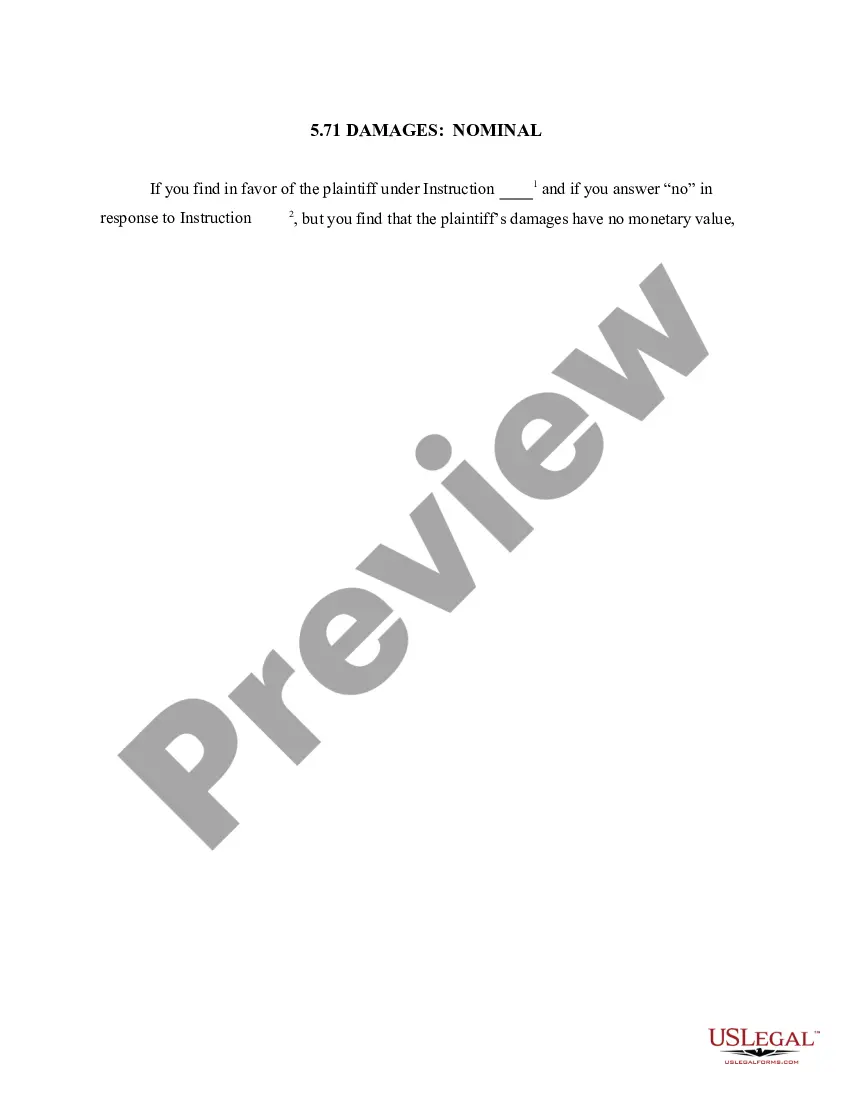
- Instructions for determining when nominal damages instructions may be appropriate.
- Guidance on referencing other model instructions that support the use of nominal damages.
- Notes on the applicability of nominal damages in ADEA cases.
- Potential limitations on recoverable damages in age discrimination claims.
When this form is needed
This form should be used in situations where an individual believes they have been discriminated against based on age, yet cannot demonstrate substantial financial loss. It may apply primarily in ADEA-related cases where proof of actual damages is lacking, and the plaintiff seeks to assert their rights without quantifiable harm.
Who needs this form
- Individuals involved in age discrimination cases under the ADEA.
- Parties seeking to assert their legal rights in scenarios where actual damages cannot be substantiated.
- Legal professionals handling cases that may qualify for nominal damages despite lack of concrete financial loss.
Instructions for completing this form
- Identify the parties involved in the claim.
- Provide a clear statement of the alleged discriminatory act.
- Include a declaration that actual damages were not incurred or cannot be proven.
- Specify the nominal amount being claimed as damages.
- Sign and date the form to verify its accuracy and authenticity.
Is notarization required?
Notarization is generally not required for this form. However, certain states or situations might demand it. You can complete notarization online through US Legal Forms, powered by Notarize, using a verified video call available anytime.
Get your form ready online
Our built-in tools help you complete, sign, share, and store your documents in one place.
Make edits, fill in missing information, and update formatting in US Legal Forms—just like you would in MS Word.
Download a copy, print it, send it by email, or mail it via USPS—whatever works best for your next step.
Sign and collect signatures with our SignNow integration. Send to multiple recipients, set reminders, and more. Go Premium to unlock E-Sign.
If this form requires notarization, complete it online through a secure video call—no need to meet a notary in person or wait for an appointment.
We protect your documents and personal data by following strict security and privacy standards.

Make edits, fill in missing information, and update formatting in US Legal Forms—just like you would in MS Word.

Download a copy, print it, send it by email, or mail it via USPS—whatever works best for your next step.

Sign and collect signatures with our SignNow integration. Send to multiple recipients, set reminders, and more. Go Premium to unlock E-Sign.

If this form requires notarization, complete it online through a secure video call—no need to meet a notary in person or wait for an appointment.

We protect your documents and personal data by following strict security and privacy standards.
Mistakes to watch out for
- Failing to ensure that the claim for nominal damages is properly justified.
- Neglecting to reference relevant model instructions that support the use of nominal damages.
- Providing insufficient evidence of the discriminatory act.
Why use this form online
- Immediate access to legally sound templates crafted by licensed attorneys.
- Editability allows users to tailor the form to fit individual circumstances.
- Convenience of completing the form from anywhere without the need for in-person visits.
Legal use & context
- Nominal damages can assert a plaintiff's rights even without financial loss.
- Application of this form may depend on specific case law interpretations.
- Understanding relevant judicial precedents is essential for effective use.
Summary of main points
- The Nominal Damages form is essential for asserting rights in discrimination cases where actual damages cannot be proven.
- Eligibility includes individuals involved in ADEA cases who lack substantial financial claims.
- Proper completion and understanding of legal context are vital for effective use of the form.
Looking for another form?
Form popularity
FAQ
In which of the following cases would a court most likely award the plaintiff nominal damages? In a case where compensatory damages resulted from a contract breach.
A nominal damages claim differs from a ?small claim? in the sense that a nominal damages award is not a lawsuit seeking a monetary sum of $1. A nominal-damages lawsuit seeks an affirmation of the plaintiff's rights, and the mark of that affirmation is the dollar.
A trivial sum of money awarded to a plaintiff whose legal right has been technically violated but who has not established that they are entitled to compensatory damages because there was no accompanying loss or harm.
Nominal damages are awarded when the plaintiff is legally in the right, but has not suffered substantial losses. Because the plaintiff has no established need for compensation, the amounts awarded in these cases are usually very small.
A small amount of money awarded to the plaintiff in a civil lawsuit when a judge or jury finds that the plaintiff has suffered a legal wrong, but no compensatory damages. A dollar is a common amount for a nominal damages award.
An example of nominal damages is a situation where a defendant breached a contract and failed to fulfill the terms of the agreement, but the plaintiff wasn't harmed by this failure.
A trivial sum of money awarded to a plaintiff whose legal right has been technically violated but who has not established that they are entitled to compensatory damages because there was no accompanying loss or harm.
Nominal damages are awarded when the plaintiff is legally in the right, but has not suffered substantial losses. Because the plaintiff has no established need for compensation, the amounts awarded in these cases are usually very small.