Driveway Easement and Shared Parking Agreement
What this document covers
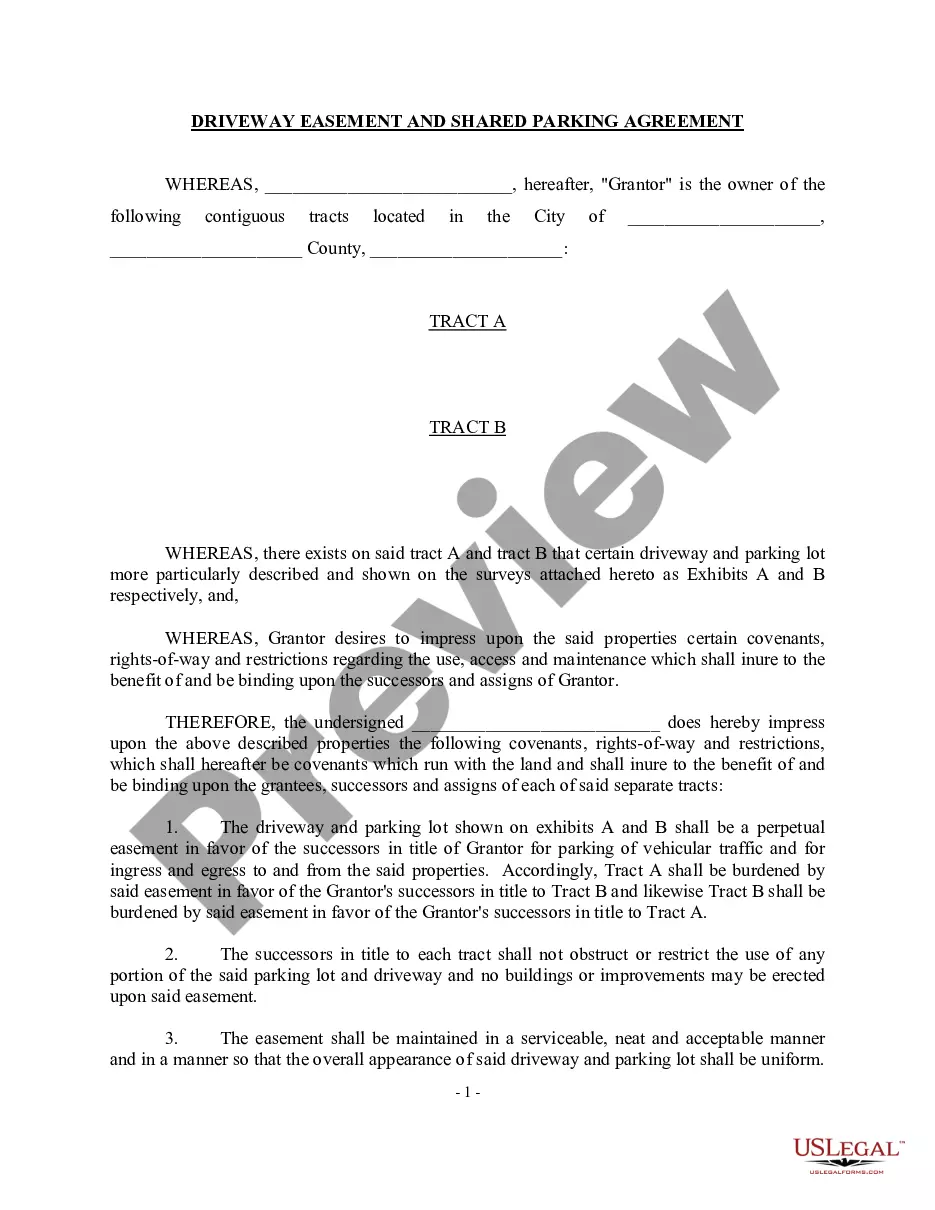
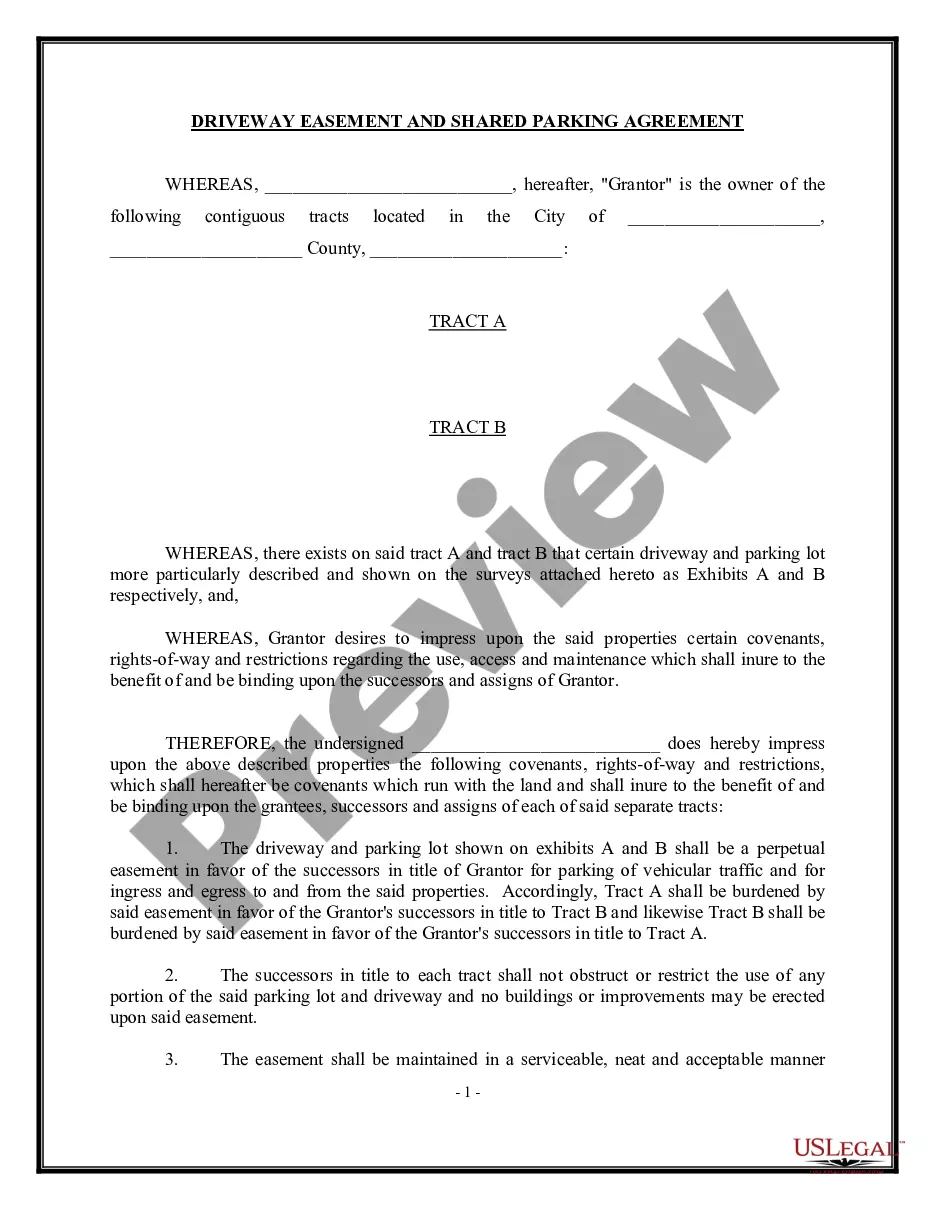
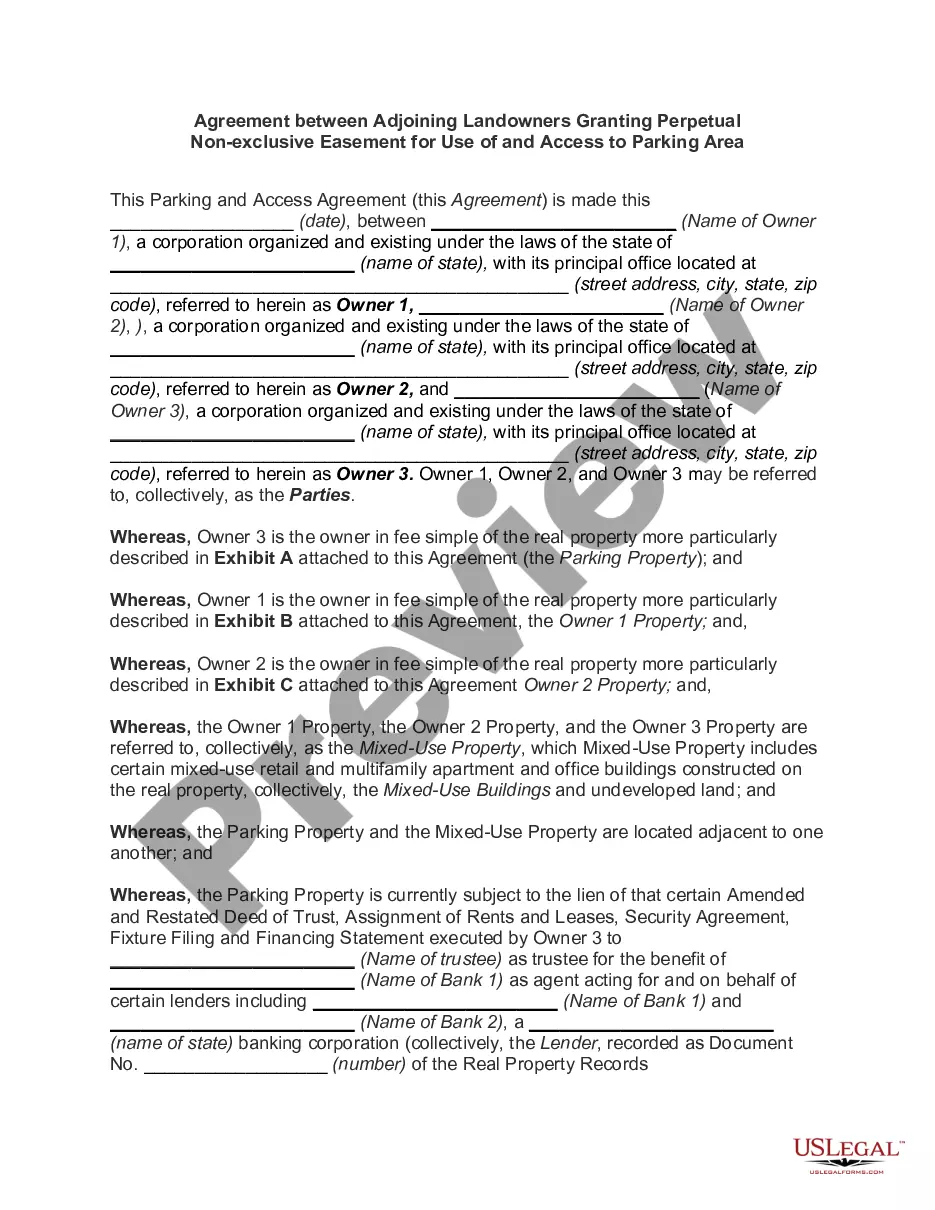
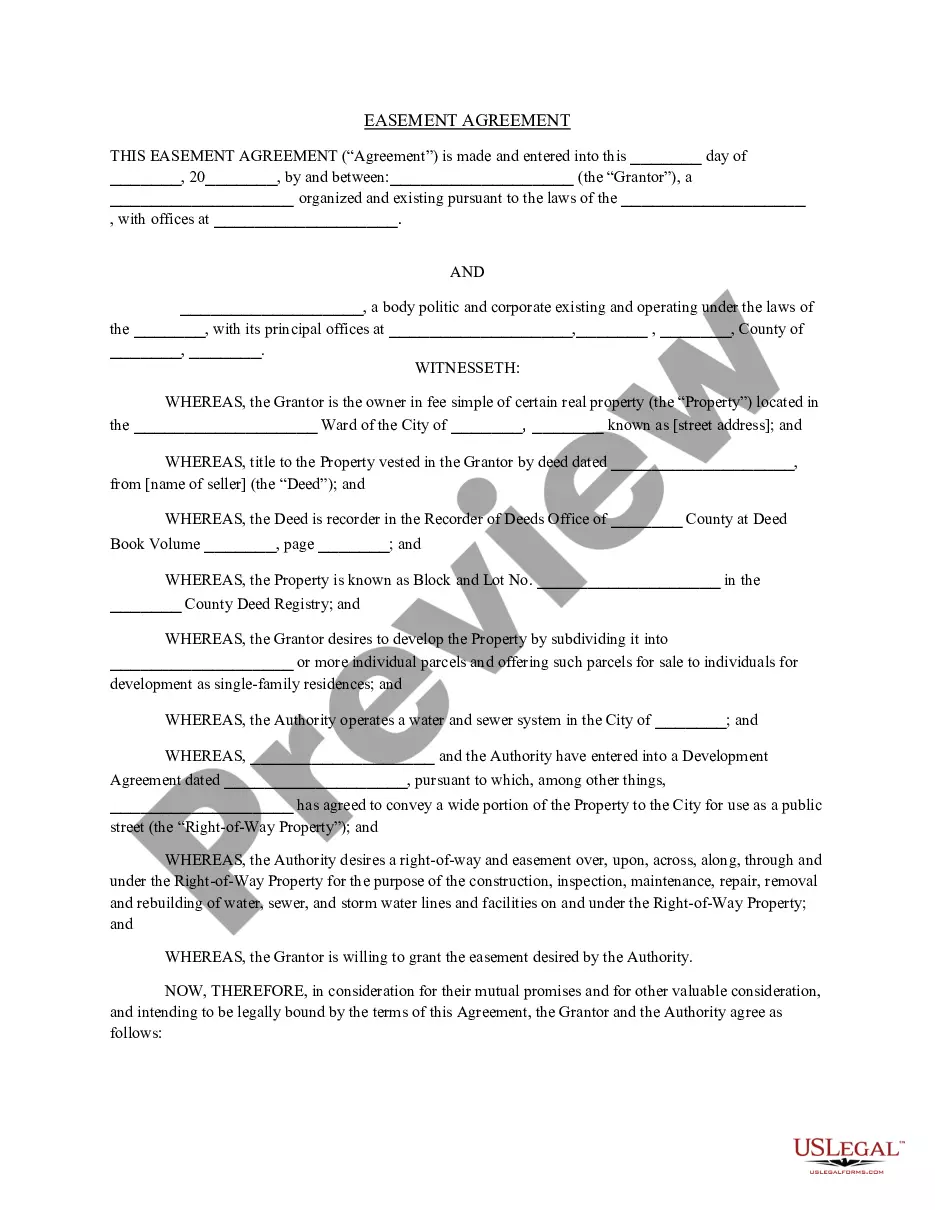
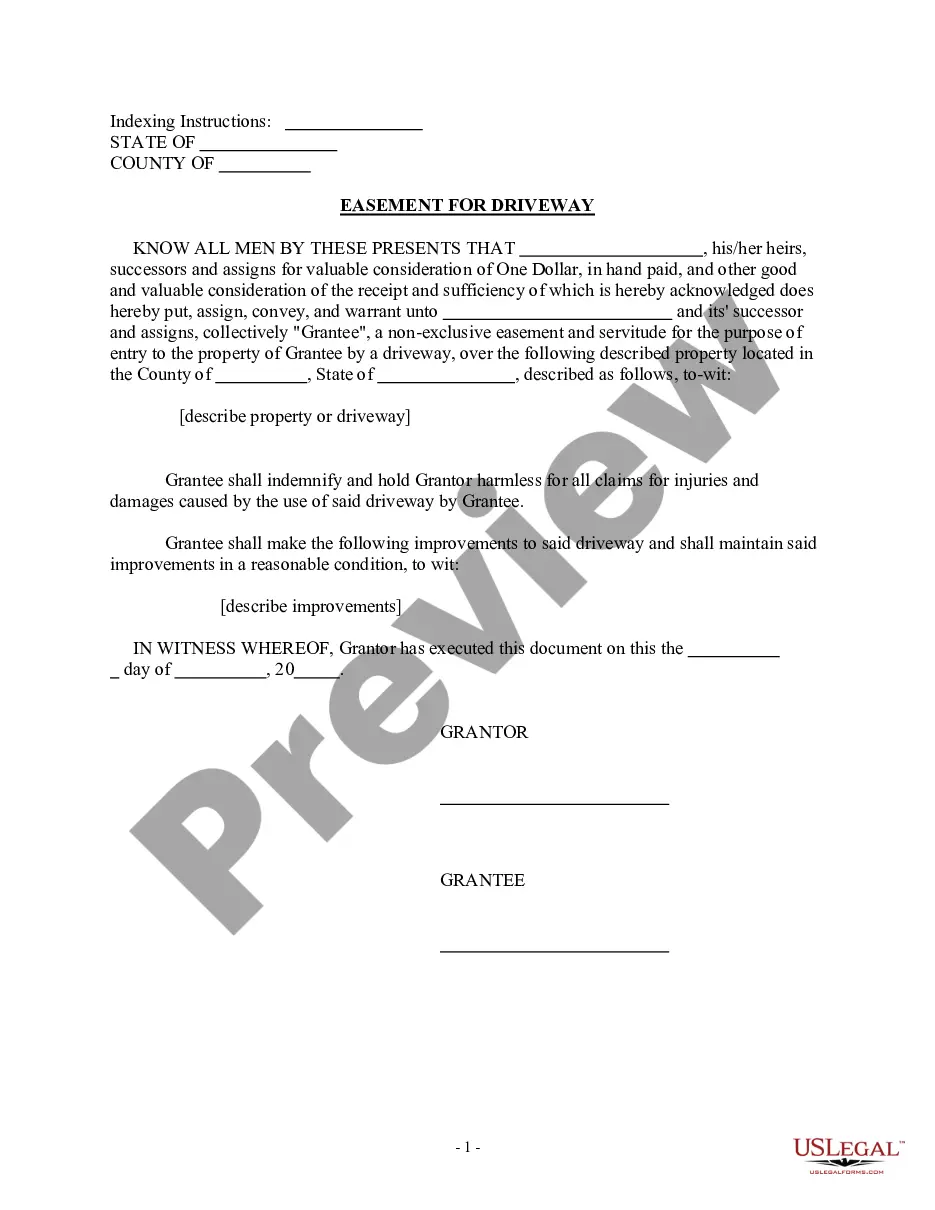
The Driveway Easement and Shared Parking Agreement is a legal document that establishes an easement between two properties, allowing one property owner the right to use a driveway located on another property. Unlike standard parking agreements, this form details rights of way and restrictions for accessing, using, and maintaining a shared parking space. This easement is essential for ensuring that both property owners have clarity on usage terms and responsibilities, preventing potential disputes over access and maintenance obligations.
Form components explained
- Identification of involved parties (Grantor and Grantee).
- Detailed description of the properties involved and the driveway's location.
- Clear terms of use and restrictions regarding the driveway and parking lot.
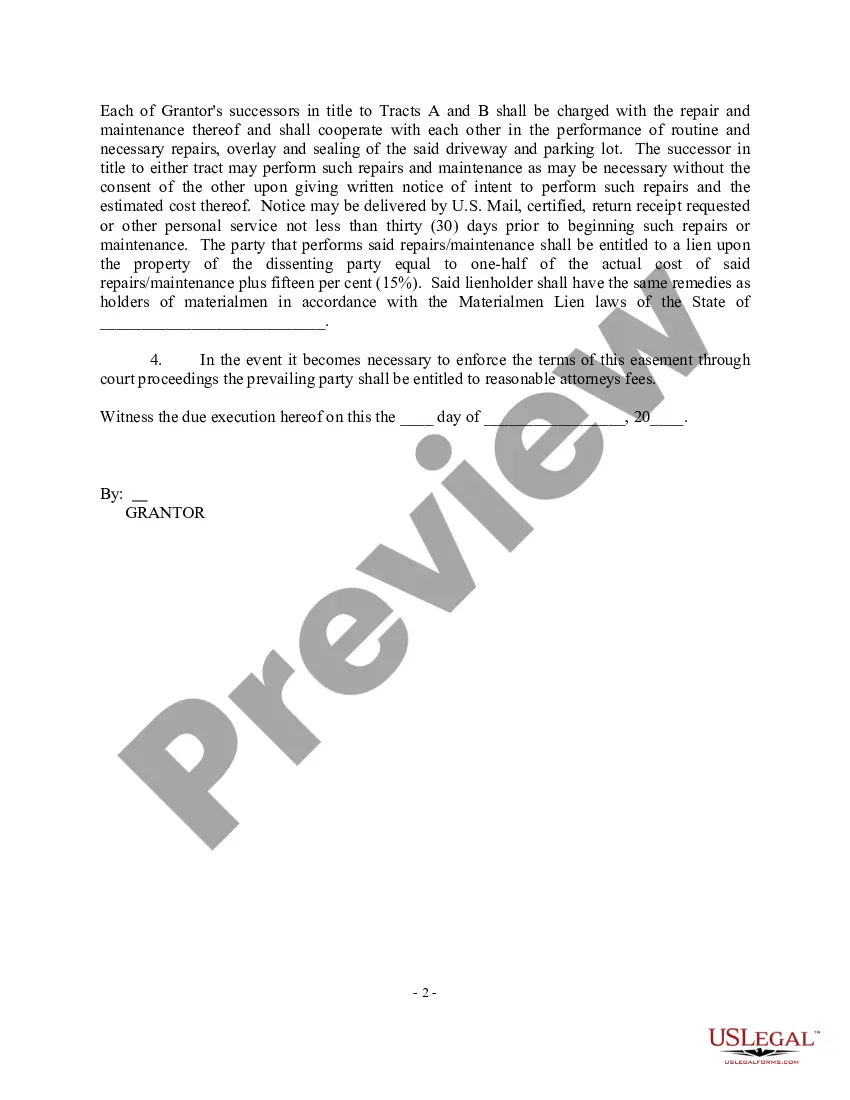
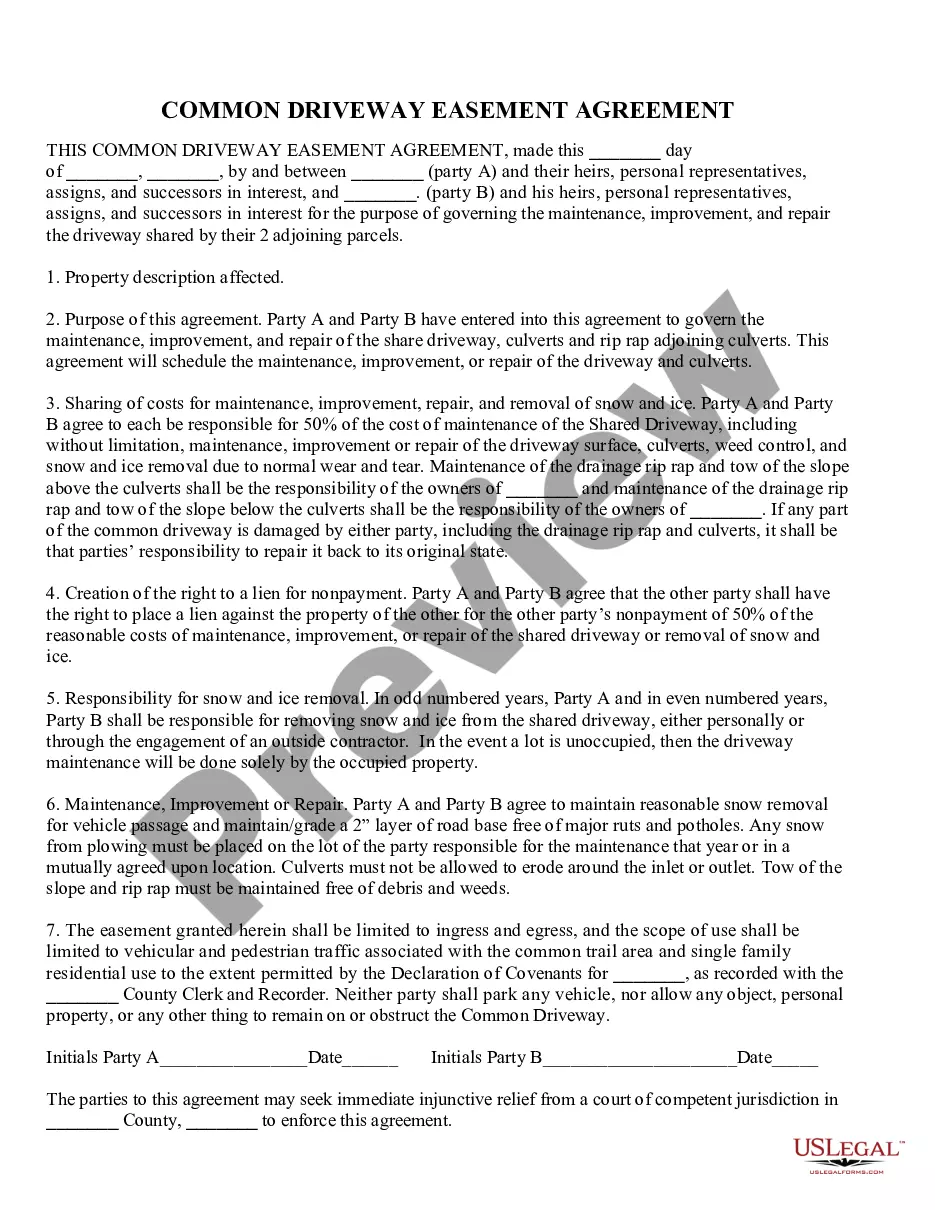
- Maintenance obligations and rights to perform repairs.
- Conditions for enforcing the agreement, including attorney fees.
When to use this form
This form is used when two property owners need to agree on shared access to a driveway and parking area. It is particularly relevant when one property relies on the other for vehicular access or when both properties share a parking lot. Use this document to formalize your agreements and clarify responsibilities for maintenance and use, thus avoiding conflicts between neighbors.
Who needs this form
- Homeowners who share a driveway and need to clarify rights and responsibilities.
- Property developers establishing shared parking arrangements for multiple residences.
- Business owners seeking to outline parking access with neighboring properties.
How to prepare this document
- Identify the parties involved by entering the names of the Grantor and Grantee.
- Describe the properties by specifying their locations and any relevant details like tract numbers.
- Clearly outline the terms of the easement, including permitted uses and restrictions.
- Specify maintenance responsibilities, including how repairs will be managed and communicated.
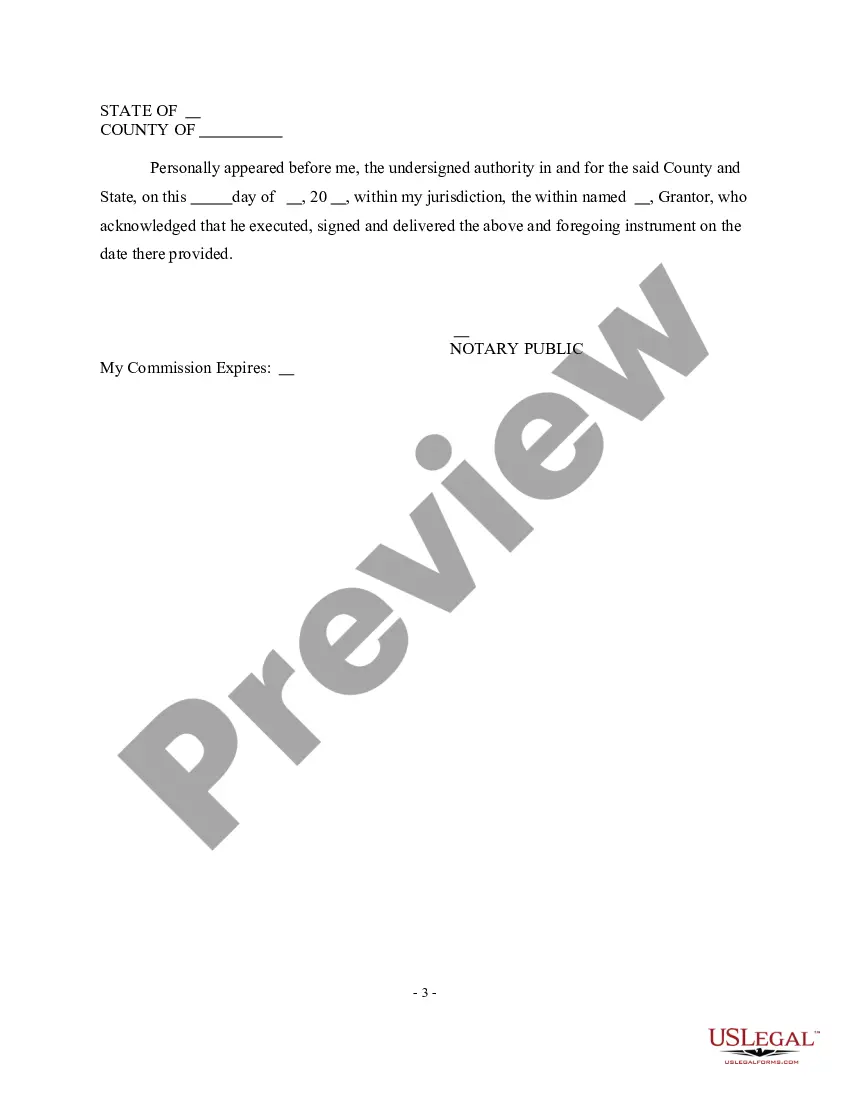
- Ensure both parties sign the form and have it notarized if necessary.
Notarization guidance
This form needs to be notarized to ensure legal validity. US Legal Forms provides secure online notarization powered by Notarize, allowing you to complete the process through a verified video call, available anytime.
Get your form ready online
Our built-in tools help you complete, sign, share, and store your documents in one place.
Make edits, fill in missing information, and update formatting in US Legal Forms—just like you would in MS Word.
Download a copy, print it, send it by email, or mail it via USPS—whatever works best for your next step.
Sign and collect signatures with our SignNow integration. Send to multiple recipients, set reminders, and more. Go Premium to unlock E-Sign.
If this form requires notarization, complete it online through a secure video call—no need to meet a notary in person or wait for an appointment.
We protect your documents and personal data by following strict security and privacy standards.

Make edits, fill in missing information, and update formatting in US Legal Forms—just like you would in MS Word.

Download a copy, print it, send it by email, or mail it via USPS—whatever works best for your next step.

Sign and collect signatures with our SignNow integration. Send to multiple recipients, set reminders, and more. Go Premium to unlock E-Sign.

If this form requires notarization, complete it online through a secure video call—no need to meet a notary in person or wait for an appointment.

We protect your documents and personal data by following strict security and privacy standards.
Mistakes to watch out for
- Not defining the easement's boundaries or allowed uses clearly, leading to potential disputes.
- Failing to address maintenance obligations, which could result in disagreements about repairs.
- Neglecting to sign or date the form, making it legally unenforceable.
Why complete this form online
- Convenience of accessing and downloading the form anytime, anywhere.
- Editability allows you to customize the agreement according to your specific needs.
- Reliability, as the forms are prepared by licensed attorneys to ensure legal validity.
Looking for another form?
Form popularity
FAQ
The Driveway Easement and Shared Parking Agreement is a legal document that creates an easement allowing one property owner to use a driveway located on another property and to share a parking area. It sets rights of way, use restrictions, maintenance responsibilities, and enforcement terms (including attorney fees) to prevent disputes. Use it when two properties need clearly defined shared access and responsibilities.
Under this form, the Grantor and Grantee define who may access the driveway and parking area, when they may use it, and what activities are permitted. It also specifies maintenance obligations, repair rights, and enforcement steps, including attorney fees. This clarifies each party's rights to use and maintain the shared space.
It sets the rules for shared use, including who can use the driveway, where and when parking is allowed, and what restrictions apply. The form also spells out maintenance obligations and who may perform repairs, plus how disputes are resolved and how enforcement works, helping prevent neighbor conflicts.
Yes. The document functions as an easement that runs with the properties, giving one owner the right to access the driveway on the other property and to use the shared parking area. It also covers use restrictions, maintenance responsibilities, and enforcement terms, including attorney fees, so both parties know their obligations.
Typically called a driveway easement or a shared driveway arrangement. The Driveway Easement and Shared Parking Agreement formalizes access rights between two homes and may also govern shared parking and maintenance duties. This terminology reflects the legal mechanism used to grant cross-property access while outlining responsibilities for upkeep and use.
It differs from a standard parking agreement by explicitly detailing rights of way and restrictions for accessing, using, and maintaining a shared parking space, whereas a standard parking agreement may not include an express easement or maintenance provisions. This makes obligations and enforcement clearer for Grantor and Grantee.