Sample Subordination, Nondisturbance and Attornment Agreement
Overview of this form
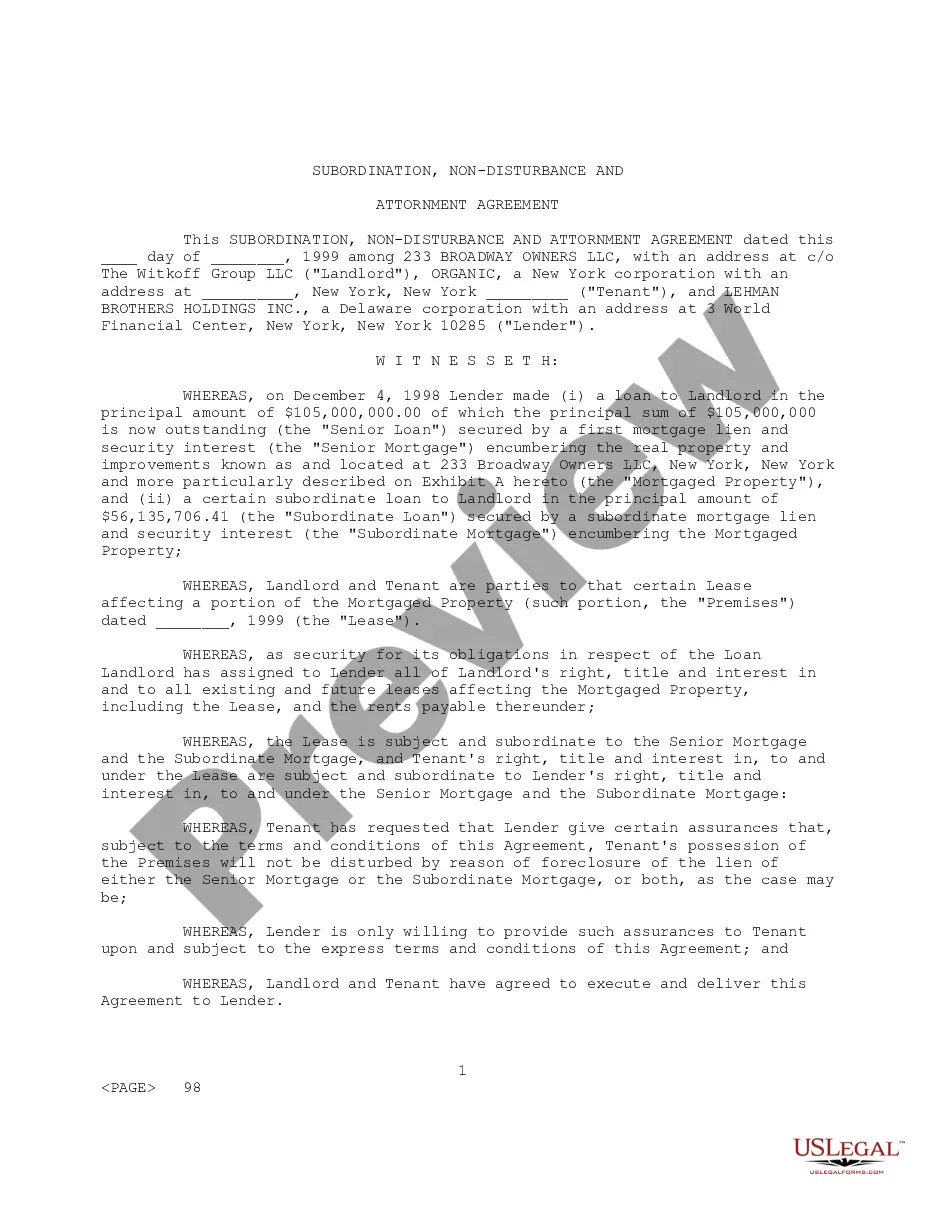
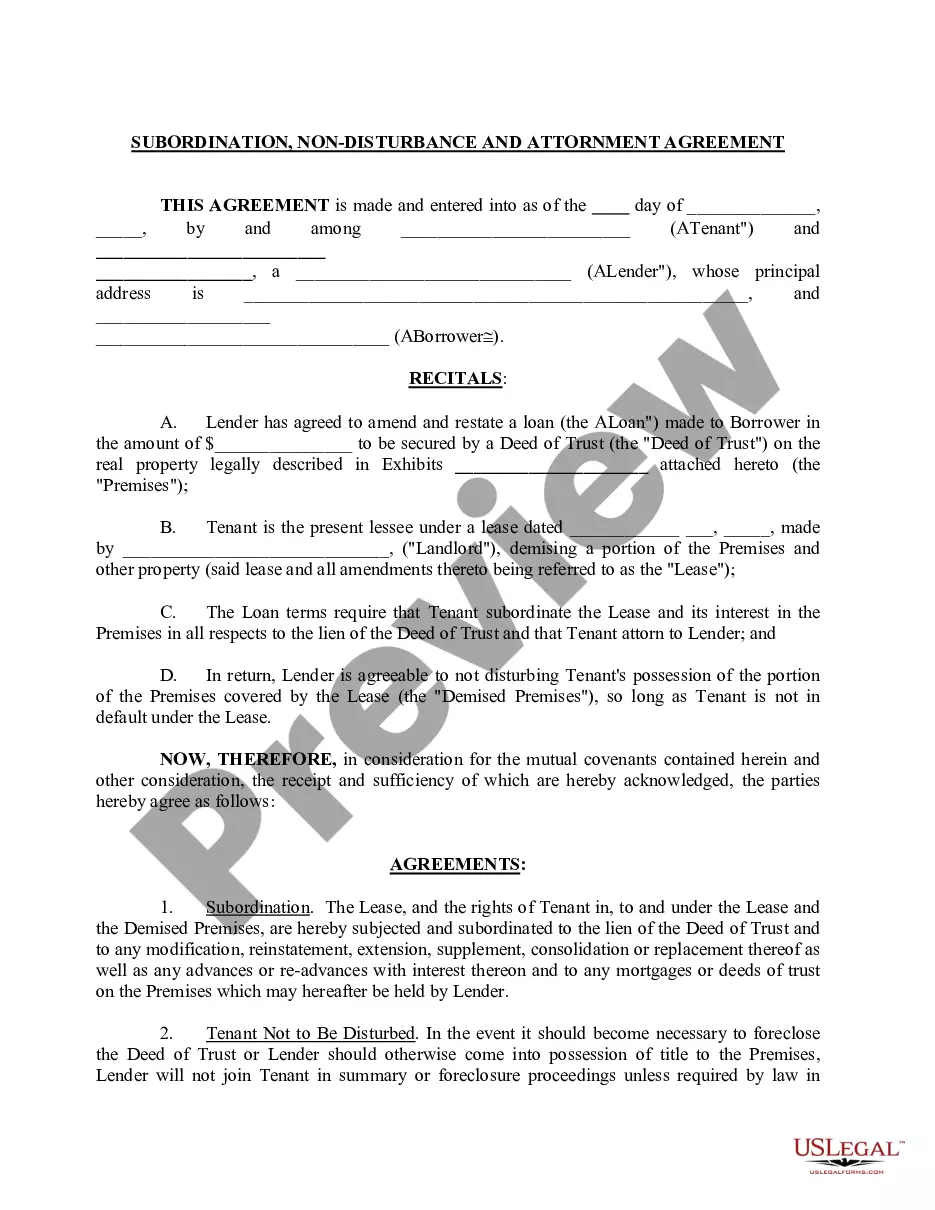
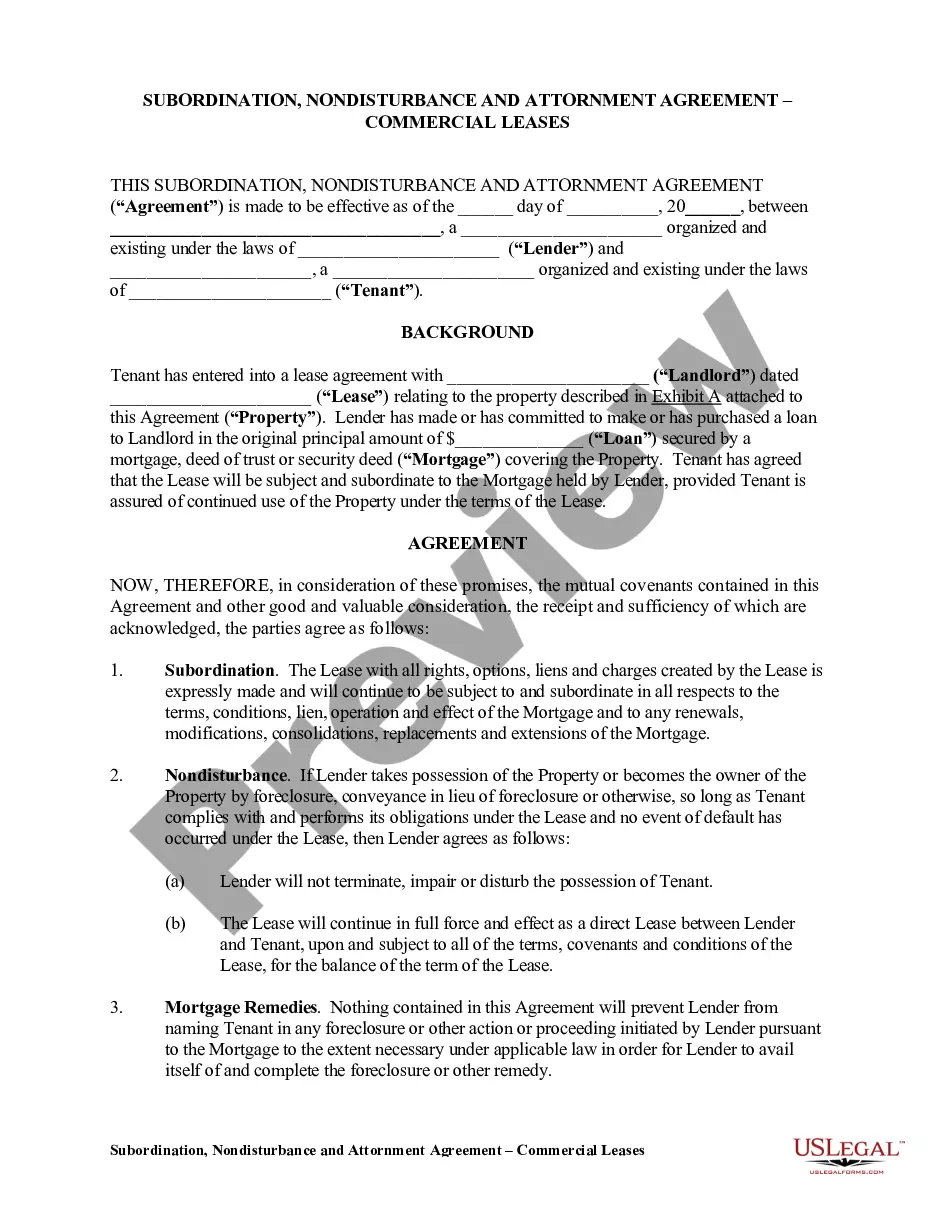
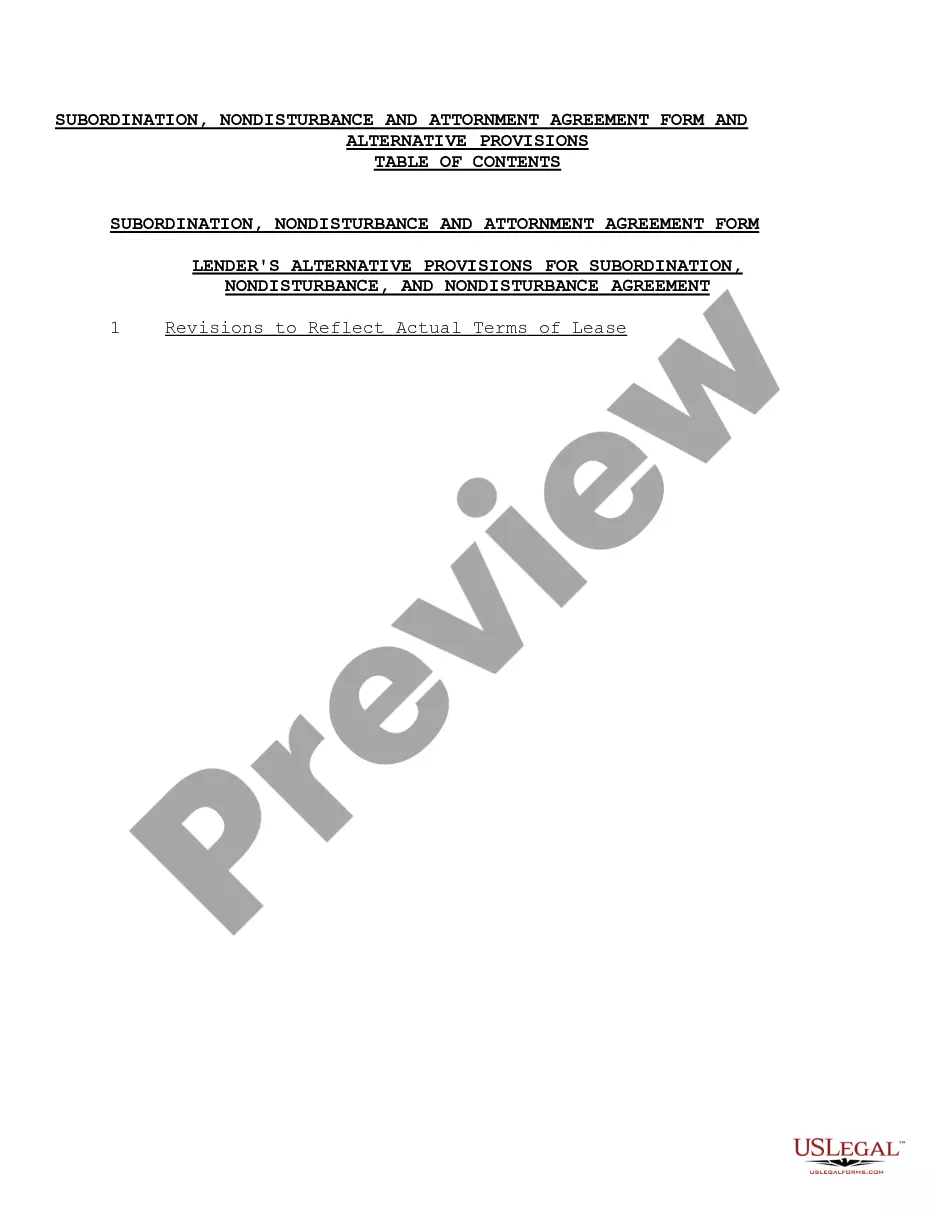
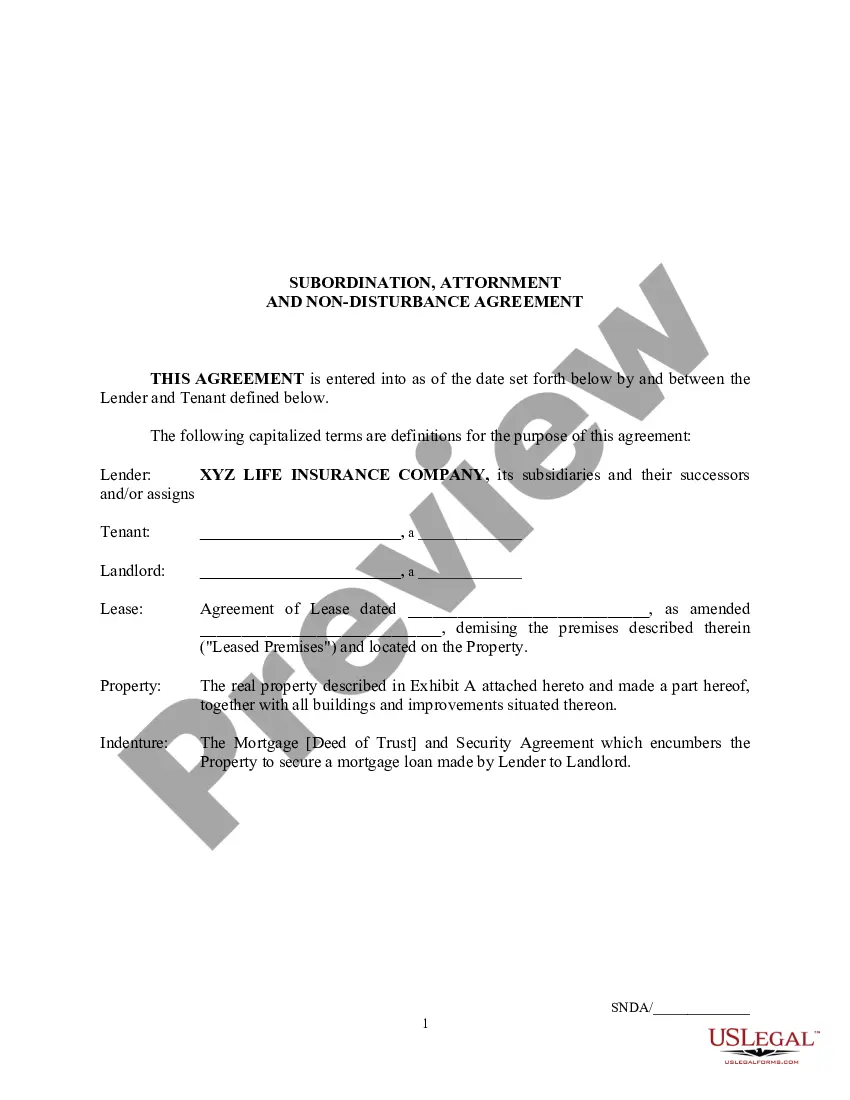
The Sample Subordination, Nondisturbance and Attornment Agreement is a legal document that establishes the relationship between a landlord, tenant, and lender concerning leased property. This form ensures that the tenant's rights to occupy the premises are protected even if the landlord defaults on a mortgage. Unlike a standard lease agreement, this form includes provisions for subordination, nondisturbance, and attornment, making it essential for maintaining tenant security in commercial real estate transactions.
What’s included in this form
- Identification of the involved parties: landlord, tenant, and lender.
- Details about the loan agreements and mortgaged property.
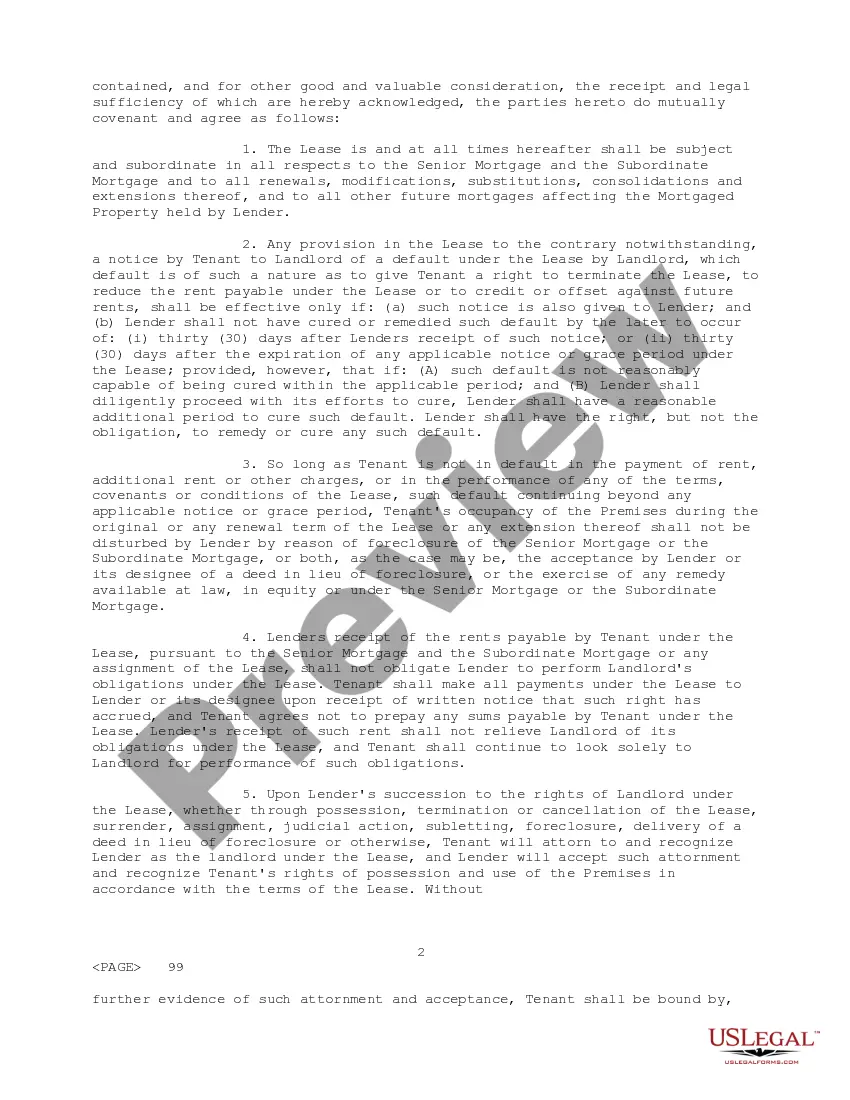
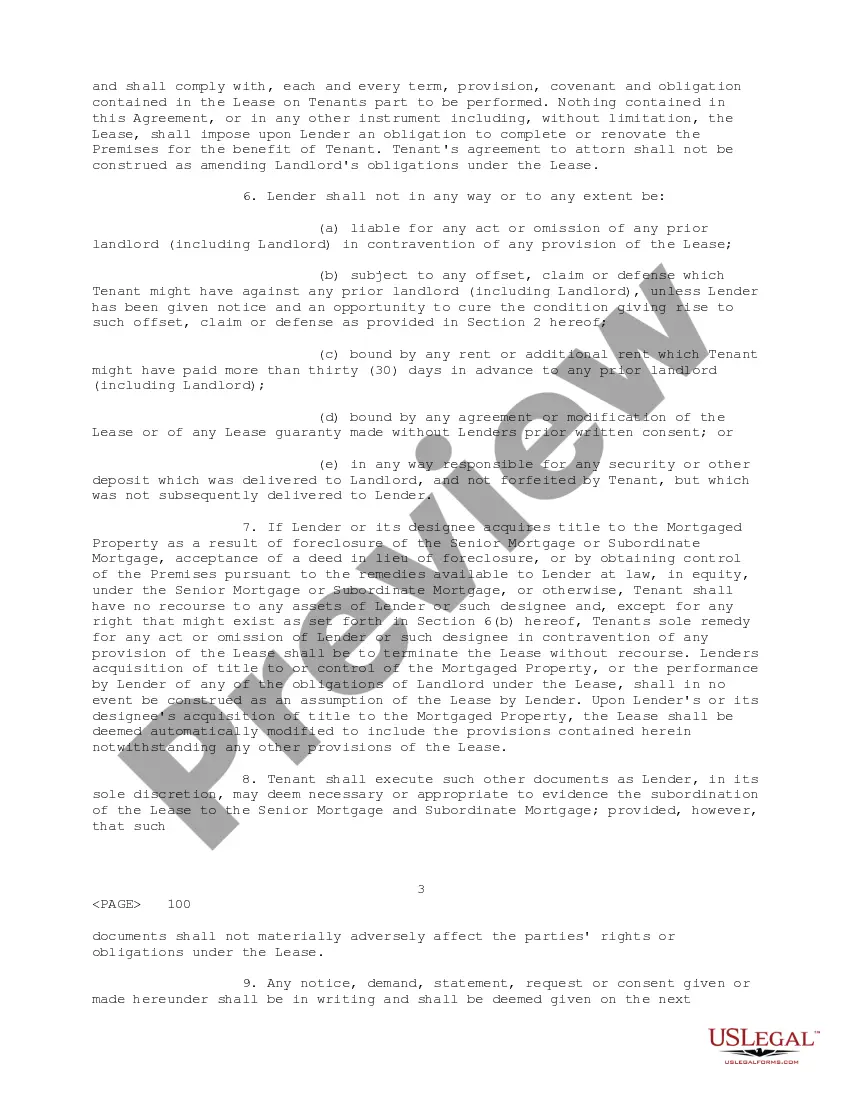
- Subordination clauses detailing the priority of the mortgage over the lease.
- Nondisturbance provisions guaranteeing the tenant's right to remain in the property.
- Attornment clause requiring the tenant to recognize the lender in case of foreclosure.
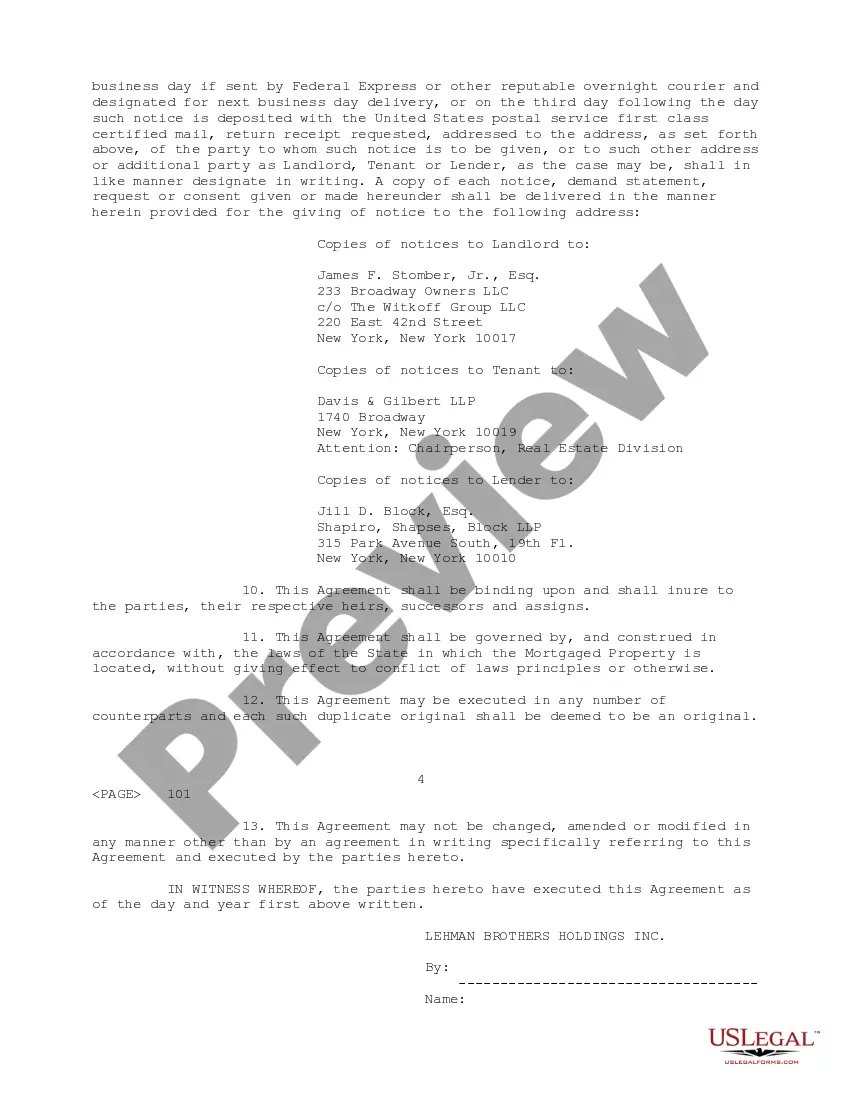
- Notice requirements to inform parties of defaults under the lease.
When to use this document
This form should be used when a tenant is leasing space in a property that has an existing mortgage. It is essential when the landlord obtains financing and the tenant wants assurances that their lease will not be disturbed if the landlord defaults on loan payments. This agreement is particularly relevant in commercial real estate transactions where multiple parties are involved, and protecting each party's rights is critical.
Who this form is for
- Landlords looking to secure financing for real estate properties.
- Commercial tenants who wish to protect their lease agreements in the event of a foreclosure.
- Lenders wanting to formalize their position regarding the mortgaged property and its tenants.
- Real estate professionals and attorneys involved in lease negotiations and mortgage agreements.
How to complete this form
- Identify the parties involved: fill in the names and addresses of the landlord, tenant, and lender.
- Provide details of the loan, including principal amounts and mortgage descriptions.
- Specify the property to be covered by the lease in accordance with the mortgage.
- Enter the effective date of the agreement and any relevant lease start dates.
- Ensure all parties sign the agreement and keep copies for their records.
Notarization guidance
To make this form legally binding, it must be notarized. Our online notarization service, powered by Notarize, lets you verify and sign documents remotely through an encrypted video session.
Typical mistakes to avoid
- Failing to accurately identify all parties involved in the agreement.
- Not providing complete property descriptions, which could lead to enforcement issues.
- Neglecting to ensure all signatures are obtained on the document.
- Ignoring state-specific requirements that may affect the validity of the agreement.
Why complete this form online
- Convenience of accessing and downloading the form anytime, anywhere.
- Editability allows users to personalize the document according to their specific needs.
- Reliability of forms drafted by licensed attorneys ensures legal compliance.

Form popularity
FAQ
In a lease subordination clause, the tenant is agreeing to allow his/her interest to be subordinated to the lender's. A sample subordination agreement is commonly requested of new tenants.The attornment agreement has the tenant agree to continue lease obligations to a new landlord in the event of a foreclosure.
A nondisturbance clause is a provision in a mortgage contract that ensures that a rental agreement between the tenant and the landlord will continue under any circumstances. This is done primarily to protect the renter from eviction by the mortgagor if the property is foreclosed upon by the lender.
Subordination is the tenant's agreement that its interest under the lease will be subordinate to that of the lender. Of course, in many situations, the mortgage will already be superior, depending on when the mortgage was recorded and when the lease was recorded or the tenant took possession of the property.
In the case of commercial property changing hands, an attornment clause in a subordination, non-disturbance, and attornment (SNDA) agreement requires the tenant to acknowledge a new owner as their landlord and to continue paying rent regardless of whether the property changes hands through a normal sale or a
An SNDA is an agreement entered into between a tenant and the lender of the landlord (and, ideally, the landlord) to establish the relationship between the tenant and lender (who would not otherwise have a direct relationship) and provide relative priorities between them.
A lender typically wants to have an SNDA because of its subordination clause if, in the absence of such an agreement, the lease would be prior to the mortgage.Therefore, if a mortgage is senior to a lease, the foreclosure of the mortgage will terminate the lease unless there is an agreement that provides otherwise.
A subordination agreement is a legal document that establishes one debt as ranking behind another in priority for collecting repayment from a debtor.
The subordination, non-disturbance and attornment agreement (commonly abbreviated as an SNDA agreement) is the document that the landlord, tenant and lender often employ to resolve how their rights do and will intersect.
An SNDA is an agreement entered into between a tenant and the lender of the landlord (and, ideally, the landlord) to establish the relationship between the tenant and lender (who would not otherwise have a direct relationship) and provide relative priorities between them.